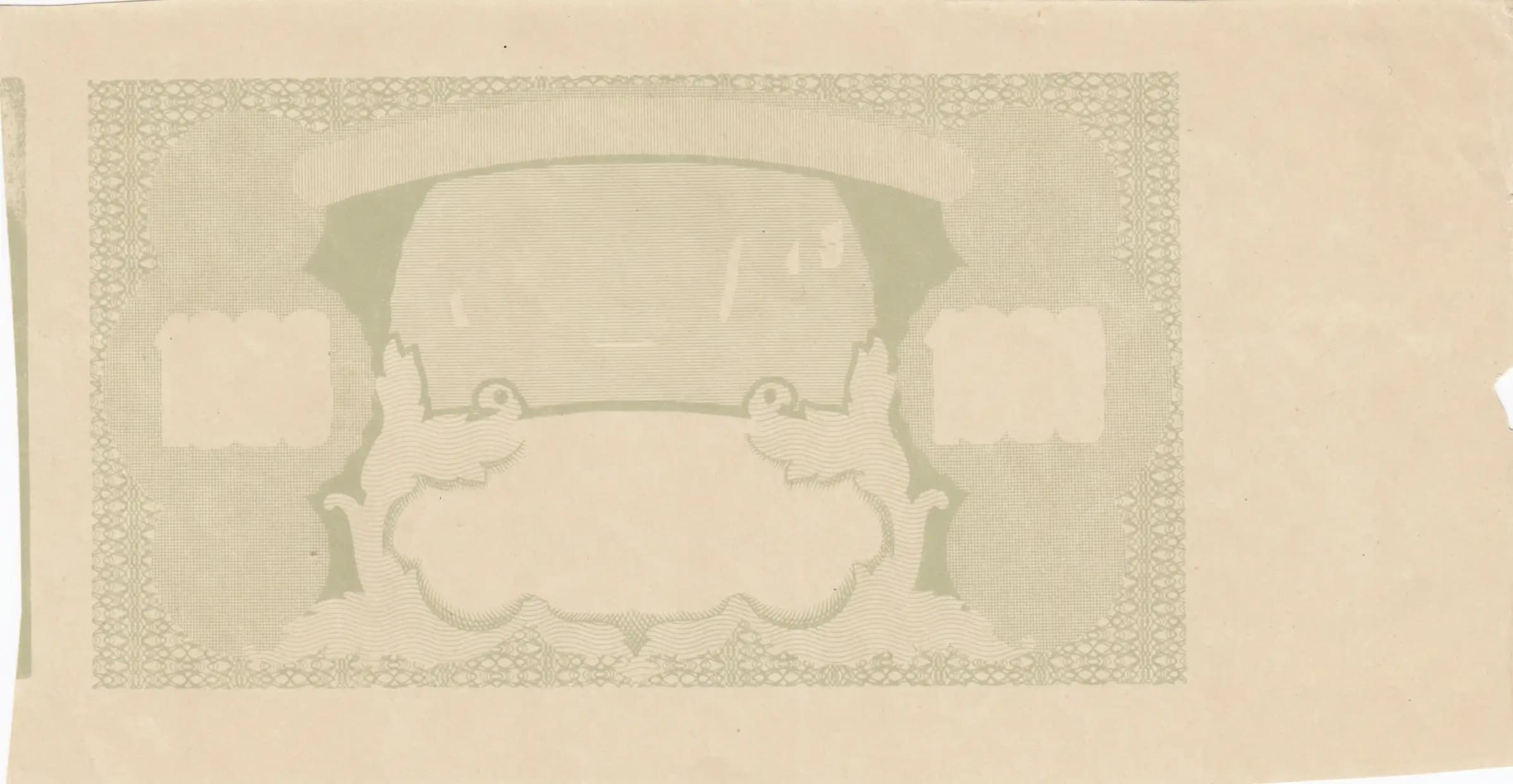
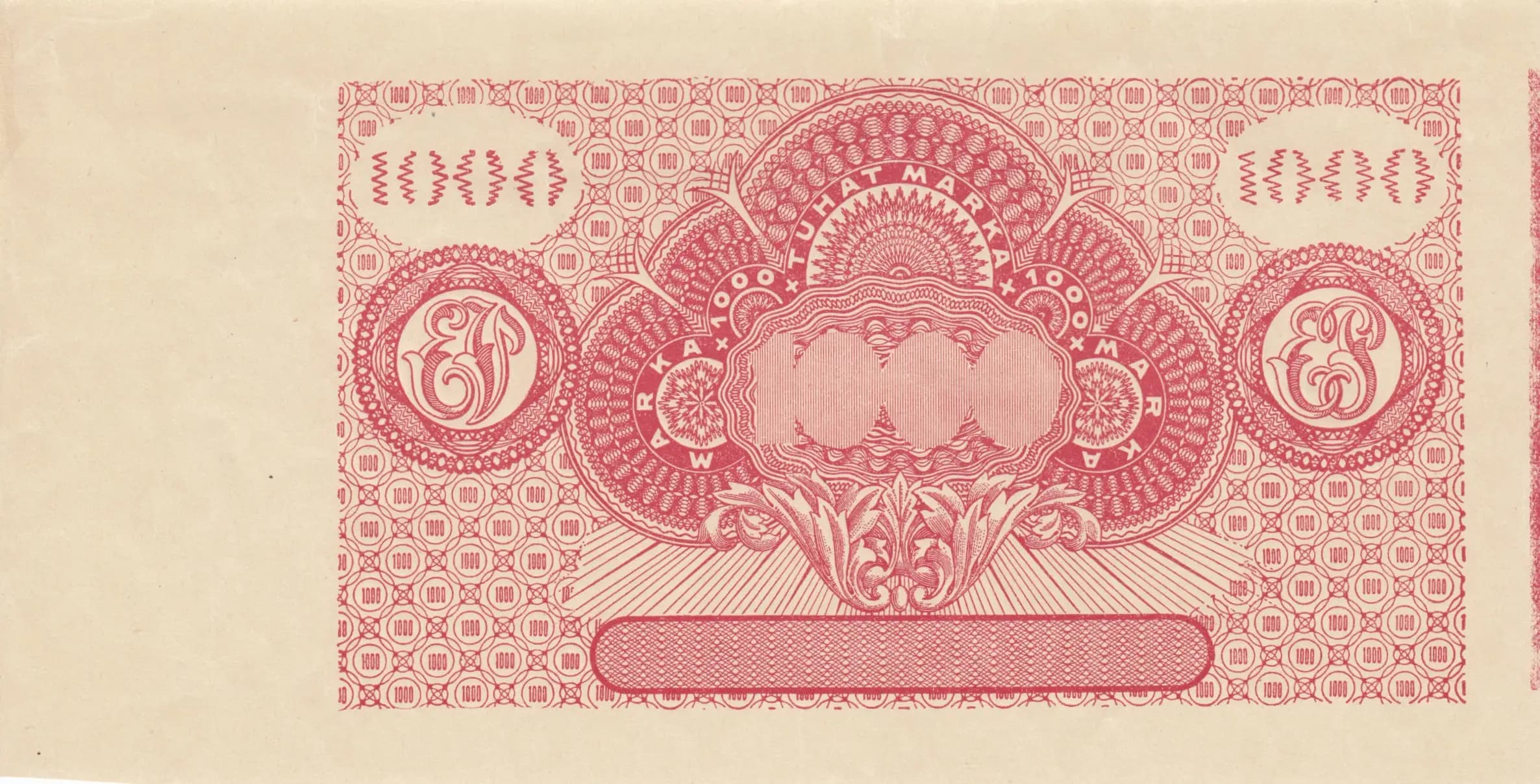
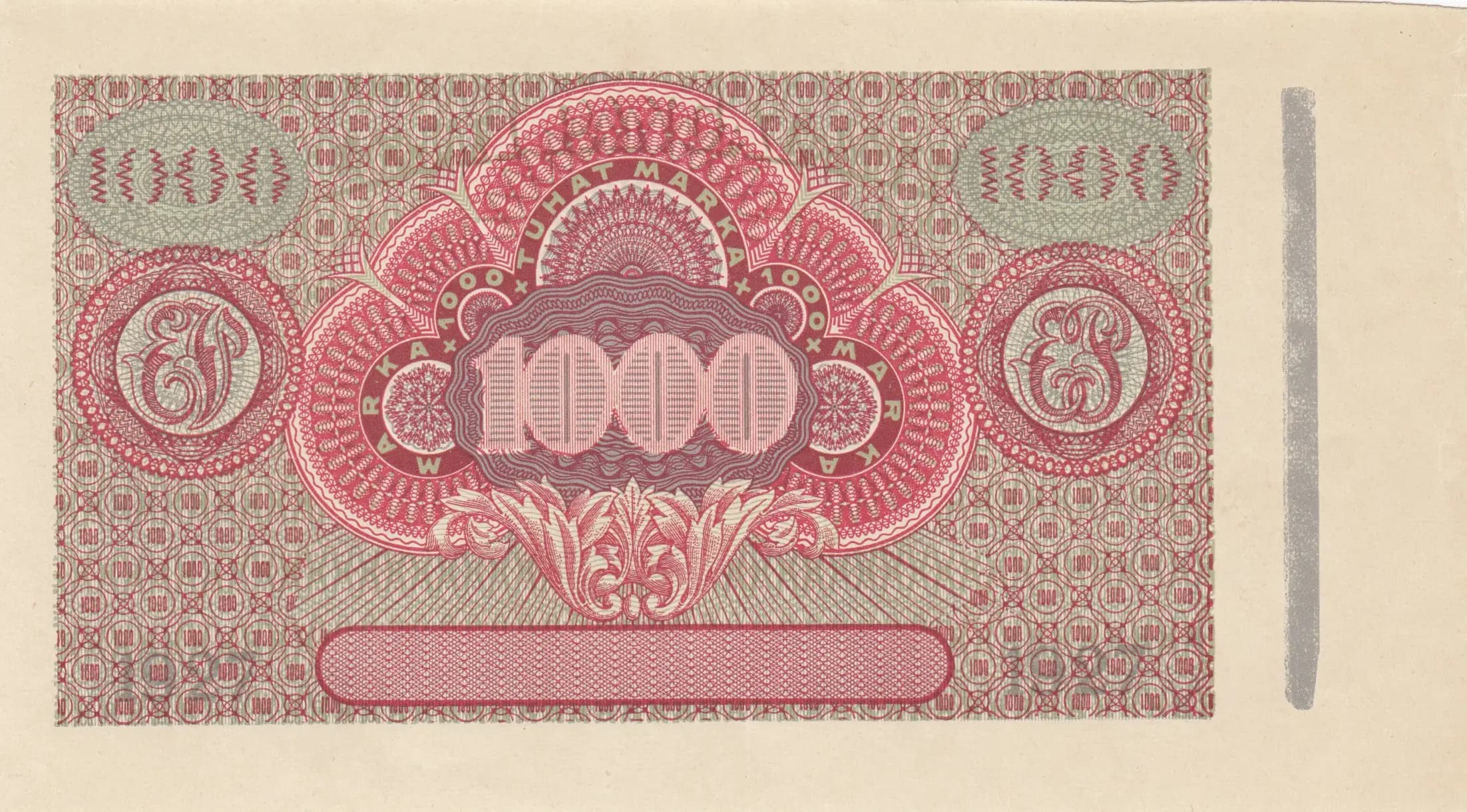
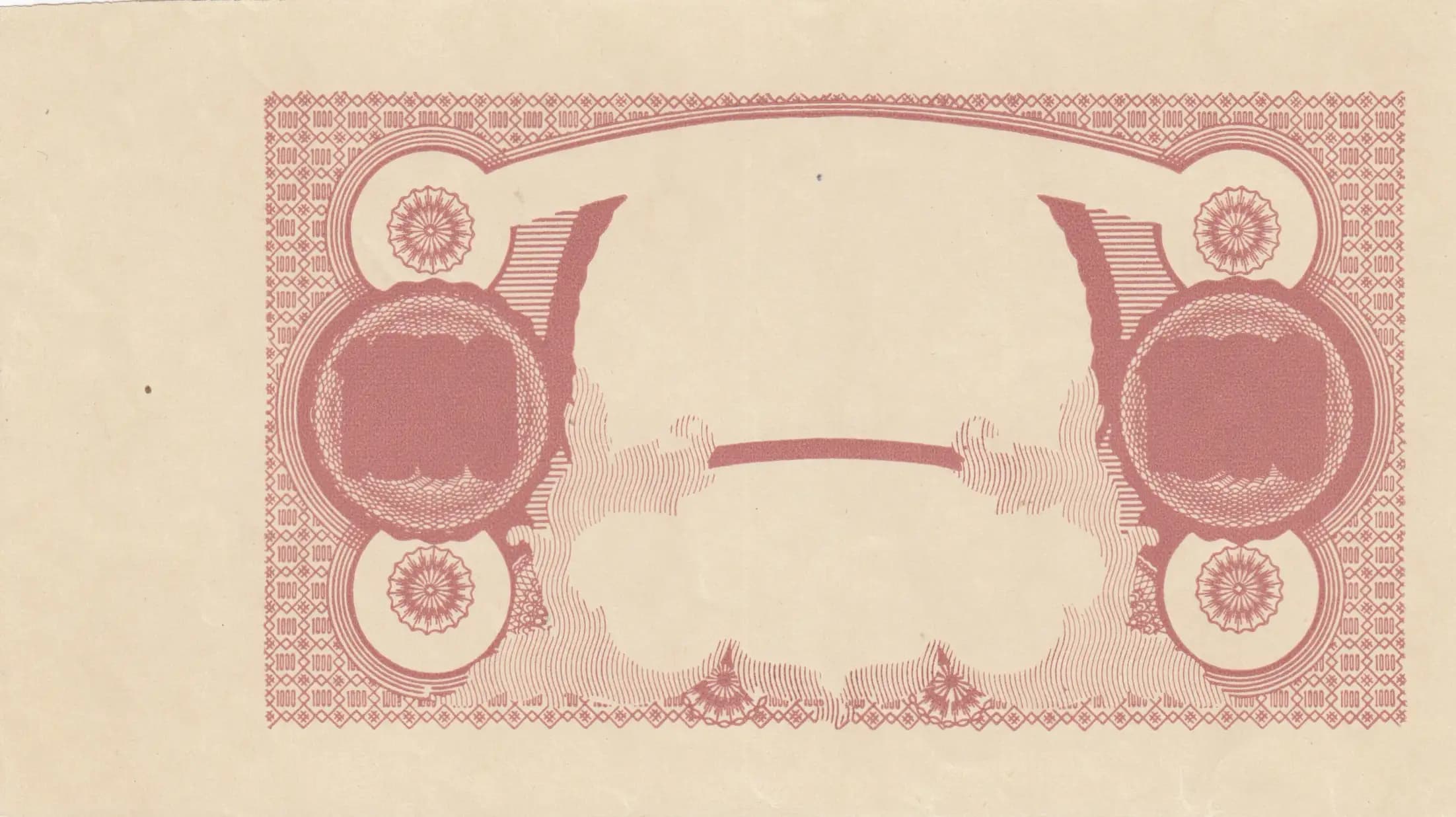
1000 marka 1927 progressive proof
About This Note
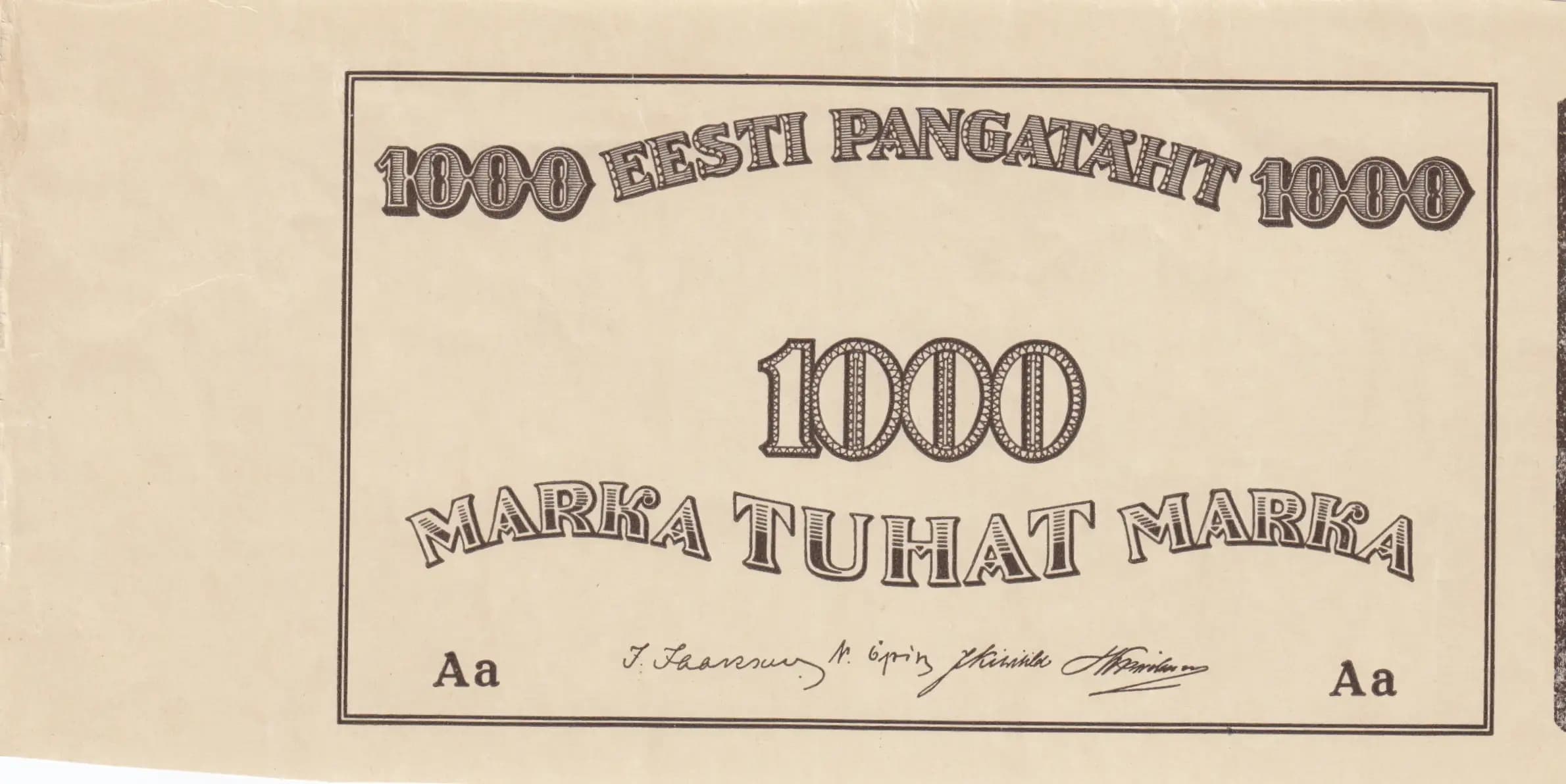
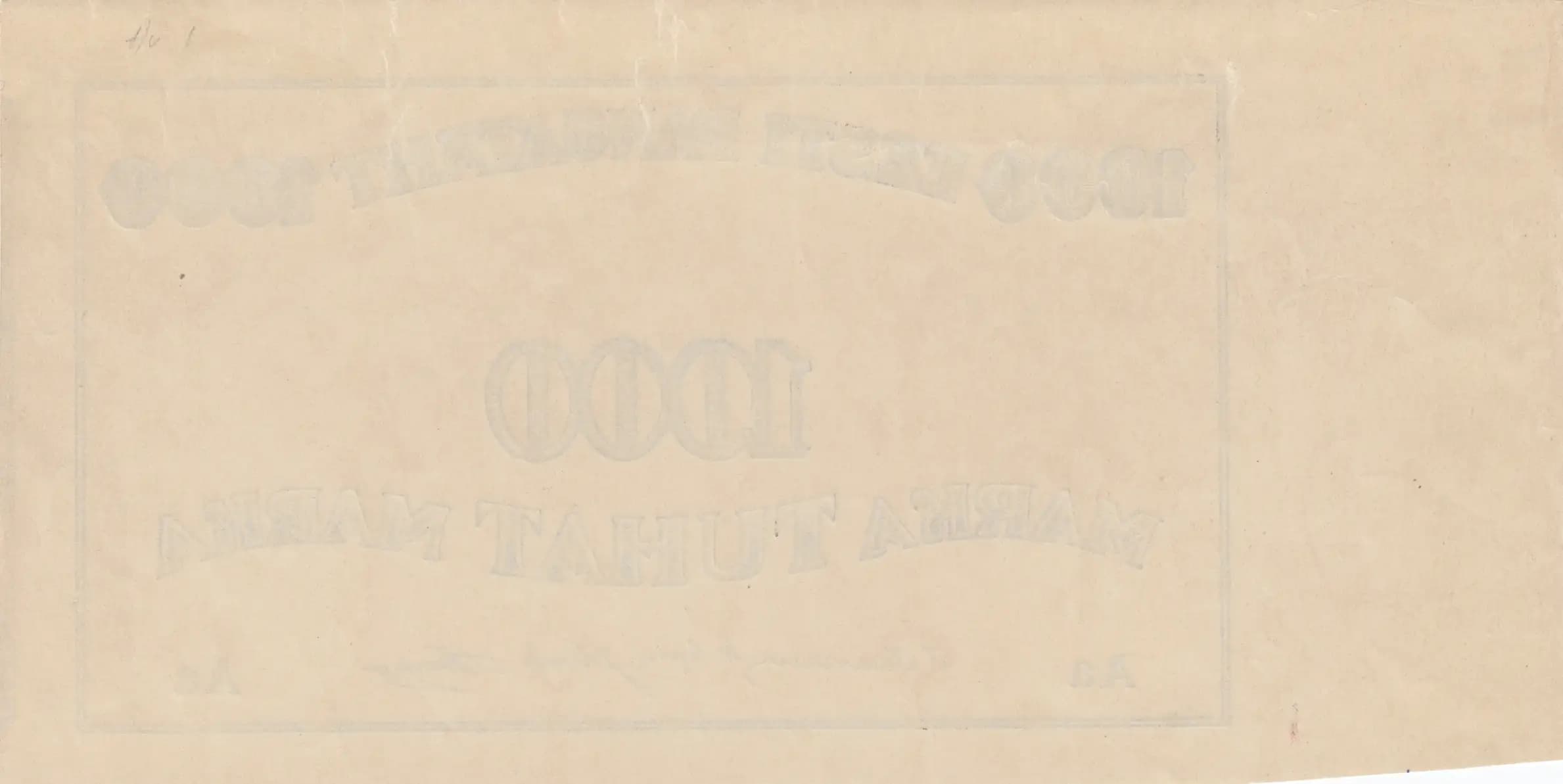
This is a progressive proof for the Estonian 1000 Marka note of 1927, representing an early design stage in the banknote production process. The front displays a formal intaglio design with ornamental border framing and denomination text in Estonian, while the reverse shows only faint impressions, indicating this is likely from the initial or intermediate proof stages. In AU condition with minimal wear and age-appropriate patina, this archival-quality proof represents a significant artifact of Estonian interwar currency development.
rare
The 1000 Marka denomination was issued by the Treasury of Estonia during the interwar period when the newly independent Estonian Republic was establishing its own monetary system. The formal, classical design with ornamental framing reflects the aesthetic standards of 1920s European banknote design, while the Estonian-language inscriptions ('Eesti Pangatäht,' 'Tuhat Marka') assert national identity during Estonia's period of sovereignty between the world wars.
The obverse features a centered, symmetrical composition dominated by a rectangular ornamental border with decorative corner elements rendered in the classical intaglio style. The denomination is prominently displayed in both numerals and spelled-out text in Estonian. The proof stage format indicates this was part of the bank note design approval process, with the reverse remaining largely unfinished or shown in light impression form—typical of progressive proofs used to evaluate design elements before final production dies were prepared. No portraits or specific architectural landmarks are clearly identifiable in this proof stage, suggesting the reverse back design (which Pick references as 'Port of Tallinn/Reval') was still in development or not yet included in this particular proof stage.
Front side: '1000 EESTI PANGATÄHT 1000' translates to '1000 Estonian Banknote 1000'; '1000 MARKA TUHAT MARKA' translates to '1000 Mark Thousand Mark'; 'Aa' appears to be a printer's mark or series designation; handwritten notation 'J.Farenzen M.Oppi [illegible]' represents signatures or approval marks, likely from designers or approving officials. Back side: '1000' appears as a faint watermarked or lightly impressed denomination marking.
Line engraving/intaglio printing, as evidenced by the fine linear details visible in the border ornamentation and the characteristic appearance of intaglio proofs. This is a progressive proof—a stage proof pulled during the design and approval process before final production. The faint reverse impression suggests either a light hand-pulled proof or a preliminary transfer stage. The specific security printer for Estonian notes of this period would likely be identifiable from the handwritten notations and printer's marks ('Aa'), though the exact printer cannot be definitively determined from the visual evidence alone.
Identified as a progressive proof (designation 'fpp9' in Pick catalog indicates proof stage variant #9). The handwritten notations 'J.Farenzen M.Oppi' represent approval or design signatures, potentially identifying the specific design team or approval stage. The 'Aa' marking may indicate printer identification or series. The incomplete reverse design (faint impression only) confirms this as an intermediate-stage progressive proof rather than a completed presentation proof, making it a valuable document of the design evolution for this denomination.