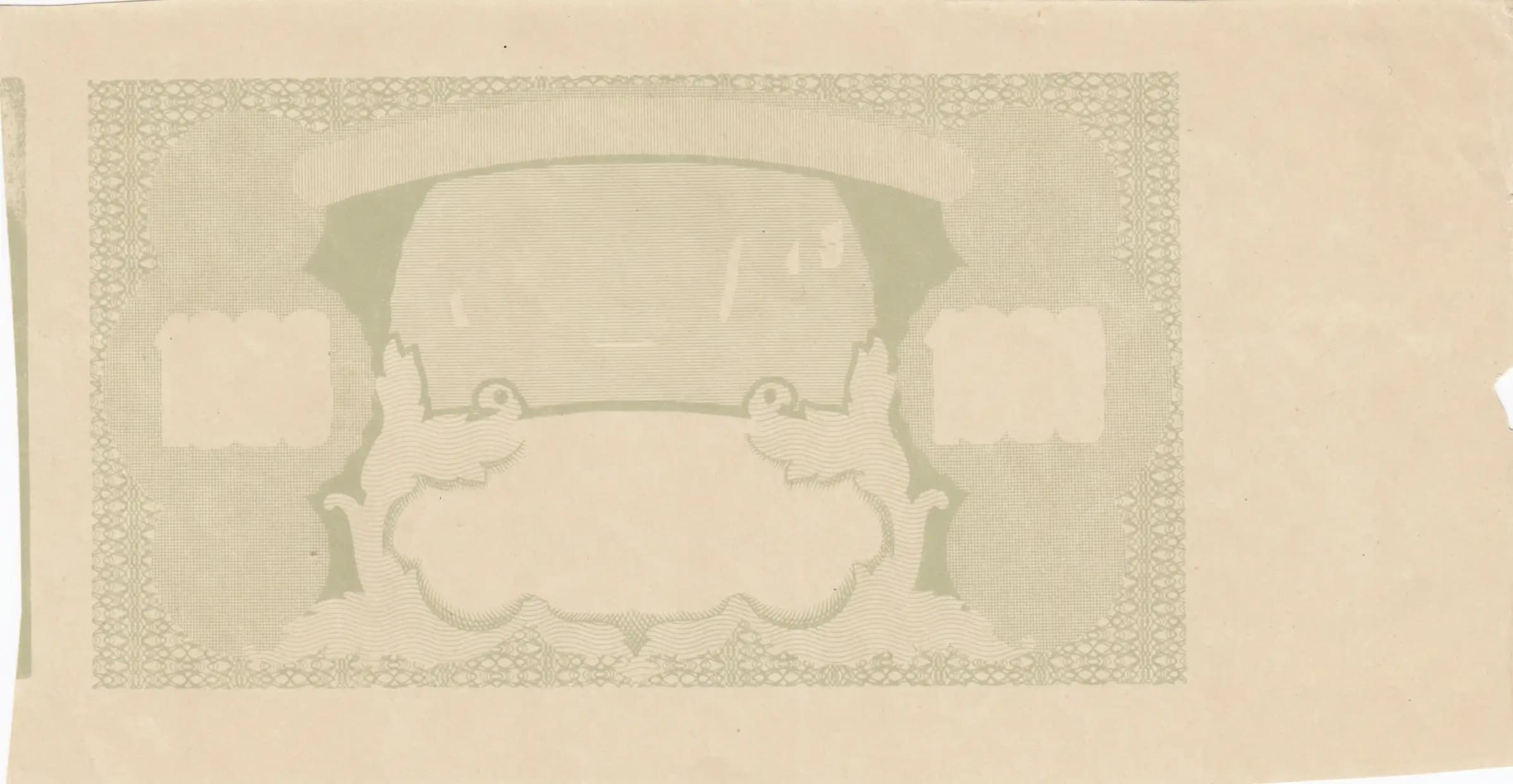
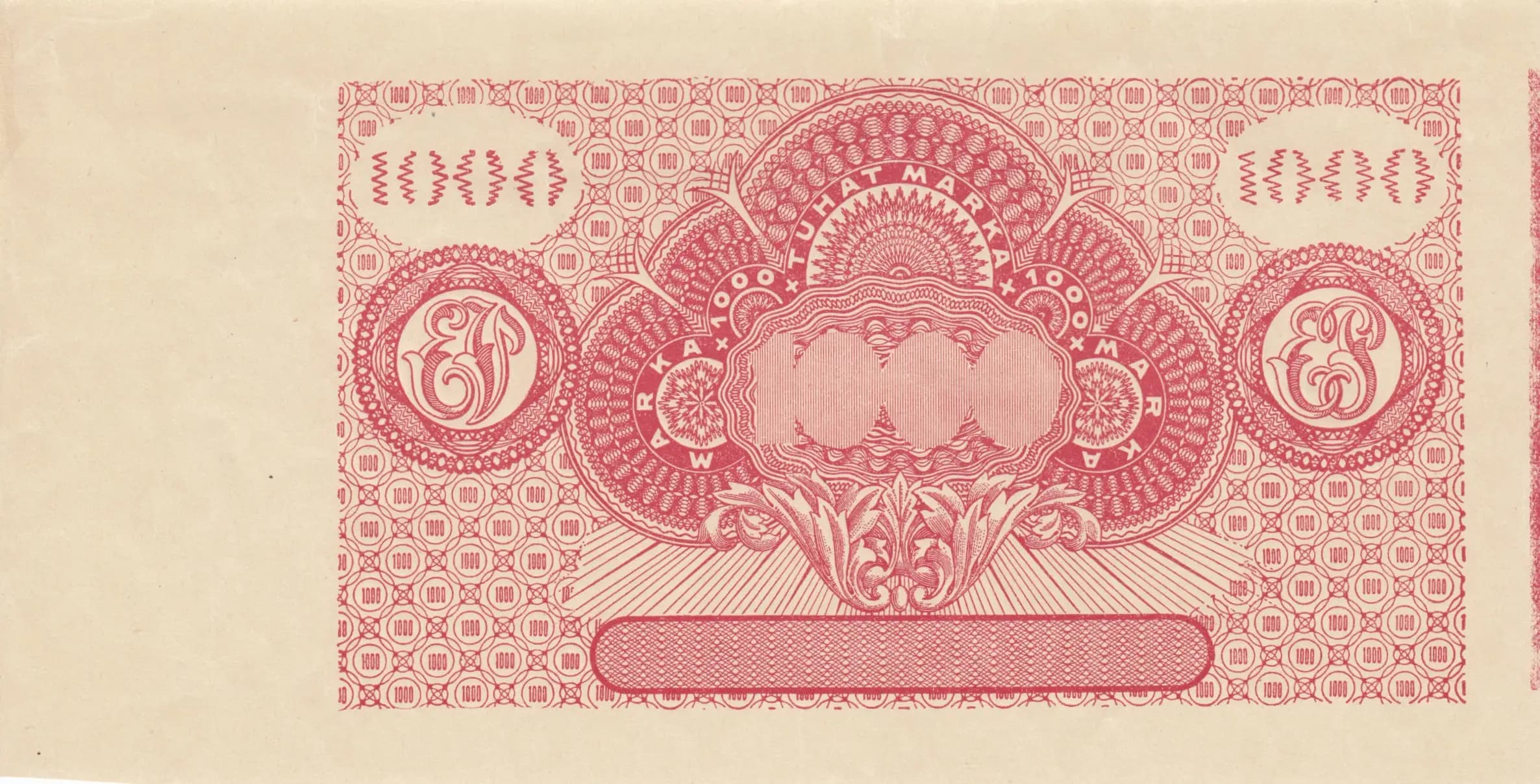
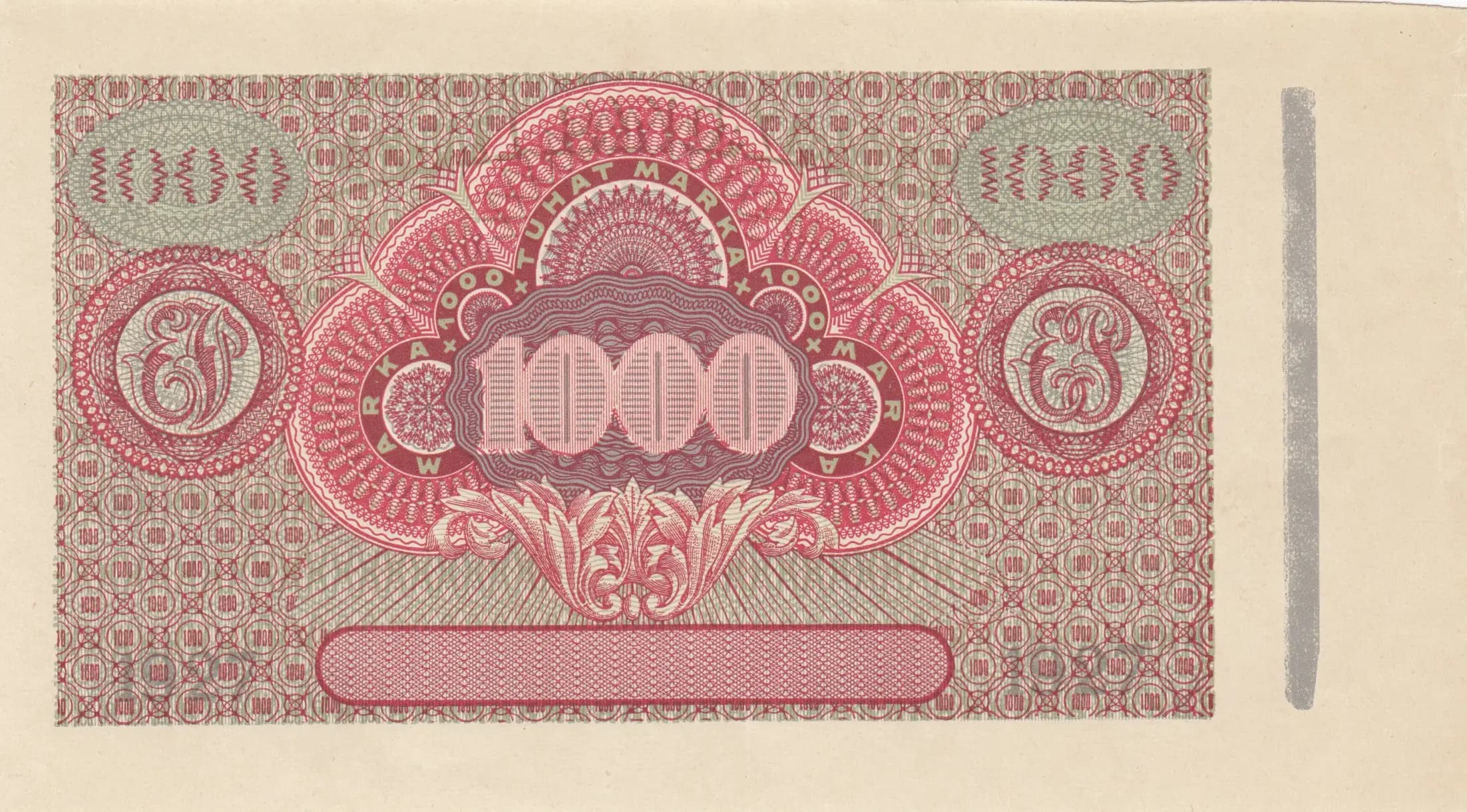
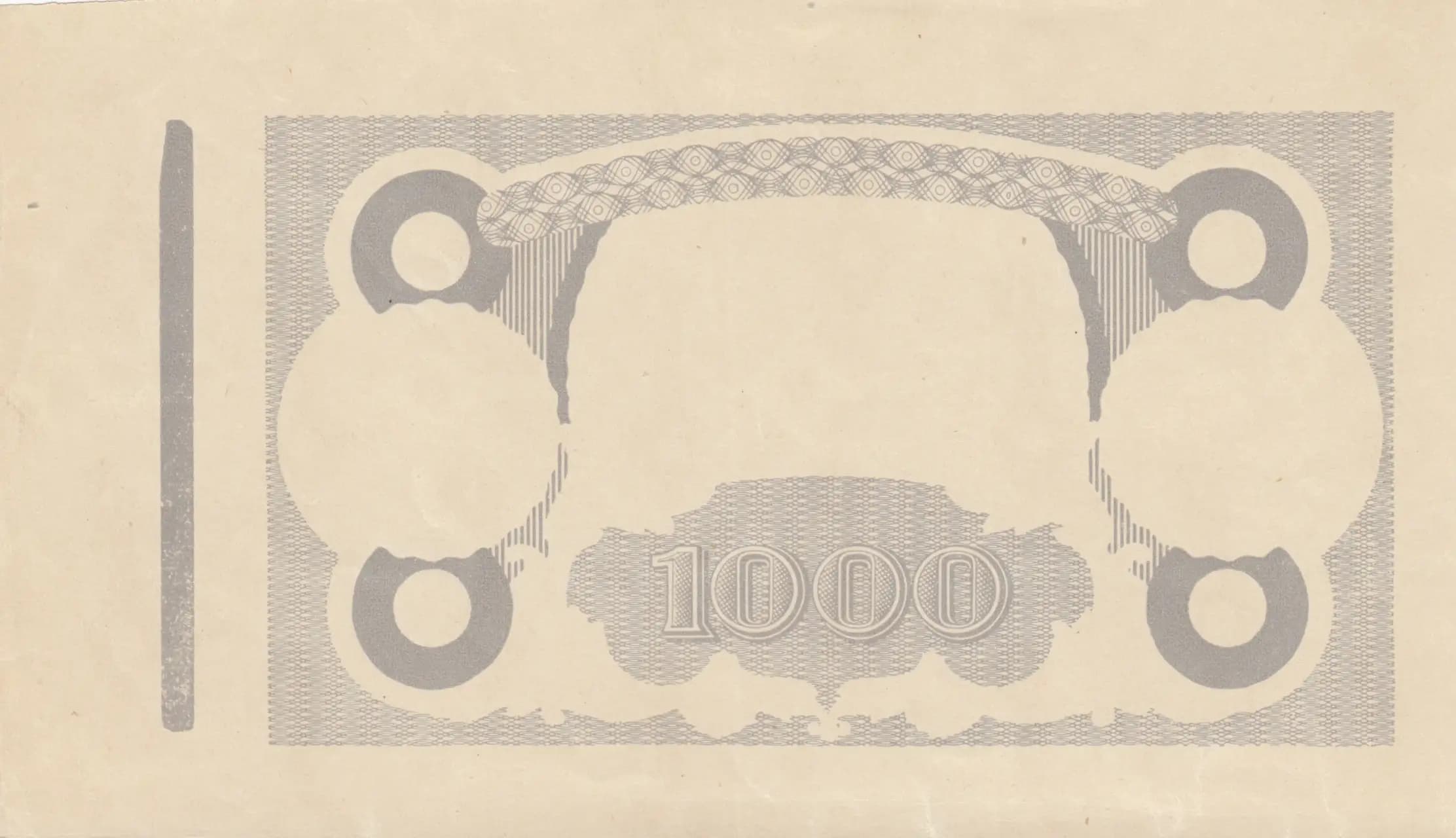
1000 marka 1927 progressive proof
About This Note
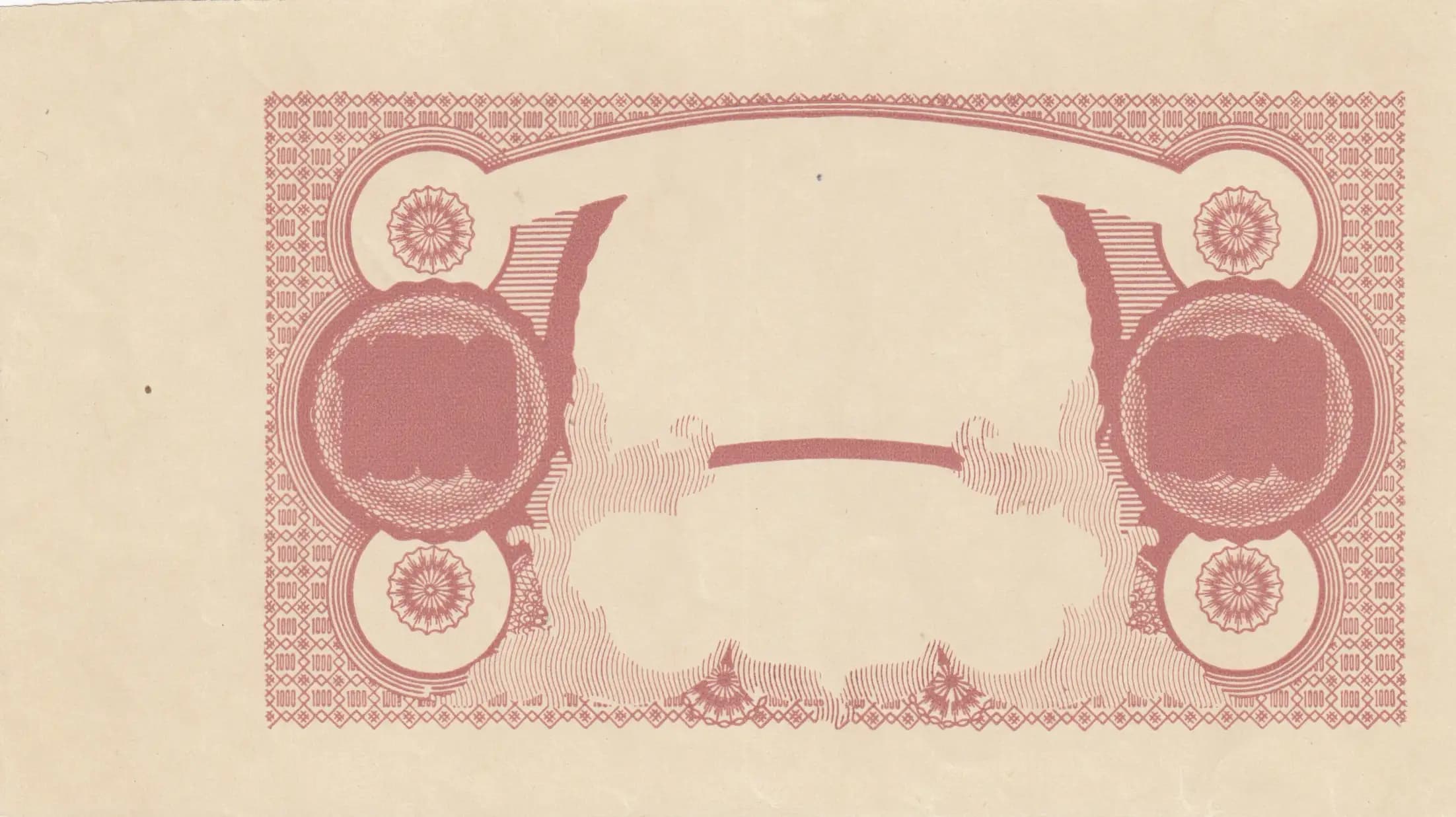
This is an exceptional progressive proof of Estonia's 1000 marka note from 1927, captured in pristine uncirculated condition. The reverse displays the characteristic ornate symmetrical design with two large circular medallions featuring intricate radiating line patterns and crosshatching, flanked by smaller decorative rosette elements—all rendered in fine rose-mauve tones against cream paper. As a progressive proof (Pick P-59fpp4), this represents an intermediate stage of the engraving process, making it a highly desirable item for serious Estonia collectors and proof specialists.
Rare. This is a progressive proof (Pick P-59fpp4), not a circulation note, which significantly limits its population. Progressive proofs represent intermediate stages of the engraving and printing process and were produced in minimal quantities, typically retained for archival or quality control purposes rather than released into circulation. The specific designation 'fpp4' (fourth stage of progressive proof) combined with the UNC condition grade makes this a specialized collector's item with limited comparable sales data. Estonian inter-war notes are moderately collected but progressive proofs of this denomination are substantially scarcer than circulation issues.
The 1927 1000 marka denomination was issued during Estonia's inter-war period as an independent republic, following the nation's establishment in 1918. The elaborate decorative engraving style—evident in the geometric borders, radiating medallions, and fine line work—reflects the sophisticated security printing standards of the era and the Treasury of Estonia's commitment to producing currency that asserted national sovereignty and resisted counterfeiting.
The reverse of this progressive proof features a highly symmetrical, ornamental composition dominated by two large circular medallions positioned left and right of center. Each medallion contains elaborate radiating line patterns with intricate crosshatching executed in the finest engraving technique. Above and below these primary circles are smaller four-petal rosette or flower-like ornamental designs. The entire composition is framed by a complex geometric border pattern at top and bottom featuring repeating diamond and rectangular motifs. This decorative approach—without figurative portraiture or specific landmark imagery on this proof stage—emphasizes anti-counterfeiting measures through pure ornamentation and technical engraving mastery. The design likely incorporated the Port of Tallinn/Reval imagery on completed circulation versions.
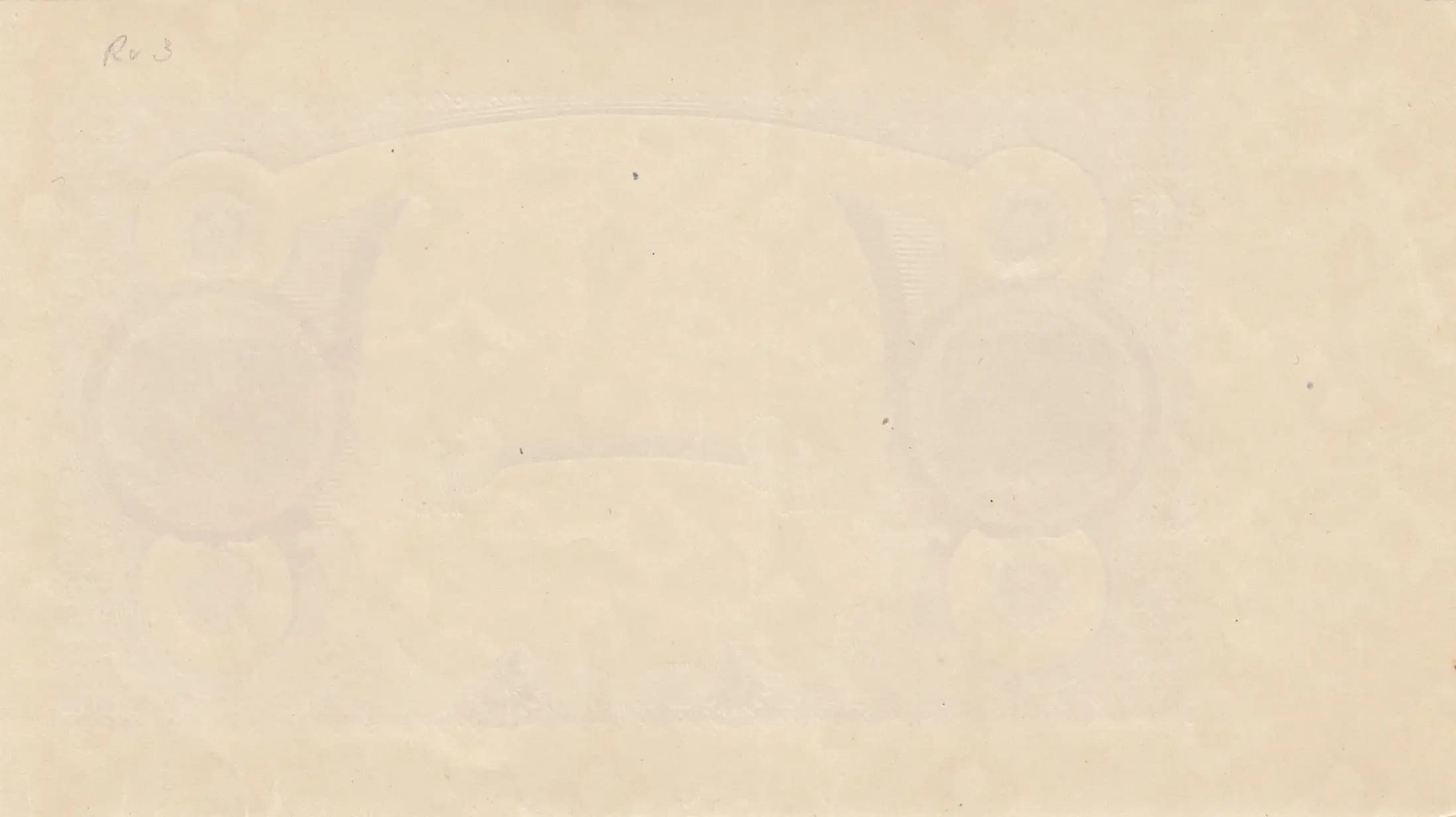
Back side: Handwritten archival notation 'R2.3' appears in pencil or light ink in the upper left corner of the verso/backing material. This represents a cataloging or reference number applied during archival preservation, not an original inscription on the banknote itself. No printed inscriptions are visible on the progressive proof stage shown.
Intaglio/engraving process, executed as a progressive proof stage. The fine line engraving, crosshatching patterns, and geometric detail work are characteristic of steel plate intaglio printing. The progressive proof format indicates this represents an intermediate engraving stage before the final color separation and production runs. The note was likely produced by a specialized European security printer, consistent with Estonian Treasury standards of the 1920s.
This is cataloged specifically as Pick P-59fpp4, indicating the fourth progressive proof stage of this design. Progressive proofs were produced in distinct stages during the engraving process, with each stage showing incremental completion of the design elements. The 'pp4' designation distinguishes this from earlier proof stages (pp1, pp2, pp3) and from the final circulation printing. The archival notation 'R2.3' on the verso suggests this piece has institutional provenance and was preserved in a systematic collection, possibly a central bank or security printer's archive.