1000 marka 1927 progressive proof
About This Note
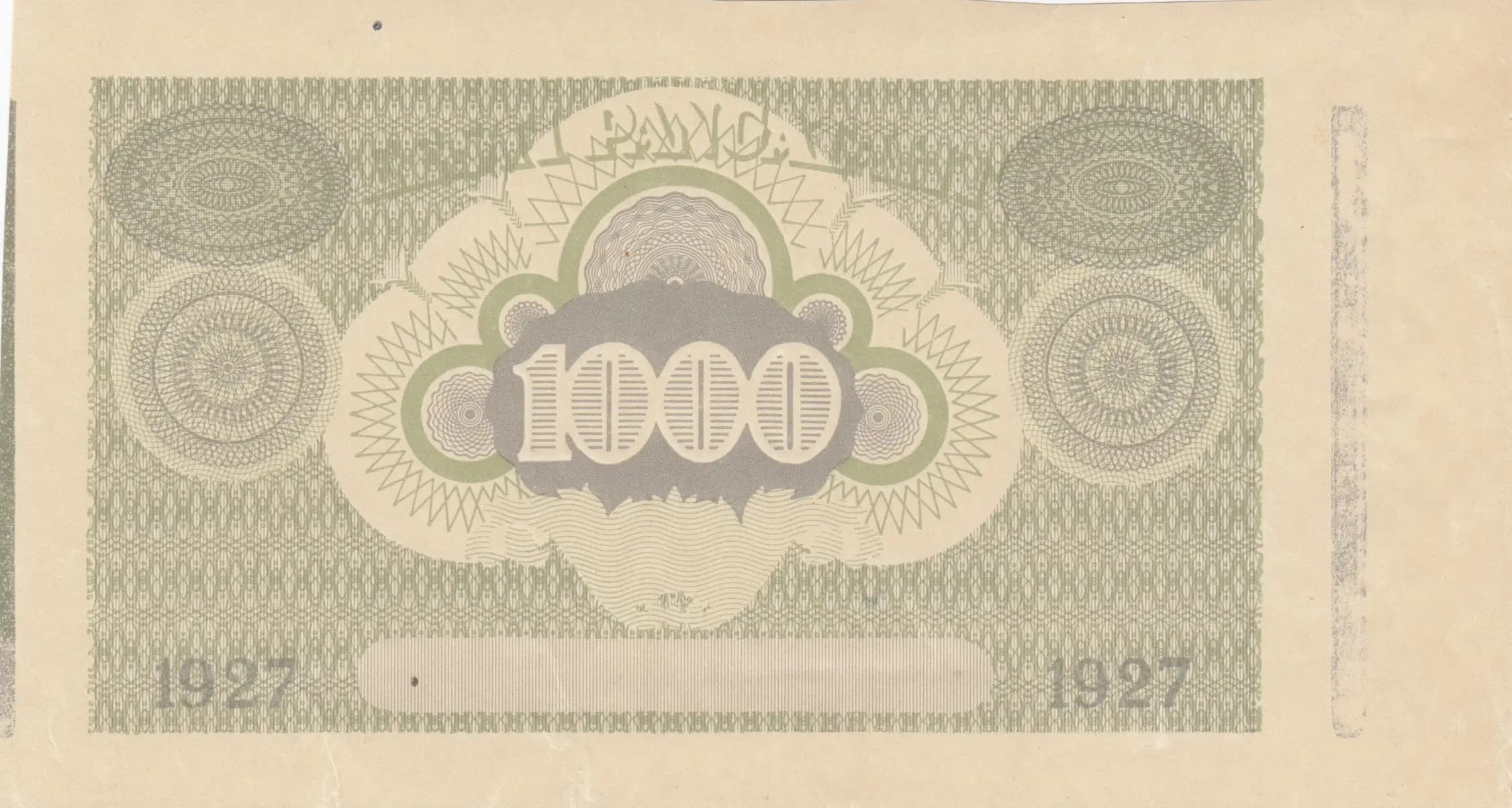
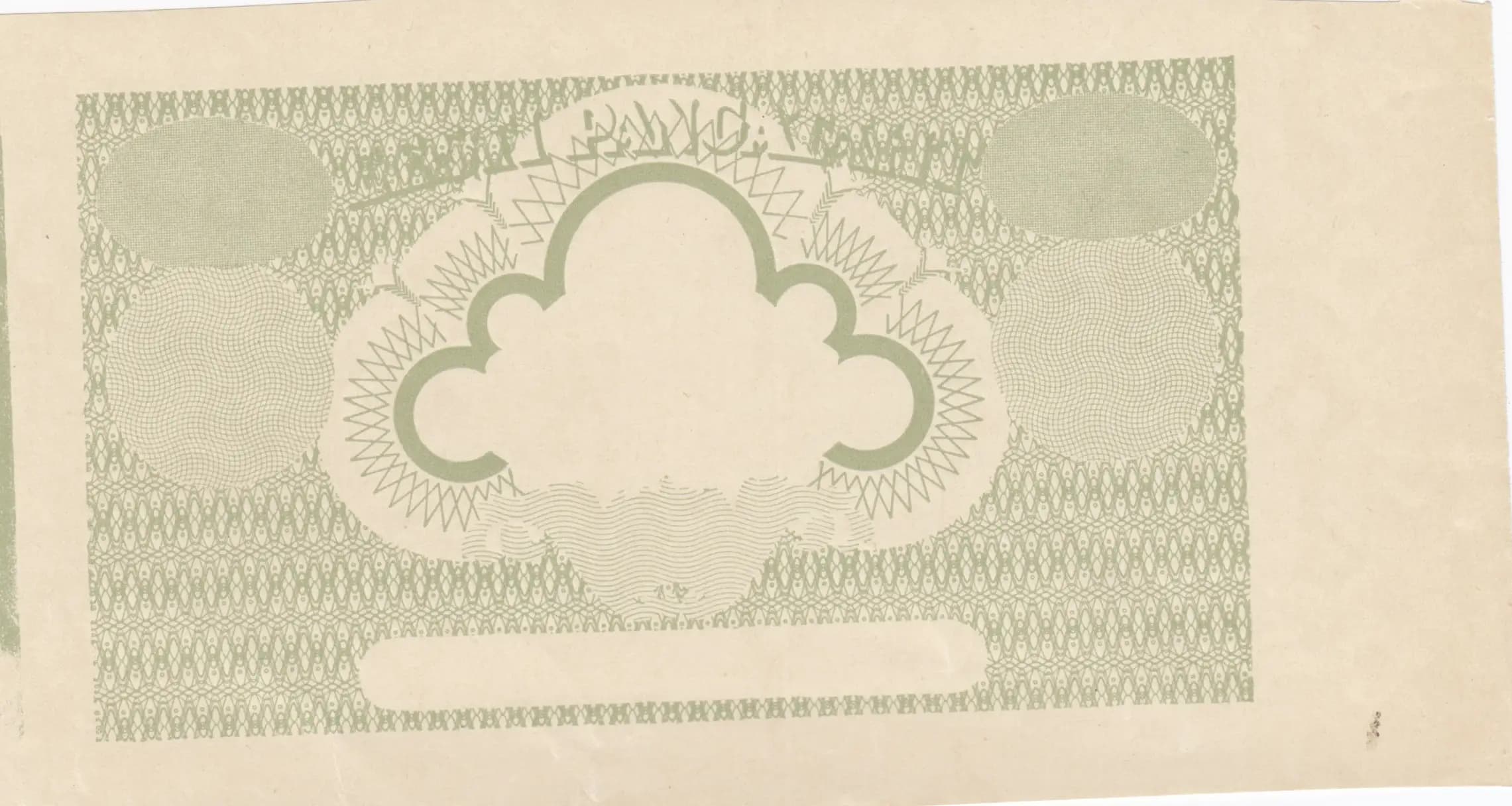
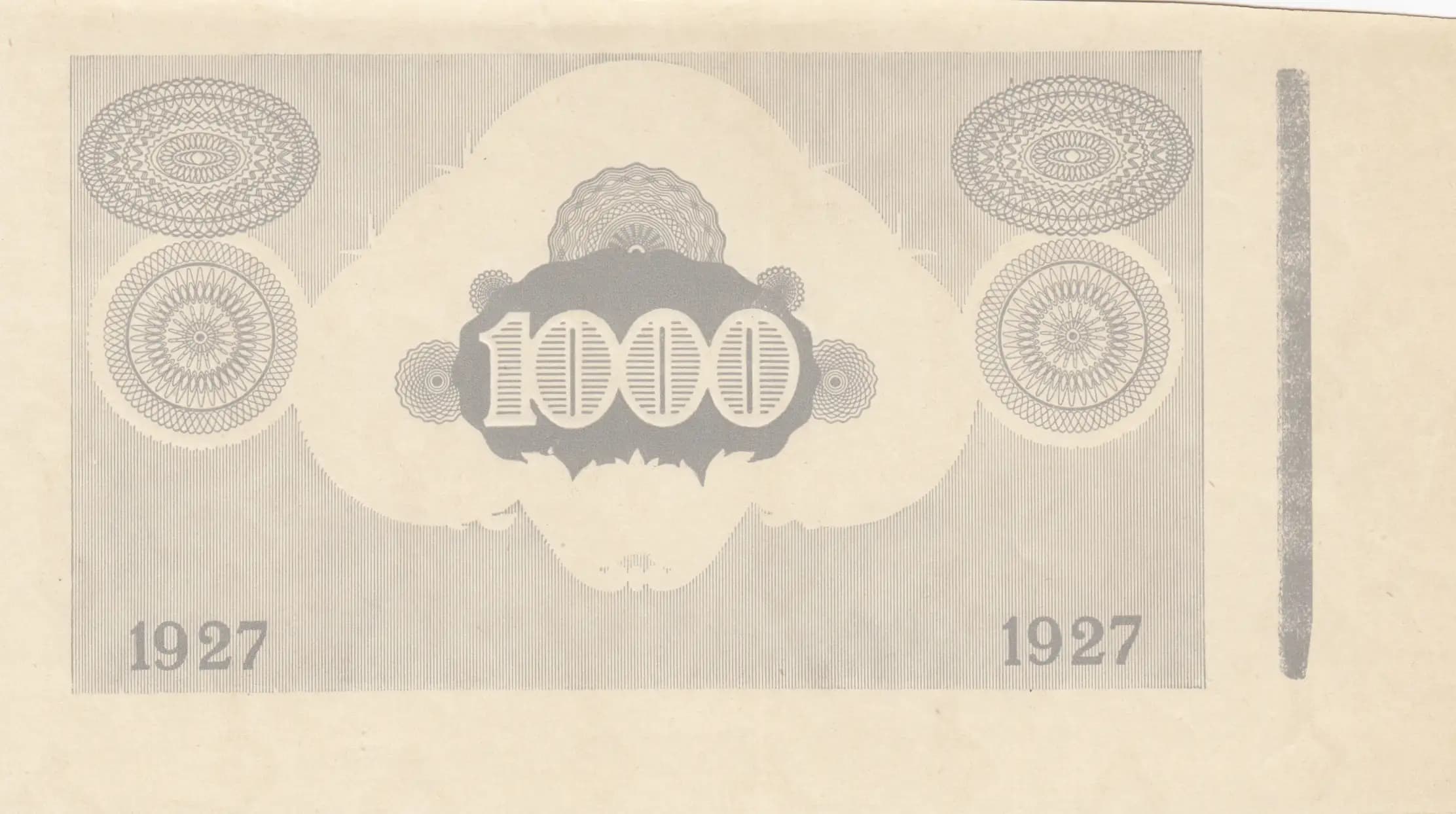
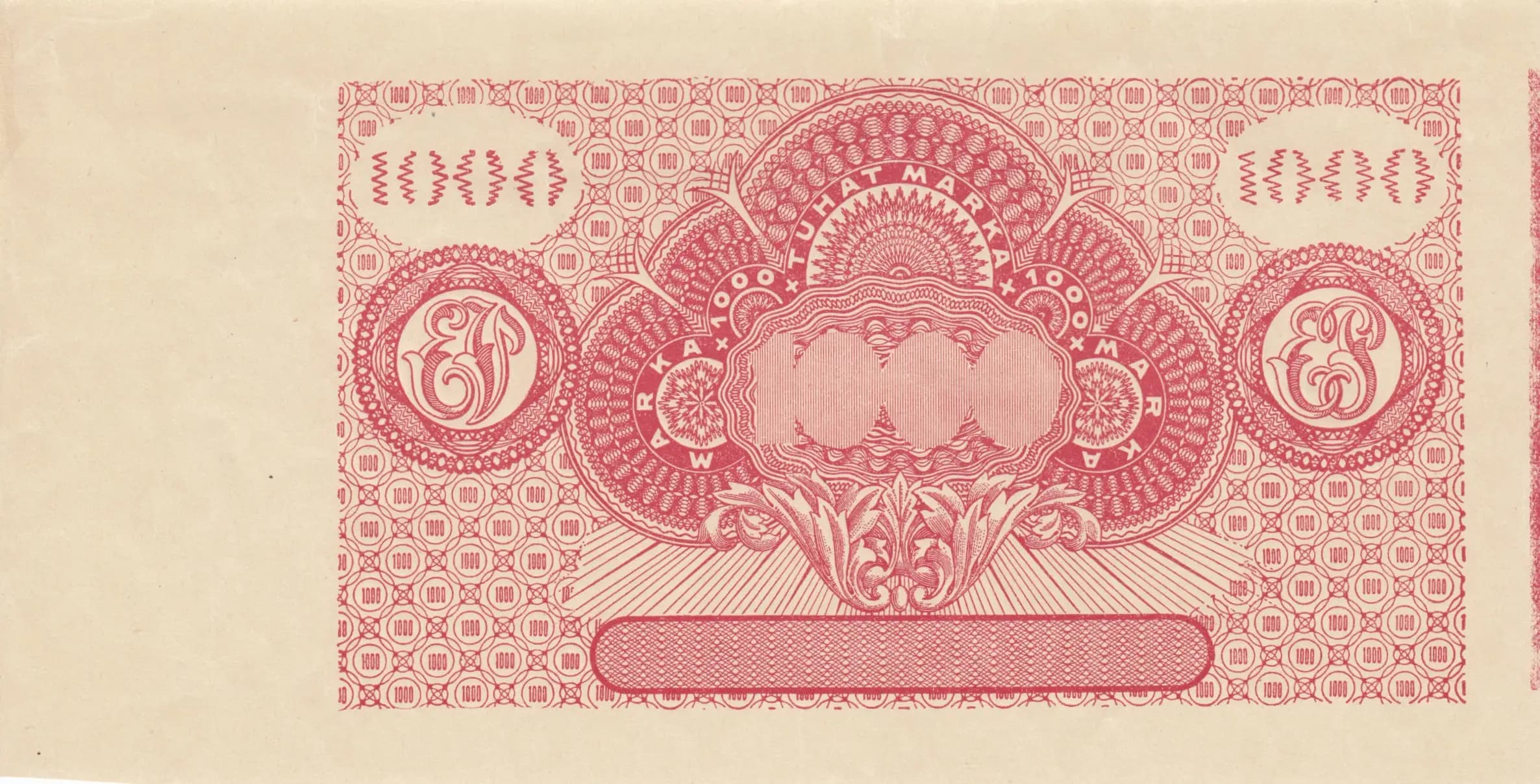
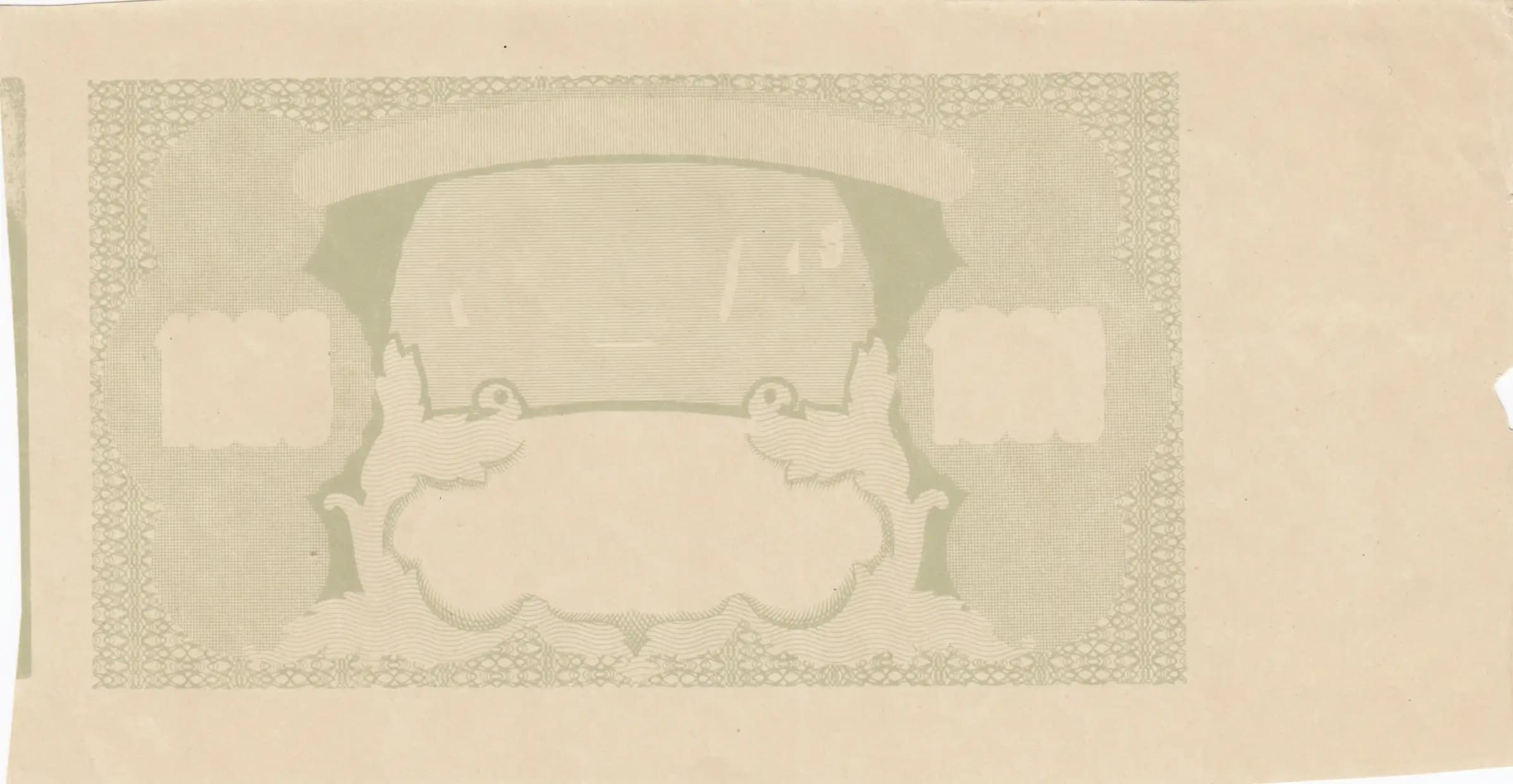
This is a progressive proof of the Estonian 1000 marka from 1927, representing an intermediate stage in the banknote design and production process. The reverse displays an elaborate ornamental composition rendered in pale green with intricate geometric borders and cloud-like decorative elements in excellent condition with age-appropriate patina. As a progressive proof rather than a circulated note, this represents a significant artifact for collectors of Estonian currency and printing history.
Rare. Progressive proofs—particularly those from early 20th century Estonian currency—represent specialized production artifacts created during the design phase rather than circulated notes. The specific Pick catalog notation (P-59fpp1) indicates this is a first progressive proof state, making it a unique or very limited archival document. Estonian 1920s proofs seldom appear on the commercial market, and institutional holdings remain limited. The condition grade of UNC combined with the proof nature makes this a significant collectible for serious numismatists specializing in Eastern European or design-phase currency artifacts.
The 1927 Estonian 1000 marka was issued during the interwar period of the newly independent Estonian Republic (Eesti Vabariik), established after World War I. The ornamental design with its sophisticated border work and cloud-form elements reflects the Art Nouveau and geometric design sensibilities of 1920s European banknote production. This denomination was part of Estonia's monetary system during a period of relative stability before the economic disruptions of the 1930s.
The reverse design of this 1000 marka proof features a symmetrical, highly ornamental composition centered on a large blank shield or oval cartouche in the upper portion, flanked by elegant wing or cloud-like decorative elements rendered with fine stippling and line work. Below this is a substantial scalloped, cloud-form ornamental element occupying the lower composition. The entire design is framed by an intricate geometric and foliate border pattern. This ornamental approach—emphasizing blank cartouche space for text, surrounded by elaborate security-focused decorative work—was typical of high-denomination banknotes from this period, where the blank areas would accommodate text, value numerals, and other printed elements on the final note.
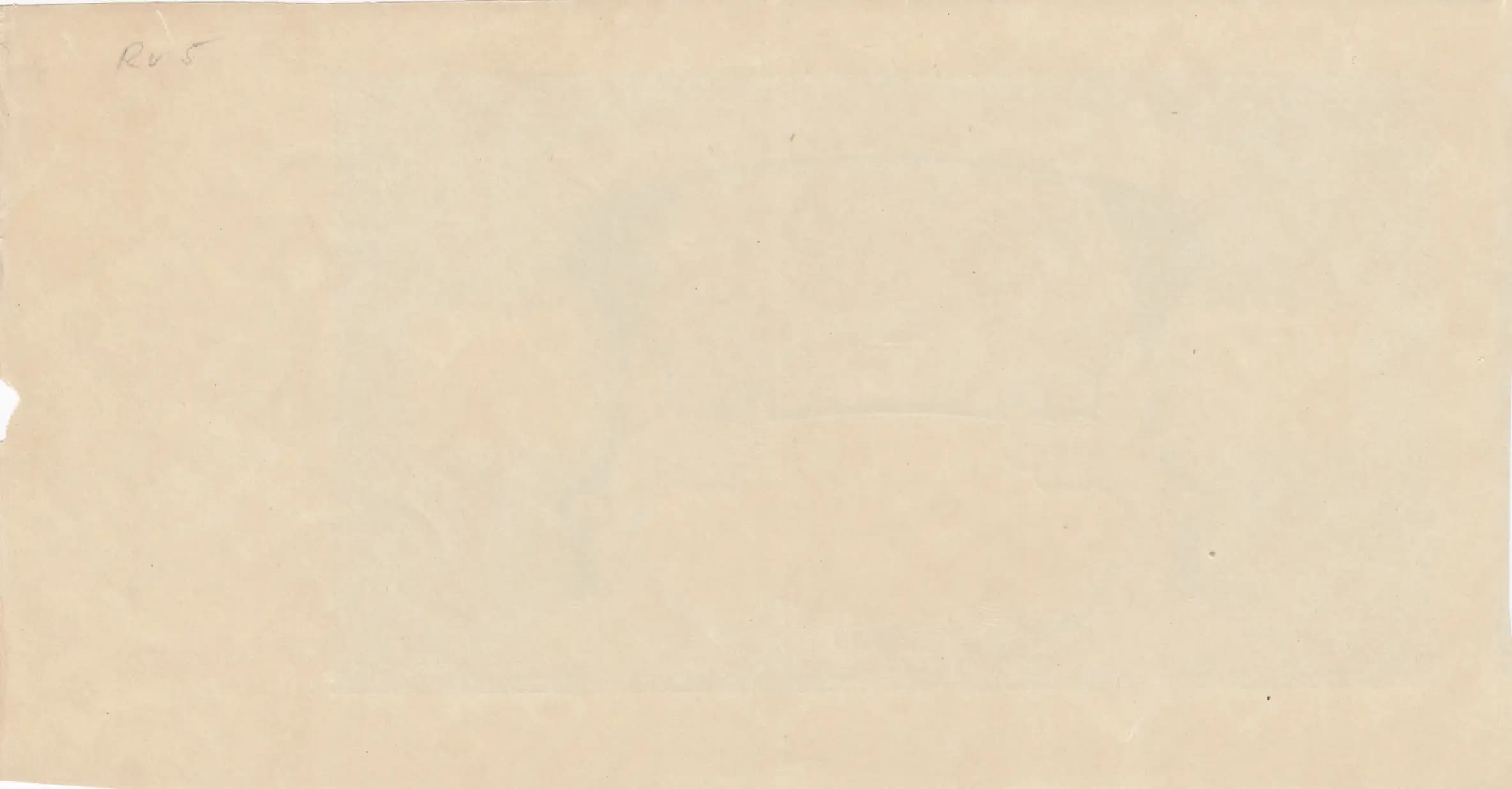
Verso notation: 'Rv 5' — Archival or catalogue designation, likely indicating this is the fifth reverse (proof) iteration or variant in the production sequence. No major denominal or issuer inscriptions are visible on the observed proof surfaces.
This progressive proof demonstrates engraved intaglio printing with extensive hand-engraved detail work. The fine line work, stippled shading, geometric border patterns, and dimensional effects visible throughout are characteristic of steel or copper plate engraving. The proof was printed on aged paper stock and shows the green monotone color associated with security printing practices of the 1920s. The technical execution suggests work by a specialized European security printer, likely Reichsdruckerei or a comparable institution engaged by the Estonian Treasury.
This is identified as P-59fpp1—the 'fpp1' designation indicates it is the first progressive proof state of Pick 59. Progressive proofs typically exist in multiple progressive states showing different stages of design completion. The 'Rv 5' notation on the verso suggests this may be the fifth reverse variant attempted during design development. Without access to other proof states or the obverse proof, the complete progression cannot be determined, but archival numbering suggests multiple iterations exist or existed in institutional collections.