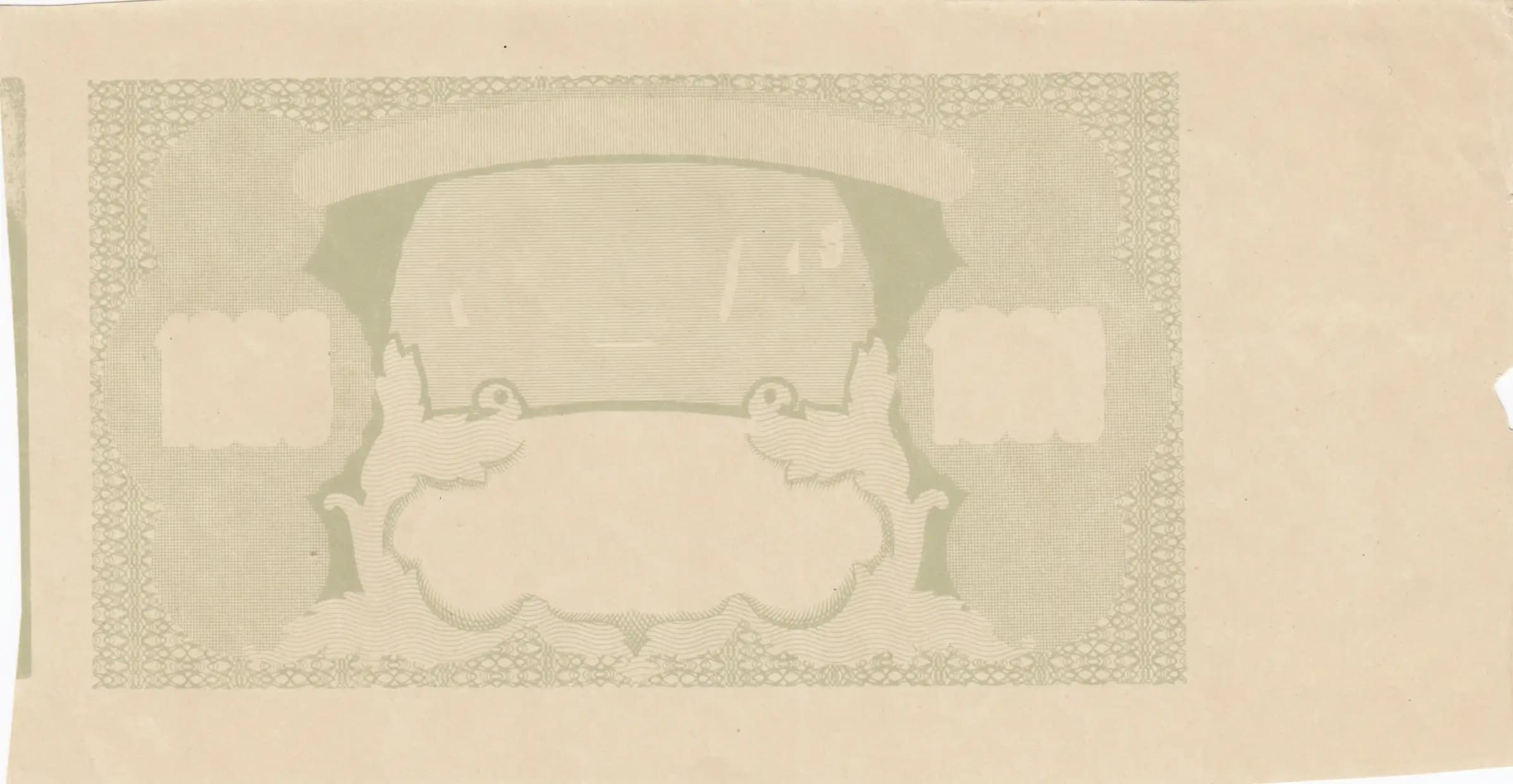
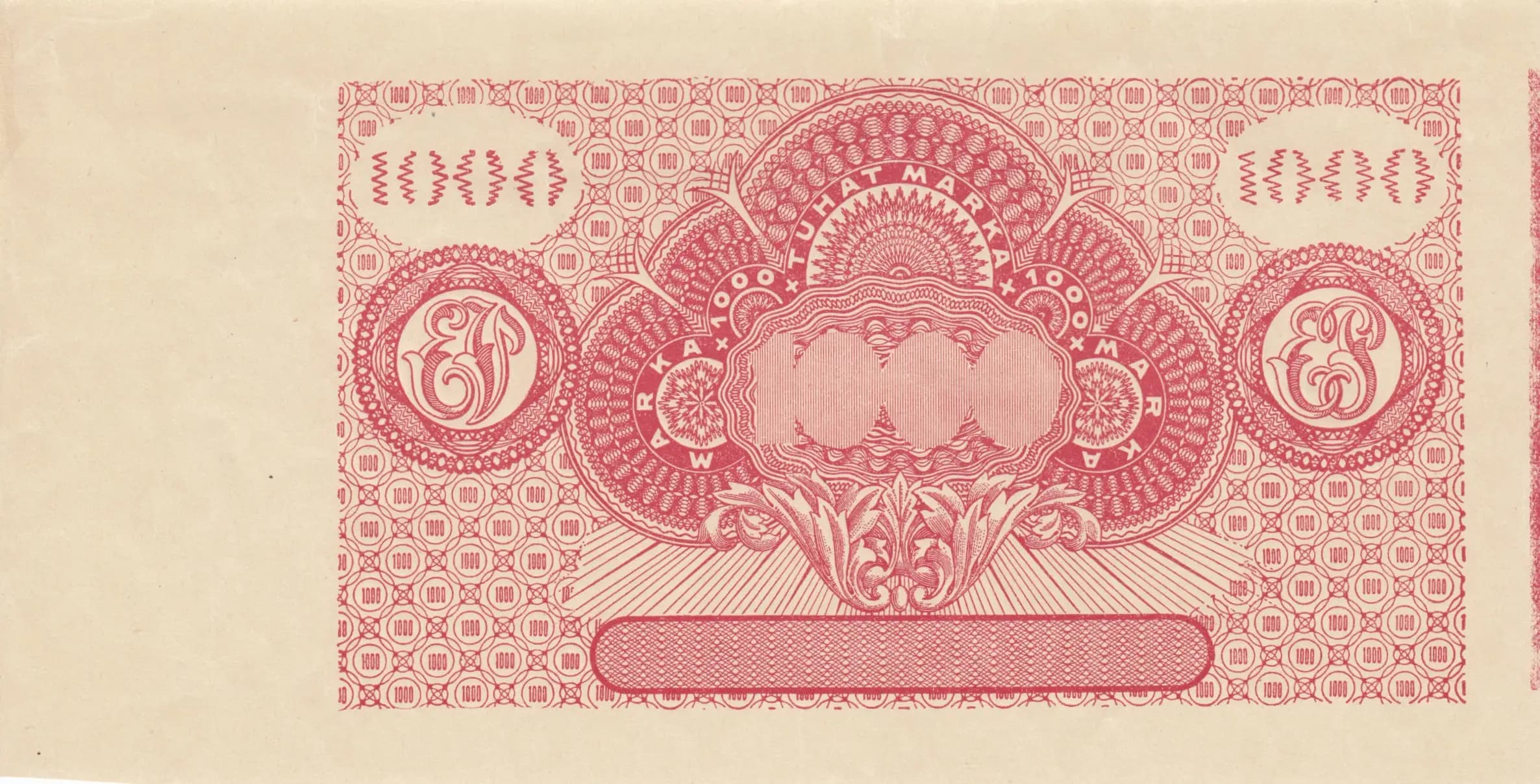
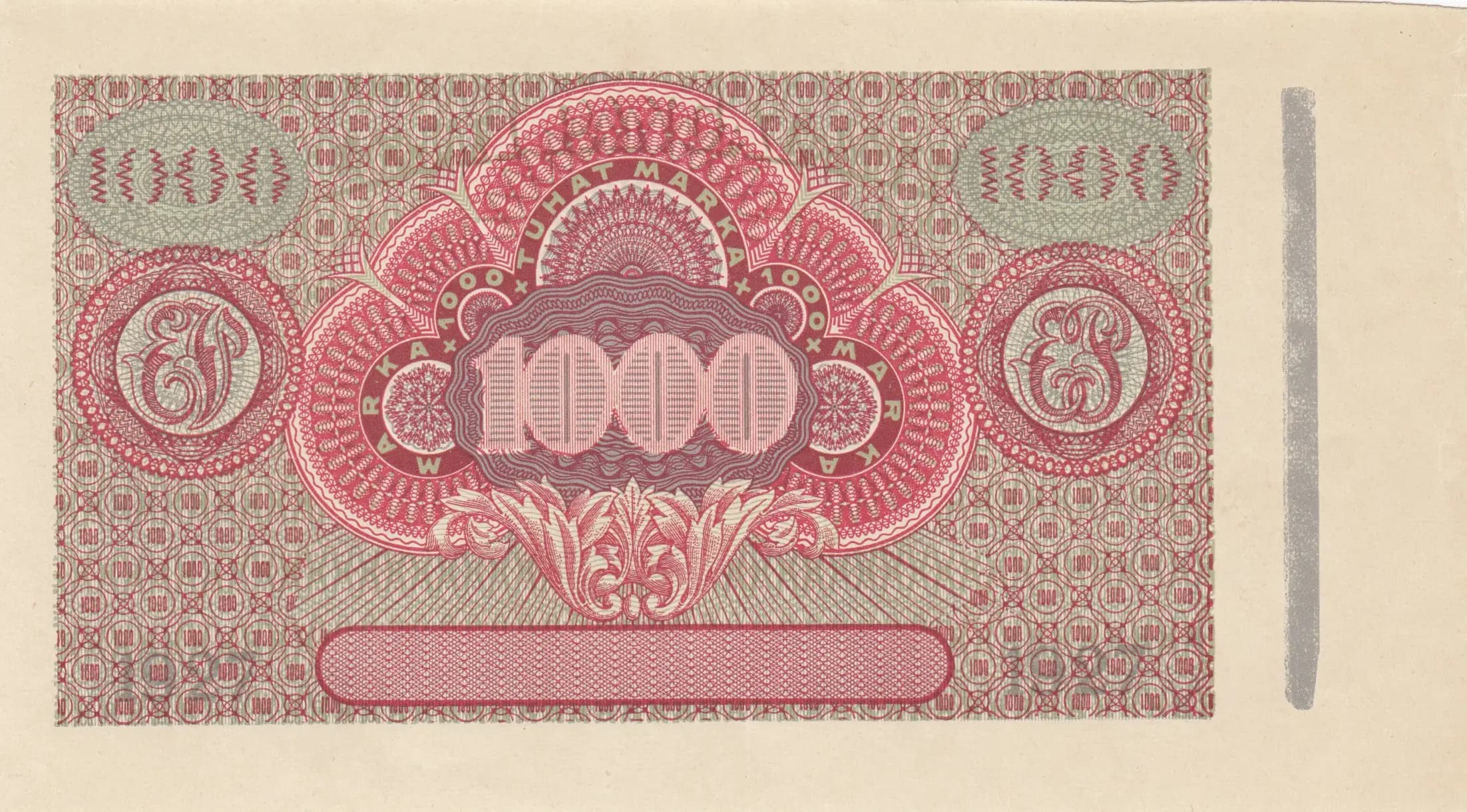
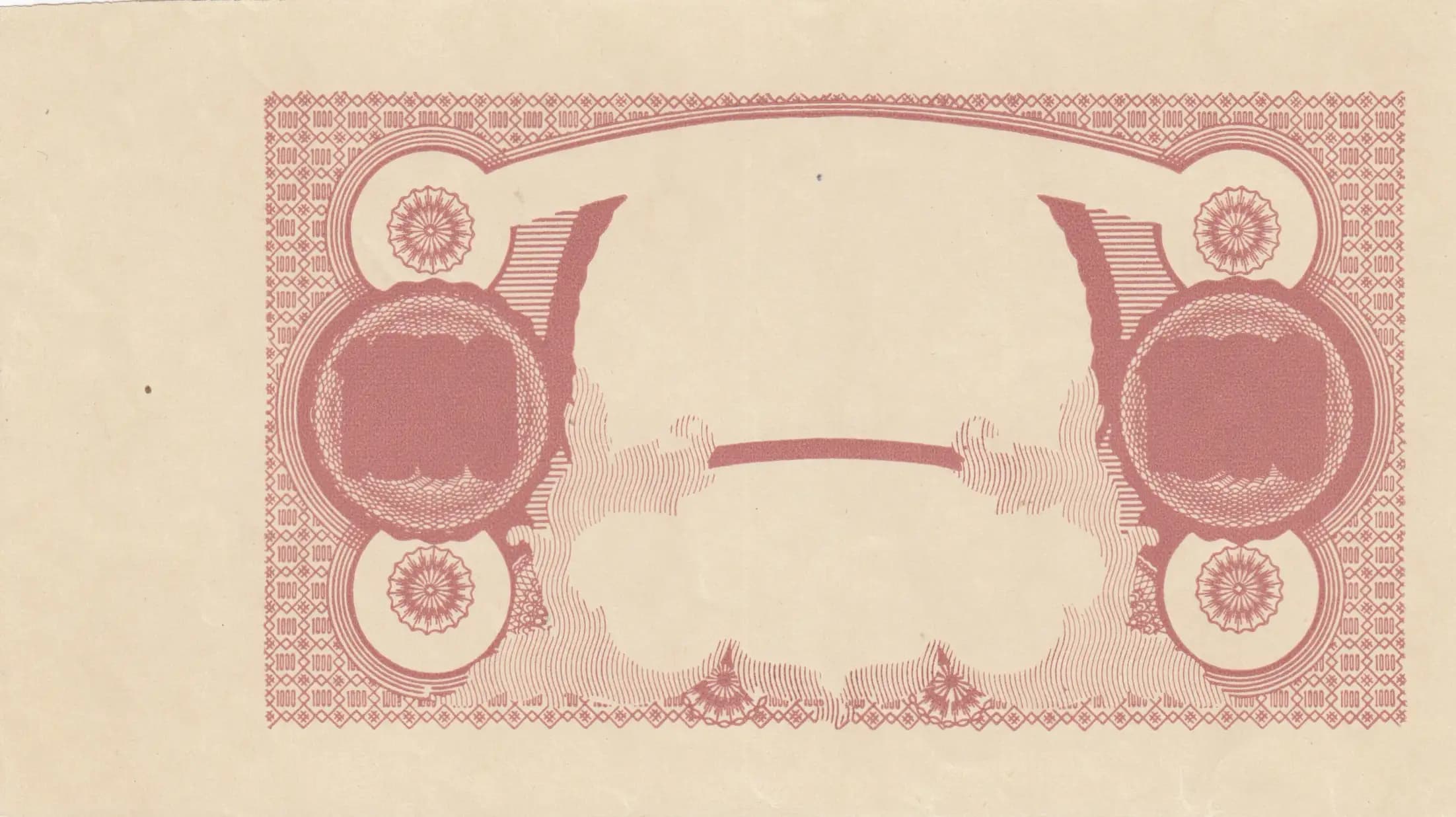
1000 marka 1927 progressive proof
About This Note
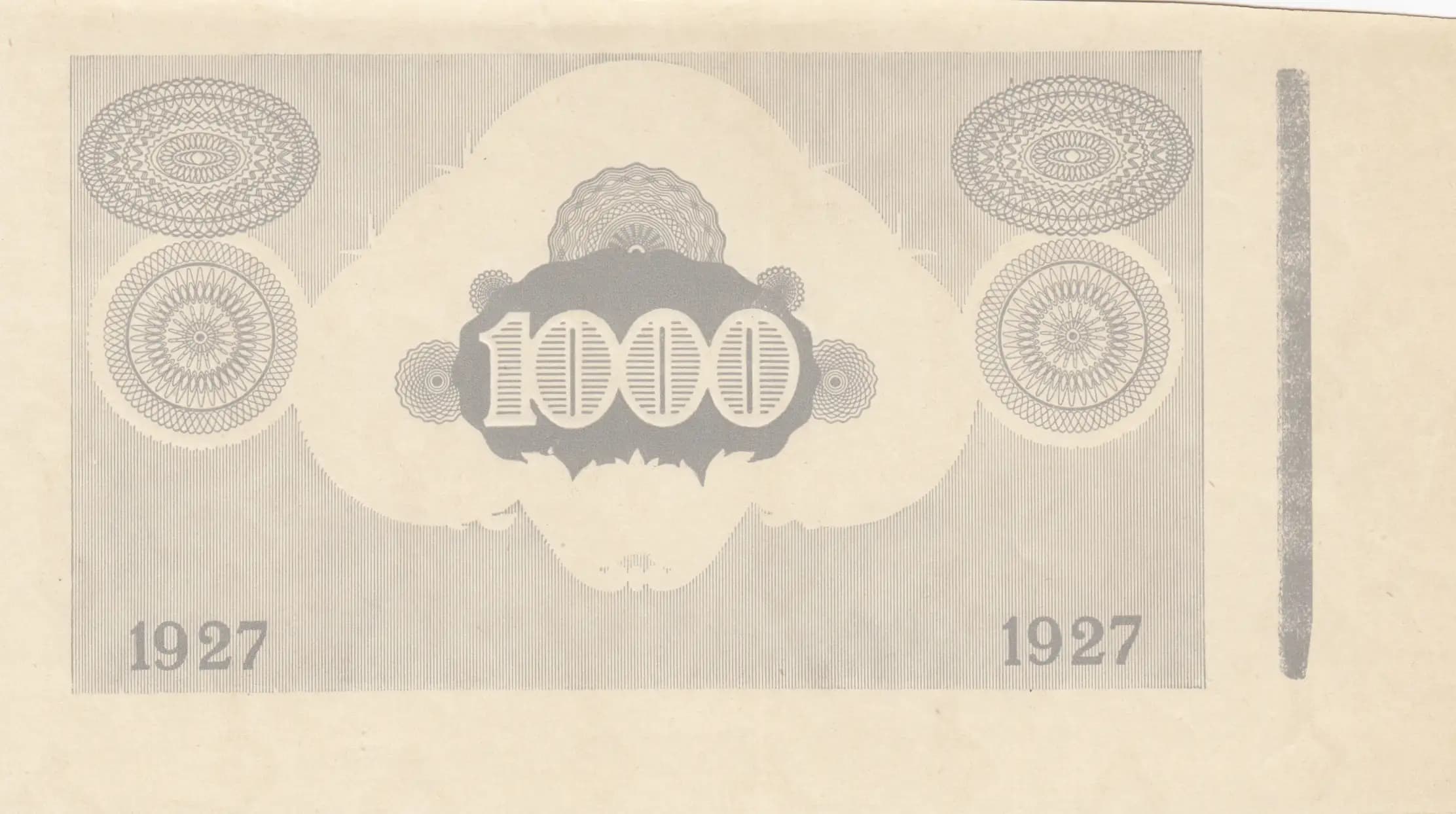
This is a 1000 Marka progressive proof from Estonia's 1927 banknote series, presented in pristine uncirculated condition. The back side displays an exceptionally intricate symmetrical design centered around the denomination in an ornamental cartouche, flanked by four circular rosette medallions rendered in fine-line engraving with geometric and floral patterns. As a progressive proof rather than a circulated note, this represents an important stage in the banknote production process, making it particularly valuable to both Estonian currency specialists and banknote engraving historians.
Rare. Progressive proofs represent a tiny fraction of banknote production, created as quality-control documentation rather than for circulation. They were typically retained by the Treasury and security printers for archival purposes, with very few entering the collector market. The specific Pick catalog designation (P-59fpp12) indicates this is cataloged as a progressive proof variant, further restricting availability. The uncirculated condition and archival presentation (with backing sheet) suggest institutional preservation, adding to its research and collector value.
The 1927 Estonian 1000 Marka issue was produced during the interwar period of the newly independent Estonian Republic (established 1918), representing the nation's efforts to establish a modern, secure currency with advanced anti-counterfeiting measures. The elaborate decorative design with its fine-line engraved security patterns reflects the technological sophistication employed by early 20th-century European security printers to protect the young nation's financial credibility. The archival presentation of this progressive proof demonstrates the careful documentation of the banknote production process by the Estonian Treasury.
The reverse design is a masterpiece of banknote security printing, featuring a centrally positioned ornamental cartouche containing the denomination '1000' in large numerals. The composition is perfectly symmetrical with two larger circular rosette medallions positioned above the central cartouche and two slightly smaller rosettes below, each adorned with intricate geometric patterns and fine concentric linework. A subtle arched or vaulted architectural element—possibly referencing Tallinn's historic architecture or port infrastructure—frames the central denomination. The entire design is executed in dense, fine-line engraving with varying line weights creating depth and complexity, a hallmark of anti-counterfeiting measures. The year date '1927' is repeated in the bottom corners, establishing the issue date definitively. The monochromatic rendering in black line work on aged cream/beige paper creates a sophisticated, formal appearance appropriate to high-denomination currency.
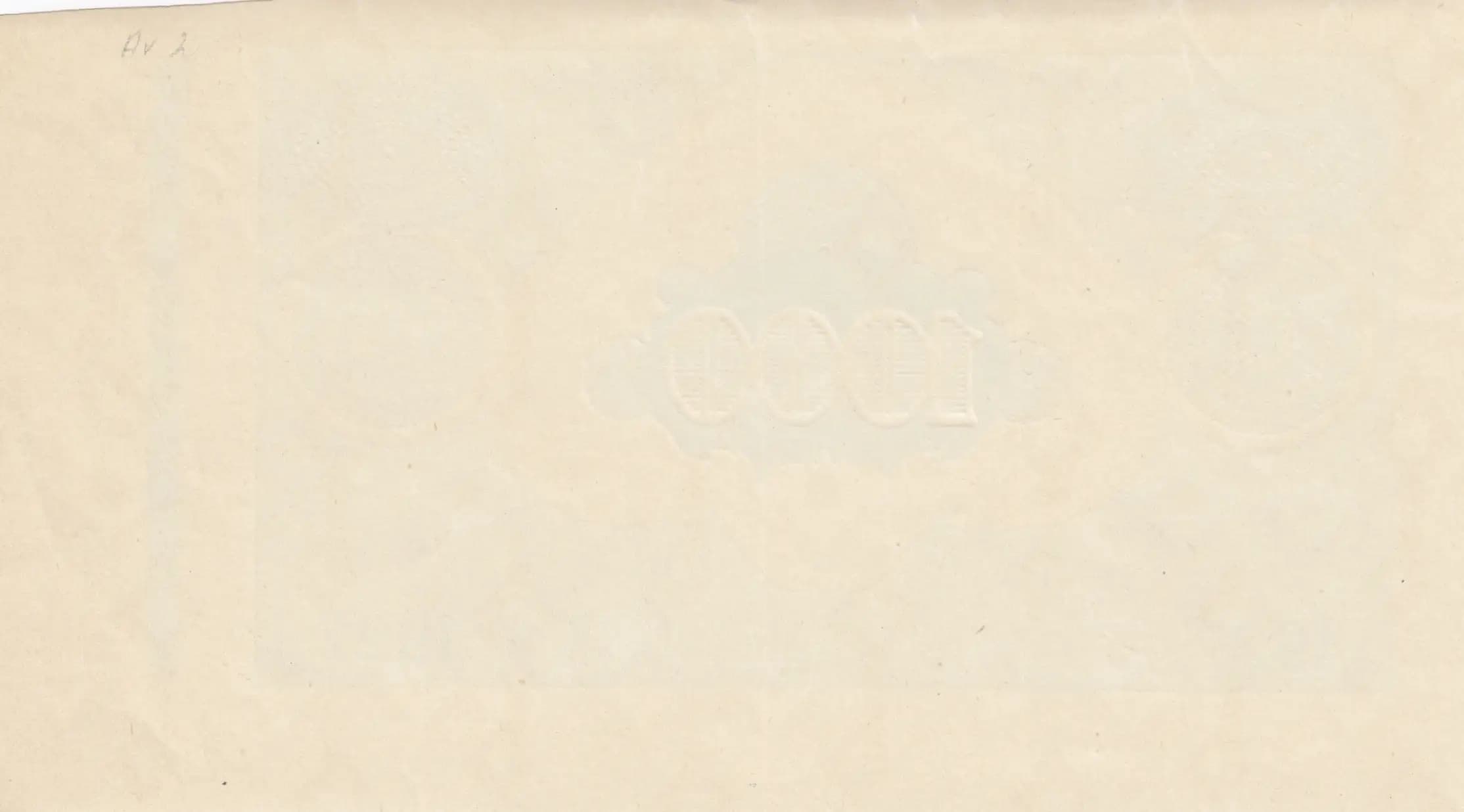
Back side inscriptions: '1000' (denomination, appears in central ornamental cartouche), '1927' (date, appears in bottom left corner), '1927' (date repeated in bottom right corner). Verso/backing sheet contains faint handwritten notation 'By i' in upper left corner, likely archival annotation.
Intaglio/Line engraving, characteristic of security banknote production. The fine-line engraved rosettes, geometric fills, and decorative cartouche demonstrate the sophisticated craftsmanship of European security printers of the 1920s. The progressive proof stage indicates this is pre-production artwork used to verify the engraved plates before full currency production commenced. The printer for Estonian currency in this period was likely a major European security house such as Giesecke+Devrient or similar firm, though specific printer attribution would require additional documentation.
This is specifically identified as P-59fpp12 in the Pick catalog system, designating it as a progressive proof (fpp = first printed proof) of the 1000 Marka issue. The notation '12' in the designation may indicate it is the twelfth stage or iteration of the progressive proof sequence. The accompanying archival backing sheet with handwritten notation suggests this proof was part of an official Treasury or security printer's archive, potentially making it a documented production sample with provenance value.