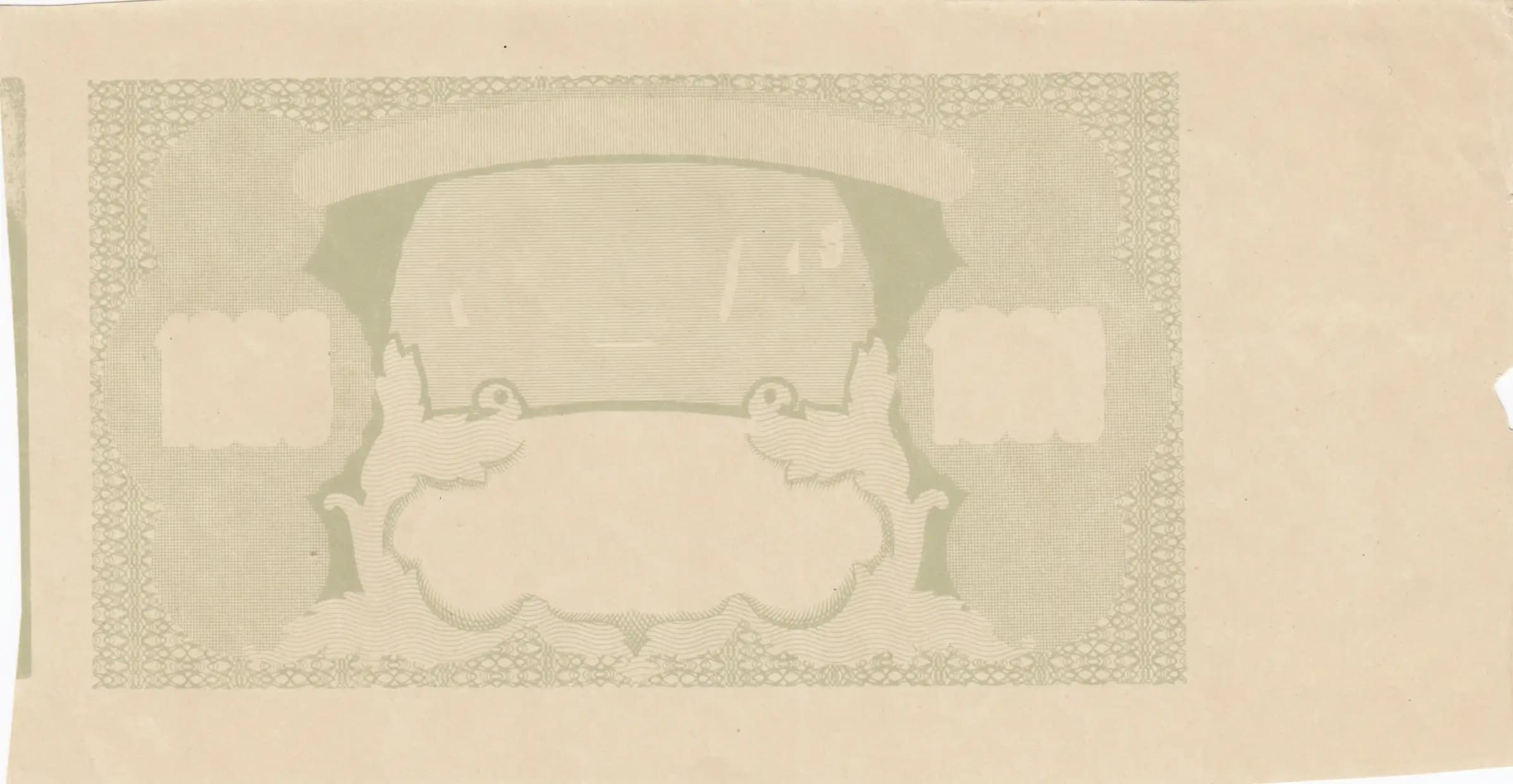
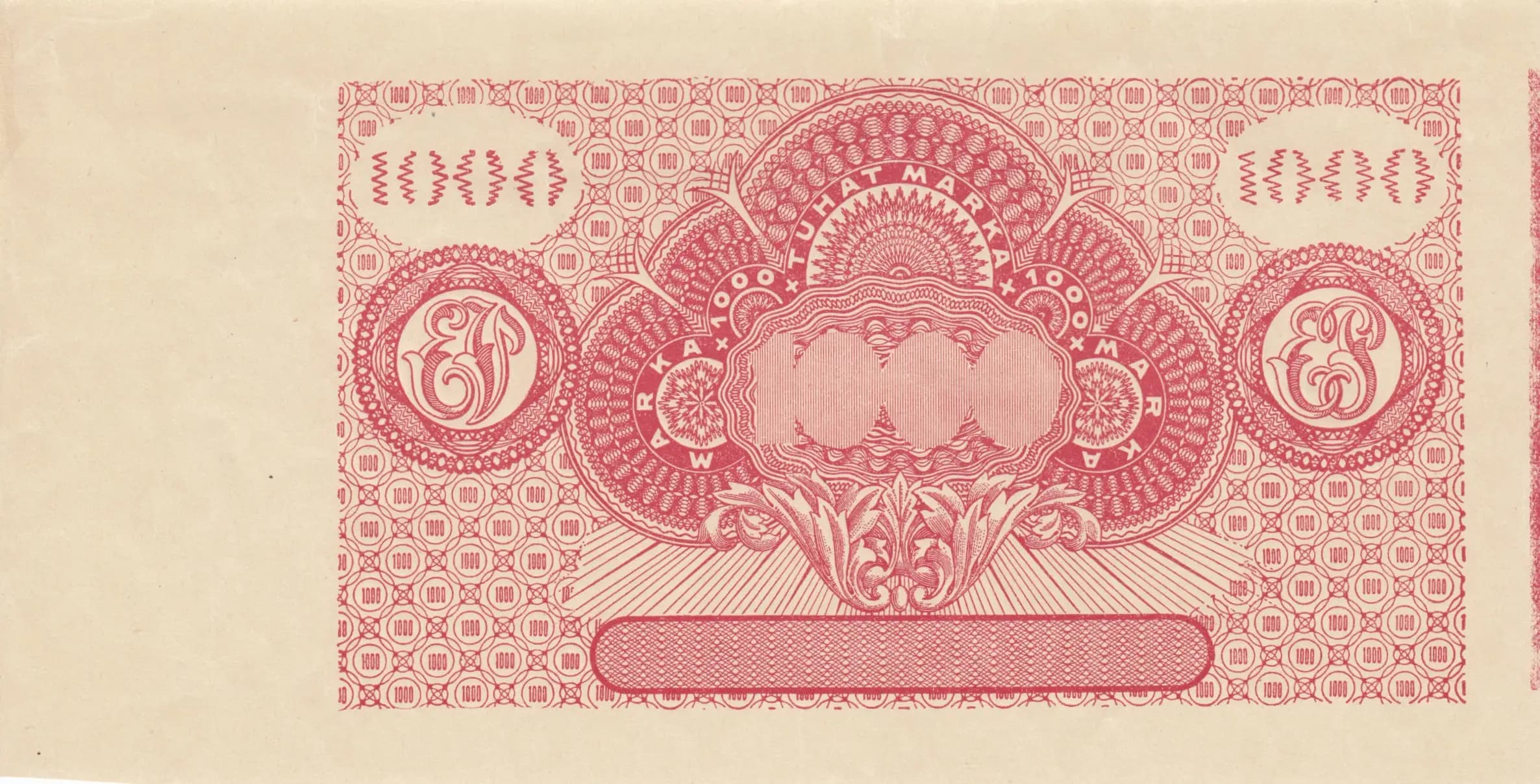
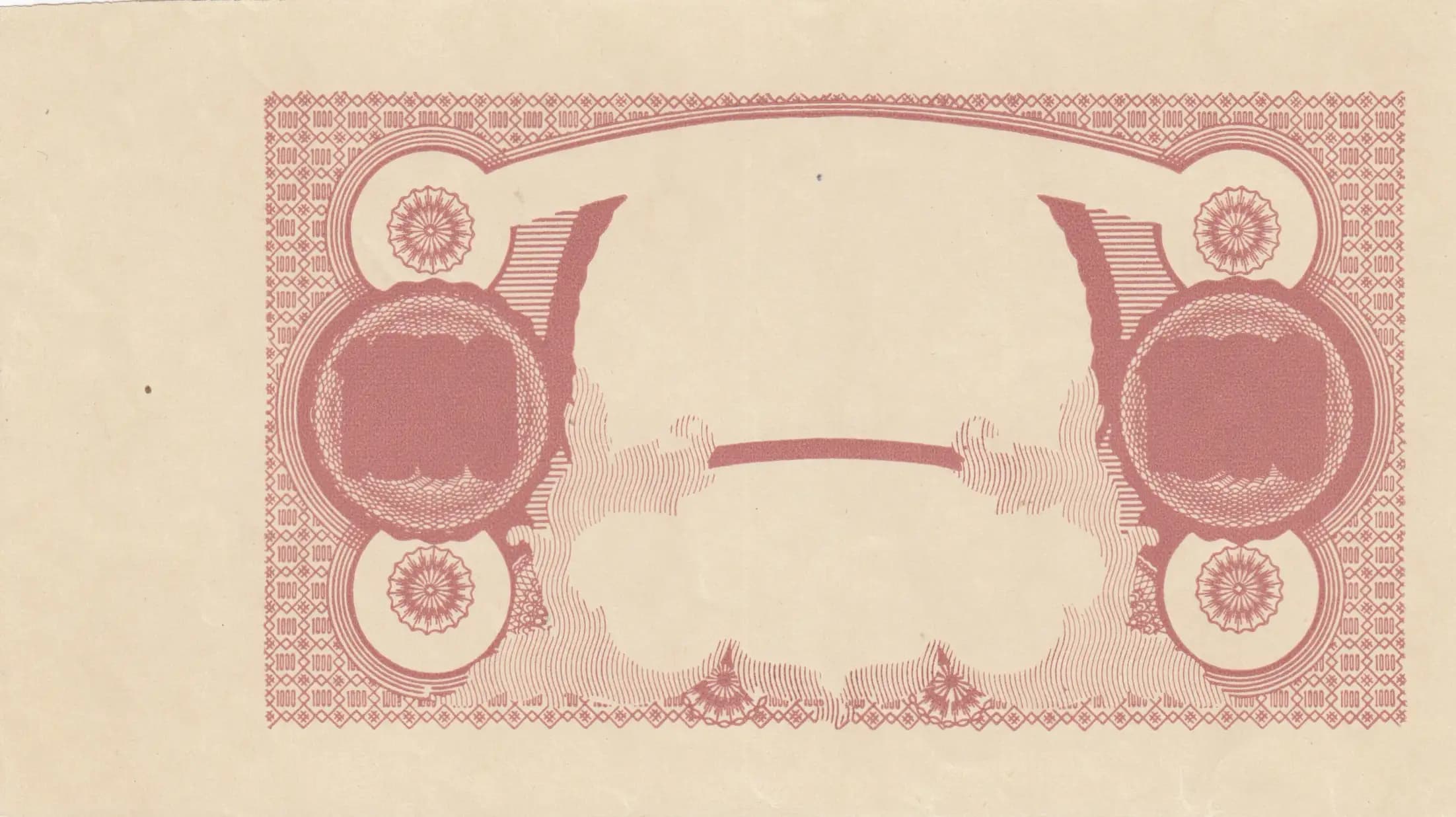
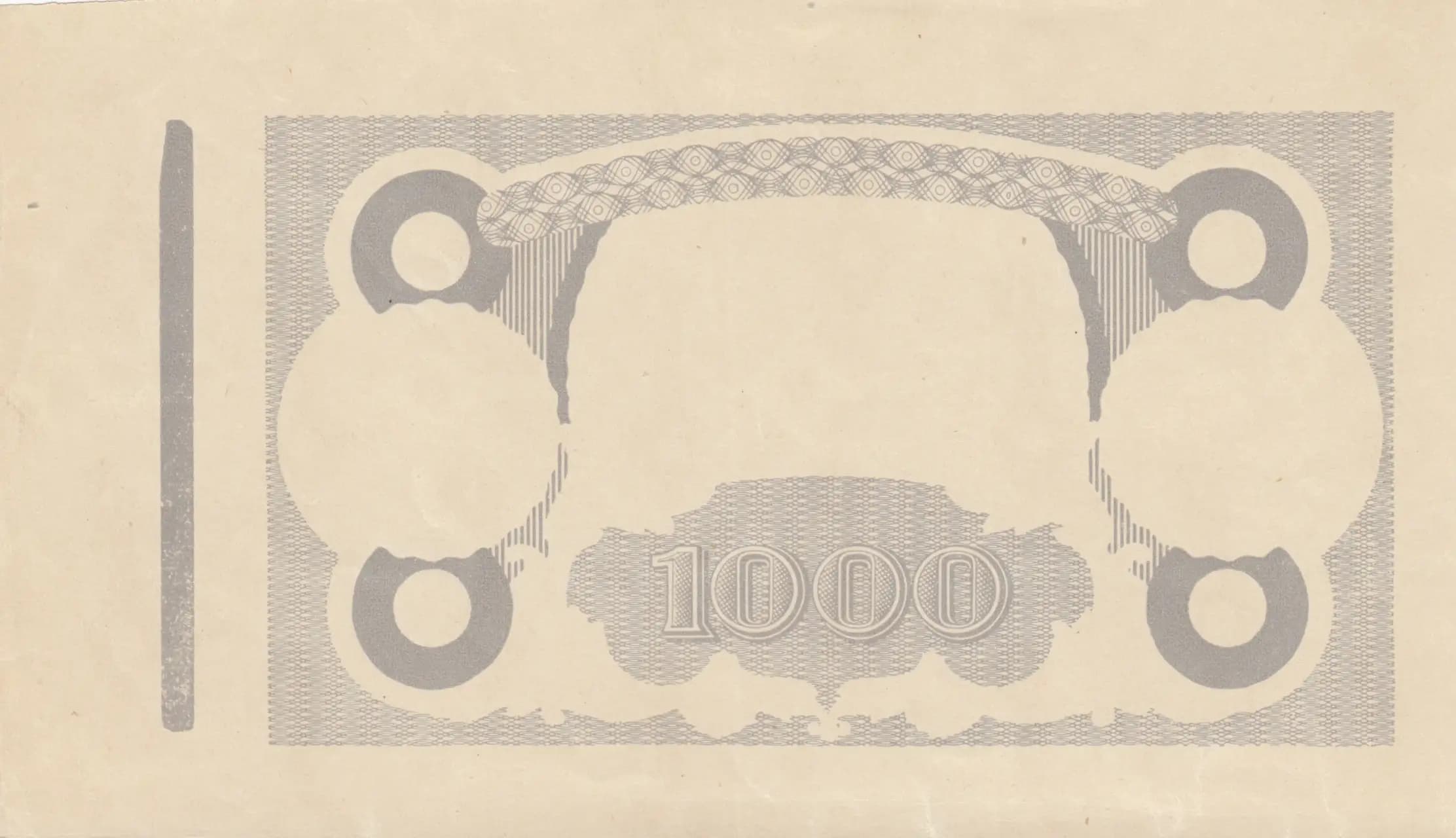
1000 marka 1927 progressive proof
About This Note
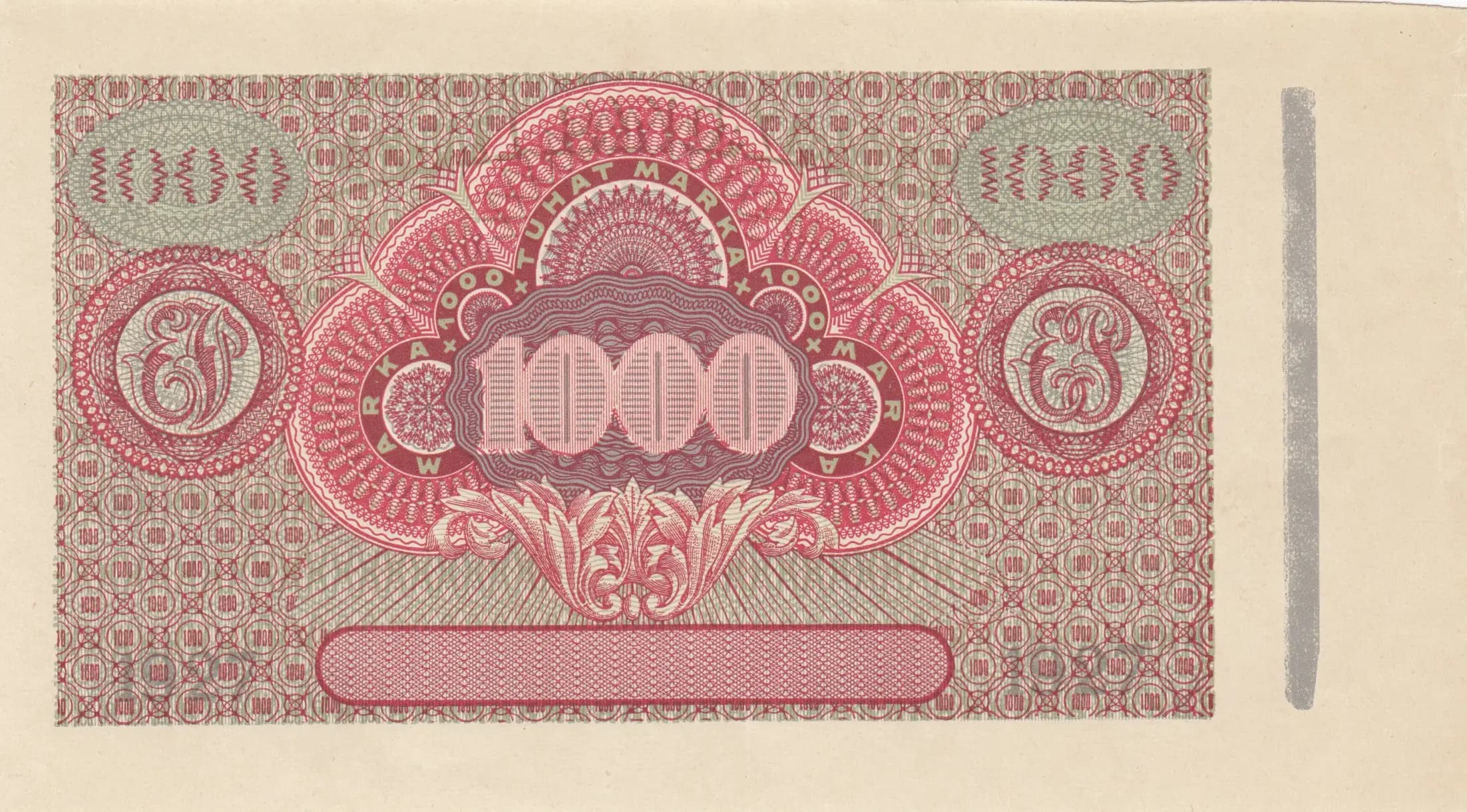
This is an Estonian 1000 Marka progressive proof from 1927, representing a critical pre-production stage in the banknote's development. The reverse displays an extraordinarily ornate design rendered in red/pink and green intaglio work, featuring an elaborate baroque-style central oval frame with radiating fan patterns, scrollwork, and circular medallions bearing the numeral '6'. The note exhibits pristine uncirculated condition with no wear, creasing, or discoloration, making it a significant artifact of both Estonian currency history and early 20th-century security printing craftsmanship.
Rare. Progressive proofs, particularly from 1920s Eastern European currency, are specialized collector items with limited surviving examples. This specific Pick 59fpp3 designation indicates it is cataloged as a formal progressive proof variant—a distinct production stage separate from circulation notes. The uncirculated condition and archival preservation (as evidenced by the cataloging notation) further restrict availability in the market. Progressive proofs are not widely circulated and were typically retained by central banks or currency printers for archival purposes.
The 1927 date and 'Eesti Vabariigi' (Estonian Republic) designation reflect Estonia's period as an independent nation following its 1918 declaration of sovereignty from Russia. The Treasury of Estonia's issuance of high-denomination currency during the mid-1920s supported the young republic's financial consolidation and international trade activities during the interwar period. The sophisticated intaglio security features visible in this proof—including the complex guilloche patterns and fine line work—demonstrate Estonia's commitment to producing modern, counterfeiting-resistant currency comparable to Western European standards.
The reverse design is dominated by a symmetrical, highly ornamental composition centered on a large decorative oval frame executed in baroque revival style. The frame features elaborate scrollwork, acanthus leaf motifs at its base, and radiating fan-like patterns that create depth and movement. Flanking the central oval are two circular medallions each containing the numeral '6', positioned as heraldic-style elements. The entire background is filled with a repeating pattern of circular ornamental elements and geometric security motifs characteristic of high-security banknote production. The color scheme of red/pink and sage green against a cream background creates strong visual contrast essential for both aesthetic appeal and anti-counterfeiting functionality.
Back side inscriptions: 'EESTI MARK' (Estonian Mark) - the official currency designation in Estonian; '1000' (numeric denomination) - indicating the face value of one thousand marks. The handwritten notation '40 G' on the reverse proof sheet likely represents archival cataloging or grading documentation.
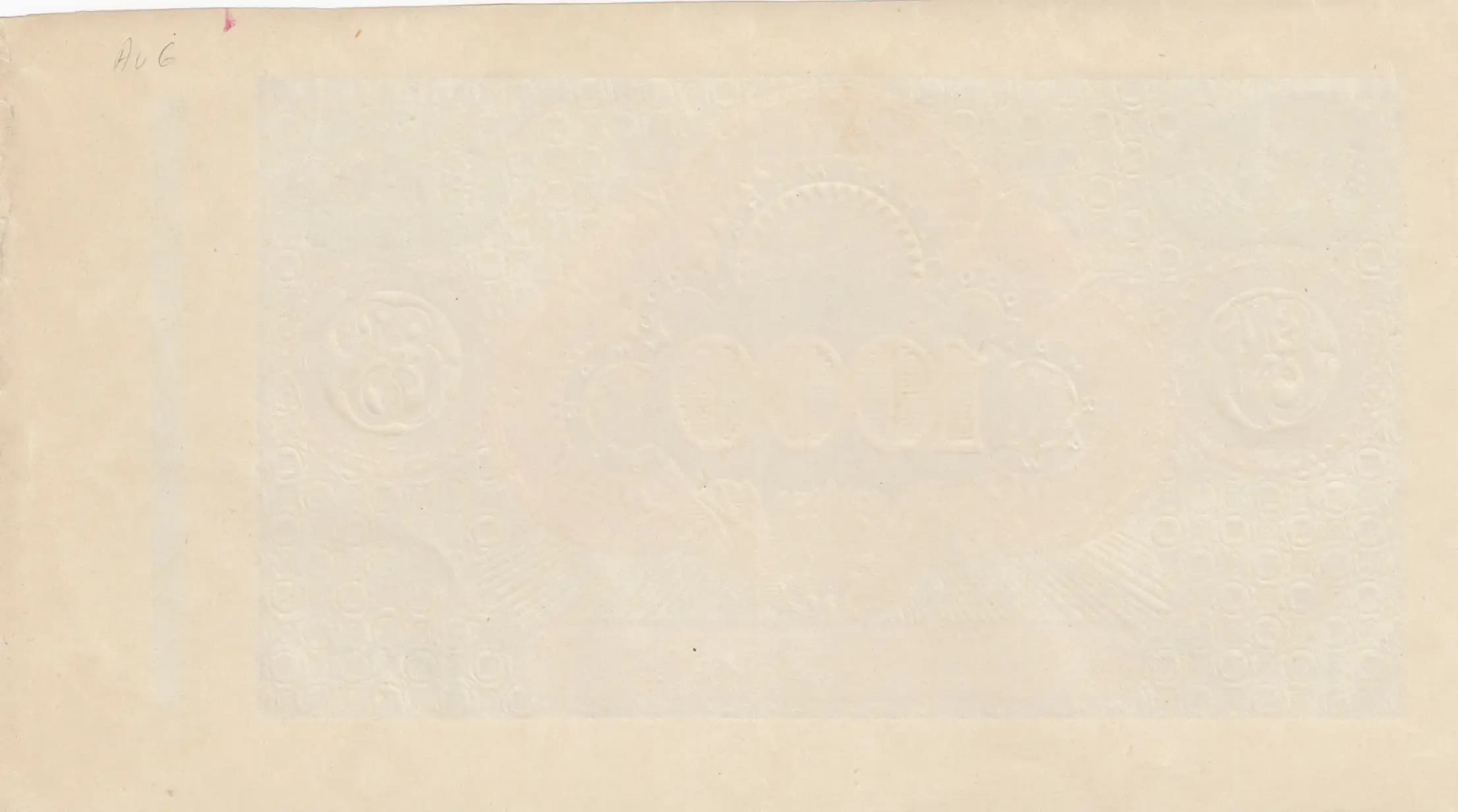
Intaglio engraving (recess printing), evidenced by the intricate line work, fine guilloche patterns, and crisp detail visible throughout the design. The progressive proof stage indicates this was struck from an engraved copper or steel plate during the design approval process, prior to final production. The embossed impressions visible on the reverse backing sheet confirm this is a genuine trial proof from the plate-making phase of production.
This note is specifically identified as Pick P-59fpp3, the 'fpp3' designation explicitly denoting this as a progressive proof (third stage/state). Progressive proofs show design development stages before final production and may be single-sided (as this specimen appears to be) or double-sided depending on the production stage. The handwritten '40 G' notation on the reverse backing may indicate this specific proof's position in the archival sequence or a cataloging grade designation.