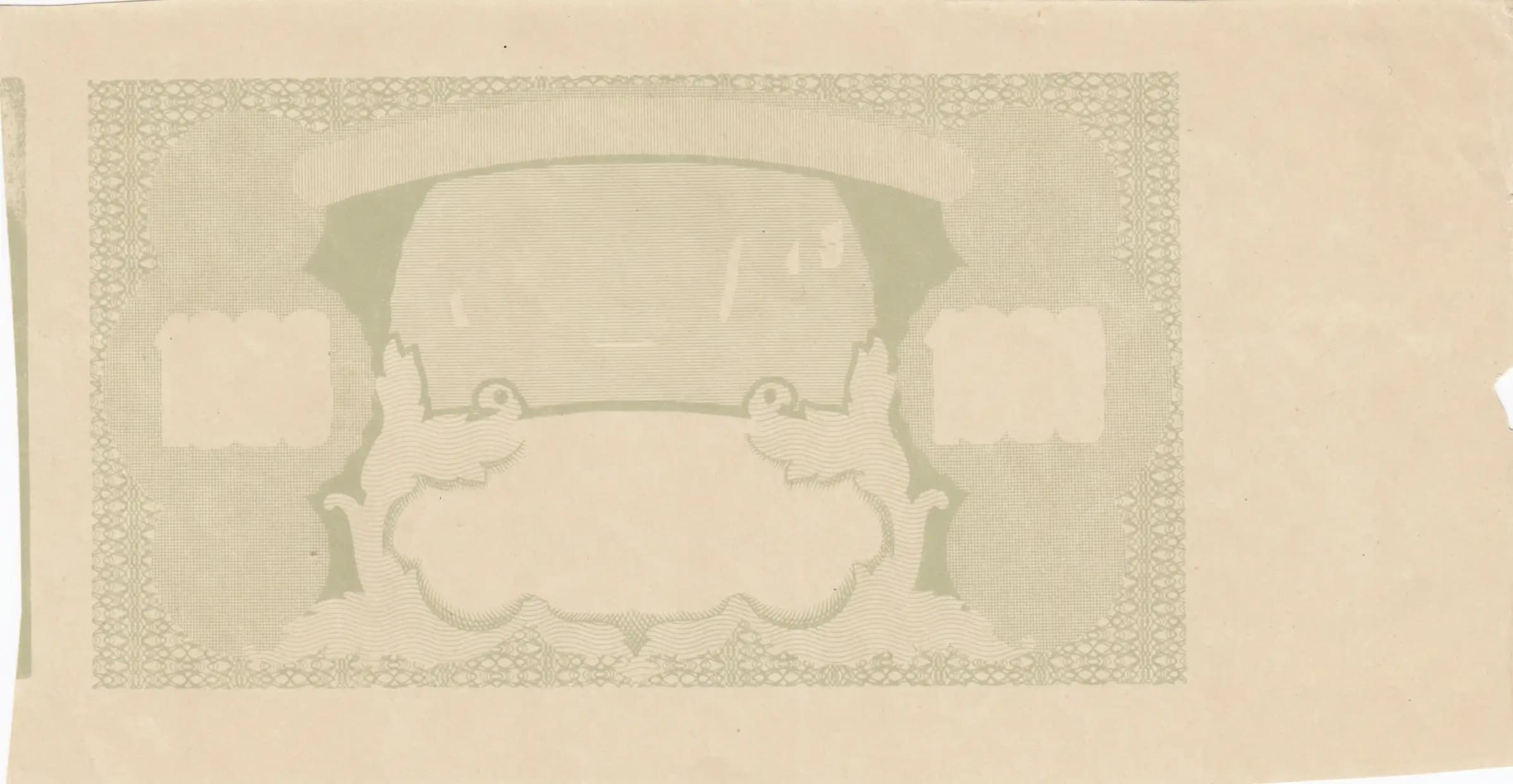
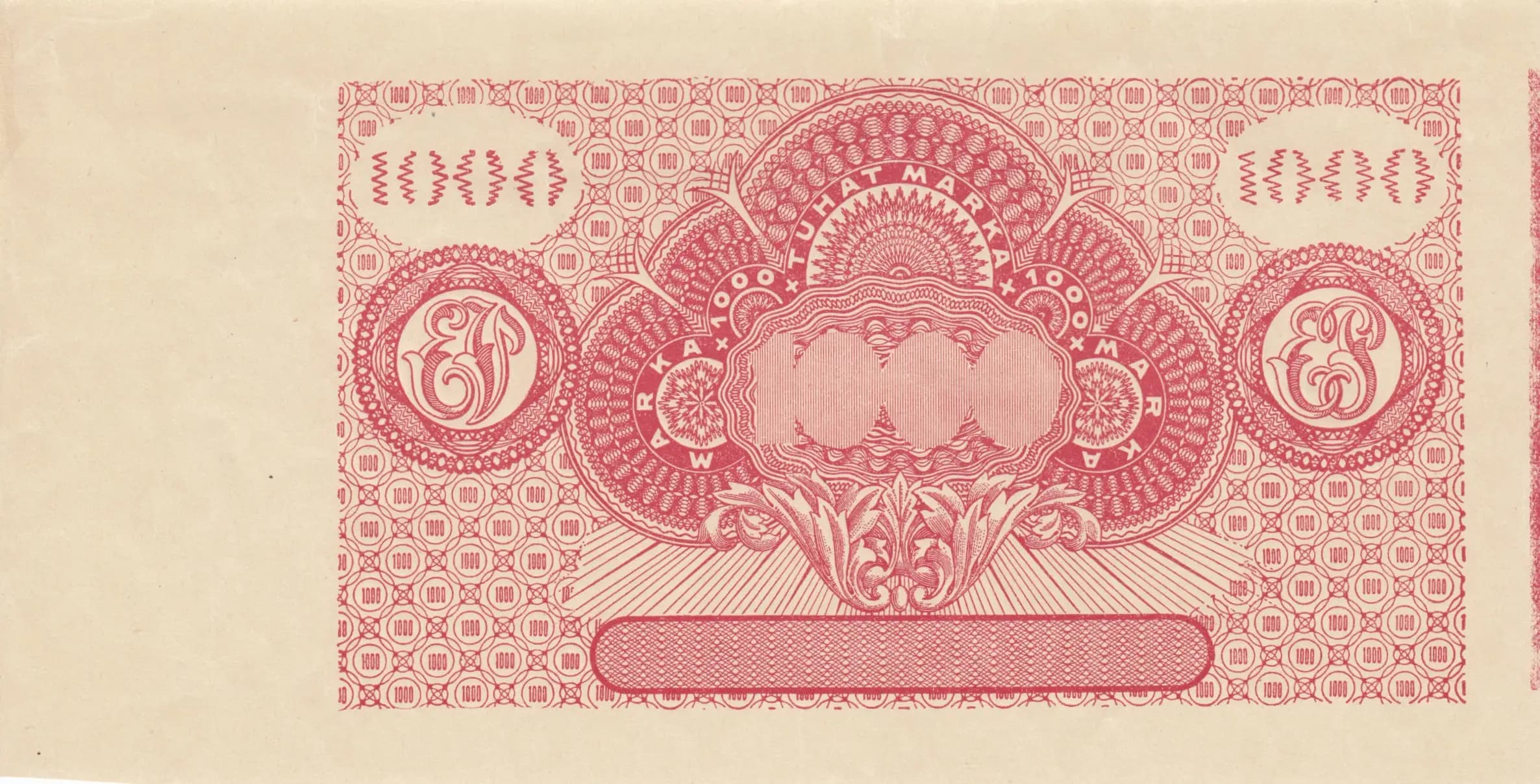
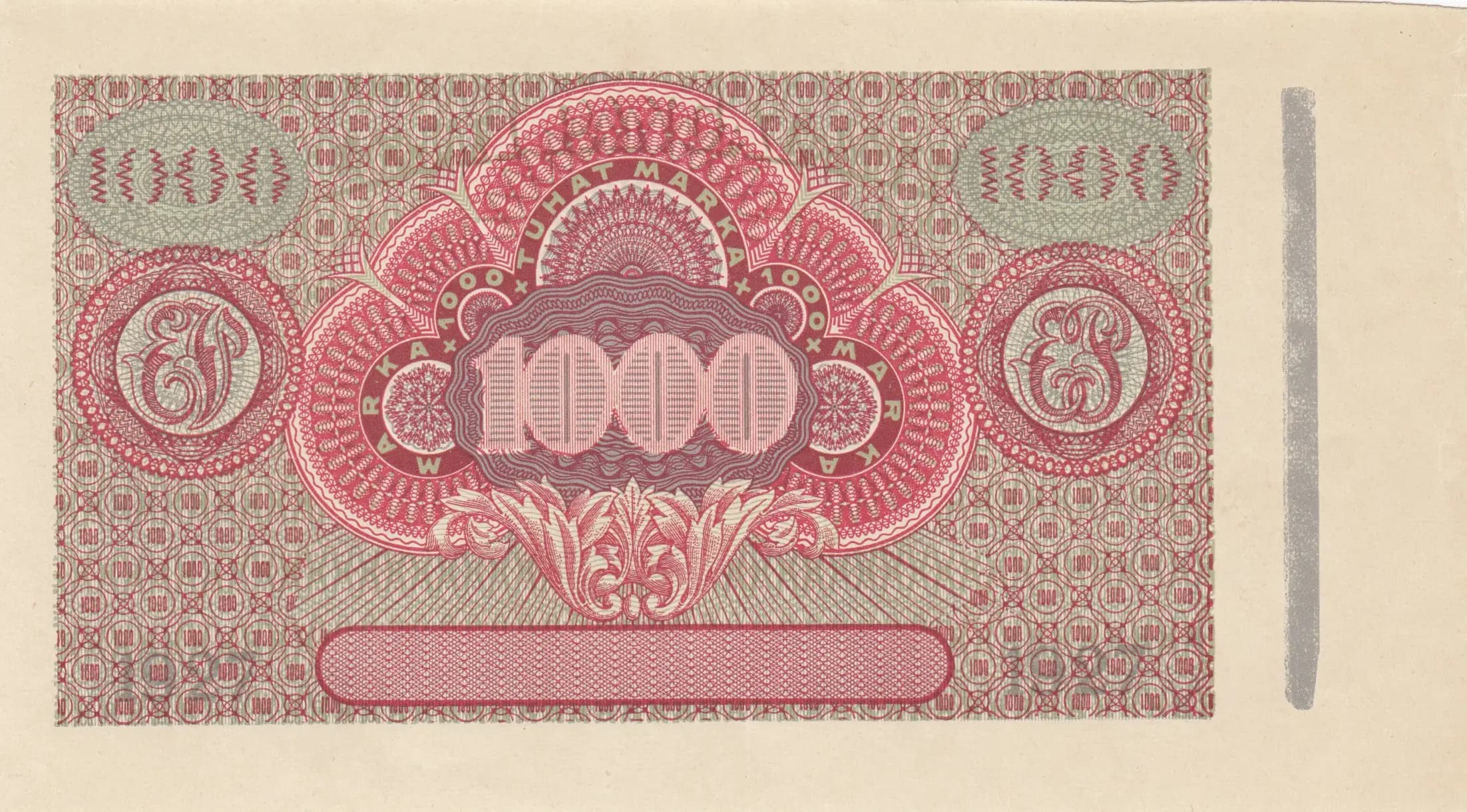
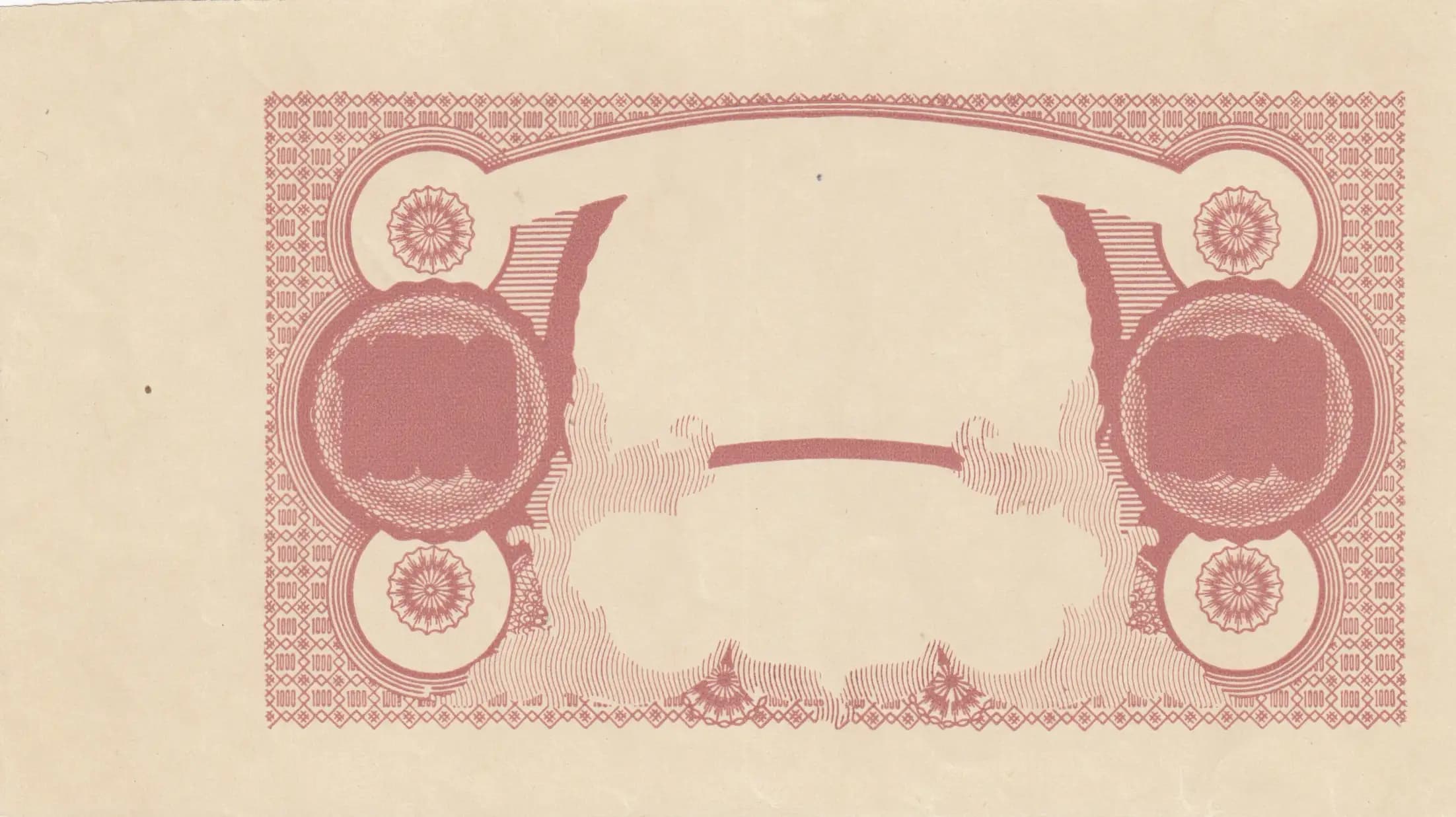
1000 marka 1927 progressive proof
About This Note
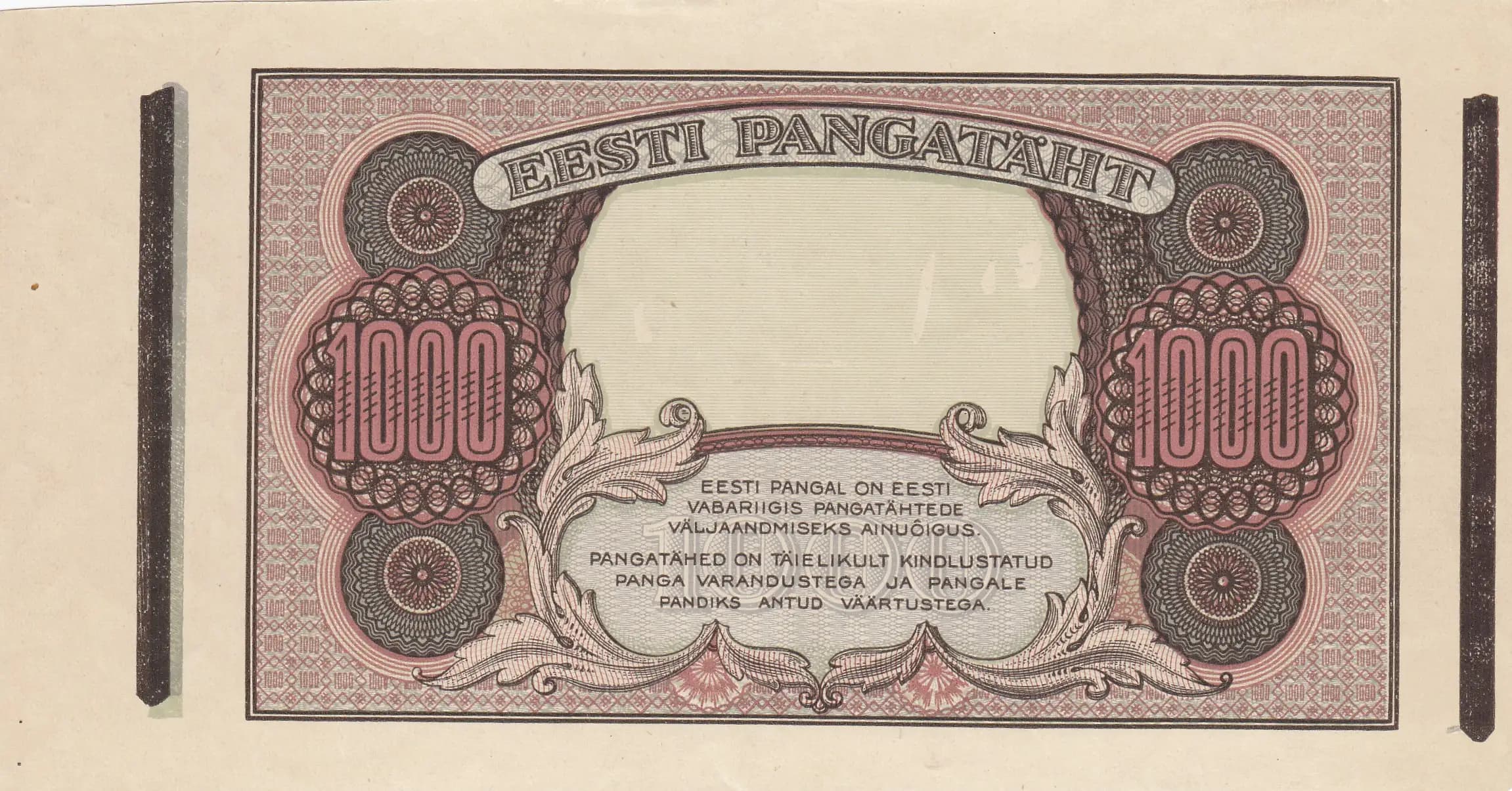
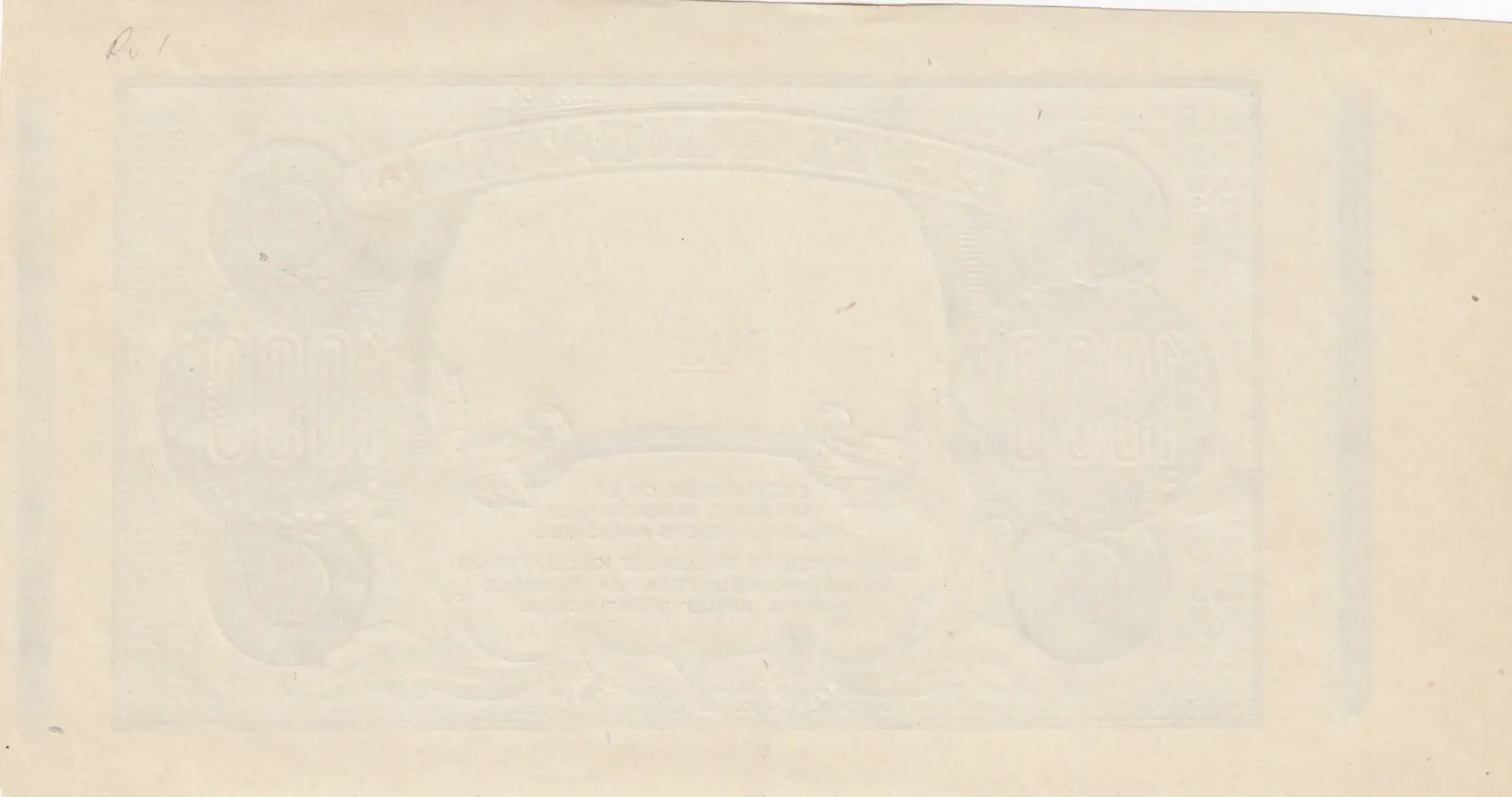
This is a 1000 Marka progressive proof from Estonia's 1927 currency series, representing an exceptional numismatic specimen in pristine unissued condition. The reverse side displays the complete design with intricate Art Deco ornamental framing, shell-scalloped medallions containing the denomination, and official Bank of Estonia inscriptions, while the obverse appears as an extremely faint preliminary proof impression showing only watermark elements. As a progressive proof (specifically stage 8 per Pick catalog notation), this note documents the multi-stage engraving and printing process and represents a rare insight into early 20th-century Estonian currency production.
rare — Progressive proofs represent specialized numismatic material produced in extremely limited quantities, typically only a handful of impressions made at each stage of plate preparation. As a stage 8 progressive proof (per Pick catalog designation fpp8), this represents one specific intermediate stage in the engraving process. These materials were rarely preserved outside the printer's archives and were not intended for circulation or collection. The combination of being a high-denomination note (1000 Marka) from Estonia's relatively short first period of independence, in an ultra-specialized proof format, makes this a significant rarity in the market.
The 1000 Marka note was issued during the Estonian Republic's early monetary independence period (1918-1940), following the country's establishment as a sovereign nation. The inscriptions emphasize the Bank of Estonia's exclusive right to issue currency and the backing of notes by the bank's assets and pledged valuables, reflecting the financial stabilization efforts of the young republic during the interwar period. The ornamental Art Deco design aesthetic reflects the contemporary design sensibilities of Northern European central banking institutions in the 1920s.
The reverse side features a symmetrical, ornate Art Deco design centered on an elaborate decorative frame with geometric cross-hatch border patterns forming the outer frame. Four ornamental rosette designs occupy the corners, demonstrating fine classical ornamentation. Two large decorative medallions with shell-like scalloped frames containing the numeral '1000' are positioned vertically on the left and right sides of the composition. The central area is left blank, typical of proof specimens. Two decorative banners — one at the top reading 'EESTI PANGATAHT' and one at the bottom containing the legal text regarding currency backing — frame the composition. The obverse (front) is shown as a progressive proof impression with only watermark elements visible, representing an early stage of the engraving process. The color palette of brown, maroon, and red/pink inks on cream paper creates a distinguished, formal appearance appropriate to a high-denomination note.
REVERSE SIDE: 'EESTI PANGATAHT' (Estonian Banknote) — appears in the upper decorative banner. Main text reads: 'EESTI PANGAL ON EESTI VABARIIGIS PANGATAHTEDE VÄLJAAMNDISEKS AINUÕIGUS. PANGATÄHED ON TÄIELIKULT KINDLUSTATUD PANGA VARANDUSSTEGA A PANGALE PANDIKS ANTUD VAARTUSTEGA.' Translation: 'The Bank of Estonia has the exclusive right to issue banknotes in the Estonian Republic. Banknotes are fully secured by the bank's assets and the values pledged to the bank.' The numeral '1000' appears prominently in decorative medallion frames on both sides. FRONT SIDE: Not legible in this progressive proof stage; appears as extremely faint watermark impressions only.
Intaglio engraving (line engraving and steel plate engraving), evidenced by the fine detailed geometric patterns, ornamental scrollwork, and crisp line definition visible throughout the design. The progressive proof nature of this specimen indicates it was produced during the multi-stage plate preparation process, with separate proofs taken at different completion stages of the engraving. The extreme faintness of the obverse proof suggests it was a stage proof pulled before final inking adjustments, while the reverse shows the near-complete design ready for production. The Bank of Estonia likely employed a European security printer, consistent with Estonian interwar currency practices.
This specimen is specifically cataloged as Pick P-59fpp8, designating it as a progressive proof, stage 8 of the 1000 Marka design. The notation 'fpp8' indicates this is the 8th stage proof in the progressive proof series for this denomination. Progressive proofs of this note are known to exist in multiple stages, with each stage showing different degrees of design completion. This particular example shows the reverse in near-final form with complete ornamental and textual elements, while the obverse remains at an extremely preliminary stage, confirming its place in the documented progression sequence.