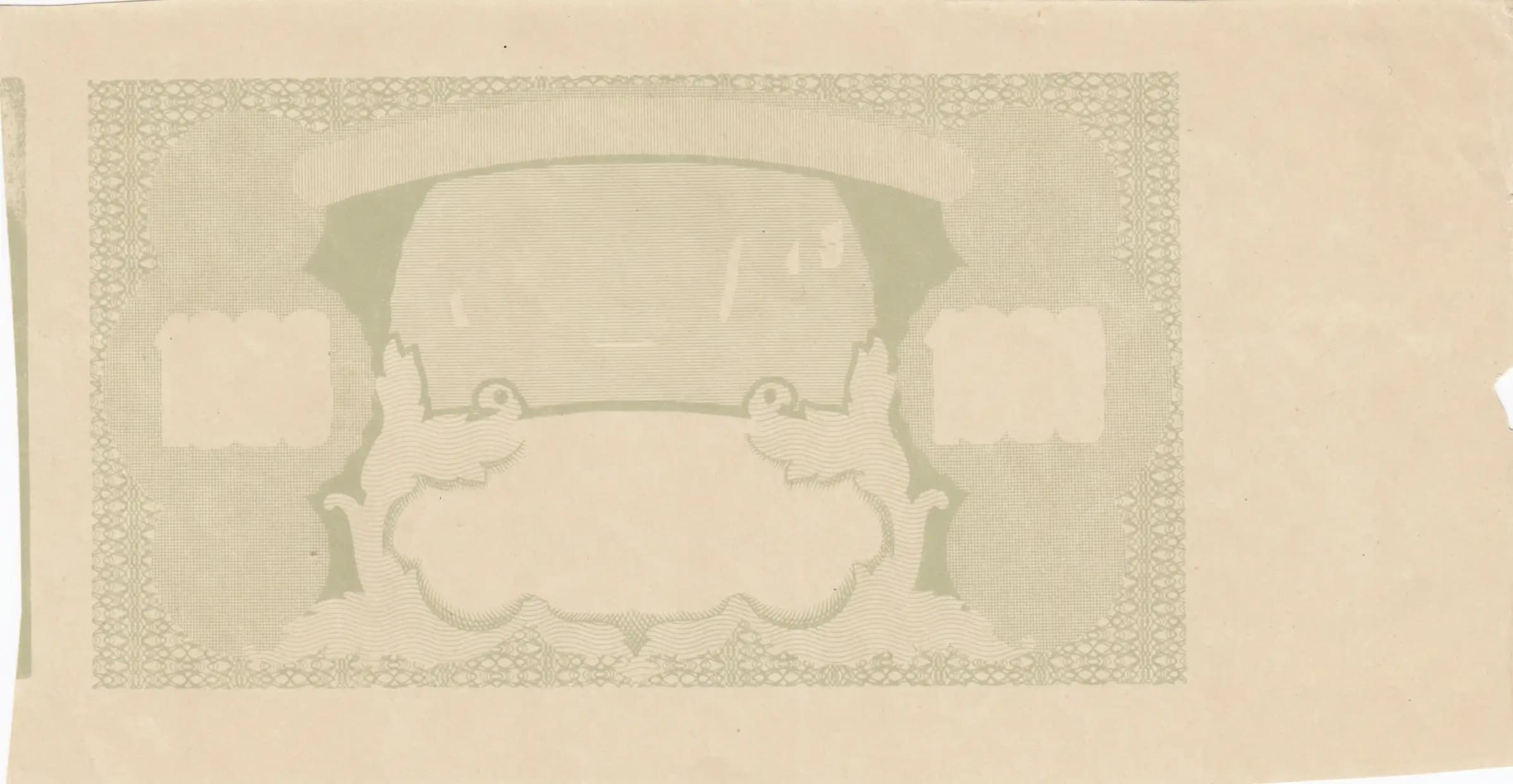
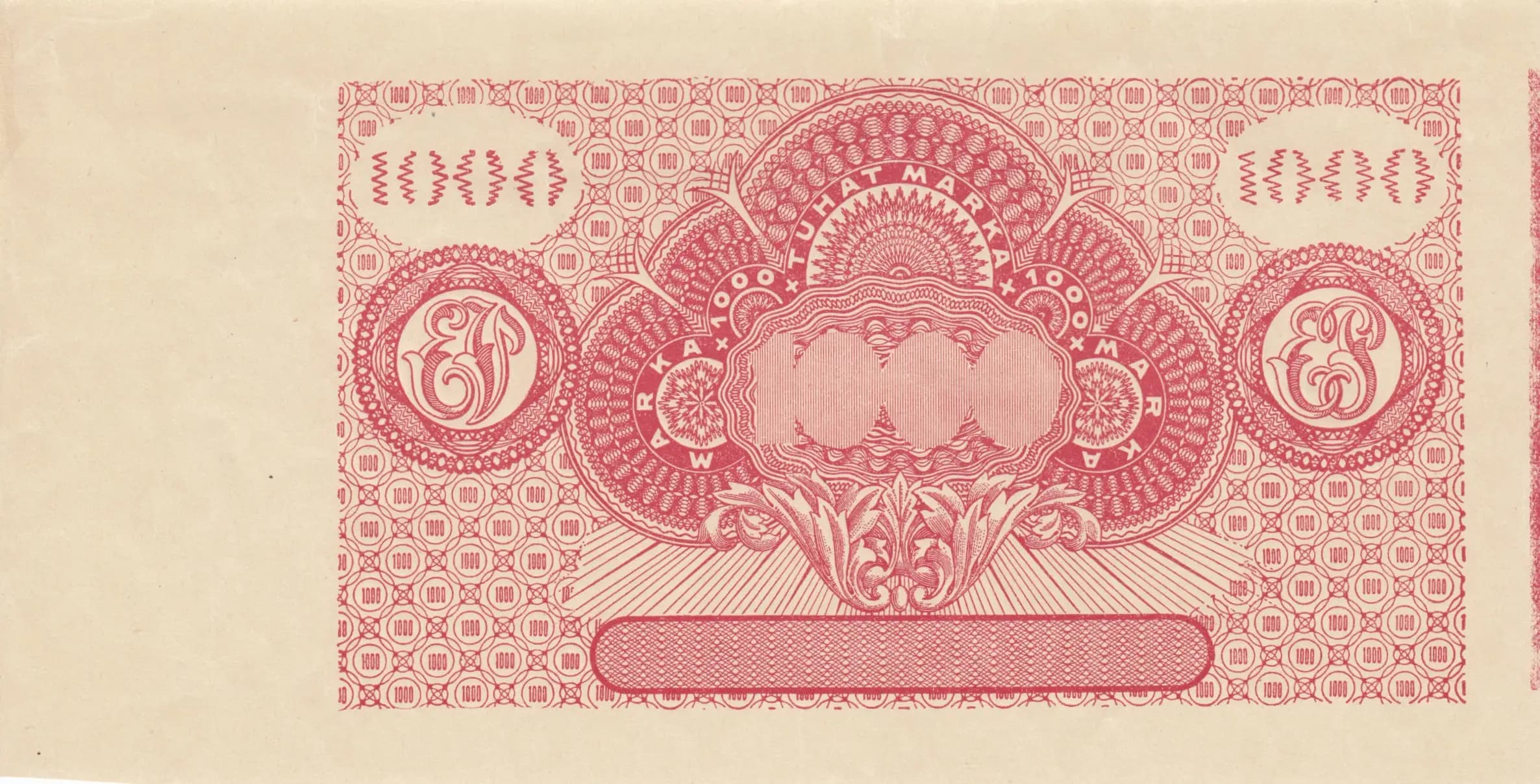
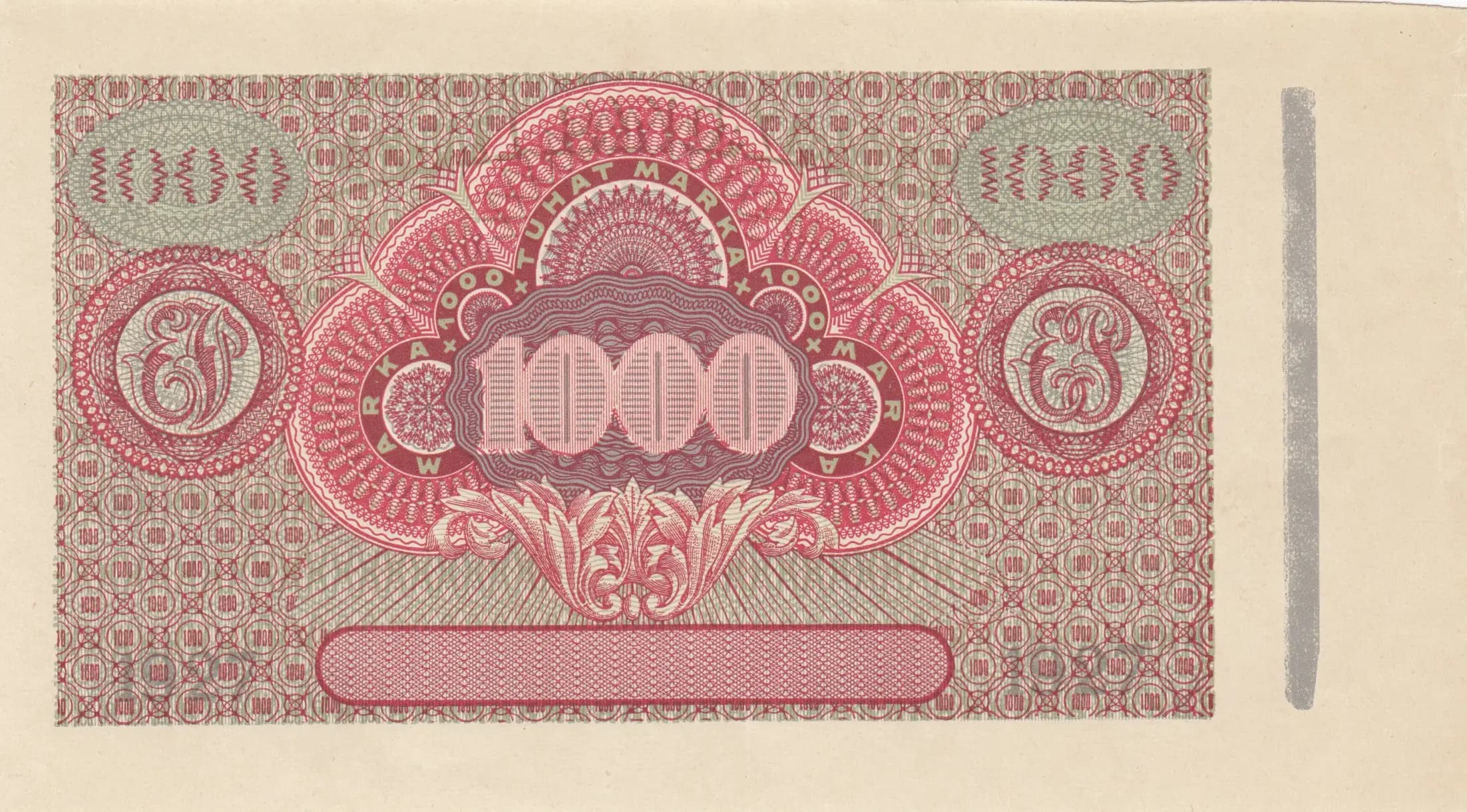
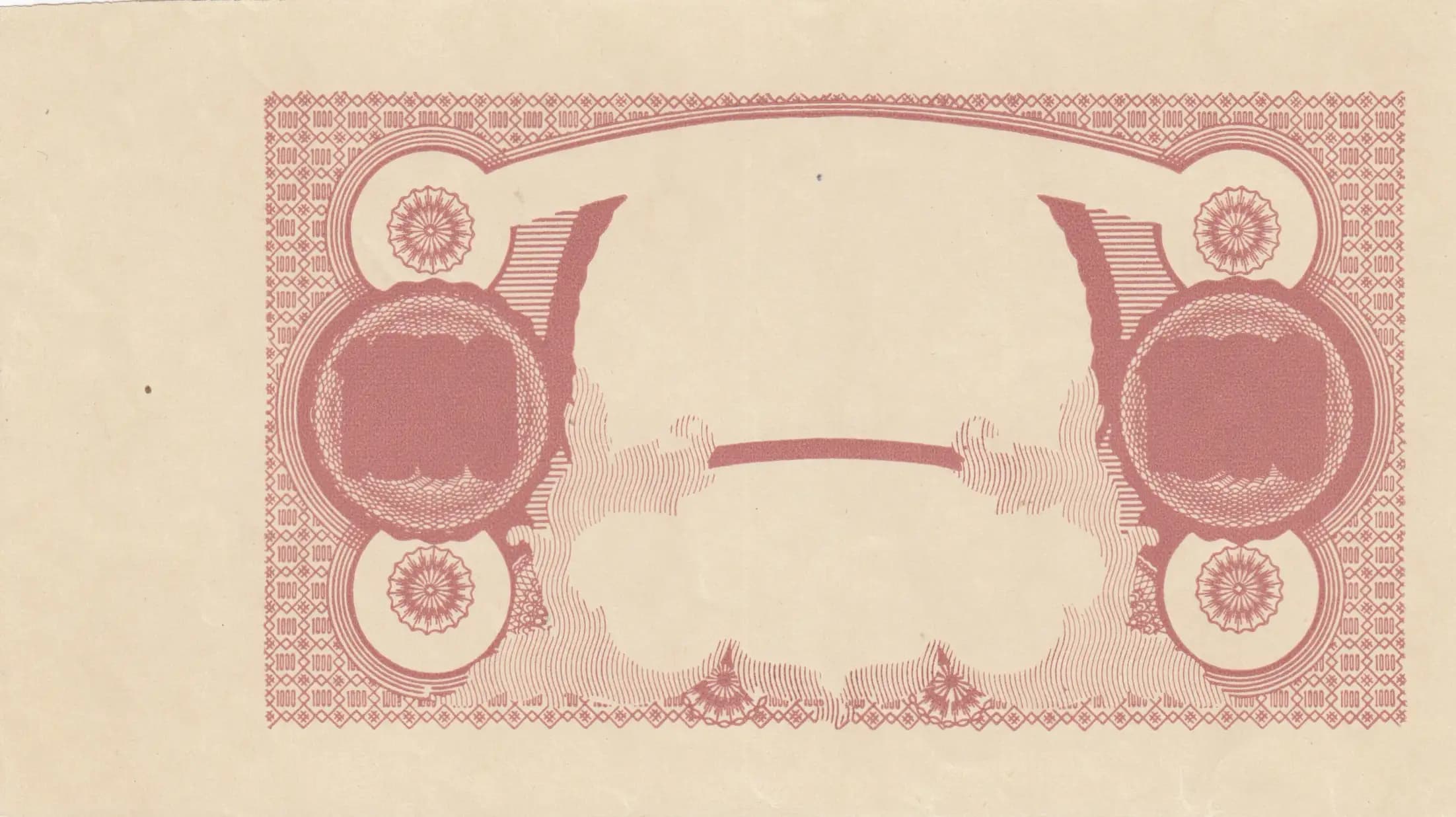
1000 marka 1927 progressive proof
About This Note
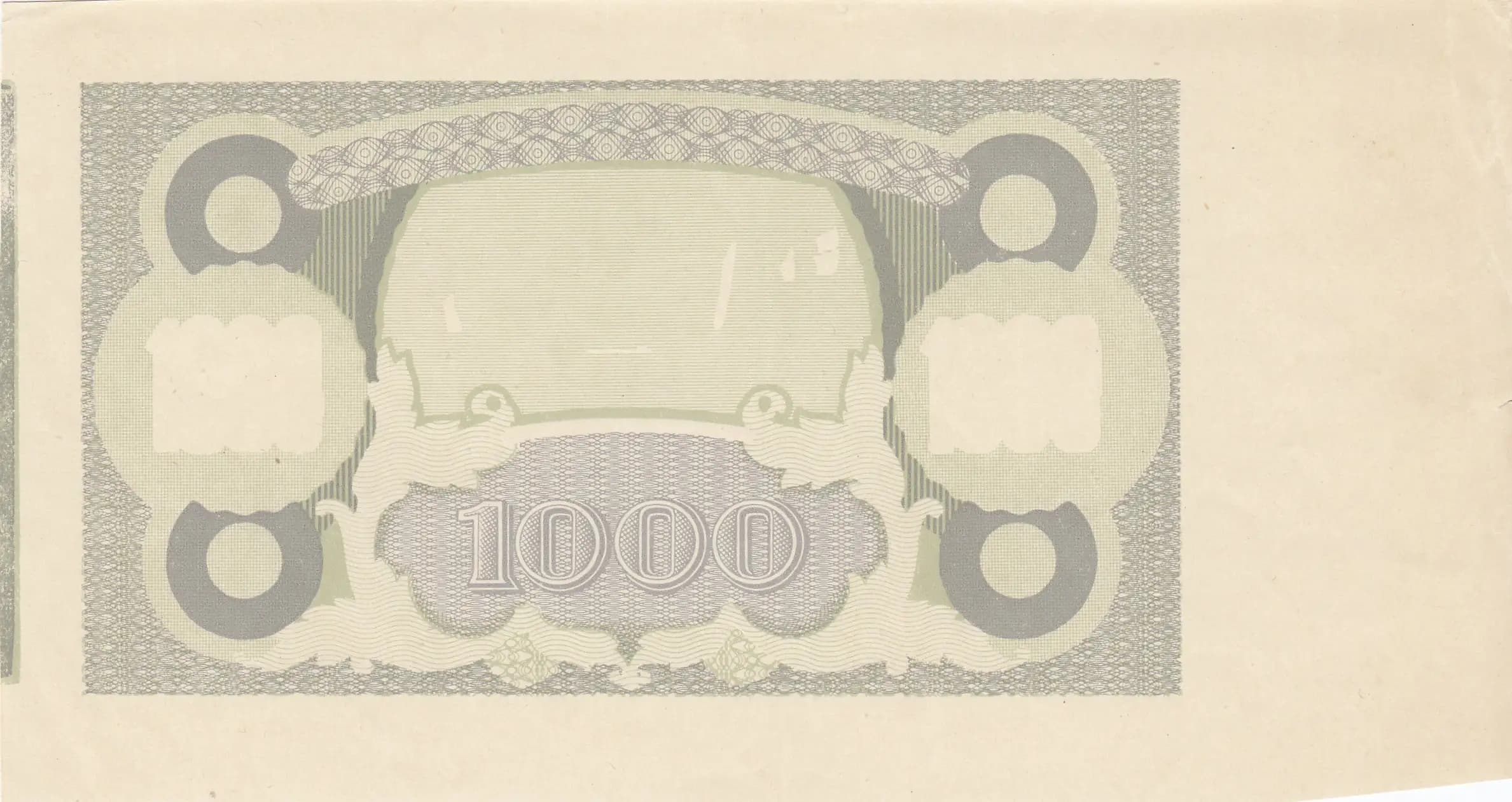
This is a progressive proof of the Estonian 1000 marka from 1927, representing an intermediate stage in the banknote's production process. The reverse side displays a finely detailed geometric design centered around the denomination, featuring four corner ornaments and elaborate security pattern bands characteristic of 1920s interwar currency production. In uncirculated condition with only light aging, this progressive proof offers a glimpse into the security printing techniques and design evolution of Estonia's early independence-era currency.
Rare. Progressive proofs represent intermediate production stages rather than issued circulation notes, making them scarce by definition. This is not a standard circulation issue but a specialized collector item from the proof production process. The specific Pick number (P-59fpp7) indicates this is the 7th progressive proof state, suggesting only a handful of such proofs were created for quality assurance purposes. The 1927 date and archival cataloging notation further confirm this is a specialized numismatic artifact rather than a common banknote.
The 1000 marka denomination was issued by the Treasury of Estonia during the newly independent Estonian Republic, established following independence from the Russian Empire in 1918. The geometric ornamental design with fine line work reflects the Art Deco and modernist aesthetic prevalent in European currency design during the 1920s, while the sophisticated security features (cross-hatching, geometric pattern bands, parallel line work) demonstrate Estonia's commitment to advanced anti-counterfeiting measures typical of progressive printing stages during this period of economic stabilization.
The reverse side features a symmetrically balanced layout dominated by four large circular ornamental rosettes positioned at each corner, each with concentric rings creating a medal-like appearance. These corner elements frame rectangular decorative panels along the top and sides. At the top center is an elaborate geometric pattern band featuring diamond and linear motifs used for security purposes. The central focus is the large '1000' denomination numeral, enclosed within an ornamental rectangular frame with multiple border layers. The entire design employs fine parallel line work and cross-hatching throughout, creating a complex security pattern that would be difficult to counterfeit. The color palette is monochromatic grayscale with cream toning from age.
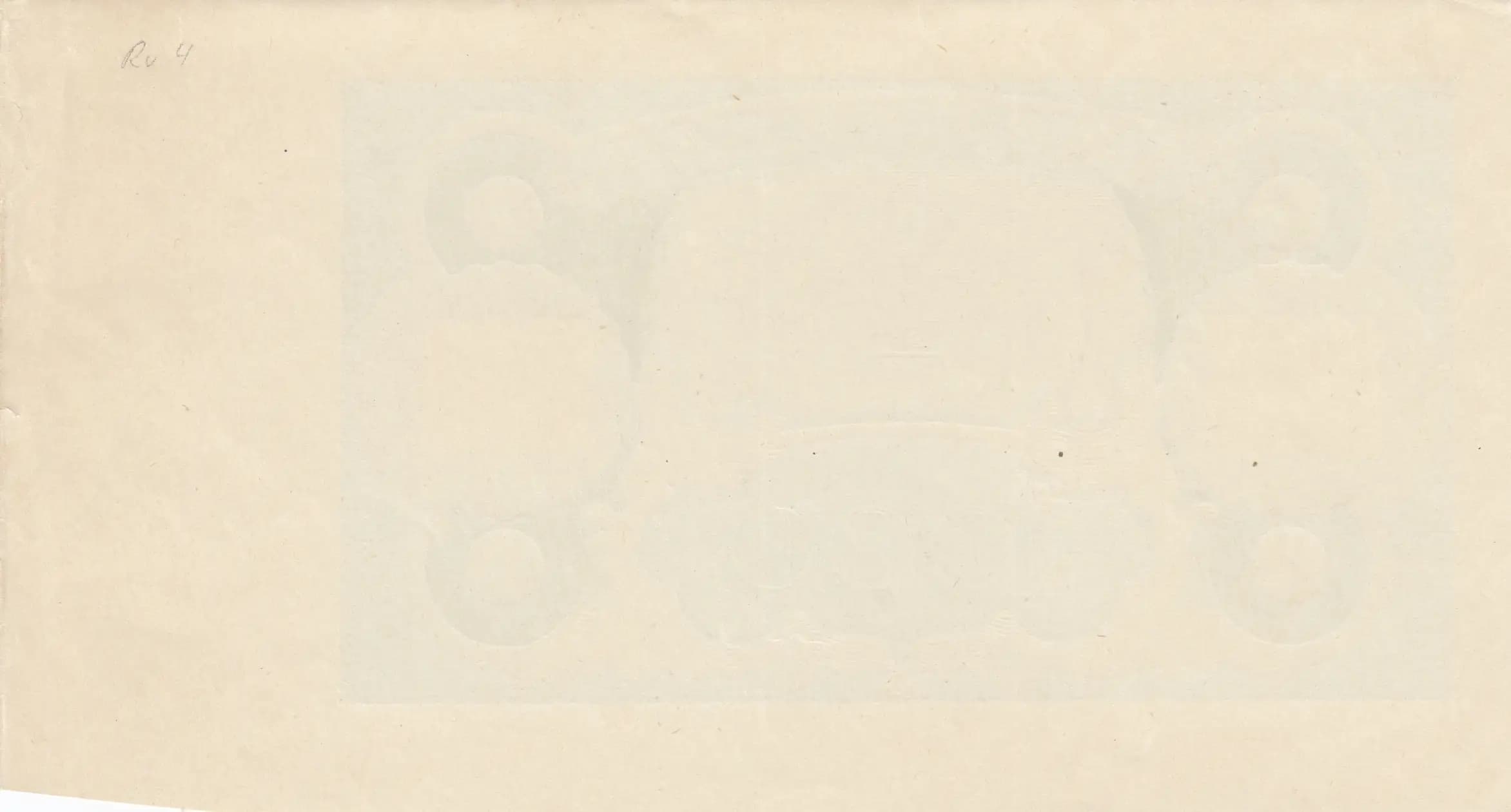
Back side: '1000' (denomination in numerals); Archival notation on verso: 'Rv 4' (cataloging reference, likely indicating 'Reverse 4' or reverse proof stage 4)
Intaglio (engraved) printing, evidenced by the fine line work, precise cross-hatching, and detailed geometric pattern work visible throughout. The security printing characteristics—particularly the elaborate parallel line patterns and the fine rosette designs—are consistent with high-security intaglio production standards employed by established European security printers of the 1920s. The progressive proof nature indicates this is an intermediate stage in the plate development and quality control process before full production release.
This is specifically identified as progressive proof stage 7 (fpp7) in the Pick catalog designation P-59fpp7. Progressive proofs are characterized by showing different stages of color separation and plate development. The '1927' date and 'Rv 4' archival notation on the verso suggest this piece is part of a documented collection with multiple proof states. The reverse-only presentation (with blank verso backing) is typical of proof sheets mounted for archival preservation and cataloging purposes.