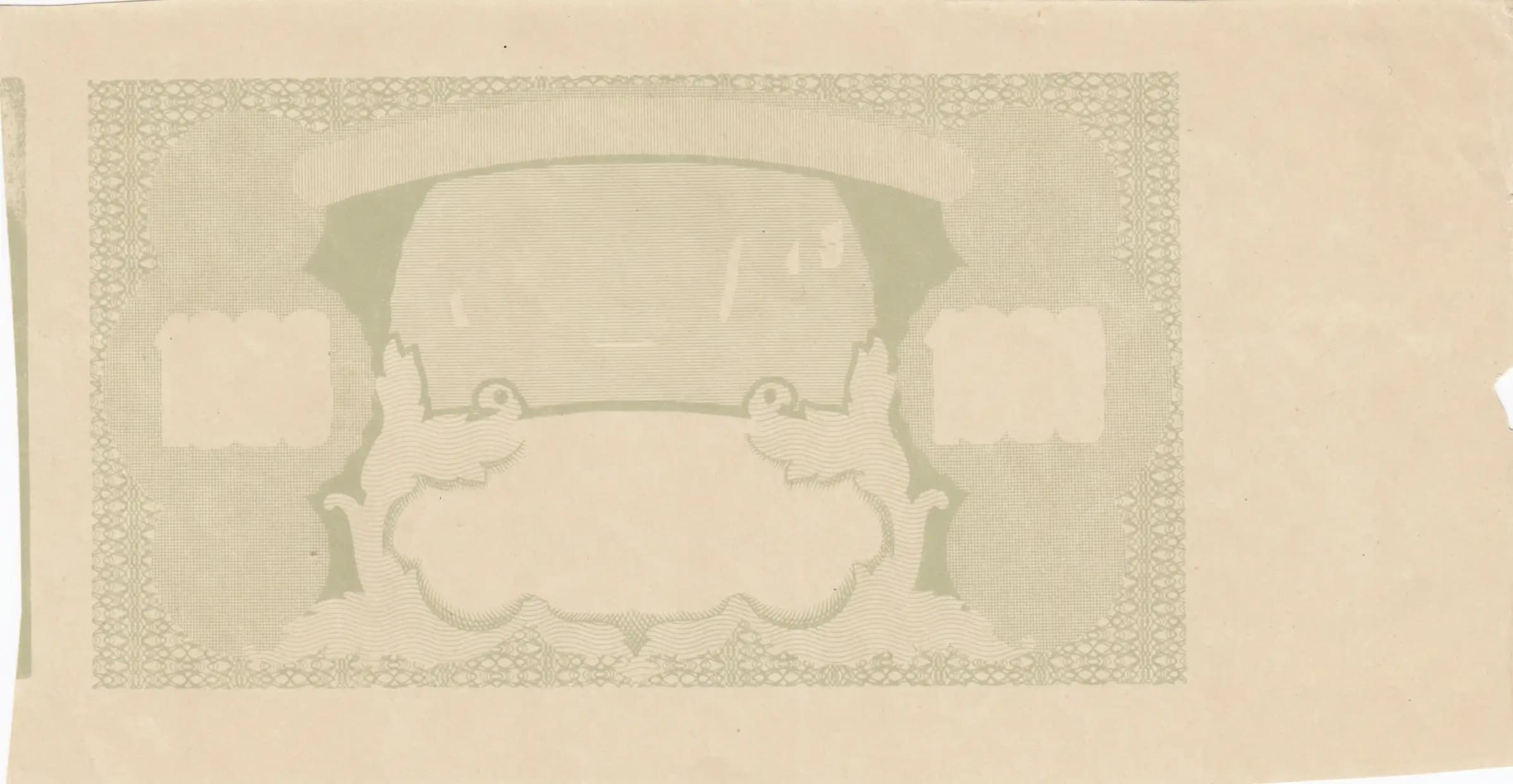
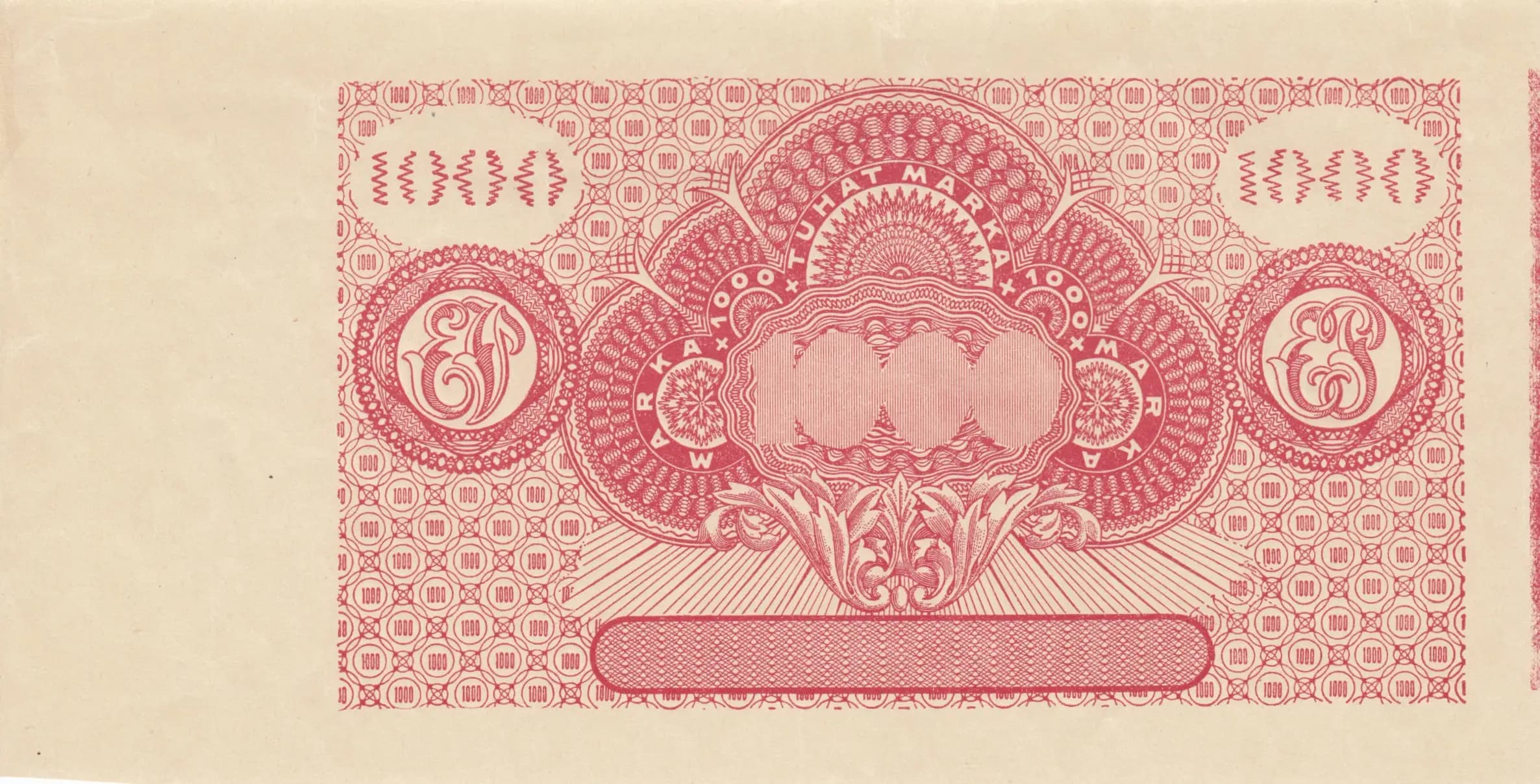
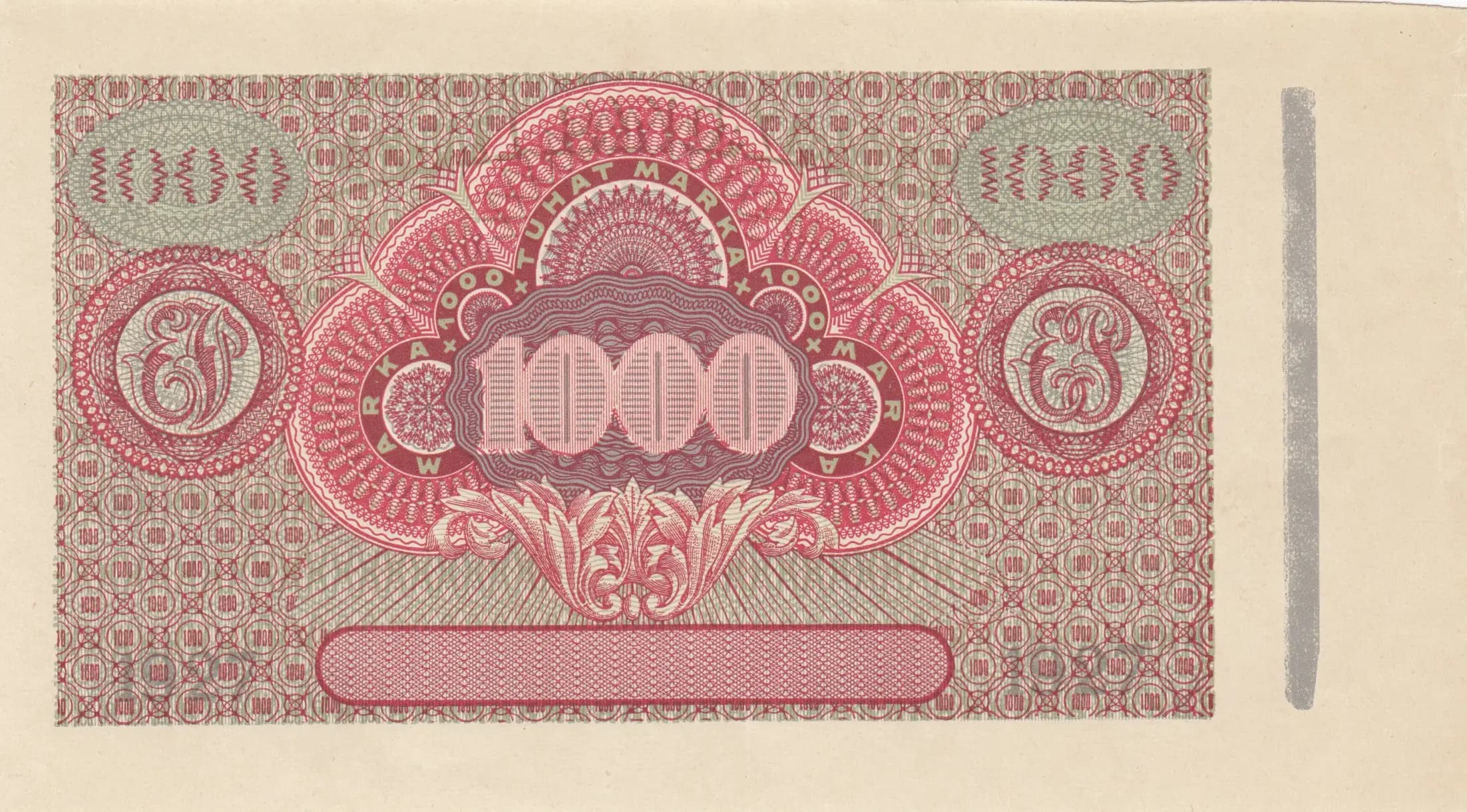
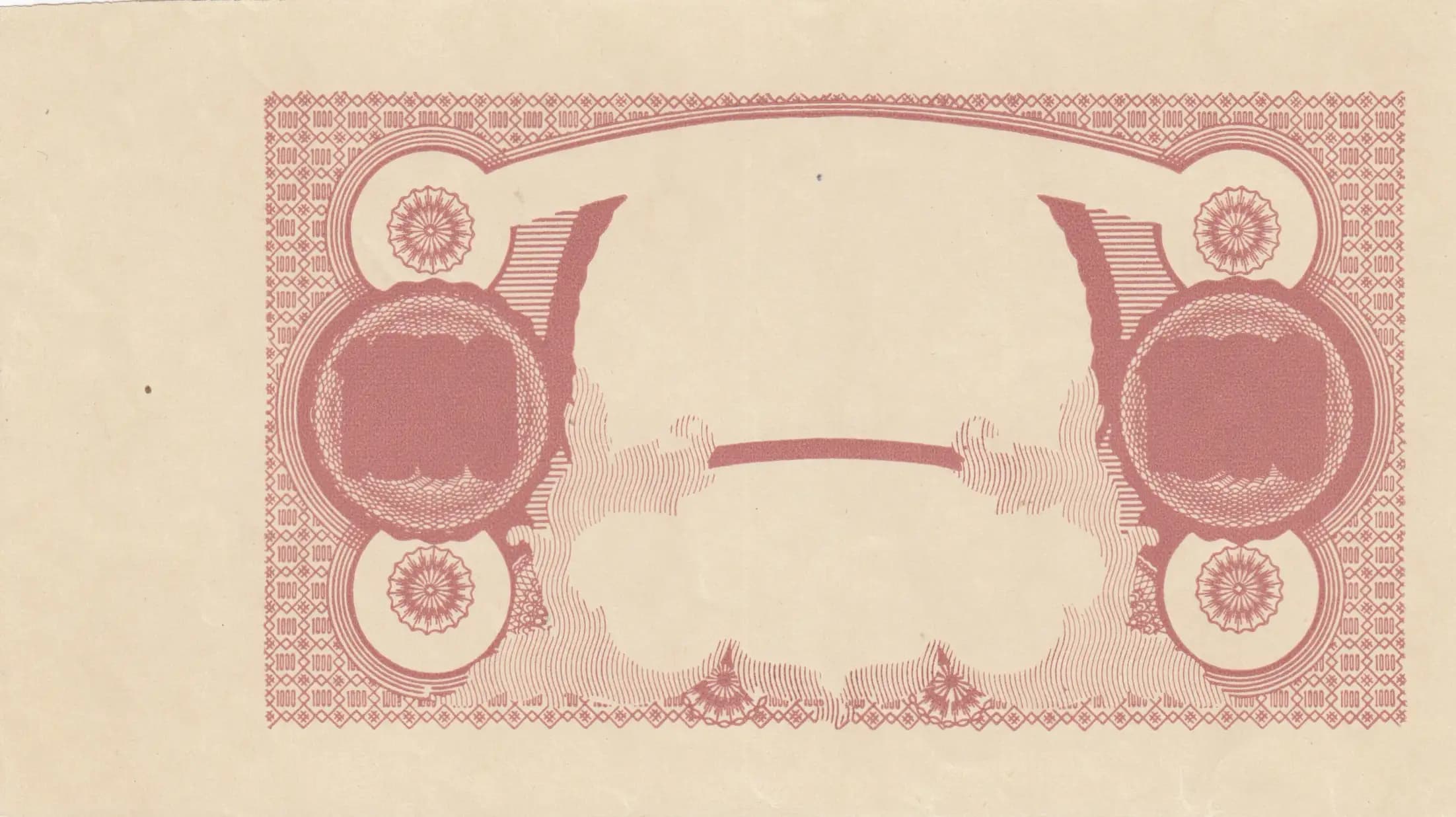
1000 marka 1927 progressive proof
About This Note
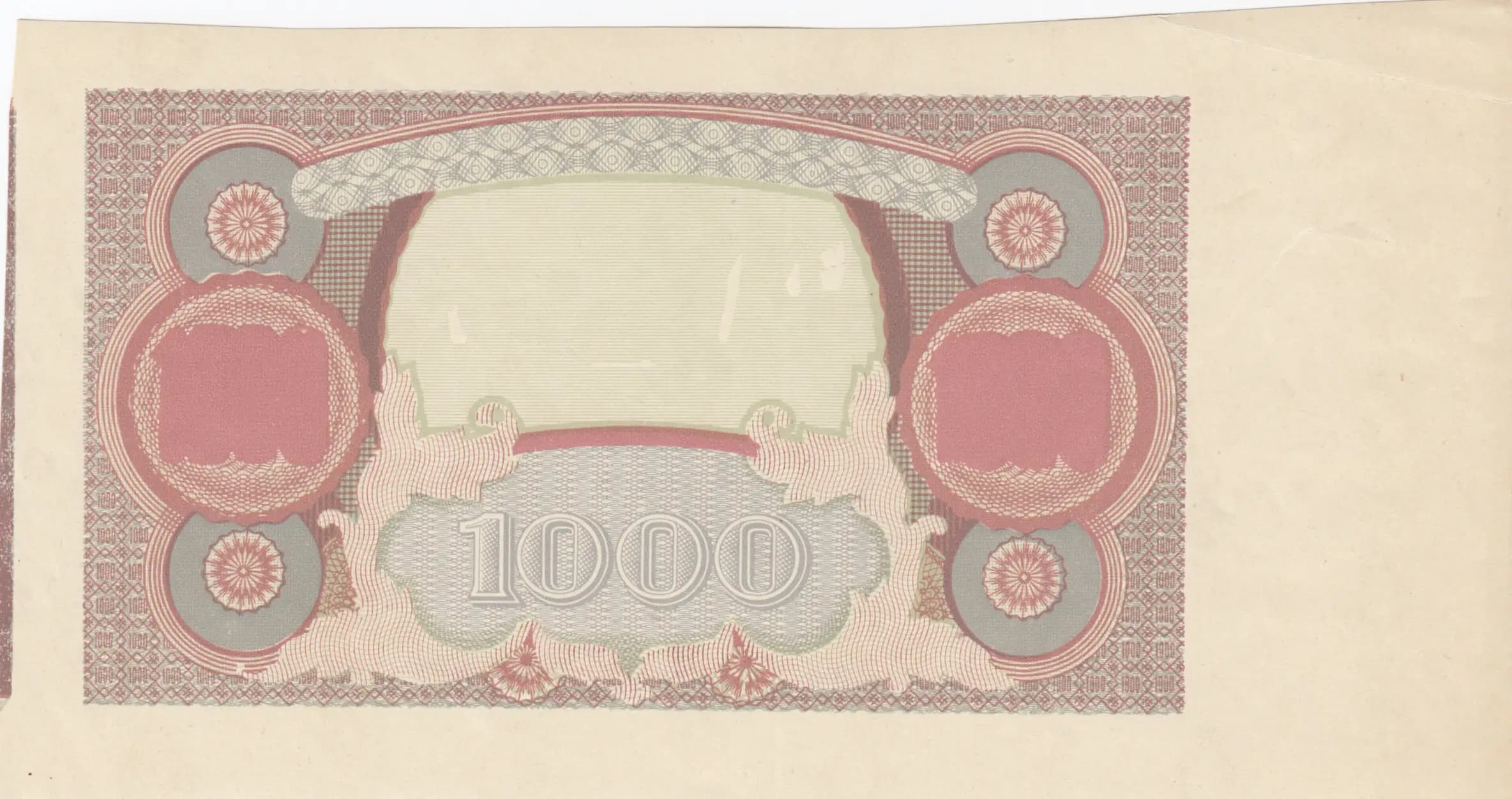
This is an Estonia 1000 Marka progressive proof from 1927, graded AU, representing an important early specimen of Estonian monetary design during the interwar period. The reverse displays an ornate Art Deco-inspired design with four radiating sunburst medallions in the corners and intricate geometric-floral border patterns in mauve and gray tones, with the denomination clearly displayed in an oval cartouche. The note exhibits excellent preservation with minimal age-related discoloration, characteristic of archival specimen notes, and includes a handwritten reference notation suggesting institutional provenance.
Scarce. Progressive proofs and specimen notes from the Estonian Treasury's 1920s-era currency production are less commonly encountered in the numismatic market compared to standard circulation issues. The specific designation as a 'progressive proof' (rather than a finished note) and the institutional archival notation ('R v 2') indicate this note had restricted distribution, likely remaining within Treasury or central bank holdings rather than entering widespread circulation or private collections. The AU condition grade further supports scarcity, as most surviving examples show greater wear.
Estonia's 1927 1000 Marka notes were issued during the early years of the Estonian Republic's monetary independence following the 1918 declaration of statehood and the Treaty of Tartu (1920). The ornate Art Deco design with its geometric and floral patterns reflects the modernist artistic movements of the 1920s, while the absence of a specific depicted landmark on this proof suggests the design may have been intended for a commemorative or institutional purpose rather than standard circulation.
This progressive proof displays the refined reverse design of the 1000 Marka denomination featuring a symmetrical Art Deco aesthetic. Four identical circular medallions with radiating sunburst motifs occupy the corner positions (upper left, upper right, lower left, lower right), creating a balanced compositional frame. The central field remains blank on this proof stage, surrounded by elaborate ornamental scrollwork and decorative flourishes in an ornate border treatment. The design incorporates multiple layers of intricate line work with geometric patterns and stylized floral elements, printed primarily in mauve/rose and gray tones on cream-colored paper, with the denomination '1000' prominently displayed within an oval cartouche in the lower center portion.
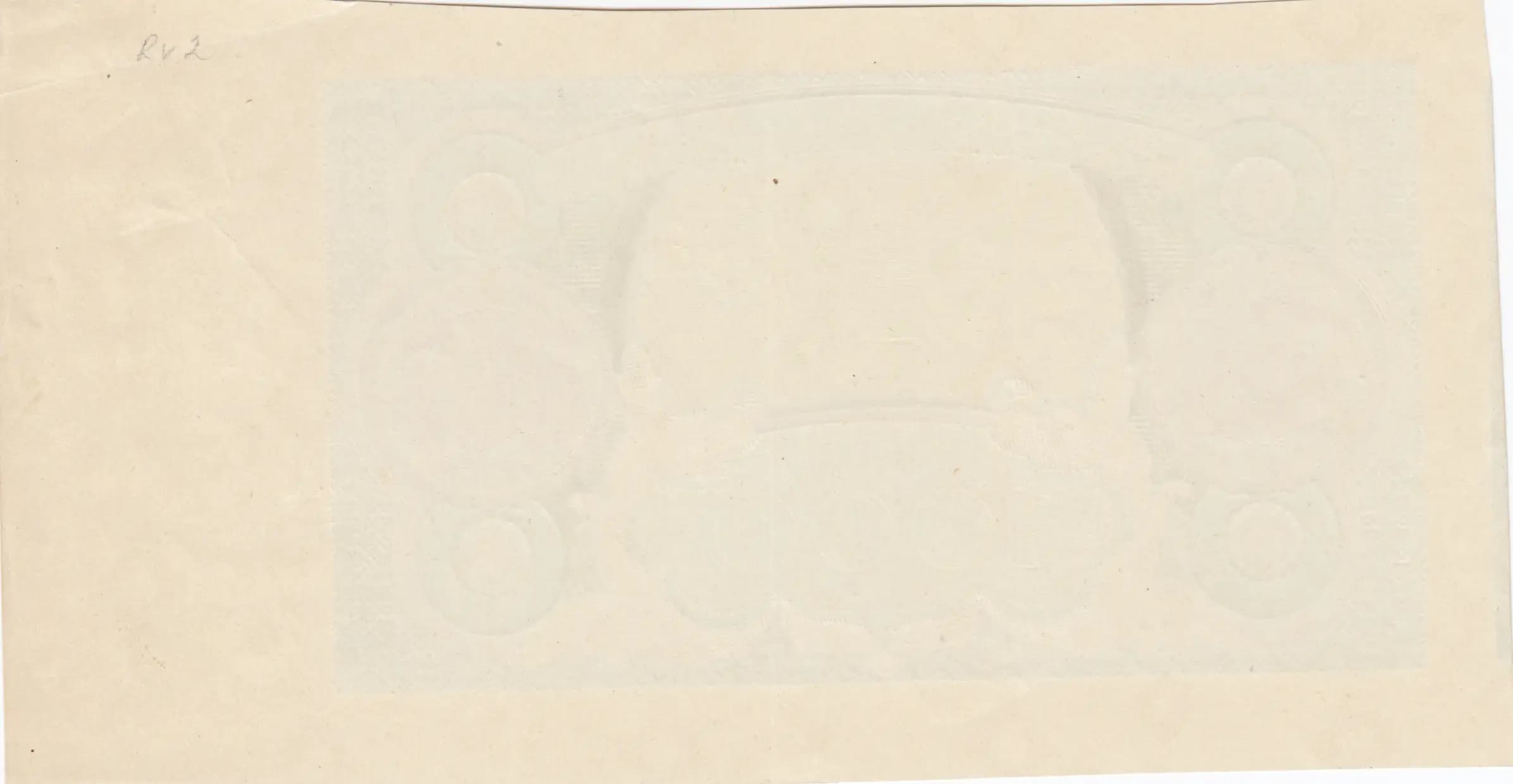
Back side: '1000' - denomination marking in numeric form, indicating one thousand markas. Additional notation 'R v 2' appears as an archival reference marking on the verso, likely indicating catalog or inventory classification by the Estonian Treasury or a subsequent holding institution.
This progressive proof was produced using intaglio printing (line engraving), evidenced by the crisp detail reproduction of the complex geometric patterns, the fine line work throughout the design, and the characteristic depth and precision of the ornamental borders. The printing exhibits the hallmarks of security printing typical of early 20th-century European banknote production, with multiple layers of intricate patterning designed to prevent counterfeiting.
This note is cataloged as Pick P-59fpp6, with the designation 'fpp6' indicating this is a 'final progressive proof' stage 6 of the design development process. Progressive proofs from different production stages (fpp1 through fpp6) represent distinct varieties, each showing various stages of design refinement. The handwritten archival notation 'R v 2' may indicate a specific holding or classification within the Estonian Treasury's records or a subsequent institutional archive, providing additional provenance detail for this particular specimen.