1000 mark 1921 specimen
Market Prices
About This Note
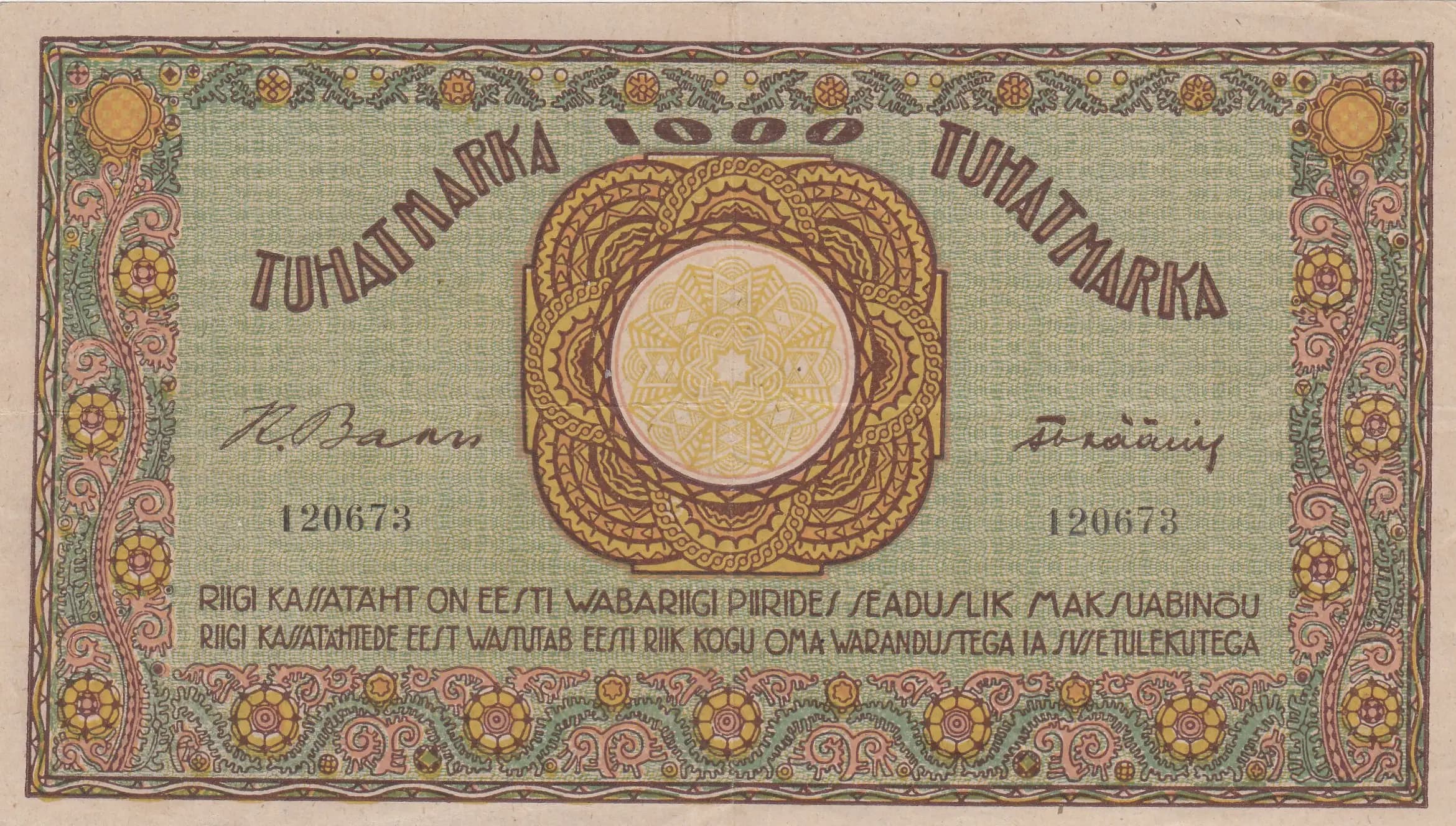
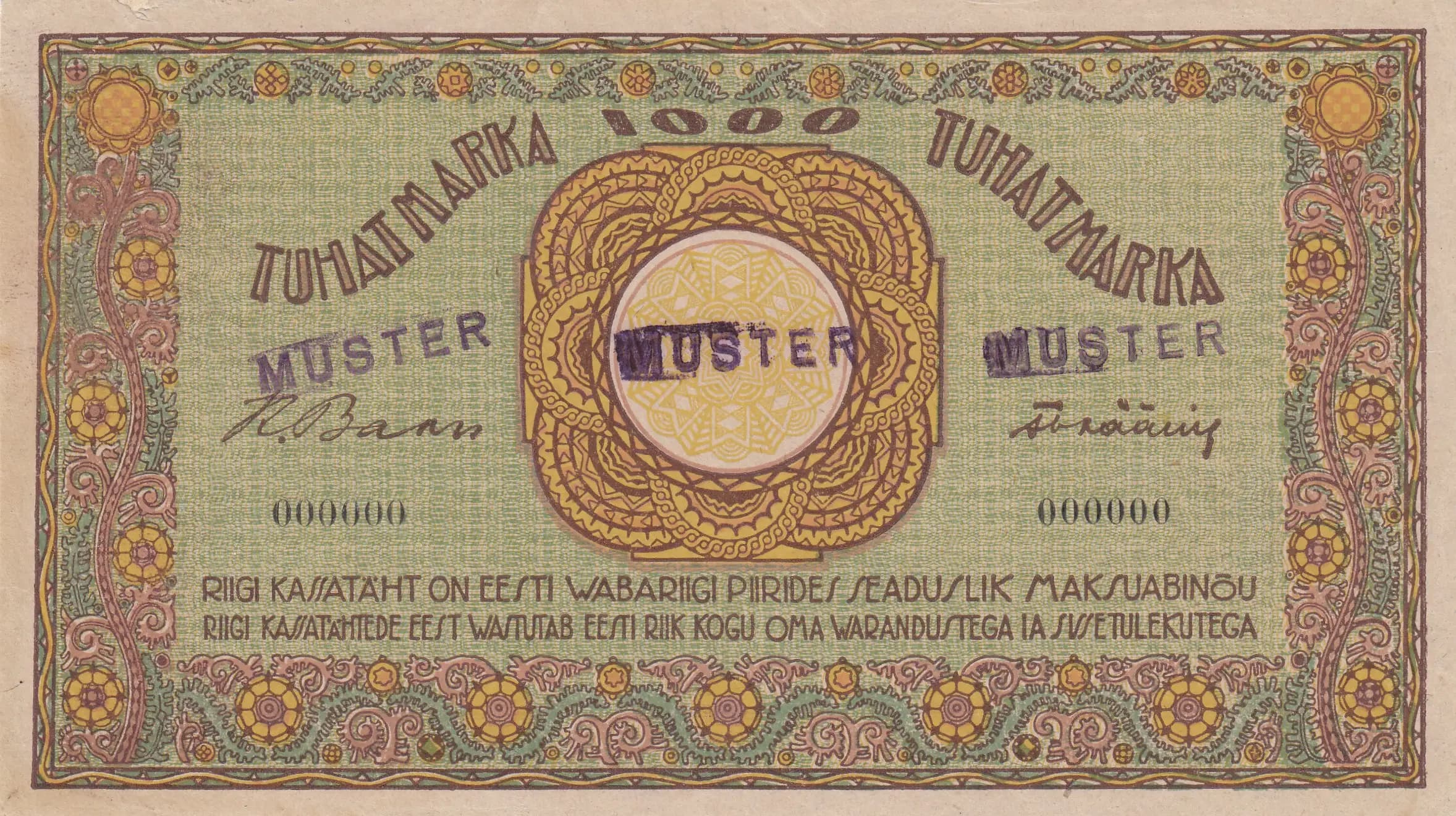
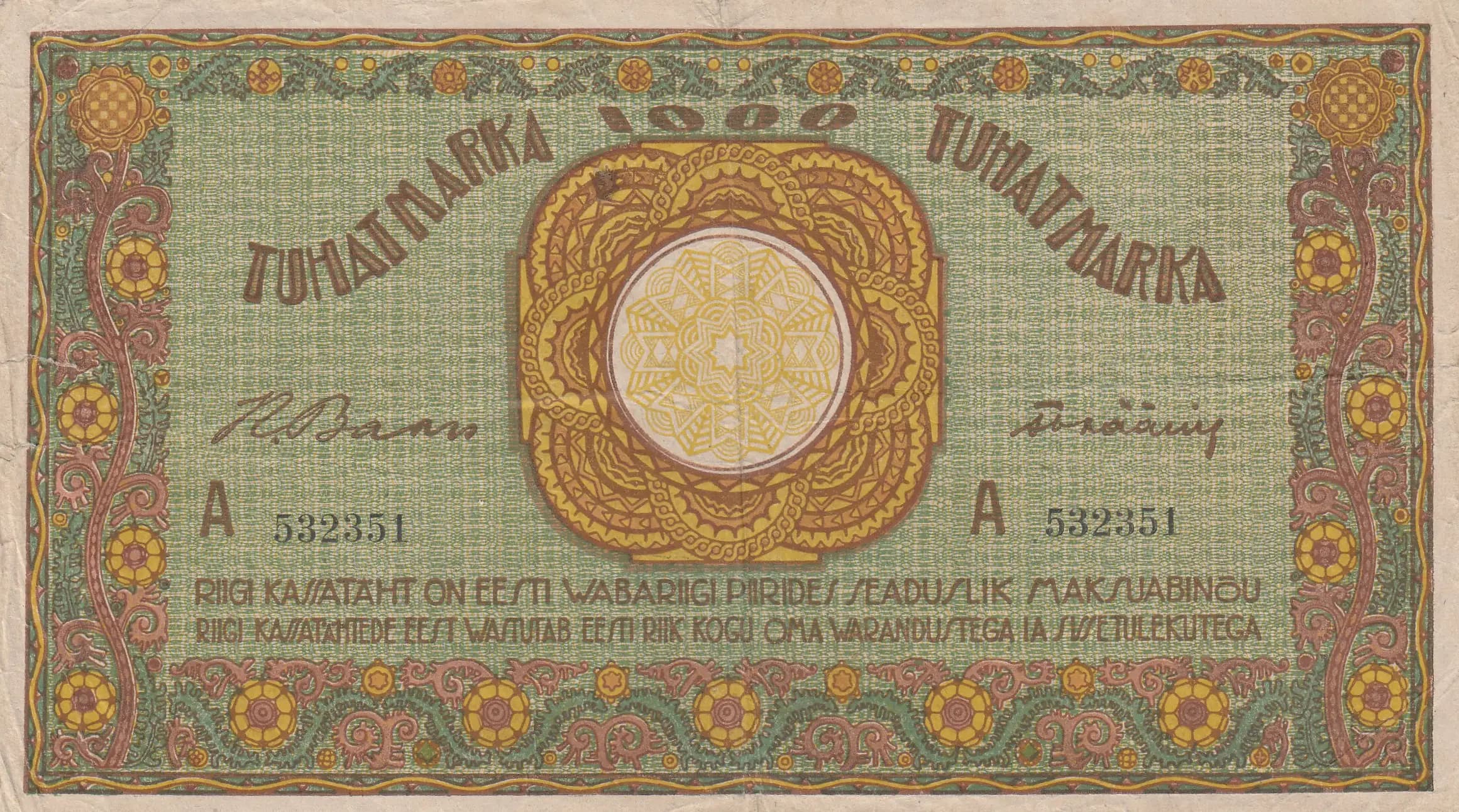
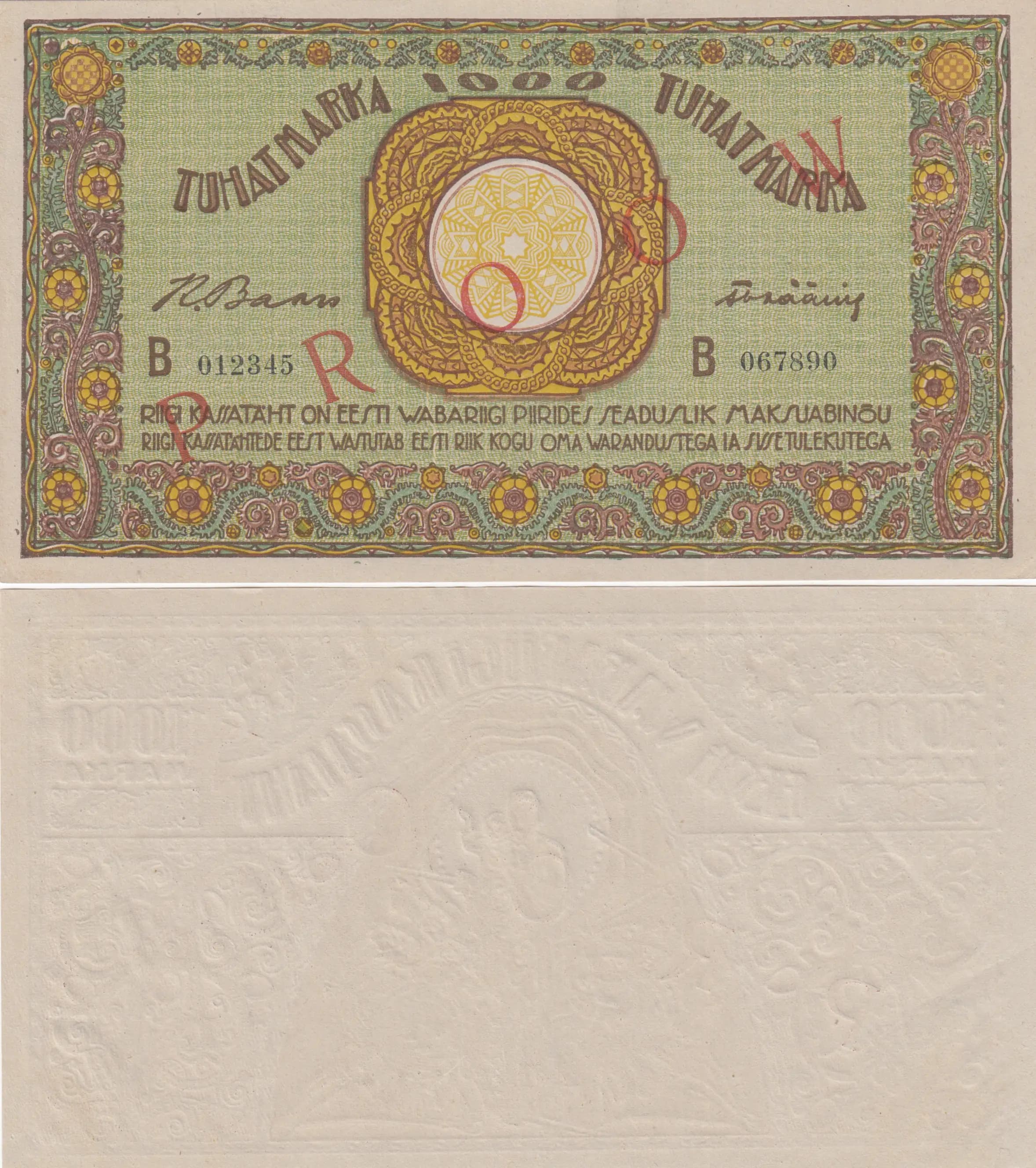
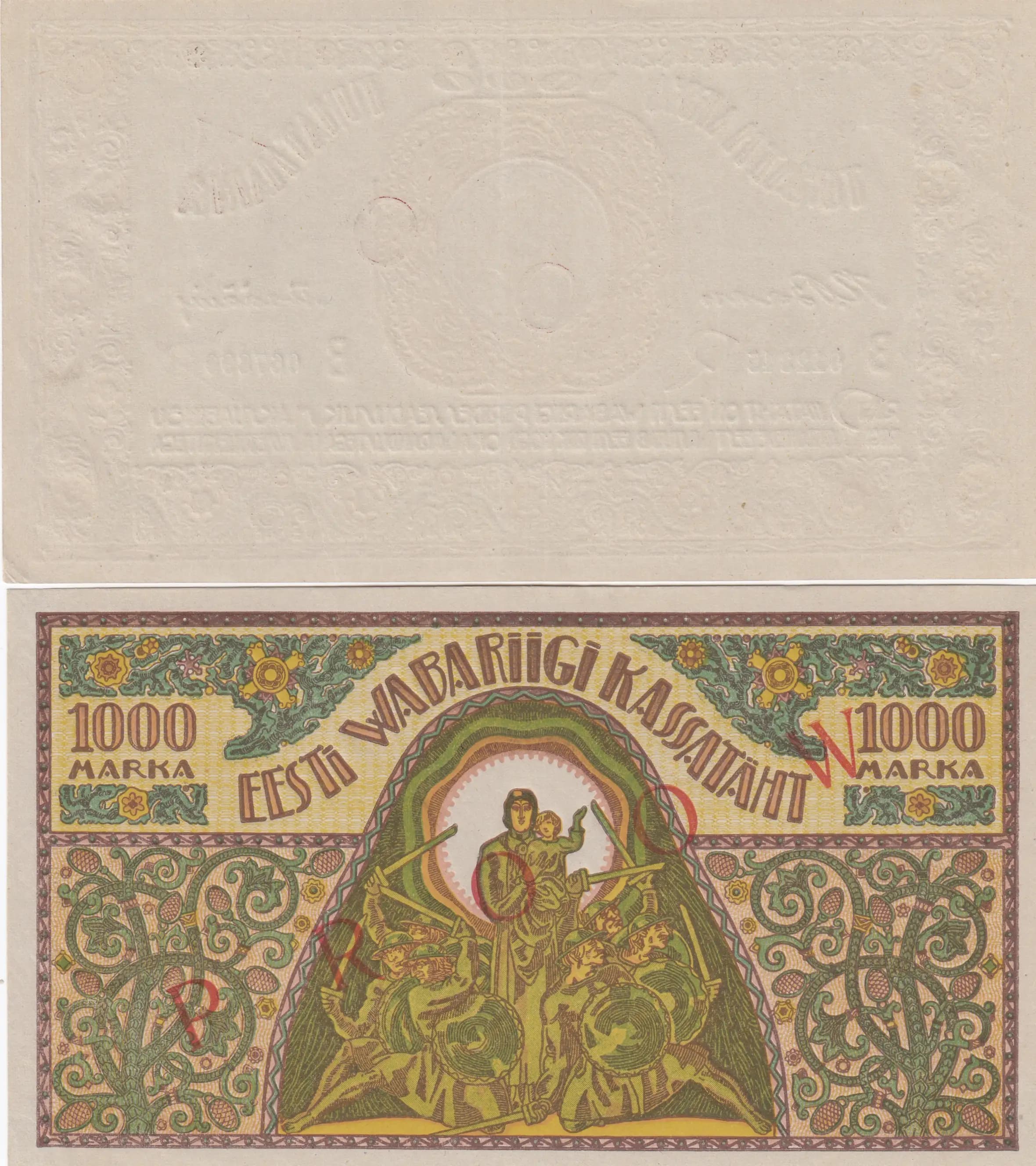
This is an exceptional UNC specimen of Estonia's 1000 Mark note from 1921, featuring a striking Art Nouveau design with an ornate geometric medallion on the obverse and a classical allegorical "Birth of Liberty" vignette on the reverse. The note displays pristine condition with sharp, clear printing throughout and no circulation wear, representing a high-quality example of early Estonian currency design. As a specimen note with dual series prefix letters, this represents an important piece of Estonian numismatic history from the newly independent nation's early monetary period.
Uncommon to scarce. While catalog references show 2016 UNC values around $2,000 USD with typical market prices ranging from $150-$450 USD depending on grade, the specimen designation ('cs' suffix in Pick number P-50cs) indicates this is a special issue variant created for archival or presentation purposes rather than standard circulation. Specimen notes typically have lower survival rates than regular issues due to their limited production and specialized handling. The UNC grade and specimen status elevate this above common circulation examples.
Issued by the Treasury of Estonia (Eesti Vabariigi) in 1921, this note represents the fledgling Estonian Republic's assertion of monetary independence following the nation's declaration of independence in 1918. The allegorical "Birth of Liberty" depicted on the reverse symbolizes the nation's emergence as a free state, while the classical styling and intricate ornamentation reflect early 20th-century European design aesthetics and the aspirations of the new nation to establish itself as a modern, cultured state.
The obverse features a classical Art Nouveau design centered on a large circular geometric medallion with an intricate star/cross pattern in gold and white, surrounded by an ornamental border of floral and geometric elements in green, gold, purple, and cream tones. The reverse displays an allegorical female figure (personification of Liberty) holding a cherub or child figure, representing the 'Birth of Liberty'—a powerful symbol of Estonian national independence. The figure is rendered in classical engraving style with fine line work, surrounded by botanical and mythological decorative elements. The overall composition employs symmetrical framing with ornamental borders featuring floral patterns, typical of contemporary European banknote design from the post-WWI period.
Front: 'TUHATLINDIKA JUHANKINNA' (One Thousand Mark) - denomination text; 'PANK MATAMTONI EEST VABARIIGI DIIRIDE / SADIHIK MAMUARINO' (Bank of the Estonian Republic) - issuing authority; Serial numbers with prefix 'B' appear on left and right sides. Back: '1000 MARKA' (1000 Mark) - denomination, appearing at both top corners; 'EESTI VABARIIGI RAAMATRIHT' (Estonian Republic Bank) - issuing authority. The dual-language and bidirectional text layout is characteristic of early Estonian banknote design.
Intaglio engraving (line engraving and stipple engraving techniques) combined with letterpress for text elements. The fine detail work visible in the geometric medallion, the allegorical figure, and ornamental borders is characteristic of high-quality banknote intaglio production. The sharp, clear impression and fine line definition throughout the design indicate professional security printer production, likely by a European specialized banknote printer (specific printer attribution would require additional research into Estonian Treasury contracts of 1920-1921).
This note is cataloged as Pick P-50cs, the specimen variant. The PMG population report identifies five variants for the base 1000 Mark P-50: P-50a, P-50b, P-50c, P-50cs1, and P-50s2. The 'cs' suffix designates this as a specimen note (likely with 'SPECIMEN' overprint or similar marking, though not explicitly confirmed in visual analysis). The watermark is listed as 'EV' (Eesti Vabariigi / Estonian Republic), and the note carries serial number prefix 'B' without additional letter prefixes. Issue date variants suggest 1920-1921 production, with this specific catalog entry dated to 1921.