1000 mark 1921
Market Prices
About This Note
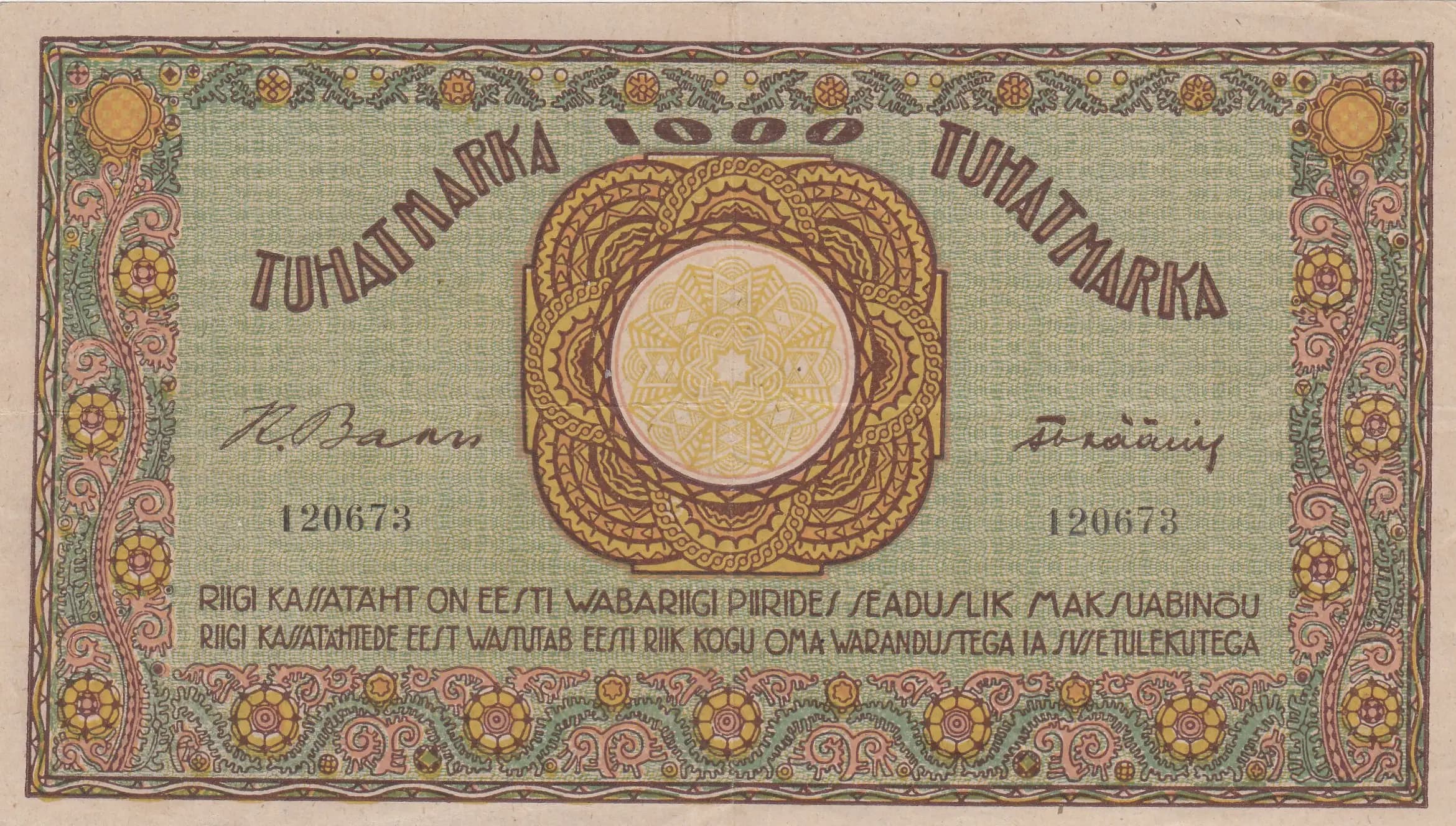
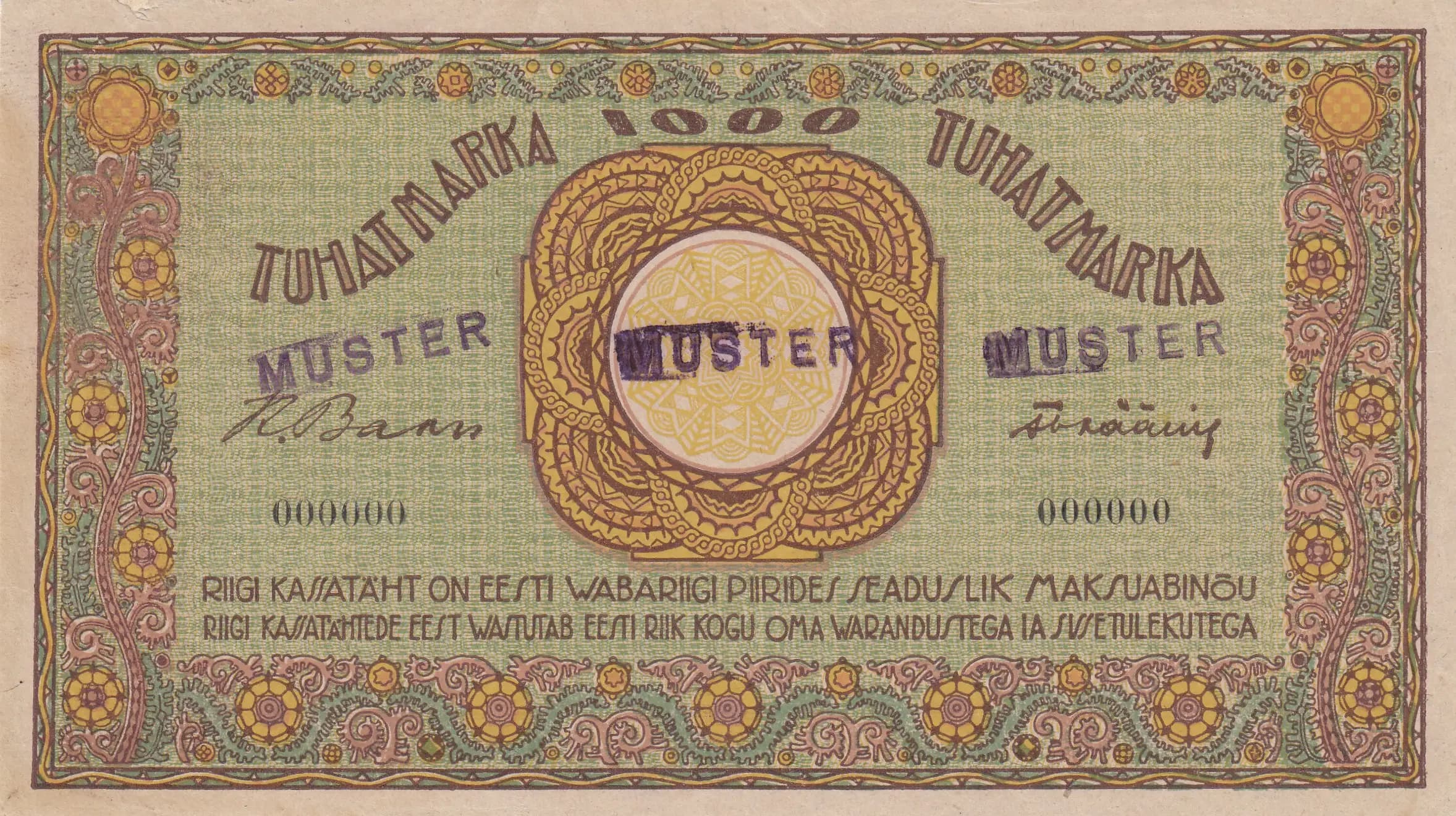
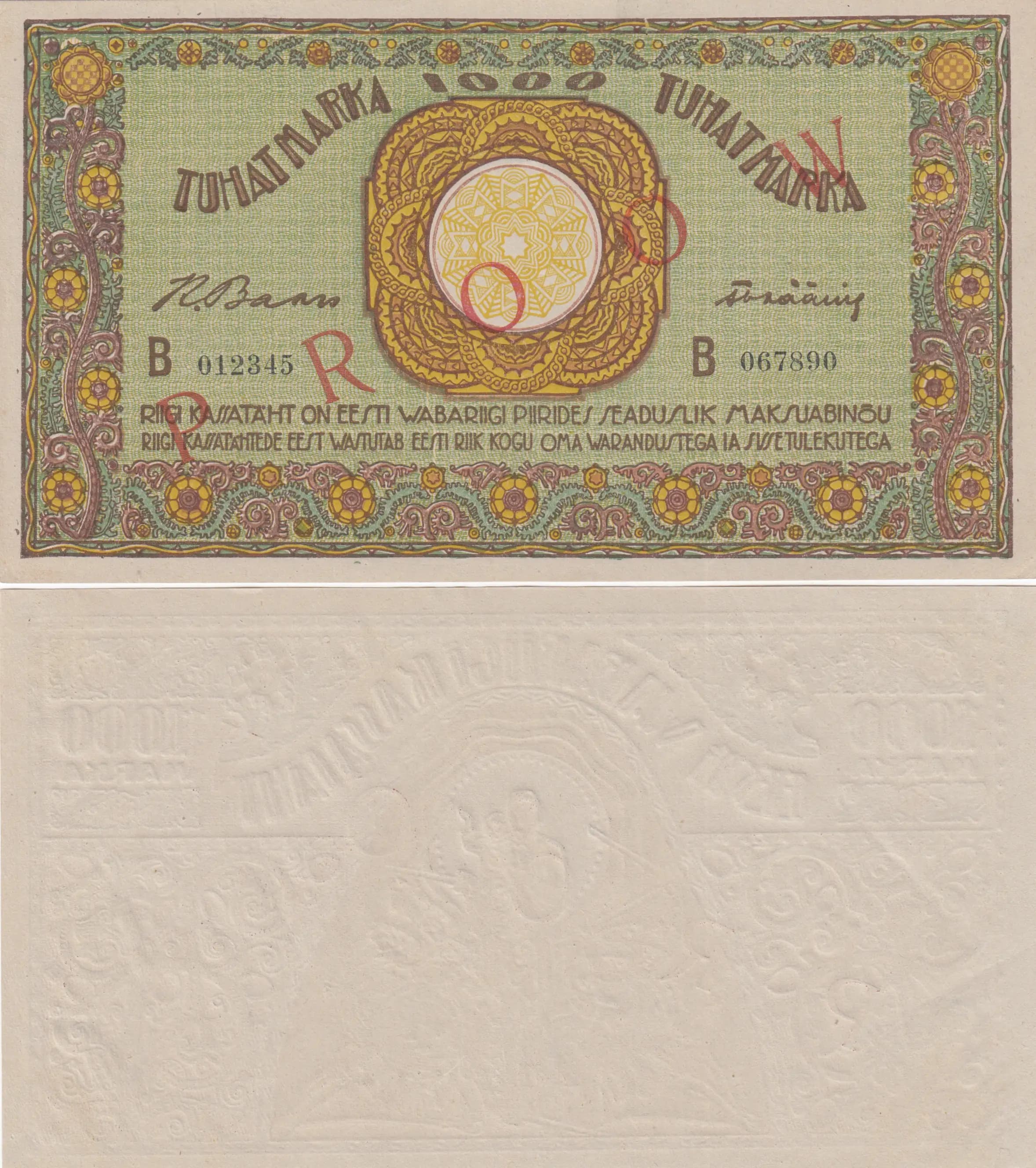
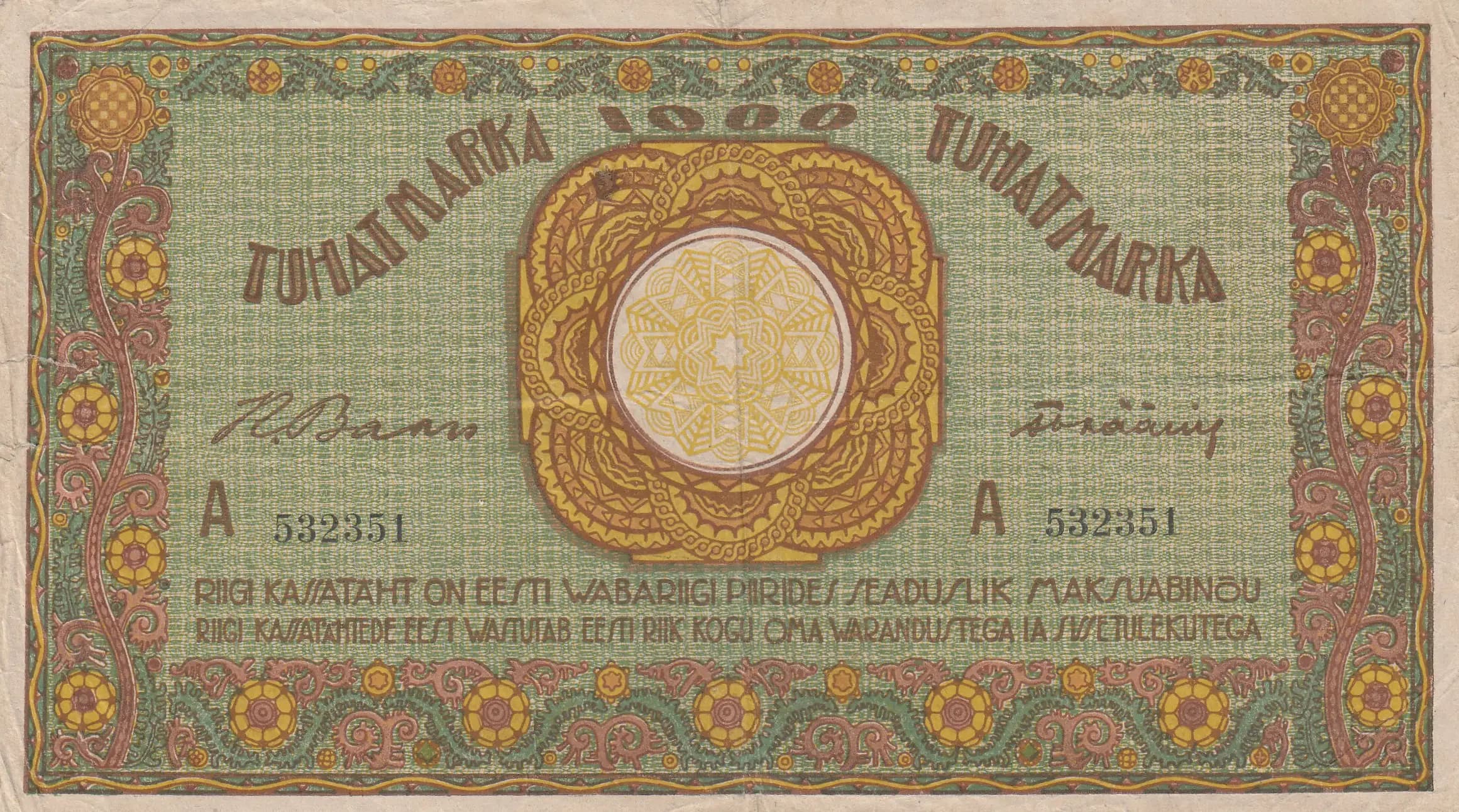
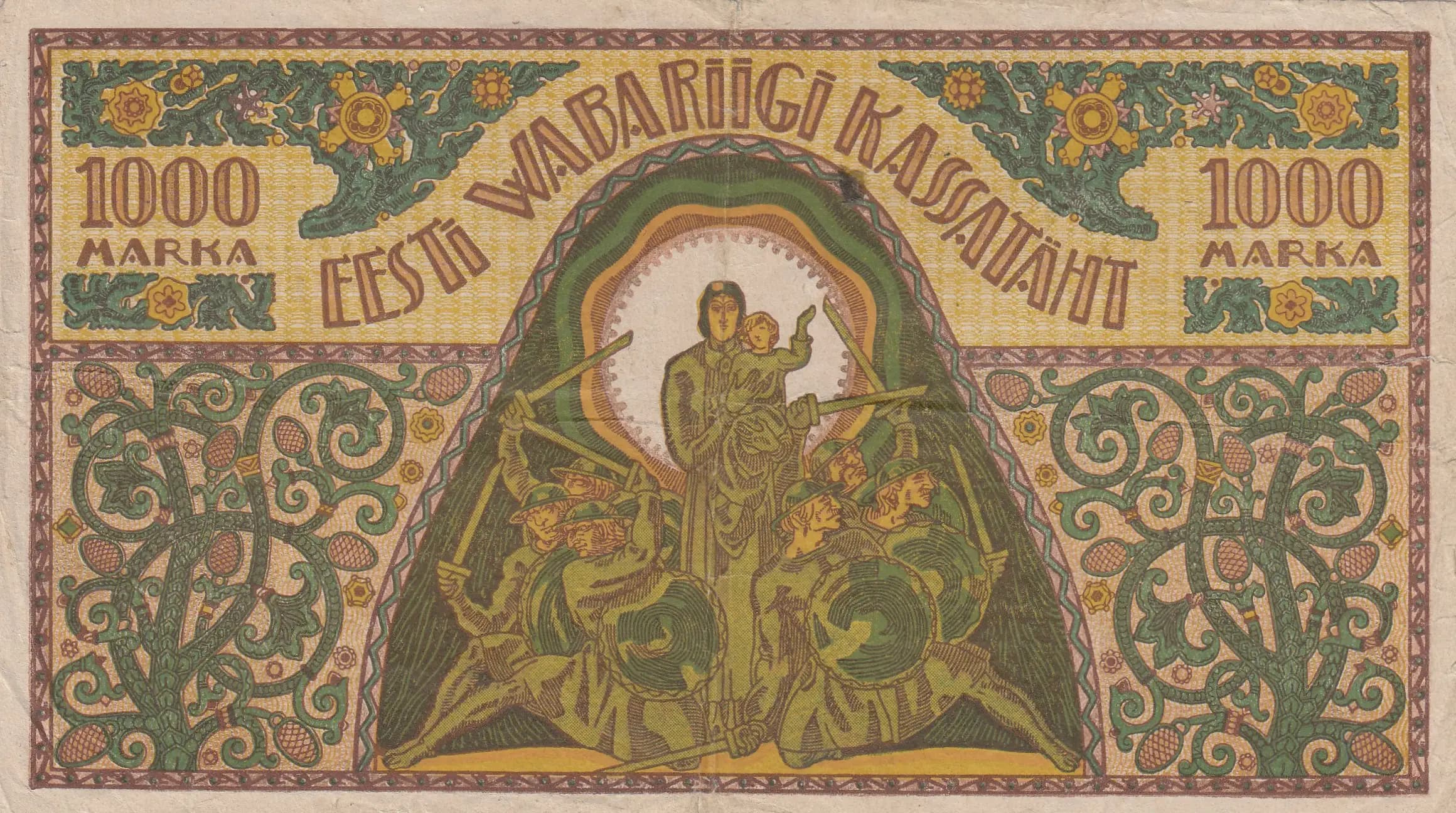
This 1000 Mark note from Estonia's 1921 issue presents a striking example of interwar Baltic currency design in Very Fine condition. The obverse features an ornate circular medallion with intricate geometric patterning in gold and cream tones against a green background, while the reverse depicts an allegorical 'Birth of Liberty' scene with a personified female figure and cherubs, characteristic of the nationalist imagery popular in newly independent Estonia. Despite age-appropriate foxing and patina, the note displays excellent structural integrity with no major tears or creases, making it a desirable example of early Estonian numismatic history.
common. While this note represents an important historical issue from a newly independent nation, the 1000 Mark denomination from 1921 appears in the marketplace with sufficient regularity to qualify as common in most grades. The catalogue value of $1000 VF cited in reference data reflects numismatic value rather than scarcity—the note is desirable to collectors of Baltic currency and early Estonian history, but not rare in absolute terms. eBay pricing shows considerable variation ($38.50 to $450 in XF/VF grades), typical of common notes where individual specimen quality and seller pricing strategies create volatility. The existence of five catalogued Pick variants (P-50a through P-50cs1) suggests multiple printings or states, further supporting common-grade classification.
This note was issued by the Treasury of Estonia (Eesti Vabariigi) during the critical early years of the newly independent Estonian Republic, following independence from Russia in 1920. The 'Birth of Liberty' allegorical imagery on the reverse—featuring a female figure embodying Estonia with children and symbolic palm frond—directly reflects the nation's celebration of sovereignty and freedom after centuries of foreign rule. The ornamental design language and security features represent Estonia's efforts to establish credible state currency authority during a period of significant economic reorganization in the Baltic region.
The obverse showcases Estonia's heraldic and decorative traditions through a large central circular medallion featuring sophisticated geometric patterning, rendered in gold and cream against a green field with ornamental floral motifs along the borders. The reverse presents 'Pallas,' the allegorical female personification of Estonia herself, depicted in classical style with upraised hand, accompanied by cherub figures representing future generations or national virtue. She holds symbolic attributes including a palm frond (victory/peace) and staff (authority), positioned within an ornamental arch. Decorative scrollwork with pinecone elements (likely representing Estonian forests) flanks the central composition. The design synthesizes classical allegorical conventions with nationalist symbolism specific to newly independent Estonia.
Front side: Central text reads 'TÕHISMAARKA PANK' (Estonia Bank). Serial numbers appear as 'A 532351' on both left and right margins. Extended legal text (partially legible in analysis) references state treasury authority and the Estonian Republic's currency backing. Back side: Denomination displayed as '1000 MARKA' (1000 Marks) in upper and lower corners. Lower inscription reads 'EESTI VABARIIGI MAKSANDINT' (Estonian Republic Treasury/Finance Ministry). The note's textual elements emphasize state authority and currency legitimacy.
This note employs intaglio (engraved) printing with multiple color passes, typical of high-security banknote production of the period. The precise geometric patterning in the central medallion, fine line work in the allegorical composition, and crisp denomination numerals all indicate professional security printing. The color separation visible between green, gold/yellow, and brown/maroon elements suggests multi-plate color intaglio production. Estonian banknotes of this era were typically printed by established European security printers; the technical quality observed is consistent with professional central bank note production standards of the 1920s.
This note is catalogued as Pick P-50b, one of five recognized varieties for the 1000 Mark 1921 issue. The primary distinguishing feature among varieties is the watermark pattern—all variants listed in PMG population data show 'EV' watermark (standing for Eesti Vabariigi, Estonian Republic), though P-50a, P-50b, and P-50c are distinctly recorded variants while P-50cs1 and P-50s2 represent additional state variations. The observed serial number prefix 'A' with sequential numbering (A 532351) is consistent with Series A production. Without access to comparative high-magnification imaging of watermark details or printing characteristics, precise differentiation between P-50a and P-50b cannot be confirmed from visual analysis alone, though the catalog assignment should be verified against watermark examination under UV light.