1000 mark 1921
Market Prices
About This Note
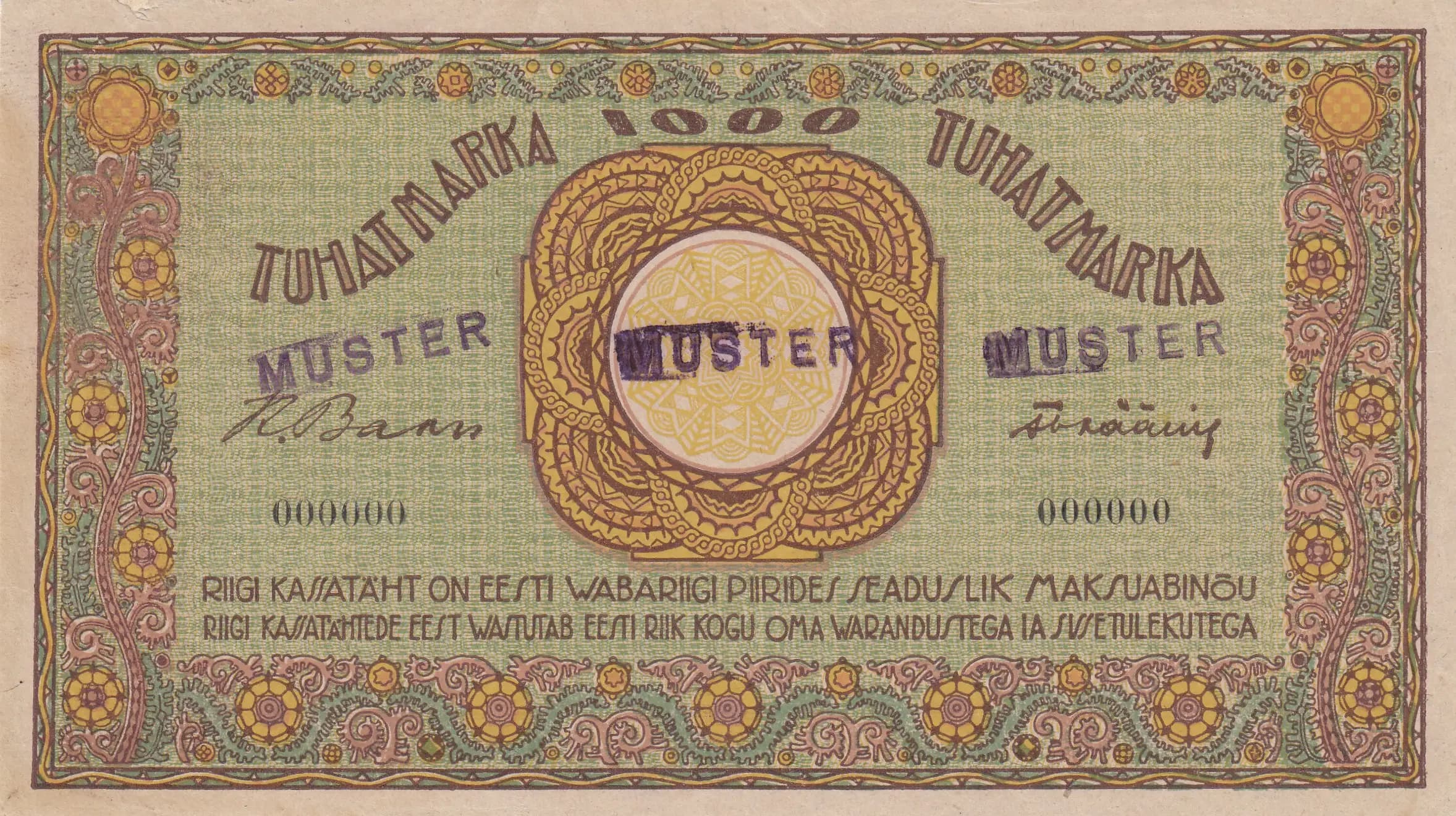
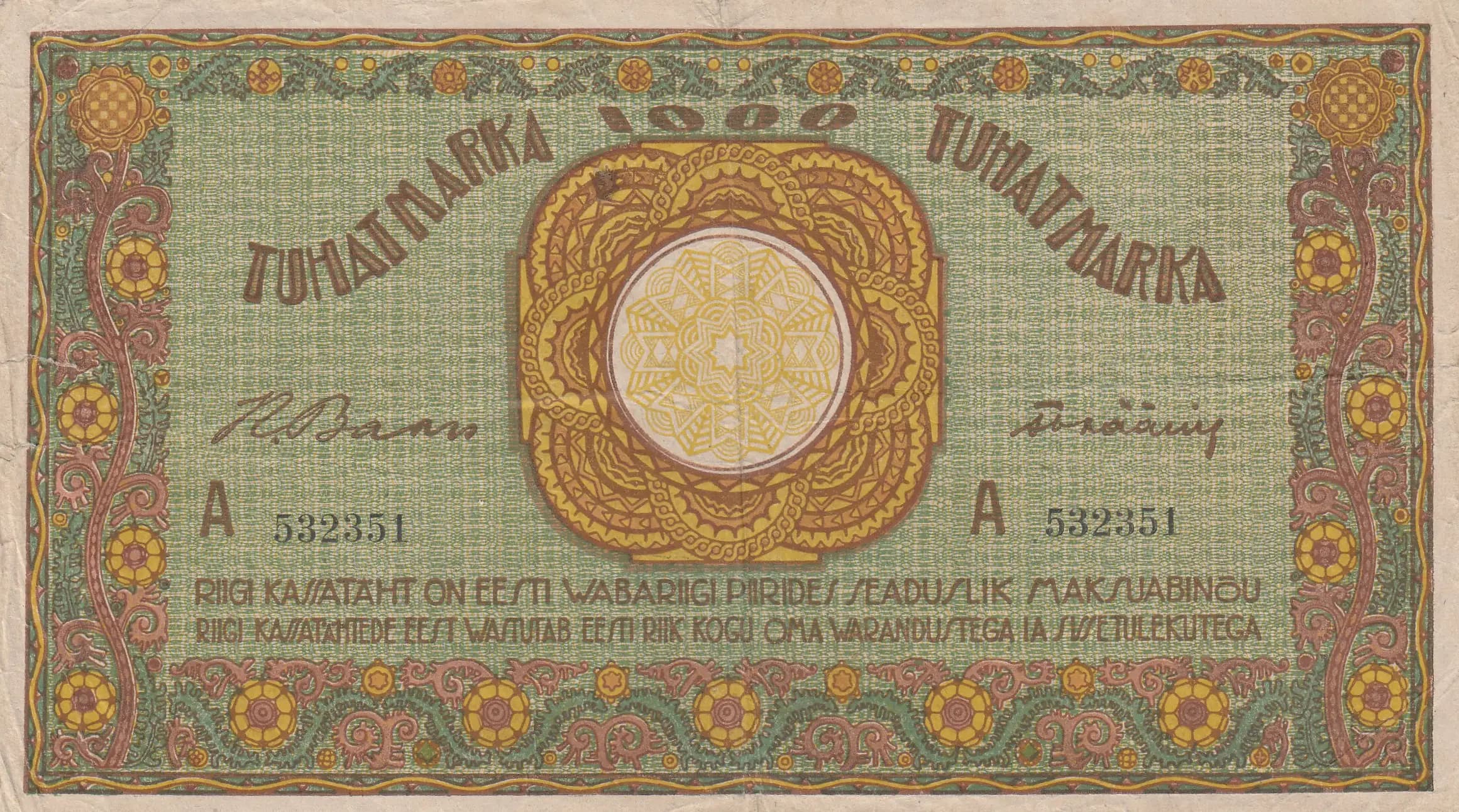
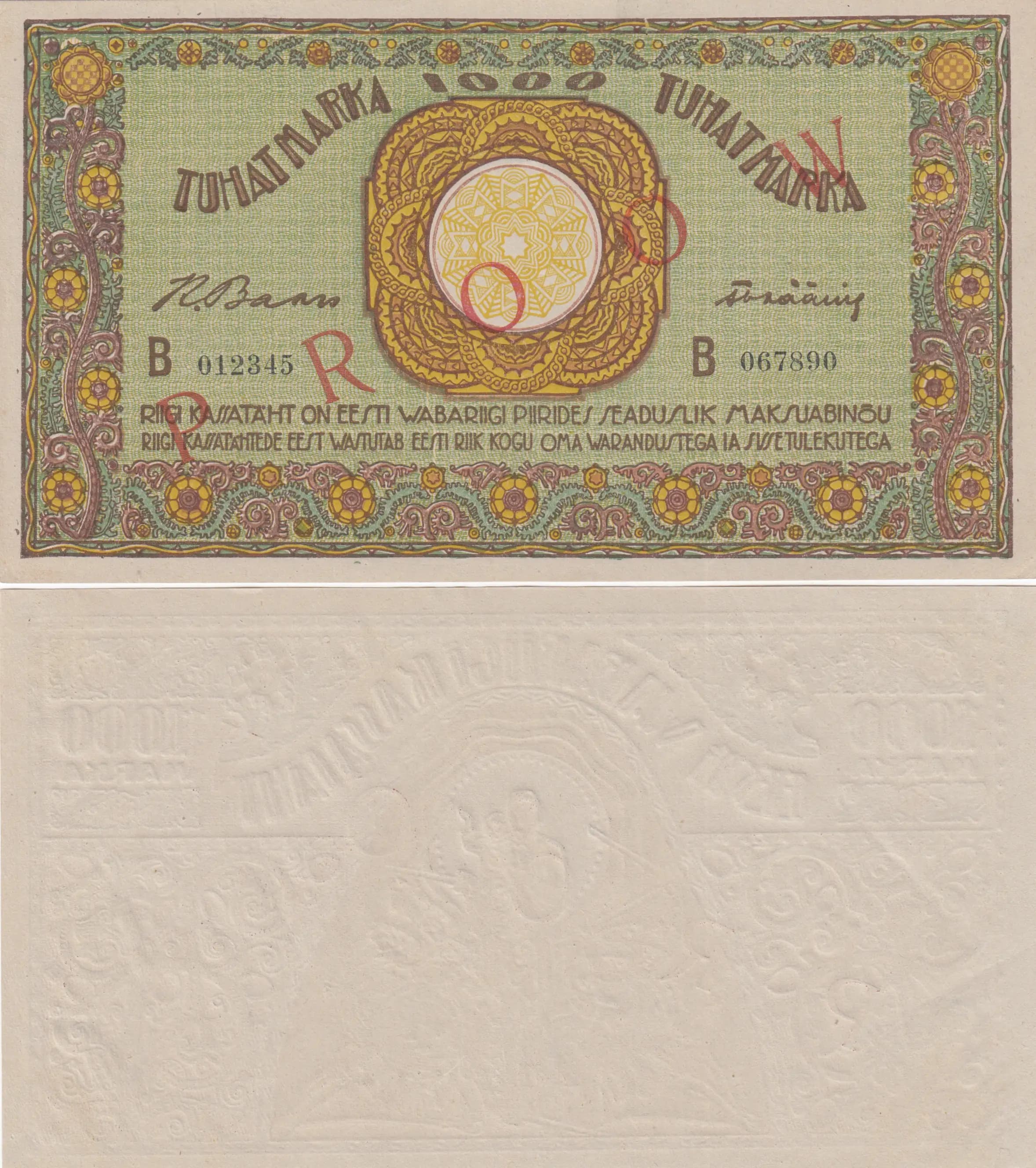
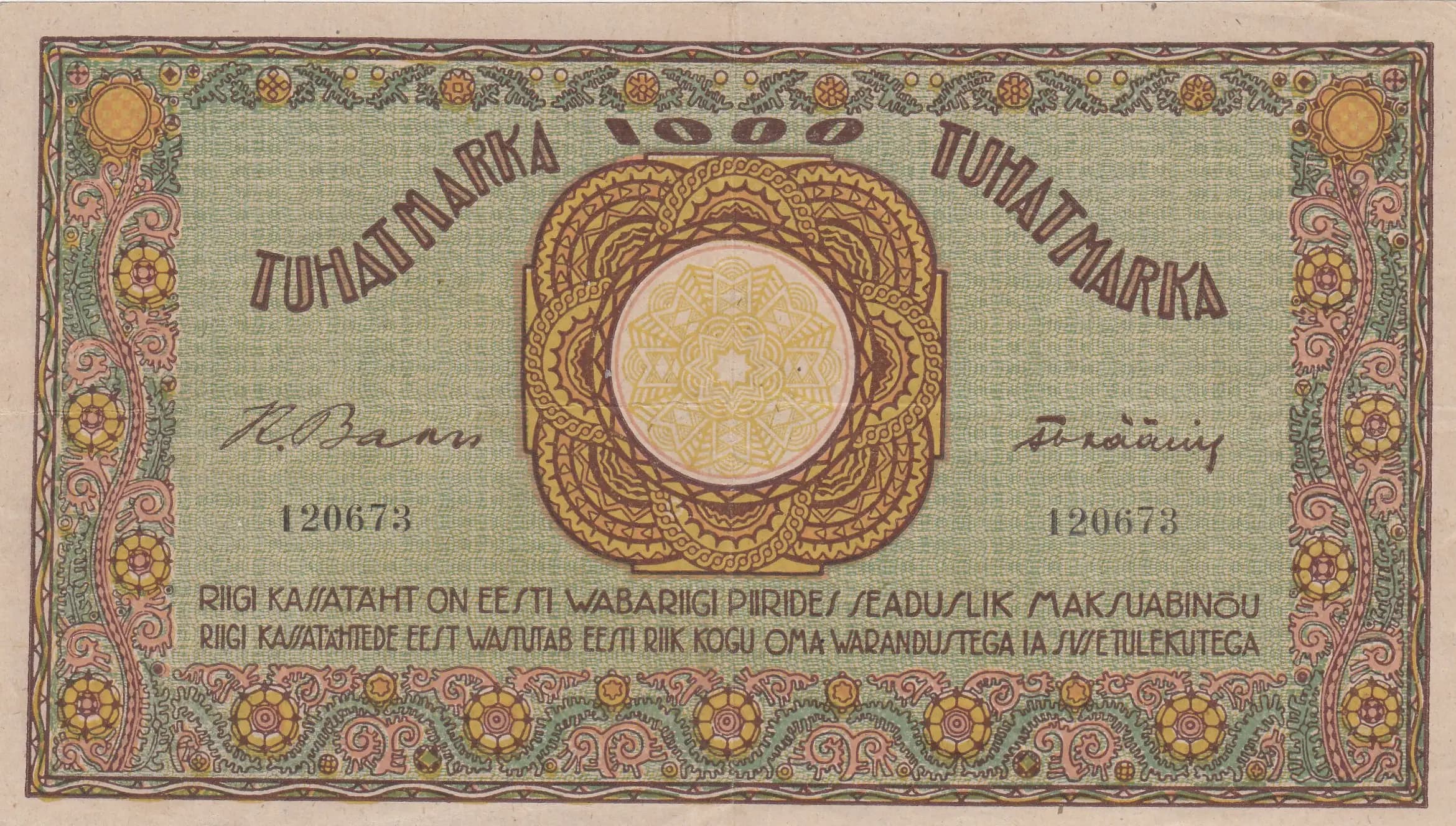
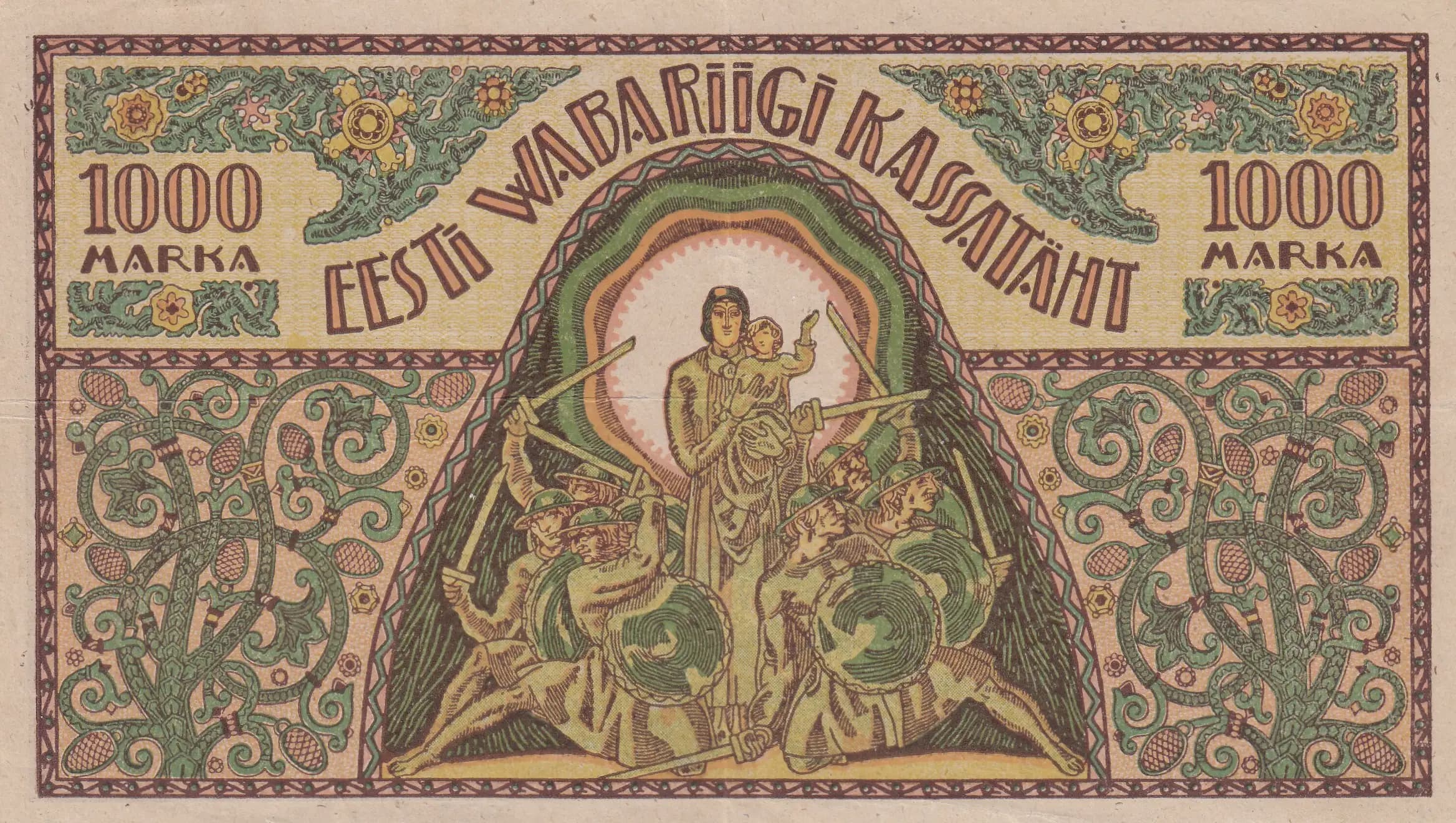
This is a VF-graded 1000 Marka note from Estonia's Treasury issued in 1921 (Pick P-50a), featuring a striking allegorical design on the reverse depicting the 'Birth of Liberty' with a winged female figure and cherubs in classical engraving style. The obverse showcases an intricate mandala-like geometric pattern in gold and cream against a light green background with ornate floral borders. The note exhibits vibrant colors, crisp detail, and no visible wear or circulation damage, representing a solid mid-grade example of this early Estonian currency.
Common. While this note has moderate catalog values ($1,000 VF in 2016), eBay transaction data shows considerable price variation ($15–$669), with most VF grades selling in the $82–$245 range. This volatility and the presence of multiple auction listings indicate reasonable availability in the collector market. The note was part of a regular issue from a functioning national treasury with no evidence of restricted print runs or recalls. The existence of five cataloged varieties (P-50a through P-50cs1) suggests sufficient original circulation and survival to support multiple variants.
This 1000 Marka note was issued during Estonia's early independence period (1920-1921) following the country's break from Russian imperial control. The 'Birth of Liberty' allegorical design on the reverse—featuring a winged female figure with cherubs—symbolizes Estonia's newfound sovereignty and national identity during the founding years of the Estonian Republic. The use of the denomination 'Marka' reflects Estonia's transition away from the Russian Ruble, as the newly independent nation established its own monetary system to affirm statehood and economic independence.
The obverse features a meticulously engraved geometric centerpiece—a large circular mandala-like pattern rendered in gold and cream tones within a rounded square cartouche, surrounded by an elaborate border of floral and scroll motifs in green, brown, pink, and gold. The reverse displays an allegorical engraving in the neoclassical tradition: a winged female figure personifying Liberty or Estonia as the 'mother of the nation,' depicted with children and cherubs arranged around her in a protective, nurturing composition. The central allegorical scene is enclosed within a decorative oval frame with multiple borders and ornamental scroll-work. This iconography was typical of early 20th-century European national currencies celebrating newly won independence. The watermark 'EV' (Eesti Vabariigi/Estonian Republic) is present throughout.
FRONT: 'TOHATU MARKA' (One Thousand Mark) / '1000' (numerical denomination) / 'PÜHATU MARKA' (Thousand Mark) / Serial number: 120673 / Legal authority text regarding the backing and legal tender status of the note issued by the Estonian State Treasury. BACK: '1000 MARKA' (appears twice at top corners) / 'EESTI WABARIIGI KLASSANINT' (Estonian Republic)
This note was produced using intaglio engraving (line engraving), evidenced by the fine, precise line work visible in both the intricate geometric patterns of the obverse and the detailed allegorical figures on the reverse. The crisp detail retention in the mandala pattern and the exceptional rendering of the cherubs and drapery confirm professional engraved plate printing. The multi-color printing required separate passes for the green, brown, pink, and gold inks. This technique was standard for security printing of national banknotes in the early 1920s and provided both aesthetic refinement and counterfeiting resistance through the complexity of the engraved plates.
This note is Pick P-50a, one of five identified varieties of the 1000 Marka denomination. All variants share the watermark 'EV' (Eesti Vabariigi). The distinguishing characteristics of P-50a versus P-50b and P-50c are likely related to signature combinations, series letter prefixes, or printer marks; the visual analysis notes the absence of series prefix letters on this example. The serial number observed (120673) contains no letter prefix, which is consistent with the P-50a designation. The exact criteria differentiating P-50a from P-50b and P-50c would require comparison with other cataloged examples or reference to detailed Pick catalog notes on signature varieties or printer variations.