1000 mark 1921 specimen
Market Prices
About This Note
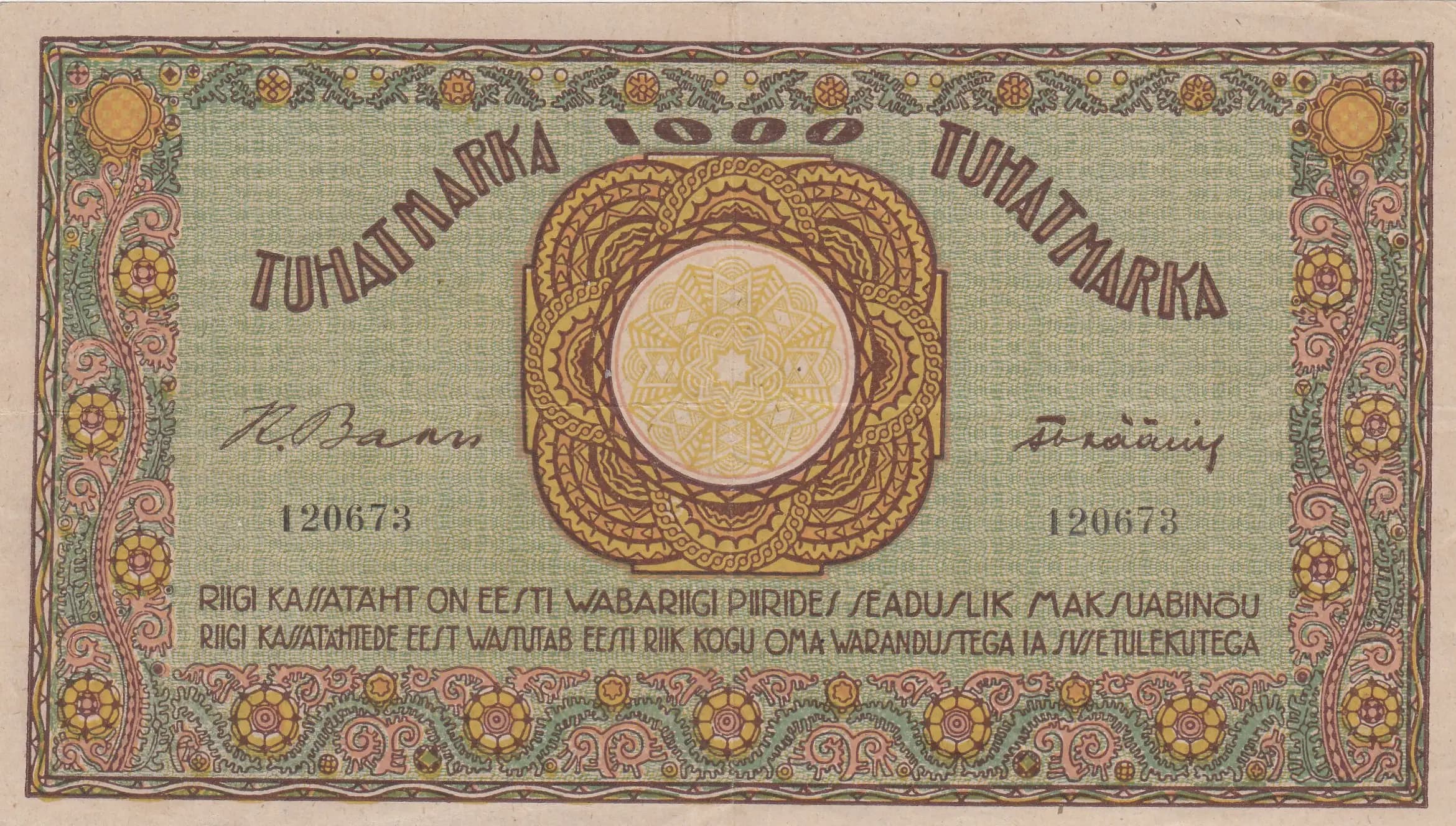
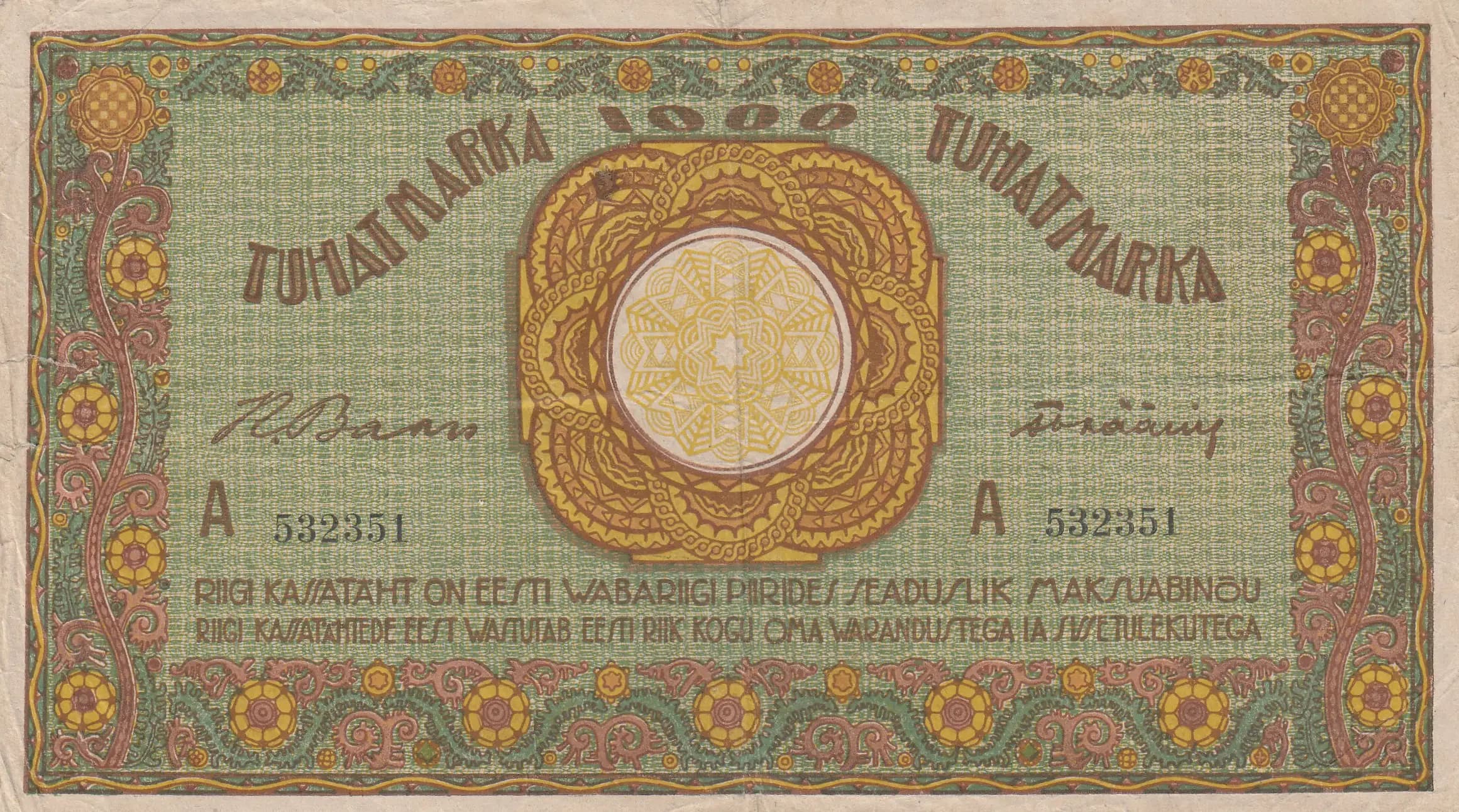
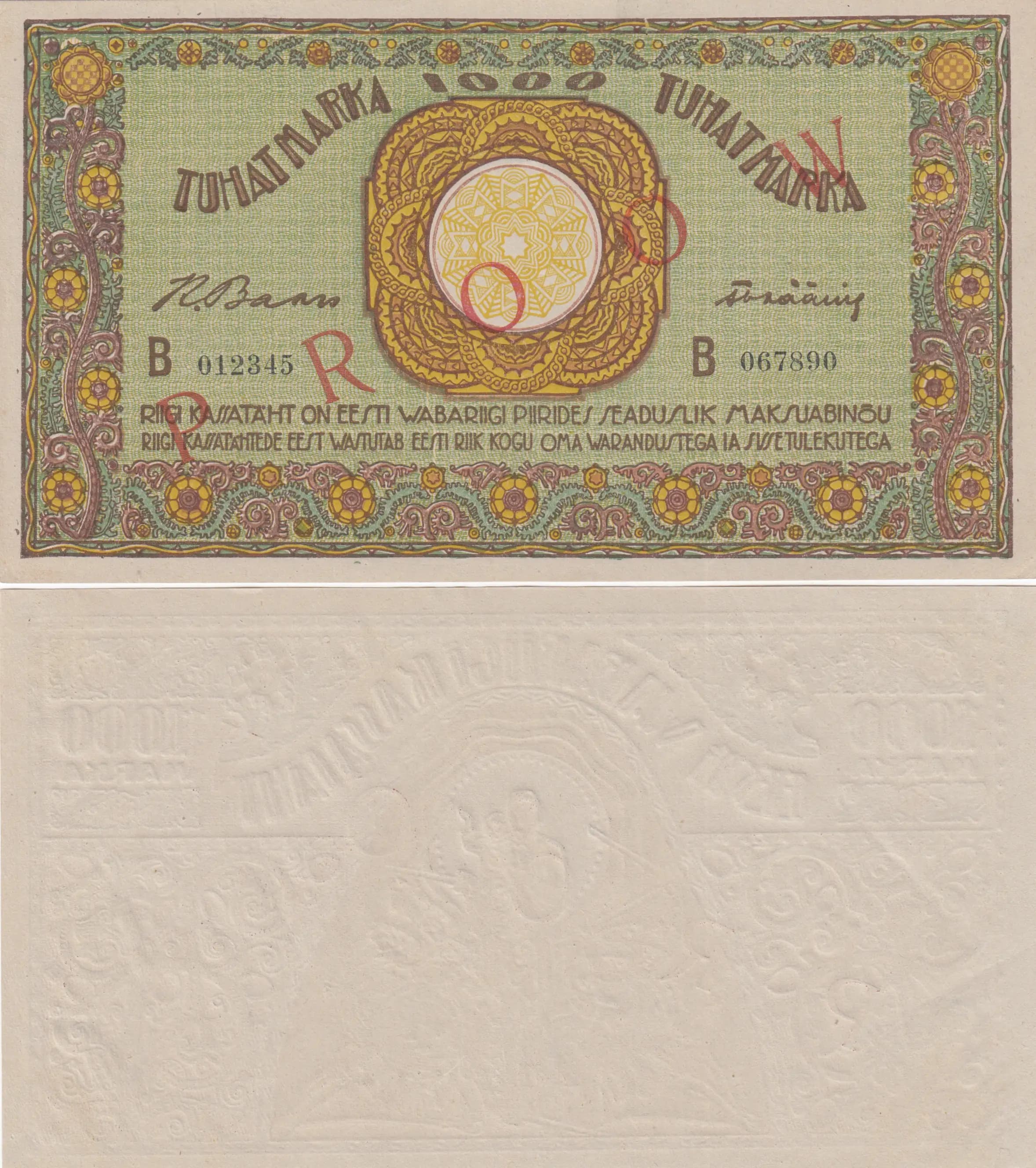
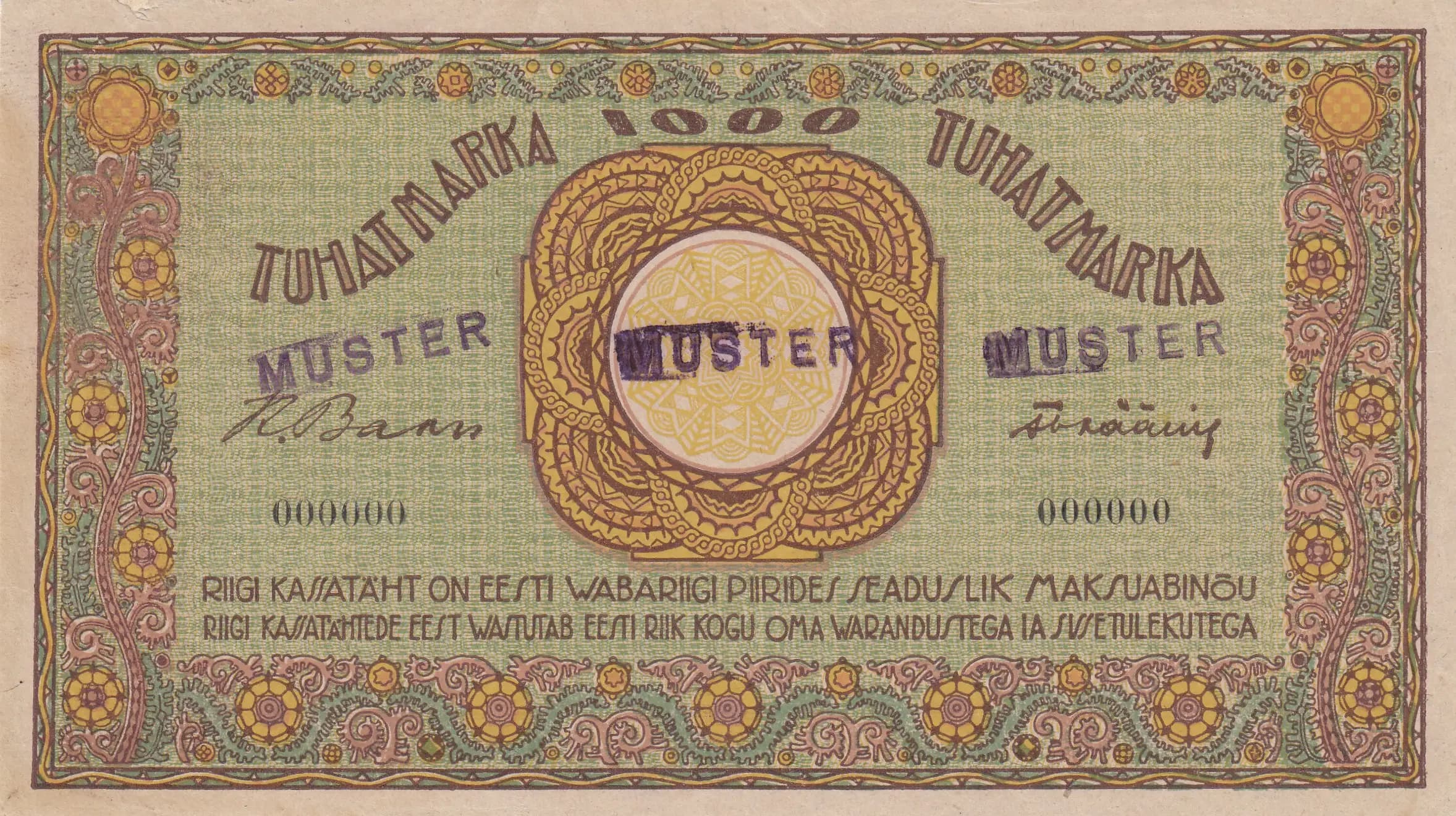
This is a specimen note of the Estonian 1000 Marka from 1921, displaying the characteristic light green and brown color scheme with ornate Art Nouveau-inspired decorative borders. The note features prominent "MUSTER" (specimen) overprints in German, indicating it was never intended for circulation. In UNC condition, this specimen note shows minimal wear with excellent preservation of the intricate engraving work, making it a desirable example for collectors of early Estonian currency and interwar period banknotes.
Common. Although specimen notes command a premium over circulated examples, this denomination and type are not particularly scarce. Catalog values from 2016 list UNC examples at $2000, but current eBay market data shows wide price variation ($15–$669 USD, with most UNC examples in the $150–$450 range), indicating adequate supply. The PMG population report shows five cataloged variants (P-50a through P-50cs1, plus P-50s2), suggesting multiple printings and variants exist. The specimen designation actually increases survival rates since such notes were archived and not circulated. Collector demand for early Estonian currency is moderate but not specialized enough to drive significant scarcity premiums for common denominations.
This note was issued during Estonia's early independence period (1918-1940) by the newly formed Estonian Treasury, following the country's declaration of independence from Russia in 1918. The ornate decorative design reflects the aesthetic preferences of early 20th-century European currency design, while the Estonian language inscriptions prominently affirm the sovereignty and legitimacy of the new Estonian state. The specimen designation indicates this was a security printer's sample, used to demonstrate the note's design and security features to the Estonian government before full production runs.
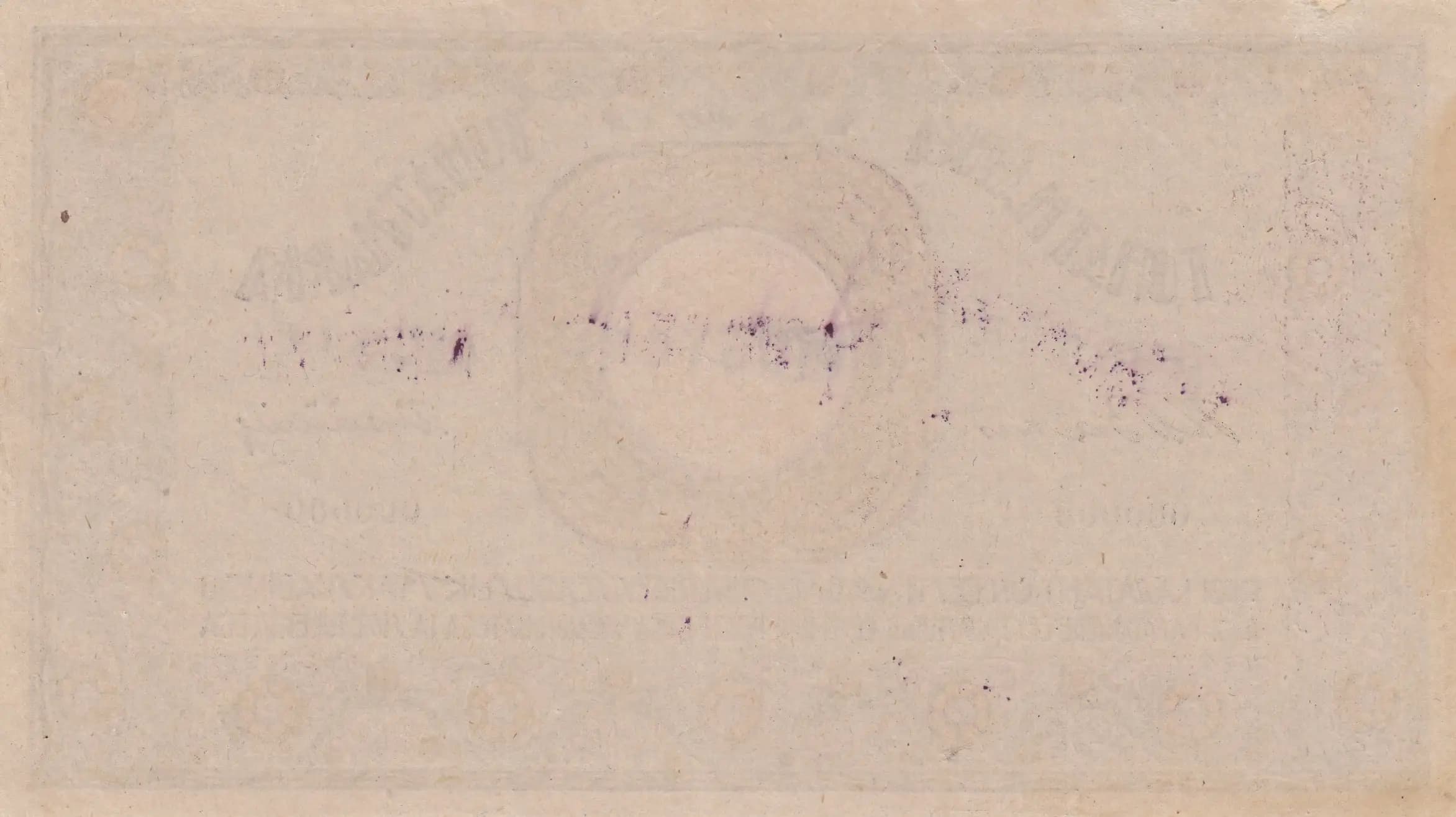
The obverse features a symmetrical, highly ornamental design typical of early 20th-century Scandinavian and Baltic currency aesthetics. The dominant design element is a large central ornamental square frame rendered in gold and brown, filled with intricate geometric and floral interlocking patterns. This central panel is surrounded by an elaborate decorative border featuring repeated floral motifs, scroll work, and circular medallions positioned in the corners. The color palette employs a light green background with accents in gold, brown, and red/burgundy tones. Denomination numerals "1000" appear prominently, with the value name "TUHIMARKKAA" in Estonian script. The reverse is notably plain, showing only a faint circular watermark or design element in the center—a typical approach for specimen notes to reduce production costs. The overall design reflects no specific portraits or landmarks, instead emphasizing the national identity through language and heraldic-style ornamentation.
Front Side: "TUHIMARKKAA" (Estonian: One Thousand Marks); "1000" (numeric denomination); "MUSTER" (German: Specimen - appears three times as overprints); "000000" (serial number area, blank on specimen); "RIIGI KASSATAHT ON EESTI WABARIIGI PIIRIDES SEADUSLLIK MAKSAABINOU RIIGI KASSATAHDE EEST WAJUTAB EESTI RIIK KOGU OMA WARANDUST/EGA IA SWETULEKUTEGA" (Estonian legal tender declaration: "State note is legal tender within the Estonian Republic. The Estonian state is responsible with all its wealth for this treasury note"). Back Side: No legible inscriptions present; largely blank with age-related discoloration.
Intaglio (steel engraving) combined with multicolor letterpress or chromolithography. The fine line work visible in the border designs, the crisp definition of the ornamental patterns, and the precision of the geometric elements are characteristic of high-quality intaglio printing. The watermark ("EV" for Eesti Vabariigi) was incorporated into the paper during manufacture. The specimen note's "MUSTER" overprints appear to have been applied via typography or secondary printing. While specific printer attribution requires additional documentation, many early Estonian notes were produced by foreign security printers; the technical quality suggests a reputable European printer such as those based in Germany or Scandinavia.
This note is cataloged as Pick P-50as, where the 's' suffix denotes specimen status and the 'a' indicates the first major variety. The visual analysis confirms the "EV" watermark and the absence of series prefix letters, consistent with P-50a characteristics. The note displays "MUSTER" overprints characteristic of German-language security printer samples. PMG records indicate this base Pick number encompasses five variants (P-50a, P-50b, P-50c, P-50cs1, P-50s2), likely differing in watermark placement, overprint style, or minor design elements. This specimen (P-50as) would represent the specimen version of the first design variant. No series letters or alternate signature varieties are visible on this example.