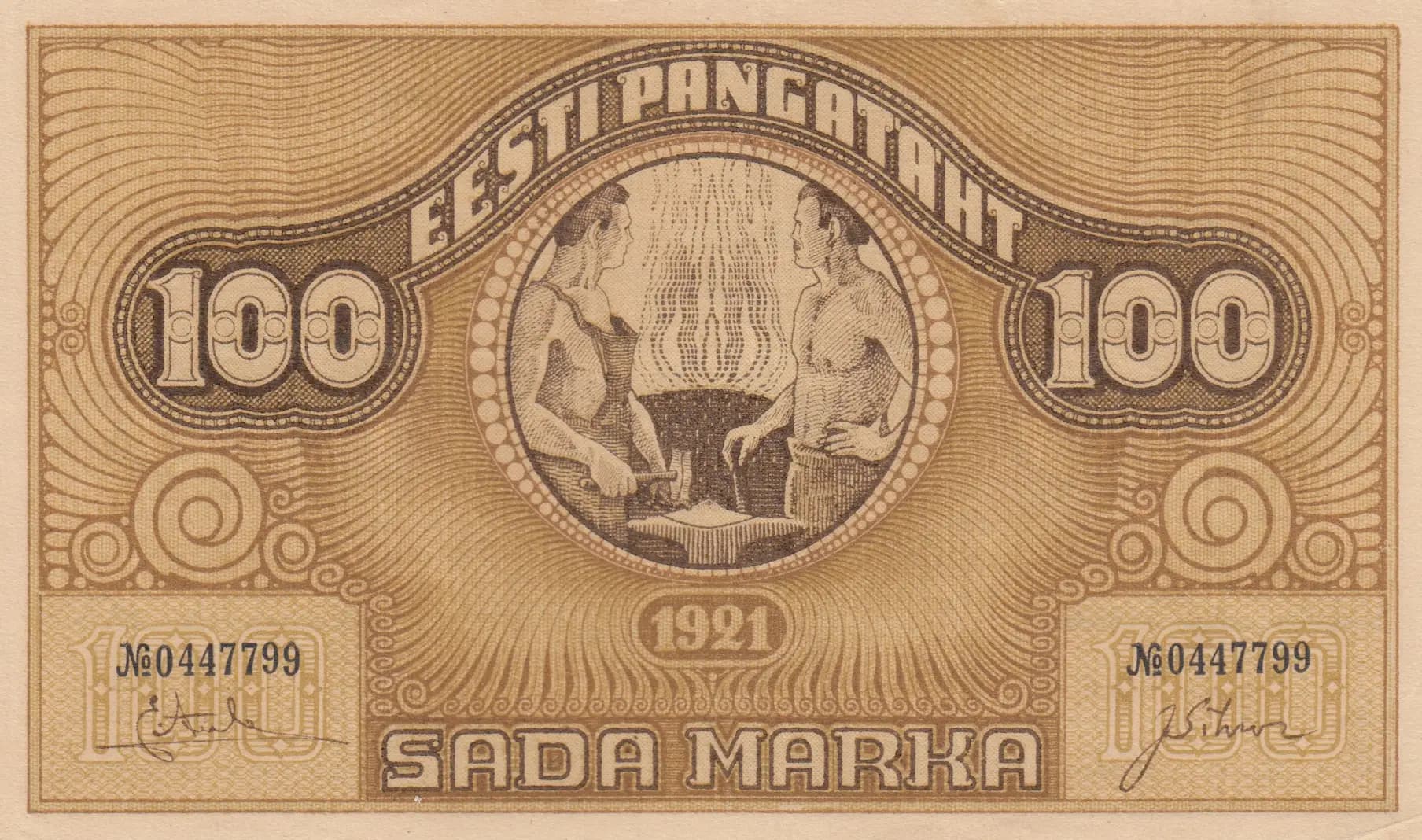
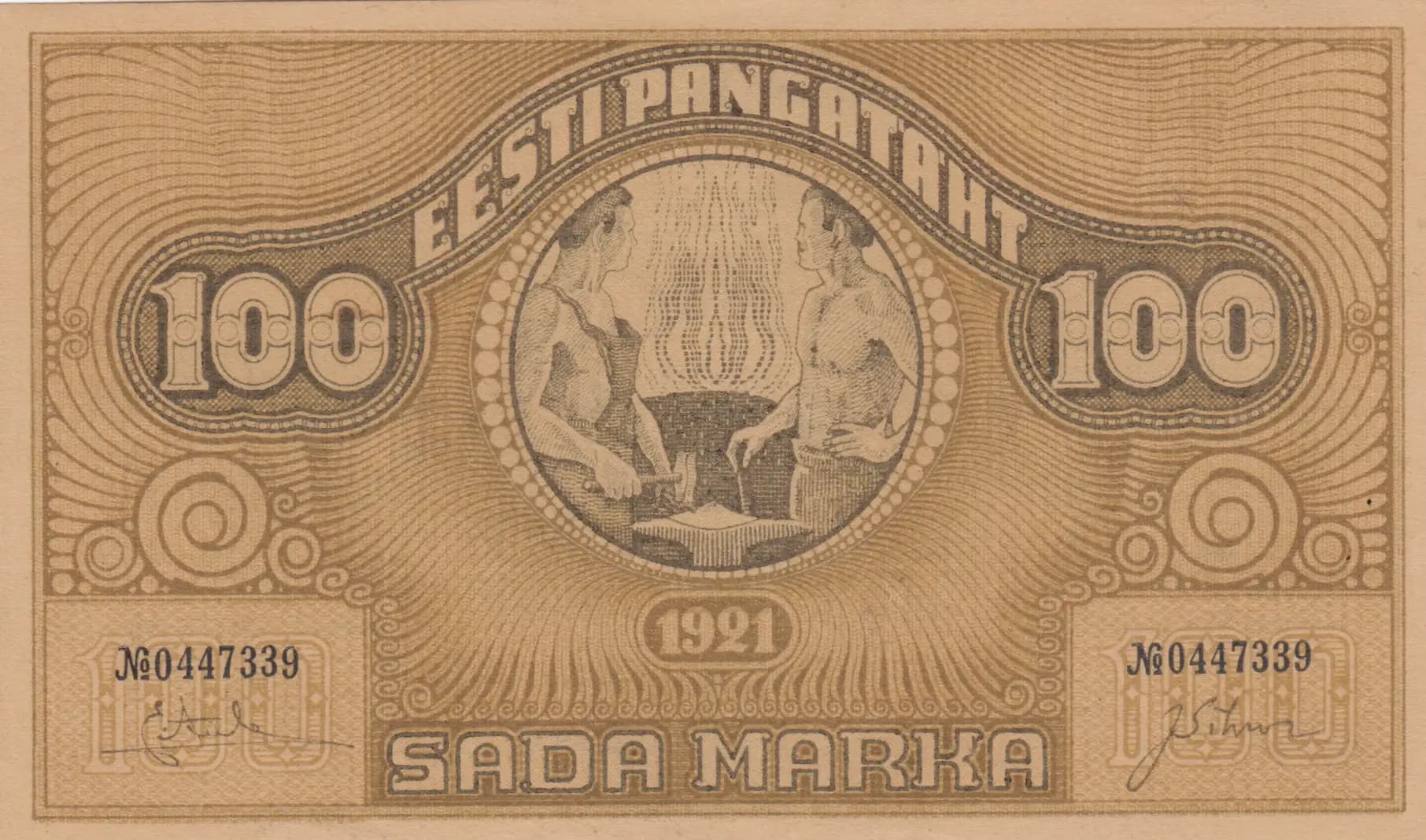
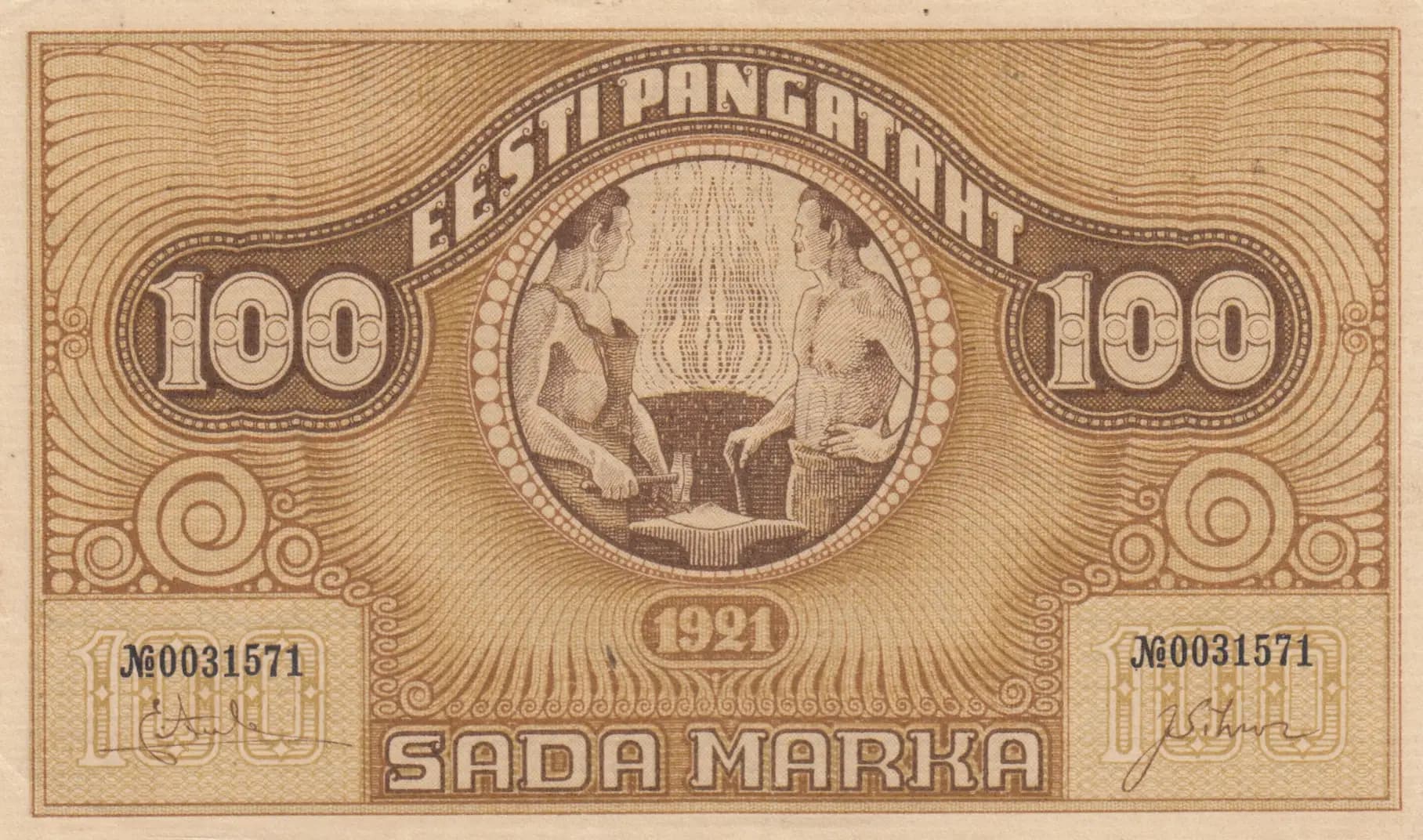
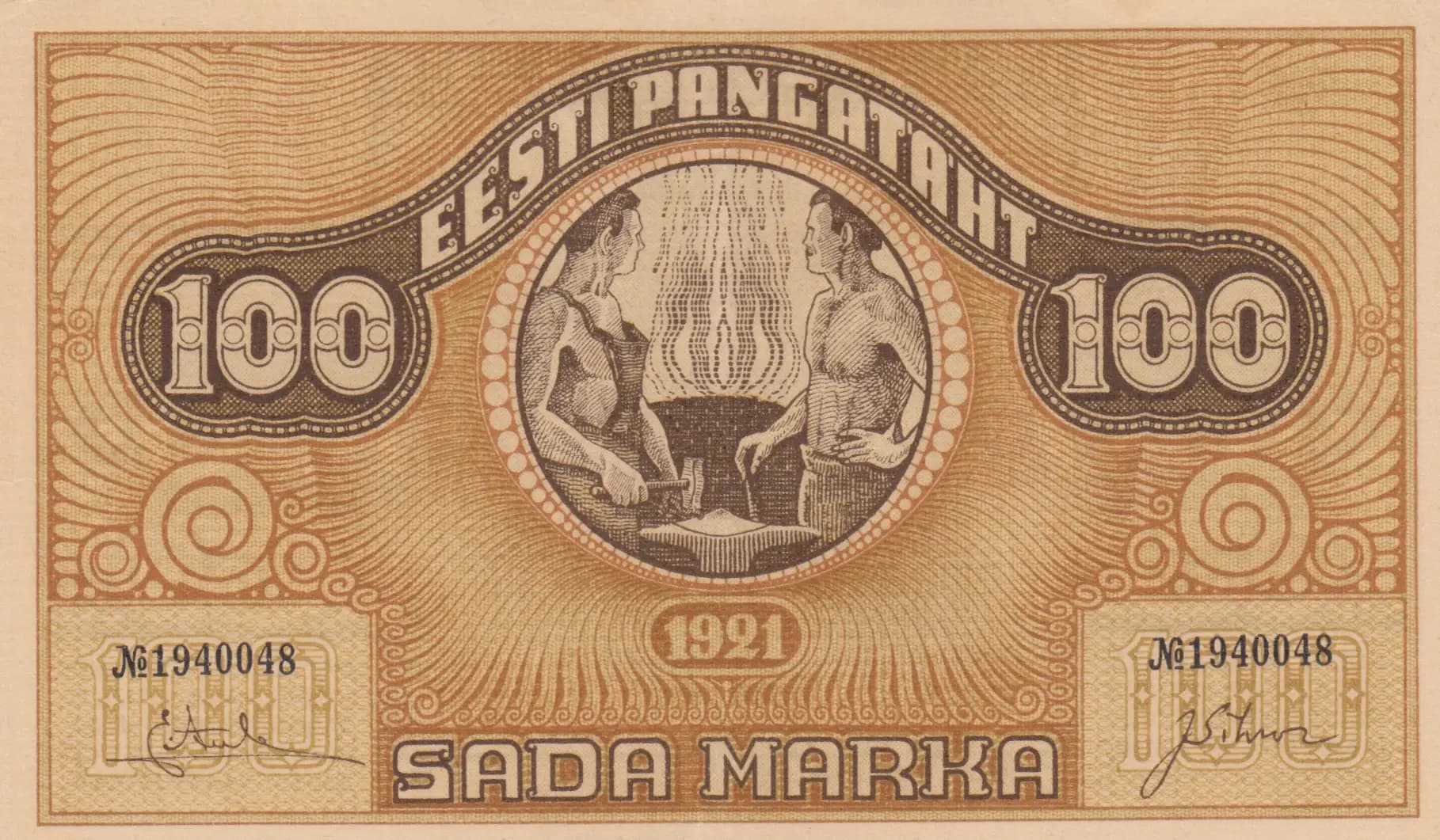
100 marka 1921 specimen
Market Prices
1 saleAbout This Note
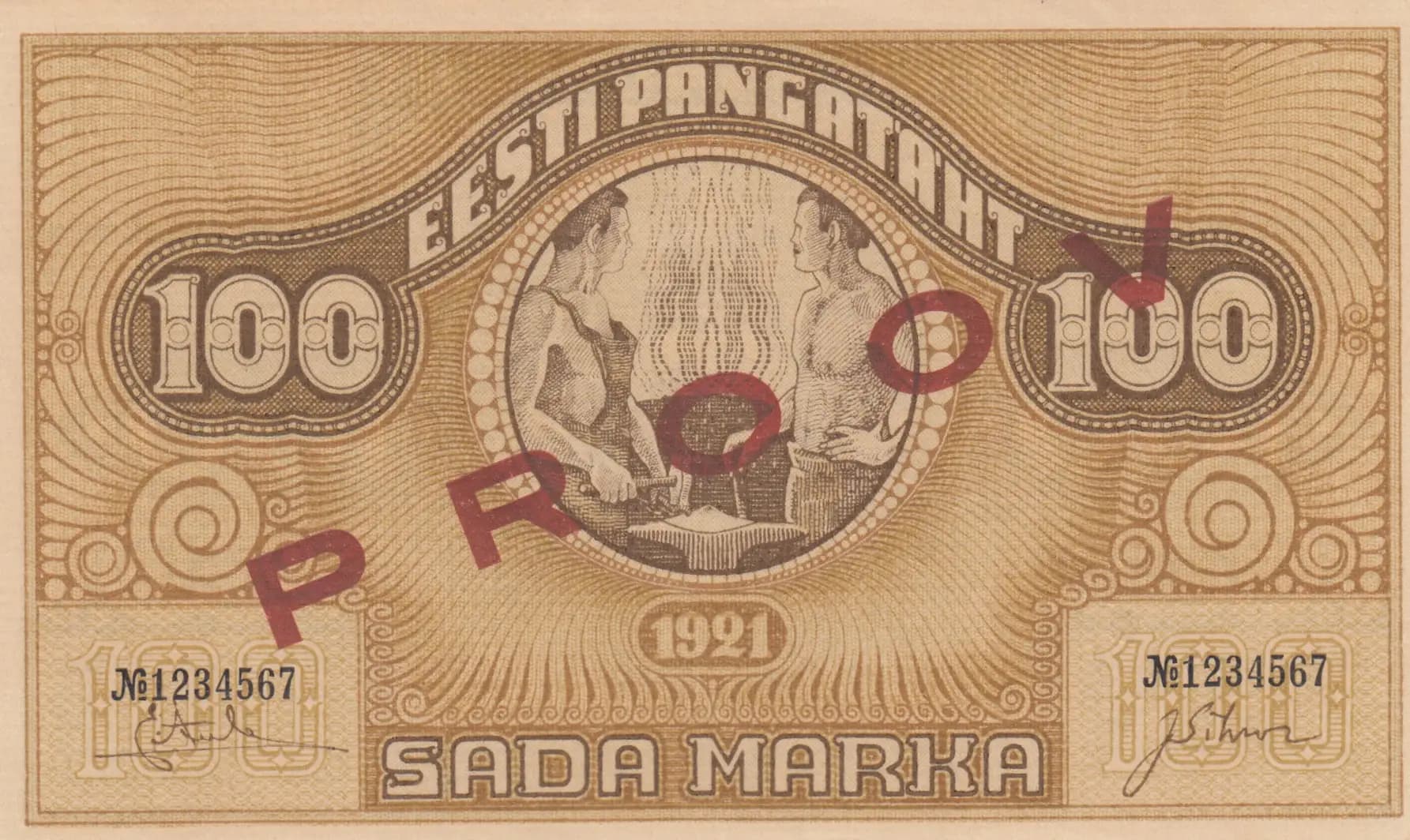
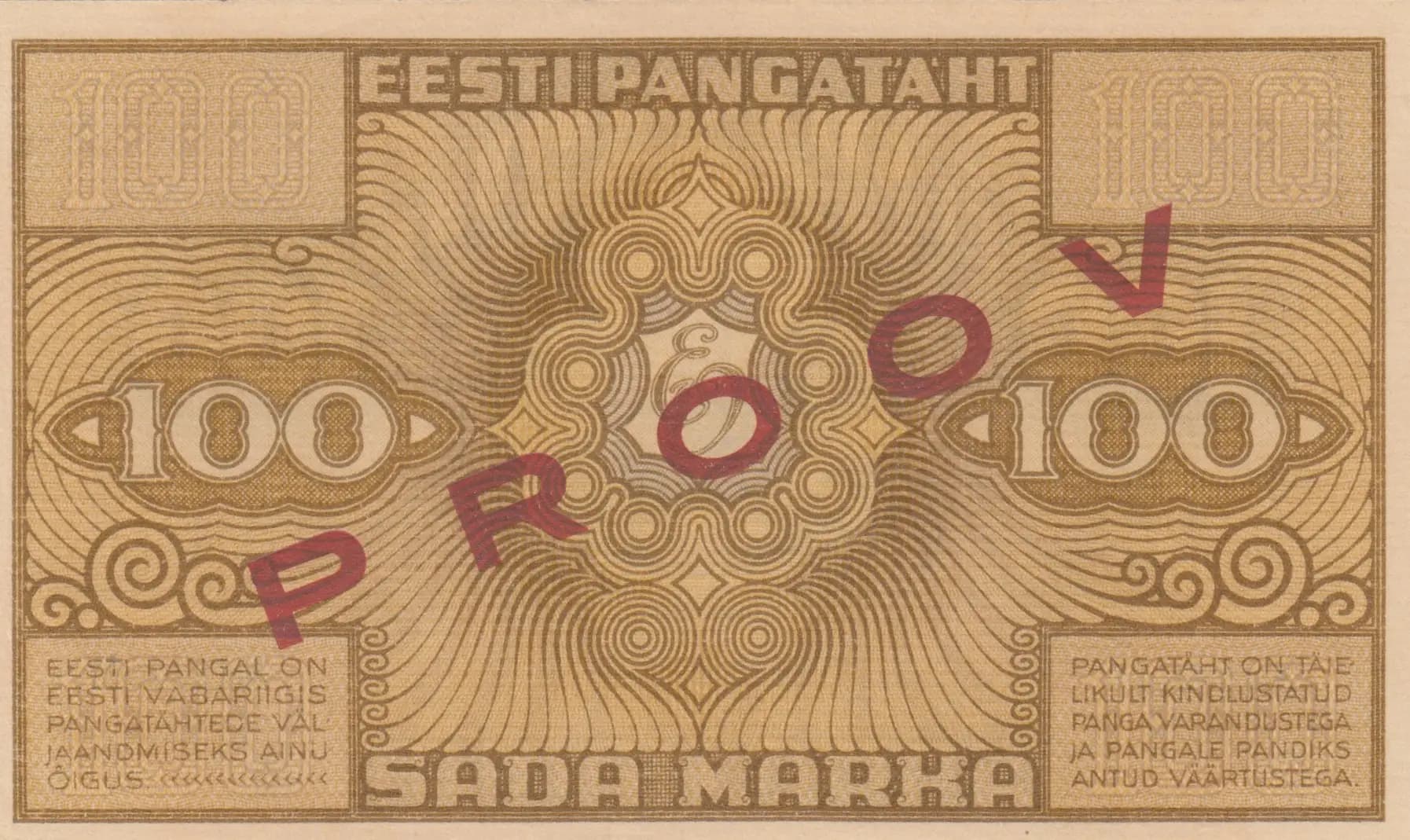
This is a stunning uncirculated specimen of Estonia's 100 Marka note from 1921, featuring bold red 'PROV' overprints indicating its status as a specimen issue. The note displays pristine condition with sharp, clear printing throughout and exhibits the elegant Art Nouveau design characteristic of early Estonian currency, centered around a classical allegorical vignette of two figures representing national virtues or concepts.
Common. While this is a specimen issue (indicated by 'PROV' overprints), which may seem specialized, Estonian 100 Marka notes from 1921 were issued in substantial quantities and are readily available in the numismatic market. The eBay catalog reference shows UNC examples trading at $400 as of 2016, with VG examples selling at $63.20, indicating active market liquidity typical of common notes rather than the appreciation and scarcity associated with rare issues. Specimen overprints, while visually distinctive, do not necessarily reduce availability as many were preserved for institutional and collection purposes. The relatively modest pricing and documented market sales suggest this Pick number remains accessible to collectors.
Issued during Estonia's early independence period following the 1918 declaration of sovereignty from Russia, this 1921 note represents the Treasury of Estonia's efforts to establish a distinct national currency identity. The classical allegorical figures depicted in the central vignette reflect the neoclassical aesthetic favored by young European nations seeking to establish legitimacy and cultural continuity with historical traditions. The text 'Eesti Pangal' (Estonian Bank) and references to the 'Eesti Vabariigi' (Estonian Republic) on the note emphasize the nation's newly won autonomy and financial independence.
This banknote features a sophisticated Art Nouveau design with symmetrical layout across both sides. The obverse (front) centers on an oval vignette containing two classical-style allegorical figures—a male and female—rendered in neoclassical style, likely representing virtues such as industry, justice, or prosperity. The figures are enclosed within a circular laurel wreath or pearl border, symbolizing achievement and honor. The reverse (back) features concentric circular ring patterns at the center in place of portraiture, maintaining the decorative theme. Both sides employ extensive ornamental scrollwork, spiral designs, and intricate wavy line patterns throughout the border and field areas. The denomination '100' is positioned in all four corners in large numerals. The color scheme consists of tan/beige as the dominant background color with brown and red inks used for text, numerals, and decorative elements. The 'EESTI PANGATAHITI' (Estonian Banknote) designation appears prominently on the reverse.
FRONT SIDE: '100' (denomination numeral, left and right); 'SADA MARKA' (One Hundred Marks, Estonian); 'PROV' (Specimen marking); '1921' (issue year); Serial number 1234567 (appears twice). BACK SIDE: '100' (denomination numeral, left and right); 'EESTI PANGATAHITI' (Estonian Banknote); 'SADA MARKA' (One Hundred Marks); 'PROV' (Specimen marking); Legal text translating approximately to 'The Estonian Bank has the exclusive right in the separate Republic to issue and circulate banknotes through banks' and 'Banknotes are fully exchangeable and pledged with full value at the bank.' These inscriptions establish the legal authority for note issuance and guarantee its redemption value.
The note exhibits characteristics consistent with engraved intaglio printing, the standard security printing method for banknotes of this era. The fine line engraving patterns visible throughout the background, intricate wavy line security patterns, detailed ornamental borders, and crisp definition of all design elements are hallmarks of intaglio printing. The precision of the concentric rings on the reverse and the complex scrollwork throughout demonstrate the sophisticated craftsmanship typical of state security printers. The printer for Estonian notes of this period has not been definitively identified from the visual analysis, though Estonian banknotes of the 1920s were often produced by established European security printers.
This specimen is cataloged as Pick P-56b, indicating it is one of the known varieties within the 100 Marka 1921 series. The 'PROV' (Specimen) overprinting in red is a primary distinguishing feature of this specimen variety. The PMG population report indicates one cataloged variant for the base Pick number P-56. Serial number 1234567 visible on this example appears to be a placeholder or demonstration serial typical of specimen notes. Collectors should note that this specific variety with red 'PROV' overprints distinguishes it from regular circulation issues and represents the specimen distribution variant of Pick-56.