100 marka 1921
Market Prices
1 saleAbout This Note
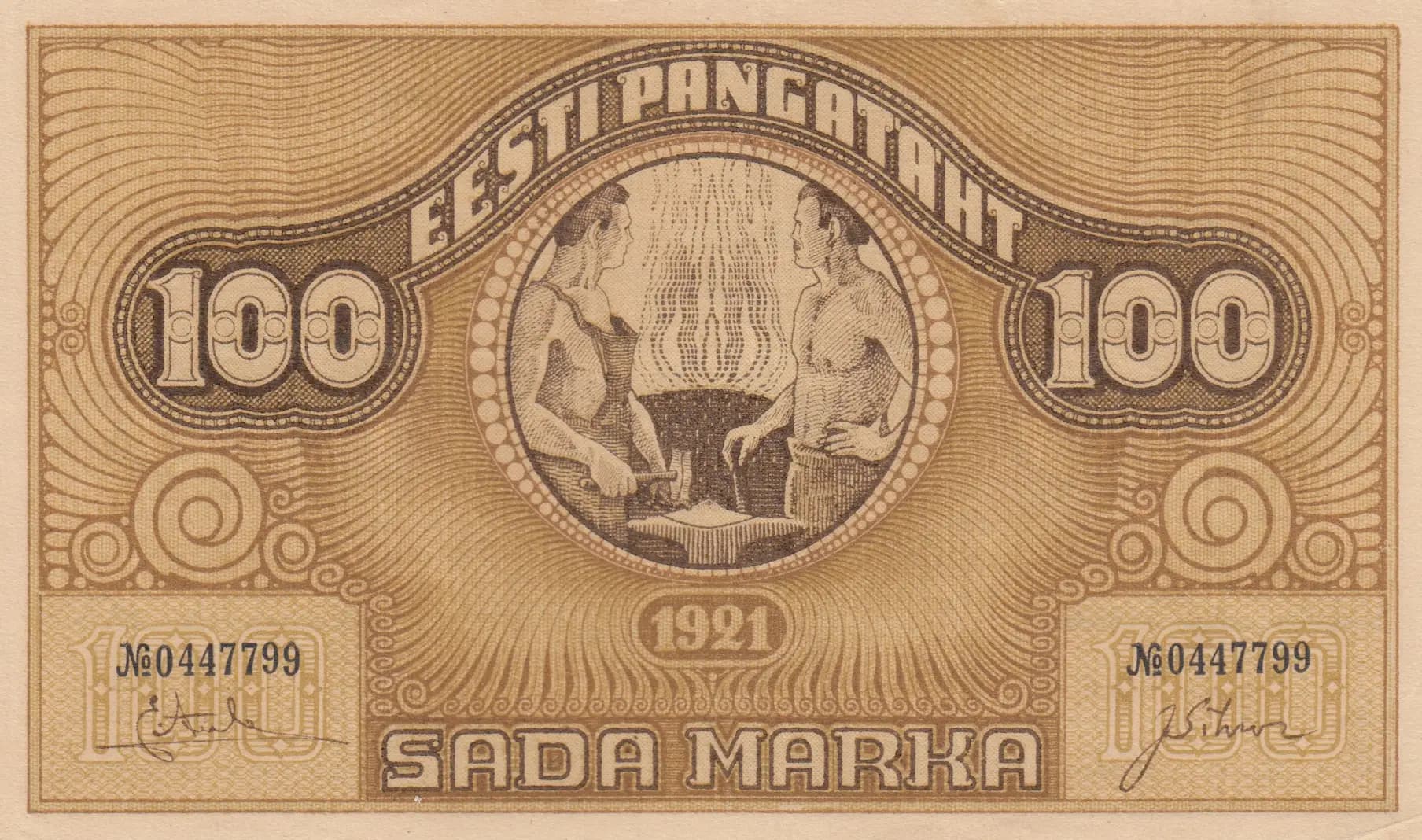
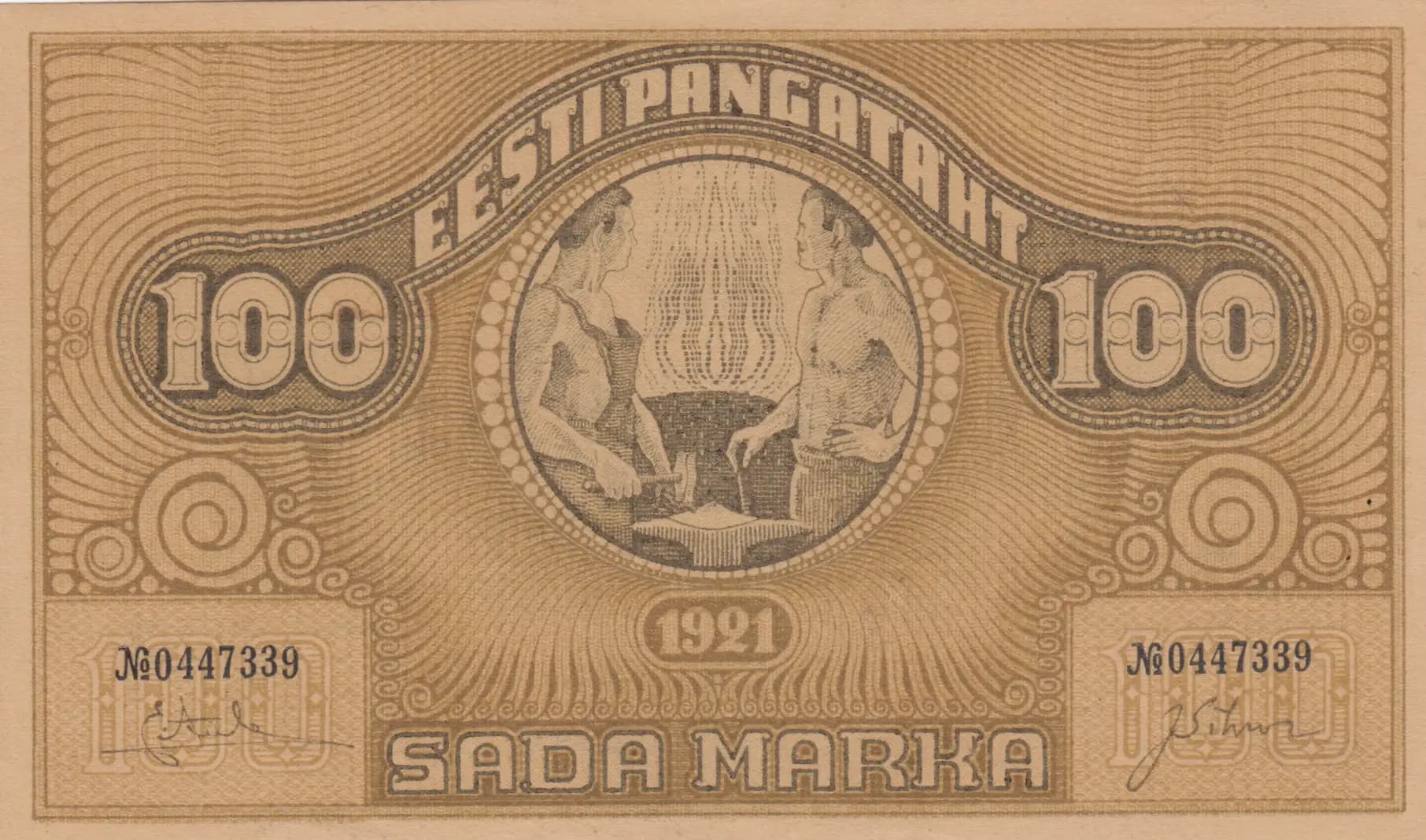
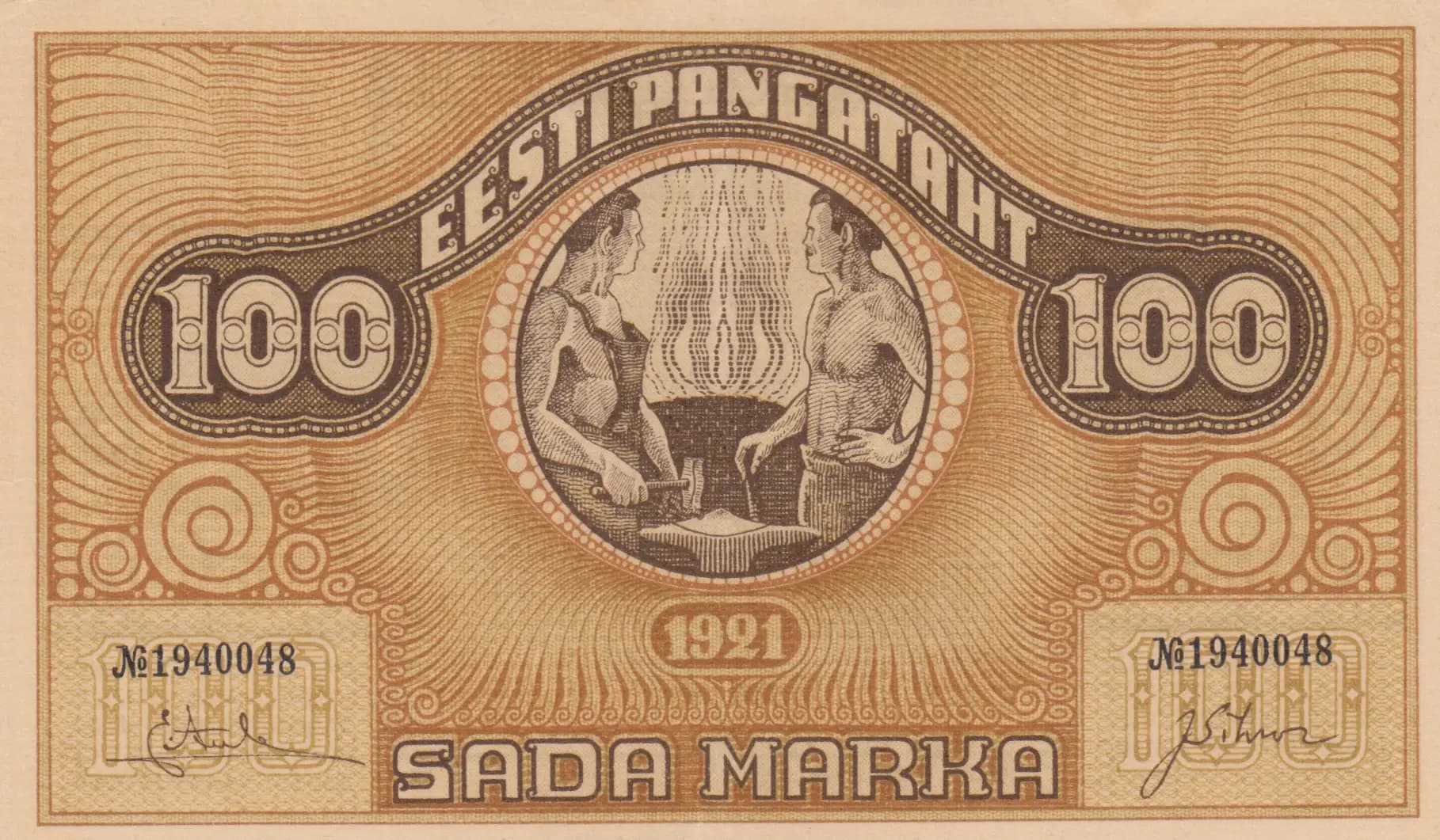
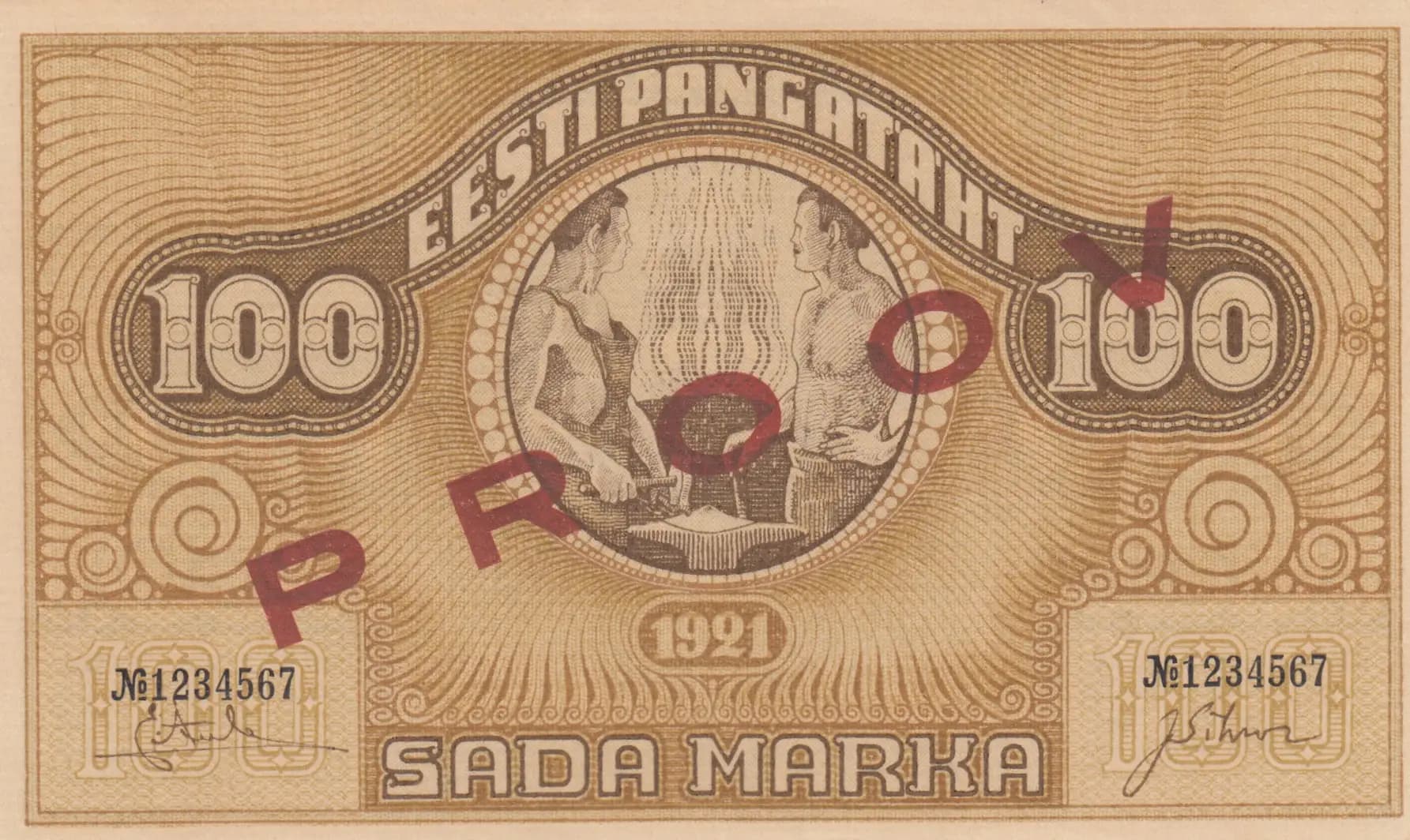
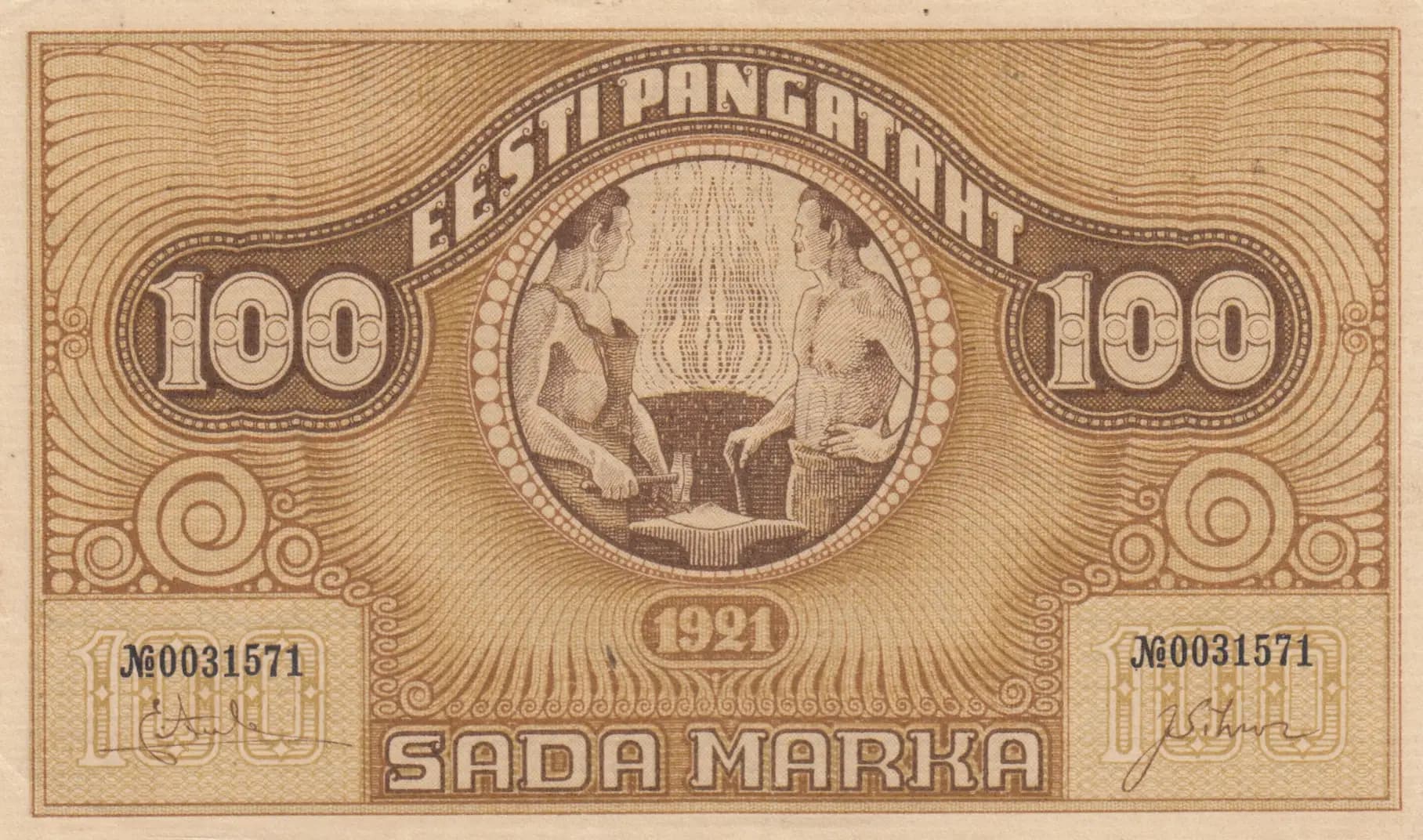
This Estonian 100 Marka from 1921 presents an exceptional example of early independent Estonia's currency design, featuring a striking central vignette of two classical blacksmiths flanking a flaming cauldron—a powerful allegory of national industry and rebuilding. The note exhibits VF condition with minimal wear, light foxing consistent with its age, and the intricate engraving work remains crisp and well-defined throughout both sides. The composition and security printing reflect the sophisticated craftsmanship typical of this transitional period in Estonian numismatic history.
Common. The catalog reference values from 2016 (VG: $100, VF: $200, UNC: $400) combined with documented eBay sales activity indicate this is a widely available note in the collector market. Print run data for 1921 Estonian currency was substantial, and specimens have circulated sufficiently to ensure regular availability. The VF grade represented here is well-represented in the market. No evidence of scarcity, recall, or limited distribution exists for Pick-56b.
Issued during Estonia's first years of independence following the 1918 declaration of sovereignty, this 100 Marka note symbolizes the young nation's economic aspirations and industrial revival. The blacksmith imagery—depicting two figures at a forge with flames—carries allegorical weight, representing Estonia's determination to forge its own identity and economy independent of Russian Imperial rule. The inscriptions crediting 'Eesti Pangahall' (Estonian Bank Hall) underscore the establishment of native financial institutions as a cornerstone of statehood, a critical marker of the nation's transition from colony to sovereign republic.
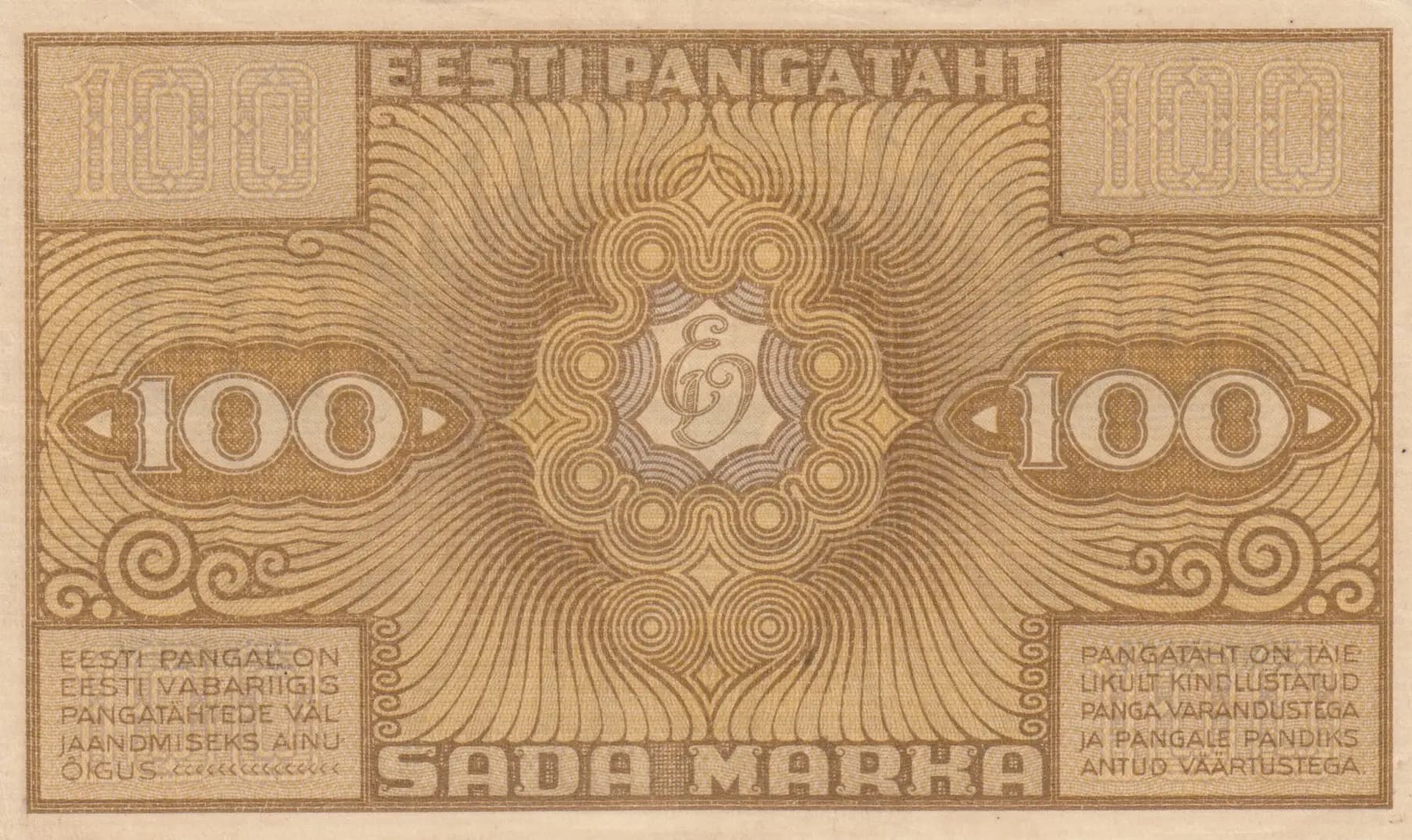
The obverse features a classical allegorical composition centered within an ornate circular medallion: two male figures in Greco-Roman dress are positioned symmetrically on either side of a central flaming cauldron or forge vessel, symbolizing the blacksmith's craft and by extension, national industrial vigor. The background employs dense concentric wavy line patterns and ornamental scrollwork throughout, providing both aesthetic sophistication and security through complexity. Large denomination numerals '100' appear in decorative frames on the left and right edges. The reverse abandons figurative imagery in favor of pure geometric ornamentation: concentric circular patterns radiate from the center in a mandala-like design, with additional geometric frames surrounding the denomination numerals. Both sides employ identical tan-brown-cream color palettes typical of period wood-engraved currency, and both feature the issuing institution's name prominently at top.
FRONT SIDE: 'EESTI PANGAHALL' (Estonian Bank Hall) — appears as the issuing authority banner; '100' and 'SADA MARKA' (One Hundred Marks) — denomination indicators; '1921' — year of issue; 'JA0031571' — serial number. BACK SIDE: 'EESTI PANGAHALL' (Estonian Bank Hall) — top center; '100' and 'SADA MARKA' (One Hundred Marks) — denomination identifiers; 'EESTI PANGAL ON EESTI VABARIIGIS PANGATÄHTEDE VAL JAANDMISEKS AINU ÕIGUS' (The Estonian Bank has the sole right to issue banknotes in the Estonian Republic); 'PANGATAHT ON TÄIE LIKULT KINFLUSTATAUD PANGA VARANDUSTEGA JA PANGALE PANDIKS ANTUD WAARJUSTEGA' (The banknote is fully secured by the bank's assets and by securities entrusted to the bank) — legal notices establishing monetary authority and backing.
Wood engraving and line-work on steel plates, typical of 1920s European currency production. The intricate cross-hatching, fine line patterns, and radiating geometric designs visible throughout both sides are consistent with intaglio printing (relief engraving), which was the standard security printing method for Estonian currency of this period. The printer remains unattributed from the visual analysis, though Estonian banknotes of 1921 were typically produced by Reichsdruckerei Berlin or similar Central European security printers. The security features emphasize complexity of line work rather than modern security threads or watermarks, relying on the difficulty of reproducing fine engraved detail.
Pick catalog designation is P-56b, indicating a known variant status within the Pick system for this denomination. The serial number prefix 'JA' and the specific serial sequence 'JA0031571' visible on this specimen are consistent with first-issue series. No overprints, additional signatures beyond standard authorization marks, or date variations are evident on this note. The note represents the standard emission of the 100 Marka denomination from the Treasury of Estonia in 1921 with no known sub-varieties requiring differentiation.