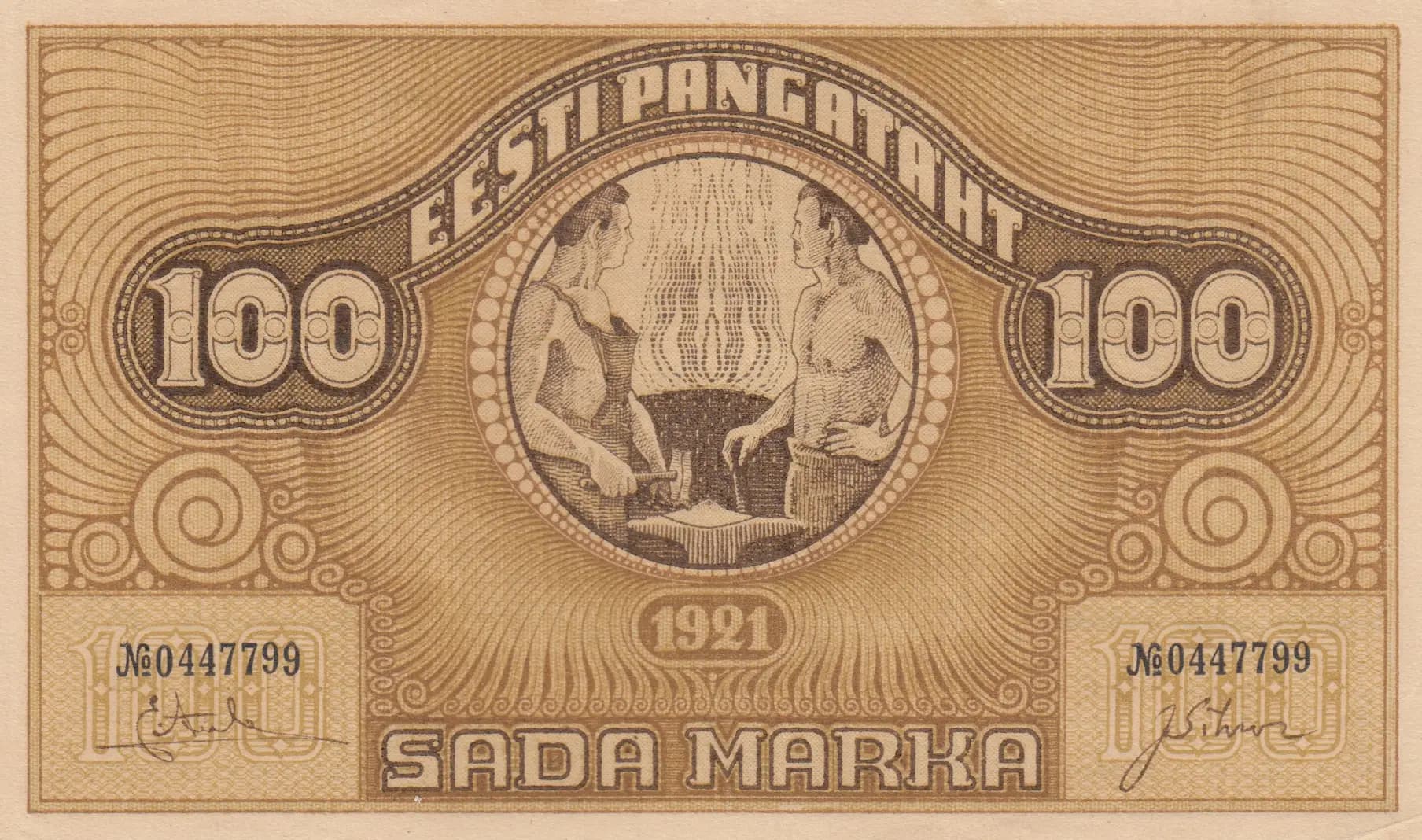
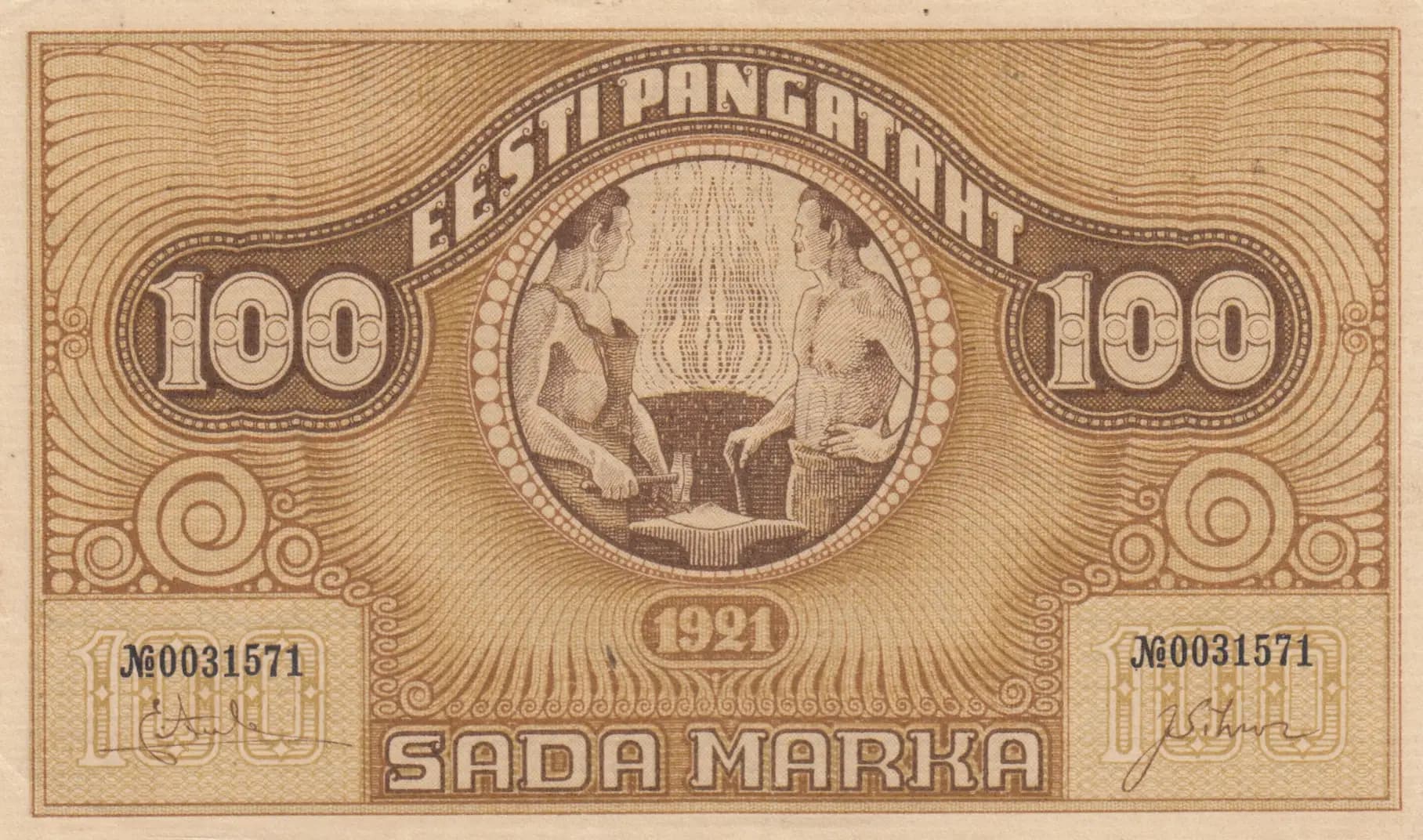
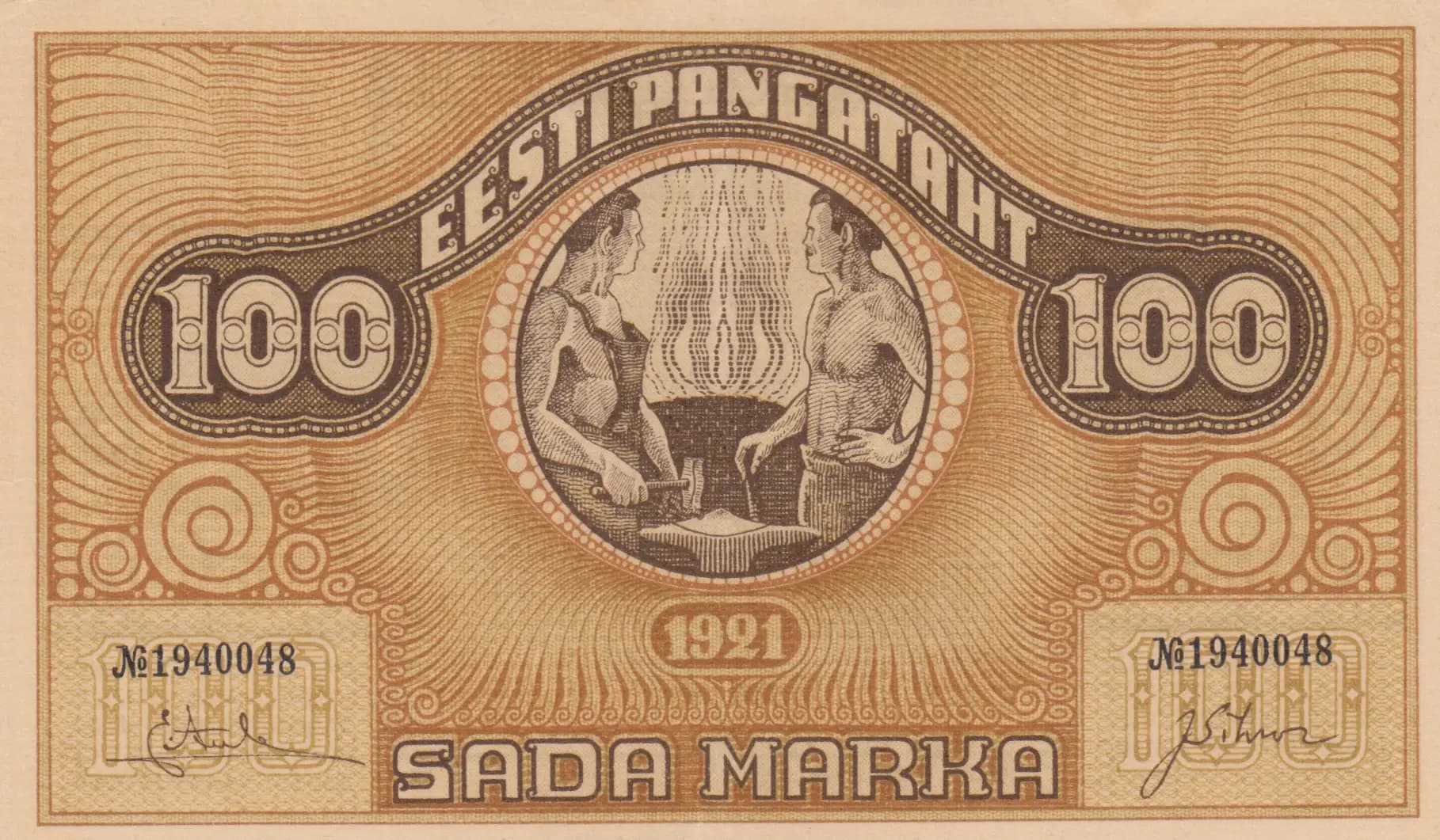
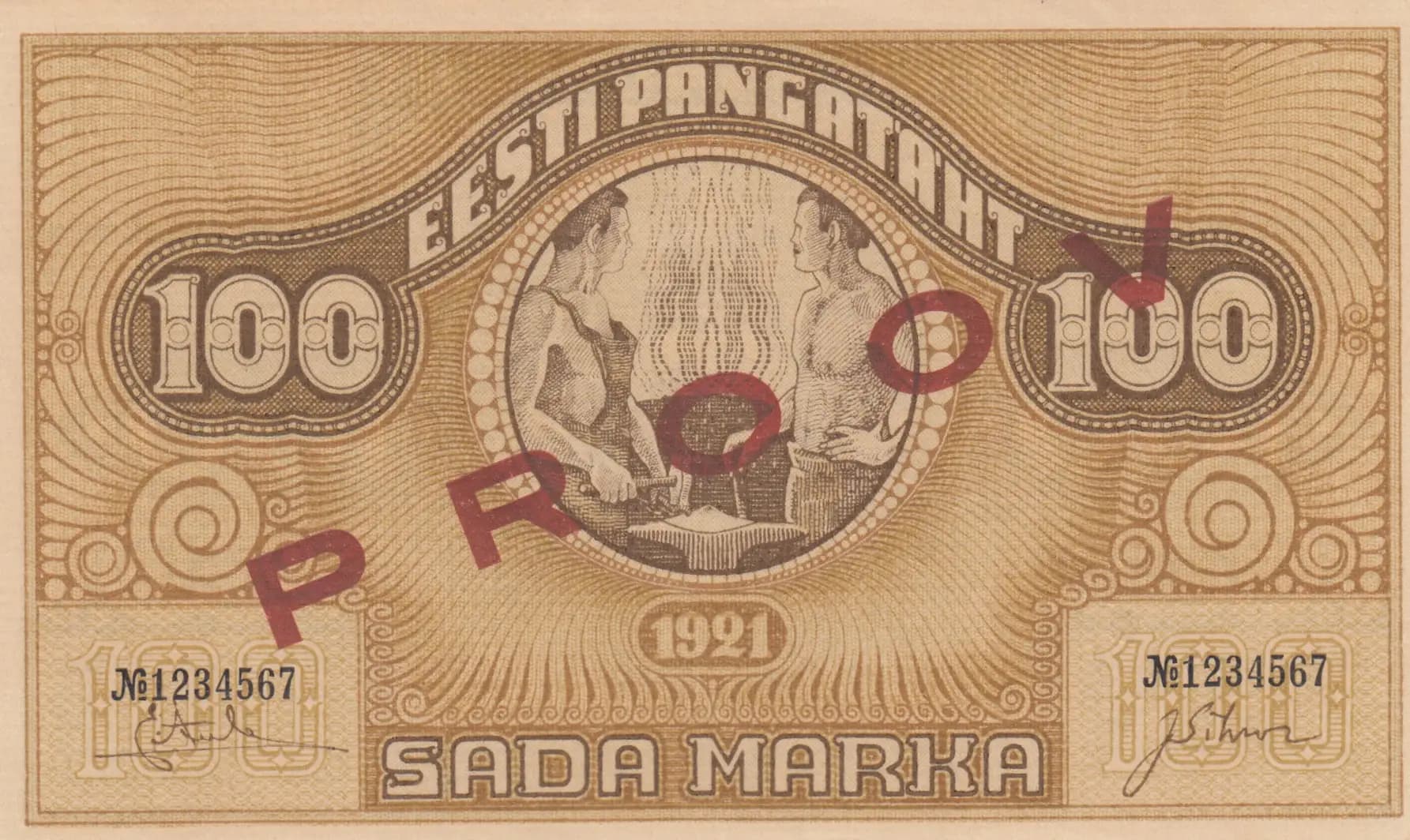
100 marka 1921
Market Prices
1 saleAbout This Note
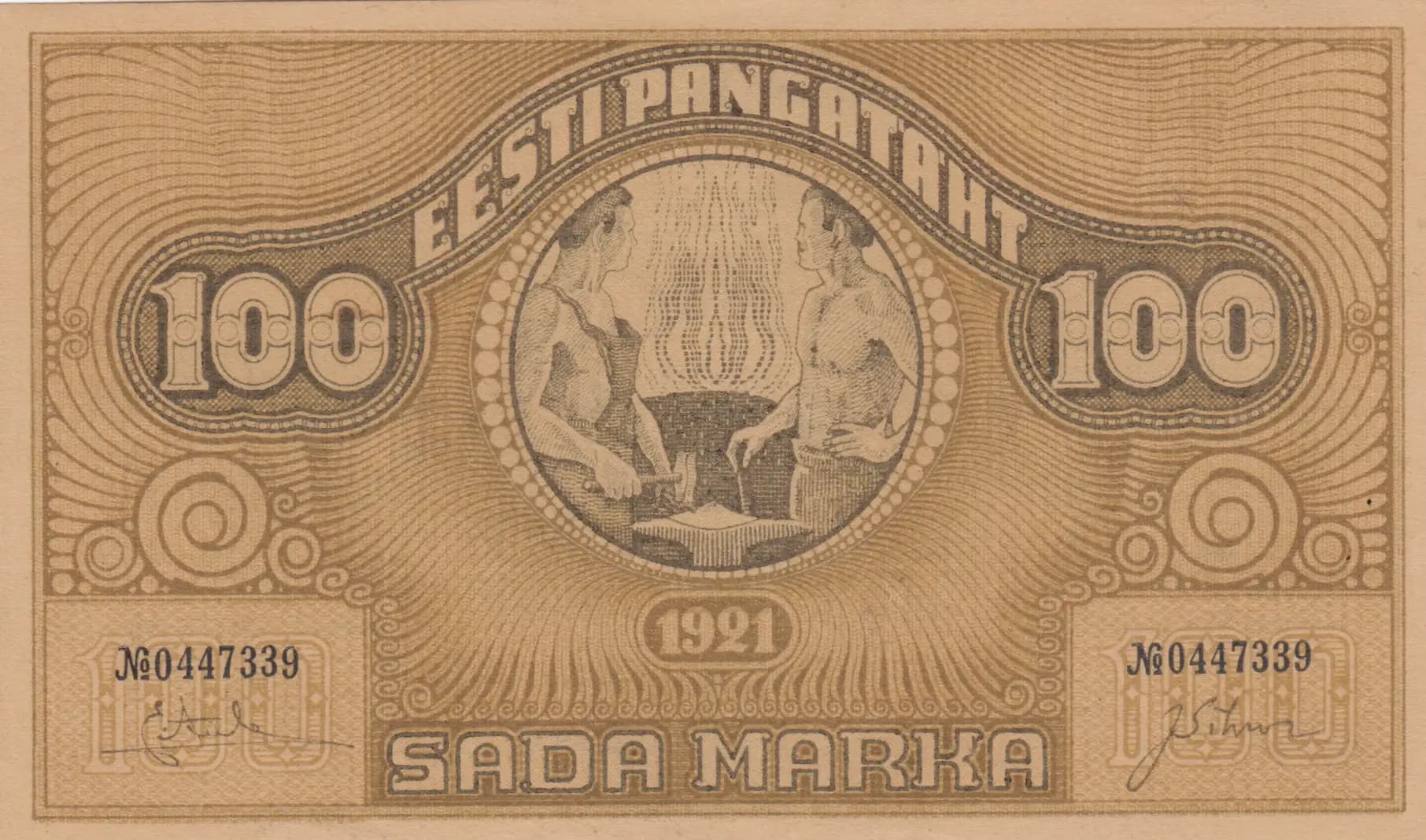
This is an exceptional example of Estonia's 1921 Treasury 100 Marka note (Pick P-56a) in uncirculated condition, featuring a distinctive Art Deco design centered on two allegorical female figures flanking an eternal flame within an ornate circular medallion. The note exhibits pristine condition with no visible wear, creasing, or stains, and displays the fine engraving quality and intricate wave-pattern security background characteristic of early Estonian currency. As a foundational issue from Estonia's first years of independence, this note represents an important piece of numismatic history and carries catalog values of $400 in UNC condition.
Common. While this is an early Estonian note with historical significance, the 100 Marka denomination from 1921 was produced in substantial quantities to support the new nation's economy. The eBay market data shows notes in Fine condition selling for approximately $126, and catalog values of $400 for UNC are moderate and consistent with common early 20th-century European banknotes. No evidence of short print runs, recalls, or scarcity exists for this Pick number. The availability of multiple examples in the numismatic market and stable, modest pricing indicate this is a common date and denomination.
Issued in 1921 by the Treasury of Estonia (Eesti Vabariigi), this banknote commemorates the newly independent Estonian Republic following its separation from the Russian Empire. The allegorical imagery—two female figures representing strength and prosperity flanking an eternal flame—symbolizes the nation's aspirations for stability and enduring independence during the tumultuous post-World War I period. The inscription 'The Estonian Bank has the sole right to issue bank notes in the Estonian Republic' asserts the sovereignty and monetary authority of the fledgling nation.
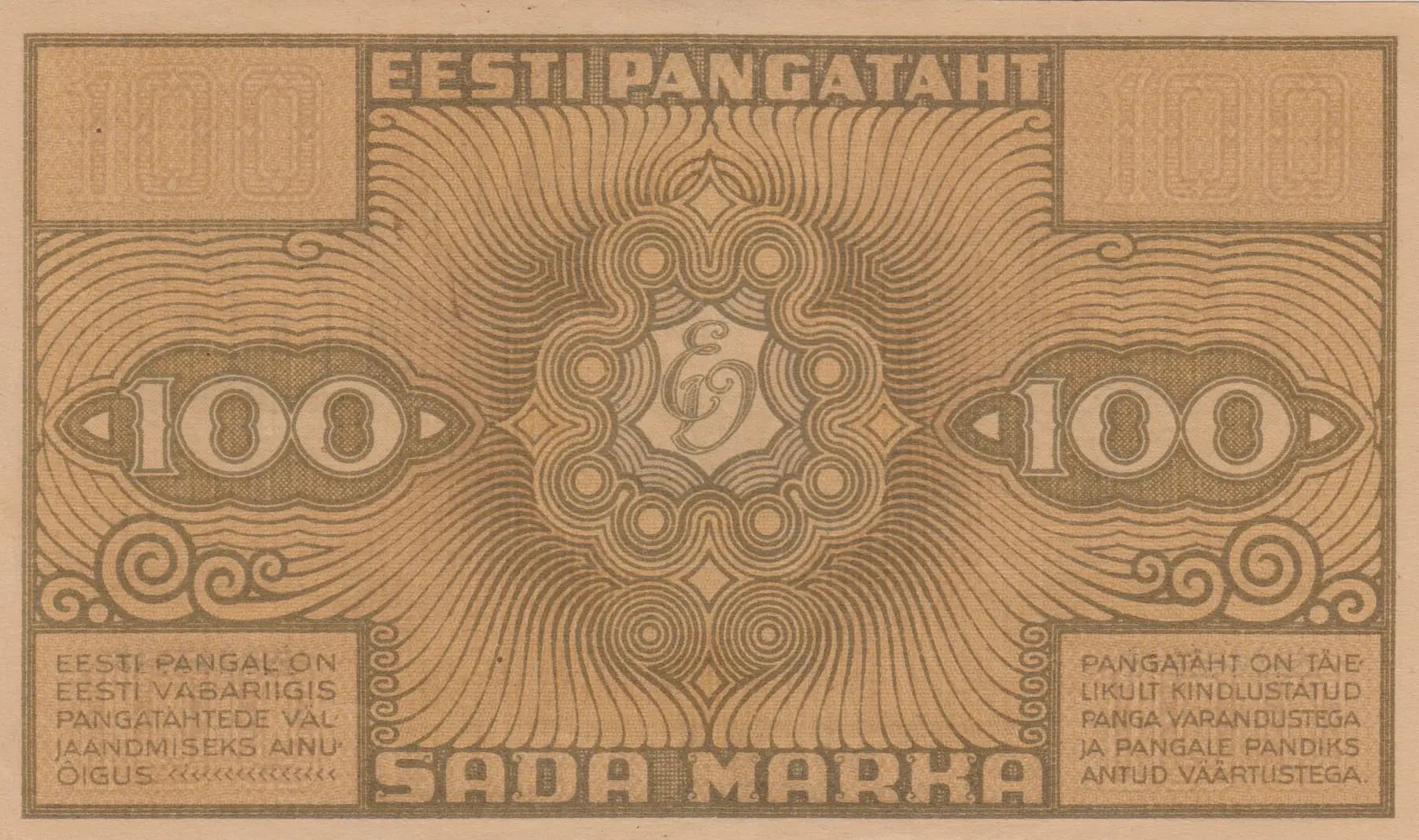
The obverse features a classical Art Deco allegorical composition centered in a circular medallion with two female figures in classical drapery flanking a central eternal flame or torch, symbolizing the enduring light of Estonian independence. Large denomination numerals '100' occupy both left and right margins. The reverse presents a symmetrical, non-portrait design dominated by intricate concentric circular patterns, geometric spirals, and radiating line work in pure Art Deco style, with corner ornaments and the same large denomination numerals. Both sides employ a repeating fine-line wave pattern as background security ornamentation. The color scheme is warm monochromatic brown/sepia tones typical of the period. All inscriptions are in Estonian, emphasizing national identity.
FRONT: 'PANGATAHT' (Bank Note - partial inscription); '100' (denomination numeral); '1921' (year of issue); 'SADA MARKA' (One Hundred Mark in Estonian); Serial number '№0447339'. BACK: 'EESTI PANGATAHT' (Estonian Bank Note); '100' (denomination numerals, left and right); 'SADA MARKA' (One Hundred Mark); 'EESTI PANGAL ON EESTI VABARIIGIS PANGATAHTEDE VAC JAANDMISEKS AINU ÕIGUS' (The Estonian Bank has the sole right to issue bank notes in the Estonian Republic); 'PANGATAHT ON TÄJE LIKULT KINDLUSTATUD PANGA VARANDUSEGA JA PANGALE PANDIKS ANTUD VÄÄRTUSTEEGA' (The bank note is fully secured by the bank's assets and valuables pledged to the bank).
This note was produced using fine line engraving and intaglio printing methods, as evidenced by the precise, raised line work visible throughout the design. The consistent depth of the intricate wave patterns, the crisp definition of the allegorical figures and circular elements, and the overall print quality indicate professional bank note security printing. The specific printer for Estonian Treasury notes of this series is not definitively documented in standard references, though production likely occurred at an established European security printer contracted by the Estonian government.
This note is cataloged as Pick P-56a, with at least one known variant (P-56b) documented by PMG. Varieties likely differ in signature combinations, serial number prefixes, or minor design characteristics typical of early state bank issues. The observed serial number 0447339 appears to be from the standard printing series. Without additional provenance documentation or signature variations visible in the current images, this specimen is identified as the P-56a variety. Collectors should verify signature placement and serial number prefixes to distinguish between known varieties of the 1921 Estonian 100 Marka.