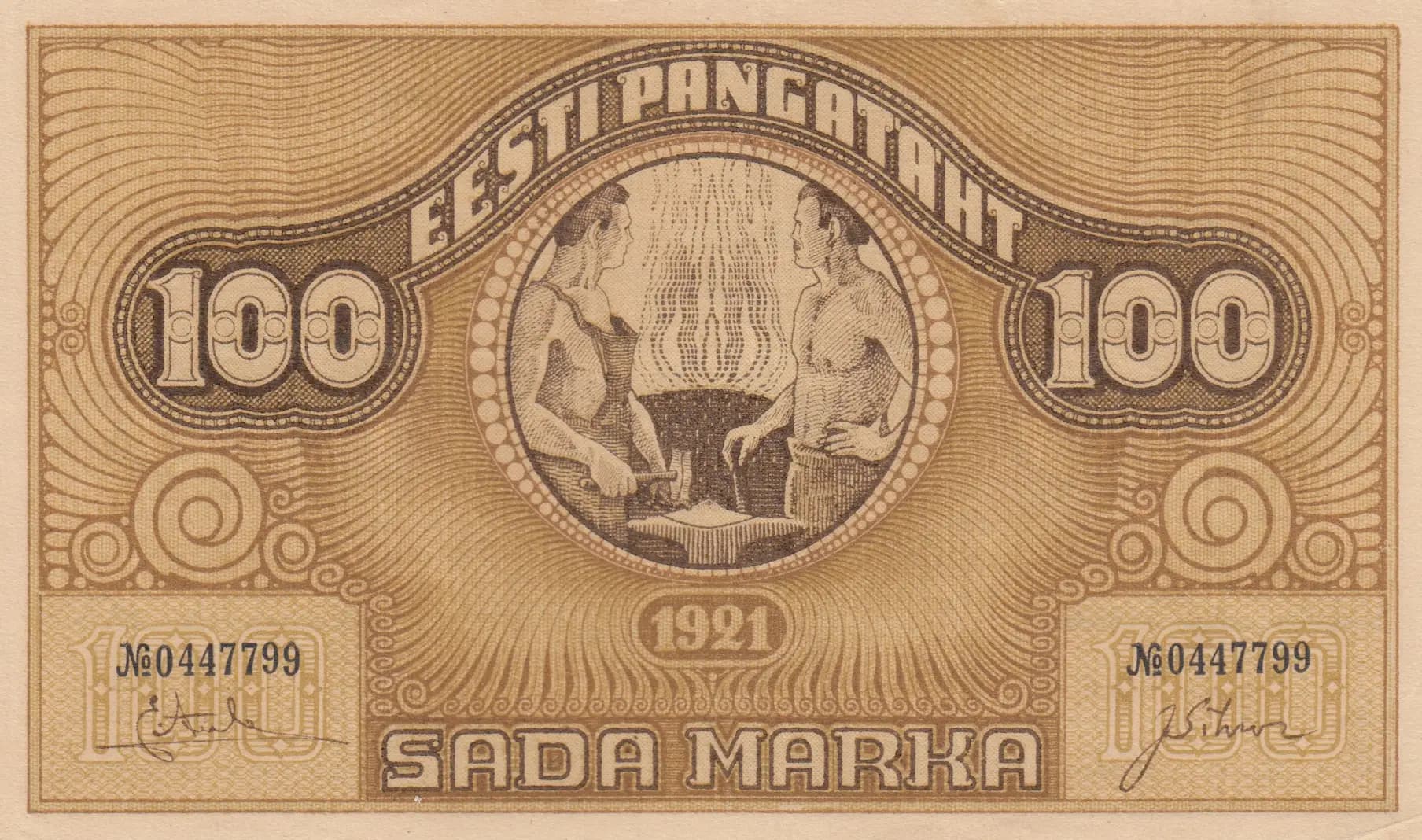
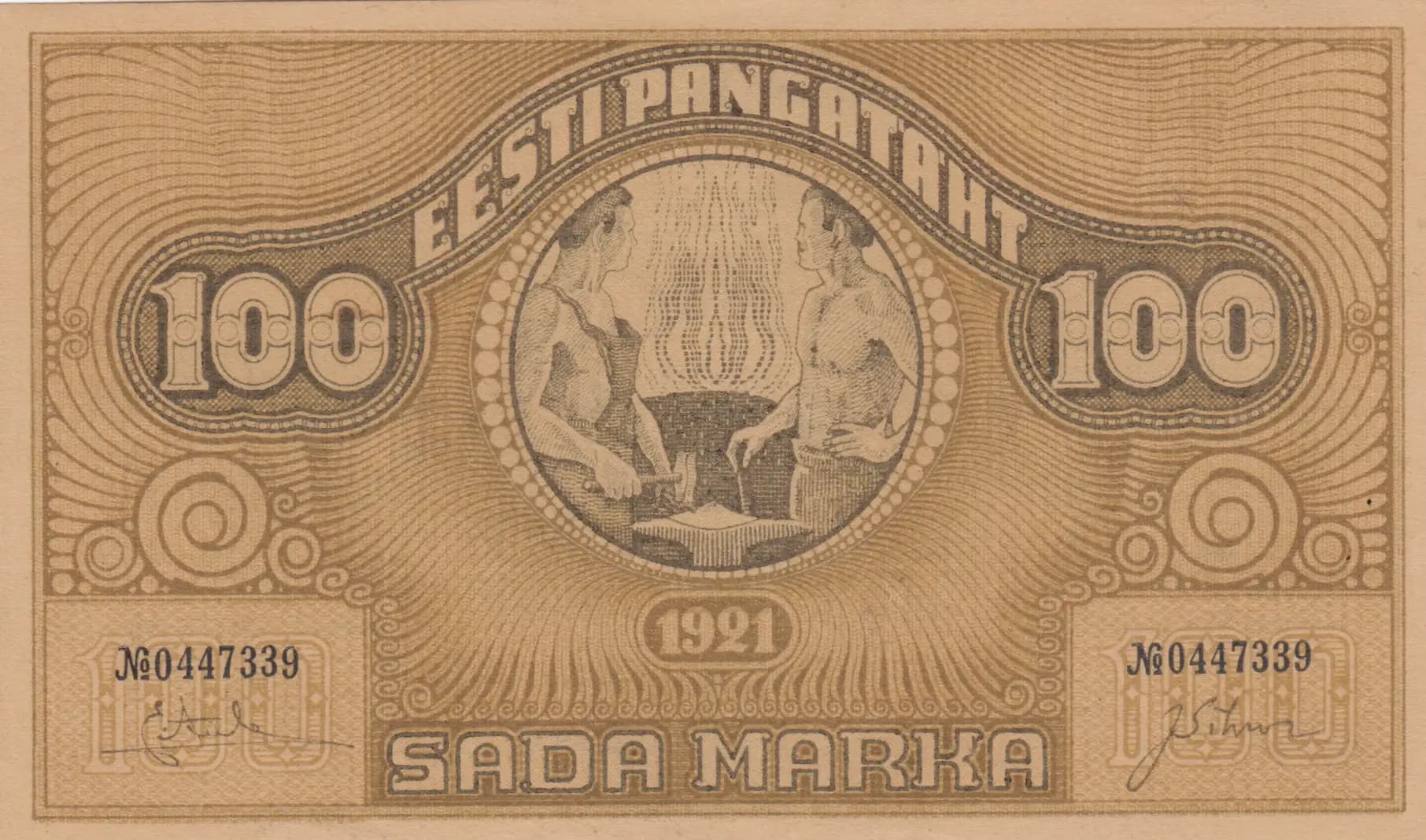
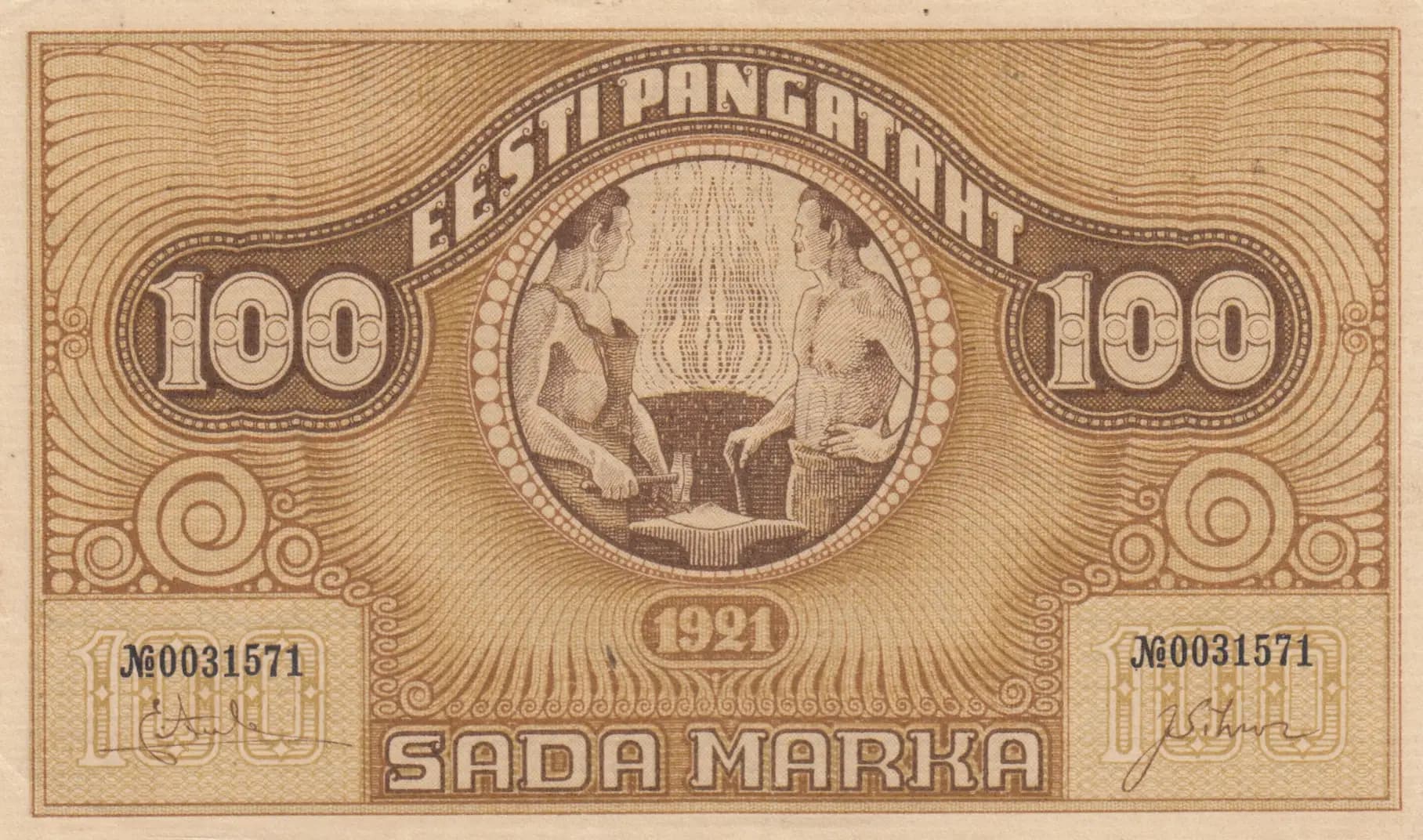
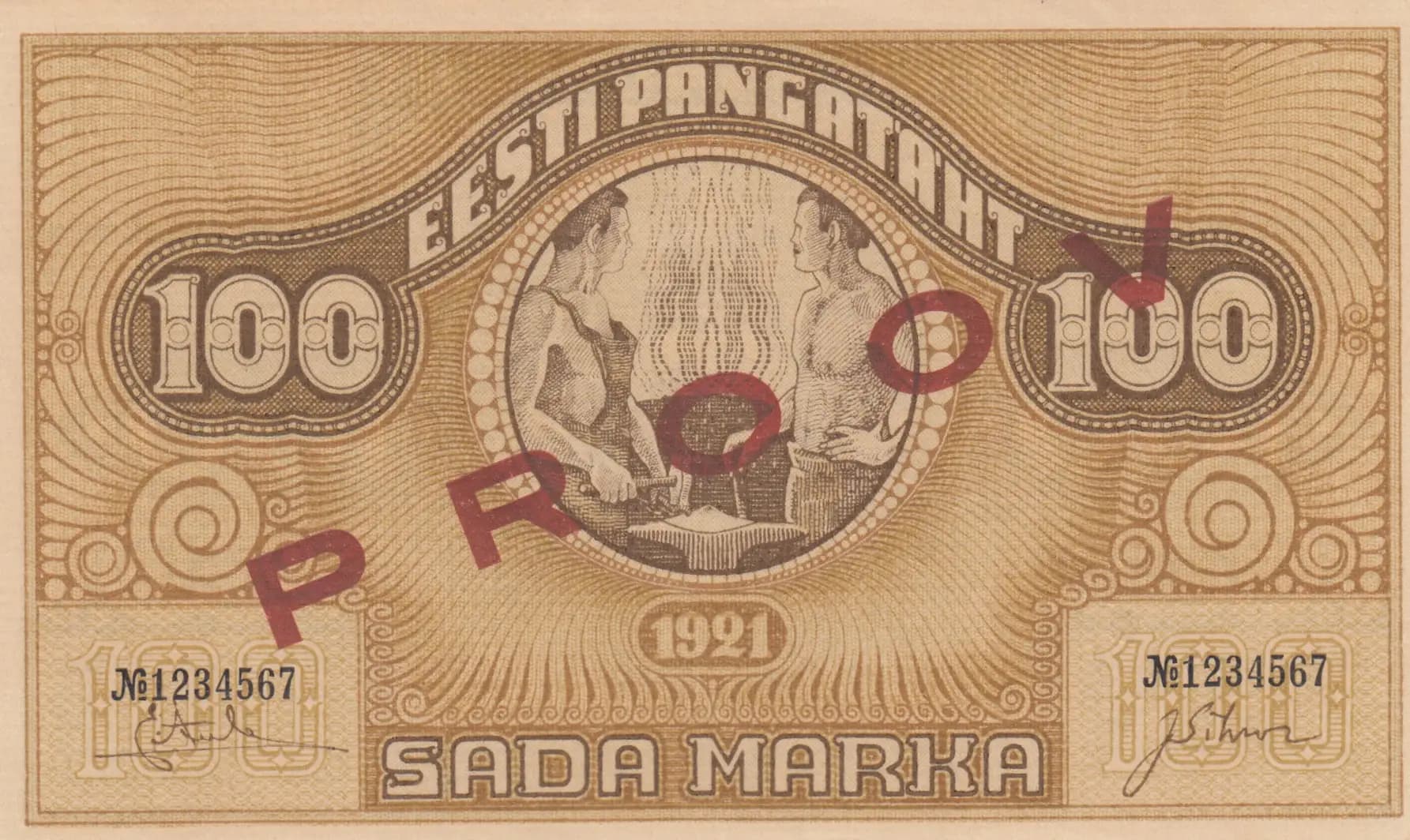
100 marka 1921
Market Prices
1 saleAbout This Note
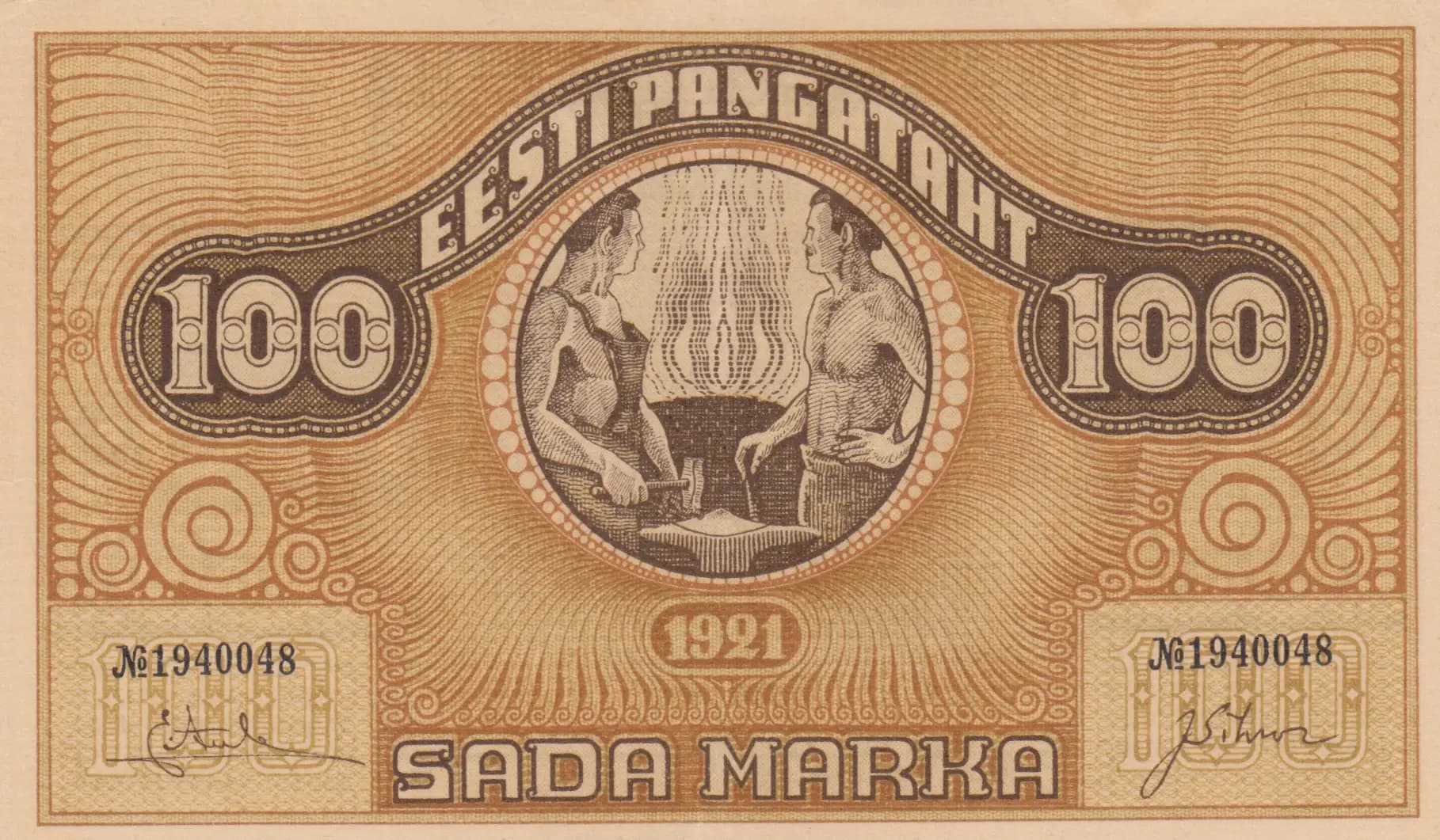
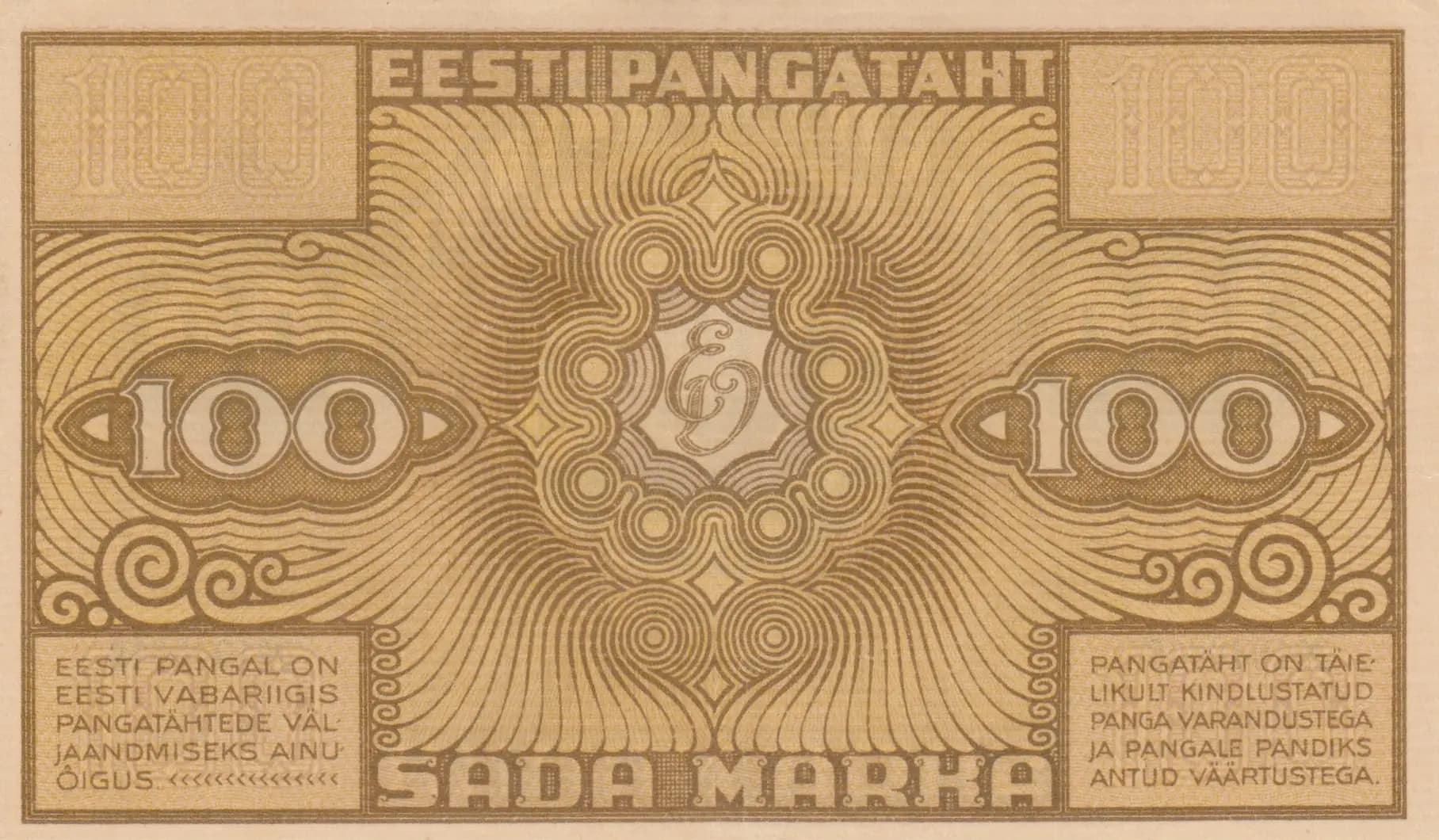
This is an exceptional example of the Estonian 100 Marka note from 1921, graded EF and displaying sharp, well-preserved details throughout. The obverse features two classical male figures flanking a central flame design in warm tan and brown tones, while the reverse showcases intricate geometric patterns centered on a monogram. This early independence-era currency represents a crucial moment in Estonian financial history and remains highly collectible for its artistic design and historical significance.
Common. While early Estonian currency from the independence period (1918-1940) is historically significant, the 100 Marka denomination appears regularly in the collector market. eBay sales data from 2016 valuations showing VF examples at $200 and catalog values remaining modest, combined with documented PMG population data for this Pick number, indicate steady availability without scarcity premiums. The note was part of a regular issue with substantial print runs rather than a limited or emergency issue.
The 100 Marka was issued by the newly independent Estonian state in 1921, following Estonia's declaration of independence in 1918. The classical blacksmith imagery on the obverse symbolizes labor, craftsmanship, and the industrial strength of the young nation, while the flame between them likely represents the forge of national identity. The reverse's assertion that the Estonian Bank held sole authority to issue banknotes underscored the sovereignty and financial independence of the fledgling Estonian Republic.
The obverse depicts two classical male blacksmith figures in muscular Greco-Roman style, positioned symmetrically on either side of a central flame or torch emerging from a dark vessel or forge. This imagery evokes the mythology of Hephaestus and represents industrial capability and national craftsmanship. The design employs ornate decorative wavy-line patterns and spiral motifs in the corners, creating an elaborate frame around the central circular medallion. The denomination '100' appears on both sides of the vignette. The reverse abandons portraiture in favor of an elaborate geometric security pattern composed of concentric circles and interlocking diamond shapes arranged concentrically, with the monogram design at center. The warm palette of tans, browns, and beiges is consistently rendered across both sides, unifying the design while the fine line work provides visual complexity intended as a security measure.
FRONT SIDE: 'EESTI PANGA RAHAT' (Estonian Bank Notes) - arched text at top; '100' (denomination); '1921' (year of issue); 'SADA MARKA' (One Hundred Marka) - text at bottom; 'N61940048' (serial number). BACK SIDE: 'EESTI PANGATAHT' (Estonian Bank Note) - banner text at top; '100' (denomination); 'SADA MARKA' (One Hundred Marka); 'EESTI PANGAL ON EESTI VABARIIGIS PANGATAHTEDE VAL-JA ANDMISEKS AINU ÕIGUS' (The Estonian Bank has the sole right to issue banknotes in the Estonian Republic); 'PANGATÄHT ON TAIE-LIKULT KINDLUSTATUD PANGA VARANDUSEGA JA PANGALE PANDIKS ANTUD VÄÄRUSTEGA' (The banknote is fully secured by the Bank's assets and valuables pledged to the Bank).
Intaglio engraving (steel plate printing), evidenced by the exceptionally fine line work, precise detail reproduction, and subtle tonal gradations visible in both the portrait vignette and the geometric security patterns on the reverse. The intricate wavy-line background patterns and concentric circular designs are characteristic of high-quality bank note engraving of the early 1920s period. The sharp impression and crisp detail preservation in this EF example suggest skilled craftsmanship and quality printing standards typical of independent Estonia's financial institutions.
This note is cataloged as Pick P-56b, indicating it is the 'b' variety within the 100 Marka 1921 issue. The visual analysis shows serial number 'N61940048', suggesting an 'N' series prefix. No overprints, signatures, or other secondary varieties are evident from the detailed images. The P-56b designation in the PMG population report confirms this represents a documented cataloged variant, though specific distinctions between 'a' and 'b' varieties (such as printer marks, serial prefix changes, or organizational differences) are not explicitly noted in the available reference materials and would require detailed comparison with reference specimens.