100 marka 1921
Market Prices
1 saleAbout This Note
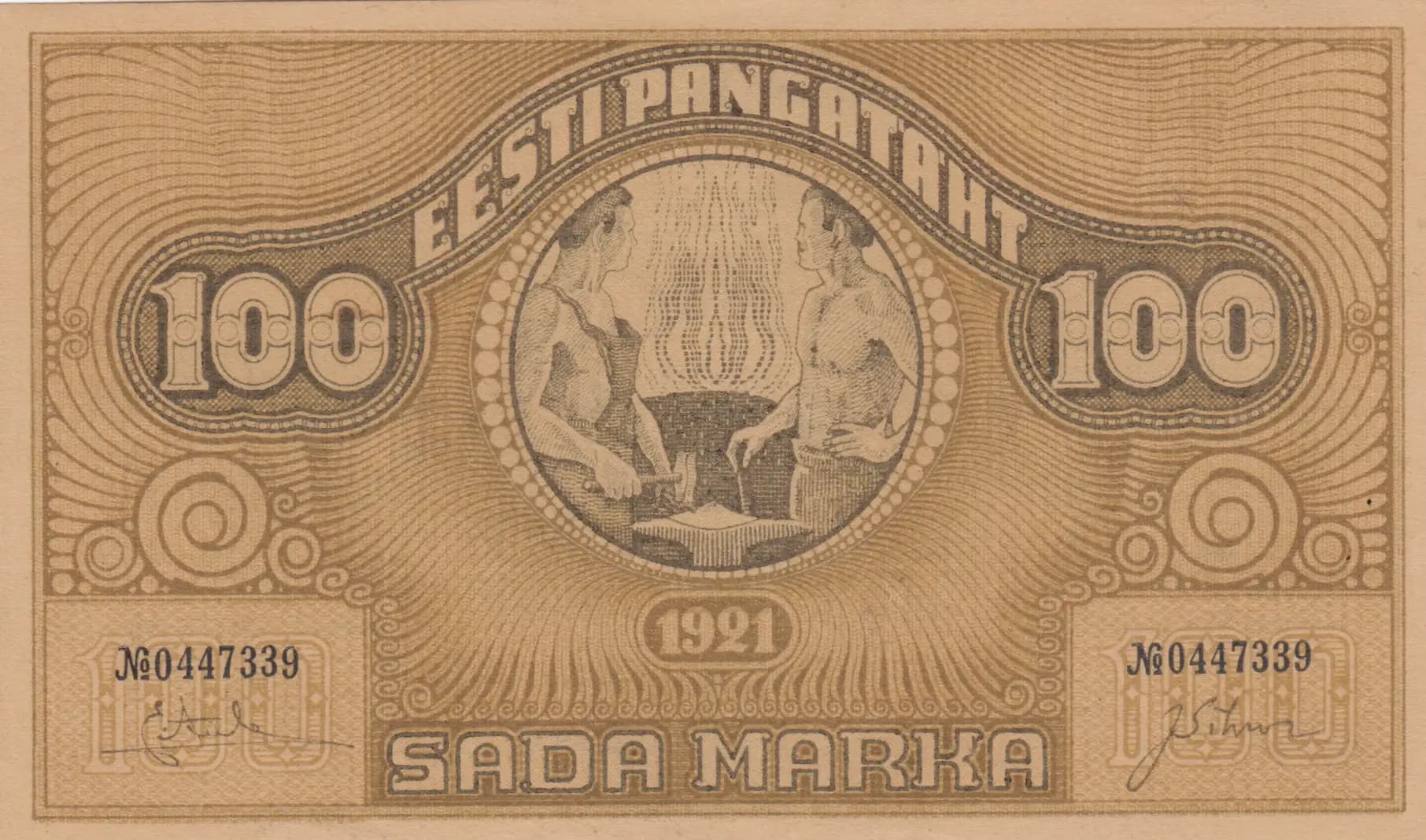
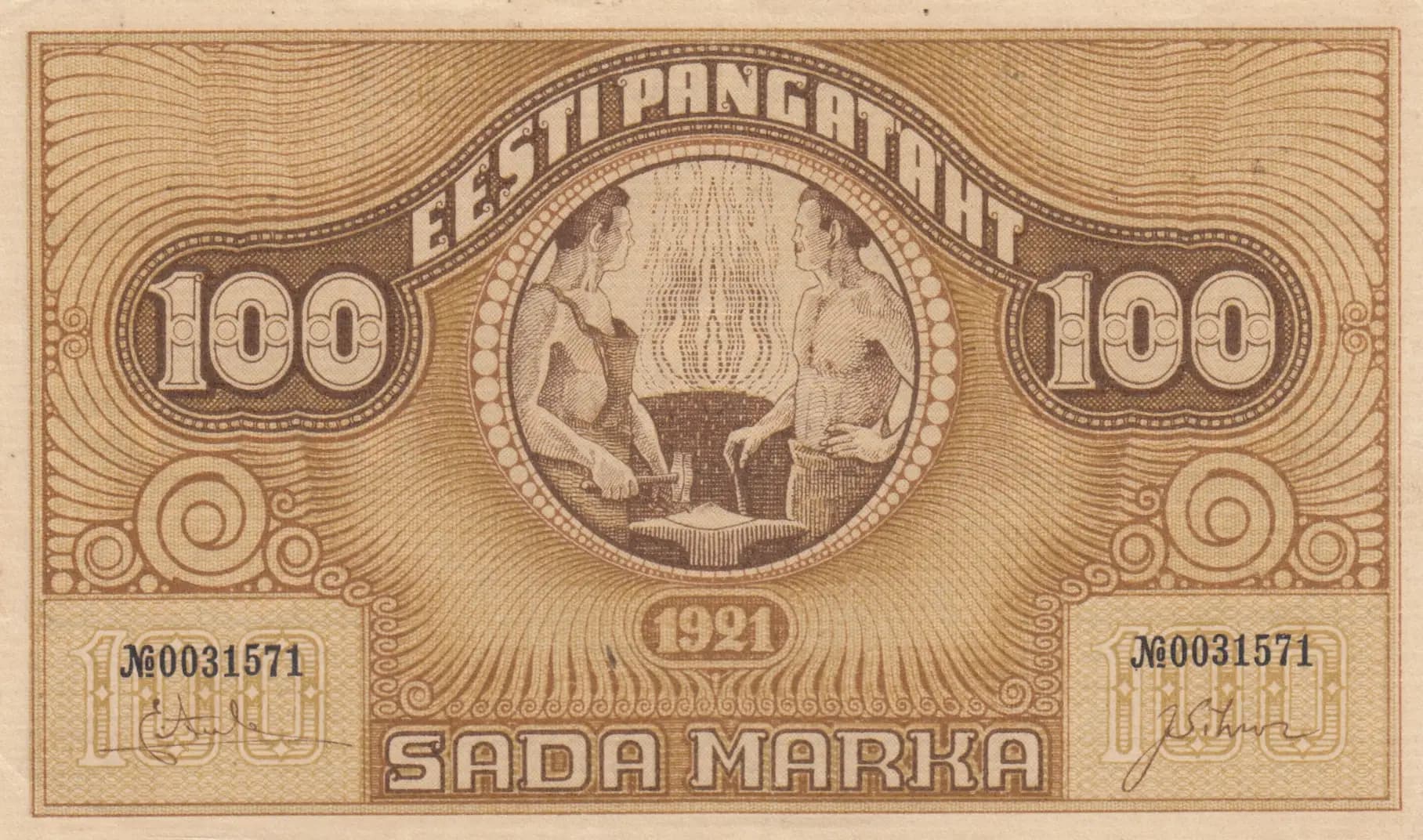
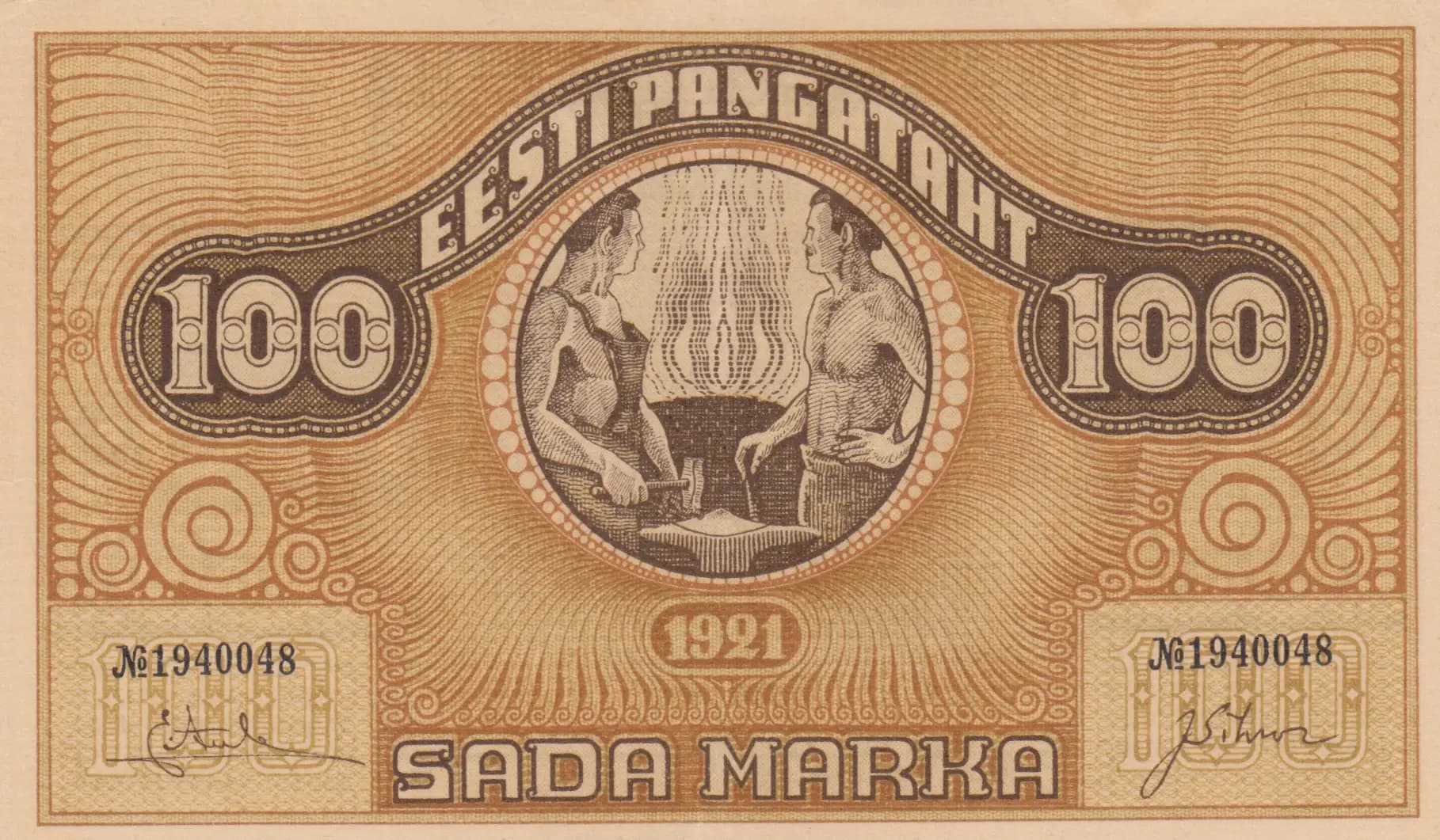
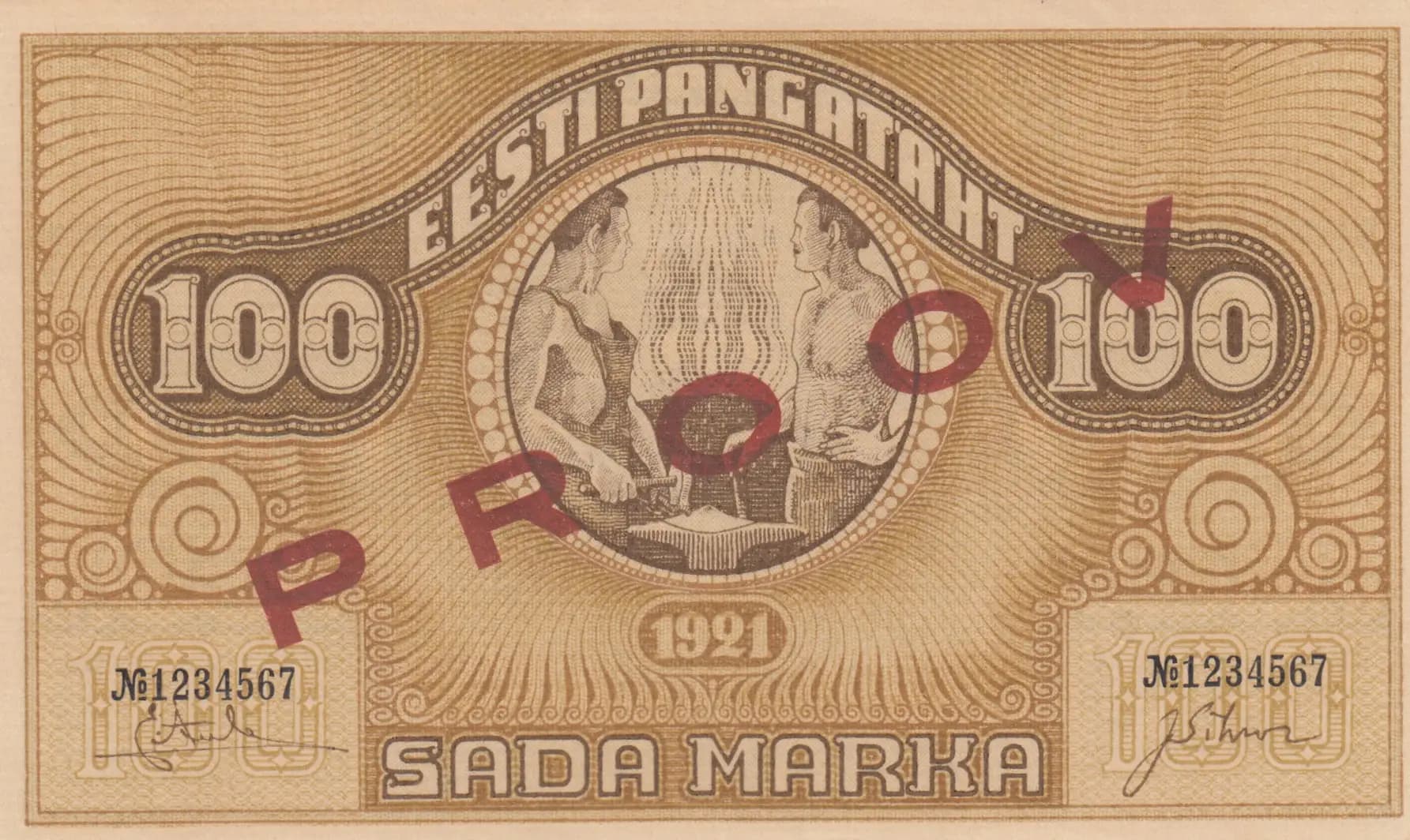
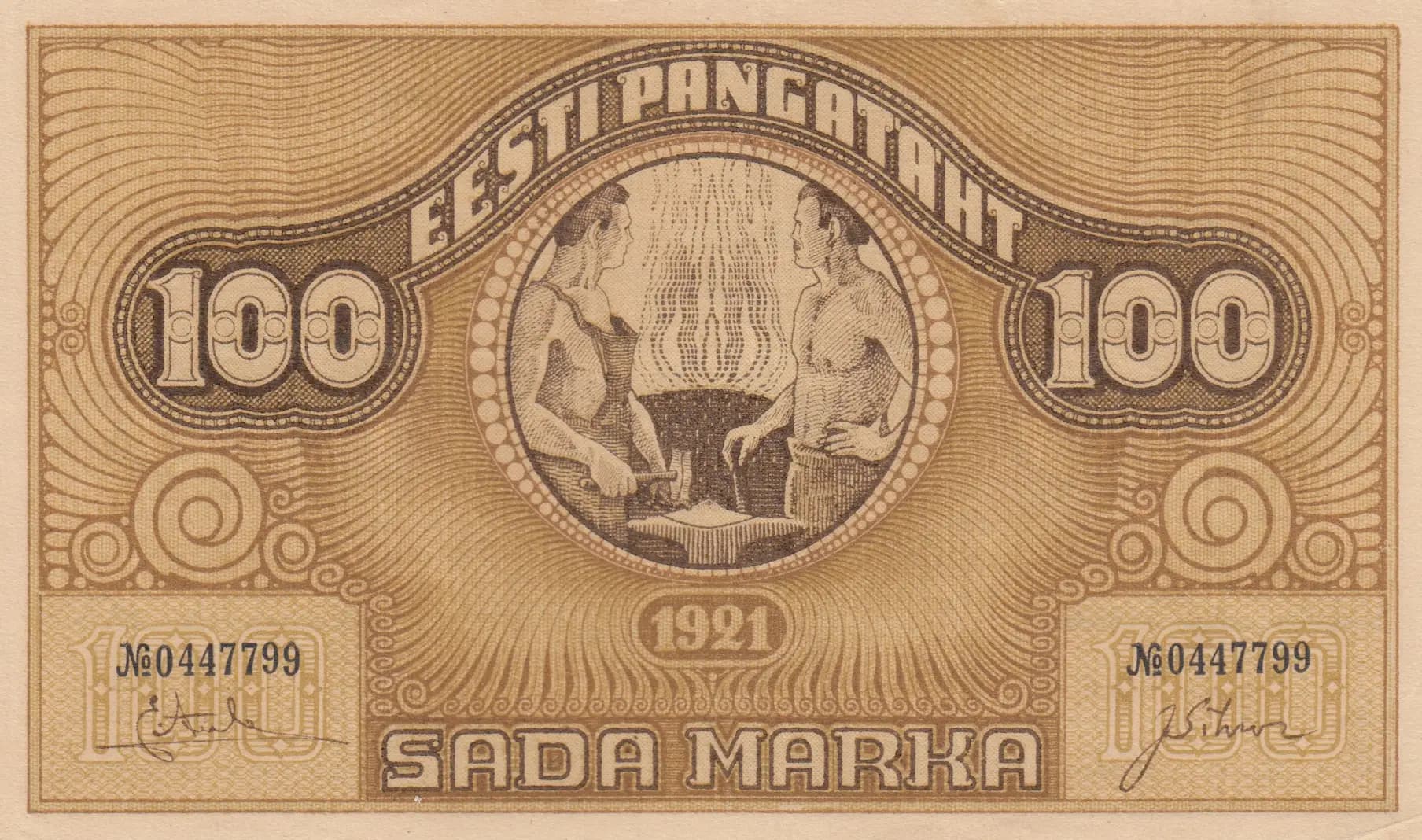
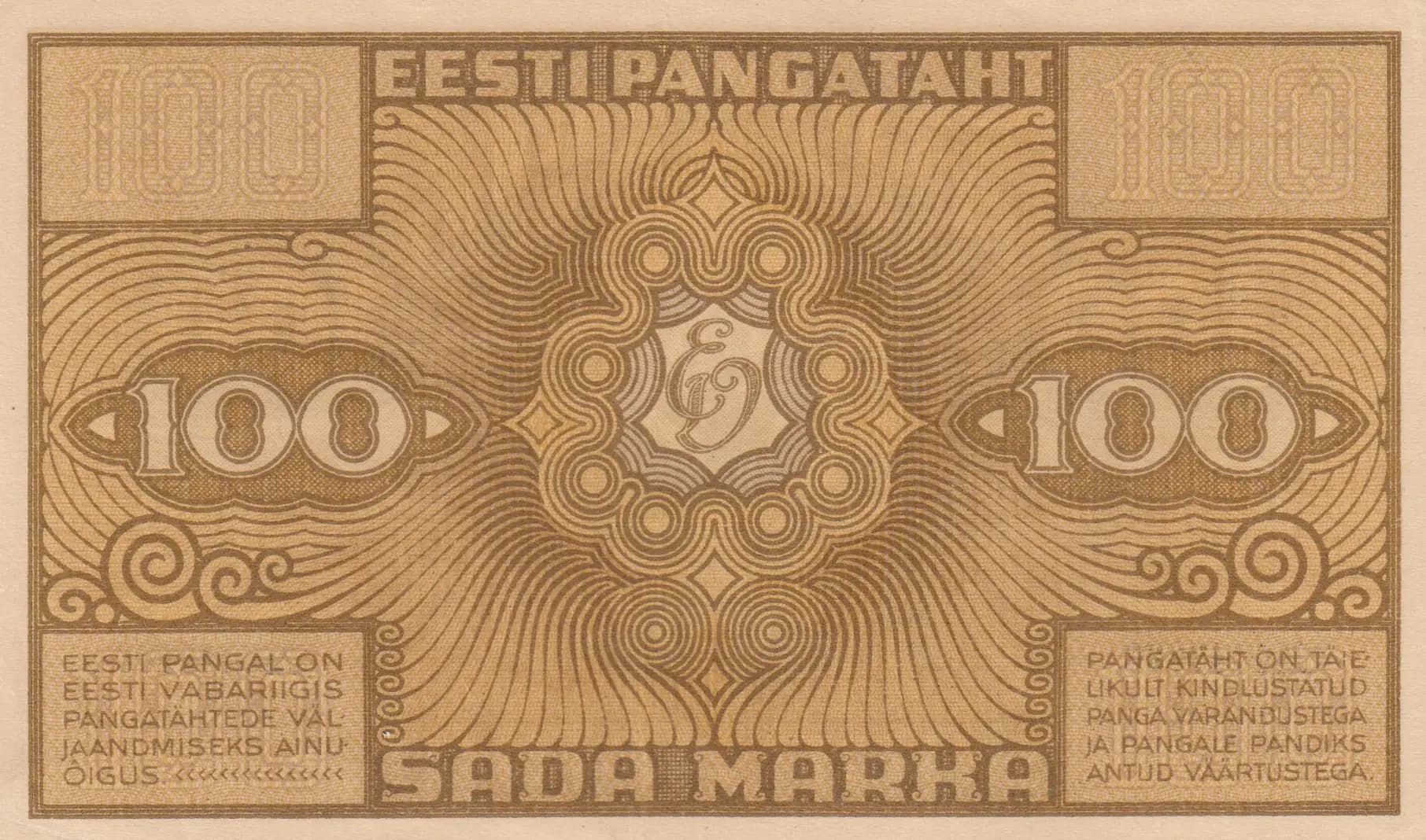
This 100 Marka note from 1921 represents an early issue of the newly independent Estonian Republic's currency, featuring a classical vignette of two blacksmiths flanking a vessel on the obverse and an ornamental monogram on the reverse. The note presents in Very Fine condition with sharp, clear printing throughout, minimal wear, and well-preserved intricate guilloche patterns that showcase the fine engraving quality of the period. The brown color palette and classical iconography reflect Estonia's aesthetic preferences during the early years of independence.
Common. While this is an early Estonian issue from 1921, the catalog values and eBay pricing data indicate accessibility at modest price points ($126-$400 depending on condition grade). The VF-graded example shown aligns with the 2016 catalogue valuation of $200 for that grade, and the observed eBay transaction at $126 for a Fine example demonstrates active collector interest but not scarcity. Early Estonian banknotes in general were produced in sufficient quantities for regular circulation and have survived in collectible numbers.
This 100 Marka banknote was issued in 1921 by the Treasury of Estonia (Eesti Vabariik) during the nation's first decade of independence following World War I and the Russian Revolution. The classical imagery of the blacksmiths—shown facing each other with a vessel between them—symbolizes labor, craftsmanship, and the industrial foundation of the new nation, while the reverse's ornamental monogram 'EV' (Eesti Vabariigi) emphasizes national sovereignty and the state's exclusive right to currency issuance.
The obverse features a central circular vignette depicting two classical male figures—identified as blacksmiths based on catalog references—positioned in profile facing each other with a classical vessel or urn between them, symbolizing craftsmanship and labor. The design is framed by ornate decorative borders with concentric wavy lines and ornamental scrollwork in the corners. Large ornamental numerals '100' appear symmetrically on both left and right sides. The reverse presents an abstract ornamental emblem at center featuring concentric circles and symmetrical diamond-shaped geometric patterns radiating outward, characteristic of the monogram 'EV' (Eesti Vabariigi), surrounded by additional decorative flourishes and guilloche patterns forming a complete ornamental frame.
OBVERSE: '100' (denomination), 'PANGAKAHT' (Bank note), '1921' (year of issue), 'SADA MARKA' (One hundred marks), '№0447799' (serial number). REVERSE: '100' (denomination), 'EESTI PANGATAHT' (Estonian bank note), 'EESTI VABARIIGIS PANGATAHTEDE VAL JAANDMISEKS AINU ÕIGUS' (The sole right to issue bank notes in the Estonian Republic), 'PANGATAHT ÕN TAAE LIKUT KINDLUSTATUD PANGA VARANDUSTEGA JA PANGALE PANDIKS ANTUD VAARTUSTEGA' (Bank note secured by the bank's assets and values pledged to the bank), 'SADA MARKA' (One hundred marks).
This note was produced using traditional intaglio engraving and letterpress printing techniques, evidenced by the deep, fine-line work visible throughout both sides. The intricate guilloche patterns, detailed background concentric lines, and sharp denomination numerals are characteristic of high-quality security printing from the early 1920s. The printer for Estonian Treasury notes of this period is not definitively attributed in the provided data, but such notes were typically produced by established European security printers specializing in government currency.
This example corresponds to Pick catalog number P-56a. The PMG Population Report indicates a P-56b variant exists for the same base Pick number, suggesting minor differences in printing or signatures between variants. The observed serial number (№0447799) and the specific printing characteristics visible should be compared against the P-56b variant definition to confirm this note's exact variety assignment. The absence of visible signature variations or date overprints on this example suggests it represents the standard P-56a production run.