100 marka 1923 specimen
Market Prices
1 saleAbout This Note
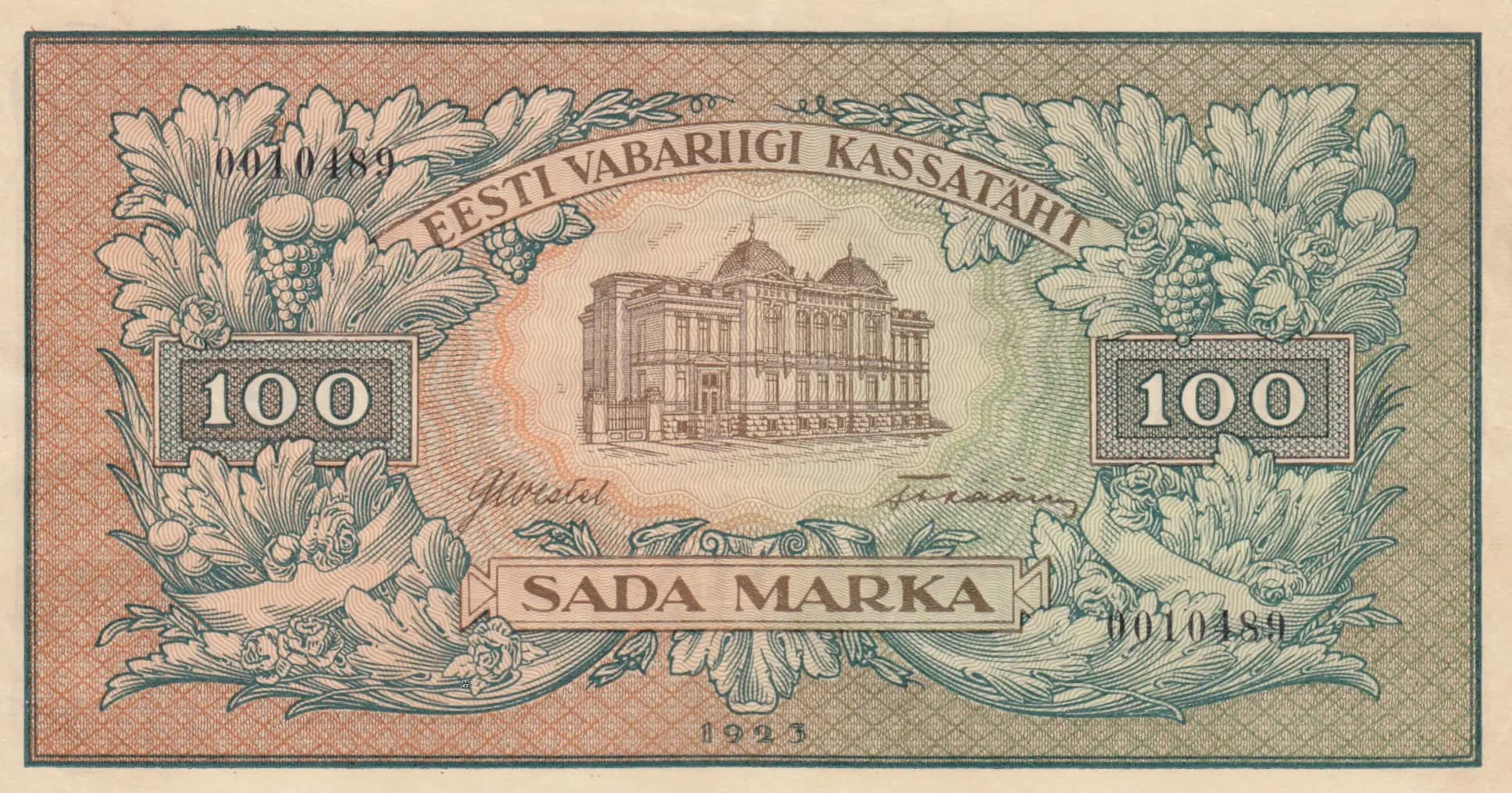
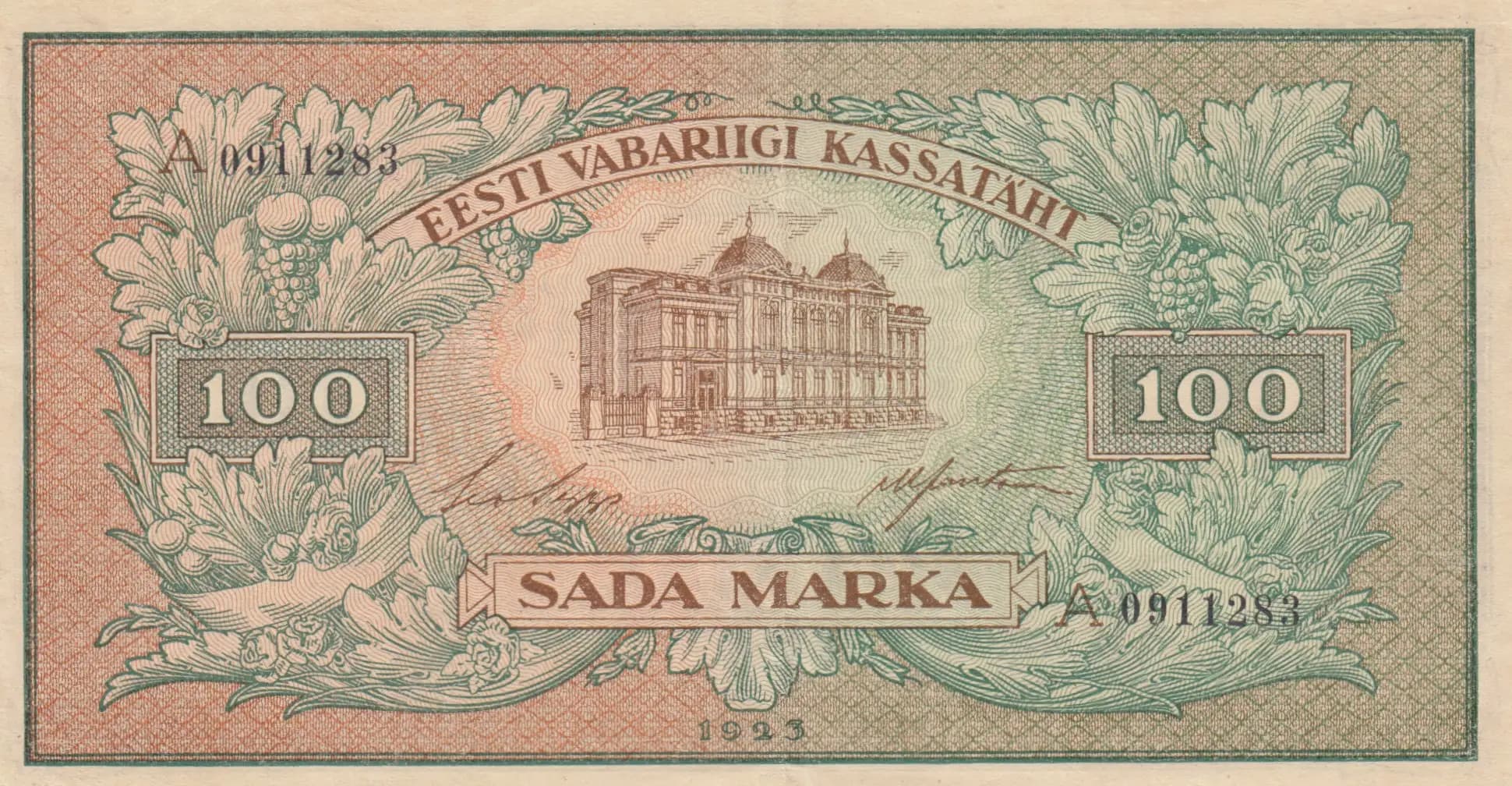
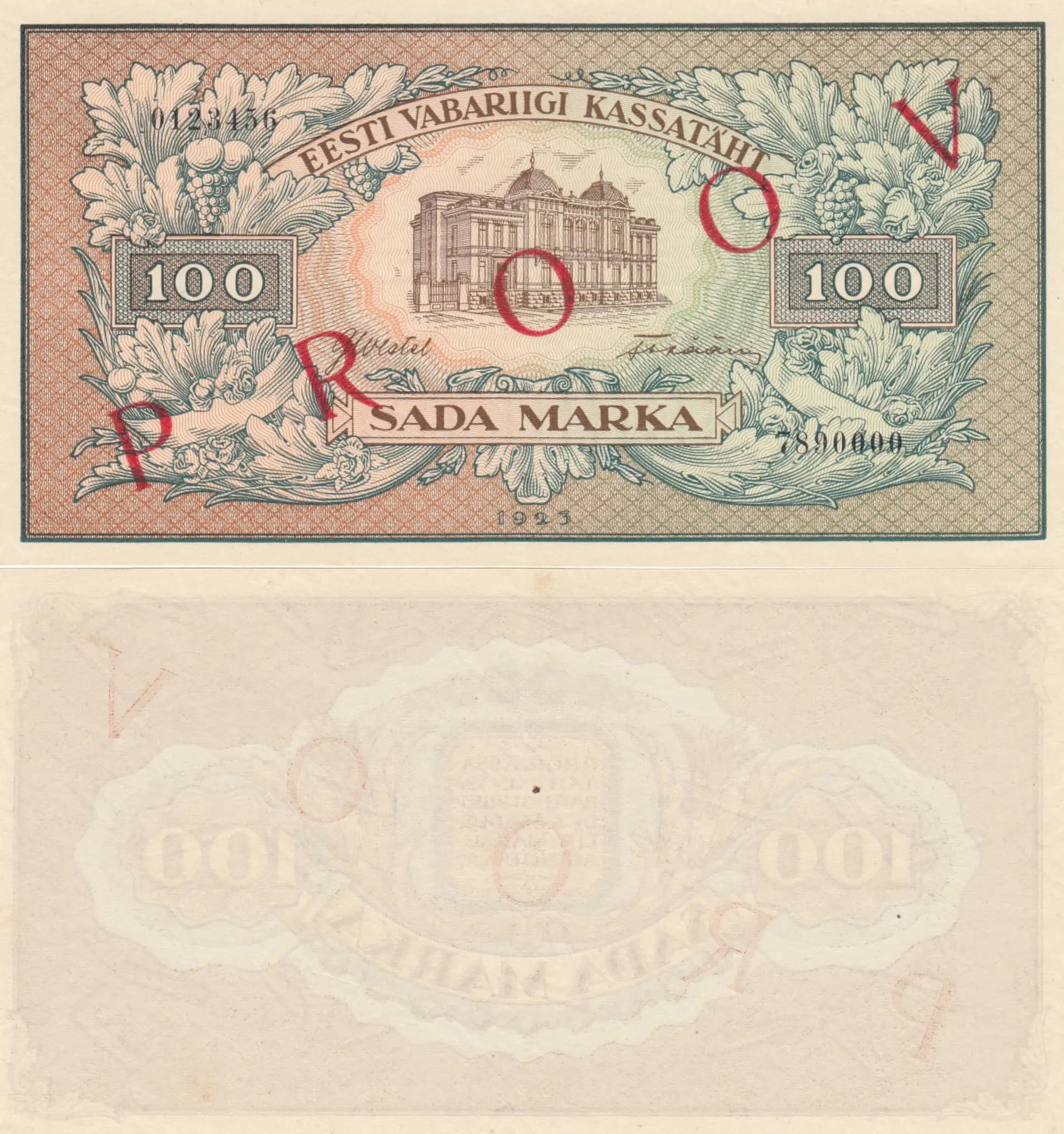
This is an exceptional specimen example of Estonia's 100 Marka note from 1923, displaying the classical architectural and ornamental design characteristic of the early Estonian Republic's currency. The note features prominent red specimen markings and is in UNC condition, preserving the intricate engraving work, decorative grape vine motifs, and classical domed building at the center with remarkable clarity. As a specimen note rather than a circulation issue, this example carries numismatic significance for collectors of Estonian banknotes and early 20th-century Eastern European currency.
Uncommon. While the base Pick number P-51a represents a regular issue from 1923, specimen notes (P-51as variant) are considerably less common than circulation strikes, as they were typically produced in limited quantities for archival, presentation, or destruction purposes. The catalog value of $300 in UNC condition (2016 data) and the rarity of specimen variants in the PMG population report support an 'uncommon' assessment. However, the note is not rare in absolute terms—specimen examples do appear in the market periodically, and this is not from a recalled or ultra-short-run issue.
The 100 Marka note was issued by the Treasury of Estonia in 1923, during the formative years of the Estonian Republic following independence from Russia in 1918. The classical building depicted on the obverse represents institutional authority and stability, while the ornamental grape vine and floral motifs reflect the artistic traditions of pre-war European banknote design. The bilingual and purely Estonian inscriptions ('Eesti Vabariigi Kassatäht' and 'Sada Marka') underscore the nation's assertion of cultural and monetary sovereignty during this critical period of state-building.
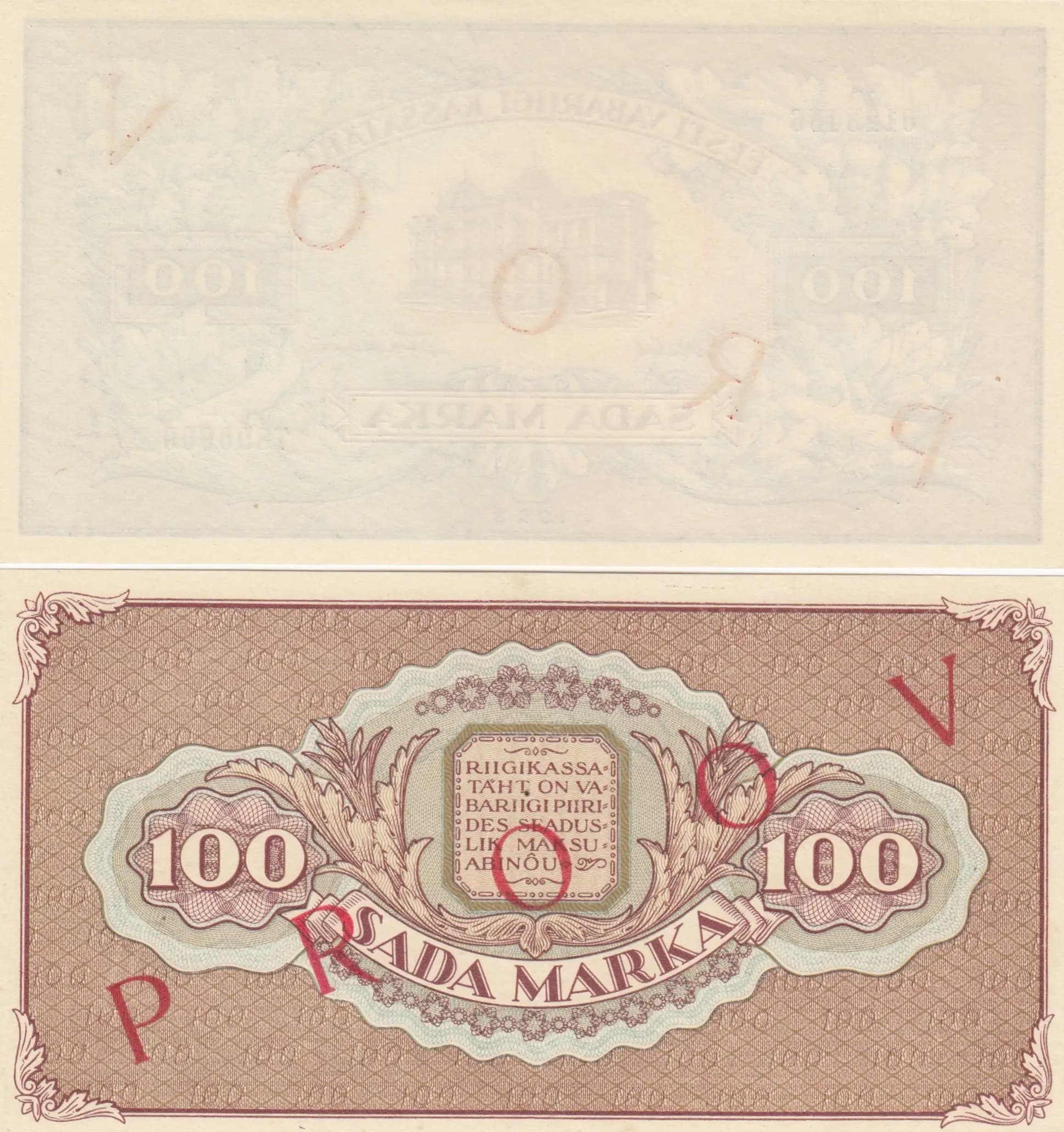
The 100 Marka features a symmetrical, classical design centered on a domed institutional building with portico, likely representing Estonia's central bank or treasury building. The obverse employs beige, cream, and green tones with elaborate decorative borders featuring grape vines and fruit clusters framing both sides, reflecting Belle Époque artistic conventions. The reverse shifts to a mauve and reddish-brown palette with decorative corner ornaments in all four corners and a centered cartouche containing legal tender text. The denomination appears in rectangular frames on both sides, with fine crosshatch background patterns and intricate engraving providing security features throughout. The specimen markings in red are consistent with bank or government archive examples reserved from circulation.
Front side: 'EESTI VABARIGI KASSATÄHT' (Estonian Republic Bank Note); '100' and 'SADA MARKA' (One Hundred Marka); '1923' (year of issue); Serial number '330600'. Back side: '100' and 'RIDA MARKA' (Hundred Marka); 'RIIGIKASSA-TÄHT ON VA-HARIDIGI PURI-DES STADUS-LIK MA.SU-AE.NOU.' (State Treasury Note is valid legal tender). All inscriptions are in Estonian, reflecting the nation's linguistic independence.
This note was produced using intaglio (engraved) printing, evidenced by the fine line work, detailed crosshatch background patterns, and the depth of impression visible in the intricate borders and central building. The sophisticated engraving of the decorative grape vine motifs and ornamental scrollwork, combined with the precision of the denomination frames and security patterns, is characteristic of high-security banknote production by established European security printers. The red specimen overprint was likely applied by hand or stamp after printing.
This note is cataloged as P-51as (specimen variant with EV watermark). The Pick catalog recognizes multiple variants for this base number: P-51a, P-51as, P-51as1, P-51b, and P-51s. The presence of the 'EV' (Eesti Vabariigi) watermark and the red specimen markings confirm this as a specimen issue rather than a regular circulation note. The serial number '330600' and the absence of any series letter designation are consistent with 1923 Estonian Treasury notes. No signature variants are observable in the visual analysis provided.