100 marka 1923
“serie A”
Market Prices
About This Note
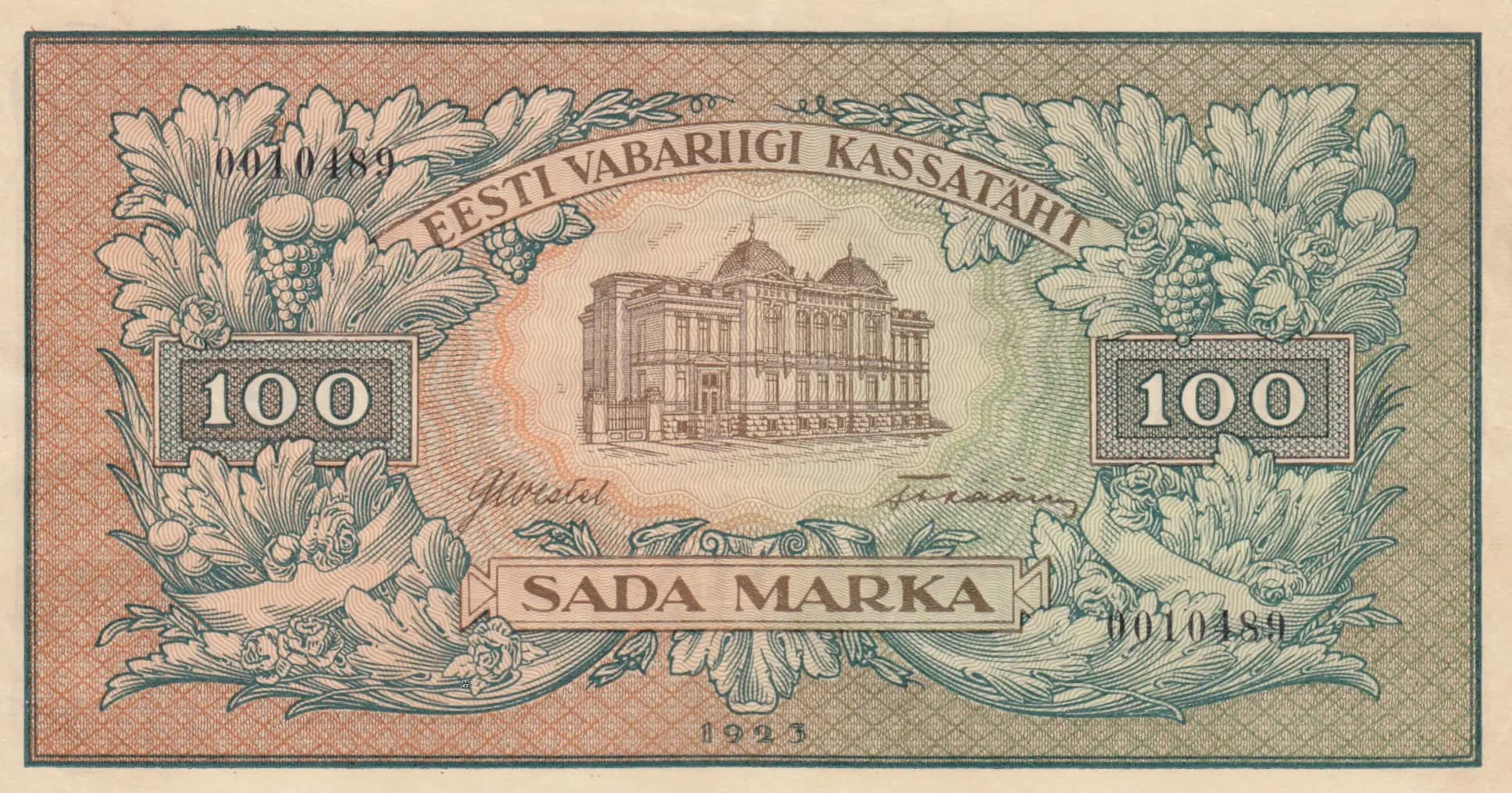
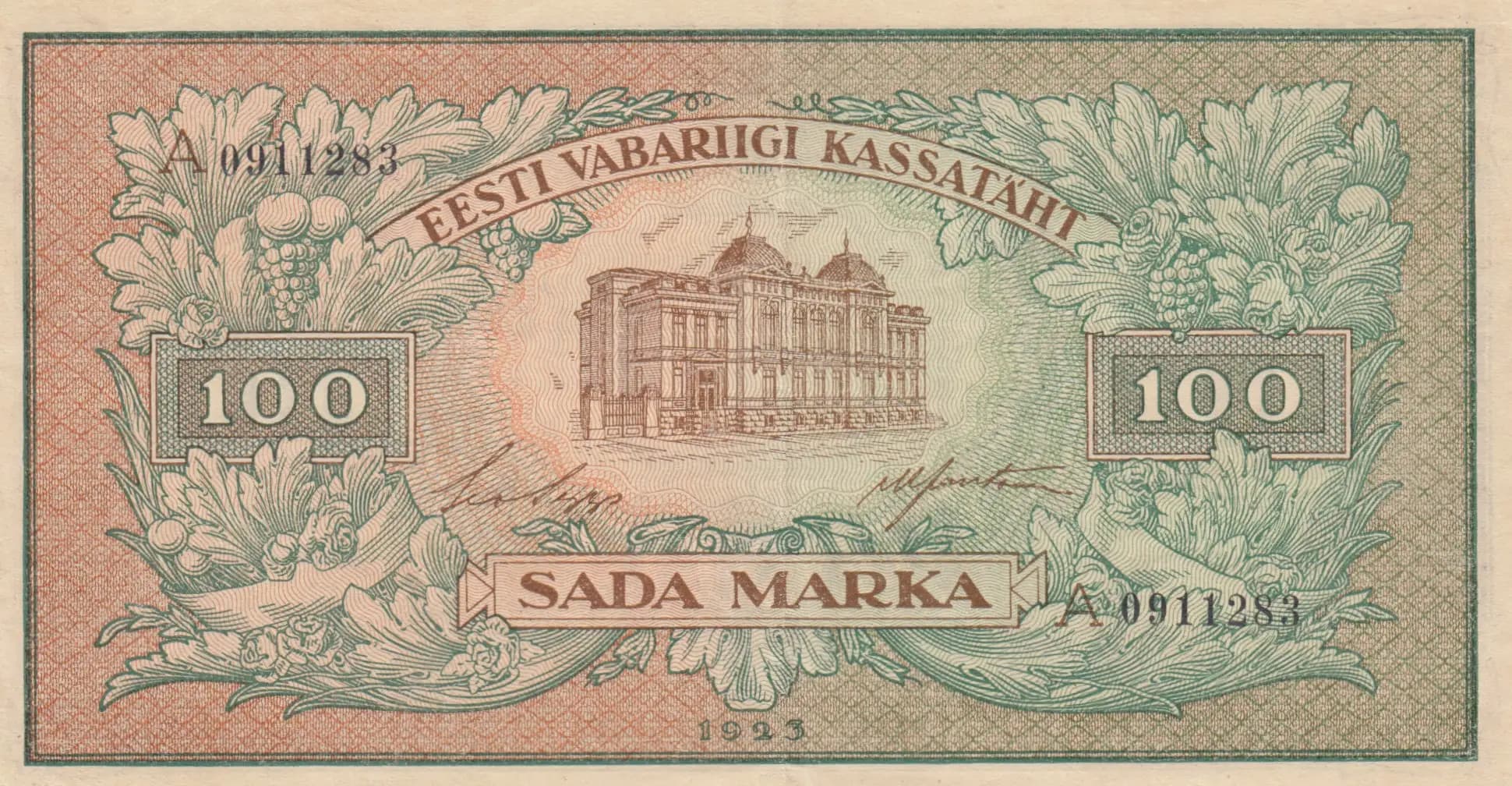
This Estonian 100 Marka treasury note from March 1923 presents in exceptional condition, appearing uncirculated with crisp, sharp printing throughout and no visible wear, creasing, or damage. The note showcases beautiful Art Nouveau-influenced design with ornate grape vine and floral motifs framing a central palatial building on the obverse, rendered in harmonious tan, green, brown, and cream tones. As a Series A example from the early period of Estonian independence, this note represents an important artifact of the newly established Estonian Republic's currency.
Common. Based on eBay market price tracking showing VF examples consistently selling in the $82-$245 USD range (with notable variation likely due to series and grade inconsistency), this note trades as a regular collectible item with adequate supply. The catalog reference notes (2016) of $150 for VF condition aligns with current market activity. As a regular issue from the early Estonian Republic with substantial print runs, and given its appearance in multiple condition grades on the secondary market, this Pick number represents a common banknote despite its historical significance. The variety of prices reflects market variance rather than fundamental scarcity.
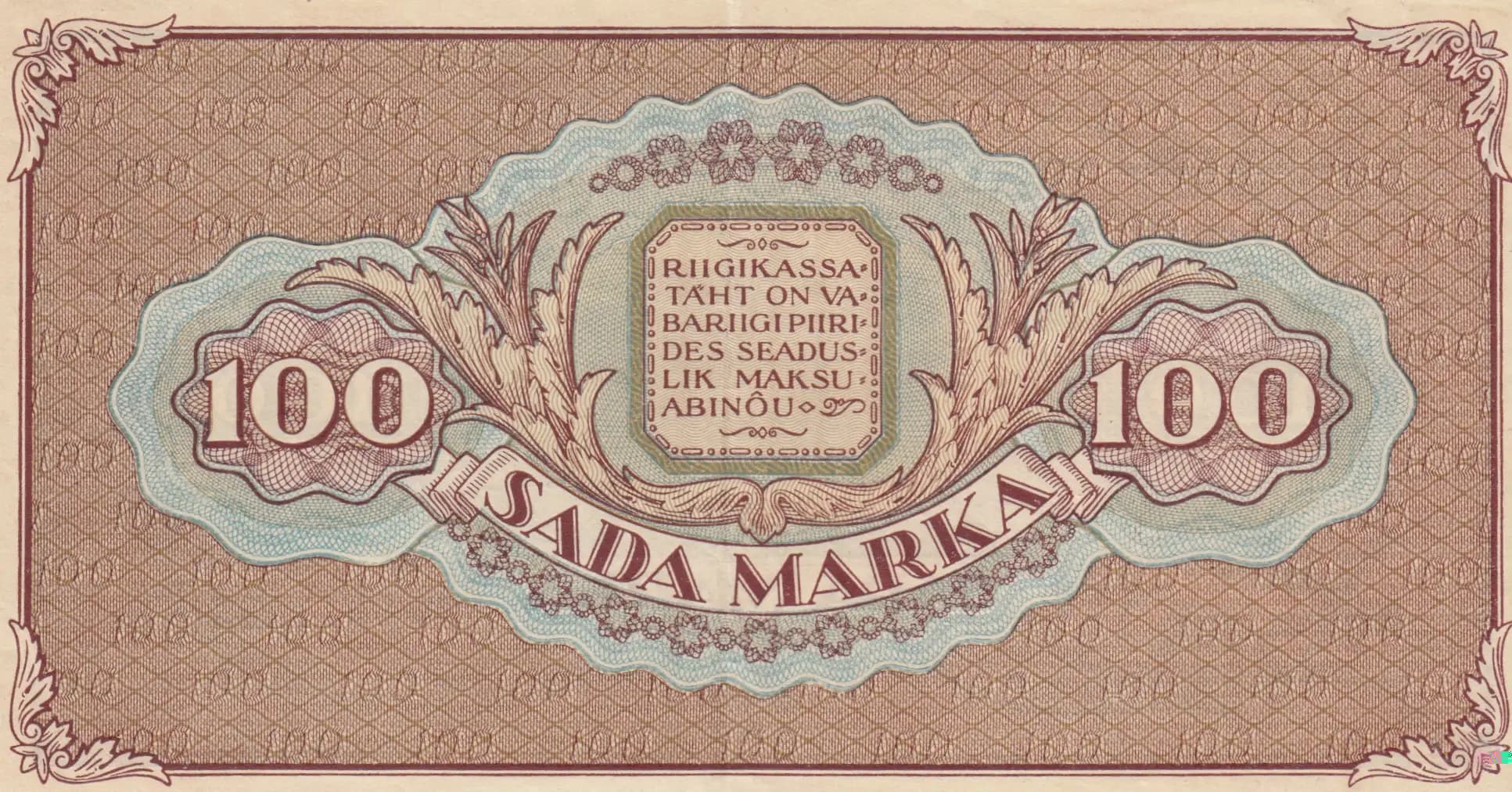
The 100 Marka note was issued by the Estonian Republic's Treasury (Eesti Vabariigi Kassatäht) in 1923, during the formative years following Estonia's independence declaration in 1918. The palatial building depicted on the obverse likely represents an important governmental or financial institution of the young republic. The ornamental design language reflects the Art Nouveau aesthetic popular in early 20th-century European currency design, while the legal tender declaration on the reverse ('The state treasury note is a legal means of payment within the borders of the Republic') underscores Estonia's establishment of sovereign monetary authority.
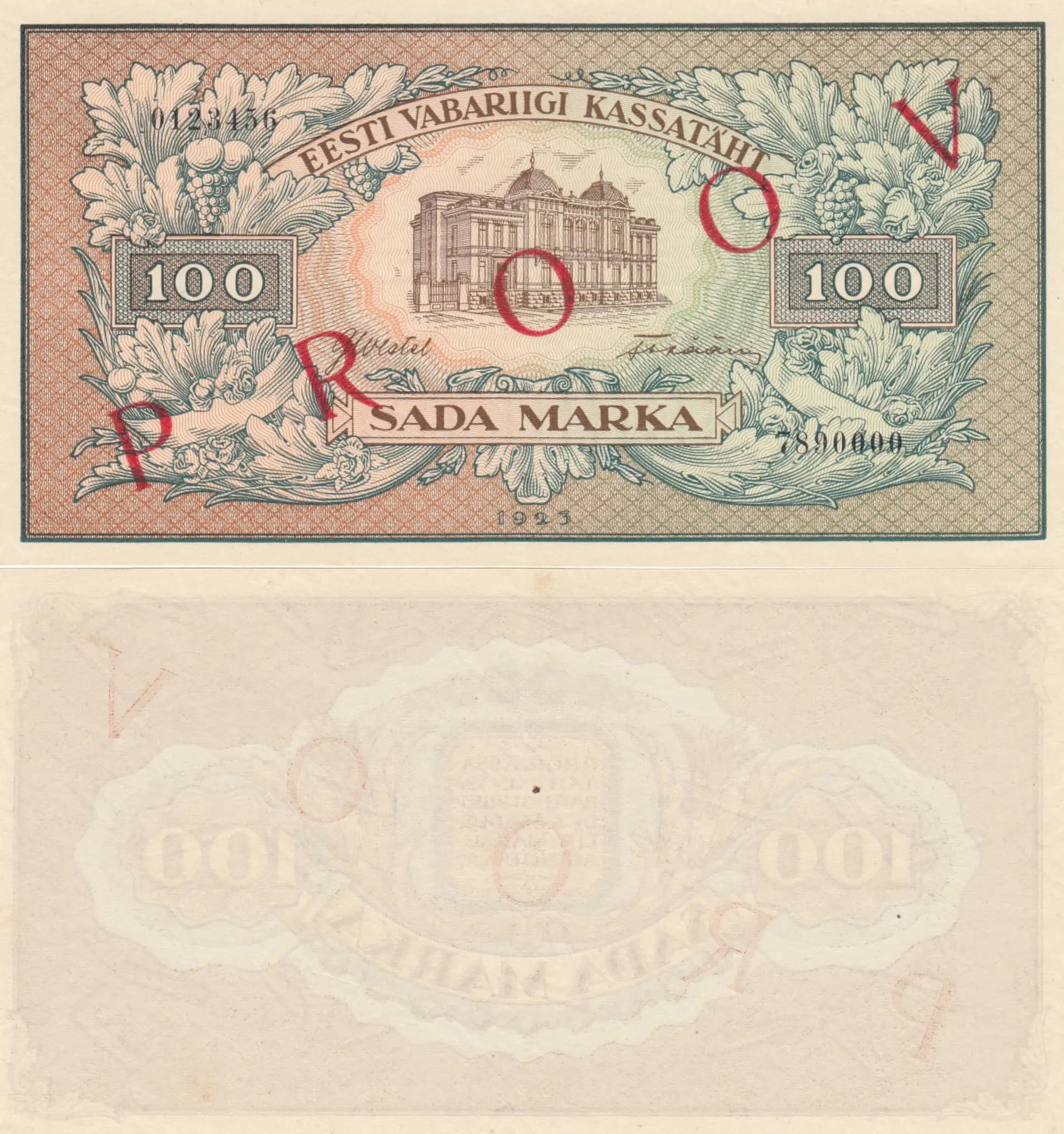
The obverse features a striking multi-story palatial building with distinctive neoclassical architecture, including domed towers, ornamental windows, and architectural detailing centered as the note's primary vignette. This building, characteristic of early Estonian institutional architecture, is flanked by elaborate Art Nouveau-style grape vine bunches with leaves and scrollwork in the upper corners, with the grape motif being a traditional symbol of abundance and prosperity. The reverse employs a symmetrical design with ornate cartouches bearing the denomination, centered seal cartouche with legal text, and matching floral and vegetal border ornamentation. The overall design reflects the sophisticated engraving standards of 1920s European currency production, with fine line work creating depth and security through complexity.
FRONT SIDE: 'EESTI VABARIIGI KASSATÄHT' (Estonian Republic Treasury Note) - arced across top; 'SADA MARKA' (One Hundred Marks) - in rectangular panel at bottom center; '100' - denomination markers in boxes at left and right; 'Märts 1923' (March 1923) - issue date; 'SA01128' - serial number. BACK SIDE: '100' - denomination in decorative cartouches (left and right); 'SADA MARKA' (One Hundred Marks) - curved banner at bottom; 'RIIGIKASSA-TÄHT ON VABARIIGI PIIRIDES SEADUSLIK MAKSUABINÕU' (The state treasury note is a legal means of payment within the borders of the Republic) - central cartouche text.
Intaglio engraving (copperplate/steel engraving) with multi-color printing. The fine line engraving patterns visible throughout, intricate decorative borders, detailed background security features, and sharp definition of the architectural vignette are characteristic of high-quality intaglio production. The multiple color palette (tan/beige, green, brown/rust red, and cream) suggests sequential color printing typical of professional government security printing. Based on the period and quality, this note was likely produced by a major European security printer contracted by the Estonian Treasury, though specific printer marks are not evident in the described visual analysis.
This example is catalogued as P-51b with watermark 'EV' (Eesti Vabariigi) and Series A designation, as noted in both the catalog data and visible watermark description. The PMG population report identifies four variants for this base Pick number: P-51a, P-51as1, P-51b, and P-51s, differentiated primarily by watermark and specimen status. The serial number 'SA01128' indicates a Series A note. The specific variety P-51b represents the standard watermarked circulation issue variant, distinguishing it from the P-51a (alternate watermark), P-51as1 (specimen), and P-51s (specimen) variants. The March 1923 date and Series A designation are consistent with early-run notes of this type.