100 marka 1923
Market Prices
1 saleAbout This Note
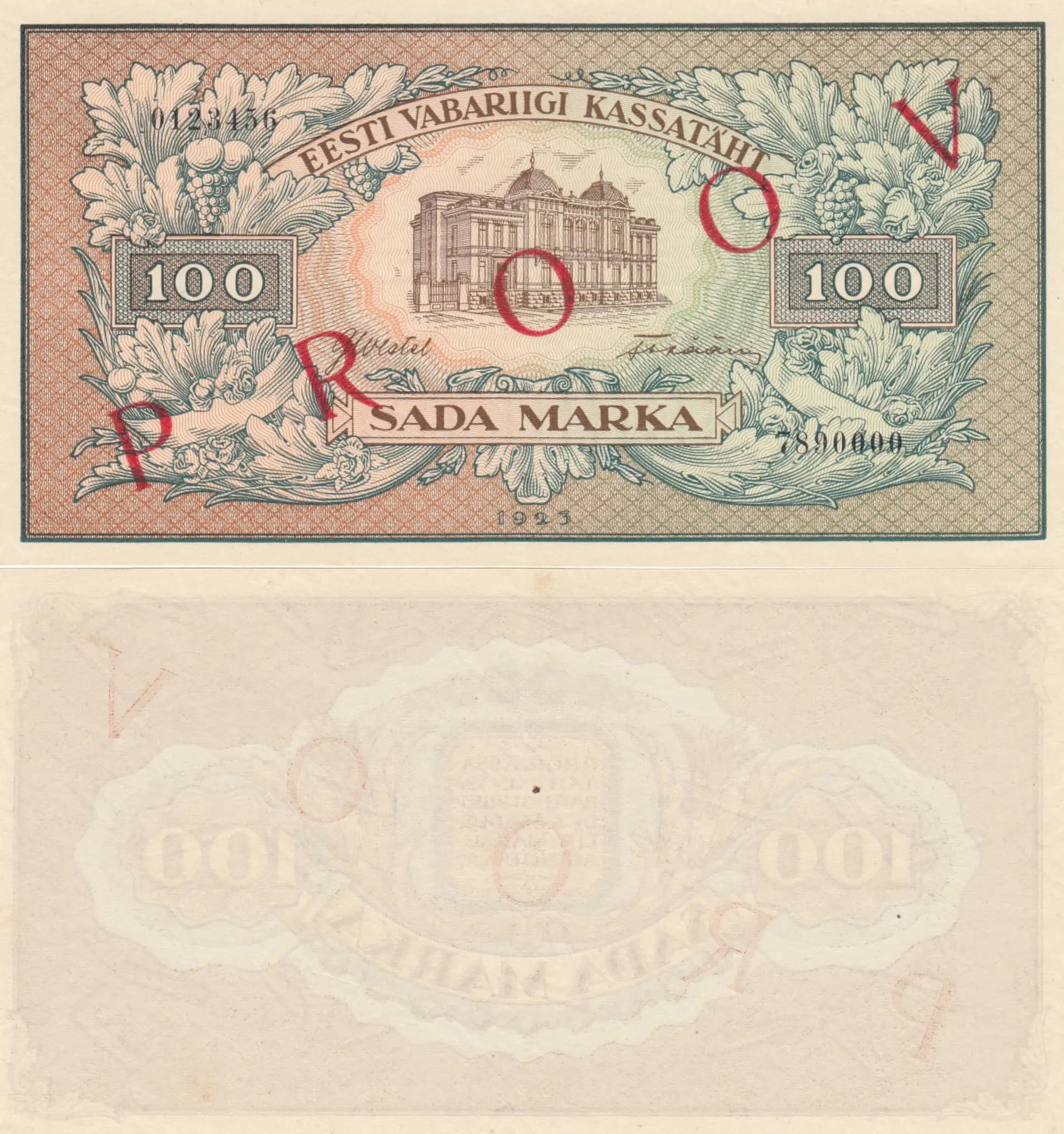
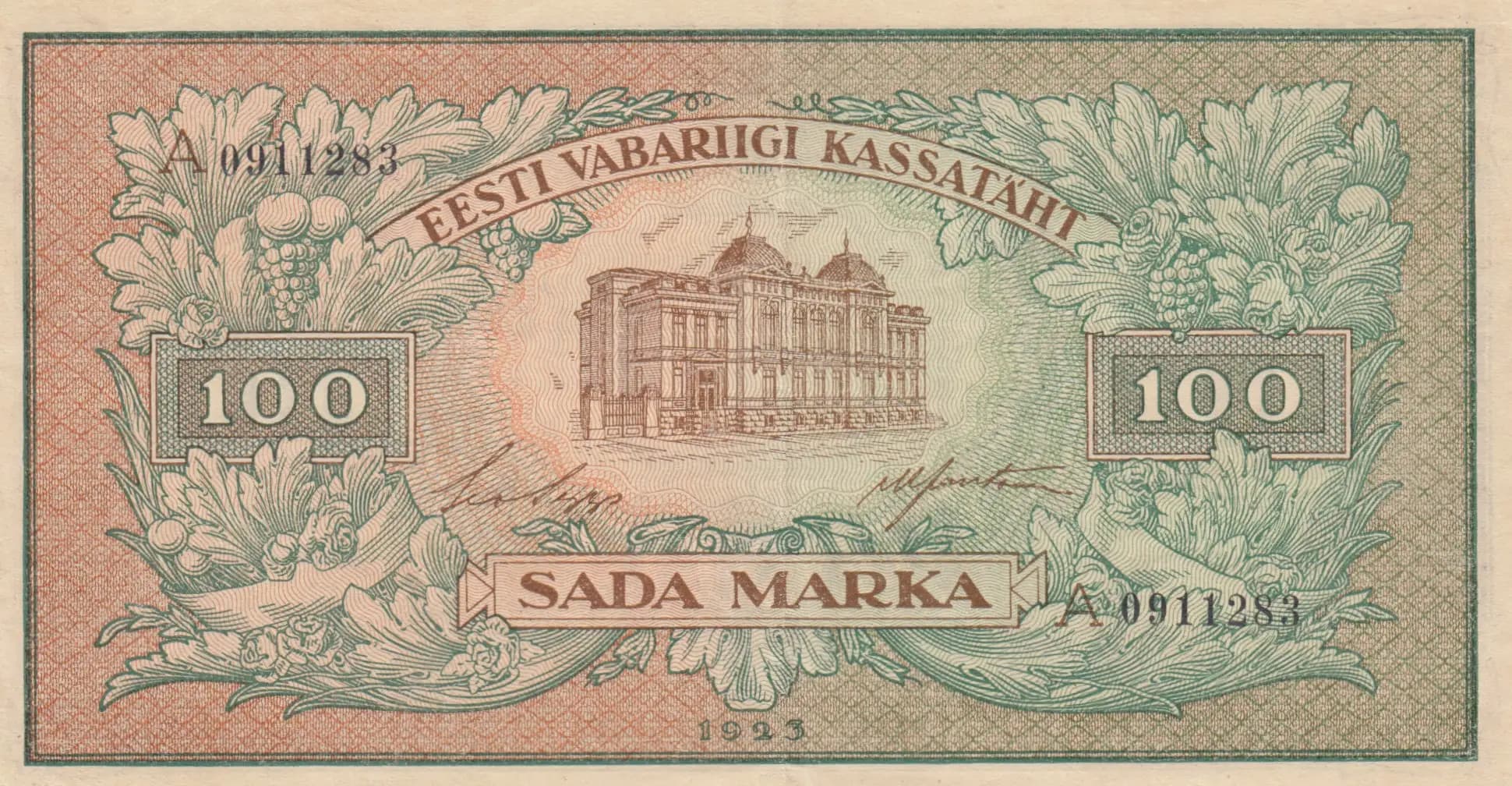
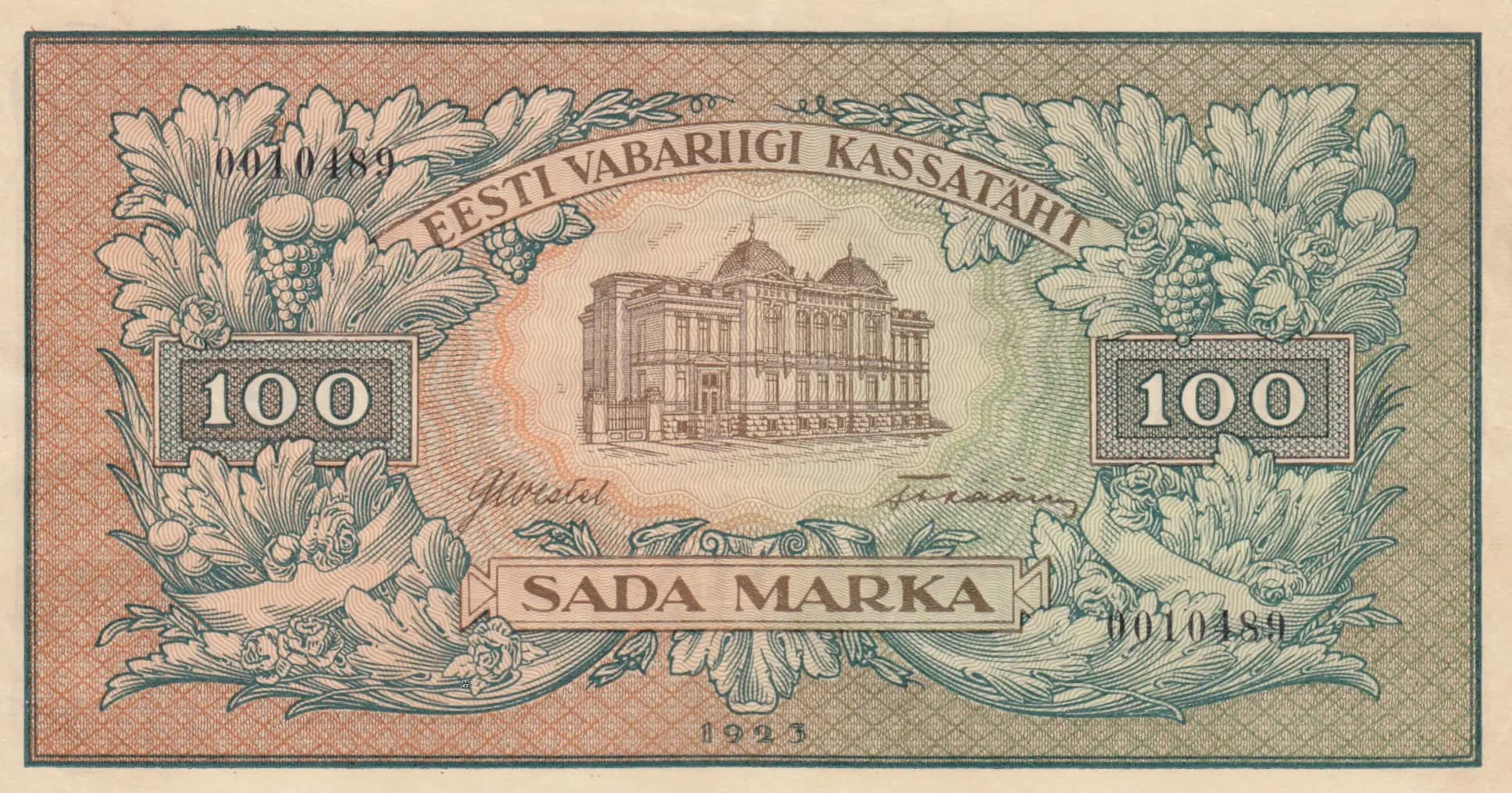
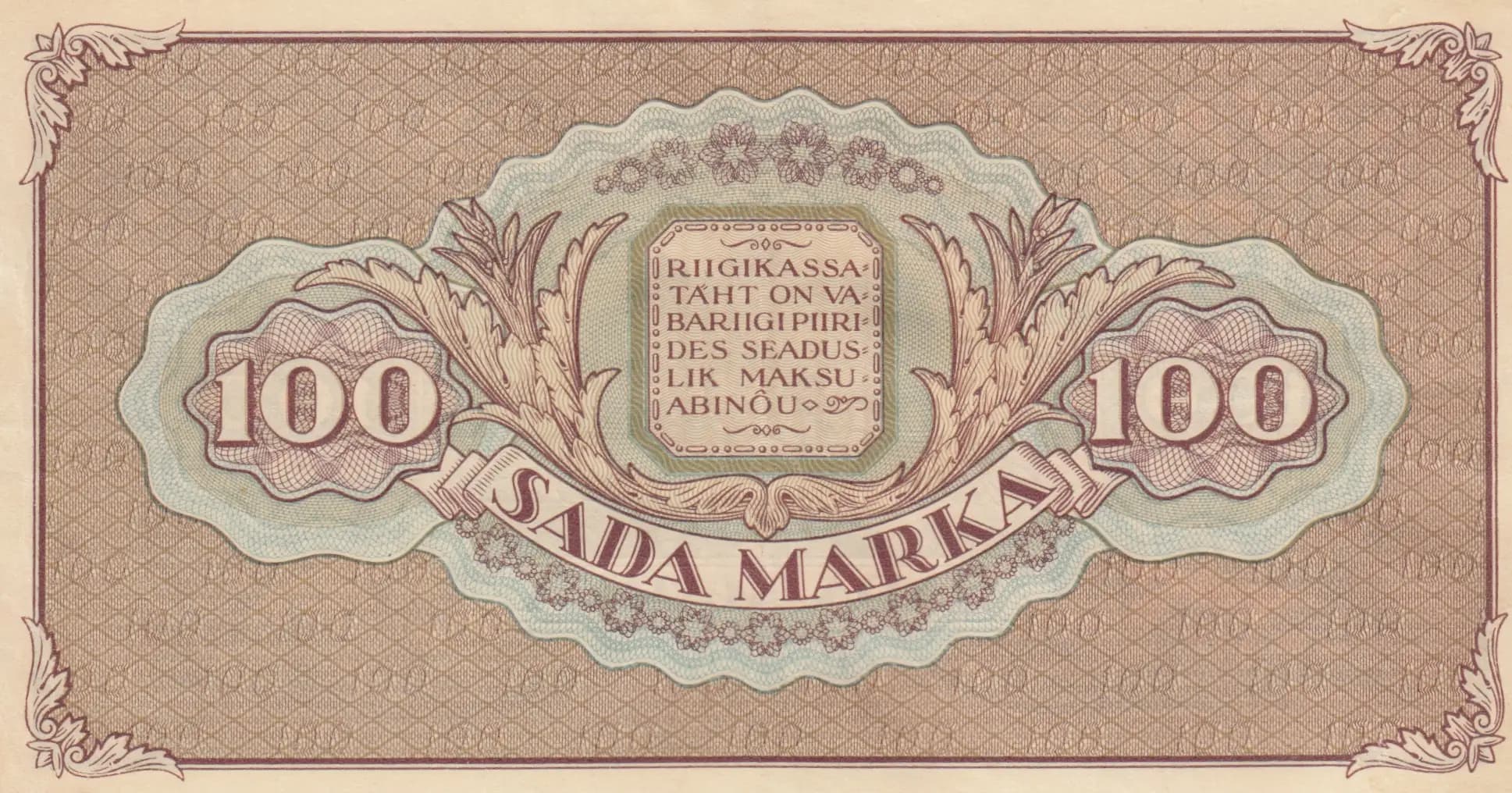
This Estonia 100 Marka note from 1923 represents a beautiful example of early Estonian Republic currency in exceptional condition. The obverse features an ornate classical bank building at center, framed by decorative grape vine motifs in a distinctive orange-red to green color scheme, while the reverse displays an elegant tan and brown design with a central cartouche and scalloped denomination boxes. In EF condition with crisp edges, clean surfaces, and no visible wear, this note showcases the fine line engraving and intricate decorative work characteristic of 1920s Baltic numismatics.
Common. While this note is from the early Estonian Republic period (1923) and represents an important numismatic type, the Pick catalog shows multiple variants (P-51a, P-51as1, P-51b, P-51s) indicating substantial production runs. The eBay market price reference showing an F-grade note selling for $81 in 2019, combined with catalog valuations of $150 for VF and $300 for UNC, indicates this is a readily obtainable note in the collector market. The presence of multiple graded examples in PMG records further confirms adequate supply.
Issued during Estonia's early years as an independent republic following the 1918 declaration of independence from Russia, this 1923 note represents the Treasury's effort to establish a distinctive national currency. The depicted classical bank building symbolizes the new nation's financial stability and institutional confidence during the initial post-independence period. The Estonian language inscriptions (EESTI VABARIIGI KASSATAHI and RIIGIKASSA-TAHT) prominently assert state sovereignty and the legal tender status of the currency within Estonia's borders.
The obverse depicts a stately neoclassical banking institution as the central architectural motif, rendered with classical proportions including a domed roof and columned facade. The building is positioned centrally and framed by elaborate ornamental borders featuring grape vines laden with fruit on both left and right sides, symbolizing prosperity and abundance. Two rectangular denomination boxes containing '100' flank the central image. The color palette transitions from warm orange-red tones on the left through tan in the center to cooler greens on the right. The reverse maintains the same architectural theme with an ornamental cartouche at center containing text affirming legal tender status, surrounded by decorative corner flourishes and two scalloped boxes containing large '100' denominations. Fine line engraving patterns and cross-hatching techniques create subtle security features throughout both sides.
Front: 'EESTI VABARIIGI KASSATAHI' (Estonian Republic Treasury); 'SADA MARKA' (One Hundred Marks); '100' (denomination); '1923' (year of issue); '9010480' (serial number). Back: 'SADA MARKA' (One Hundred Marks); '100' (denomination); 'RIIGIKASSA-TAHT ON VABARIIGI PIIRIDES SEADUSLIK MAKSABINOÜ' (State Treasury note is legal tender within the borders of the Republic).
Intaglio engraving (banknote line engraving), characteristic of early 20th-century currency production. The fine line patterns, cross-hatching for security purposes, and detailed architectural rendering indicate traditional engraved plate printing. The printer for Estonian issues of this period was typically a specialized security printer, likely a European security printing house contracted by the Estonian government.
This example is cataloged as Pick P-51a, identified by the EV watermark without series designation. The PMG population report documents four variants of the 100 Marka 1923 issue, including P-51a (the main variety with EV watermark), P-51as1, P-51b (also with EV watermark), and P-51s. Serial number 9010480 suggests this note falls within the regular issue production sequence. No significant overprints or exceptional signing varieties are noted for this Pick number.