100 marka 1919 specimen
“w/m vert lines”
Market Prices
About This Note
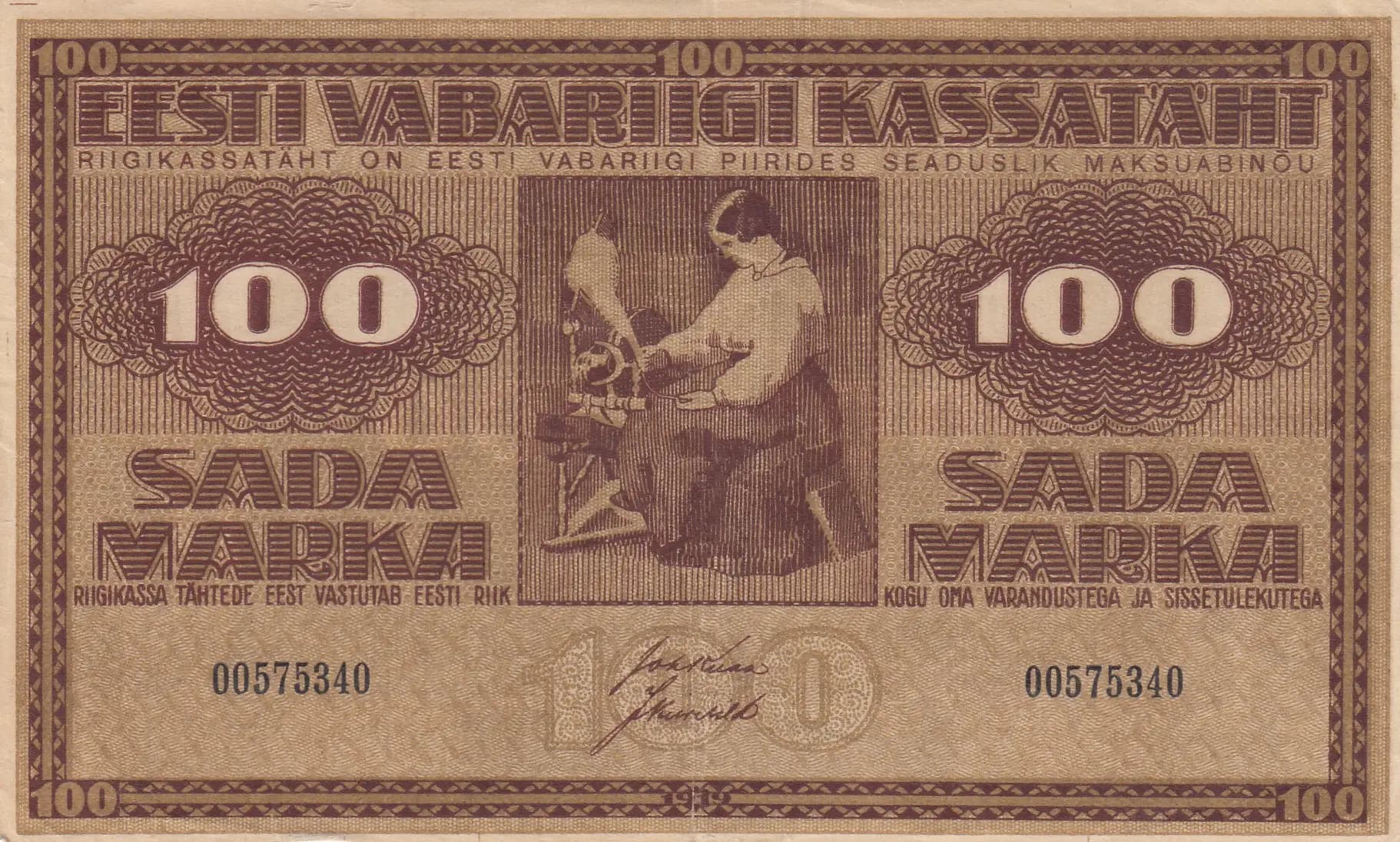
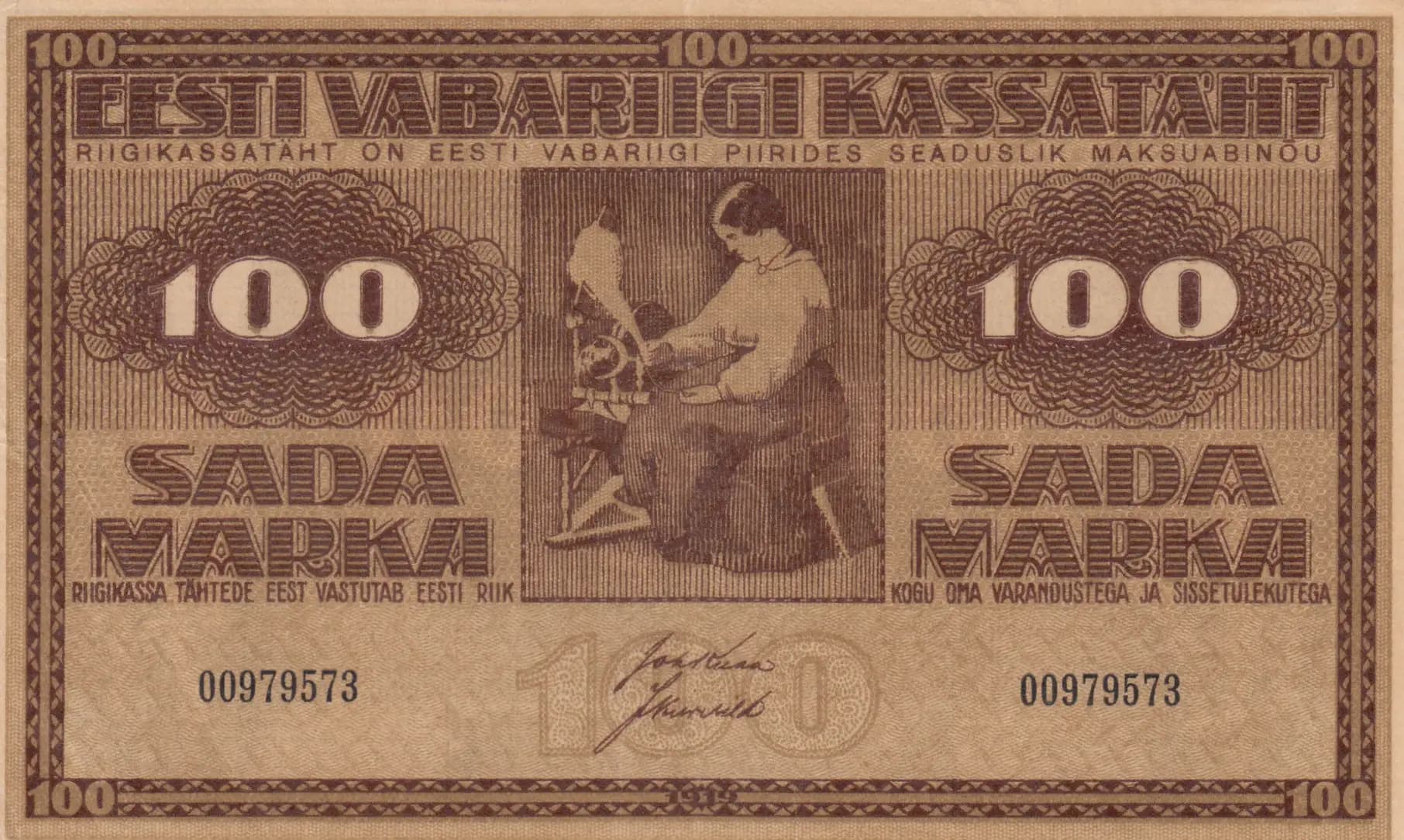
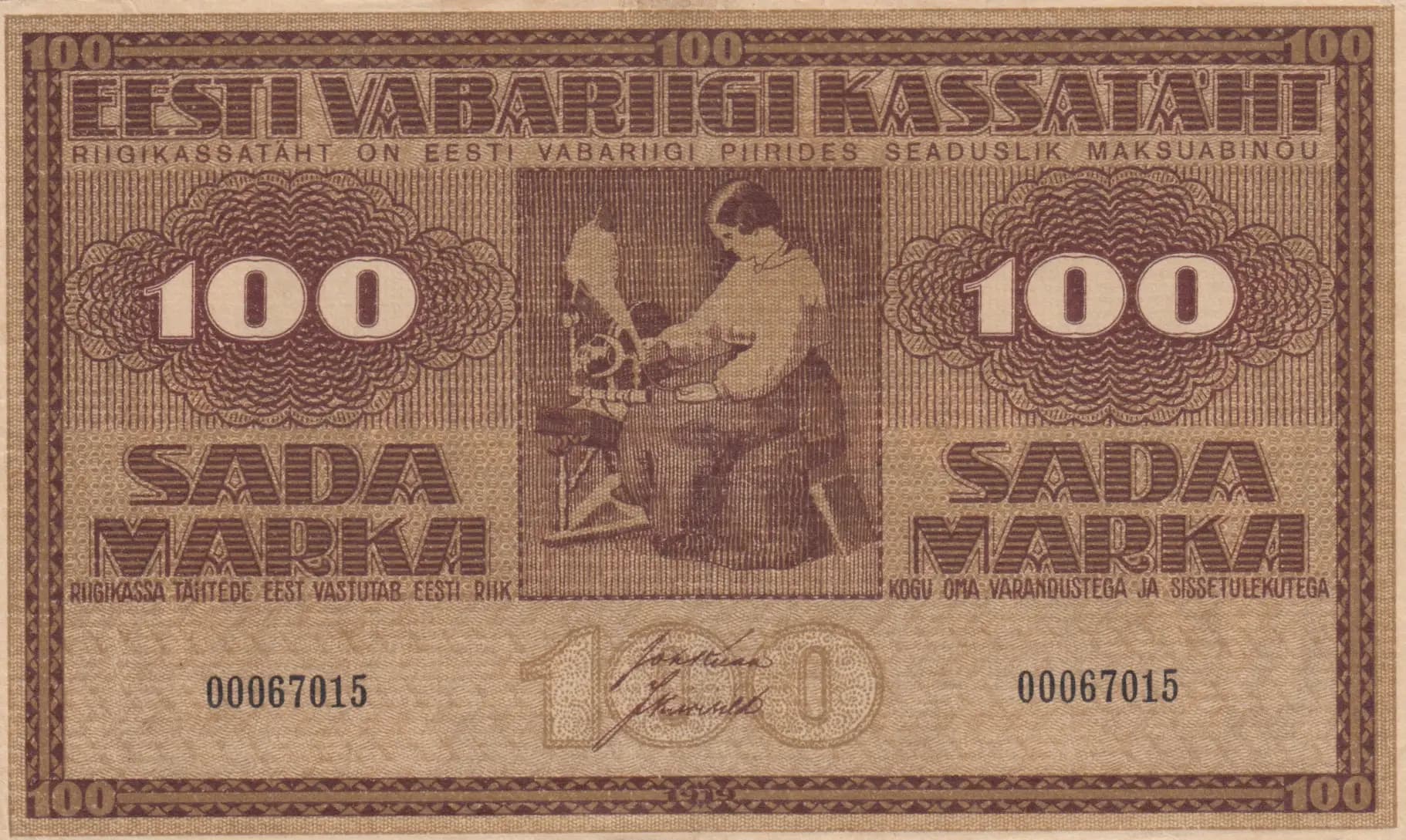
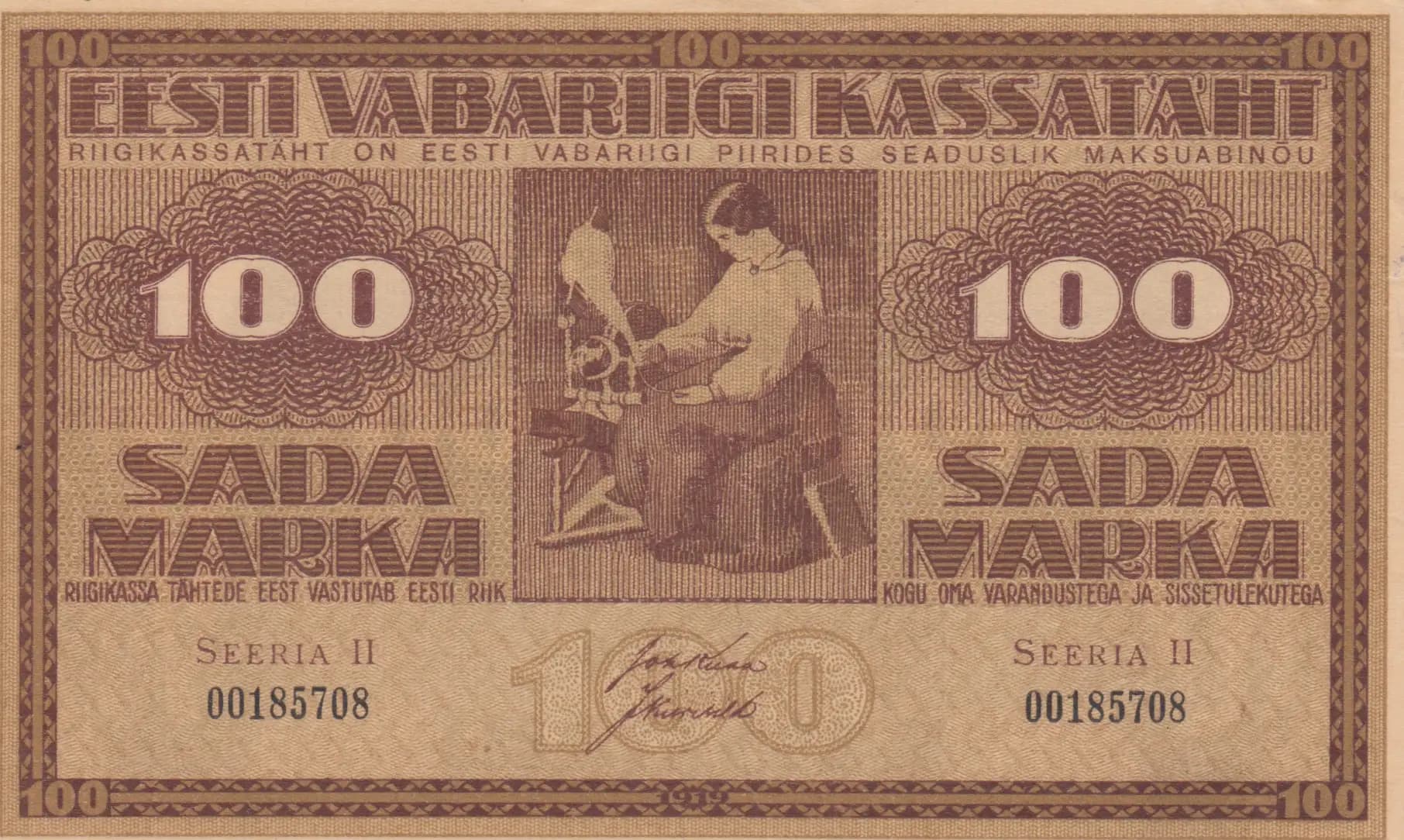
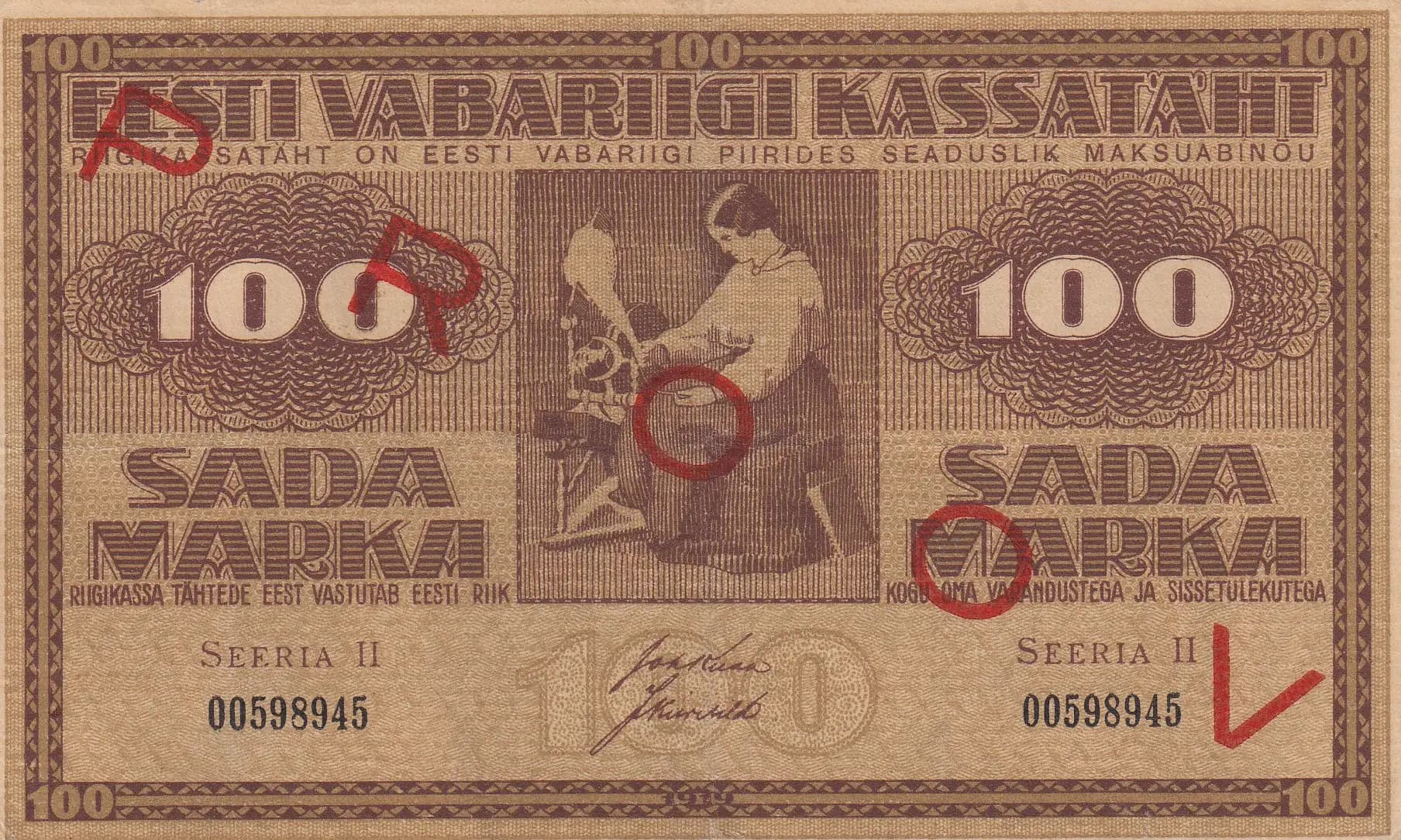
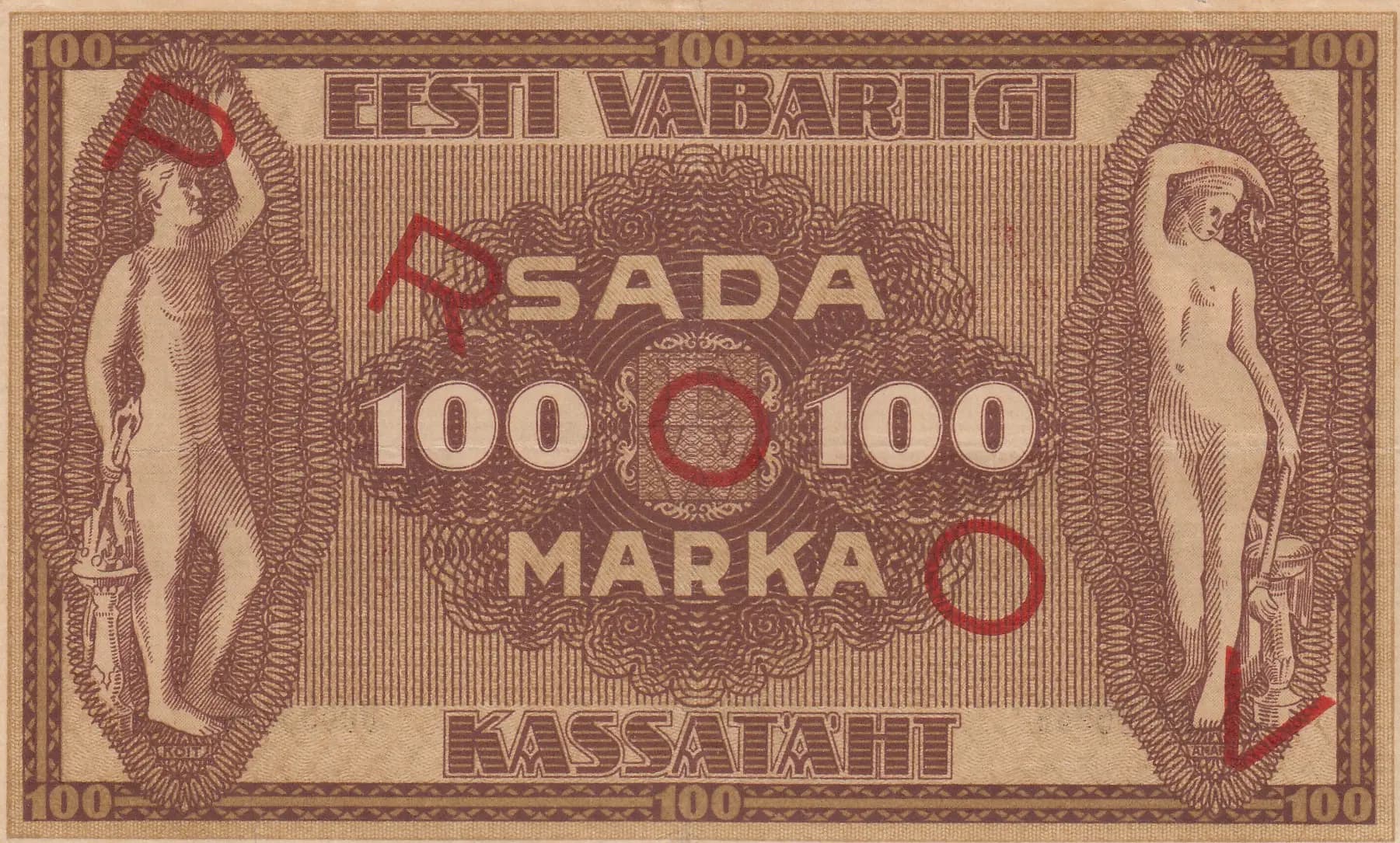
This is a VF-grade specimen of Estonia's 100 Marka banknote from 1919, featuring a striking design with a worker at a loom on the obverse and classical allegorical female figures on the reverse. The note displays the characteristic red specimen markings and overprints typical of trial or specimen issues, and exhibits the fine engraving and tan-brown color palette representative of early Estonian Republic currency. The presence of vertical line watermarks and the specimen designation (indicated by the red stamps visible across both sides) make this a notable example of Estonia's first independent currency issue.
Common. While this is a specimen note (which adds collector interest), the 100 Marka denomination from 1919 remains relatively available in the market. eBay pricing data shows VF examples trading in the $45-$245 USD range with catalogue values (2016) at $100 for VF condition, indicating steady but not exceptional demand. The note was part of a regular issue from a functioning central bank, and specimen notes from this era, though less common than circulation examples, remain obtainable for collectors at moderate prices. The absence of extreme scarcity markers (small print run, early recall, war damage) supports a common classification.
The 100 Marka denomination was issued by the newly independent Estonian Republic in 1919, following the declaration of independence from the Russian Empire. The imagery reflecting labor (the worker at the loom on the obverse) and allegorical representations of prosperity on the reverse symbolize the young nation's aspirations for economic development and national identity. As a specimen note, this particular example represents the Treasury of Estonia's official design approval process during the formative period of the Estonian Vabariik (Republic).
The obverse features a beige and tan background with purple-brown decorative elements, centered on an allegorical figure depicted in profile working at a loom or textile equipment—representing Estonian labor and industrial capacity. Denomination circles containing '100' appear in the upper left and right corners within ornate circular medallions. The reverse displays two classical female allegorical figures (likely representing Commerce and/or Prosperity and Industry) standing nude in decorative circular frames on either side of the central denomination display. Both sides feature elaborate geometric border patterns and fine line-work engraving typical of early 20th-century security printing. The color scheme throughout is dominated by warm earth tones (beige, tan, cream) with brown accent printing.
Front Side: 'EESTI VABARIIGI KASSATAHIT' (Estonian Republic banknote); 'SADA MARKA' (One hundred marks); 'RIIGIKASSA TAHTEDE EEST VASTUAB EESTI RIIK KOGU OMA VARANDUSEGA JA SISSETULEKUTEGA' (The Estonian State is responsible for the State Treasury notes with all its property and income); 'SEERIA II' (Series II); Serial number '00598945'. Back Side: 'EESTI VABARIIGI KASSATAHIT' (Estonian Republic banknote); 'SADA MARKA' (One hundred marks); Denomination '100' (appears twice).
Intaglio/engraved steel plate printing, characteristic of high-security banknote production in the early 20th century. The fine detail visible in the allegorical figures, decorative borders, and geometric patterns indicates professional security printing by an established banknote printer, likely a European security printer contracted by the Estonian Treasury. The specimen markings appear to have been applied post-printing, using red overprint stamps.
This is catalogued as Pick P-48bs (specimen variant). The visual analysis confirms Series II designation and serial number 00598945. The red specimen stamps and overprints are consistent with official trial/specimen production. PMG records indicate P-48c as a variant within this Pick number; this example's specific overprints and markings should be compared to PMG-graded examples to determine if this represents a distinct sub-variety. The presence of 'SEERIA II' (Series II) notation on the front suggests multiple series were issued; this would be distinguishable from Series I examples.