100 marka 1919
“w/m vert lines”
Market Prices
About This Note
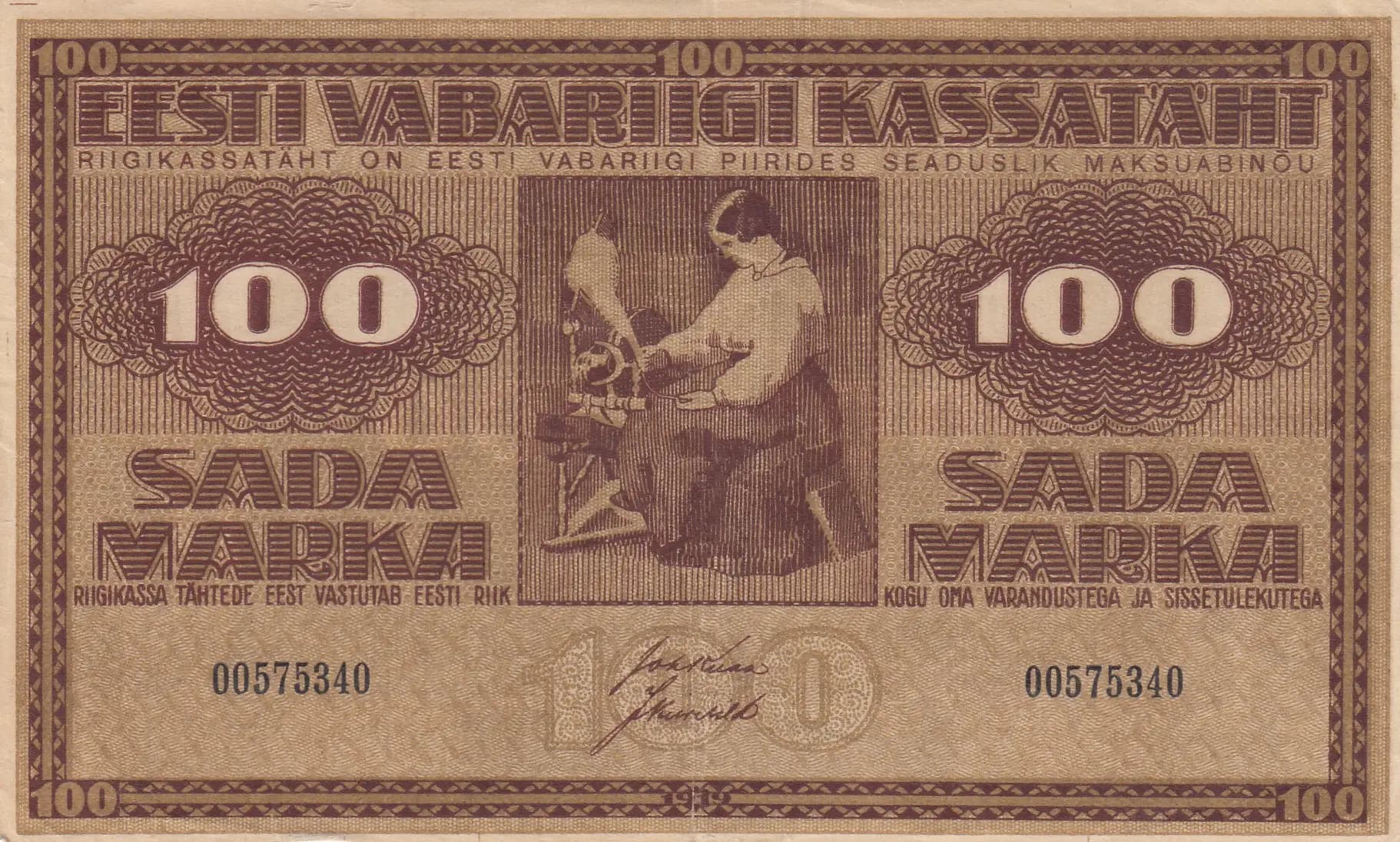
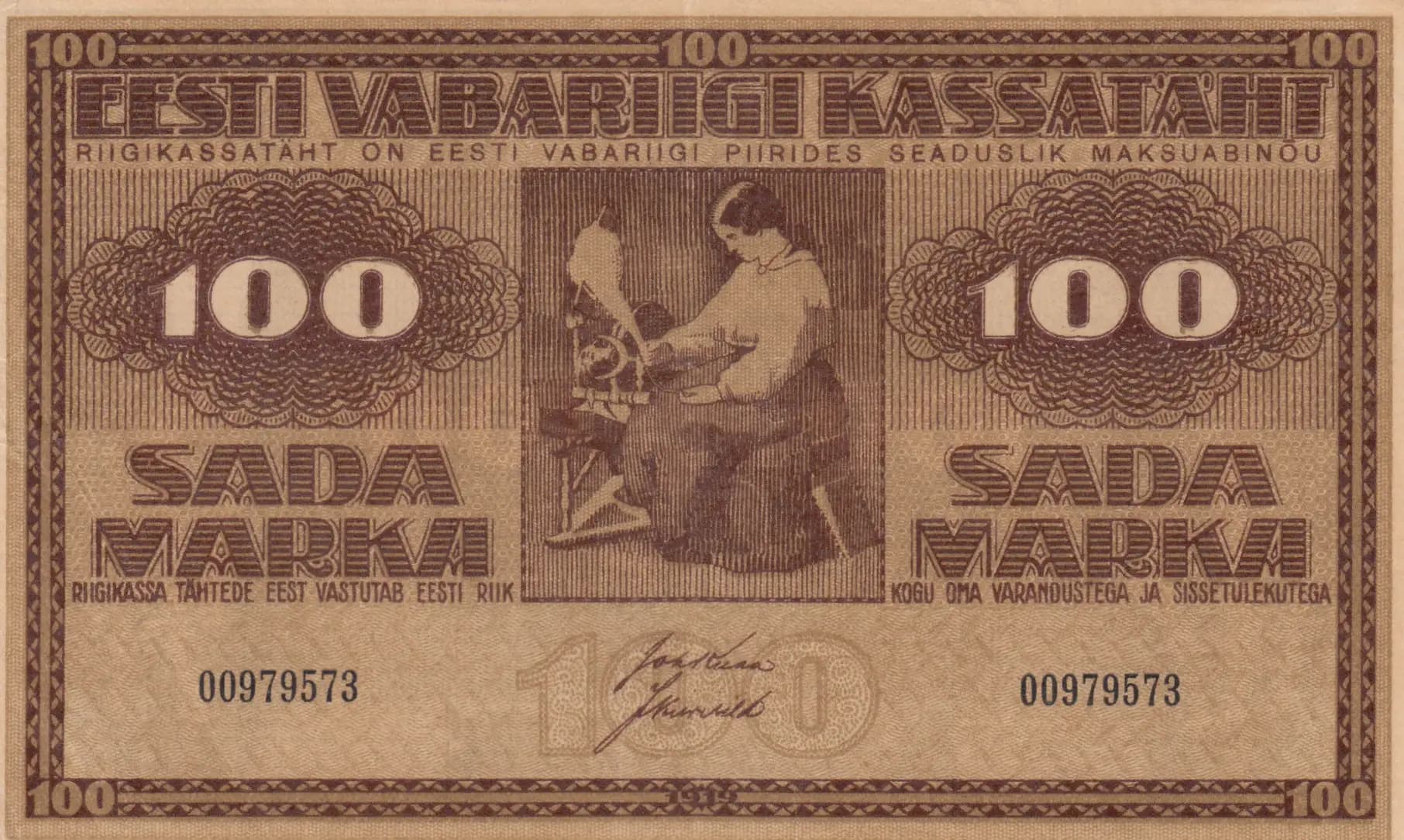
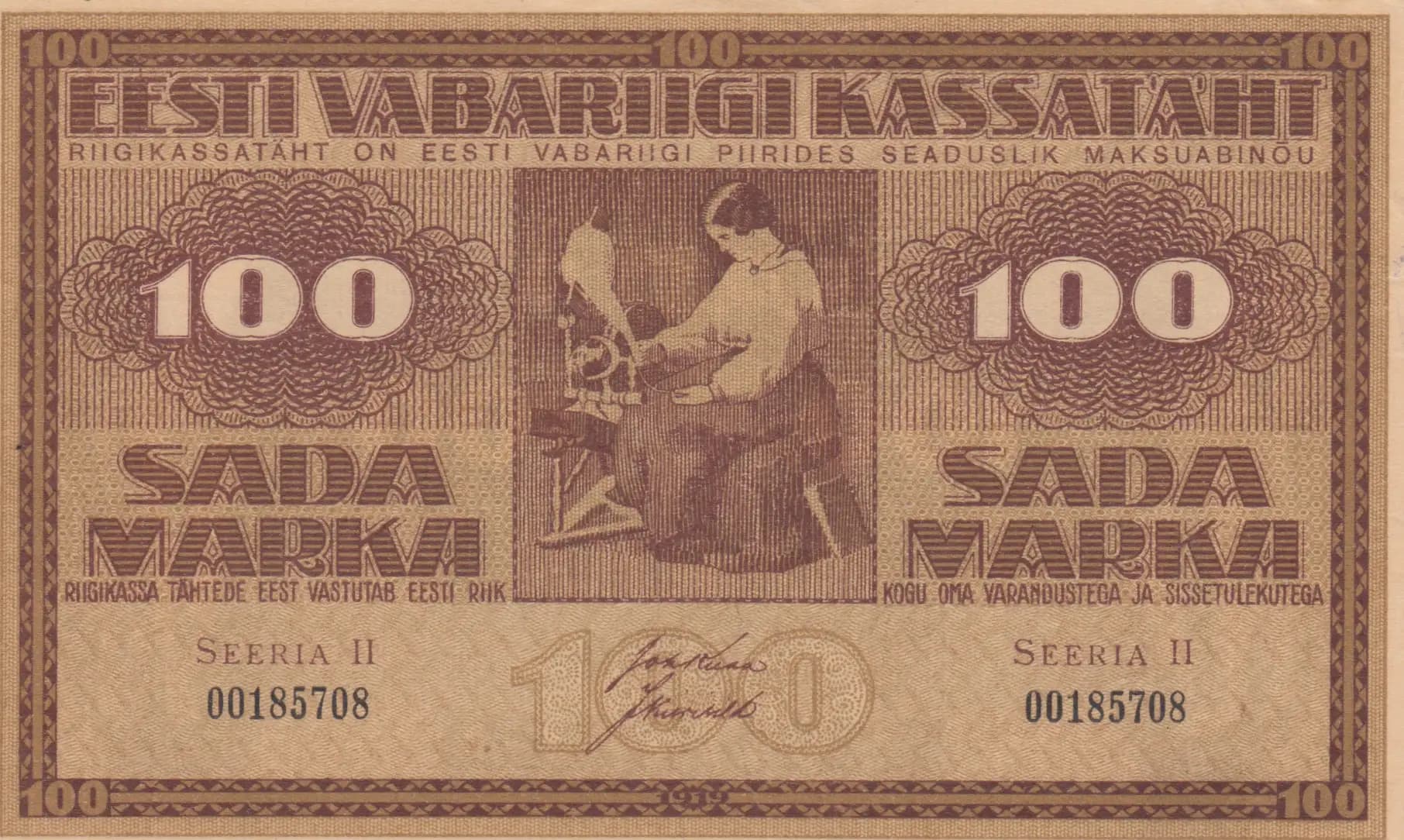
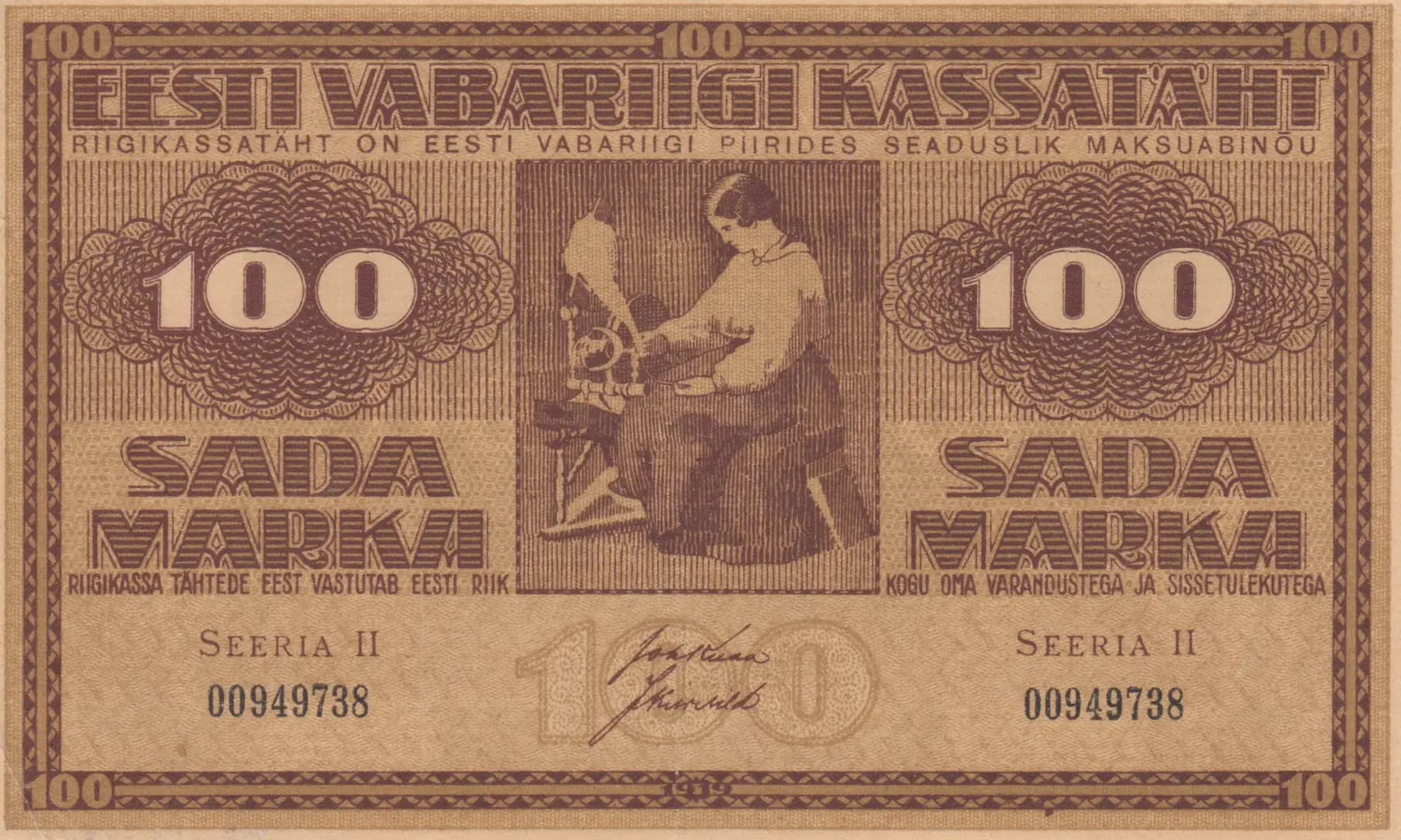
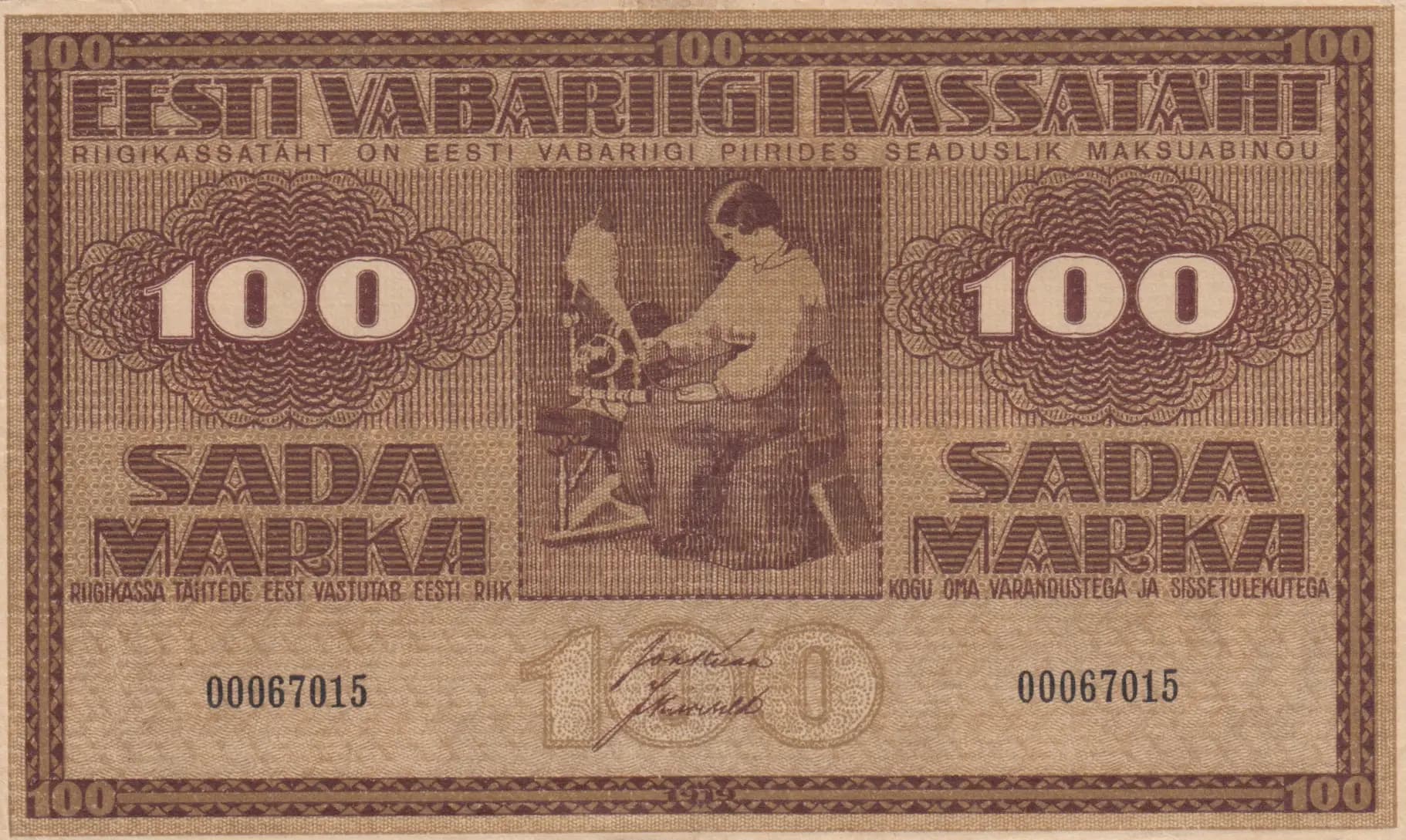
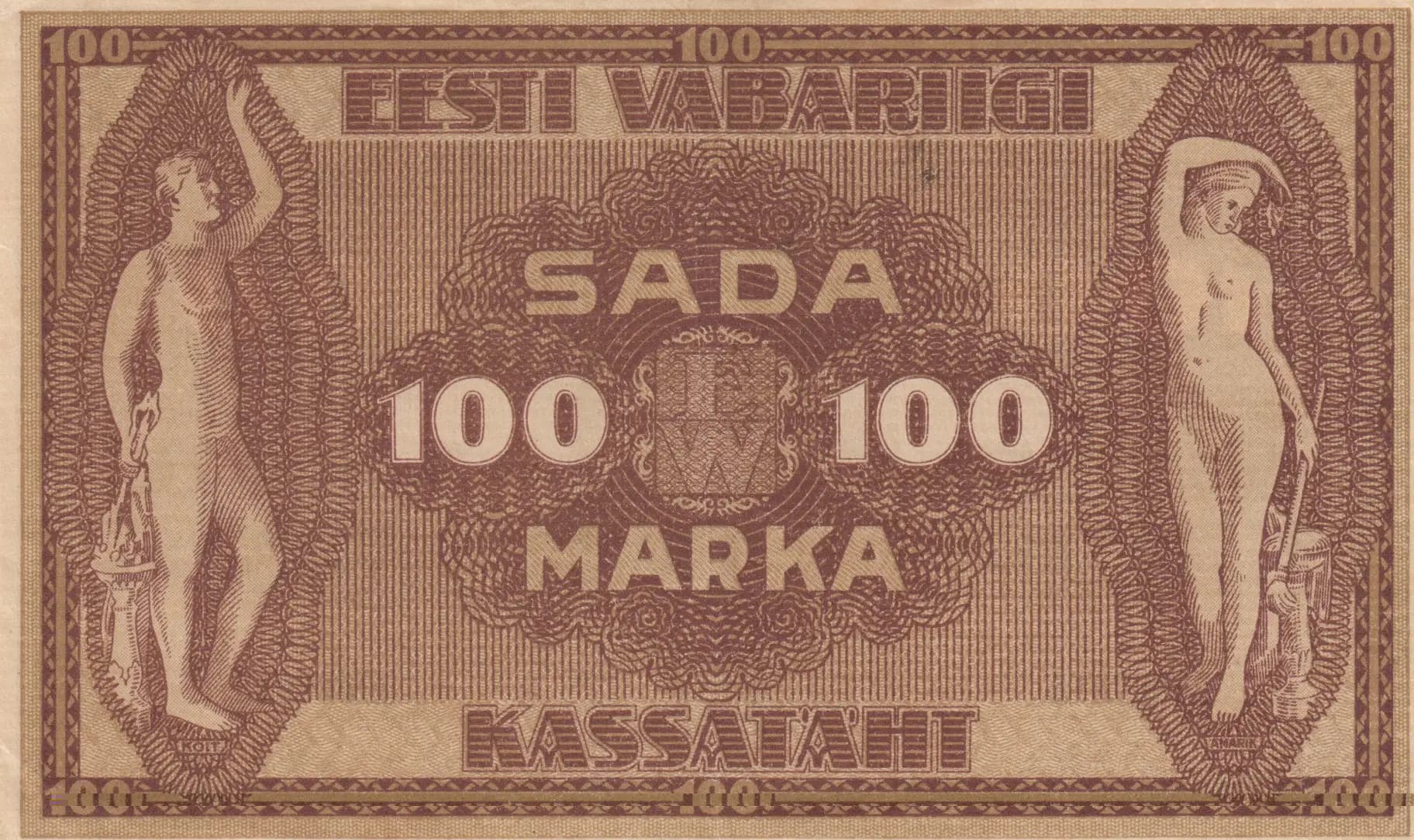
This is an exceptional example of Estonia's first independent currency issue, the 100 marka of 1919. The note displays pristine, uncirculated condition with no visible wear, creases, or stains, featuring rich brown and tan engraving throughout. The front showcases a classical female figure at a spinning wheel—a powerful symbol of Estonian independence and national identity—while the reverse displays allegorical female figures, making this a highly representative example of the Treasury of Estonia's early national imagery.
Common. The 1919 100 marka (Pick P-48a) is a regular issue from Estonia's first independent currency series. eBay market data shows multiple sales with prices ranging from $45–$275 USD depending on condition and grading service, with typical VF and XF examples selling in the $50–$100 range. This wide availability and relatively modest pricing indicate a substantial print run with good survival rates. While historically significant as part of Estonia's independence-era currency, the note is not scarce in the collector market.
Issued in 1919 following Estonia's declaration of independence from Russia, this banknote represents the newly formed Estonian Republic's assertion of sovereignty through its own currency. The imagery deliberately employs classical allegorical themes—particularly the spinning wheel on the obverse and female allegorical figures on the reverse—reflecting broader European artistic traditions of the period while establishing distinctly Estonian national symbolism during the early years of the republic.
The obverse features a central allegorical female figure in classical dress, depicted seated at a spinning wheel—a symbolic representation of Estonian industriousness and textile production heritage. Large ornamental medallions containing bold '100' numerals frame this central vignette on both sides. The entire composition is enclosed within an intricate decorative border of geometric patterns executed in fine line work. The reverse presents two classical allegorical female figures (likely representing virtues such as prosperity and justice typical of national allegories of the period) positioned symmetrically within ornamental frames, flanking a central cartouche inscribed with 'SADA 100 MARKA KASSATÄHT.' The color palette throughout is predominantly brown and tan on beige underprint, creating a harmonious yet dignified aesthetic consistent with early 20th-century European banknote design standards.
Front side: 'EESTI VABARIIGI KASSATÄHT' translates to 'Estonian Republic Treasury Note.' The legal tender declaration reads 'RIIGIKASÅ TÄHT ON EESTI VABARIIGI PIIRIDES SEADUSLIK MAKSUABINOU' ('This treasury note is legal tender within the borders of the Estonian Republic'). The denomination appears as both '100' and 'SADA MARKA' (100 marka). The state guarantee reads 'MÜGOSSA TAHTUDE EEST VASTUTAB EESTI RIIK KOGU OMA VARANDUSEGA JA SISSETUEKUTEGA' ('The Estonian State is responsible for this note with all its property and revenues'). The serial number is 00067015. Back side: 'EESTI VABARIIGI' ('Estonian Republic'), 'SADA 100 MARKA KASSATÄHT' ('100 marka treasury note').
This note was produced using intaglio engraving, the standard security printing method for banknotes of this era. The fine detail visible in the guilloche patterns, allegorical figures, ornamental medallions, and decorative borders are characteristic of high-quality intaglio work. The precise line work and the dimensional quality of the impression are consistent with banknote production by established European security printers of the period, likely contracted by the newly formed Estonian state for their inaugural currency issue.
This note is catalogued as Pick P-48a, representing the standard 1919 issue. The PMG population report indicates P-48c exists as a variant for this base Pick number, though the specific differences between P-48a and P-48c are not detailed in the provided data. The serial number 00067015 does not indicate any overprint, prefix, or signature variety distinguishing this as a rare state or variant. The watermark noted in the collector notes as 'w/m vert lines' appears to contradict the realbanknotes.com reference of 'horizontal wavy lines,' suggesting either a documentation variance or that different printings may exist; however, without additional specific variety documentation, this specimen should be regarded as the standard P-48a issue.