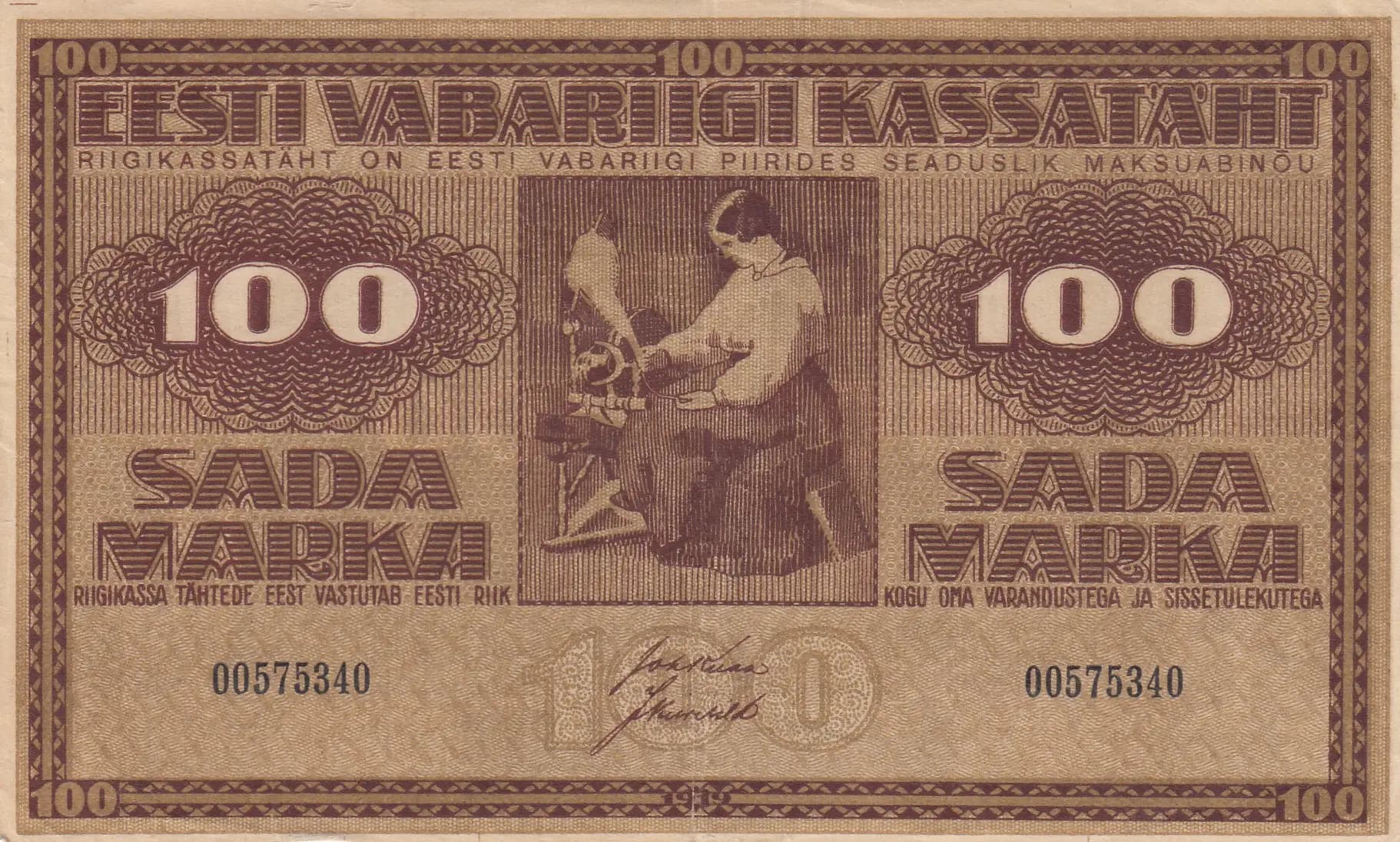
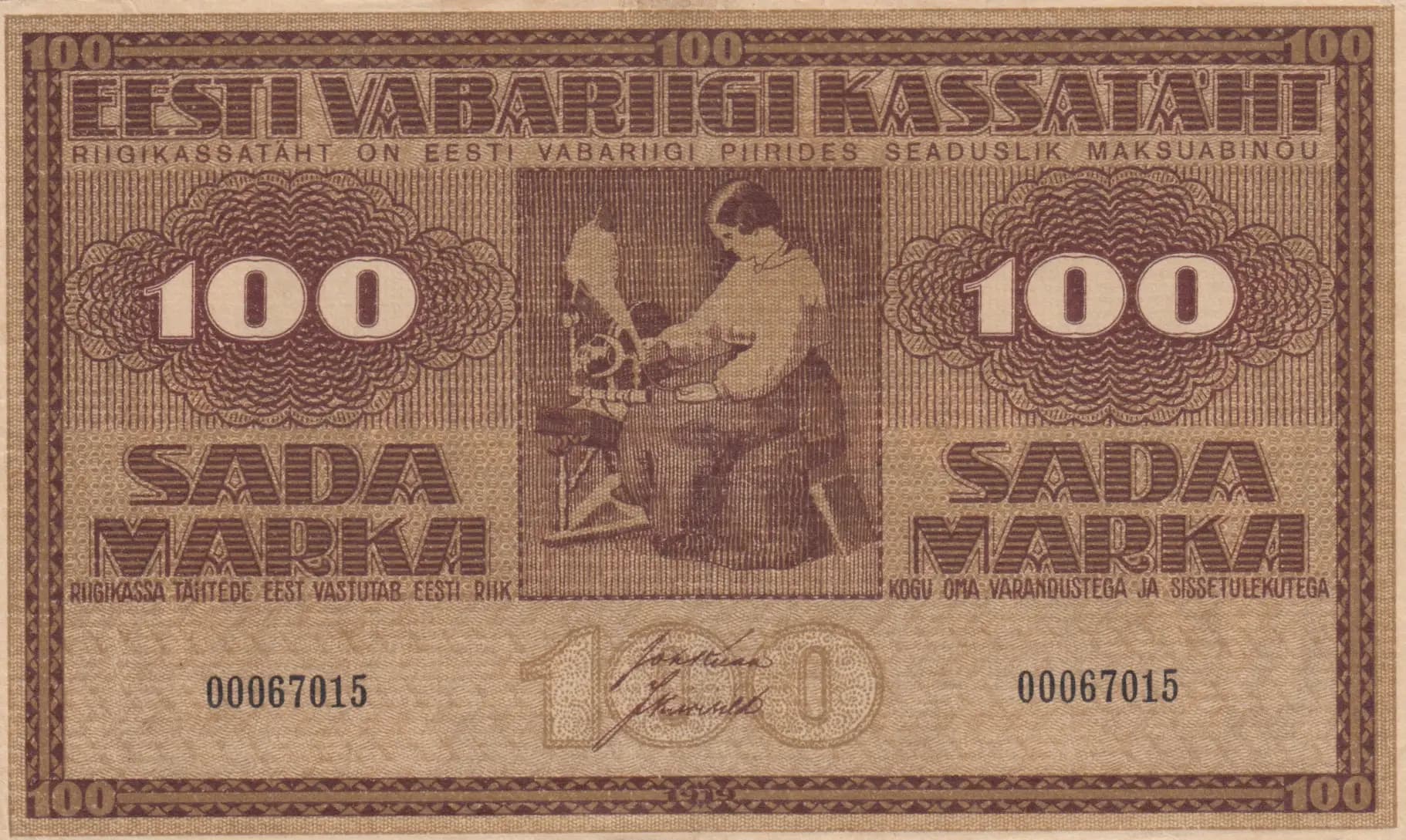
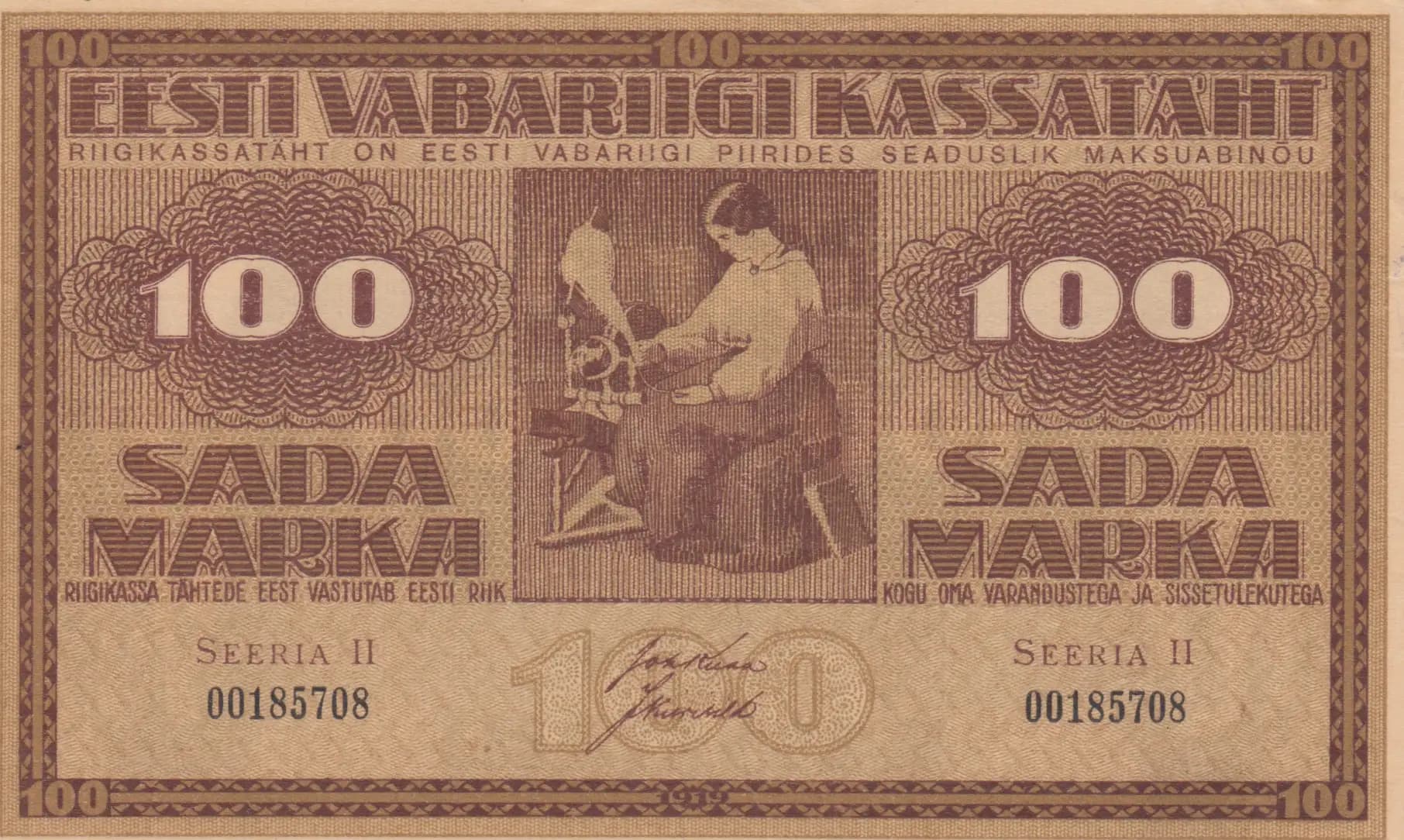
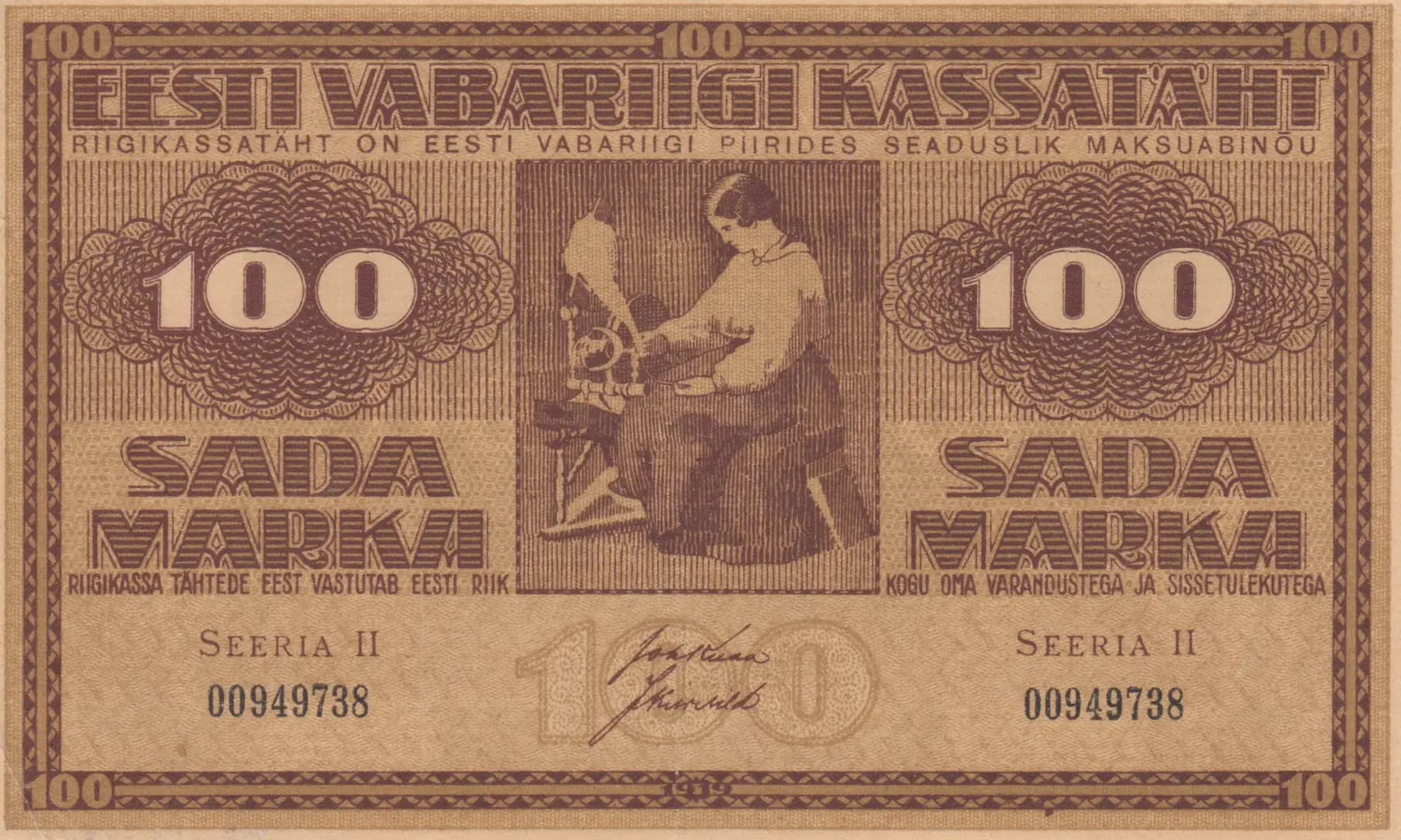
100 marka 1919
“w/m vert lines”
Market Prices
About This Note
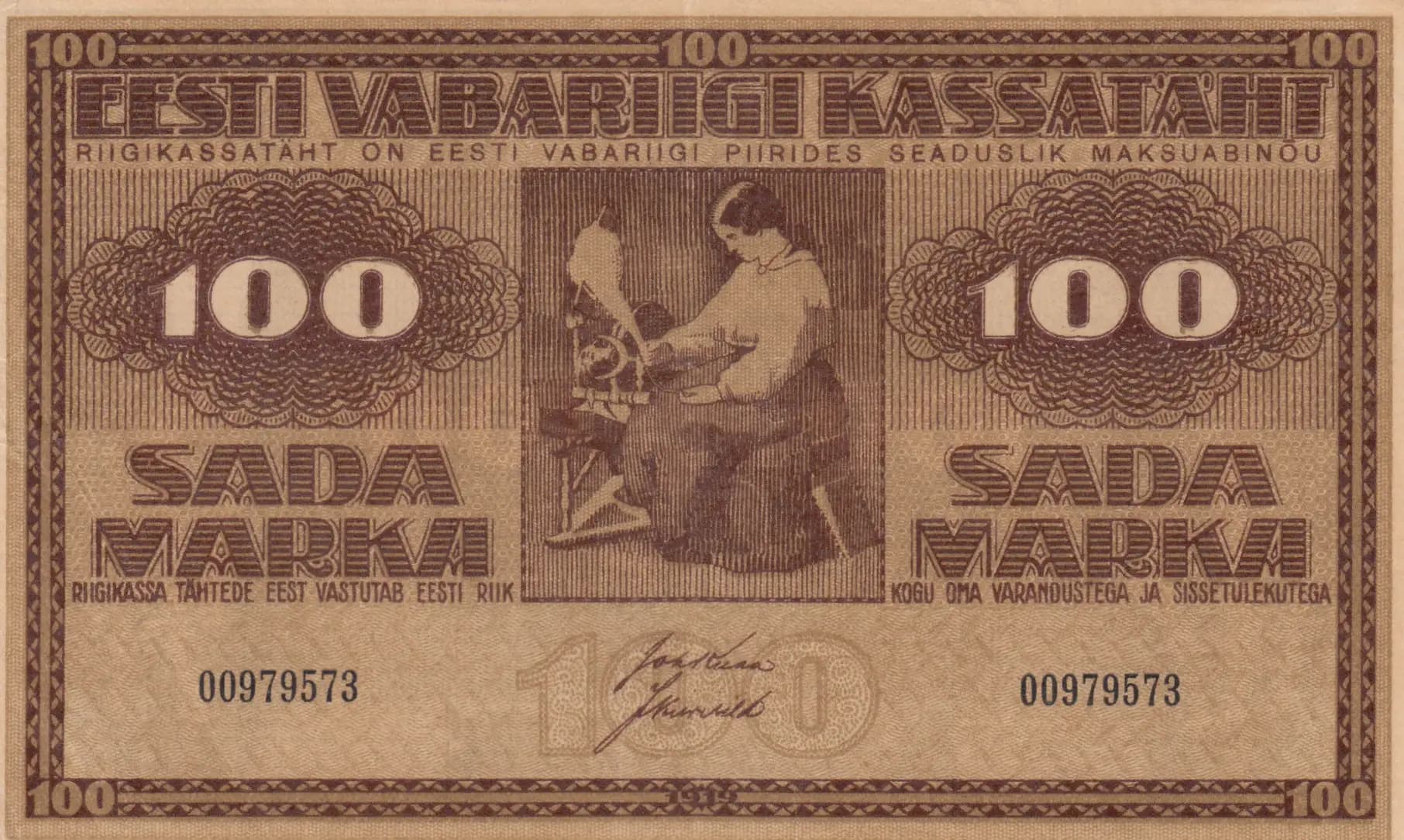
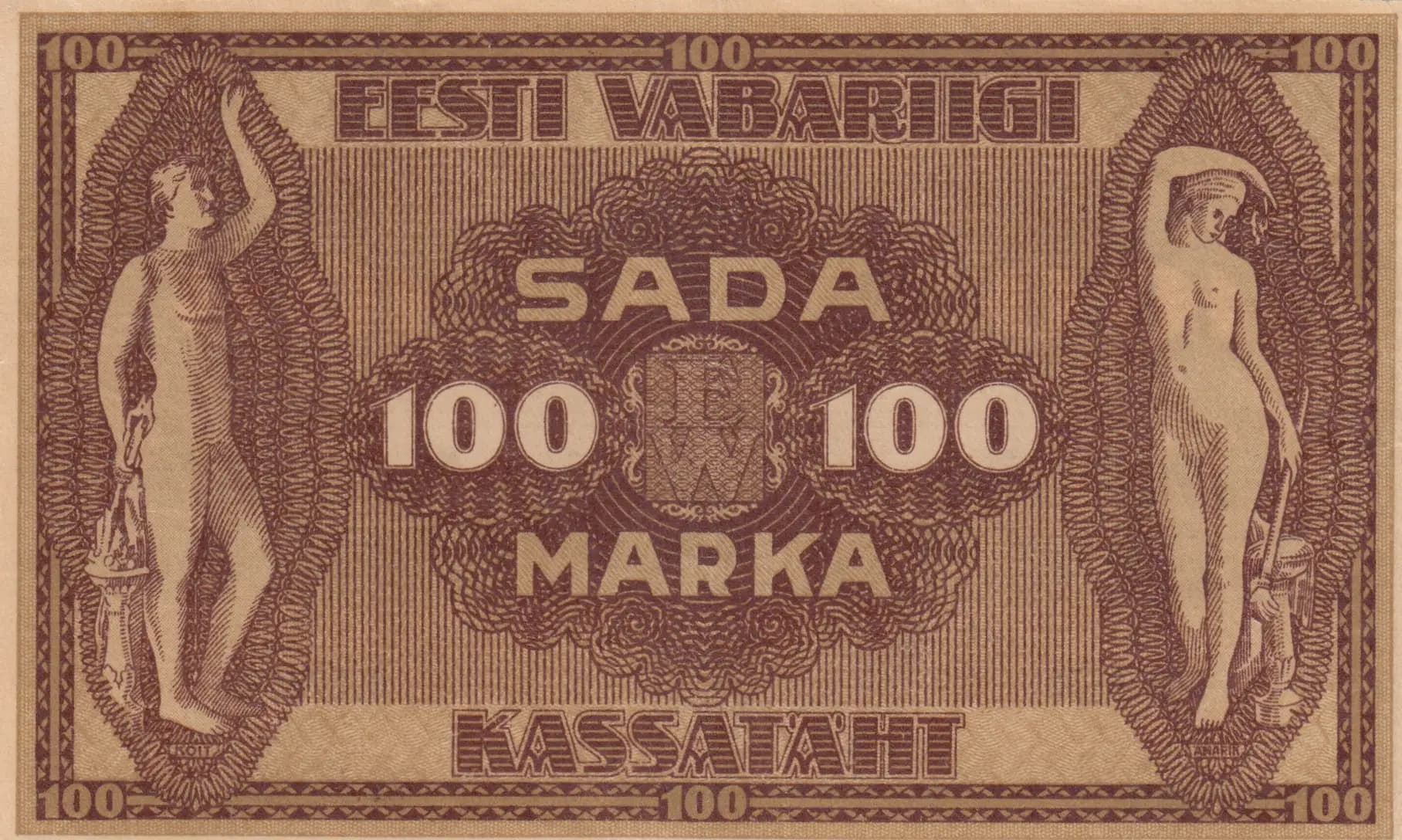
This 100 Marka note from 1919 represents Estonia's early Treasury issue during the nation's first years of independence. The note displays exceptional condition (VF) with crisp engraving and sharp printing throughout, featuring a distinctive brown/tan color scheme. The obverse presents a seated figure engaged in textile or craft work, while the reverse displays two allegorical female figures in classical style flanking the denomination—imagery typical of nationalist-themed early 20th century currency.
Common. The 1919 Estonian 100 Marka (Pick-48a) represents a standard treasury issue from the early independence period with substantial print runs. While early Estonian notes are collected, this denomination in VF condition appears regularly on the numismatic market and does not command significant premiums. No evidence of recall, limited print runs, or scarcity typical of truly rare notes exists for this Pick number.
Issued by the Treasury of Estonia in 1919, this note commemorates the establishment of the independent Estonian Republic following World War I and the collapse of Russian imperial authority. The design elements—including the seated craftsperson and allegorical female figures—reflect the nation's emphasis on productive labor and cultural identity during this formative period. The inscriptions in Estonian language rather than Russian marked a deliberate assertion of national sovereignty and cultural independence.
The obverse features a seated female figure in classical style, positioned centrally and depicted in profile engaged in textile work or handicraft, symbolizing Estonian productivity and labor. The figure is framed by ornamental circular medallions containing the denomination '100' on both left and right sides. The reverse displays two nude or partially draped allegorical female figures—representing concepts such as commerce, industry, or prosperity—positioned within ornamental oval frames on either side of the central denomination area. Both sides feature fine geometric border patterns with repeating decorative elements consistent with Edwardian-era banknote design. A central ornamental crest or medallion appears above the denomination on the reverse.
FRONT: 'EESTI VABARIIGI KASSATAHT' (Estonian Republic banknote); 'RIIGIKASSATAHT ON EESTI VABARIIGI PIIRDES SEADUSLIK MAKSUABINOU' (State treasury note is legal tender within the borders of the Estonian Republic); '100' / 'SADA MARKA' (One hundred marks); 'RIIGIKASSA TAHTEDE EEST VASTUAB EESTI RIIK KOGU OMA VARANDUSTEQA JA SISSETUEKUTEGA' (The Estonian State is responsible for state treasury notes with all its property and resources); Serial number '00979573'. BACK: 'EESTI VABARIIGI' (Estonian Republic); 'SADA' / '100' / 'MARKA' (One hundred marks); 'KASSATAHT' (Treasury note).
Intaglio (engraved) printing on banknote paper with fine line engraving throughout. The sharp detail, fine geometric borders, ornamental frames, and overall crisp impression are characteristic of high-quality intaglio work typical of 1919-era European banknote production. The printer details for this specific Pick number are not definitively established in standard catalogs, though Estonia employed several European security printers for early republican currency issues.
Catalog designation Pick-48a indicates the primary variety of this issue. The noted 'w/m vert lines' (watermark vertical lines) in the collector notes is the standard security feature for this Pick number. Serial number 00979573 observed on this specimen indicates standard numbering sequences; no overprints or significant variety markers are visible. The vertical line watermark pattern distinguishes this from any unpapered or differently-watermarked variants if they exist.