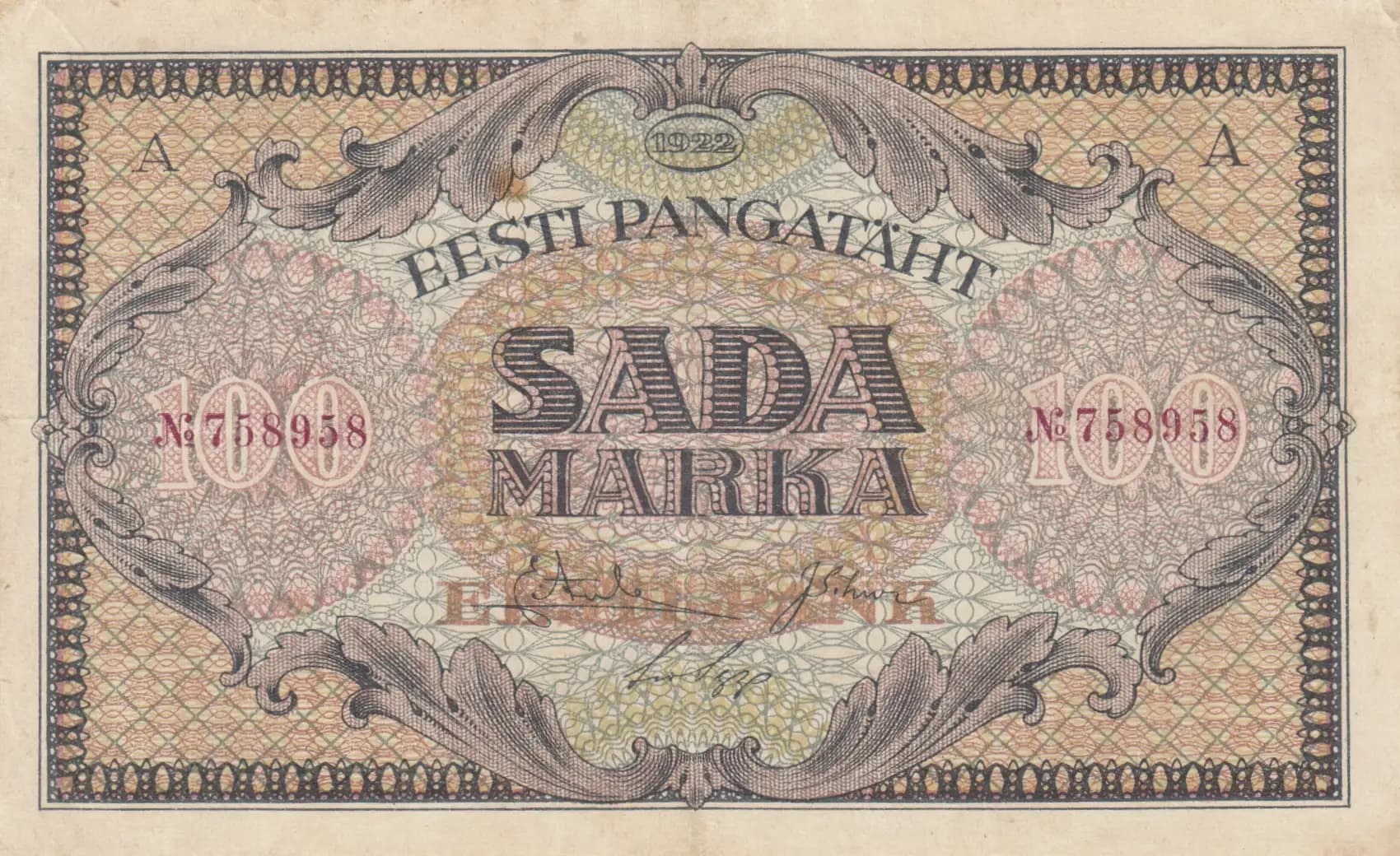
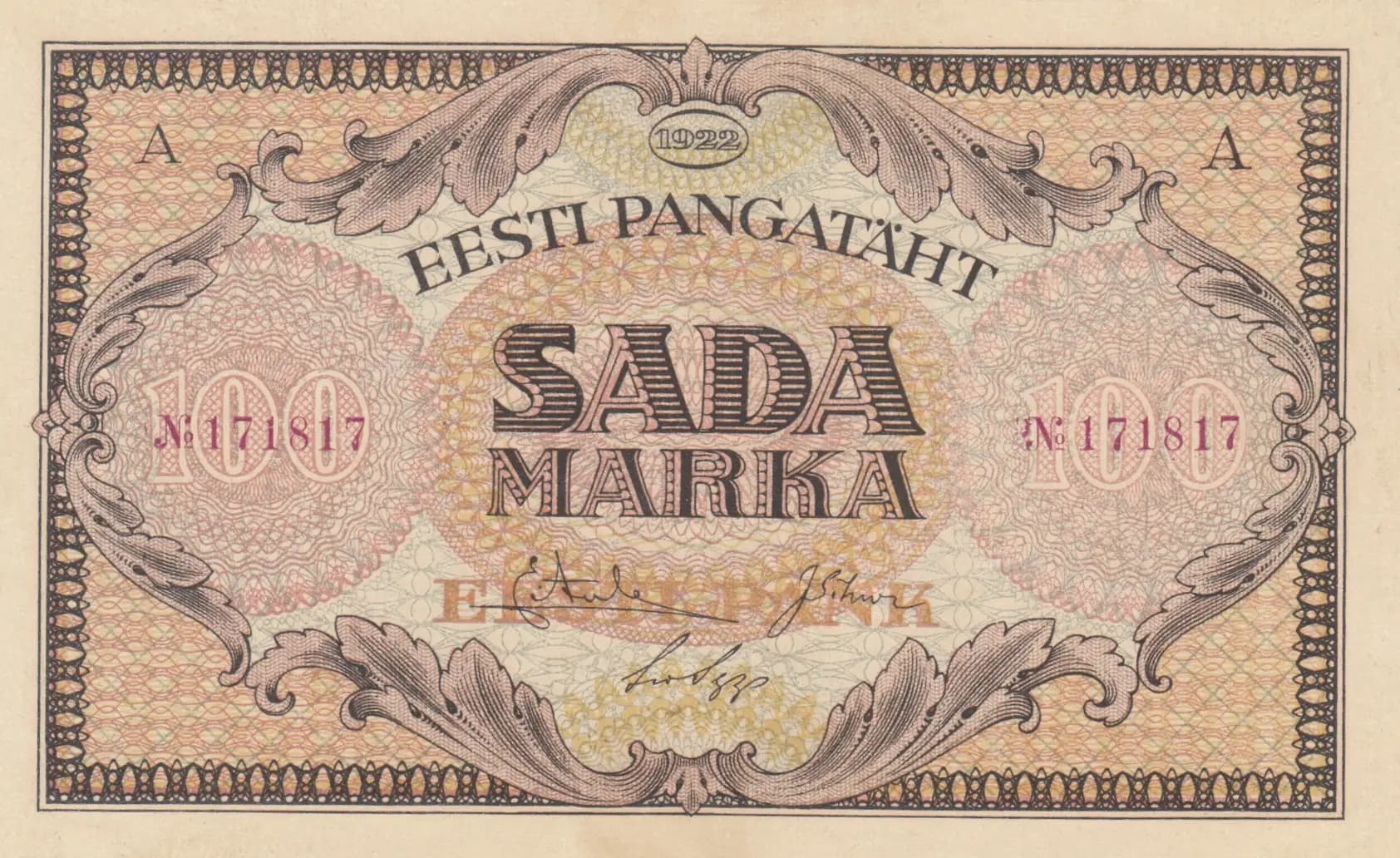
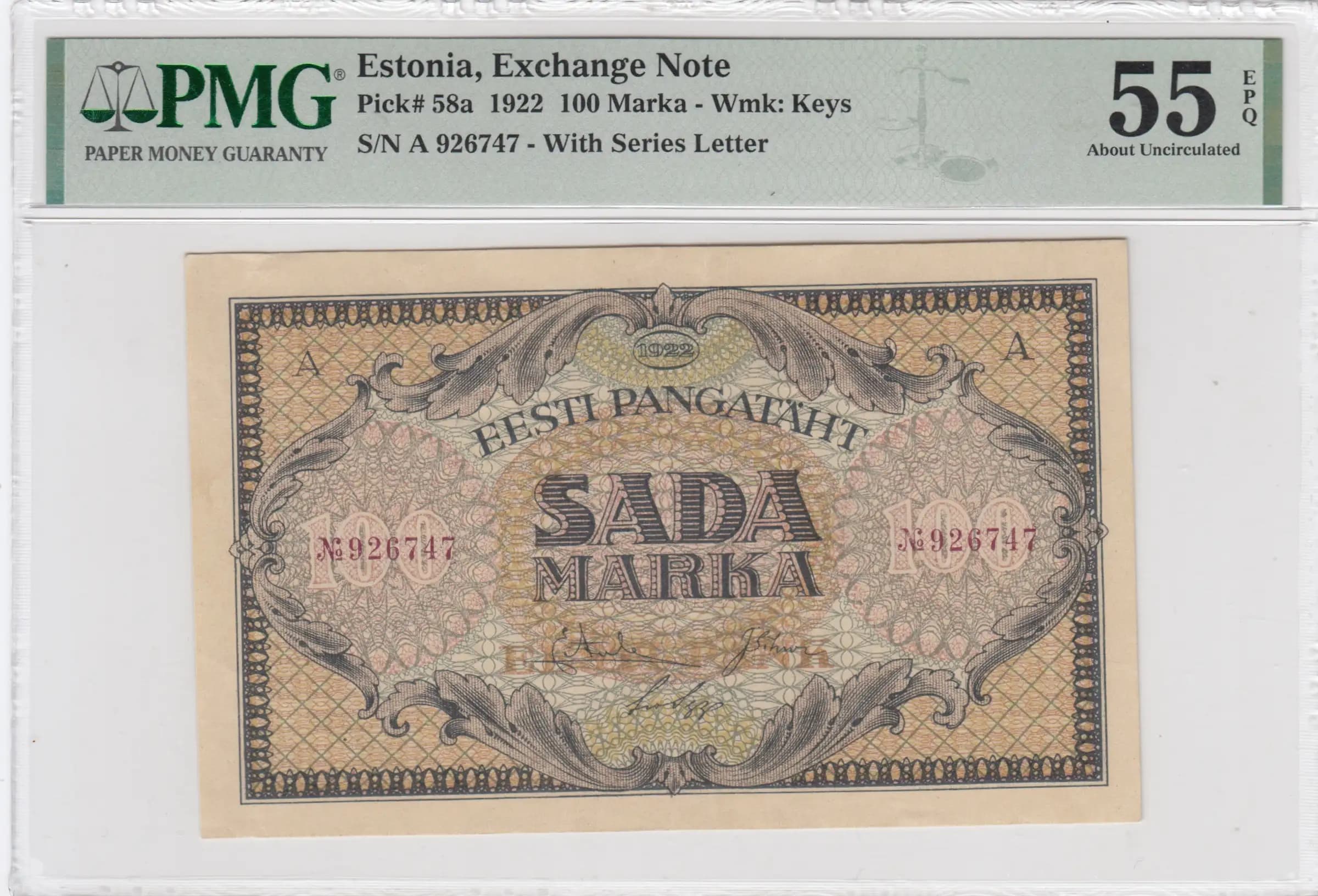
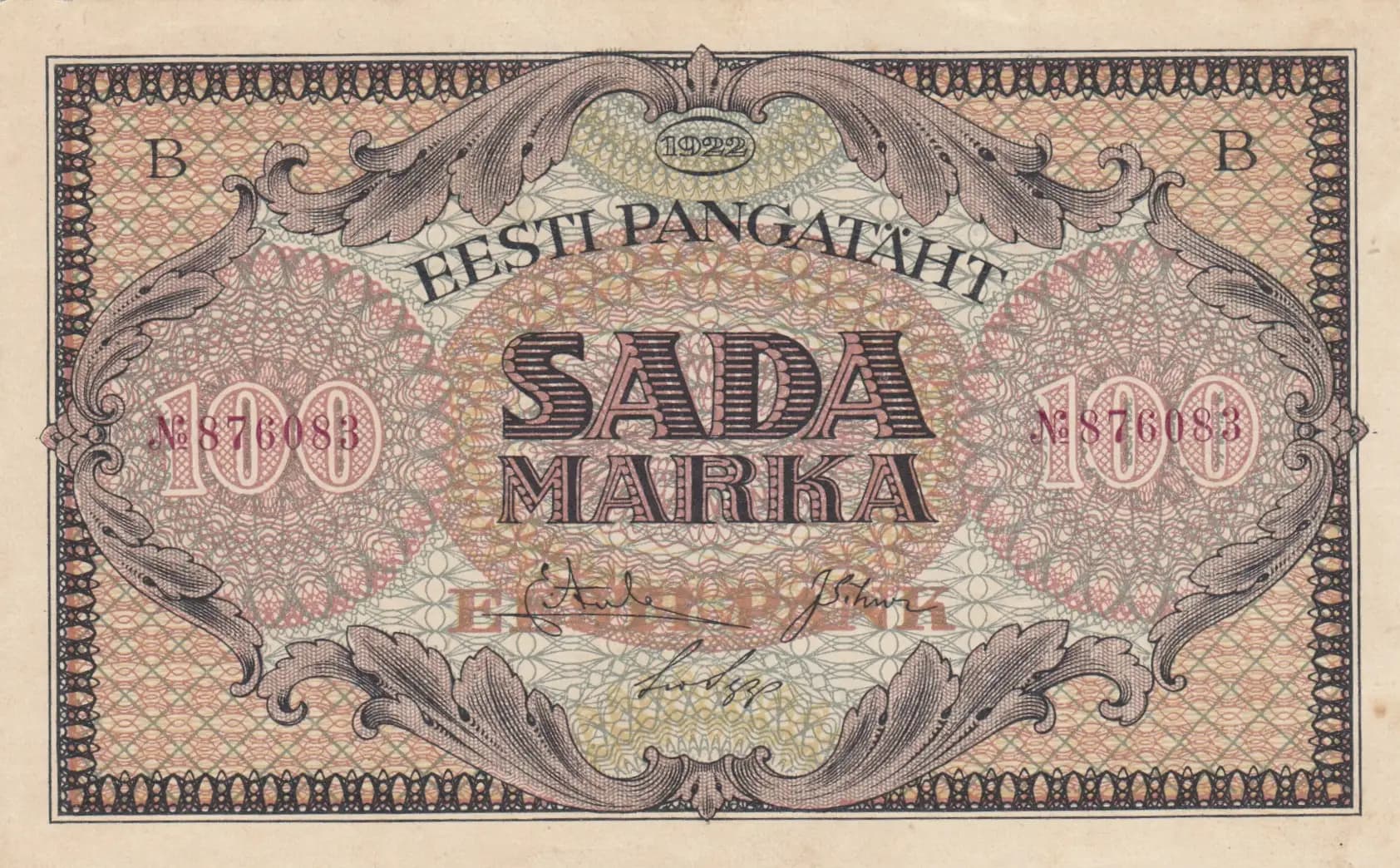
100 marka 1922
“serie E”
Market Prices
2 salesAbout This Note
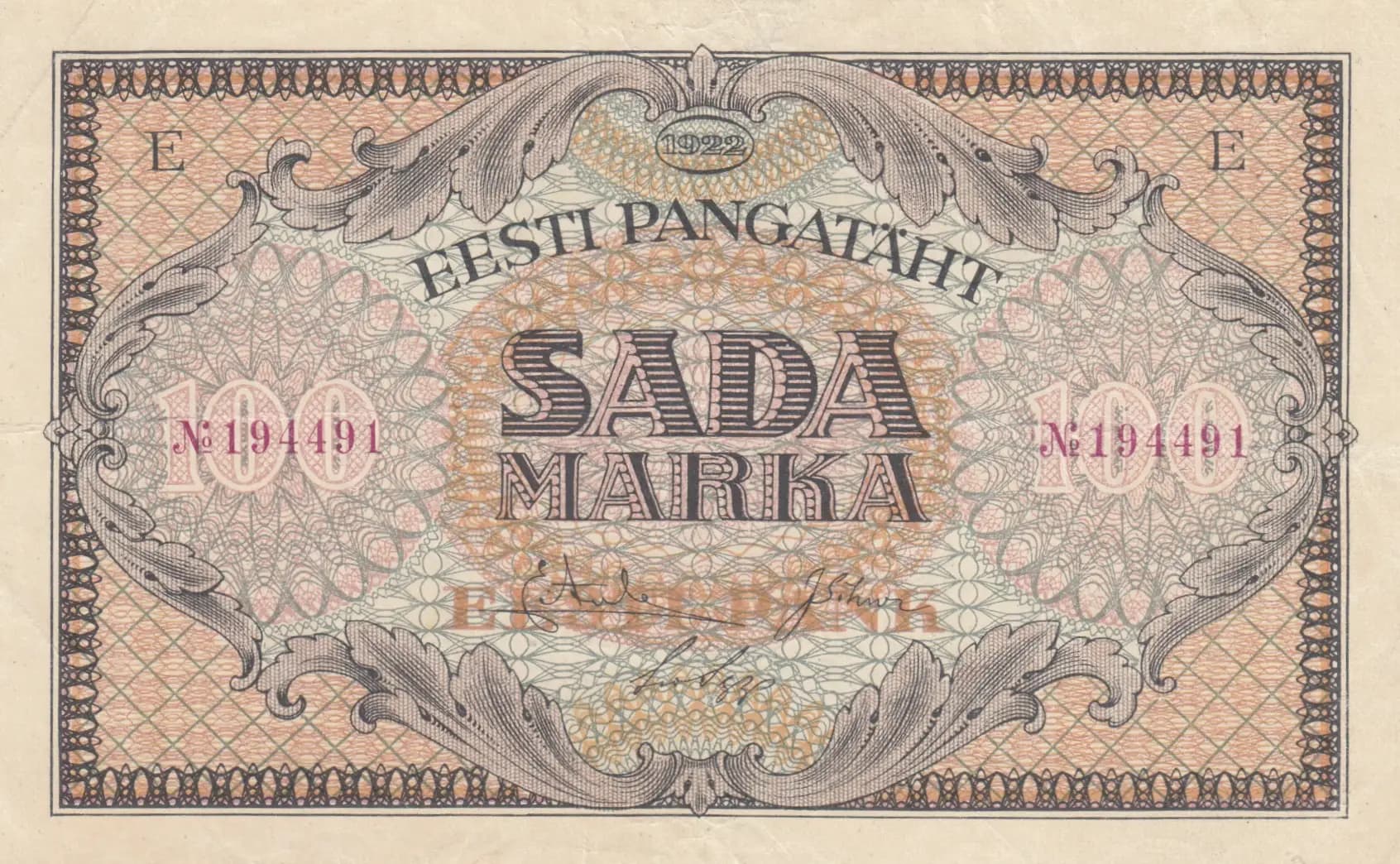
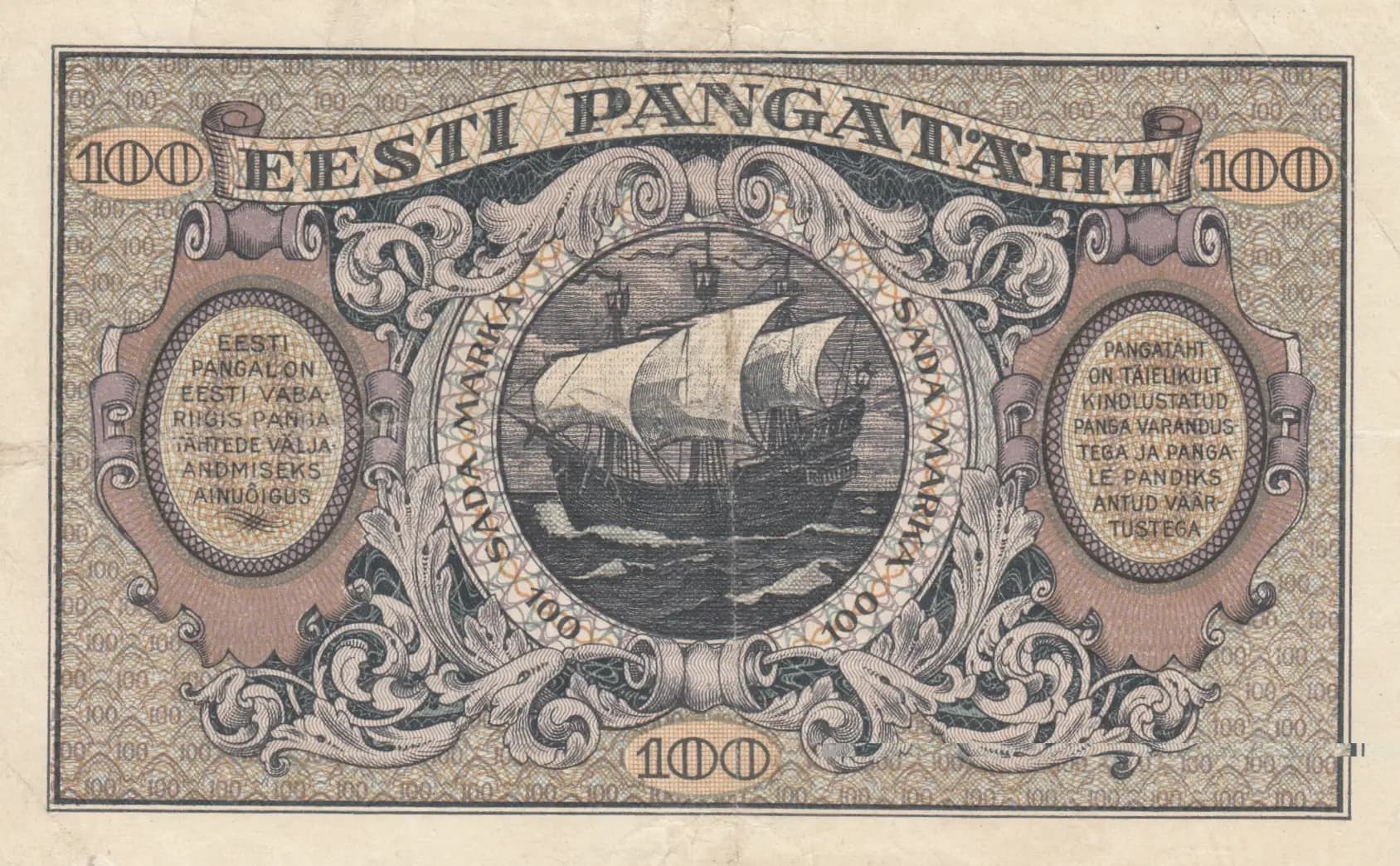
This Estonian 100 Marka note from 1922 (Pick P-58, series E) presents in VF condition with excellent clarity of the intricate engraved design work. The note features a striking sailing ship medallion on the reverse and maintains strong paper integrity with age-appropriate patina. The handwritten signature overlay on the front and crisp serial number N°194491 in red add to the character of this early Estonian independence-era currency.
Common. The Estonia 100 Marka 1922 (Pick P-58) is a widely available note in numismatic commerce. While Estonian currency from the 1922-1928 period has collector interest, the 100 Marka denomination was issued in substantial quantities to support the new nation's economy. Notes in VF condition trade regularly at modest valuations, typically in the $15-40 range depending on series and serial number appeal, placing it well within the common category.
Issued by the Treasury of Estonia in 1922, this note commemorates the newly independent Estonian state following the 1918 declaration of independence from Russia. The prominent sailing ship depicted on the reverse symbolizes Estonia's maritime heritage and mercantile traditions, while the ornate design aesthetic reflects early 20th-century European banknote security standards and nationalist pride in the young republic's financial institutions.
The front features a classical composition with 'EESTI PANGATAHIT' in a banner beneath a winged heraldic emblem containing '1922,' emphasizing the note's inaugural year. The denomination 'SADA MARKA' dominates the center in large serif lettering with decorative underscores. Handwritten signatures authenticate the issue. The reverse showcases a prominent circular medallion featuring a fully-rigged historical sailing ship (likely representing Estonian merchant or naval vessels), surrounded by elaborate baroque-style scrollwork and flourishes. Two oval cartouches below the ship contain legal text affirming the note's backing and issuing authority. The entire composition is framed by an intricate ornamental border featuring geometric patterns and flourishes characteristic of late 19th/early 20th-century security printing.
FRONT SIDE: 'EESTI PANGATAHIT' (Estonian Bank Note), '1922' (year of issue), 'SADA MARKA' (One Hundred Mark), 'N°194491' (serial number). BACK SIDE: 'EESTI PANGATAHIT' (Estonian Bank Note), '100' (denomination numerals in top corners), left oval cartouche contains text regarding the Bank of Estonia's exclusive authority over banknote issuance in the free Estonian state, right oval cartouche contains guarantee text stating the banknote is fully secured by the Bank's assets and pledged securities.
Intaglio engraving (copperplate printing), the standard security printing method for European banknotes of this era. The fine line work, ornamental detail, and dimensional quality visible in both the decorative borders and the sailing ship medallion are characteristic of intaglio production. The registration of the red serial numbers alongside the engraved design indicates multi-plate printing coordination typical of professional banknote security printers of the 1920s.
This example is identified as series E based on catalog notation. Serial number N°194491 is documented. Early Estonian banknotes of this type exist in multiple series (A through various later designations), with series E representing mid-range production runs. The handwritten signature(s) visible on the front are typical of treasury authorization marks on notes from this period and may represent a specific authorized signatory, though individual signature varieties are not typically distinguished in major catalogs for this issue.