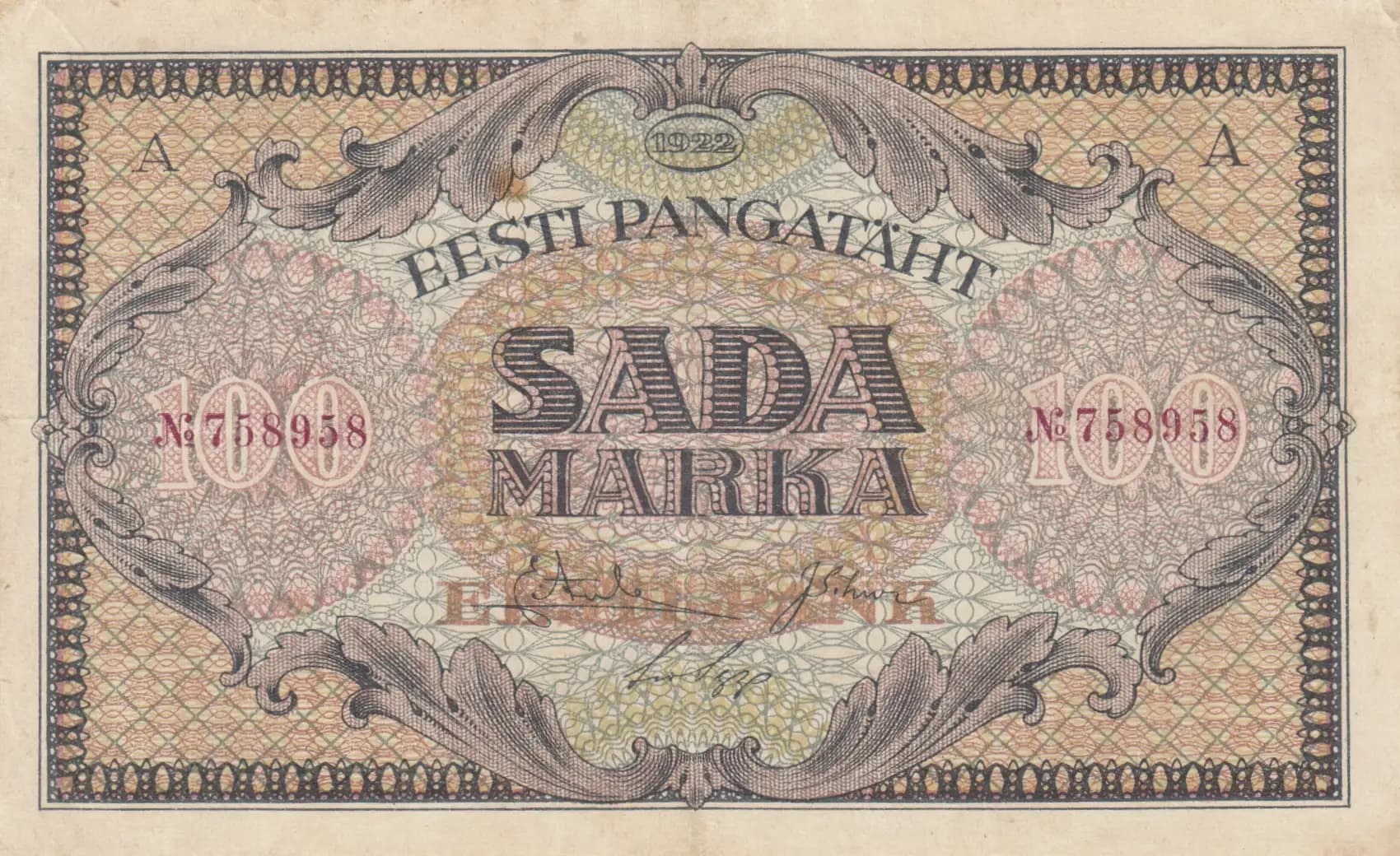
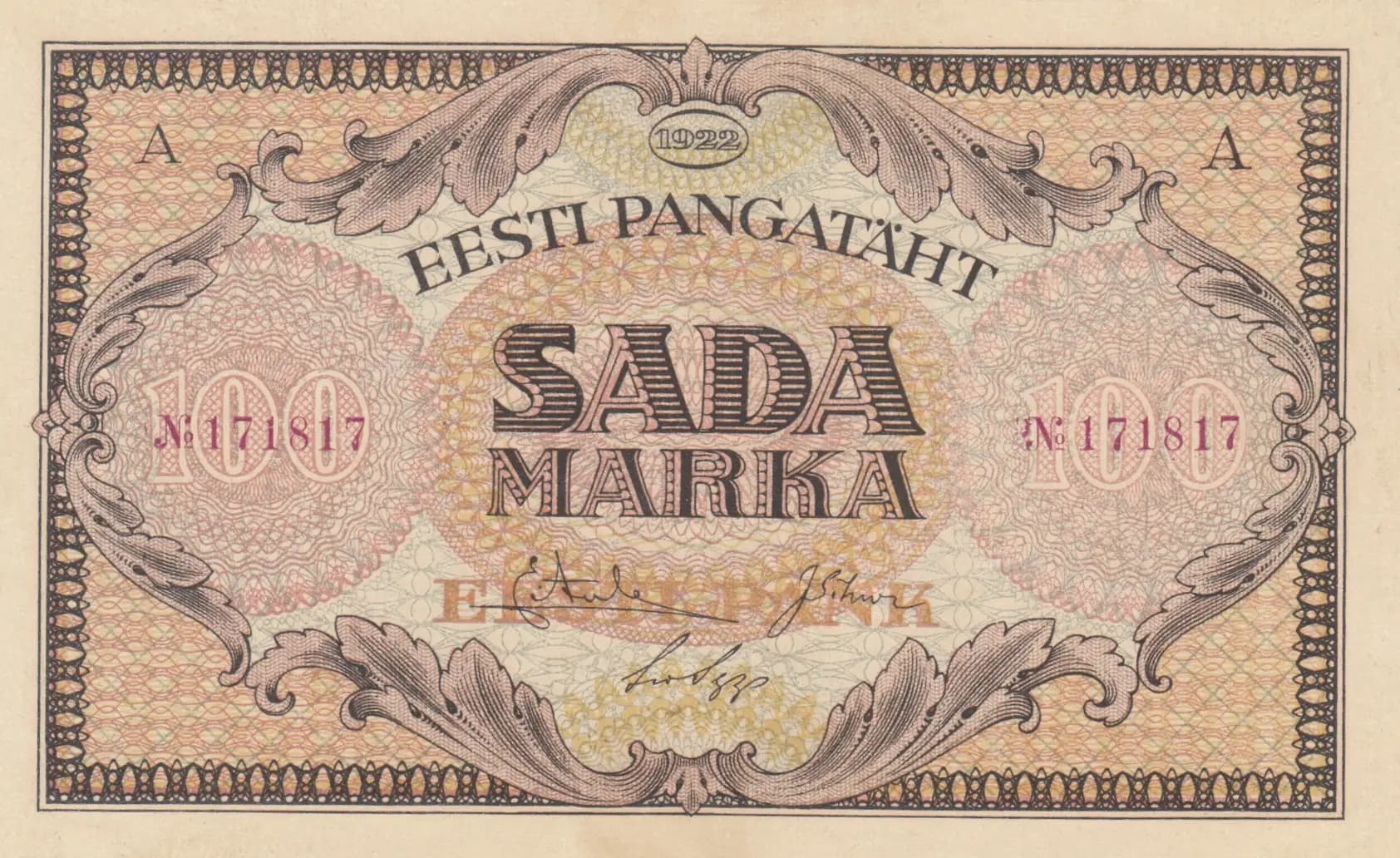
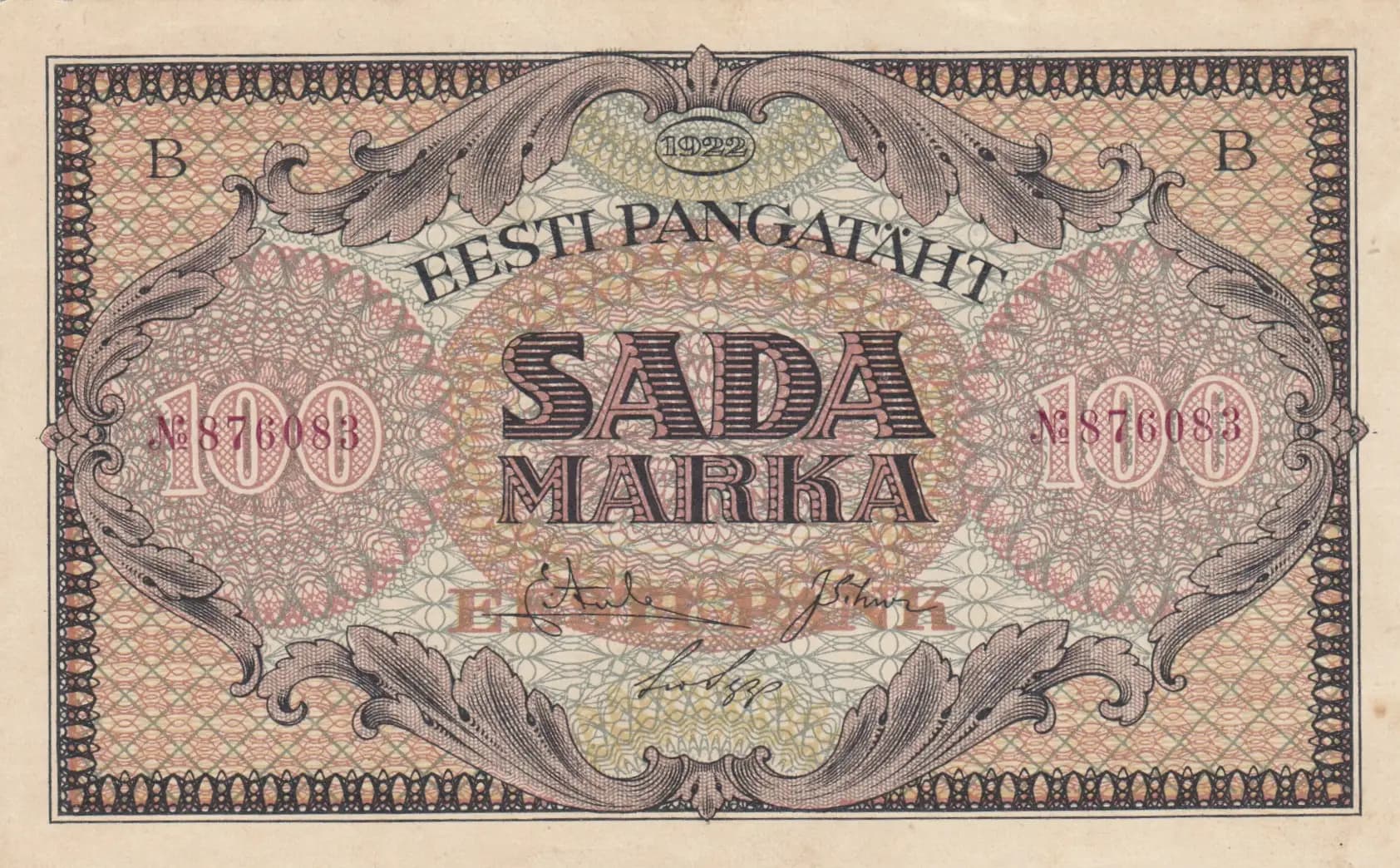
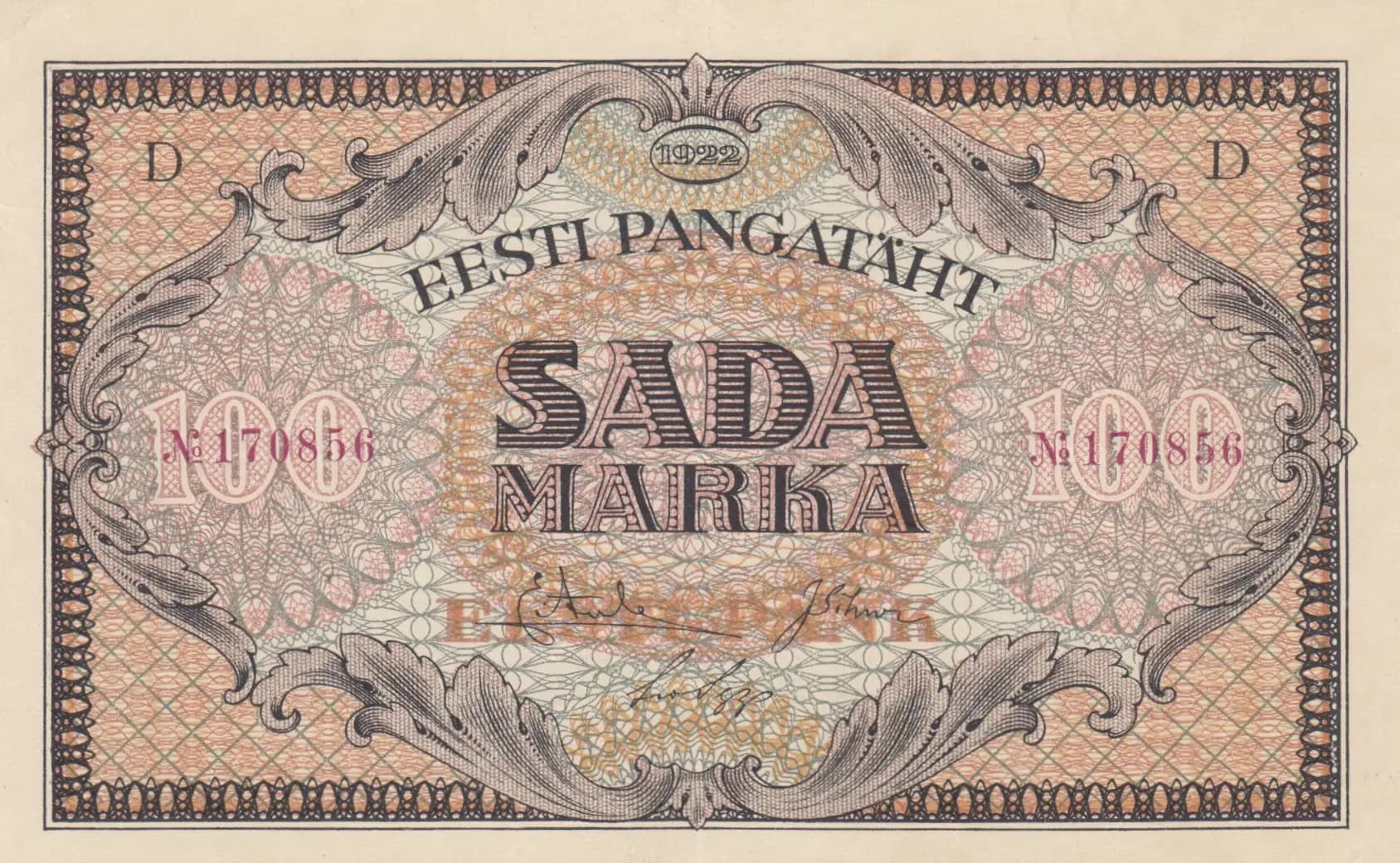
100 marka 1922
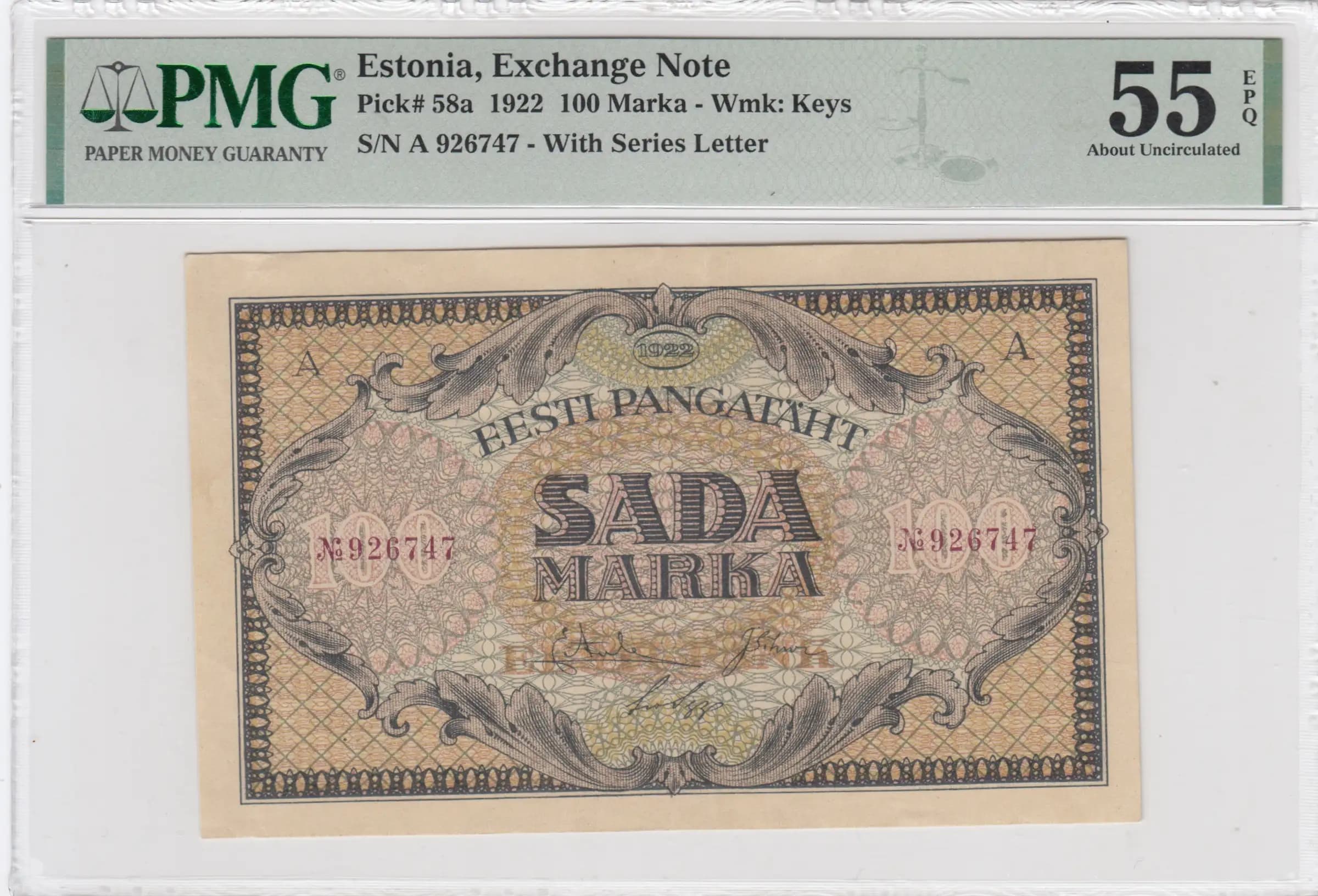
“serie A”
Market Prices
2 salesAbout This Note
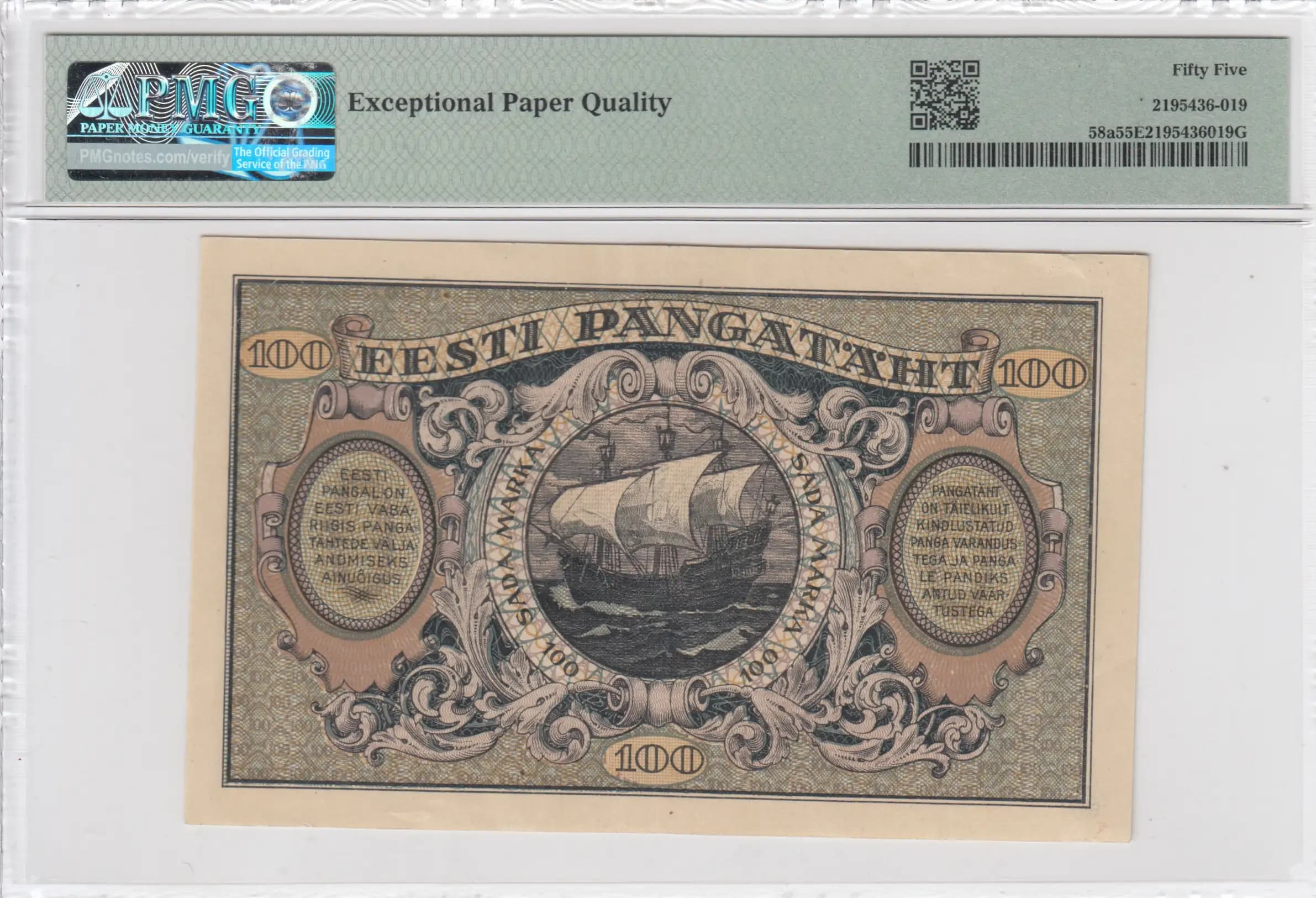
This is an exceptional example of Estonia's 100 Marka from 1922, graded PMG 55 EPQ, representing the early currency of the independent Estonian Republic. The note exhibits pristine uncirculated condition with sharp, clear printing throughout and no visible wear, creases, or stains. The design features elaborate baroque ornamentation framing the denominations and text on the obverse, while the reverse showcases a detailed central vignette of a Hanseatic galleon—a historically significant maritime symbol reflecting Estonia's merchant heritage and Baltic trade connections.
Common. The 100 Marka denomination from 1922 was part of a regular issue by the Estonian Treasury and sees steady availability in the collector market. eBay pricing data shows examples in Fine condition selling for approximately $160 and circulated examples trading regularly, with 2016 catalog values for VF specimens at $500 and UNC at $1000. A PMG 55 EPQ example represents a high-quality specimen but not an exceptionally rare variety. The print run was substantial enough to ensure ongoing availability without premium rarity premiums.
The 1922 100 Marka was issued during Estonia's first years of independence following World War I and the collapse of the Russian Empire. The prominent depiction of a Hanseatic galleon on the reverse reflects Estonia's historical role in Baltic commerce and the Hanseatic League's dominance of medieval and early modern trade routes. The baroque design elements and fine engraving techniques employed demonstrate the young nation's commitment to establishing a distinctive and sophisticated currency befitting a new European state.
The obverse features a highly ornate rectangular frame with elaborate baroque-style scrollwork and geometric borders in black, brown, and green on a tan/beige underprint with fine crosshatch security pattern. The denomination and issuer information are centered within this decorated frame. The reverse presents the note's most distinctive element: a central circular medallion containing a detailed engraved Hanseatic galleon under full sail with multiple masts and billowing sails, rendered above stylized ocean waves. This merchant vessel is flanked by two large oval cartouches containing institutional text, all surrounded by ornamental flourishes, scrollwork, and geometric border patterns consistent with the obverse design. The overall color palette maintains earthy tones of tan, beige, black, brown, and gray throughout both sides.
Front side: 'EESTI PANGAKAHT' (Estonian State Bank), 'SADA MARKA' (100 Marka), '1922' (year of issue), and serial number '№926747'. Back side: 'EESTI PANGAKAHT' (Estonian State Bank) appears again, with denomination '100' displayed prominently. Additional Estonian text inscriptions appear within the left and right oval cartouches, though these are not fully legible in the provided images.
Intaglio engraving (line engraving/copperplate), evidenced by the fine detailed line work, intricate crosshatch background security patterns, and the sharp, precise rendering of the baroque ornamentation, portrait medallions, and the central galleon vignette. The depth and quality of the engraved lines visible throughout the note are characteristic of high-security intaglio work typical of 1920s European currency production. The specific printer for Pick P-58 Estonian notes of this period was typically a European security printer, though the exact firm is not definitively documented in accessible references.
This note represents the standard P-58a variety as cataloged by PMG, featuring the watermark of light and dark keys. The serial number '№926747' with 'serie A' prefix indicates this is from the earliest printing series. No significant overprints, signature variations, or security feature anomalies are evident from the visual analysis. This appears to be a standard regular-issue specimen without unusual die states or production variants.