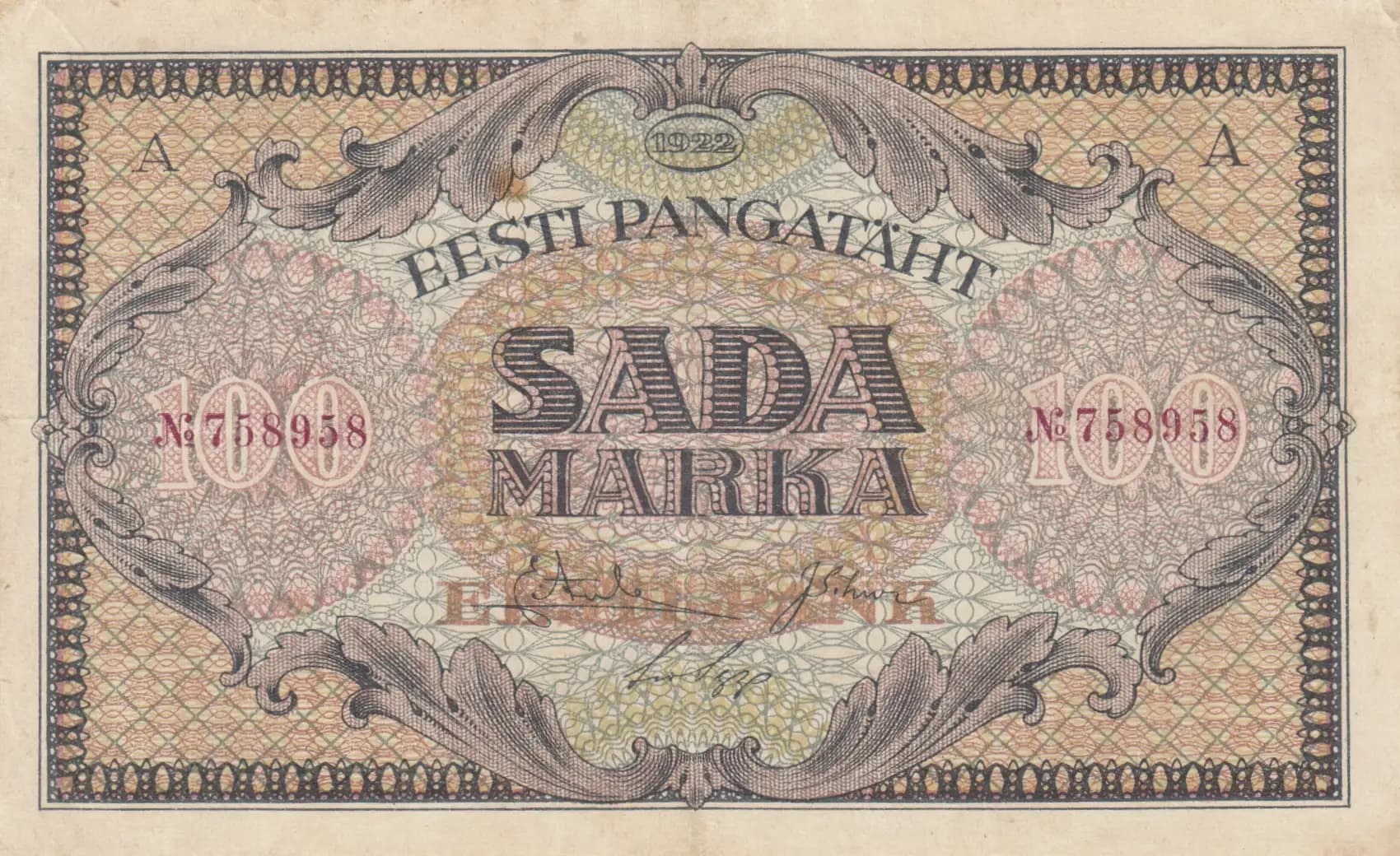
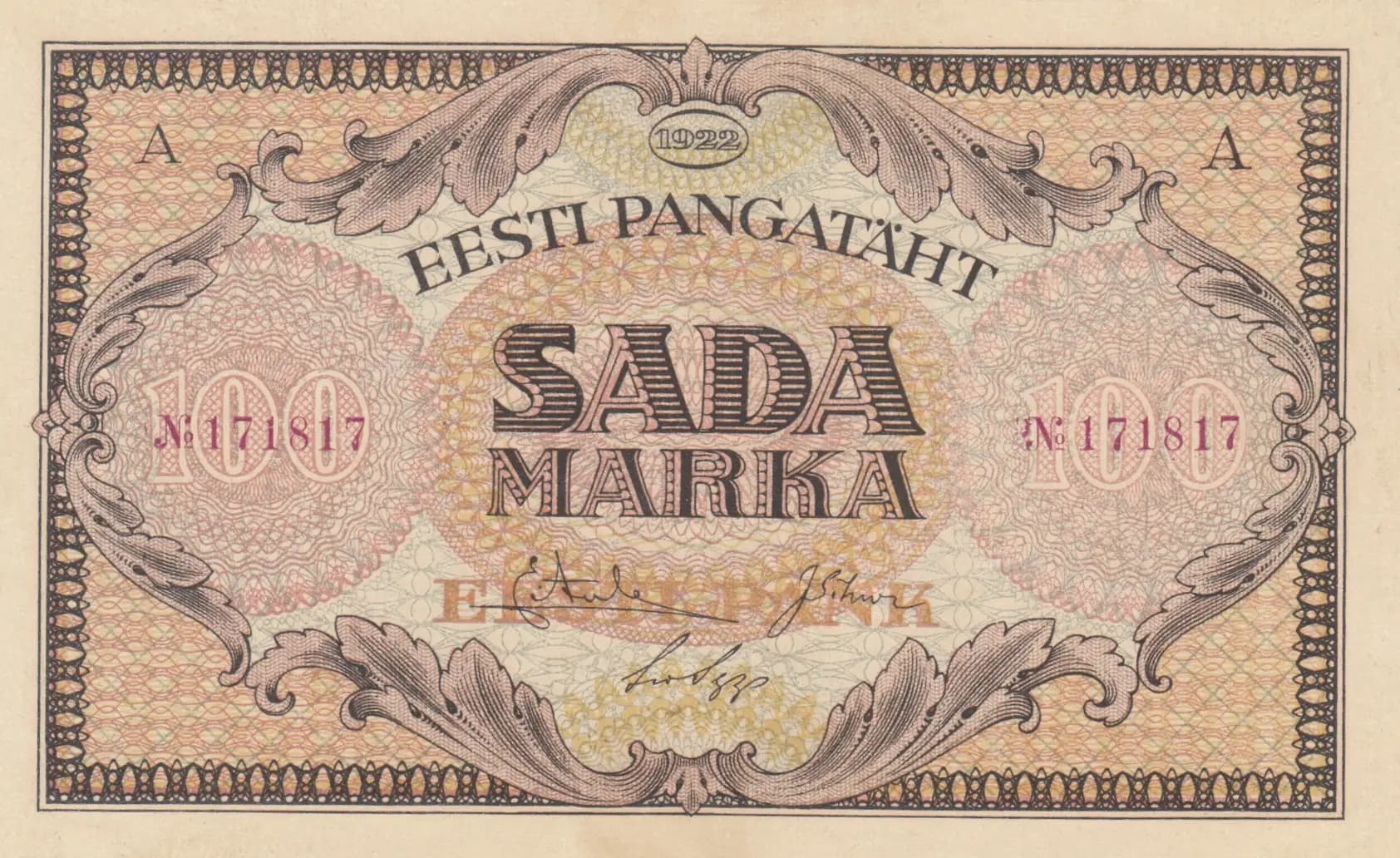
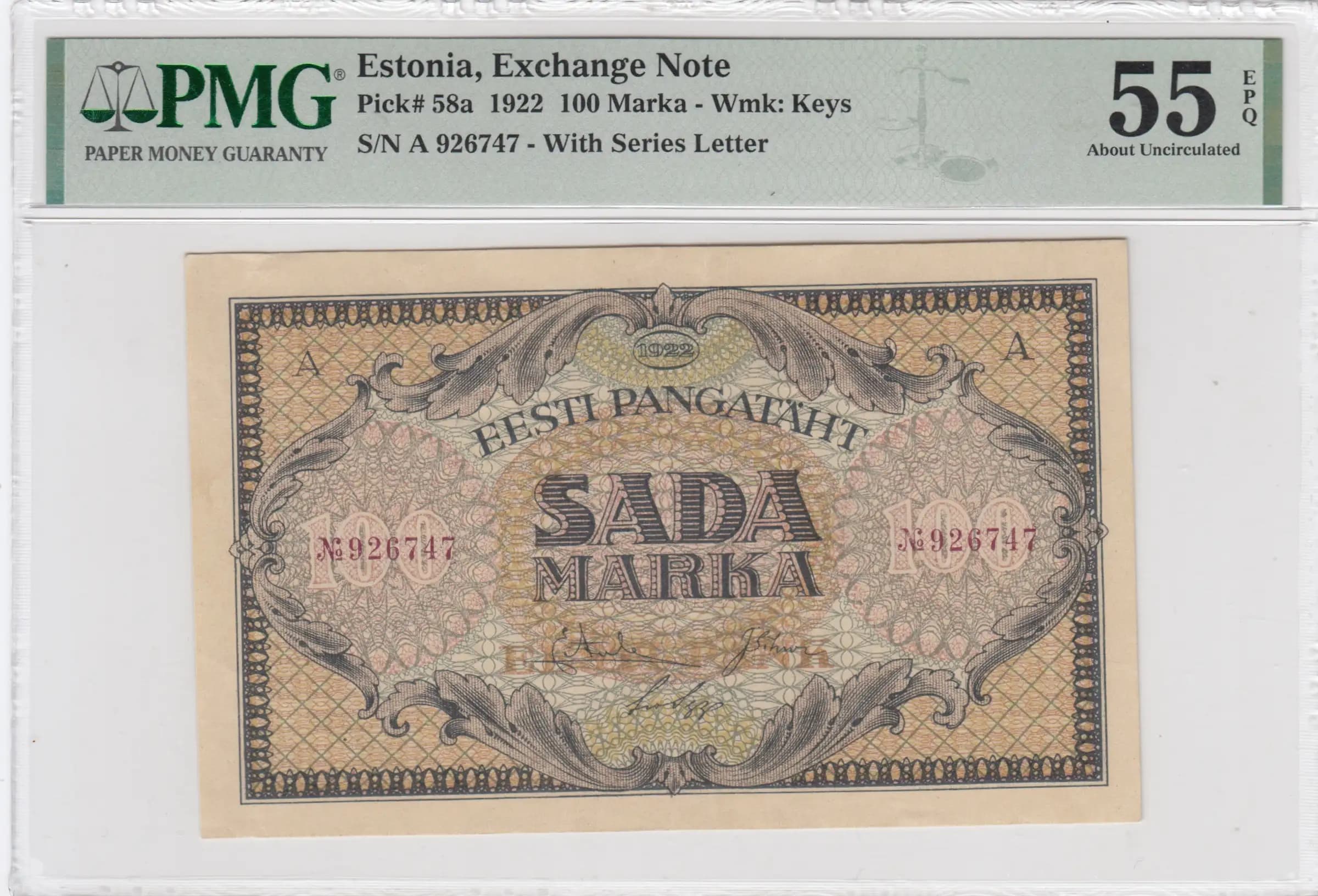
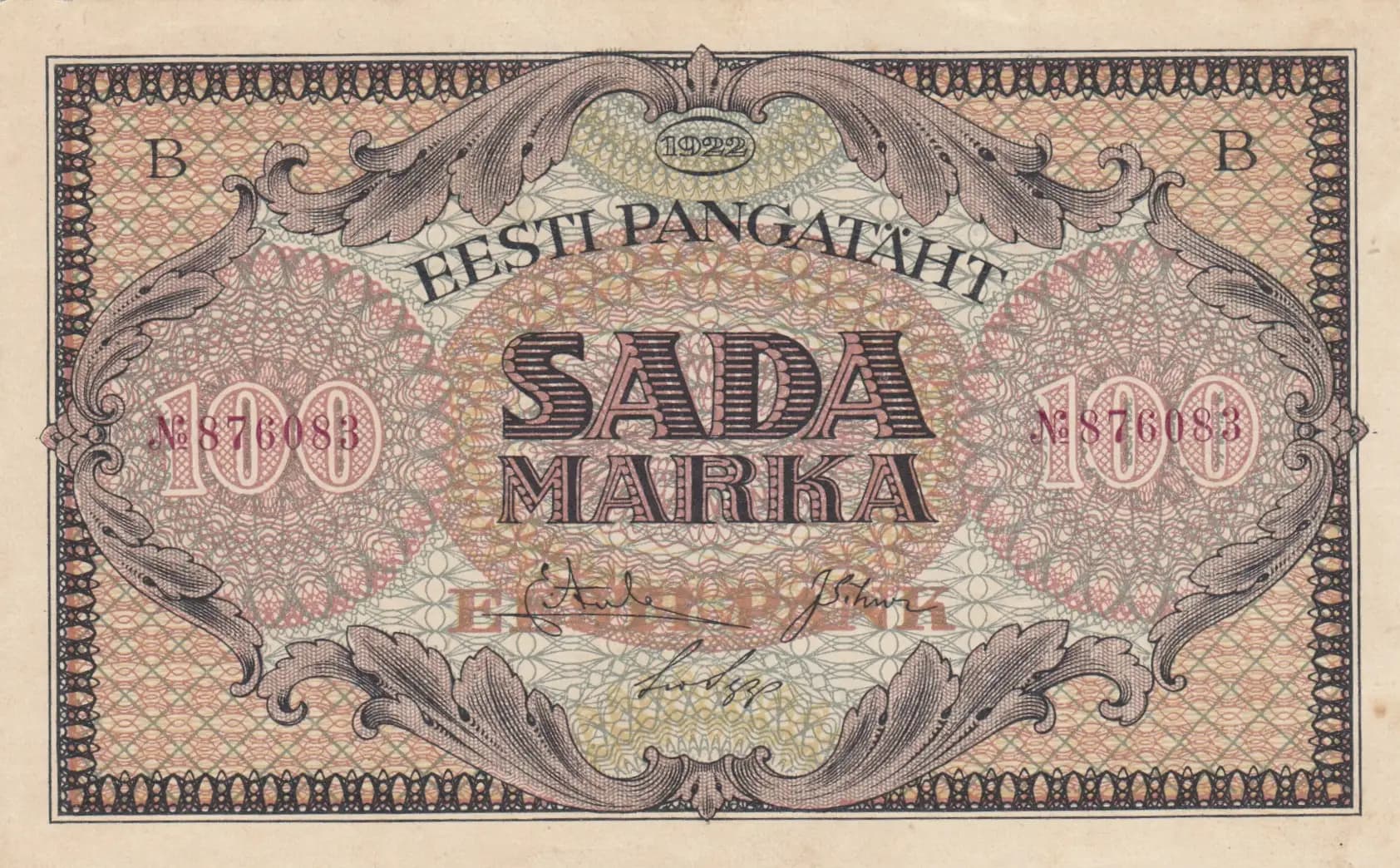
100 marka 1922
“serie D”
Market Prices
2 salesAbout This Note
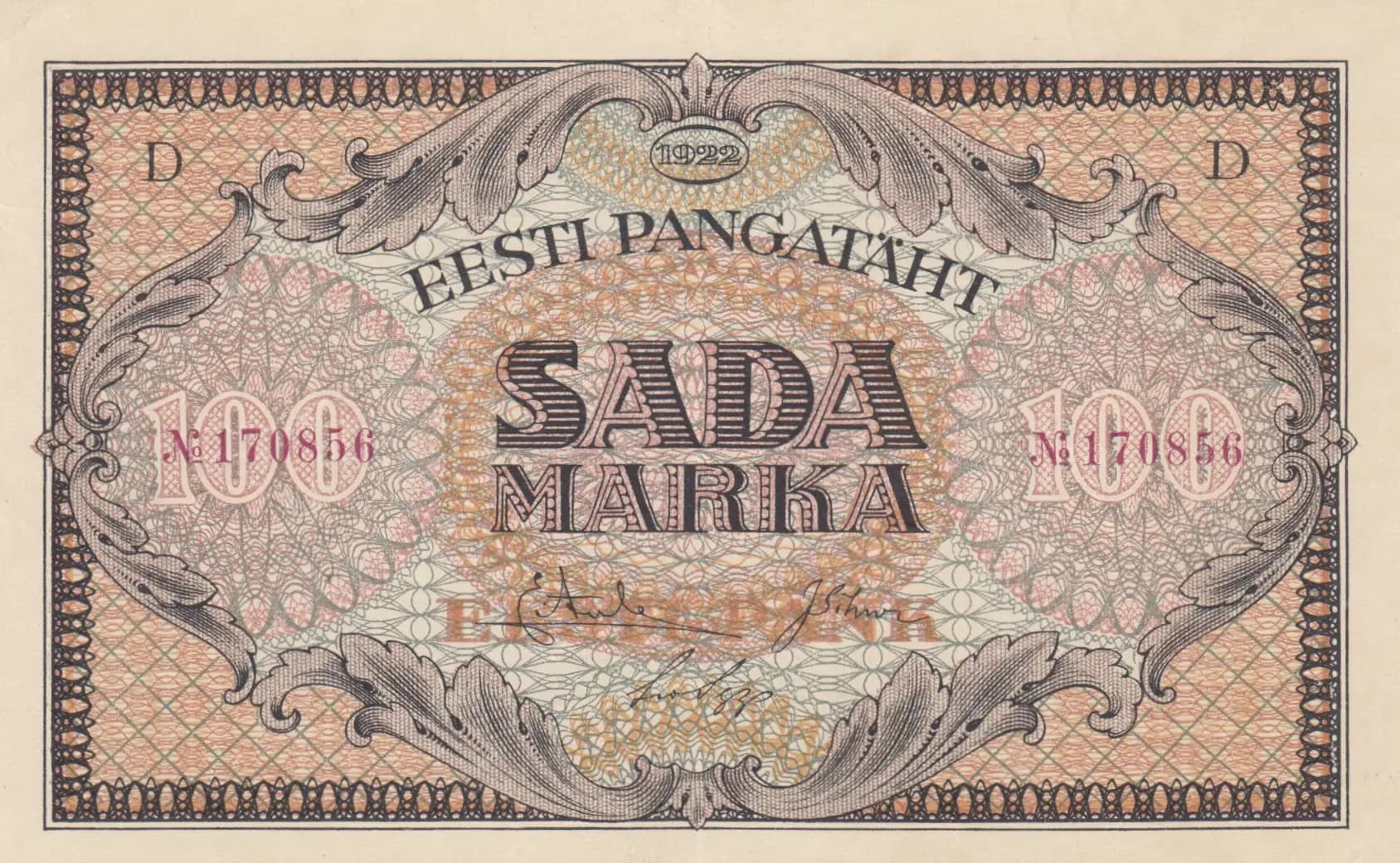
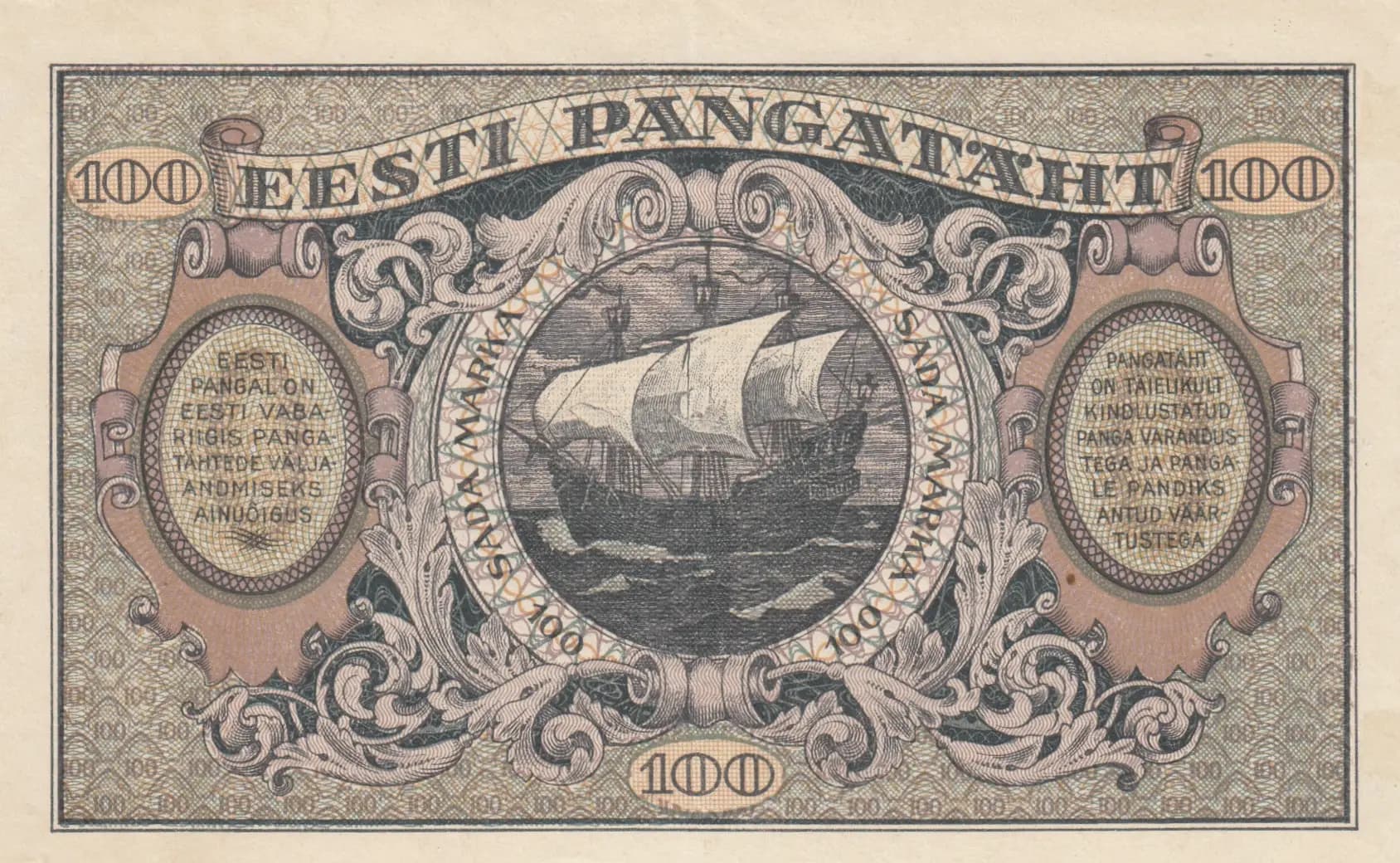
This Estonia 100 Marka note from 1922 presents in exceptional condition, grading EF, with crisp printing and no visible signs of circulation wear. The front features an ornate baroque cartouche with the denomination prominently displayed, while the reverse showcases a detailed engraved three-masted Hanseatic galleon—a symbolic reference to Estonia's Baltic trading heritage. The note's rich color palette of browns, tans, and pinks combined with intricate geometric security patterns make it an attractive example of early Estonian monetary independence.
Common. While this note is from the early period of Estonian independence, the 1922 100 Marka emission had a substantial print run sufficient to supply the young nation's currency needs. eBay historical pricing data shows examples in Fine condition sold for approximately $160, with UNC specimens reaching $1,075—a significant but not exceptional range indicating steady collector demand rather than scarcity-driven premiums. The 2016 catalog valuation of $500 for VF condition further supports a common classification. Series D examples like this specimen are readily obtainable in the collector market.
Issued in 1922 by the newly independent Treasury of Estonia (Eesti Vabariigi), this note commemorates the nation's first years of sovereignty following the collapse of the Russian Empire. The Hanseatic galleon depicted on the reverse symbolizes Estonia's historical importance as a trading power in the medieval and early modern Baltic, connecting the young republic to its prosperous mercantile past. The decorative baroque design reflects European banknote aesthetics of the interwar period while asserting Estonian national identity.
The obverse displays an elaborate baroque-style cartouche centered on the note, with curved flourishes at top and bottom framing the denomination and issuer information. The design employs ornamental border patterns with geometric designs throughout, creating a formal, classical appearance befitting a central bank issue. The reverse is dominated by a detailed circular vignette depicting a three-masted Hanseatic galleon in full sail, surrounded by concentric baroque ornamental frames and scrollwork. This sailing ship represents Estonia's medieval and early modern role in Baltic maritime commerce, particularly during the Hanseatic League period. The 'D' series designation appears in the corners of the obverse, identifying this as a later printing within the 1922 emission. The overall design palette consists of brown, tan, and rose tones with cream underprints, executed with fine-line engraving throughout.
FRONT SIDE: 'BESTI PANGATAHT' (Bank of Estonia), 'SADA MARKA' (One Hundred Marks), Serial Number '№170856', Year '1922', Designation Letter 'D'. REVERSE SIDE: 'EESTI PANGATAHT' (Bank of Estonia), Denomination '100', Guarantee text 'EESTI PANGATAHT KINDLUSTATUB PANGA VARANDUSE TEGA JA PANGA LE PANDIKS ANTIUD WAAR TUSTEGA' (This banknote is guaranteed by the assets of the Bank of Estonia and by valuables pledged to the Bank). Additional text appears in oval cartouches on either side of the central galleon vignette, reiterating the bank guarantee.
Intaglio (copperplate) engraving with multicolor printing. The note exhibits characteristic fine-line engraving work on all decorative elements and the central vignettes, combined with intricate geometric crosshatch patterns for background security. Multiple color printing layers—including the lilac, brown, and green underprints noted in contemporary references—were applied to create the finished note. This technique was standard for central bank currency issues of the 1920s period and provided both aesthetic appeal and security against counterfeiting.
This example is cataloged as P-58a with the watermark variety featuring light and dark keys, the only documented variant for this base Pick number. The 'D' series designation visible in the corners identifies this note as from a later printing within the 1922 100 Marka issue. Serial number 170856 appears to be from the standard numbering sequence for this series. No overprints, special markings, or printing anomalies are evident that would distinguish this as a premium variety.