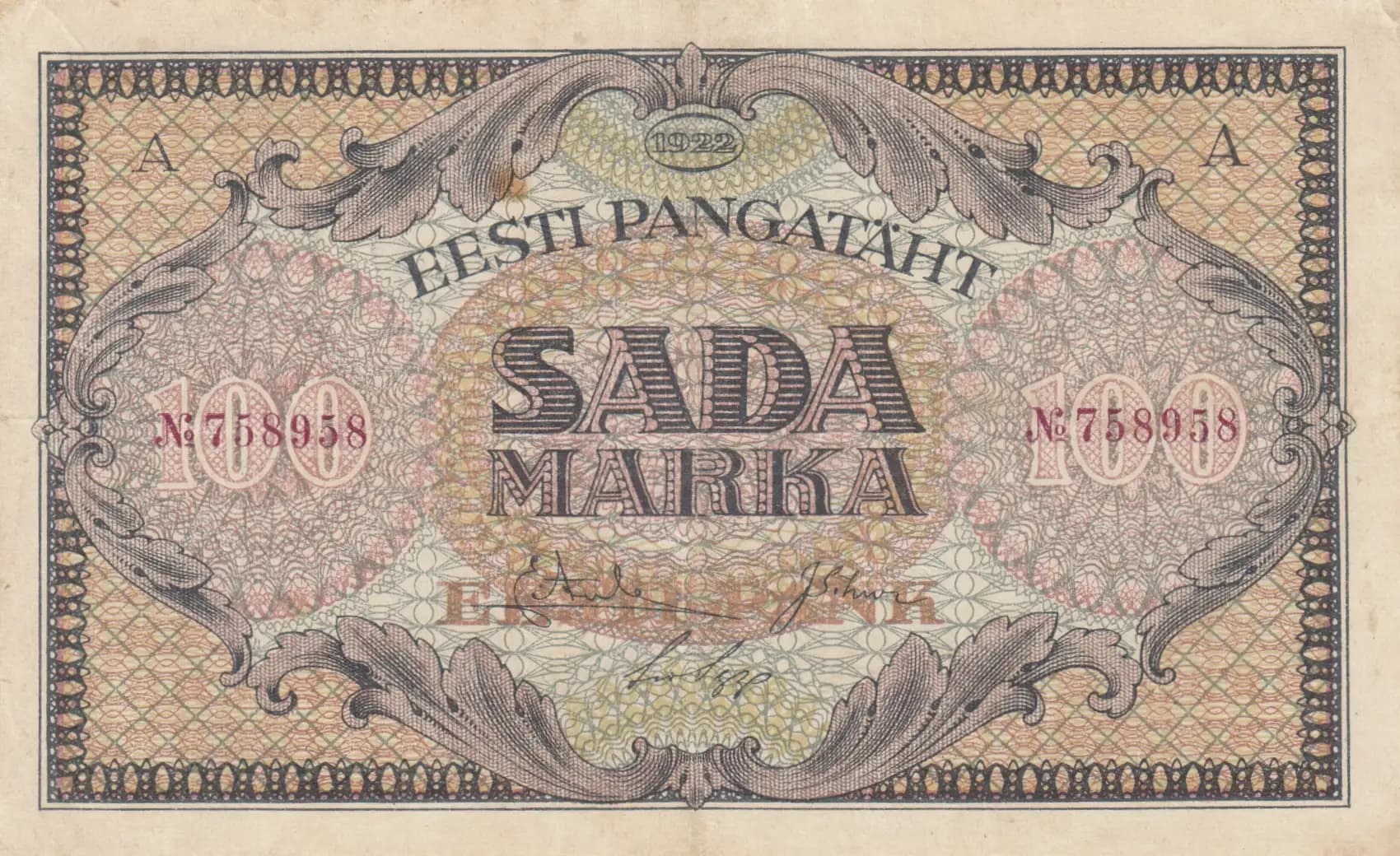
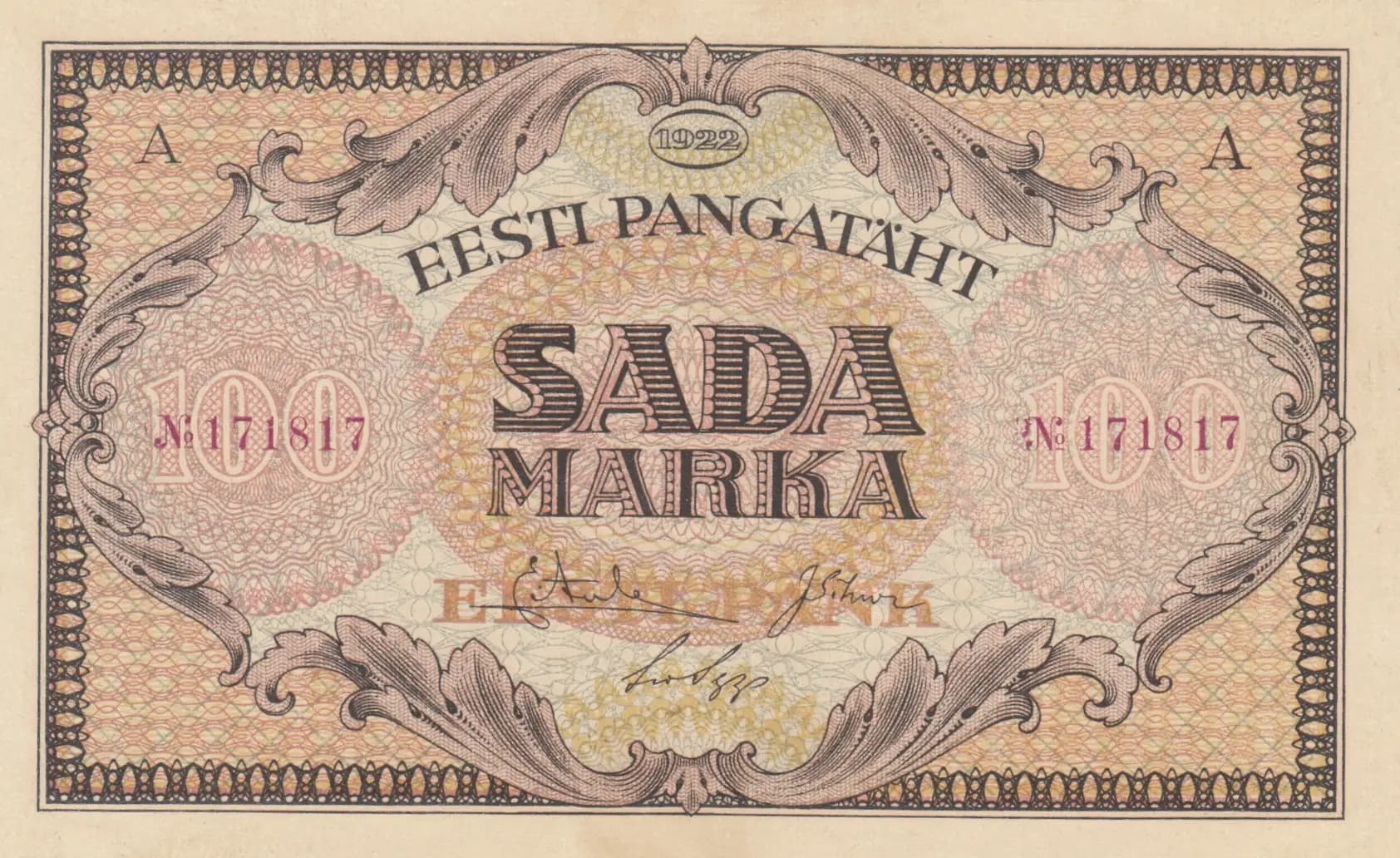
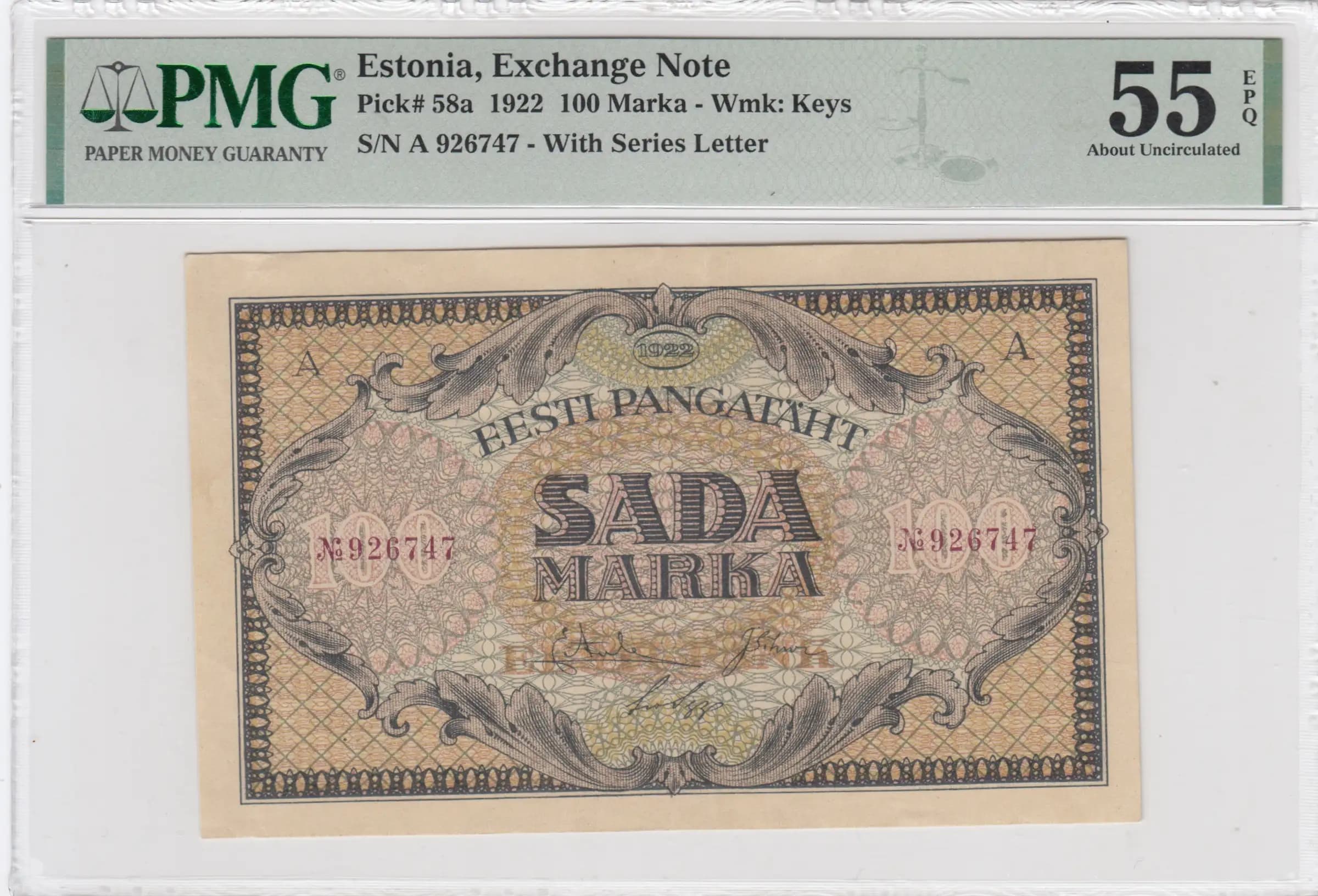
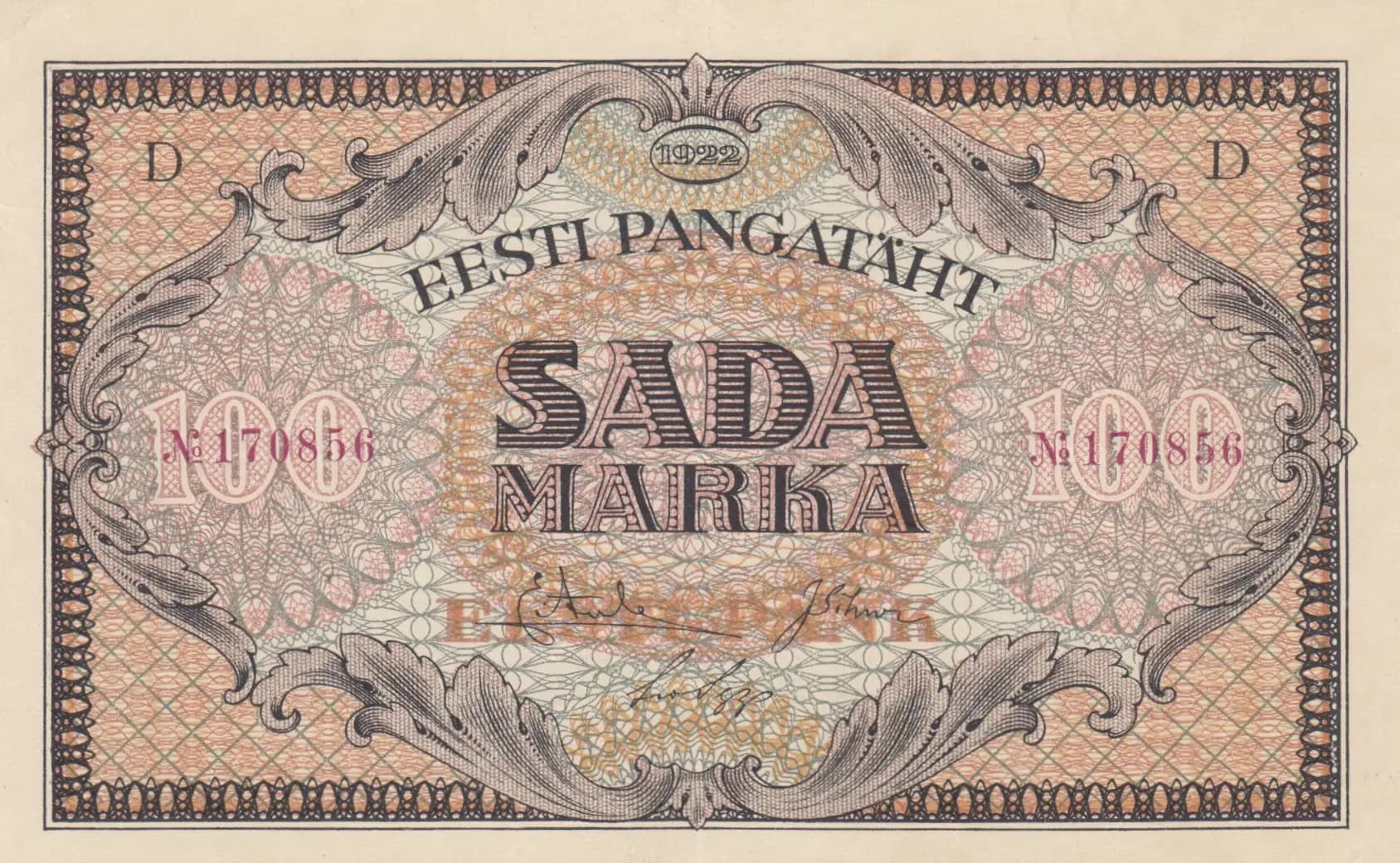
100 marka 1922
“serie B”
Market Prices
2 salesAbout This Note
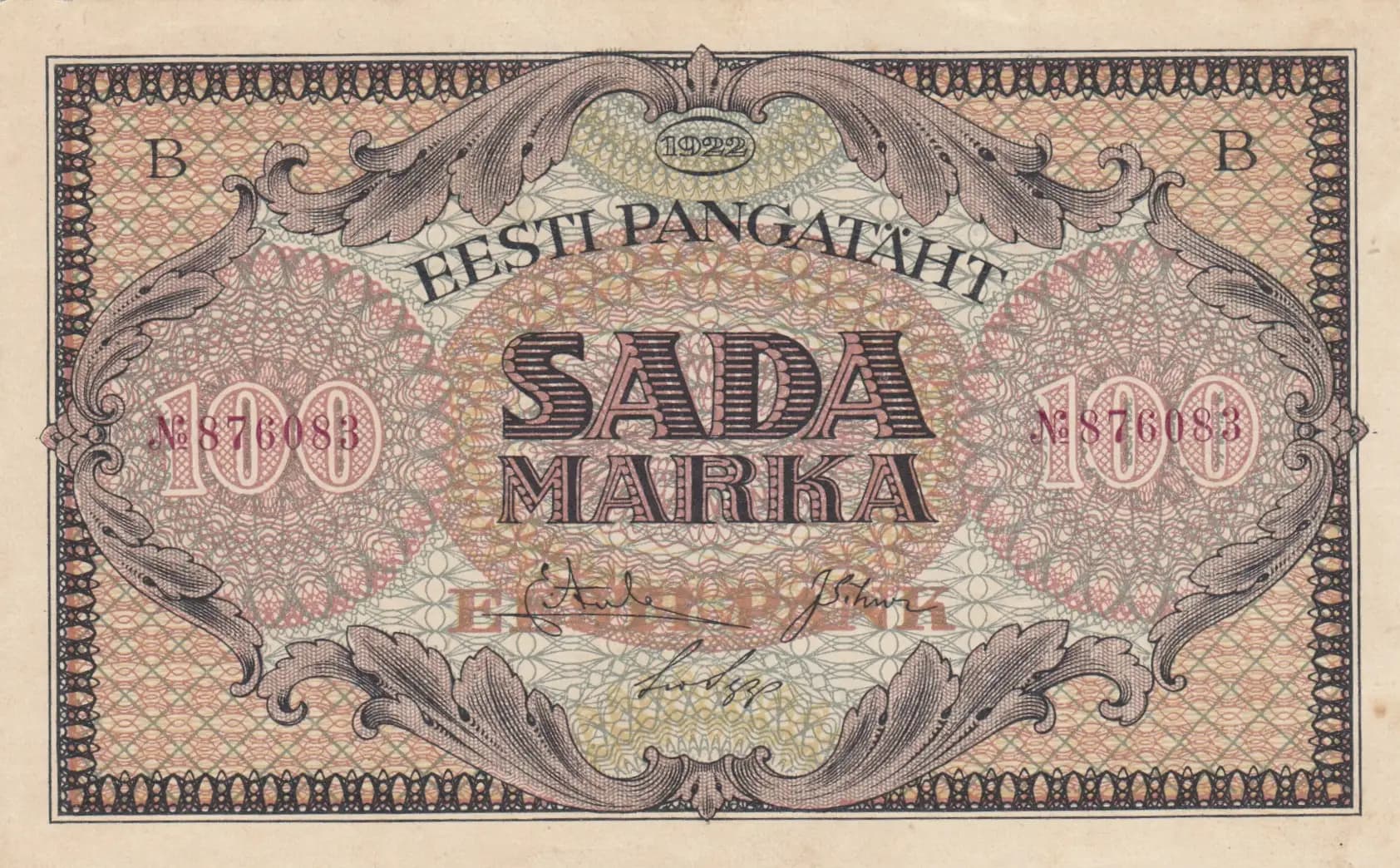
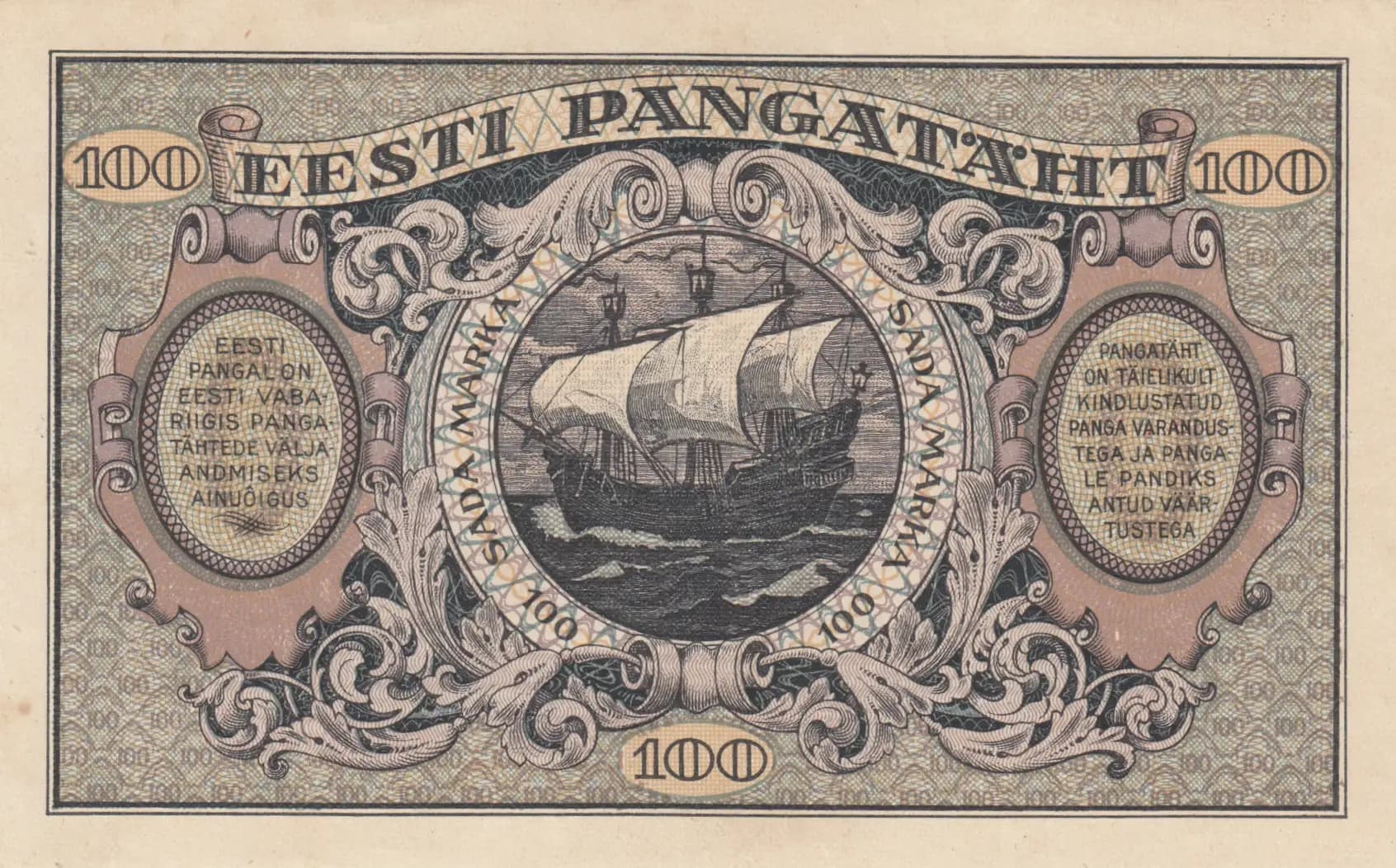
This is an exceptional example of Estonia's 100 marka banknote from 1922 (Pick P-58, Series B), presented in UNC condition with virtually no signs of circulation or wear. The note exemplifies early Estonian independence currency design with its elaborate baroque-style ornamentation, cream and pink toned paper, and meticulous engraved detailing on both sides. The reverse's prominent sailing ship vignette symbolizes Estonia's maritime heritage and the new nation's commercial aspirations during the interwar period.
Common. The 100 marka denomination from the 1922 series was a standard circulation note with substantial print runs typical of intermediate-value currency. While early Estonian banknotes have collector interest, the 100 marka is neither scarce nor rare. The Series B designation is a common variety for this issue. Notes from this period survive in reasonable quantities in the collector market.
The 100 marka note was issued by the Treasury of Estonia in 1922, during the formative years of the Estonian Republic following independence from Russia in 1918. The sailing ship depicted on the reverse represents Estonia's historical maritime tradition and economic significance as a Baltic trading nation, while the text emphasizing the note's backing by 'the bank's assets and treasury' reflects the young nation's efforts to establish monetary credibility in the post-WWI economic environment. The baroque aesthetic and ornate engraving styles were typical of early 20th-century European central bank currency design, projecting stability and national sovereignty.
The note's front features a classically formal layout with 'EESTI PANGATAHT' at the top and the denomination 'SADA MARKA' prominently centered, surrounded by elaborate baroque scrollwork and filigree patterns in black ink on a cream and pink-toned background. Corner denomination numerals and handwritten signatures reinforce authenticity. The reverse is dominated by a detailed central vignette of a merchant sailing ship (caravel-type vessel) in full sail upon water, enclosed within ornate circular medallion frames containing explanatory text in Estonian. Flanking circular frames with additional text cartouches and decorative corner elements enhance the baroque aesthetic. The geometric lattice patterns and fine-line engraving throughout both sides serve as security features. The overall color palette of cream/beige, brown, pink, and black ink reflects the aged character of early 1920s currency paper.
FRONT SIDE: 'EESTI PANGATAHT' (Estonian banknote) — appears at top center; 'SADA MARKA' (One hundred marka) — prominently displayed in large capital letters in the center; '100' — denomination numerals in corners; 'N876083' — serial number. BACK SIDE: 'EESTI PANGATAHT' (Estonian banknote); '100' — denomination numerals in decorative frames at corners; 'EESTI PANGALON EESTI VABA RIIGIS PANGA TAHTEDEGA ANDMISEKS ANTUD' (Bank of Estonia's bank note for use in the free state of Estonia); 'PANGATÄHT ON TAIELHKULT KINDLUSTATUD PANGA VARANDUSE TEGA JA PANGA-LE PANDIKS ANTUD VAAR JÜSTEGA' (The bank note is fully backed by the bank's assets and pledged with the bank's treasury).
The note was produced using intaglio (engraved) printing, evidenced by the fine line engraving patterns, complex geometric background designs, ornate scrollwork, and detailed ship vignette visible throughout both sides. The precision of the filigree work and the depth of the ornamental borders are characteristic of security printing by a specialized engraver. While the specific printer is not definitively identified in standard references for this Pick number, Estonian currency of this period was typically produced by established European security printers contracted by the Treasury.
Series B as indicated in the collector notes. The serial number N876083 and handwritten signatures on the front are consistent with notes from this production batch. No specific overprints or rare signatures are evident from the visual analysis. Standard varieties for this Pick number relate to series designations and signature combinations; no exceptional varieties appear to be present in this example.