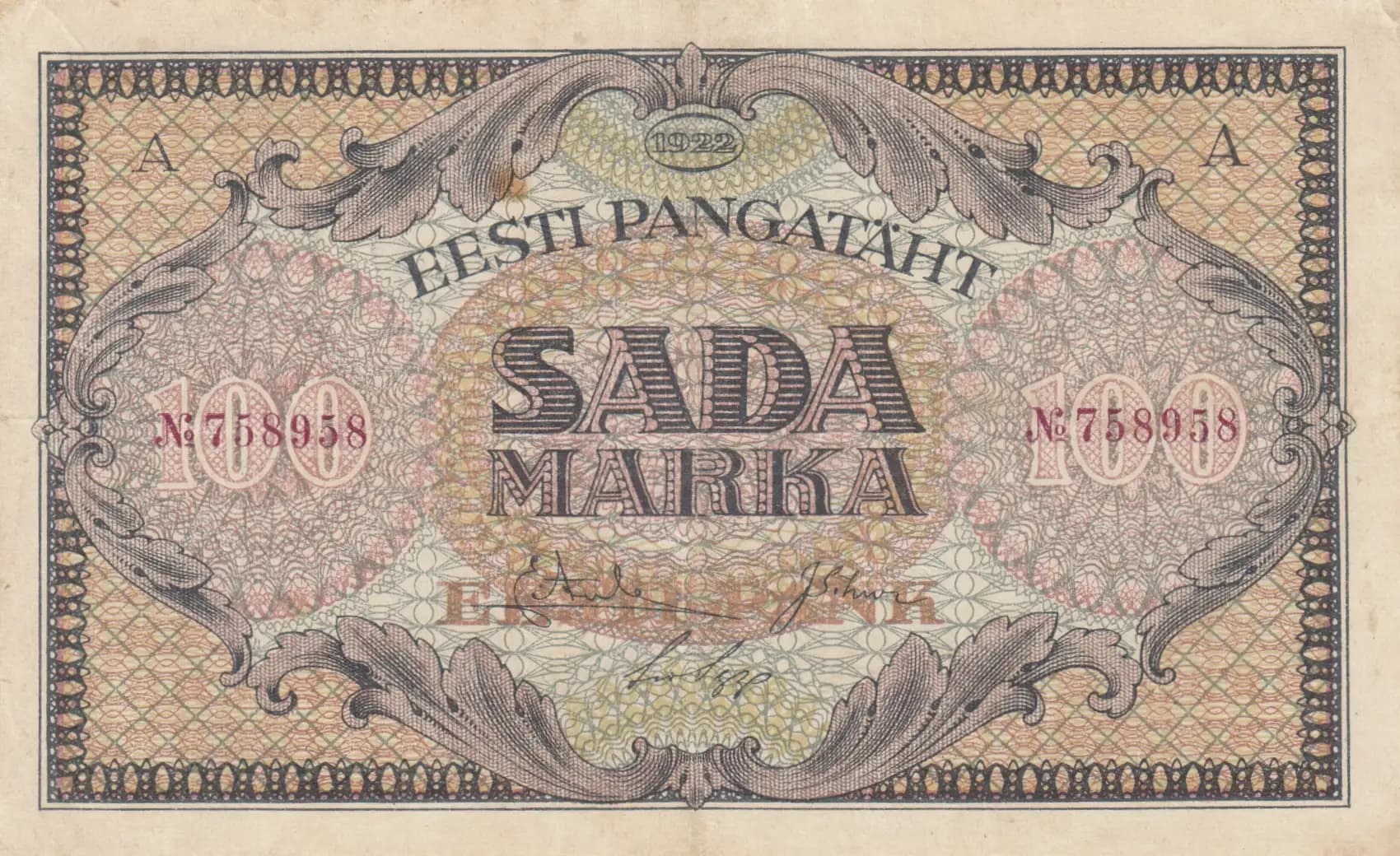
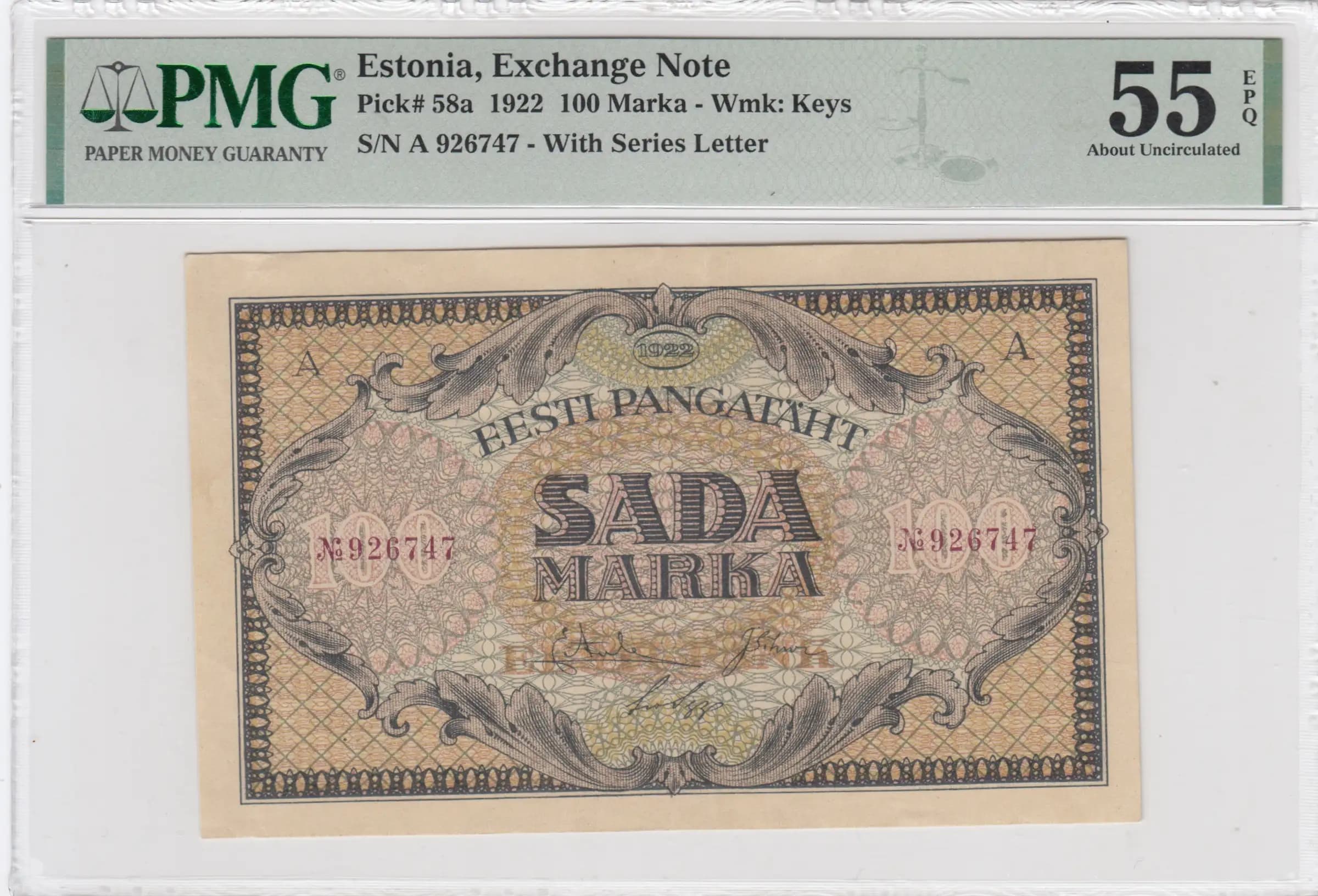
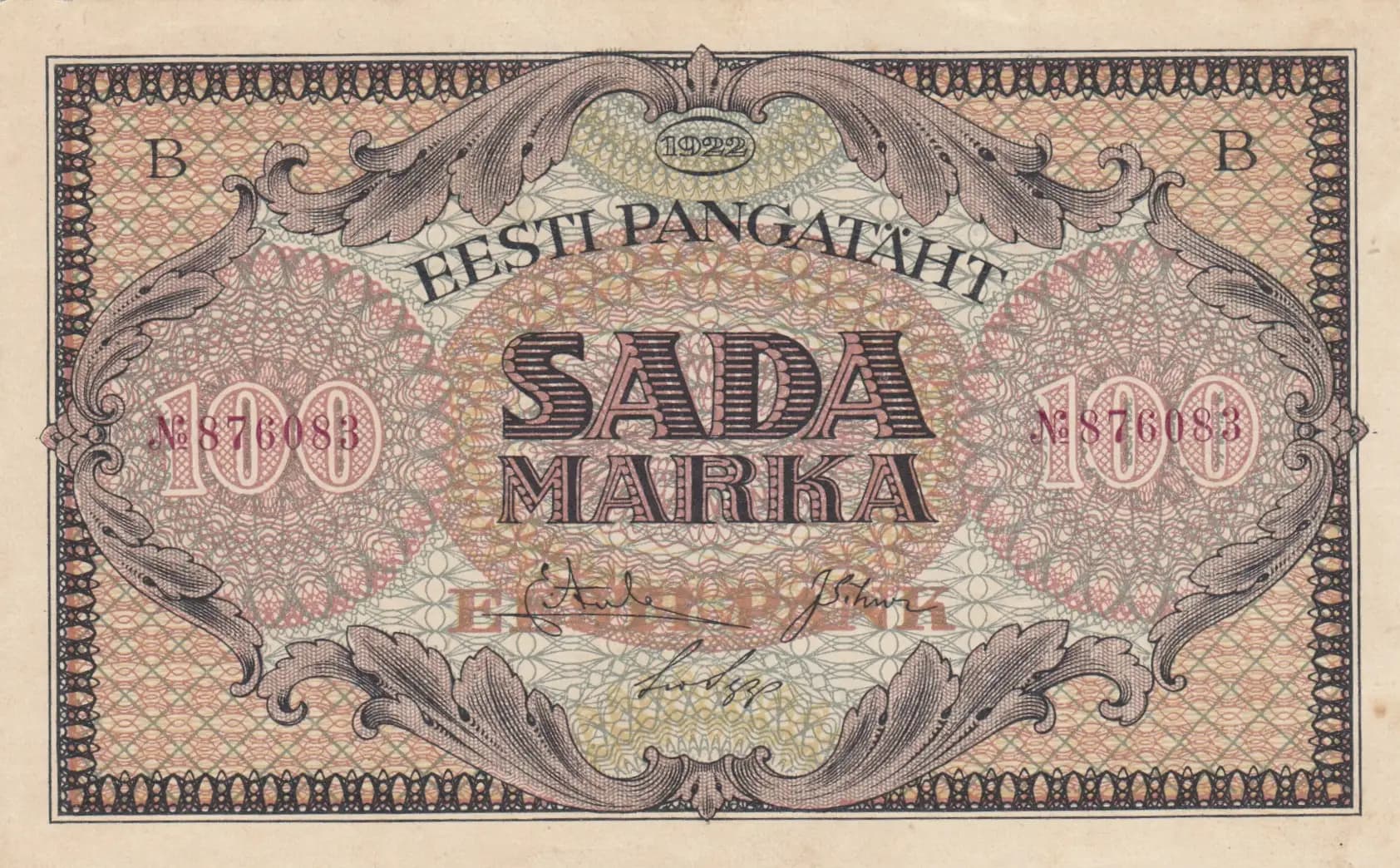
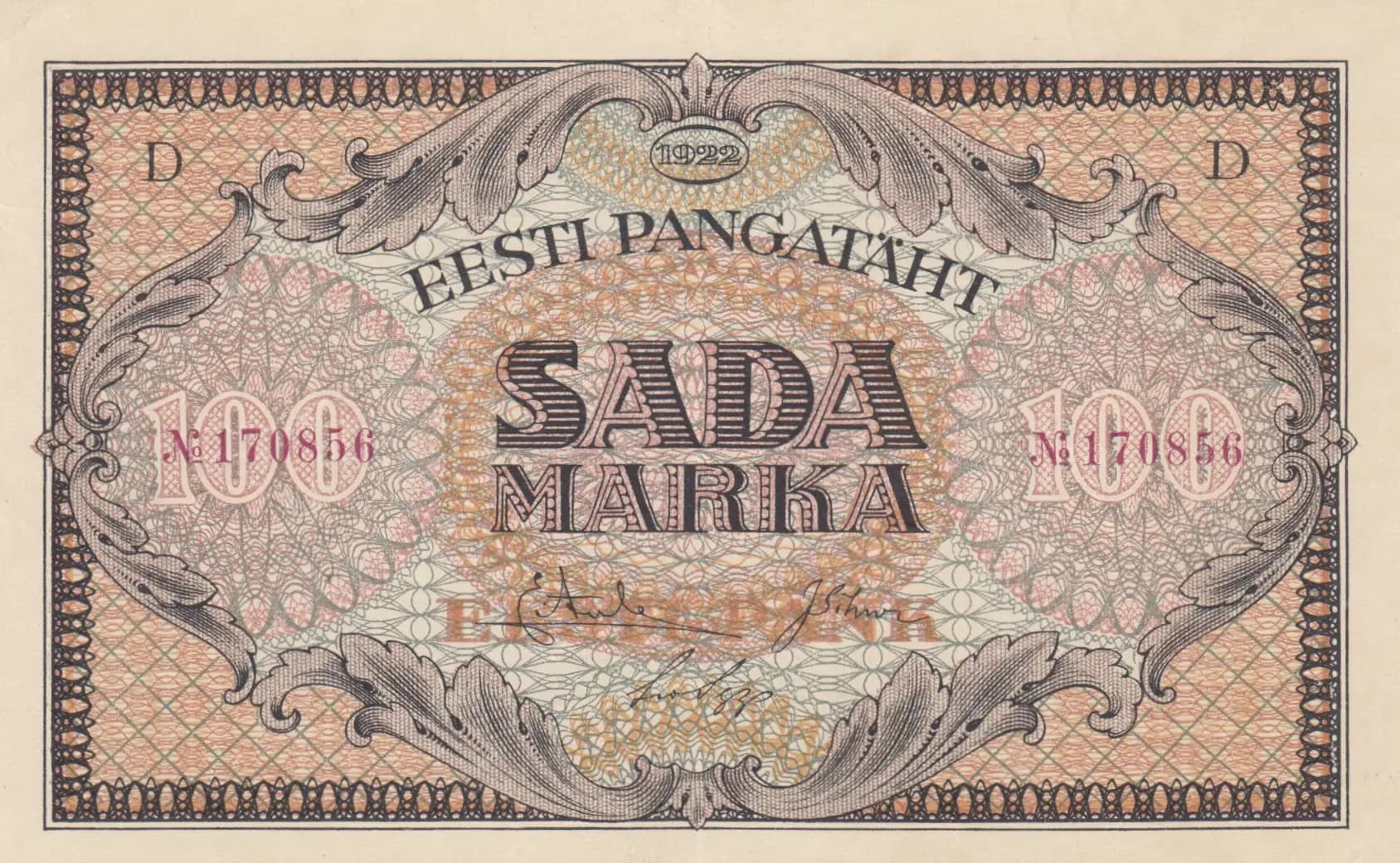
100 marka 1922
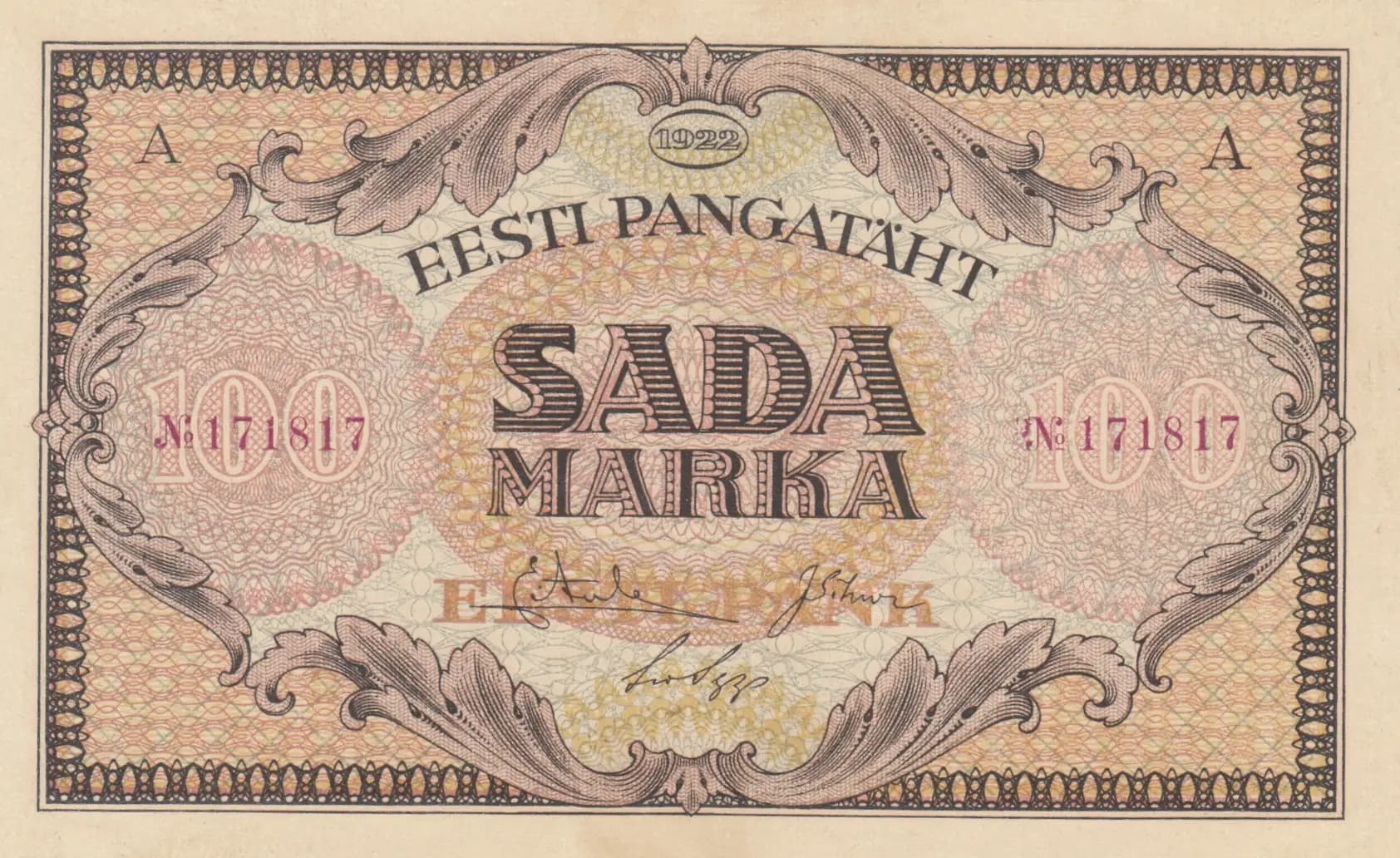
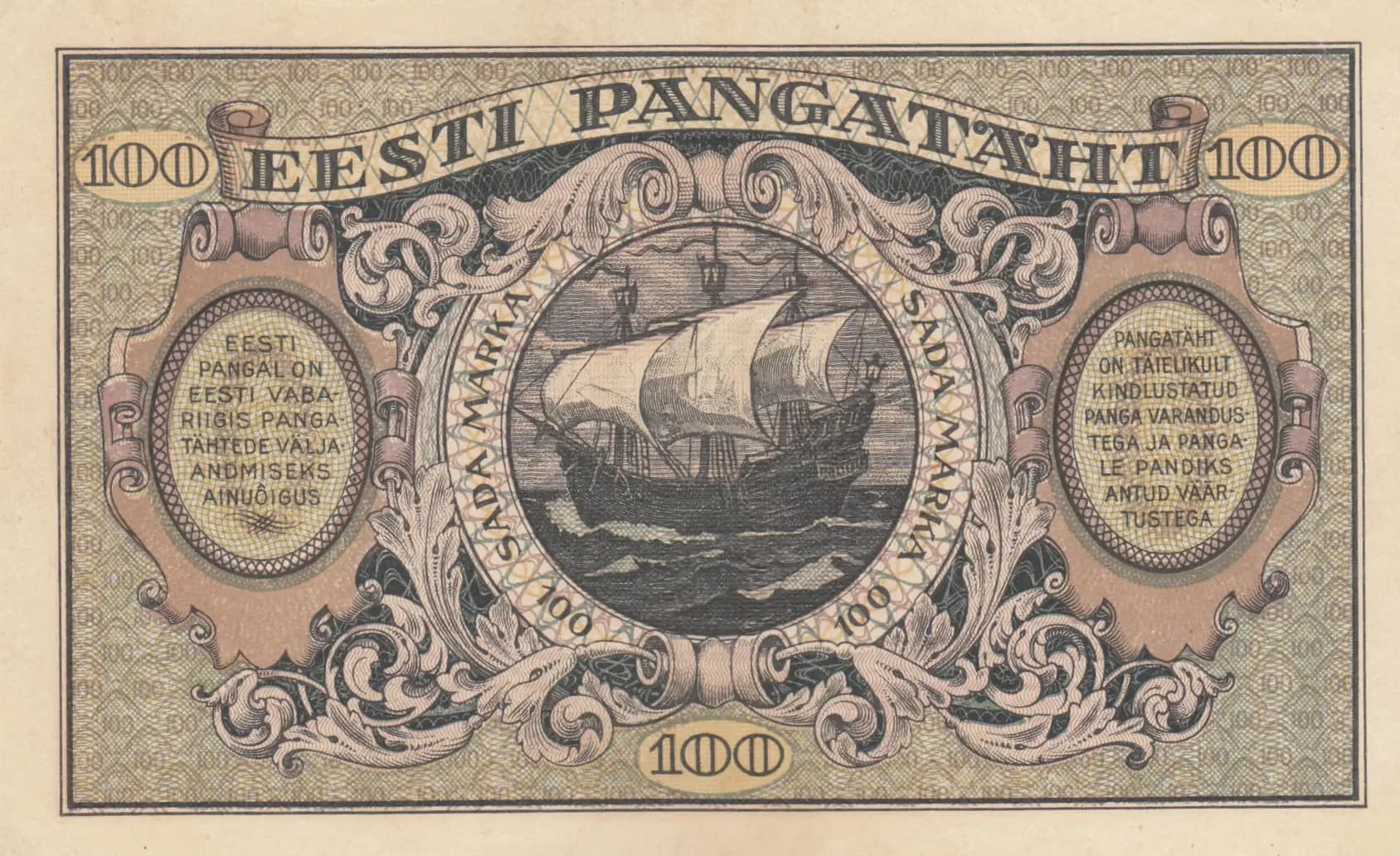
“serie A”
Market Prices
2 salesAbout This Note
This Estonia 100 Marka from 1922 is an exceptional example of early Estonian monetary design, presented in Uncirculated condition with crisp printing and minimal aging. The note showcases the foundational currency of the newly independent Estonian Republic, featuring intricate baroque-style decorative elements and a prominent Hanseatic galleon on the reverse that symbolizes Estonia's maritime trading heritage. The Series A designation and preservation quality make this a desirable specimen for collectors of Baltic numismatics.
Uncommon. While not rare, this denomination does not appear frequently in collector channels at the UNC grade level observed. The 2016 catalog valuation of $1000 for UNC specimens and documented eBay sales ($1075 for UNC in 2011, $160.39 for Fine in 2014) indicate steady but modest collector demand. Estonia's limited print runs during its early independence period and the specific Series A designation suggest this is not one of the most abundant denominations from the 1922 issue, placing it between common and scarce. The scarcity reflects both historical production volumes and preservation rates rather than extreme rarity.
Issued by the Treasury of Estonia in 1922, this banknote represents the young Estonian Republic's assertion of monetary sovereignty following independence from the Russian Empire. The central Hanseatic galleon depicted on the reverse references Estonia's historical role in medieval Baltic trade networks, while the official issuing text emphasizing the Estonian Bank's sole right to issue currency underscores the nation's newly won autonomy. The baroque ornamental style reflects the aesthetic preferences of early 20th-century European central banks seeking to convey stability and legitimacy.
The 100 Marka features a symmetrical baroque design divided between obverse and reverse. The front displays the denomination and official issuing authority text ('EESTI PANGATAHT') centered within an elaborate frame of intricate floral scrollwork and geometric cross-hatching, with a decorative coat of arms or crest positioned at top center. The reverse presents a principal design element: a detailed engraved Hanseatic sailing vessel (galleon) with multiple masts and full sails contained within a circular medallion, surrounded by nested decorative frames and ornamental cartouches. The vessel serves as a historical reference to Estonia's medieval Hanseatic League connections. The color palette combines cream/beige base stock with brown, tan, and rose underprinting, creating depth while the primary black printing renders text and security line work. Serial numbers and series letters appear in opposing corners.
FRONT SIDE: 'EESTI PANGATAHT' (Estonian banknote); 'SADA MARKA' (One hundred marka); '1922' (Year of issue); Serial number designation 'N: (7) 817' with series letter 'A' in corners. BACK SIDE: 'EESTI PANGATAHT' (Estonian banknote); '100' (Denomination, repeated in corners); 'EESTI PANGAL ON EESTI VABA-RIIGIS PANGA-TAHTEDE VALJA ANDMISE ÕIGUS AINUOIGUS' (The Estonian Bank has the sole right to issue banknotes in the Estonian free state); 'PANGATAHIT ON TAIELIKULT KINDLUSTATUD PANGA VARANDUSE TEEL JA PANDIKS ANTUD VOOR-TUSTEGA' (Banknotes are fully secured by bank assets and pledged with reserves).
Intaglio engraving (line engraving and steel plate printing), evidenced by the fine cross-hatching patterns, complex intricate line work throughout, and the detailed rendering of the galleon with precise linear shading. The multi-color underprinting suggests successive pass printing to layer the cream, brown, and rose tones before final black intaglio application. The security features—including elaborate border patterns, fine cross-hatching, and ornate scrollwork—are characteristic of early 20th-century European central bank currency production. The printer is not definitively identified from catalog data, though Estonian banknotes of this era were typically produced by established European security printers.
This note is identified as Pick P-58a, variant designation for the 100 Marka with Keys watermark (as documented in PMG population records). The Series A designation noted in the collector information corresponds to the series letter visible in the corners of the banknote. The serial number format 'N: (7) 817' with parenthetical notation is typical of Estonian treasury issues from this period. No overprints or signature varieties are apparent from the visual analysis, indicating this is a standard regular issue example from the 1922 printing.