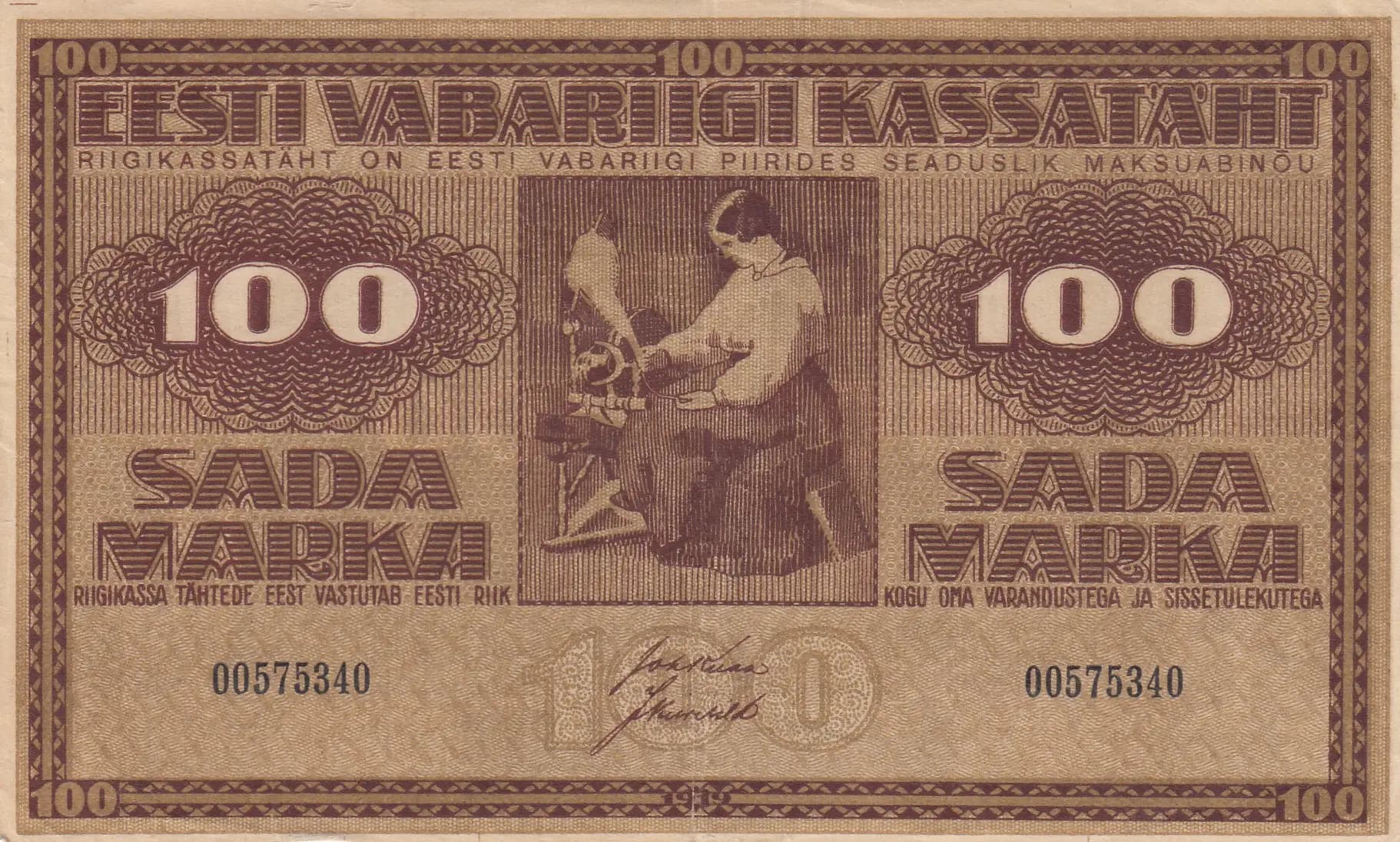
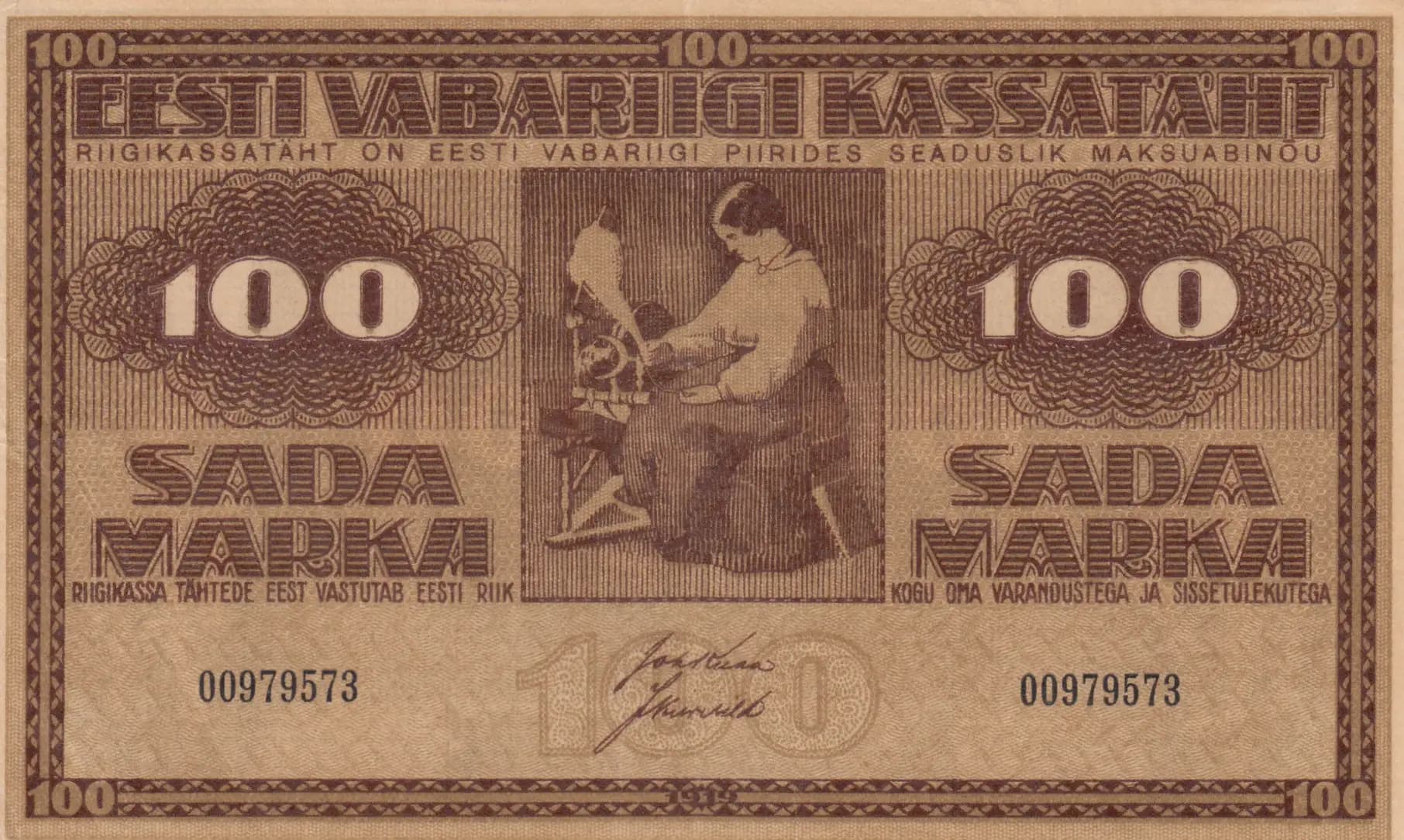
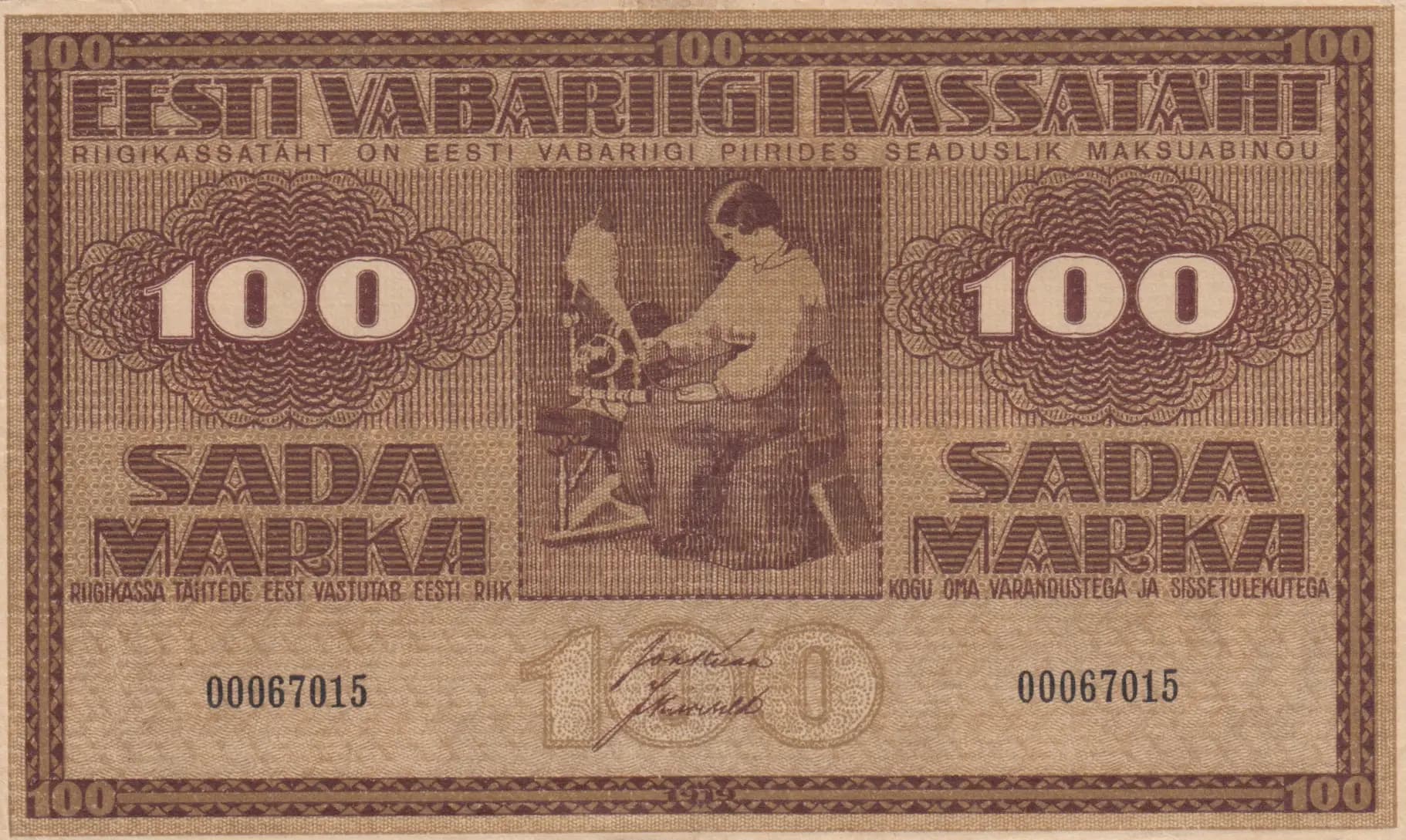
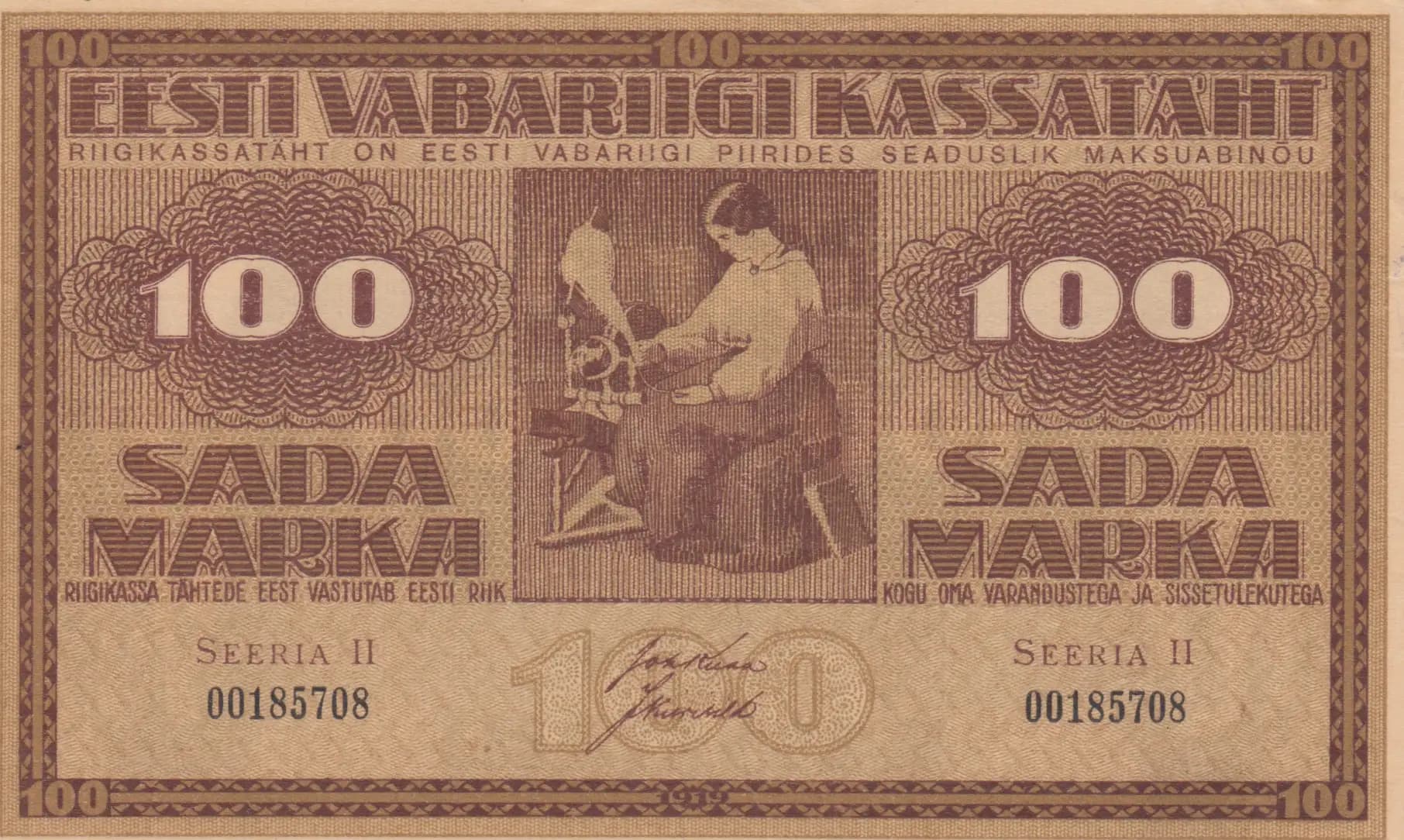
100 marka 1919
“w/m hor lines”
Market Prices
About This Note
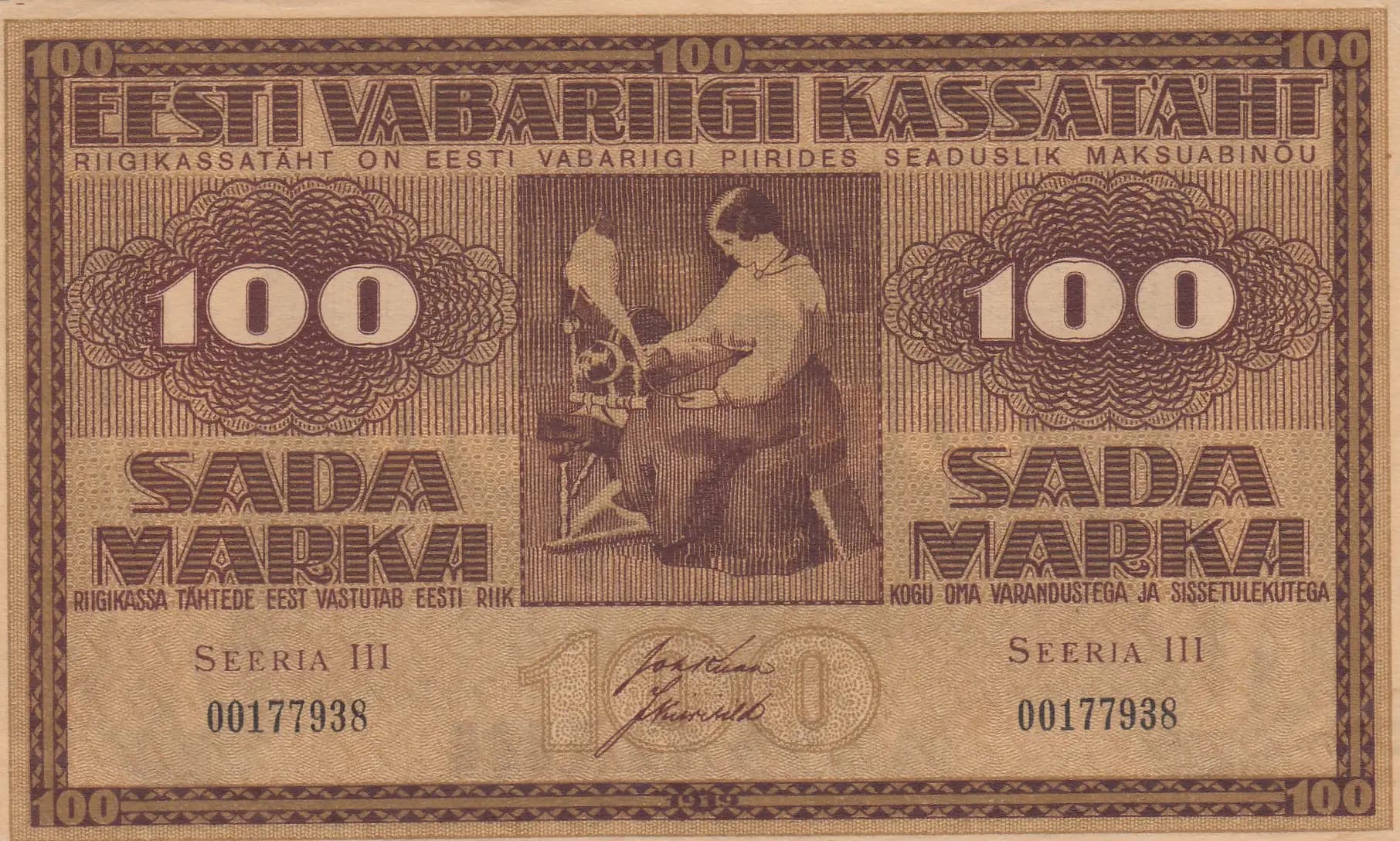
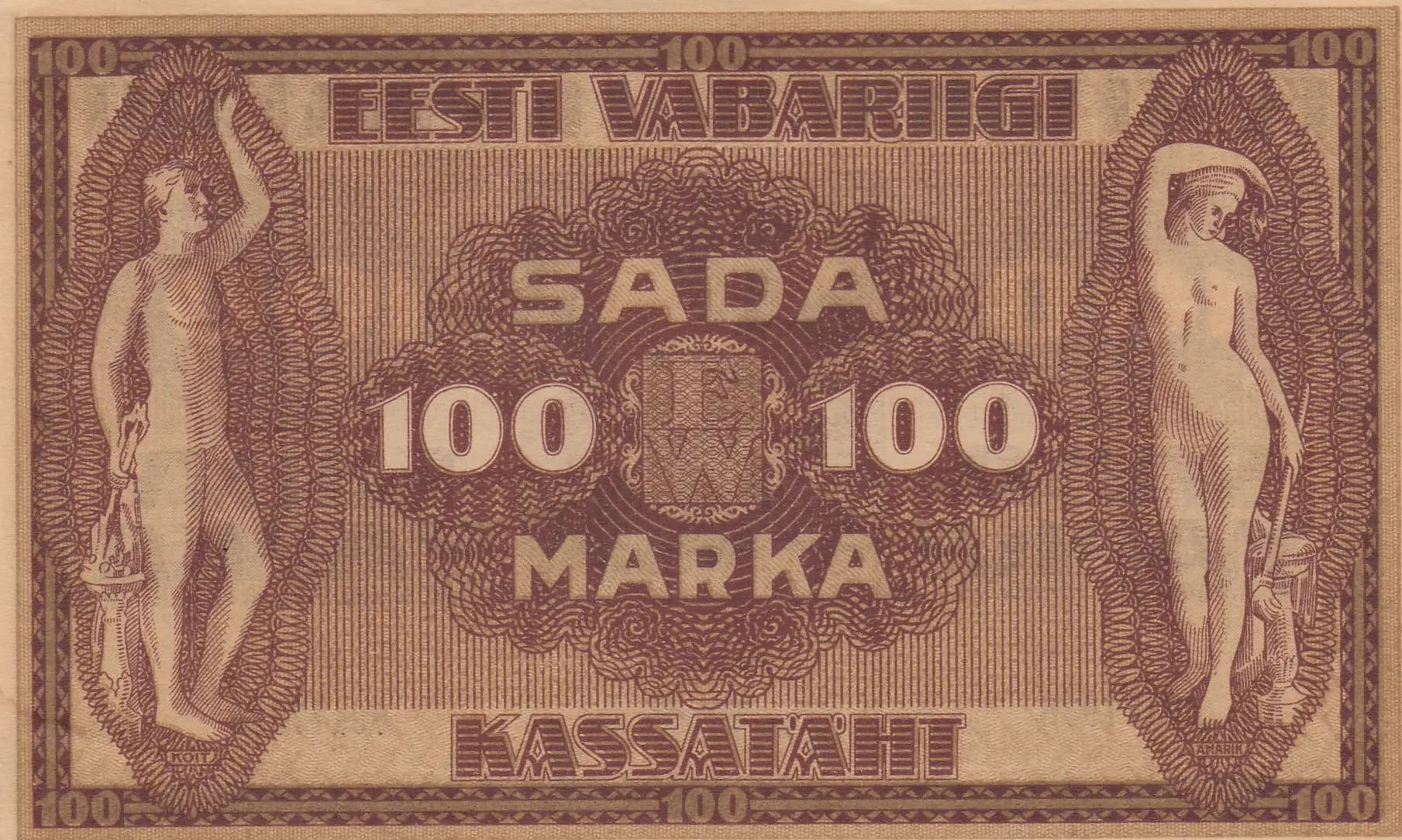
This is a beautiful example of Estonia's early treasury note from 1919, featuring a classical female figure at a spinning wheel on the obverse and allegorical female figures on the reverse. The note exhibits AU (About Uncirculated) condition with sharp printing, clear inscriptions, and no visible wear, creases, or stains. Series III, with serial number 00177938, this note represents an important piece of Estonian numismatic history from the newly independent Estonian Republic.
Common. While the 1919 Estonian Treasury notes are historically significant, they were issued in substantial quantities to establish the new nation's currency system. The eBay market data shows AU examples trading in the $270-280 range, with catalogue values (2016) placing UNC specimens at $200, and circulated examples (VF-XF) between $45-$100. The existence of multiple PMG-graded examples and consistent market availability indicates this is a widely traded note. Series III in particular represents a regular series issue with no documented scarcity factors such as small print runs, recalls, or major varieties that would elevate rarity status.
The 100 marka note was issued by the Treasury of Estonia (Eesti Vabariigi Kassajaht) in 1919, immediately following Estonia's declaration of independence from the Russian Empire. The allegorical imagery—particularly the woman at the spinning wheel on the obverse—symbolizes Estonian cultural identity and labor, while the classical figures on the reverse represent national virtues and the new republic's aspirations. The inscriptions emphasizing that 'the Estonian State is responsible for treasury notes with all its property and income' reflect the fledgling nation's effort to establish monetary credibility during a period of political and economic reconstruction.
The obverse depicts a classical female figure in draped clothing shown in profile, engaged in textile work at a loom or spinning wheel—a symbolic reference to Estonian labor and cultural heritage. The figure is centered within an ornate border of repeating geometric patterns and rosette frames containing the denomination numerals (100) on both left and right sides. The reverse features two allegorical classical female figures positioned symmetrically within decorative circular/oval frames, flanking a central cartouche displaying the denomination 'SADA 100 100 MARKA'. Both sides employ intricate line work throughout, with the overall color scheme consisting of brown on tan/beige underprint. The design reflects the Art Nouveau and classical allegorical style typical of early 20th-century European currency design, emphasizing national identity and republican values.
OBVERSE: 'FESTI VABARIIGI KASSAJAHT' (State of Estonia Treasury Note) | 'RIIGIKASSAJAHT OM EESTI VABARIIGI PIIRIDES SEADUSLIK MAKSUABINDU' (The state treasury note is legal payment within the borders of the Estonian Republic) | 'SADA MARKA' (One Hundred Marka) | 'RIIGIKASSA TAHTEDE EEST VASTUAB EESTI RIIK' (The Estonian State is responsible for treasury notes) | 'KOGU OMA VARANDUSEGA JA SISSETULEKUTEGA' (With all its property and income) | 'SEERIA III' (Series III) | Serial number: 00177938 | Denomination: 100. REVERSE: 'EESTI VABARIIGI' (Estonian Republic) | 'SADA 100 100 MARKA' (One Hundred Marka) | 'KASSAJAHT' (Treasury Note)
Intaglio engraving (line engraving), characteristic of high-security banknote production of the era. The sharp detail in the ornamental borders, the fine line work in the frames and portraits, and the crisp rendering of inscriptions are all hallmarks of professional banknote engraving. The horizontal line watermark noted in the collector notes ('w/m hor lines') indicates security watermarking in the paper itself. The printer for Estonian Treasury notes of this period was typically a European security printing firm specializing in currency production; the quality and style suggest professional banknote manufacture.
Designated as Pick P-48c, Series III. The notation 'SEERIA III' visible on this specimen indicates it is part of the third series of the 1919 issue. The serial number 00177938 falls within the normal range for Series III production. No major overprints, signature variants, or other distinguishing varieties are evident on this example. The three-digit series designation (III) helps distinguish this from earlier series of the same denomination and denomination value.