100 marka 1920
Market Prices
About This Note
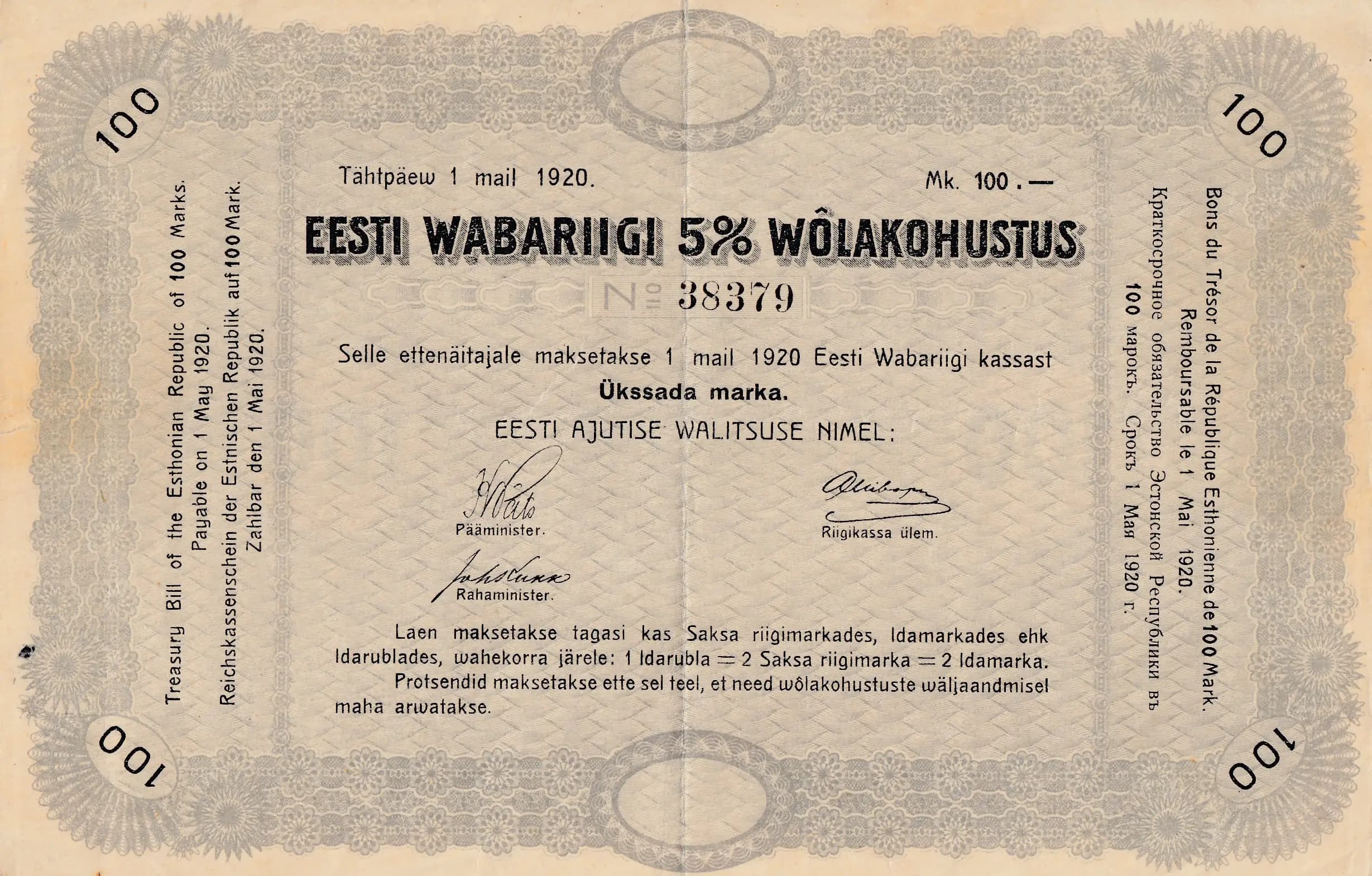
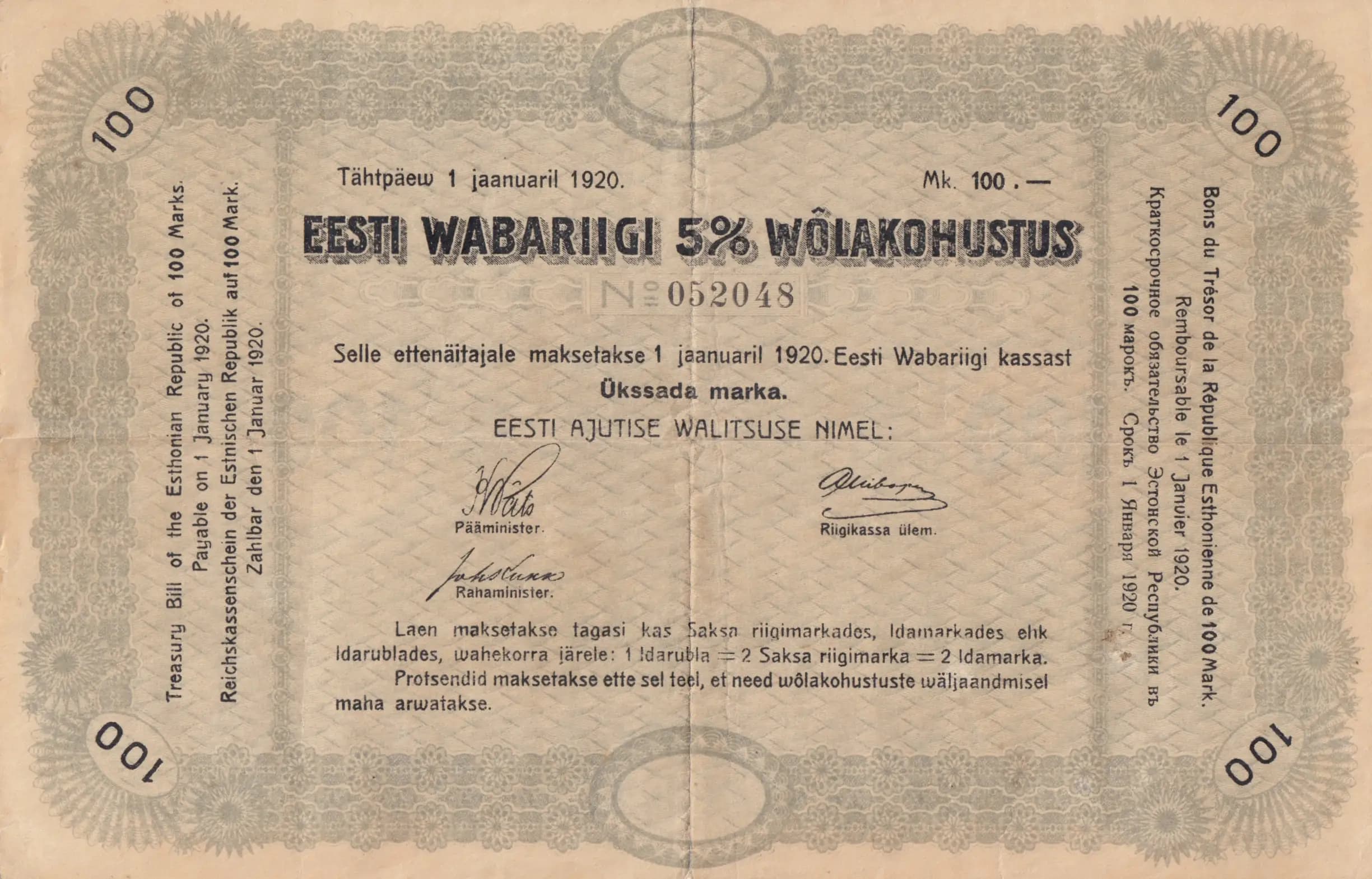
This is an Estonian 100 Marka treasury bill from January 1, 1920, representing the Estonian Republic's early monetary independence. The note displays a monochromatic sepia-brown design with ornate decorative borders and geometric patterns characteristic of early 20th-century European security printing. In VF condition with a central vertical fold and moderate age-related foxing, this note exemplifies the transition-period currency issued during Estonia's provisional government phase.
Common. Market data from realbanknotes.com shows VF-graded specimens regularly selling in the $54.90-$245 range with multiple transactions recorded, and eBay pricing data demonstrates consistent availability across multiple condition grades from $2.95 to $669. The 1920 100 Marka was a regular issue from Estonia's provisional government with substantial print runs typical of treasury bills. The wide availability at modest price points ($15-$185 for typical VF examples) confirms this is a standard, frequently encountered note among collectors of early Estonian currency.
Issued on January 1, 1920, this note represents Estonia's first assertion of monetary sovereignty following independence from the Russian Empire during the collapse of Imperial Russia. The inscription 'EESTI AJUTISE WALITSUSE NIMEL' (In the name of the Estonian Provisional Government) reflects the transitional political status, while the 5% loan obligation designation indicates this functioned as both currency and a state debt instrument during the critical early years of the Estonian Republic.
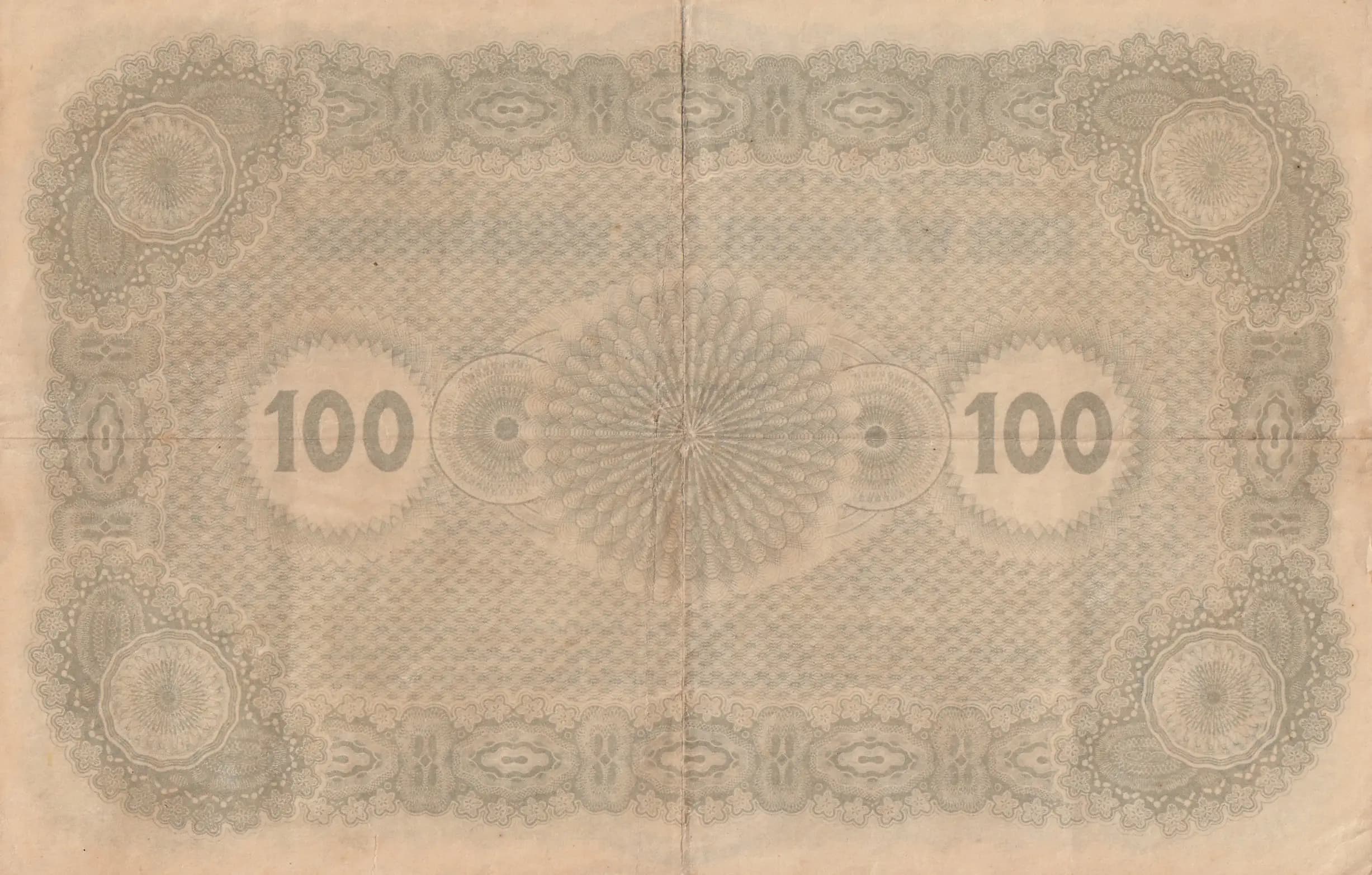
This note features a classical early-20th-century European design approach with no portraits or specific landmarks depicted. Instead, security relies entirely on ornamental design elements: elaborate geometric sunburst/radial patterns dominate the reverse, while the obverse employs intricate interlocking floral and geometric border patterns with circular rosette medallions positioned in all four corners. Two oval seal or emblem areas appear at the top and bottom center of the obverse, likely representing state seals. The design is executed in monochromatic sepia tones, with fine detail work throughout that creates visual complexity intended to deter counterfeiting. The central vertical fold visible on both sides suggests this note experienced standard circulation handling despite its nature as a treasury obligation.
FRONT: 'EESTI WABAARIIGI 5% WÕLAKOHUSTUS' = Estonian Republic 5% Loan Obligation; 'Tâhtpäew 1 jaanuaril 1920' = Date: January 1, 1920; 'Selle ettenäitajale maksetakse 1 jaanuaril 1920. Eesti Wabarigi kassast Ükssada marka' = The bearer of this will be paid on January 1, 1920 from the Estonian Republic treasury One hundred marks; 'EESTI AJUTISE WALITSUSE NIMEL' = In the name of the Estonian Provisional Government; 'Pääminister' = Prime Minister; 'Rahaminister' = Finance Minister; 'Riigikassa üllem' = Head of State Treasury; Repayment terms clause explaining currency conversion rates (1 ruble = 2 German marks = 2 ldamarks); Serial number 'N:o 052048'; Denomination markings '100 Mark', 'Mk. 100—'. BACK: Large denomination numerals '100' on both left and right sides; decorative geometric patterns with no additional textual inscriptions visible.
This note was produced using intaglio printing (engraved and recess printing), the standard security printing method for the era. The fine geometric lines, ornate border details, and the precise execution of the sunburst pattern on the reverse are characteristic of intaglio production. The uniform sepia tone and consistent ink density across both sides suggest professional security printing, likely executed by an established European security printer, though specific printer attribution for Pick P-31 requires additional archival documentation.
The observed specimen bears serial number N:o 052048 and displays the gray-brown coloration noted in the catalog reference as distinct from the yellow-brown variant represented by Pick P-32. The visual analysis confirms this is the standard P-31 gray/sepia variety. The three signatures present (Prime Minister, Finance Minister, and State Treasury Head) are consistent with the issue type, though specific signatory identification would require additional historical research. No overprints or secondary markings are visible on this specimen.