100 krooni 1935 pair
Market Prices
8 salesAbout This Note
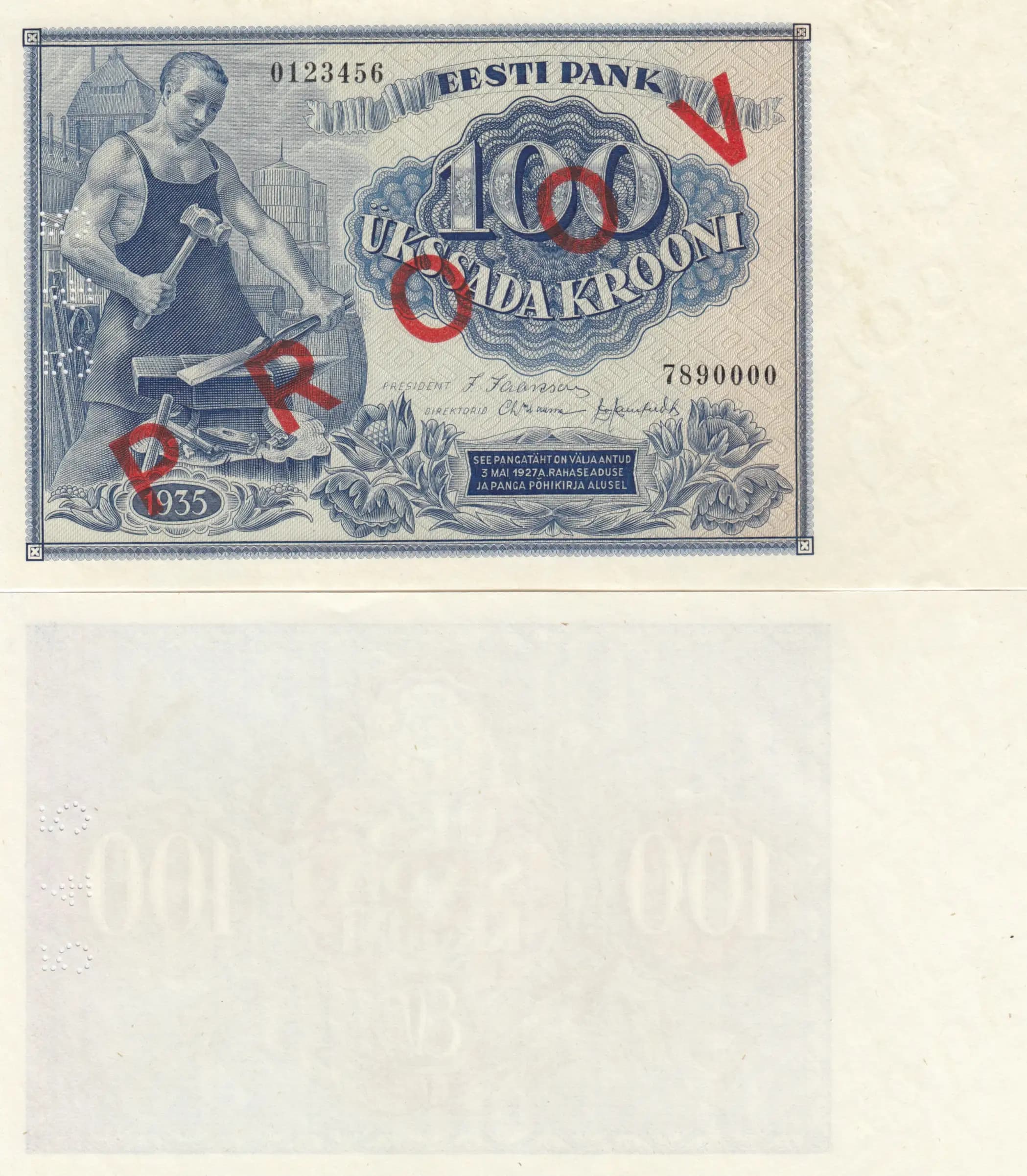
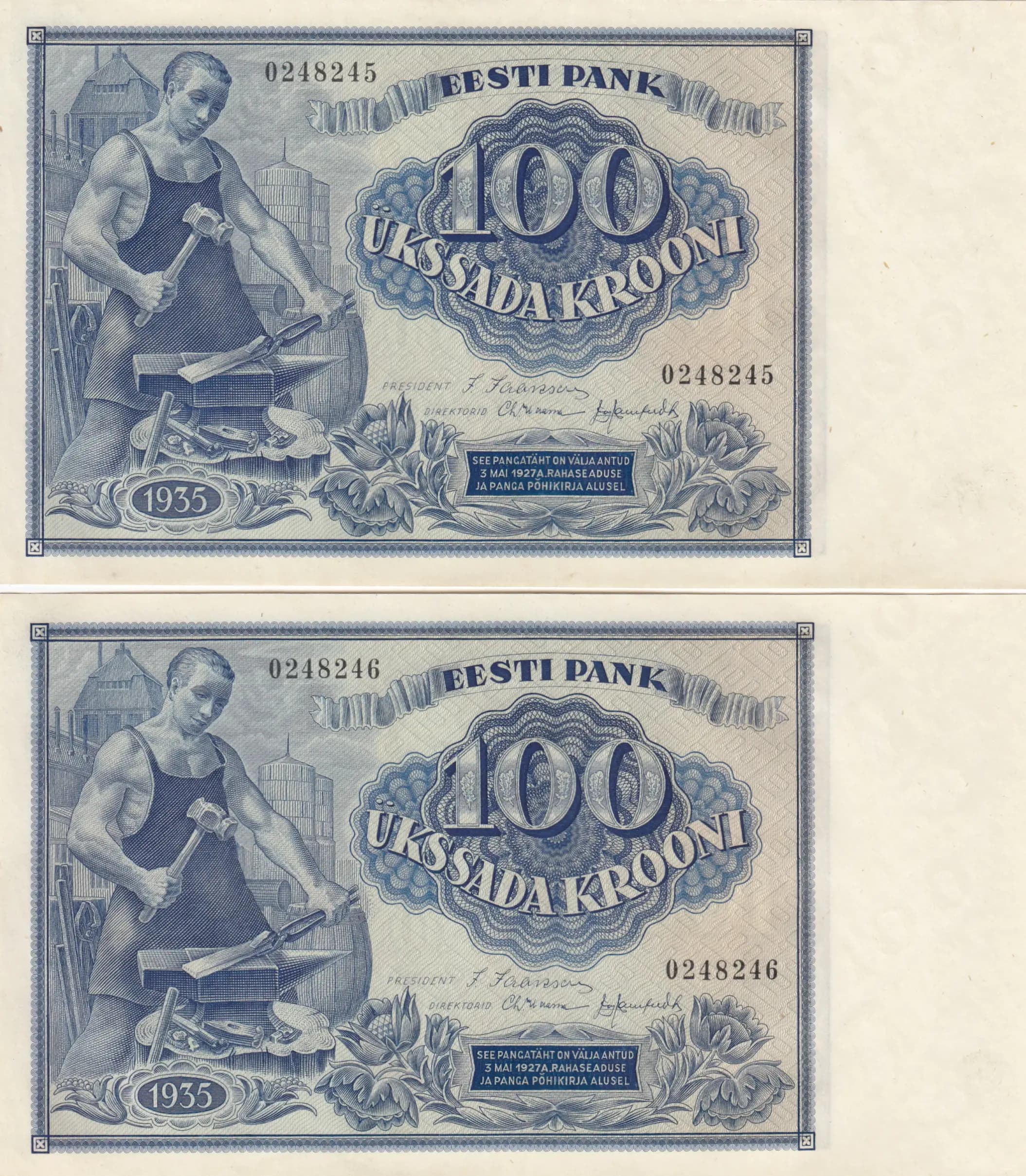
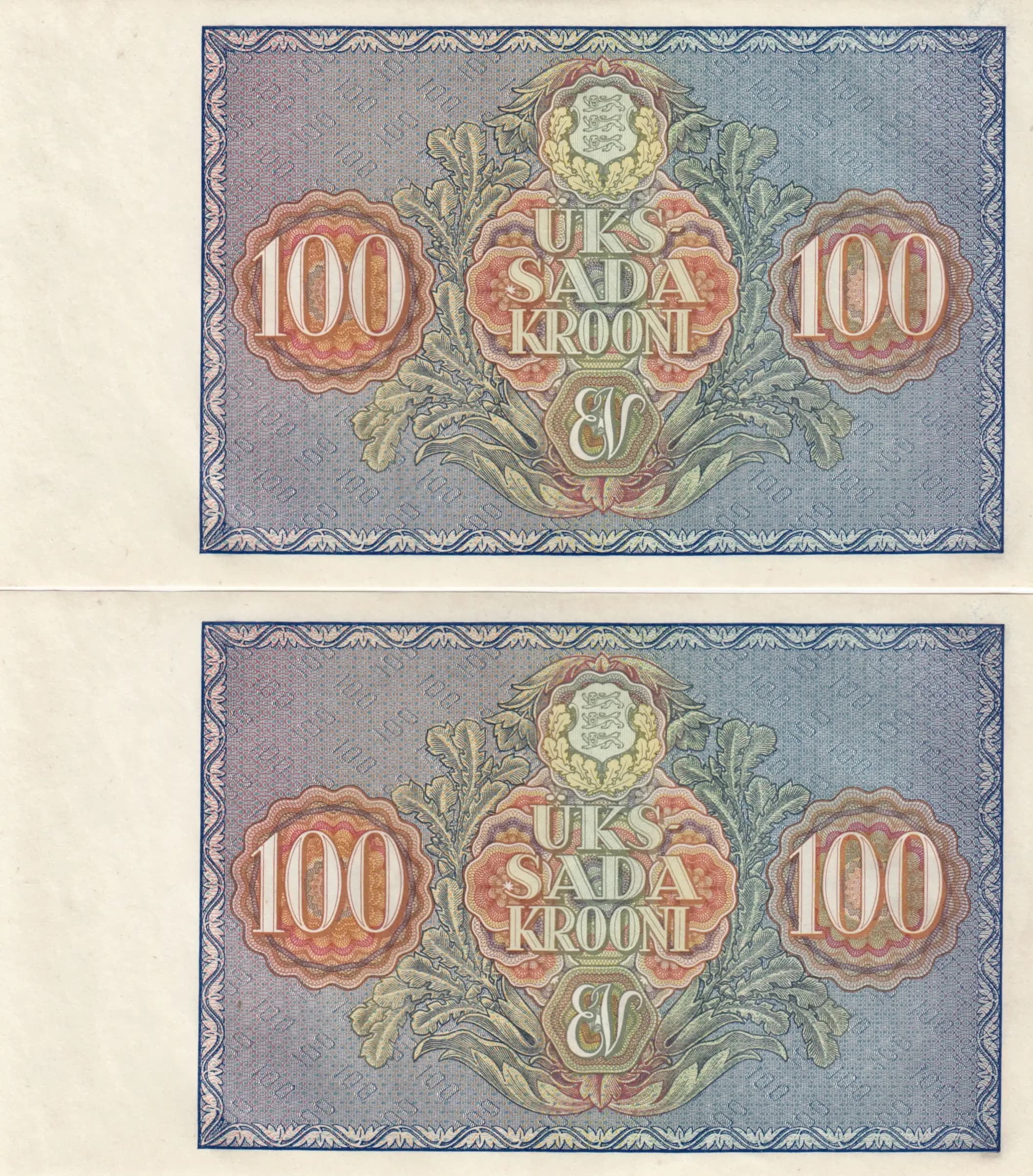
This is a consecutive pair of Estonian 100 krooni notes from 1935, both in uncirculated condition with pristine appearance and no signs of wear or handling. The notes feature a striking blue obverse depicting a classical blacksmith figure at work with anvil and tools, paired with a vibrant multi-colored reverse showcasing the Estonian coat of arms and elaborate ornamental design. These are significant examples of interwar Estonian currency issued during the nation's period of independence, representing important cultural and economic symbolism of the era.
Common. While these are classic interwar Estonian notes with historical interest, the 100 krooni denomination from 1935 was issued in substantial quantities and remains relatively available in numismatic markets. The eBay price data shows typical VF specimens trading in the $36-102 range with UNC catalog values around $300, indicating solid collector demand but not scarcity. The availability of both consecutive serial numbers in UNC condition and regular auction activity confirm this is not a rare issue.
The 100 krooni notes were issued by Eesti Pank (Bank of Estonia) in 1935, during the period of Estonian independence between the two world wars. The imagery celebrates labor and national identity through the prominent blacksmith figure, reflecting Estonia's emphasis on industrial development and craftsmanship during this period. The heraldic lion emblem on the reverse represents Estonian sovereignty and national pride during this formative chapter of the nation's history.
The obverse features a classical allegorical male figure representing the blacksmith or laborer, depicted in tank top/work clothing holding an axe positioned over an anvil—symbolizing productivity and national industry. The figure is set against an architectural background featuring buildings and towers, anchoring the design in an urban/civic context. The central denomination '100' is prominently displayed within an ornate oval medallion. The reverse showcases the heraldic lion emblem of Estonia centered at the top, with elaborate ornamental framing including acanthus leaves, foliate scrollwork, and cornucopia motifs. Two large '100' denominations appear in decorative circular frames flanking a central cartouche containing the denomination text. The overall design employs sophisticated engraved line work and cross-hatching typical of high-security banknote production of the period.
OBVERSE: 'EESTI PANK' (Bank of Estonia); 'UKSADA KROONI' (One Hundred Kroon); '100' (denomination); '1935' (year of issue); 'PRESIDENT' and 'DIREKTOR' (signature titles); Legal text: 'SEE PANGACÄHT ON VÄLJA ANTUD 3. MAI 1927.A RAHASEADUSE JA PANGA PÕHIKIRJA ALUSEL' (This banknote was issued under the Law of Money of May 3, 1927 and the Bank's Charter). REVERSE: 'UKS SADA KROONI' (One Hundred Kroon); '100' (denomination, appears twice in ornate frames).
These notes were produced using traditional intaglio engraving and multi-color lithographic processes characteristic of 1930s European banknote production. The fine line patterns, detailed cross-hatching, ornate scrollwork, and complex overlapping color work visible in the visual analysis are consistent with combined intaglio and lithographic printing techniques. The security features including fine line patterns and decorative complexity were typical of Eesti Pank's contracted security printers during this period.
This lot represents a consecutive pair of notes with serial numbers 0248245 and 0248246, both from the same 1935 printing. PMG recognizes varieties P-66a and P-66s for this Pick number base, though the specific variant classification of these notes would require examination of signature differences or printing characteristics not fully detailed in the visual analysis. The notes appear to be from the same production run based on identical design, color palette, and serial number sequence.