10 penni 1919
Market Prices
About This Note
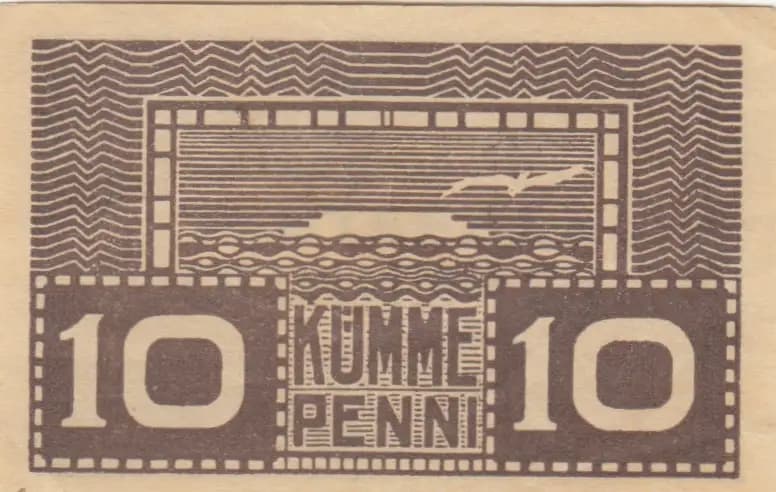
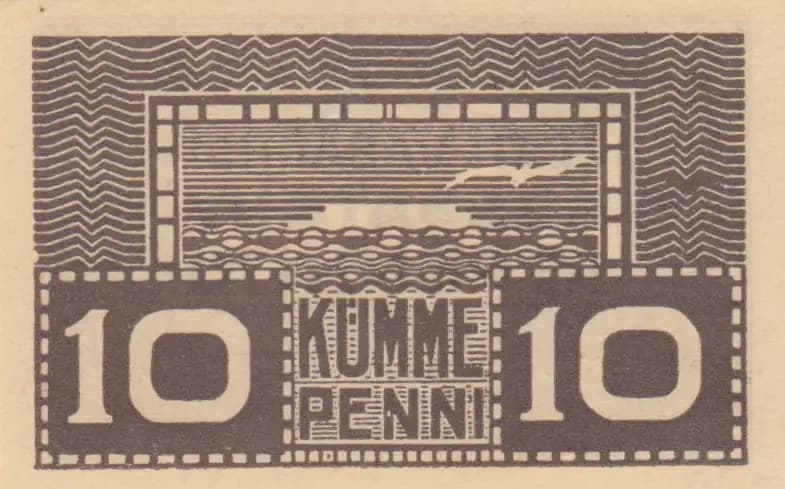
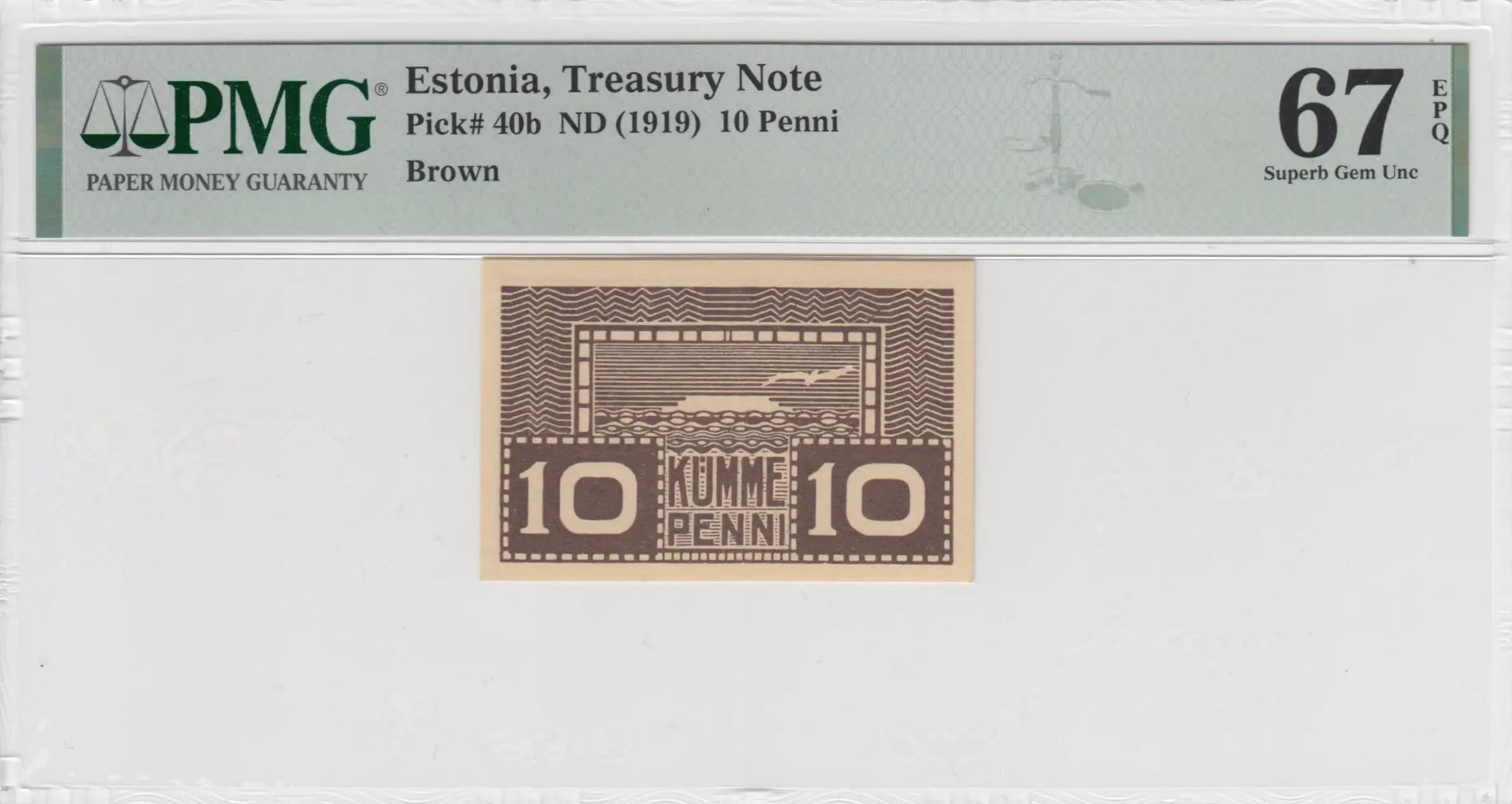
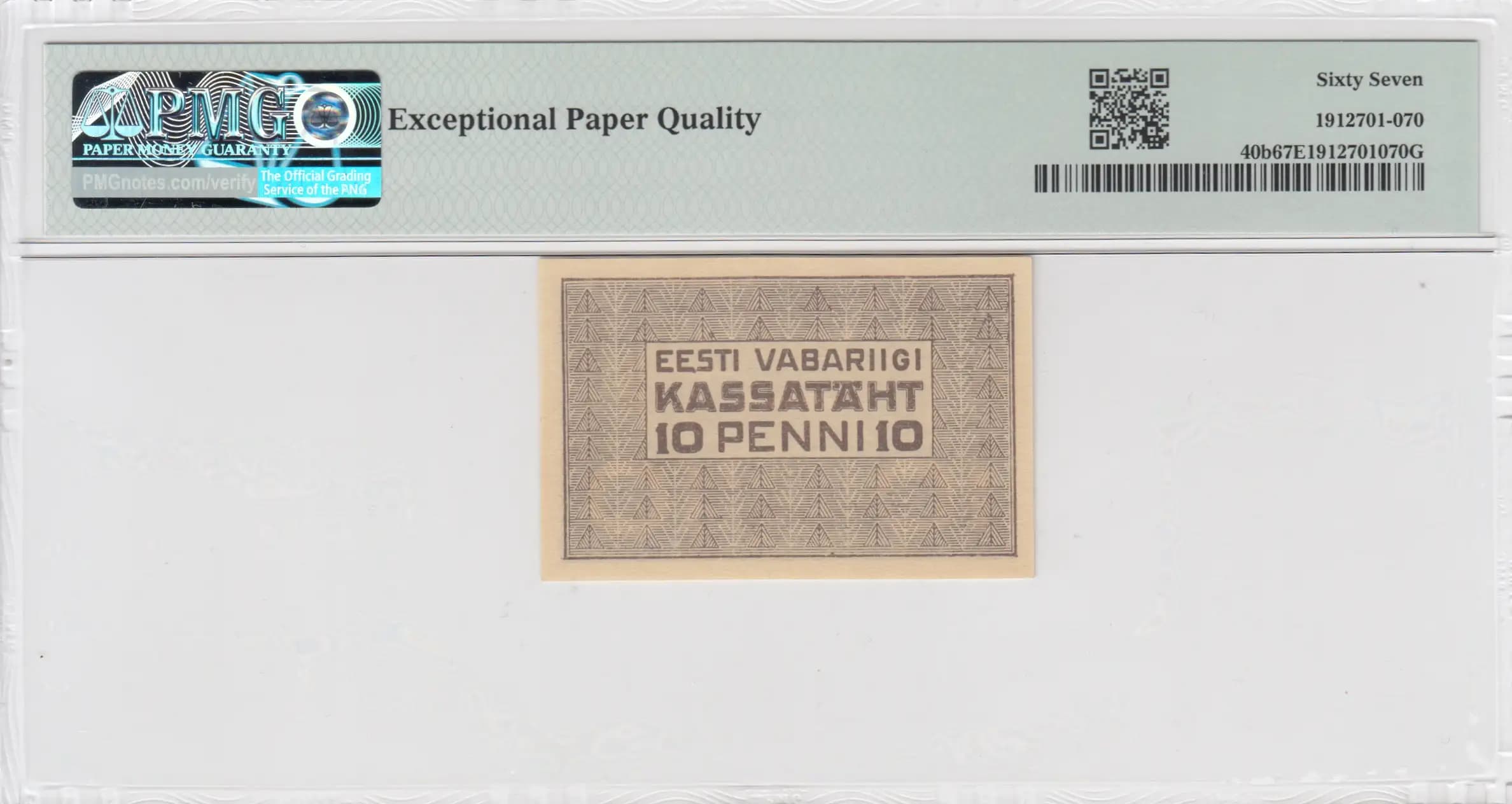
This Estonia 10 Penni Treasury Note from 1919 represents an early emission from the newly independent Estonian Republic. Graded PMG 67 Superb Gem Uncirculated, the note displays exceptional preservation with crisp brown and tan coloring, fine line engraving throughout, and intact security patterns. The architectural fortress imagery on the obverse and geometric triangular pattern on the reverse exemplify the early nationalist design aesthetic of Estonia's first currency issues.
Common. eBay market data shows consistent sales across multiple condition grades ranging from $0.99 to $35.00 USD, with 2016 catalog values peaking at $35 for UNC specimens. This 10 Penni denomination was a standard issue from the 1919 Treasury series and appears frequently in collector markets. Despite the PMG 67 grade being a superior condition example, the underlying note type lacks scarcity factors such as low print runs, early recall, or extreme age that would justify rare classification.
Issued in 1919 following Estonia's declaration of independence from Imperial Russia, this Treasury Note represents the financial infrastructure of the fledgling Estonian Republic. The fortress architectural element depicted on the obverse likely symbolizes Estonian strength and sovereignty, while the formal 'Eesti Vabariigi Kassataht' (Estonian Republic Treasury Note) designation reflects the nation's establishment of independent monetary authority during the post-WWI period of Baltic state formation.
The obverse features a stylized fortress or fortification structure in the upper-center portion, rendered in fine line engraving, surrounded by a double-lined rectangular border with wavy security line patterns. The denomination '10' appears symmetrically on both left and right margins with 'KUMME PENNI' centered below. The reverse displays a repeating triangular geometric micro-pattern throughout the field, providing both aesthetic design and security features. The central text block contains 'EESTI VABARIIGI KASSATAHT' with denomination reinforcement. The color scheme of brown/tan on obverse and light tan/cream on reverse is consistent with early 20th-century Treasury Note printing conventions.
Front side: '10' (denomination), 'KUMME PENNI' (Estonian: 'Ten Penni'). Back side: 'EESTI VABARIIGI' (Estonian: 'Estonian Republic'), 'KASSATAHT' (Estonian: 'Treasury Note'), '10 PENNI 10' (denomination and value), with certification markings '1912701-070' (certificate number) and '40b67E1912701070G' (PMG certification code). Grade notation: '67' (Superb Gem Uncirculated).
Fine line engraving on both sides, employing a detailed geometric and architectural composition typical of classical banknote security printing. The wavy-line border pattern on the obverse and the repeating triangular micro-pattern on the reverse indicate multi-stage engraving plates. While specific printer attribution for this Pick-40 issue is not definitively established in standard references, the quality and technique are consistent with Baltic state currency production of 1919, likely produced by a European security printer contracted by the Estonian Treasury.
Pick-40 represents the standard 1919 Treasury Issue. No major cataloged varieties (signature variants, watermark differences, or overprints) are noted for this denomination. The specimen observed carries certificate number 1912701-070, which is unique to this individual note but does not constitute a recognized cataloged variety.