10 penni 1919
Market Prices
About This Note
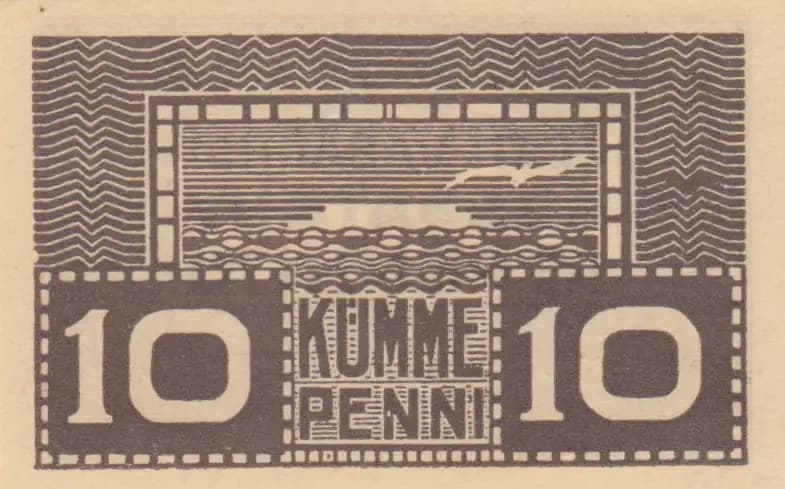
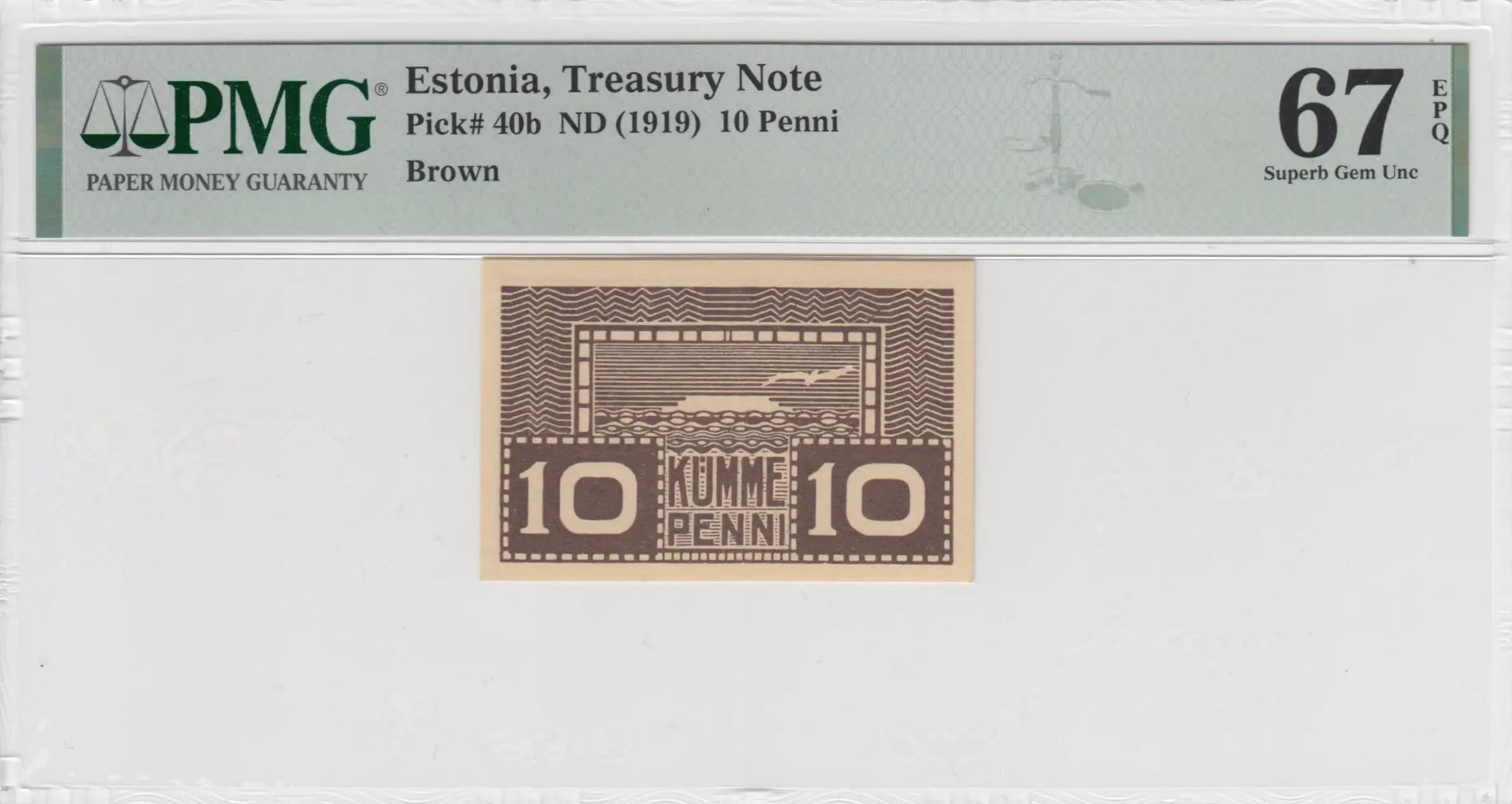
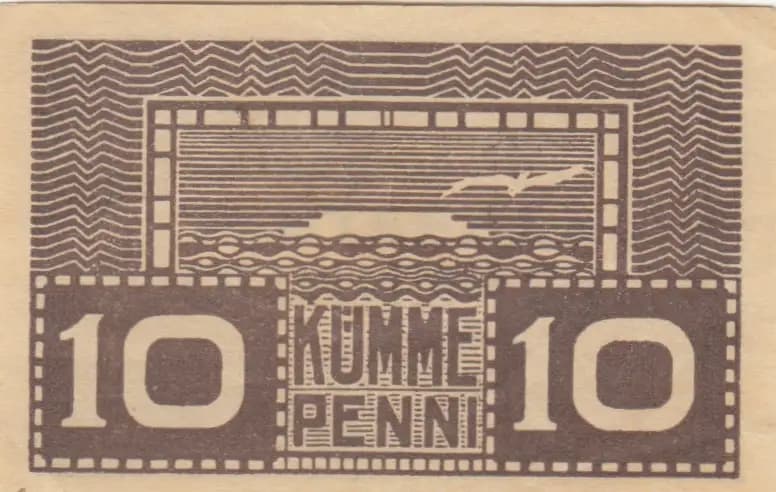
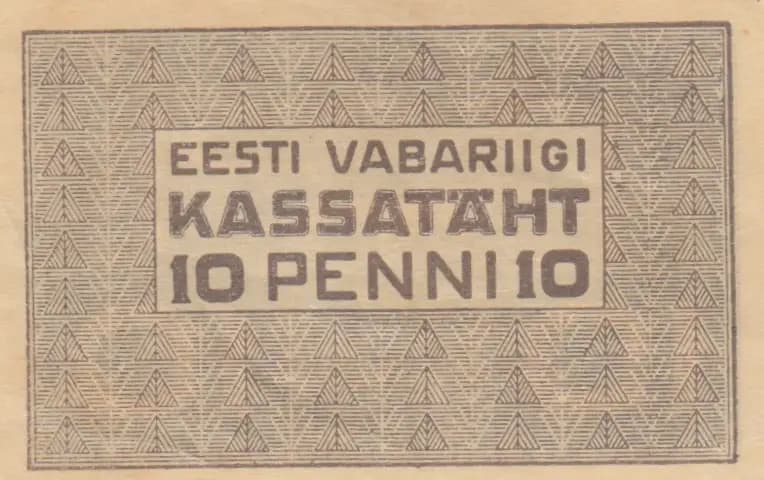
This Estonian 10 Penni note from 1919 is an uncirculated example of an early independence-era issue from the newly formed Estonian Republic. The note features a striking steam locomotive design on the obverse, rendered in fine line shading within geometric borders, with Estonian text 'KUMME PENN' identifying the denomination. The reverse displays a minimalist geometric pattern with a central cartouche bearing 'EESTI VABARIIGI KASSATAHT' (Estonian Republic Banknote). In UNC condition with crisp edges and no visible wear, this note represents a clean example of Estonia's early monetary autonomy.
Common. While this is an early Estonian note with historical significance, eBay market data shows typical UNC examples selling in the $17.95–$35.00 range, with catalog values (2016) placing UNC specimens at $35, indicating steady but not exceptional collector demand. The relative affordability and availability in the secondary market, combined with the note being part of a regular issue from the Treasury of Estonia in 1919, classifies this as a common note despite its historical interest.
Issued in 1919 following Estonia's declaration of independence from Russia, this banknote represents the Treasury of Estonia's first currency issue during a period of state consolidation and nation-building. The locomotive imagery symbolizes modernization and industrial progress, themes that were central to the nationalist narrative of the newly independent Baltic state. The use of Estonian language exclusively on the note—particularly the denominational text 'KUMME PENN' and 'EESTI VABARIIGI' (Estonian Republic)—served as a powerful statement of sovereignty distinct from the Russian Empire it had just left.
The obverse features a steam locomotive depicted in profile, moving left to right, contained within a rectangular frame with fine horizontal line shading that creates depth and detail in the engine rendering. Below the locomotive runs a wavy water pattern, possibly representing the maritime context important to Estonia. Large numeral '10' appears in white on dark background on both the left and right edges. The denomination is split vertically in the center as 'KUMME' / 'PENN'. The entire design is framed by decorative geometric borders: a zigzag/chevron pattern forms the outer border with an inner geometric grid pattern, typical of early 20th-century European banknote design aesthetics. The reverse employs a minimalist approach with an all-over repeating triangular/diamond geometric pattern, providing security through pattern complexity, with a simple central cartouche containing the issuer identification and denomination.
Front side: '10' (numeral denomination, appearing on left and right edges); 'KUMME' (Estonian: 'Ten'); 'PENN' (Estonian: 'Penni'). Back side: 'EESTI VABARIIGI' (Estonian: 'Estonian Republic'); 'KASSATAHT' (Estonian: 'Banknote' or 'Cash voucher'); '10 PENNI 10' (denomination repeated). The inscription layout reinforces the denomination through both numeral and word form in Estonian.
Intaglio printing (copperplate engraving), evidenced by the fine line shading visible in the locomotive rendering, the sharp geometric precision of the border patterns, and the crisp numeral and text impressions characteristic of the period. The repeating geometric pattern on the reverse is typical of security printing from this era, designed to prevent counterfeiting through pattern complexity. The printer for this specific issue is not identified in the available documentation.
No specific varieties (signatures, date variants, or serial number prefixes) are documented in the visual analysis or catalog data provided for Pick P-40. This appears to be a standard issue from the 1919 series. Further variety documentation would require examination of serial number ranges, printer signatures, or overprint variations not evident from the images provided.