10 penni 1919
“error print”
Market Prices
About This Note
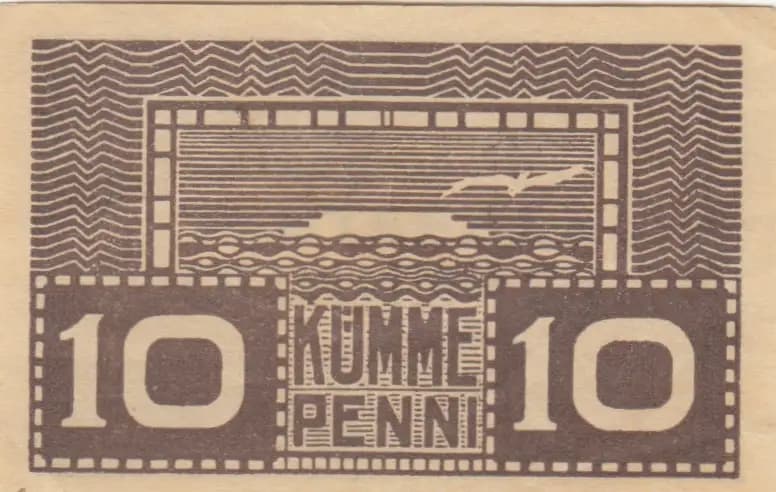
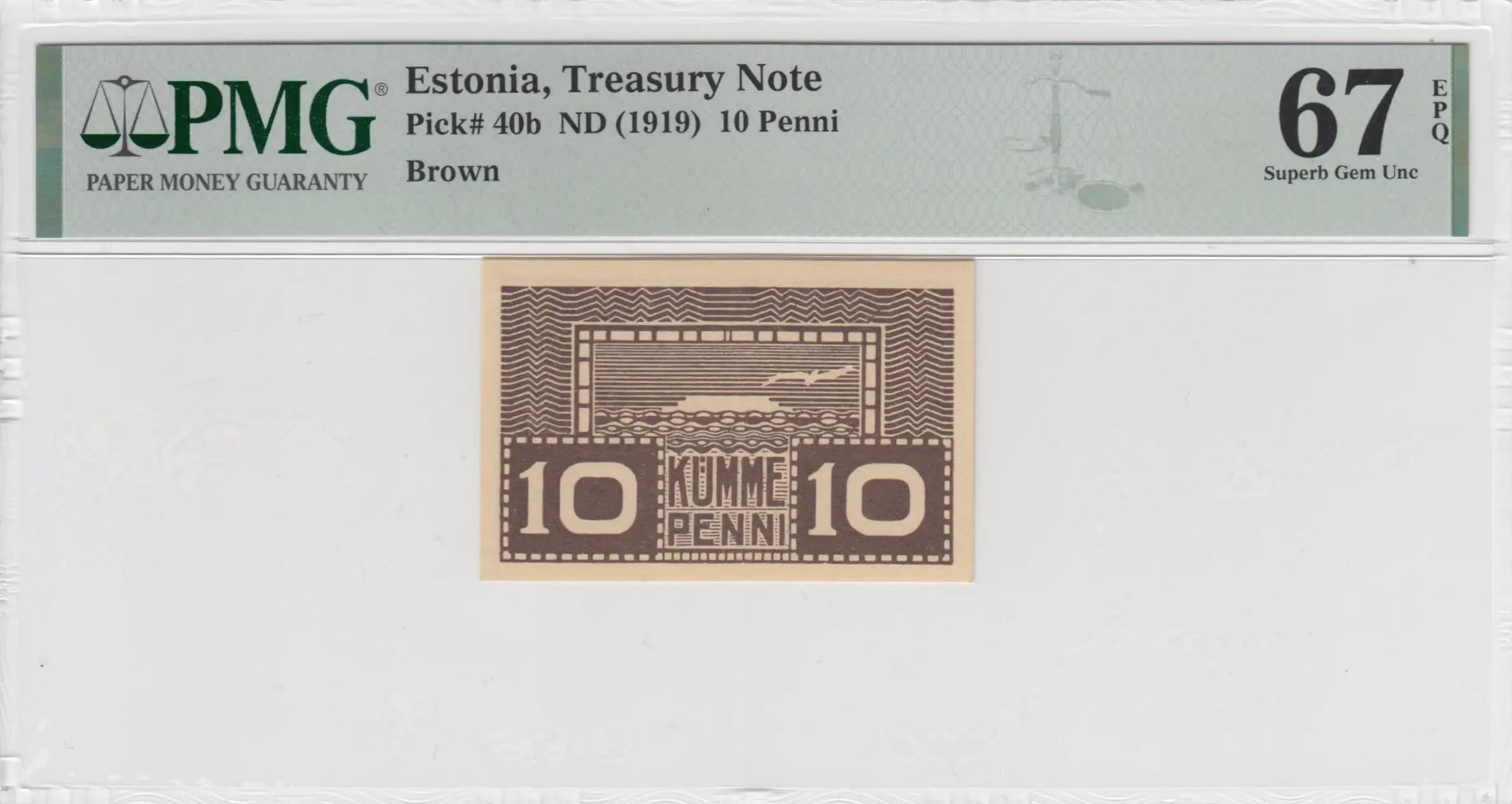
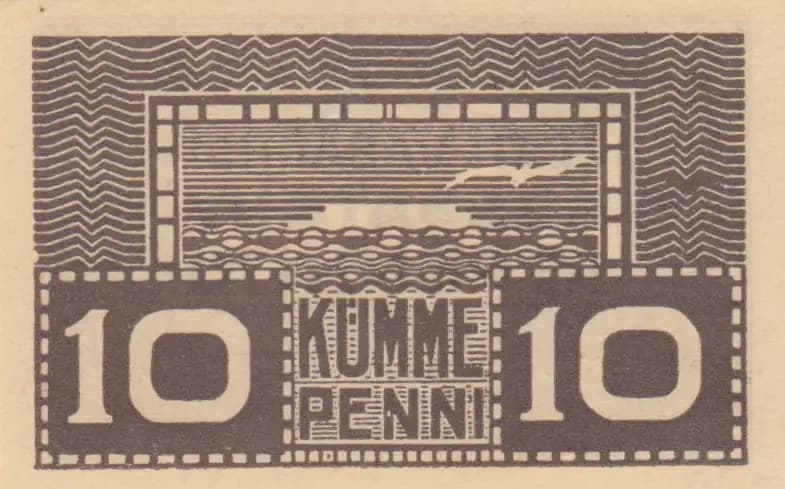
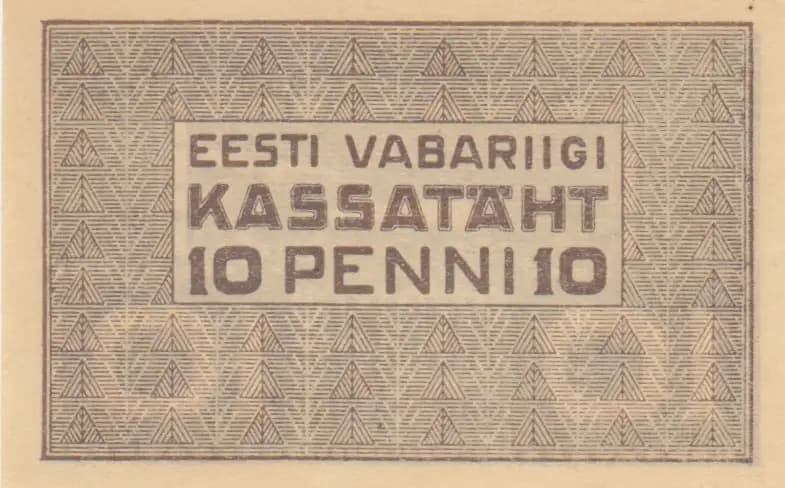
This 10 penni note from Estonia's Treasury (1919) is presented in uncirculated condition with crisp, clear printing throughout. The note features a distinctive horizontal design with a steamship or locomotive motif in the upper portion, flanked by large denomination numerals in dark sections, and is notable for being catalogued as an error print. The reverse displays the characteristic triangular pattern security background with central text panel identifying it as an 'EESTI VABAARIIGI KASSATÄHT' (Estonian Republic Treasury note), representing an important early monetary issue of the newly independent Estonian state.
Common. The 10 penni denomination from Estonia's 1919 Treasury note series was issued in substantial quantities to serve everyday transactions in the new nation's economy. No evidence of limited print runs, early recall, or extraordinary scarcity is suggested by the catalog data. The notation of an 'error print' does not inherently render the note rare—error varieties within common series remain common unless the erroneous printing run itself was small, which is not indicated here.
Issued in 1919 during Estonia's first year of independence following the Russian Revolution and World War I, this Treasury note represents the young nation's early efforts to establish its own currency system before the adoption of the kroon. The steamship or locomotive depicted on the obverse symbolizes Estonia's industrial capabilities and commercial aspirations during this formative period. The use of Estonian language exclusively on the reverse ('EESTI VABAARIIGI KASSATÄHT') underscores the nationalist assertion of sovereignty and cultural identity distinct from prior Russian Imperial rule.
The obverse features a horizontally-oriented composition with a steamship or railway locomotive occupying the upper-central area, symbolizing Estonia's transportation and industrial infrastructure. Large denomination numerals '10' appear prominently in dark rectangular sections on both the left and right margins. The design is framed by decorative wavy borders and geometric rectangular patterns, with fine dotted line frames providing additional visual structure. The reverse presents a dense, repeating triangular pattern background serving as a security feature, with a central rectangular text panel containing the issuer identification and denomination information in Estonian. The color palette of dark brown/gray, cream/beige, and black on a cream paper base is consistent with early 20th-century intaglio printing aesthetics.
Front side: '10' (denomination in large numerals, left and right); 'KUMM' (text element, partially legible or stylized); 'PENNI' (currency unit). Back side: 'EESTI VABAARIIGI' (Estonian Republic); 'KASSATÄHT' (Treasury note/Cashier's note); '10 PENNI' (denomination); '10' (numeric denomination).
Intaglio engraving (line engraving), evidenced by the fine line patterns, geometric security background designs, and the precision of the dotted-line borders visible throughout both sides. The depth and clarity of the impressions, particularly in the locomotive/steamship image and the triangular pattern background, are characteristic of high-quality steel-die engraving work typical of Treasury note production in this era. No specific printer attribution is confirmed from the catalog data, but Estonian Treasury notes of this period were often produced by established security printers in Northern Europe.
This note is specifically noted in the collector data as an 'error print' variety of Pick P-40. The visual analysis does not reveal obvious errors (such as inverted designs, missing colors, or dramatic misprints) in the images provided; the error classification may pertain to subtle printing anomalies, sequential numbering issues, or other technical variants documented in specialized Estonian numismatic catalogs. Further reference to detailed Pick or Estonian numismatic literature would be required to specify the exact nature of the error and its distinguishing characteristics.