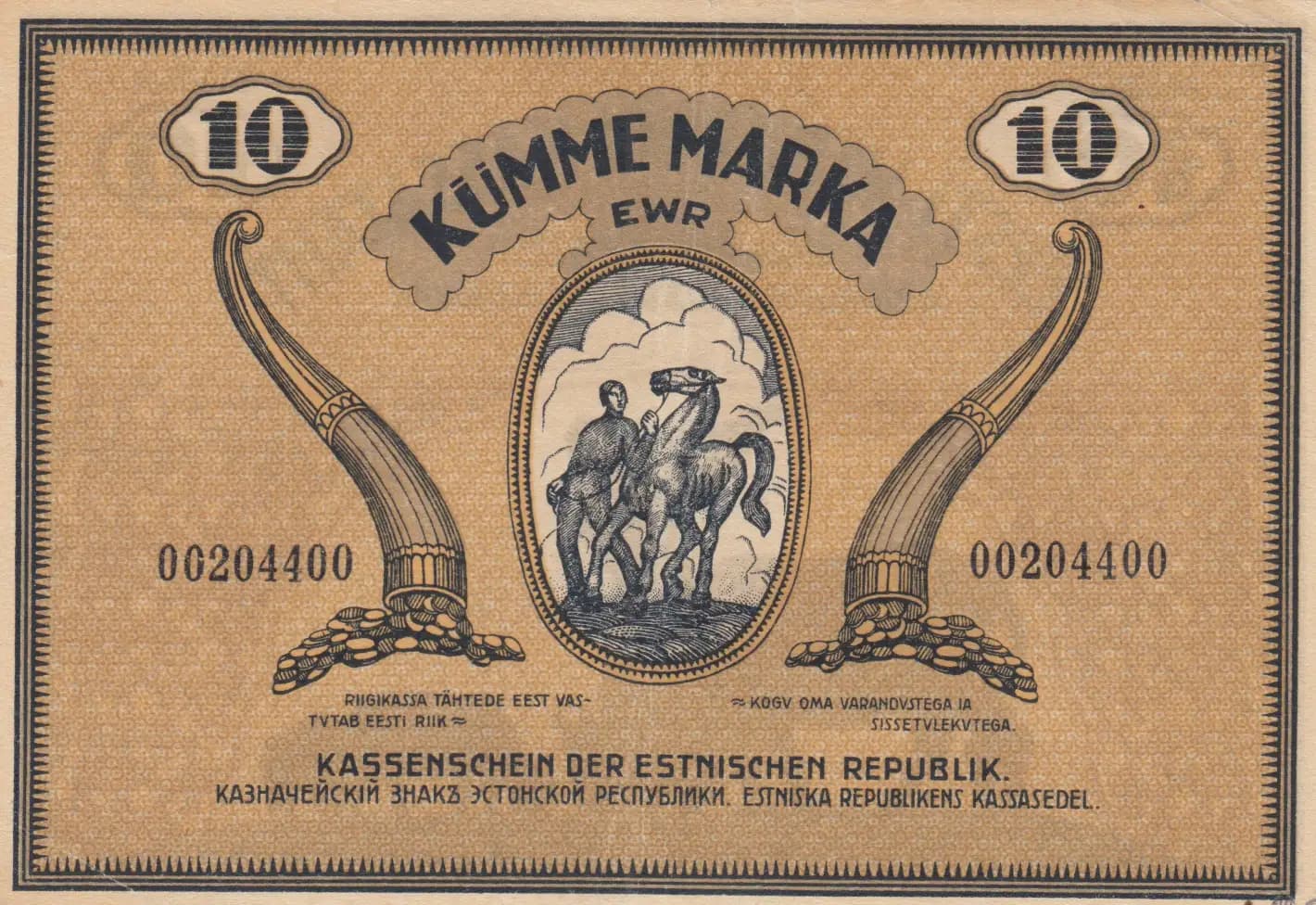
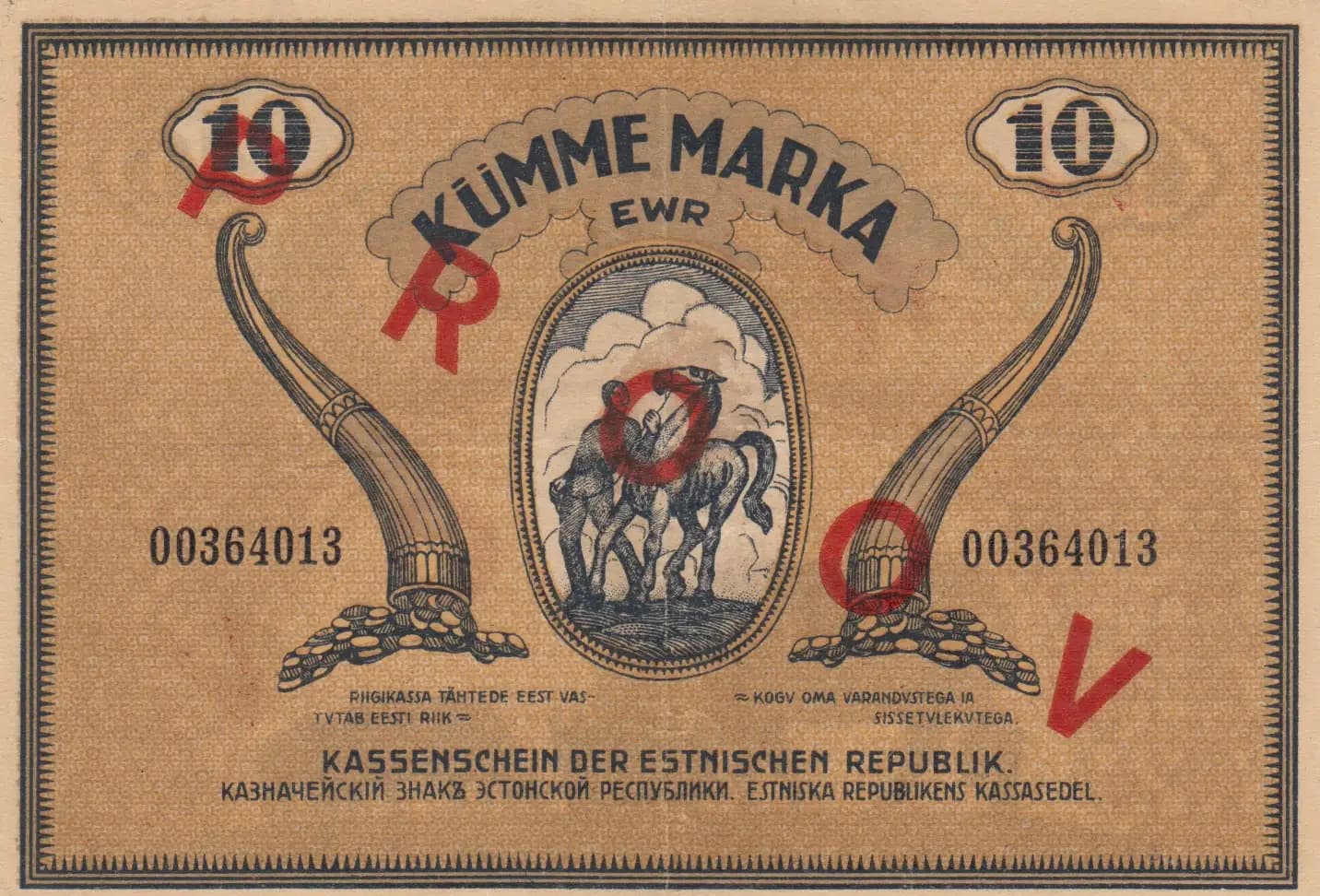
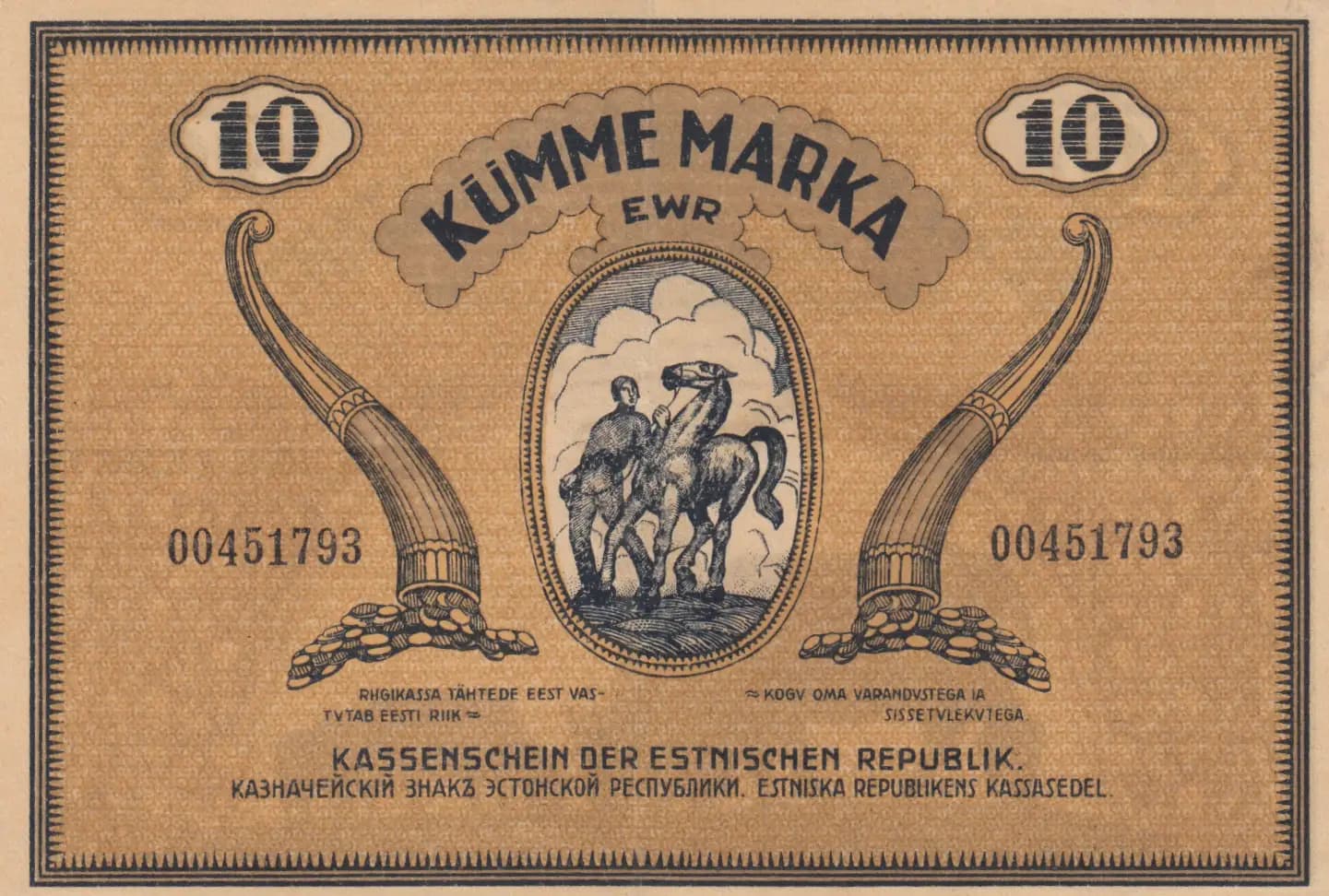
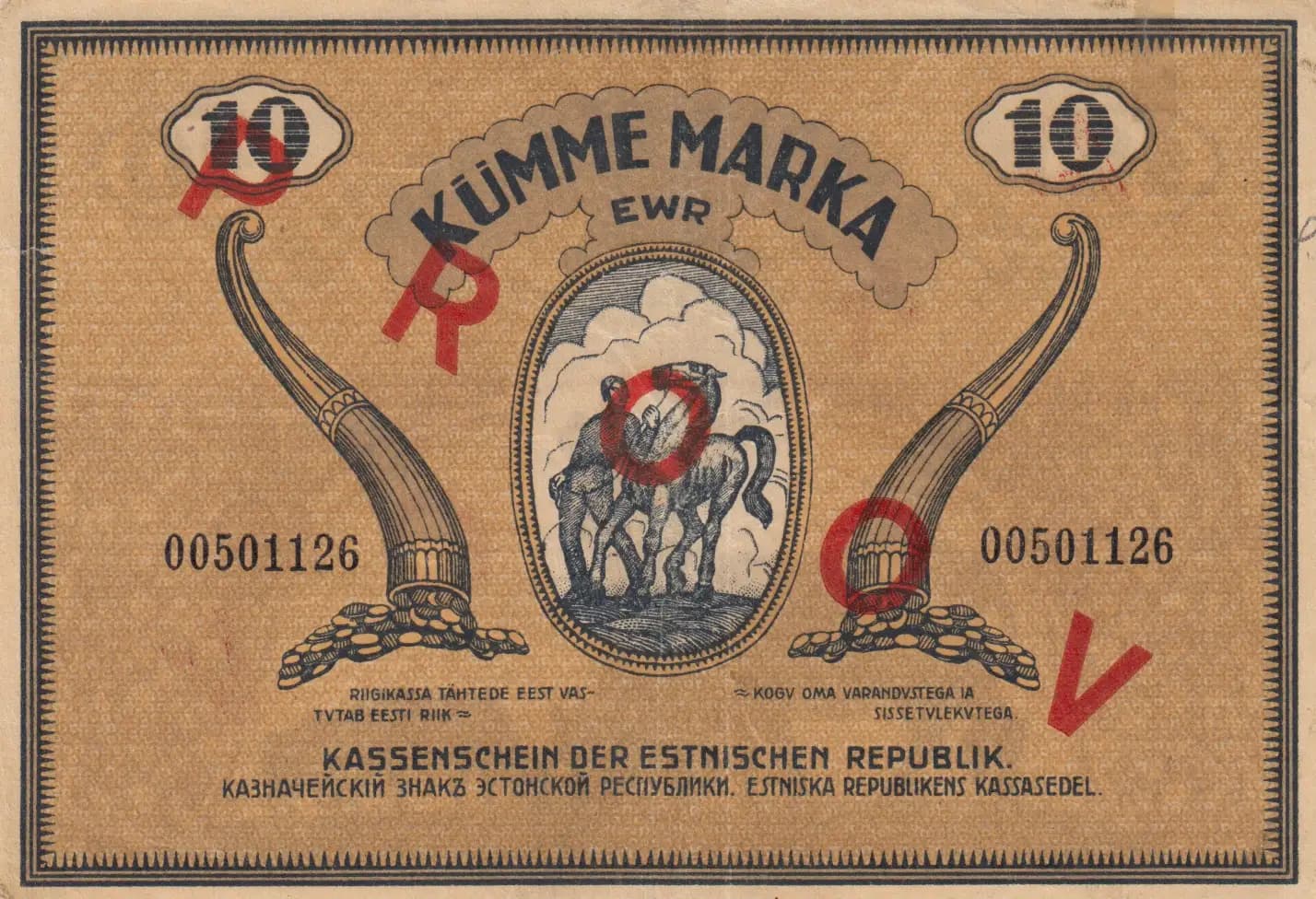
10 marka 1919 specimen
Market Prices
About This Note
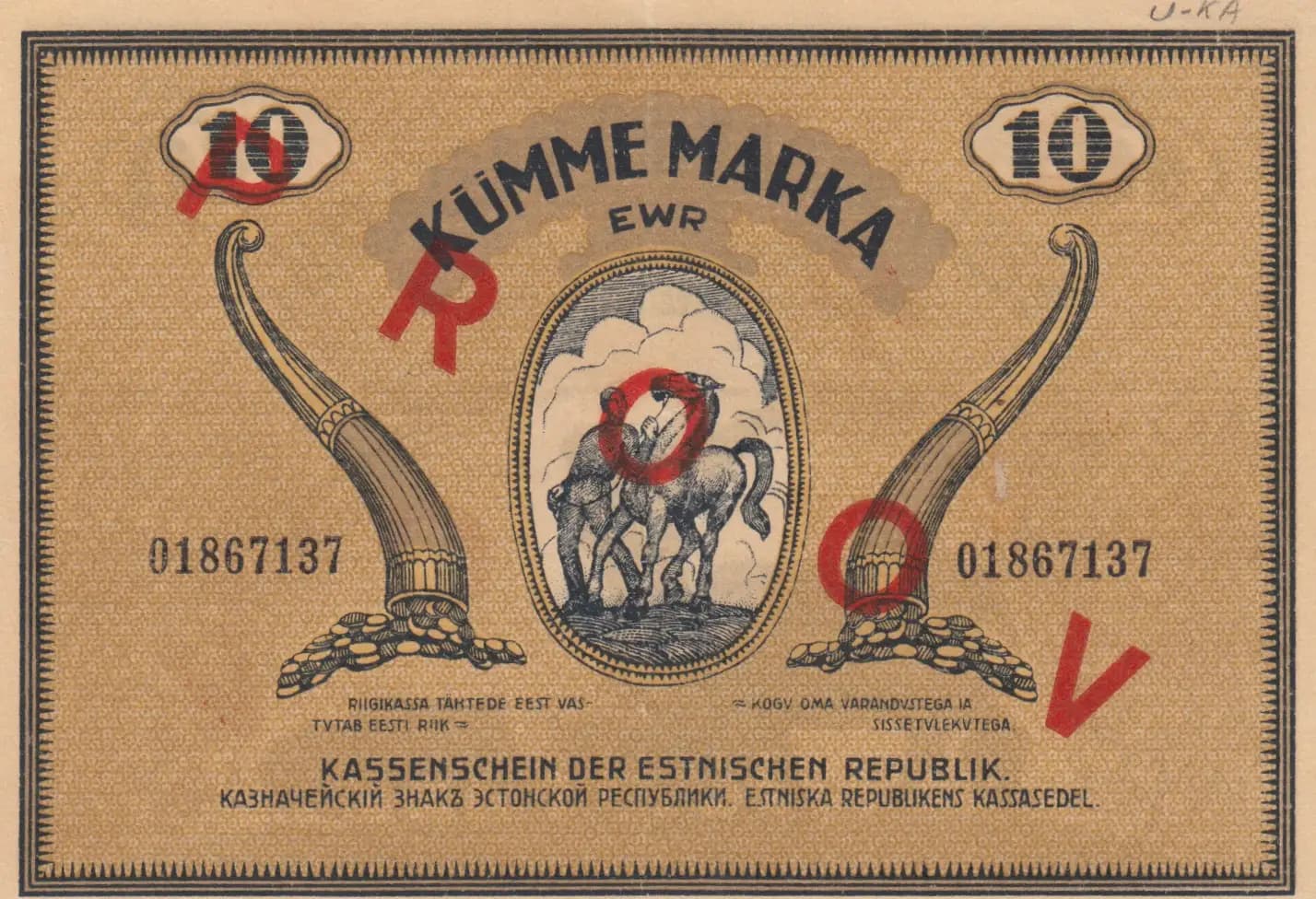
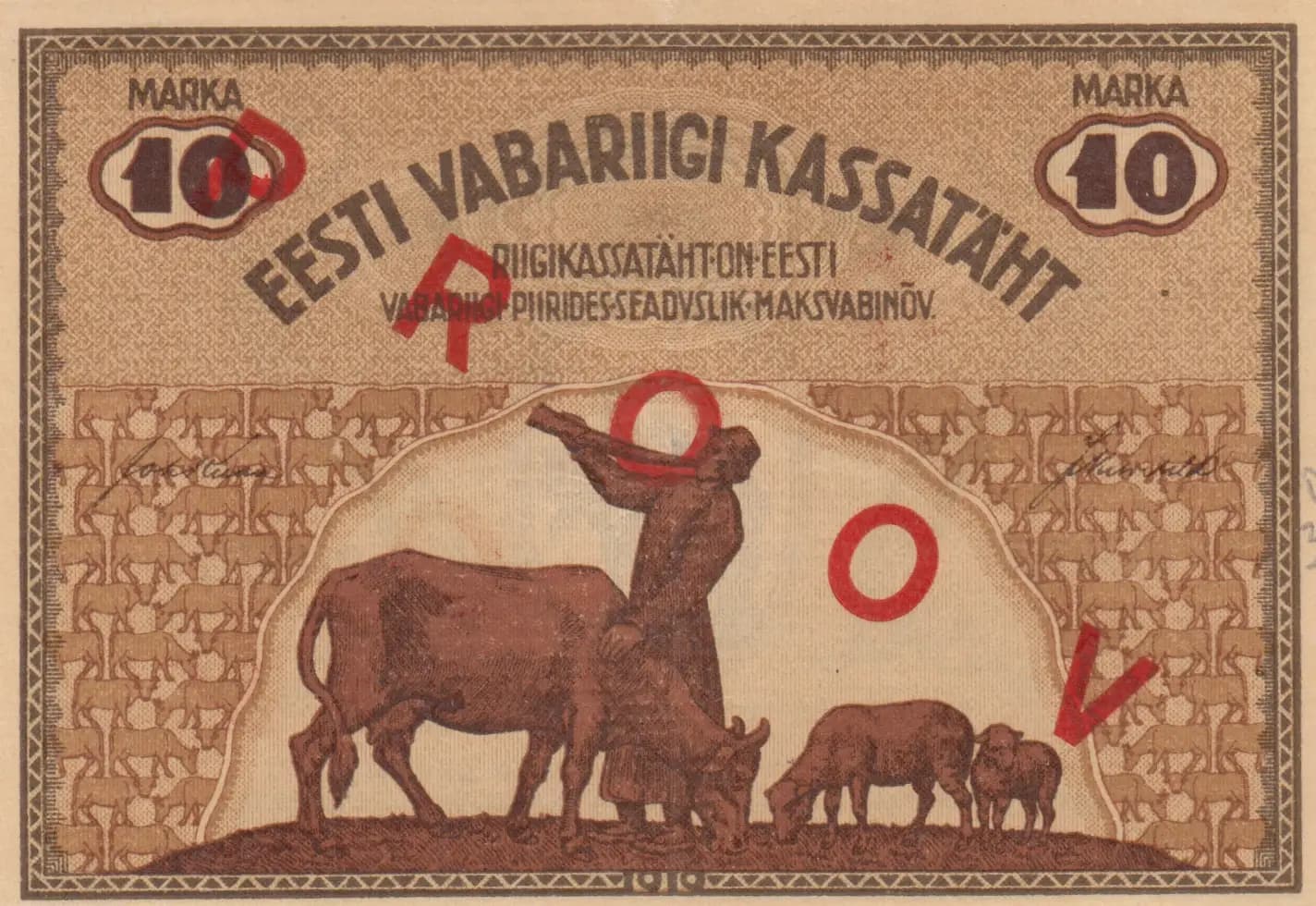
This is an EF-graded Estonian 10 Marka treasury note from 1919, issued during the nation's early independence period. The note features striking pastoral imagery on both sides—a goat with distinctive red markings on the obverse and a dramatic scene of a figure standing on a cow's back holding a red circular object on the reverse—rendered in tan, brown, and red inks with fine ornamental borders. As a specimen note (P-46ds), this example remains in excellent condition with vibrant colors and no visible wear, making it a particularly desirable example of early Estonian currency.
Common. Secondary market data from eBay shows this note trading regularly across a wide price range ($45–$275), with most examples in VF-XF condition selling between $80–$125, indicating consistent availability. The 2016 catalog value of $80 for VF and $120 for UNC supports this assessment. As a regular issue from an early but established state treasury with substantial circulation, this variety should be considered common in the collector market, though the EF specimen designation may command a slight premium.
This note was issued by the Treasury of Estonia (Eesti Vabariigi Kassatahht) in 1919, during the nation's first year of independence following the collapse of the Russian Empire and Estonian declaration of sovereignty. The pastoral and agricultural imagery—featuring livestock, horns of plenty, and rural labor—reflects the newly independent republic's emphasis on national identity and its agrarian economy during the transition from Imperial Russian rule to a sovereign nation-state.
The obverse features an ornate oval vignette depicting a goat with a distinctive red cloth or marking on its head, shown in profile facing left against a clouded background, flanked by two curved horns or tusks with rope wrapping and decorative bases. The reverse displays a more complex pastoral scene with a brown cow and calf in profile, upon which stands a human figure holding a red circular object, set against a repeating geometric pattern background. Both sides are framed by ornamental borders with red numeral denominations ('10') positioned in the corners. The note employs a tan/beige base with black line work and red accent elements throughout.
Front side: 'KUMMEMARKA' (Ten Mark); 'RIIGIKASSA TAHTEDE EEST VASI TYTAB EESTI RIIK' (State Treasury Note of the Estonian Republic); 'KOGU OMA VARANDVITEGA JA SISSETVLEGUVTEGA' (With all its property and resources); 'KASSENSCHEIN DER ESTNISCHEN REPUBLIK' (Treasury Note of the Estonian Republic - German); 'КАЗНАЧЕЙСКИЙ ЗНАК ЭСТОНСКОЙ РЕСПУБЛИКИ. ESTNIKA REPUBLIKENS KASSASEDEL' (Treasury Note of the Estonian Republic - Russian/Estonian); serial number '01867137' and denomination '10'. Back side: 'MARKA' (Mark); '10' (denomination); 'EESTI VABAARIIGI KASSATAHHT' (Estonian Free Republic Treasury Note); 'RIIGIKASSATAHTON-EESTI' (State Treasury Note - Estonia); 'VARA PIIRIDESEADVULIK-MAKSVABINOV' (Property-limited payment).
This note was produced using intaglio (engraved) printing, evidenced by the fine detail in the portraits, the precision of the line borders, and the depth of the vignette work visible in the pastoral scenes. The multiple color printing (tan, black, and red) suggests a multi-pass intaglio process. The printer was likely the state printing facility or an established security printer contracted by the Estonian Treasury, typical for early Estonian issues of this period.
This note is cataloged as P-46ds (specimen variant) according to the Pick designation provided. PMG has recorded multiple watermark varieties for the base P-46 number: P-46b (light vertical lines watermark), P-46c (light horizontal lines watermark), and P-46d (light vertical lines watermark). The visual analysis notes a light horizontal line watermark pattern, suggesting this specimen may correspond to the P-46c variety. Serial number 01867137 and the absence of any overprints or date variants indicate this is from the standard 1919 printing run.