10 marka 1919 specimen
Market Prices
About This Note
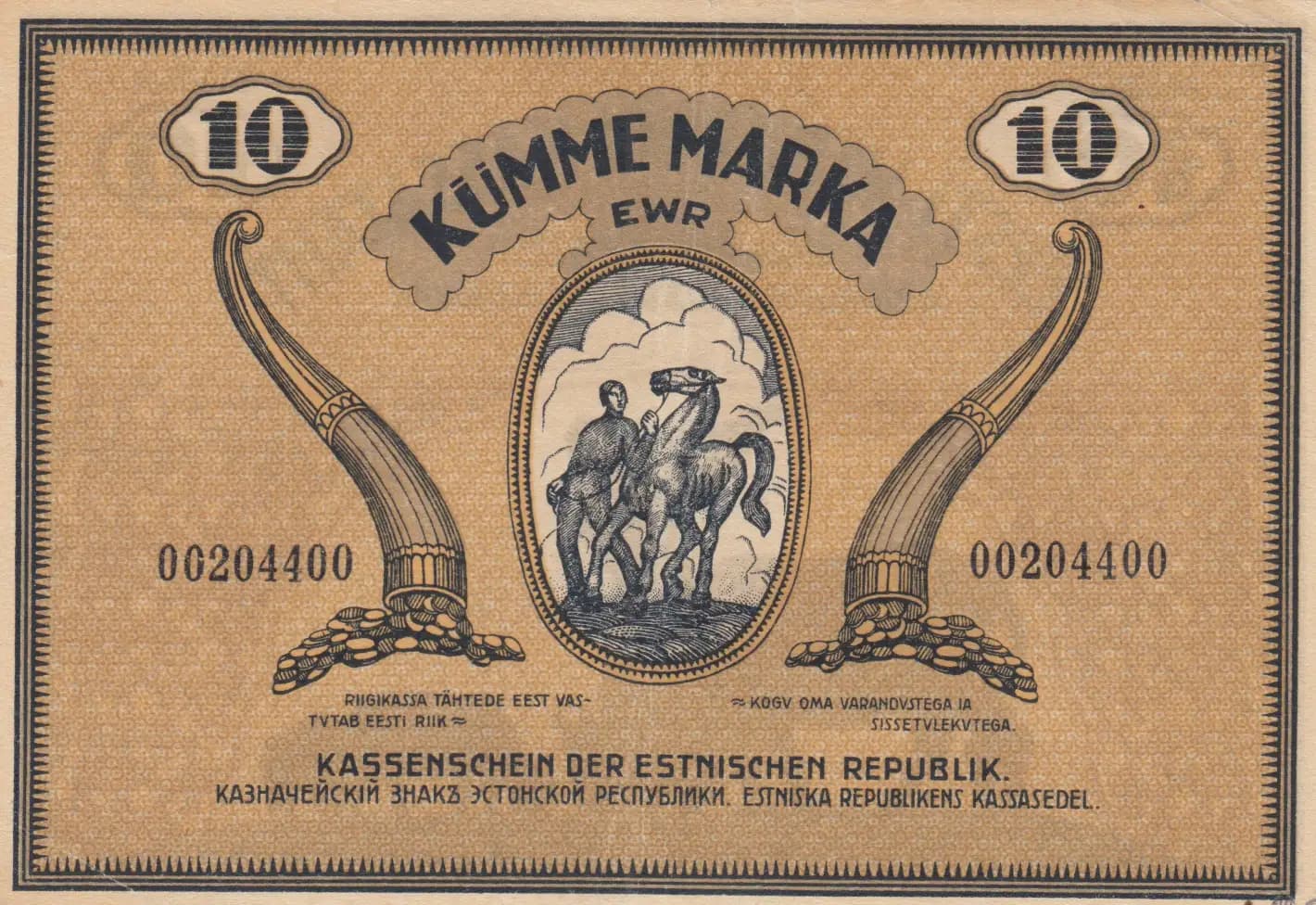
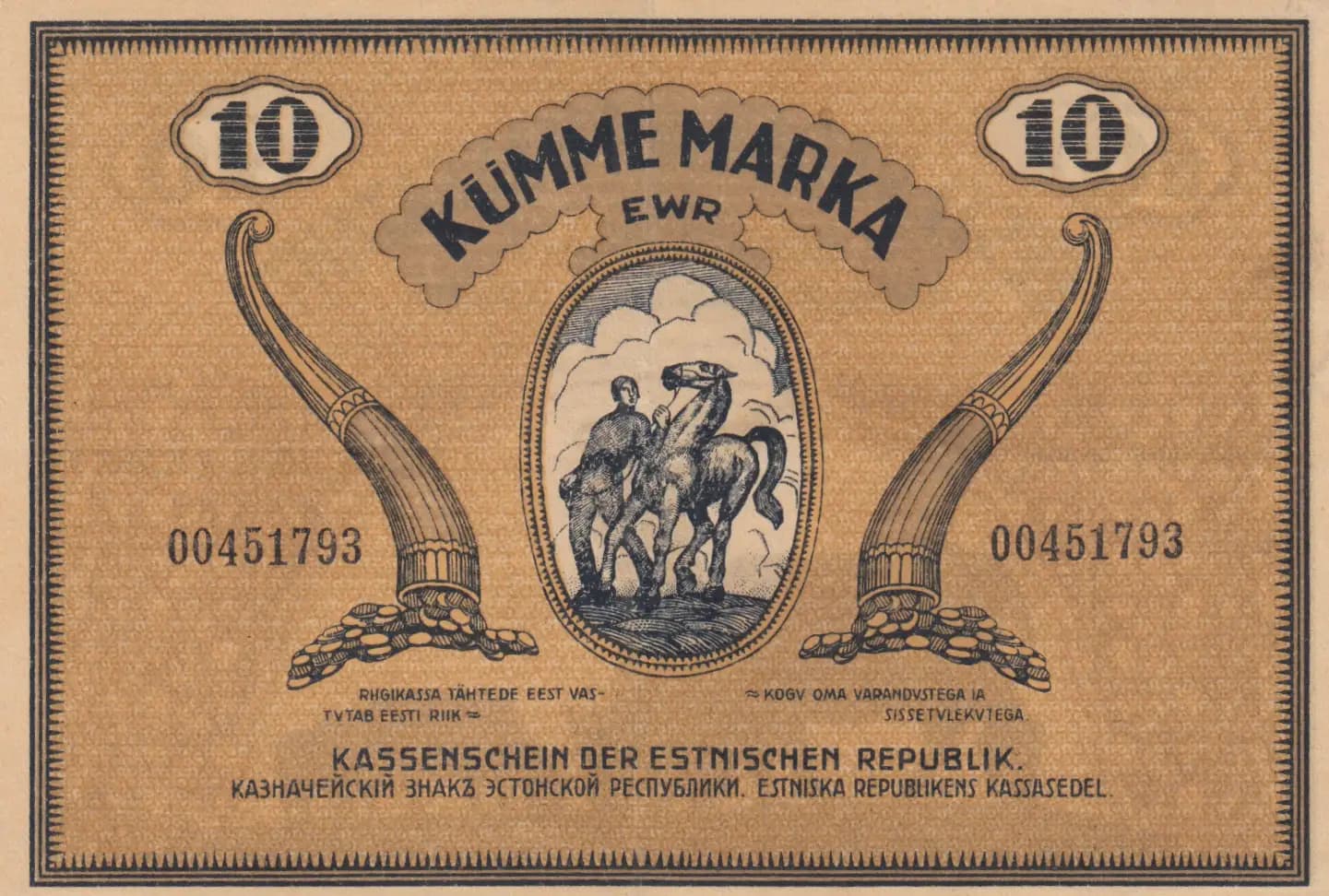
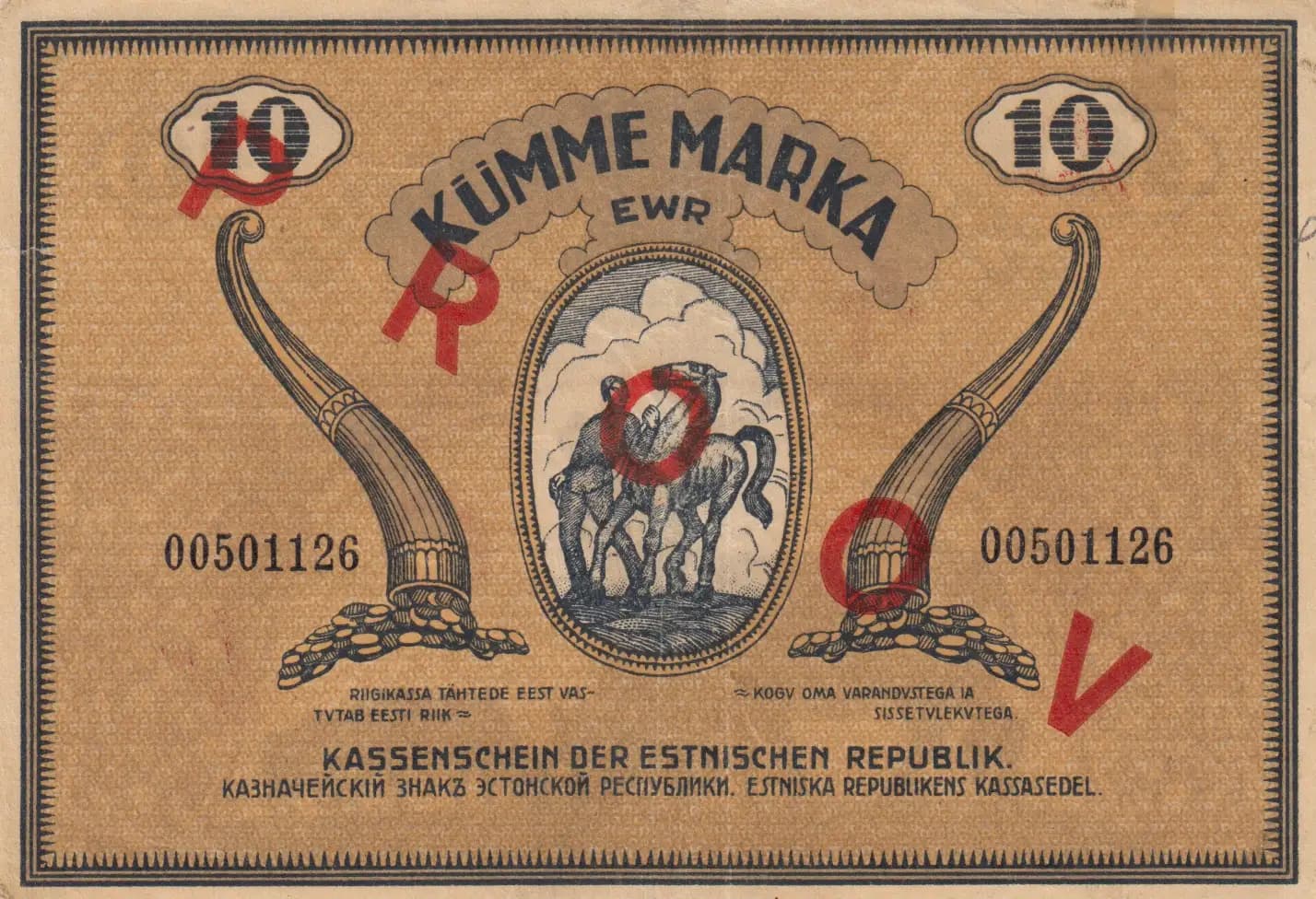
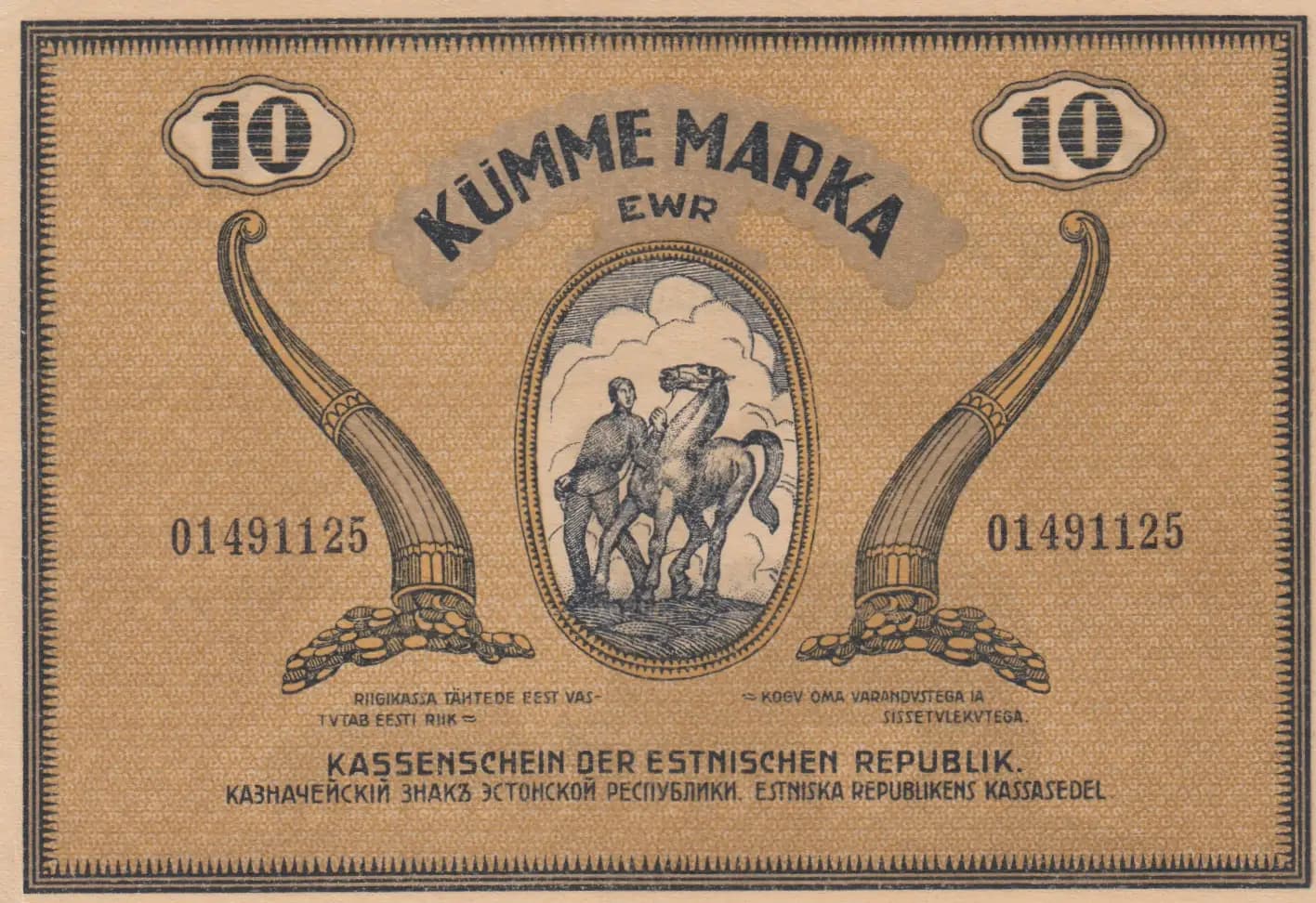
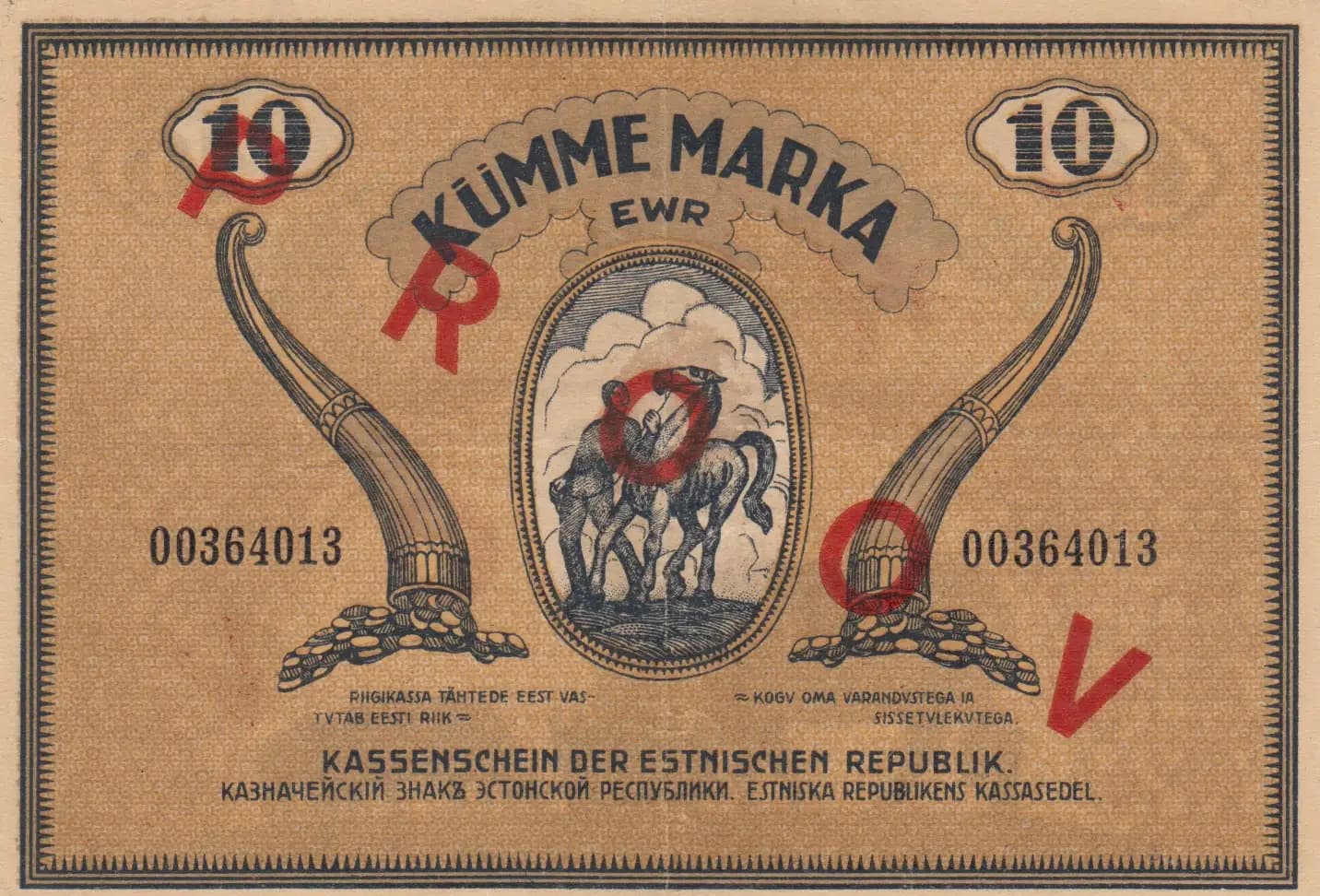
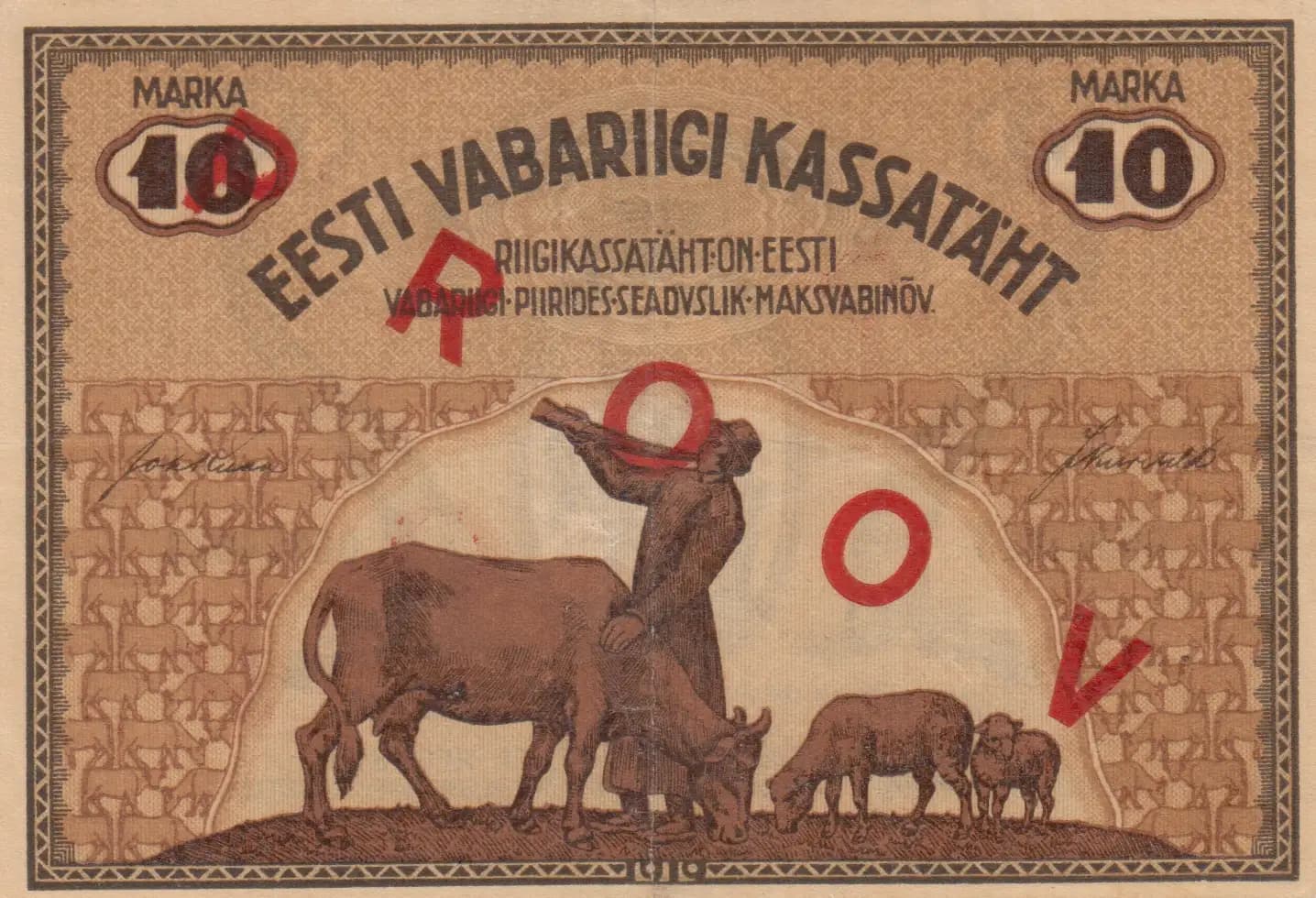
This 1919 Estonian 10 Marka treasury note presents a visually striking design featuring pastoral imagery central to Estonia's agrarian economy during its early independence period. The obverse depicts a figure in traditional red headwear within a cloud-framed medallion, flanked by symbolic curved horns, while the reverse showcases a woman in traditional Estonian dress amid cattle and pastoral landscape. In VF condition, this note exhibits appropriate aging with tan patina and foxing consistent with early 20th-century paper currency, with no significant damage, making it an attractive example of Estonia's transitional monetary period.
Common. The eBay market data shows consistent trading in the $45-$125 range for various grades, with VF examples regularly appearing at $54.90-$80.08, indicating adequate availability in the secondary market. The 2016 catalogue value of $80 for VF further supports common status. As a regular issue from 1919 with presumed standard print runs for a transitional treasury note, this Pick number exhibits characteristics typical of common European banknotes of the period rather than scarce or rare specimens.
Issued in 1919 by the Treasury of Estonia (Eesti Vabariigi), this note represents the fledgling Estonian Republic's first monetary instruments following independence from Russian Imperial rule. The pastoral imagery—shepherds, livestock, and agricultural abundance represented by the cornucopia—reflects the newly independent nation's economic foundation in farming and animal husbandry. The multilingual inscriptions in Estonian, German, and Russian reflect the complex linguistic and political landscape of the Baltic region during this transitional period.
The 10 Marka note employs a dual-sided pastoral composition celebrating Estonia's agrarian heritage. The obverse features a central oval medallion containing a figure wearing traditional red headwear and black clothing, depicted within stylized clouds, representing Estonian national identity or a harvest deity. Two ornate curved horns with bundled bases flank the lower design—symbols of prosperity and pastoral abundance. Red ribbon or bow designs accent the composition above and below. The reverse depicts a woman in traditional Estonian folk costume with raised arm, standing among grazing cattle in a pastoral landscape, reinforcing agricultural themes. Both sides employ decorative linear borders and background pattern work. Denomination numerals '10' appear in ornate frames on multiple sides, with 'MARKA' text in red circular frames on the reverse. The tan and beige color palette with black line work and red accents creates a cohesive, historically appropriate aesthetic.
FRONT: 'KÜMME MARKA' (Ten Marks); 'EWR' (State Treasury); 'PIIGIKAISSA TÄHTEDE EEST VAS-TYTAR EESTI RIIK' (For specified security reasons, Estonian State); 'KOGV OMA VARANDVISTEGA JA SISSETVLEKUVITEGA' (With all its property and revenues); 'KASSENSCHEIN DER ESTNISCHEN REPUBLIK' (Cashier's note of the Estonian Republic - German); 'КАЗНАЧЕЙСКИЙ ЗНАК ЭСТОНСКОЙ РЕСПУБЛИКИ' (Treasury note of the Estonian Republic - Russian); 'ESTNISKA REPUBLIKENS KASSASEDEL' (Cashier's note of the Estonian Republic - Swedish). BACK: 'EESTI VABARIIGI KASSATAHTT' (Estonian Republic Cashier's Note); 'RIIGIKASSATÄHTON-EESTI' (State Treasury Note - Estonia); 'VAHETUS PIIRIDESSEABVSLIK-MAKSVABINOV' (Legal exchange at state borders); 'MARKA' and '10' denomination markers.
The note employs traditional intaglio engraving techniques characteristic of early 20th-century treasury note production, evident in the precise linear patterns, fine detail work in the portraits and decorative borders, and consistent ink saturation. The use of multiple colors (tan, black, red) indicates separate plate runs or color separation printing. Red security marks and stamps appear to be applied post-printing. The specific printer for Estonian 1919 emissions is not definitively established in standard numismatic references, though such notes were often produced by established European security printers of the period.
This example is catalogued as P-46as, indicating it is a specimen note (the 's' suffix denotes specimen status). The PMG population report identifies watermark variations for this base Pick number: P-46b, P-46c (light horizontal lines), P-46d (light vertical lines), and P-46s. The visual analysis confirms light horizontal line watermarking visible in the note image, consistent with the P-46c variety. Serial number 00364013 is present. Specimen notes often bear special markings or perforations; examination for such overprints would confirm specimen status. The multilingual inscription set and pastoral design composition remain consistent across known varieties of this denomination.