10 marka 1919
Market Prices
About This Note
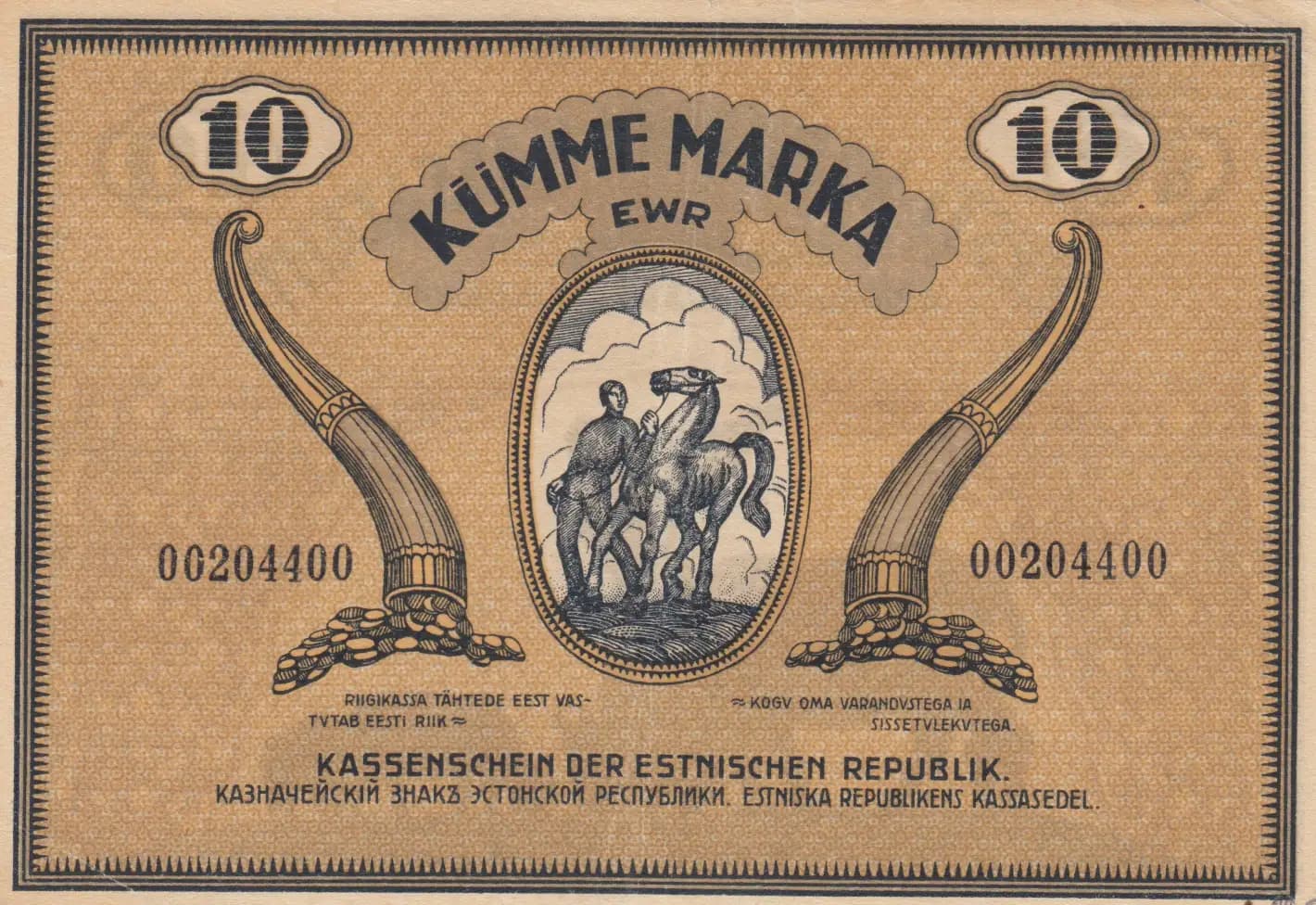
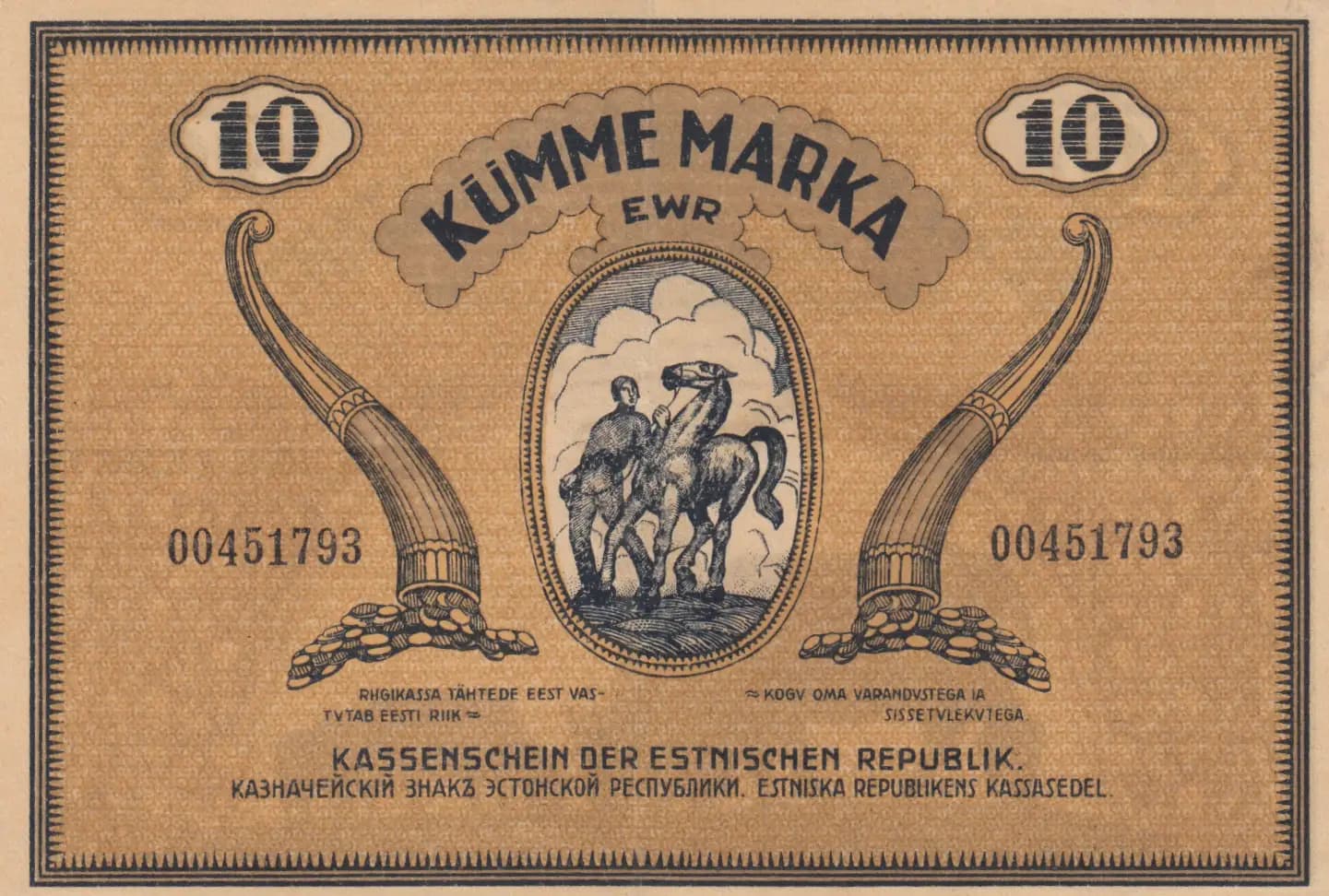
This is an exceptional example of Estonia's first independent currency issue—a 10 Marka note from 1919 graded AU (Almost Uncirculated). The note displays crisp, clean condition with vibrant tan and brown tones, featuring allegorical pastoral scenes on both sides that symbolize Estonian agricultural prosperity and national independence. The detailed engraving work, multilingual inscriptions in Estonian, German, Russian, and Swedish, and the light horizontal line watermark characteristic of Pick 46c make this a compelling piece of early Estonian numismatic history.
Common. While early Estonian currency notes possess historical significance, this particular denomination and Pick variety (P-46c) appears with sufficient frequency in the numismatic market. eBay transaction data shows AU examples trading in the $269.99–$288.00 range, with multiple sales recorded, indicating adequate supply. 2016 catalog values list UNC at $120 USD, and the presence of multiple graded examples in PMG population reports confirms this is not a scarce issue. The Treasury of Estonia's 1919 emission was substantial enough to meet circulation demands across the new nation.
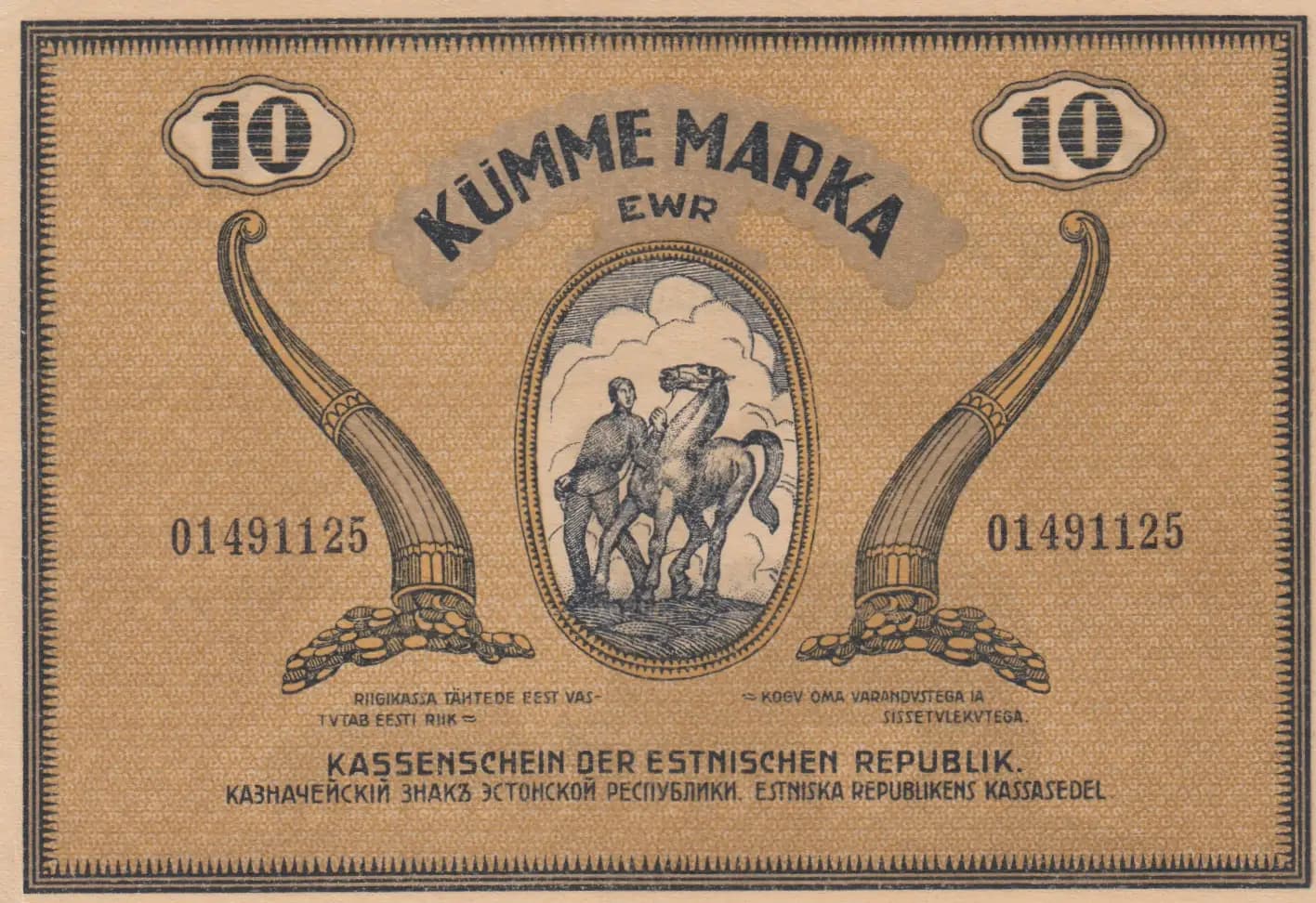
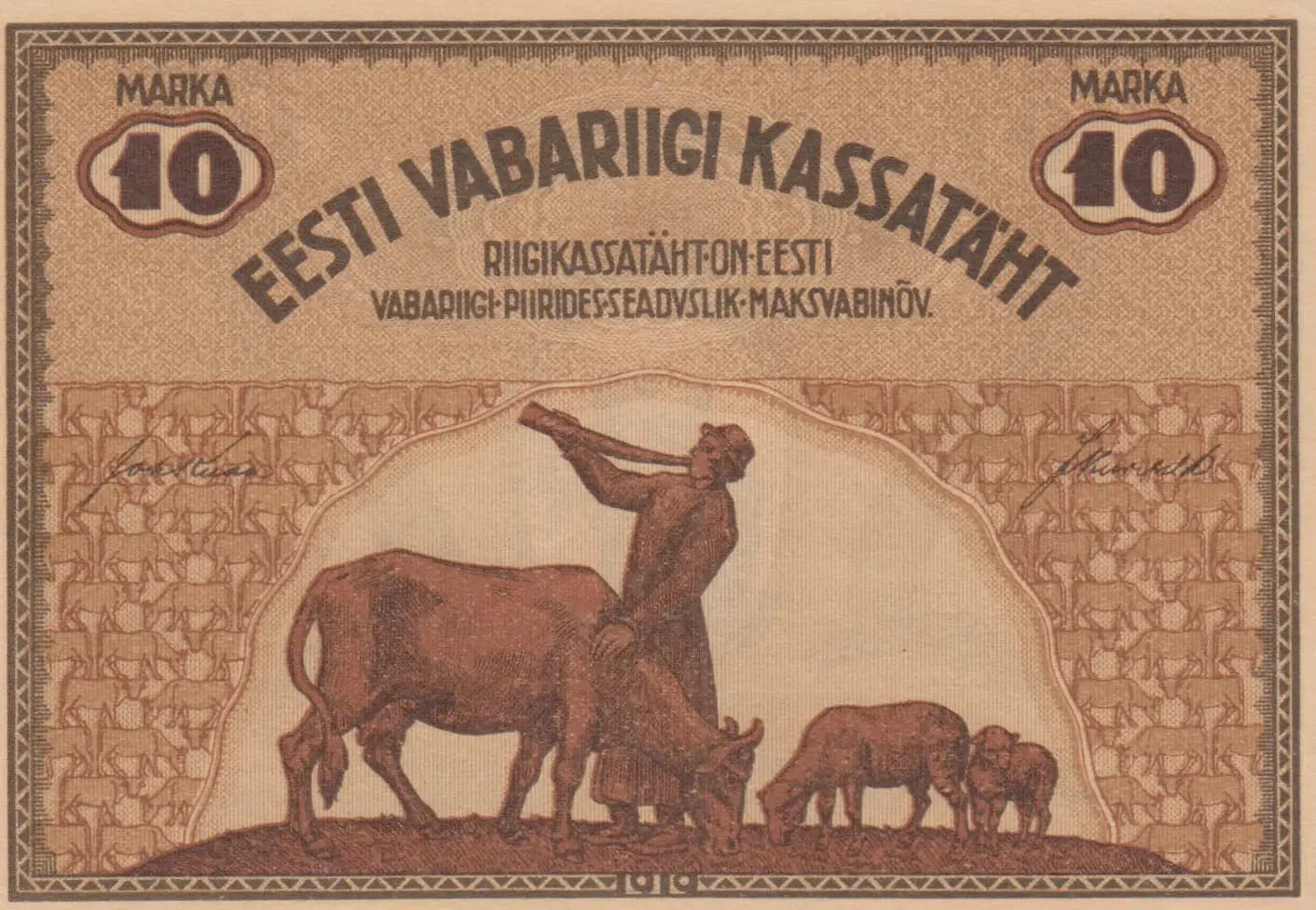
Issued by the Treasury of Estonia (Riigikassa) in 1919 following Estonia's declaration of independence from the Russian Empire, this note represents the nascent Estonian nation's assertion of financial sovereignty. The pastoral imagery—featuring a shepherd with livestock on the back and a man with a horse and cornucopiae on the front—reflects the agrarian economic base of the newly formed Baltic republic during the immediate post-WWI period. The multilingual inscriptions (Estonian, German, Russian, Swedish) document the complex linguistic and political landscape of the region during this transitional era.
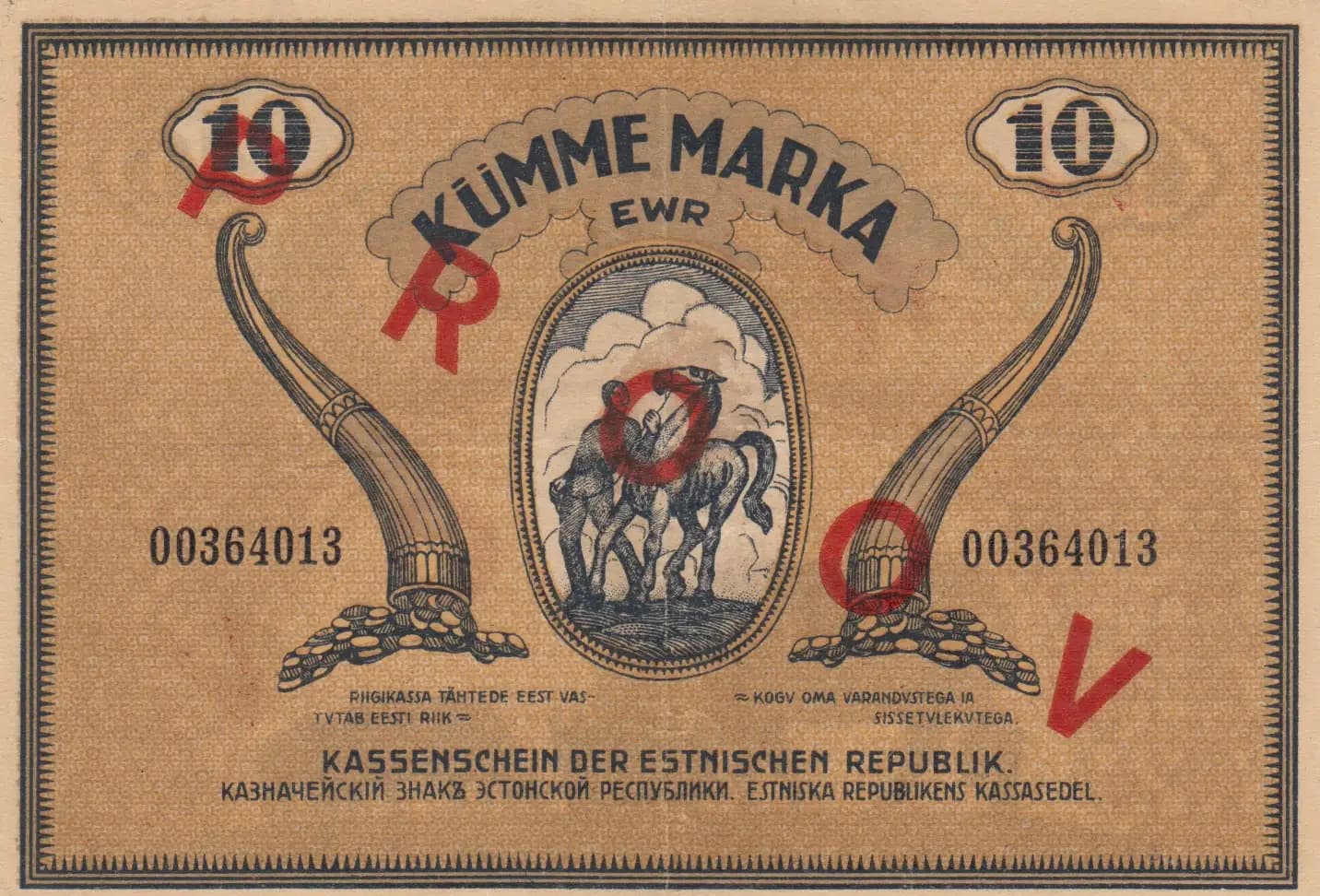
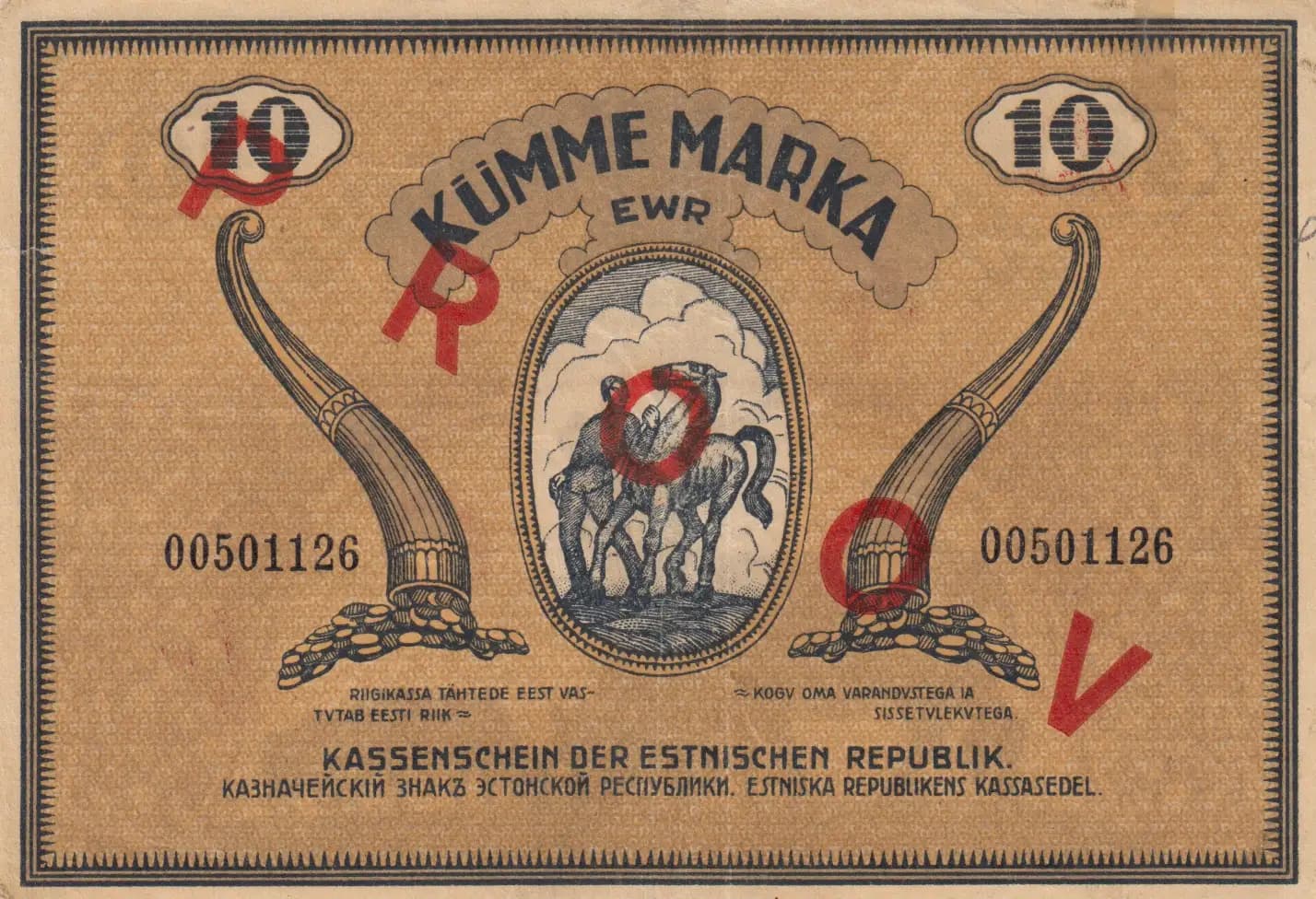
The obverse (front) features an allegorical composition centered on classical economic prosperity symbolism: a man in Greco-Roman classical dress stands with a rearing horse, flanked by two cornucopiae (horns of plenty) overflowing with coins, representing abundance and national wealth. The reverse (back) depicts complementary agricultural imagery with a shepherd in classical dress gesturing upward over pastoral livestock—one adult cow and three calves or younger cattle—symbolizing Estonia's agrarian foundation and pastoral prosperity. Both sides employ fine crosshatch background patterns and ornamental numerical frames at the corners. The design language reflects early 20th-century European banknote aesthetics, emphasizing allegorical virtue and national economic confidence. The note measures approximately 157×88 mm and employs a tan/beige and brown color palette consistent with period printing practices.
FRONT: '10' (denomination), 'KÜMME MARKA' (Estonian: Ten Marks), 'EWR' (currency abbreviation), 'RIIGIKASSA TÄHTEDE EEST VAS TUAB EESTI RIIK' (Estonian: The Estonian State is responsible for these notes), 'KOGV OMA VARANDUSEGA JA SISETULVERIEGA' (Estonian: With all its property and revenue), 'KASSENSCHEIN DER ESTNISCHEN REPUBLIK' (German: Currency note of the Estonian Republic), 'КАЗНАЧЕЙСКИЙ ЗНАК ЭСТОНСКОЙ РЕСПУБЛИКИ' (Russian: Treasury note of the Estonian Republic), 'ESTNISKA REPUBLIKENS KASSASEDEL' (Swedish: Currency note of the Estonian Republic), '01491125' (serial number). BACK: '10' and 'MARKA' (denomination), 'EESTI VABARIIGI KASSATÄHT' (Estonian: Estonian Republic Currency Note), 'RIIGIKASSATÄHTON EESTI' (Estonian: State Treasury Note of Estonia), 'VABARIGI PIIRIDESEADUSLIK MAKSVABIINOV' (Estonian: Legal tender within the borders of the Estonian Republic).
The note exhibits characteristics of classical intaglio (engraved) printing, evidenced by the fine line work, detailed crosshatch patterns, and crisp serif typography visible throughout both sides. The security features include fine linear borders, detailed engraving, and a light horizontal line watermark pattern (identifying this as Pick 46c variant). The multi-color printing employed (tan/beige base with brown and black accents) suggests a multi-pass intaglio production process. Estonian Treasury notes from this period were typically produced by established European security printers; the technical quality suggests professional government printing rather than emergency wartime production.
This note is cataloged as Pick 46c, specifically identified by its light horizontal line watermark (as opposed to 46b and 46d, which feature light vertical lines). The PMG population report documents four recognized variants (46b, 46c, 46d, and 46s), with 46c being distinguished by the horizontal watermark pattern. The serial number '01491125' falls within the standard range for this issue. No additional overprints, signatures variations, or printing anomalies are apparent in the visual analysis that would indicate a further sub-variety or emergency issue status.