10 marka 1919
Market Prices
1 saleAbout This Note
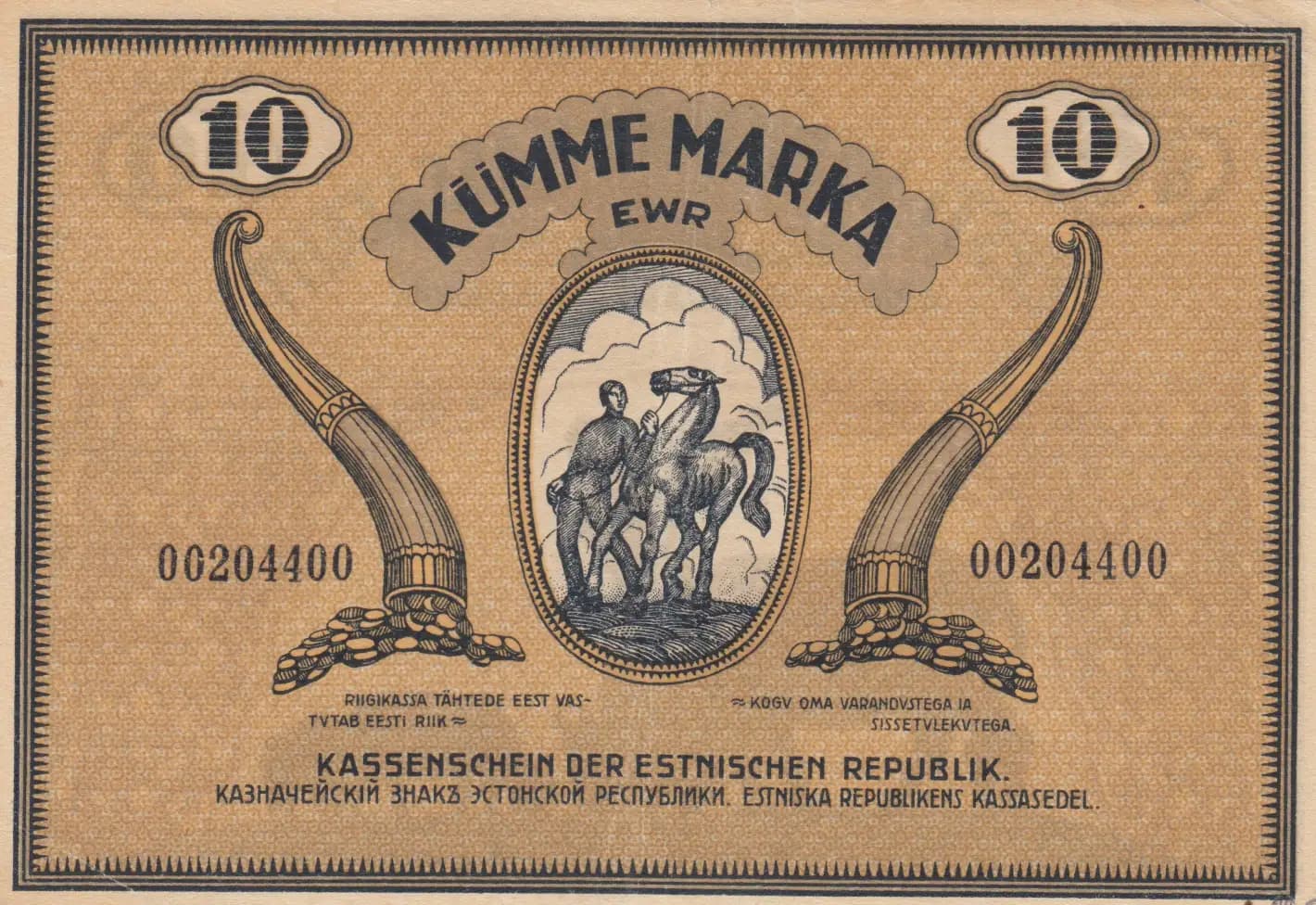
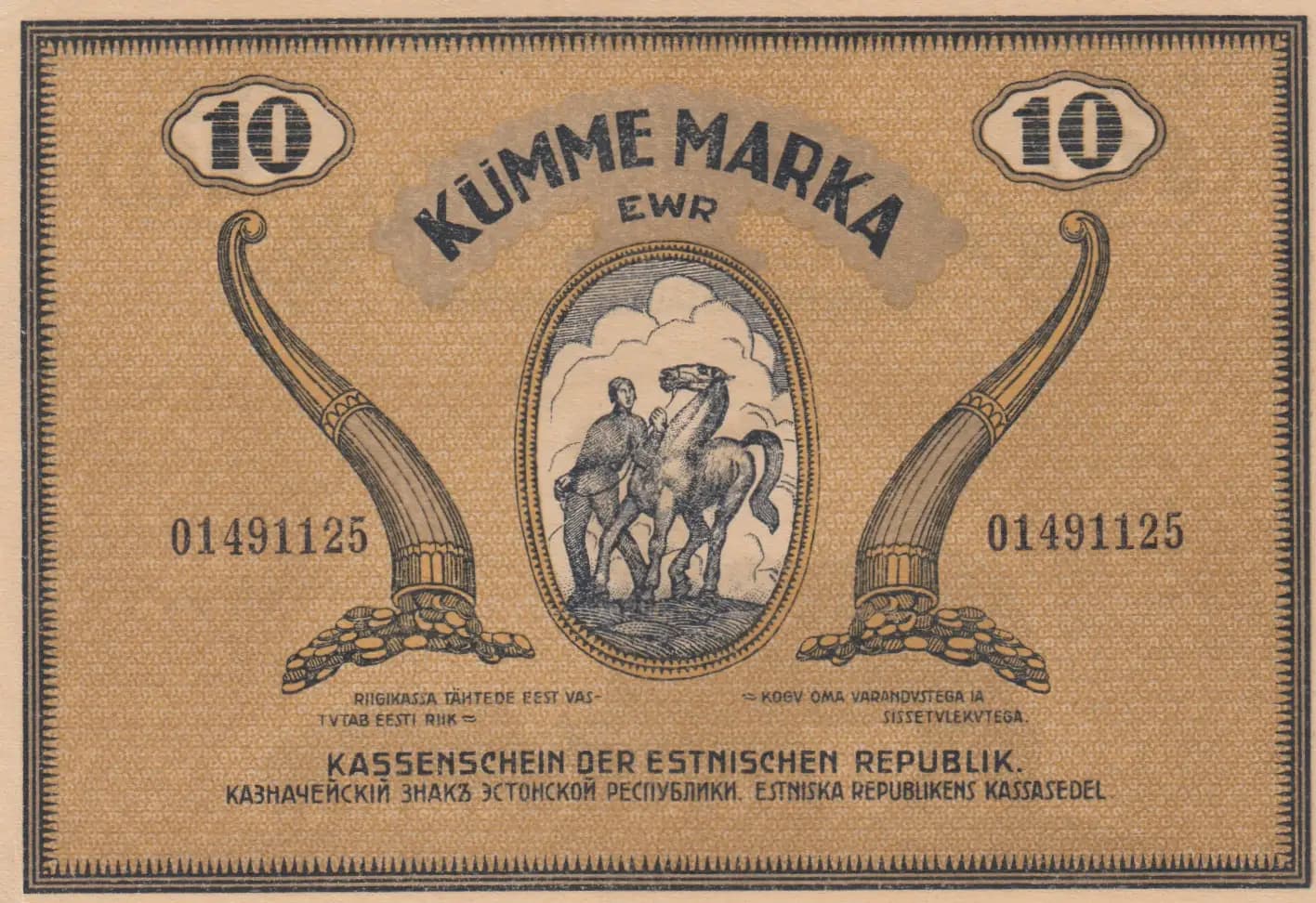
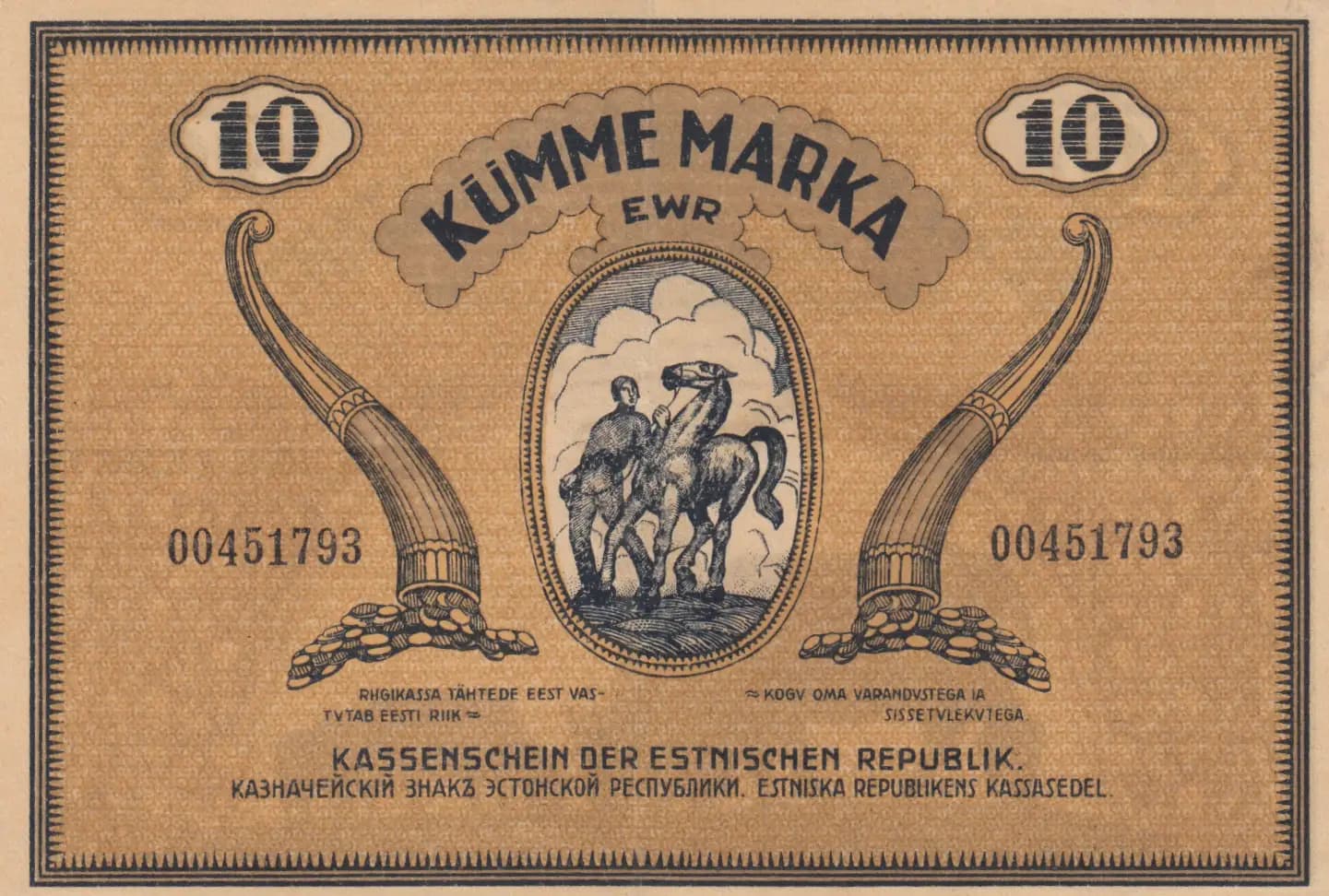
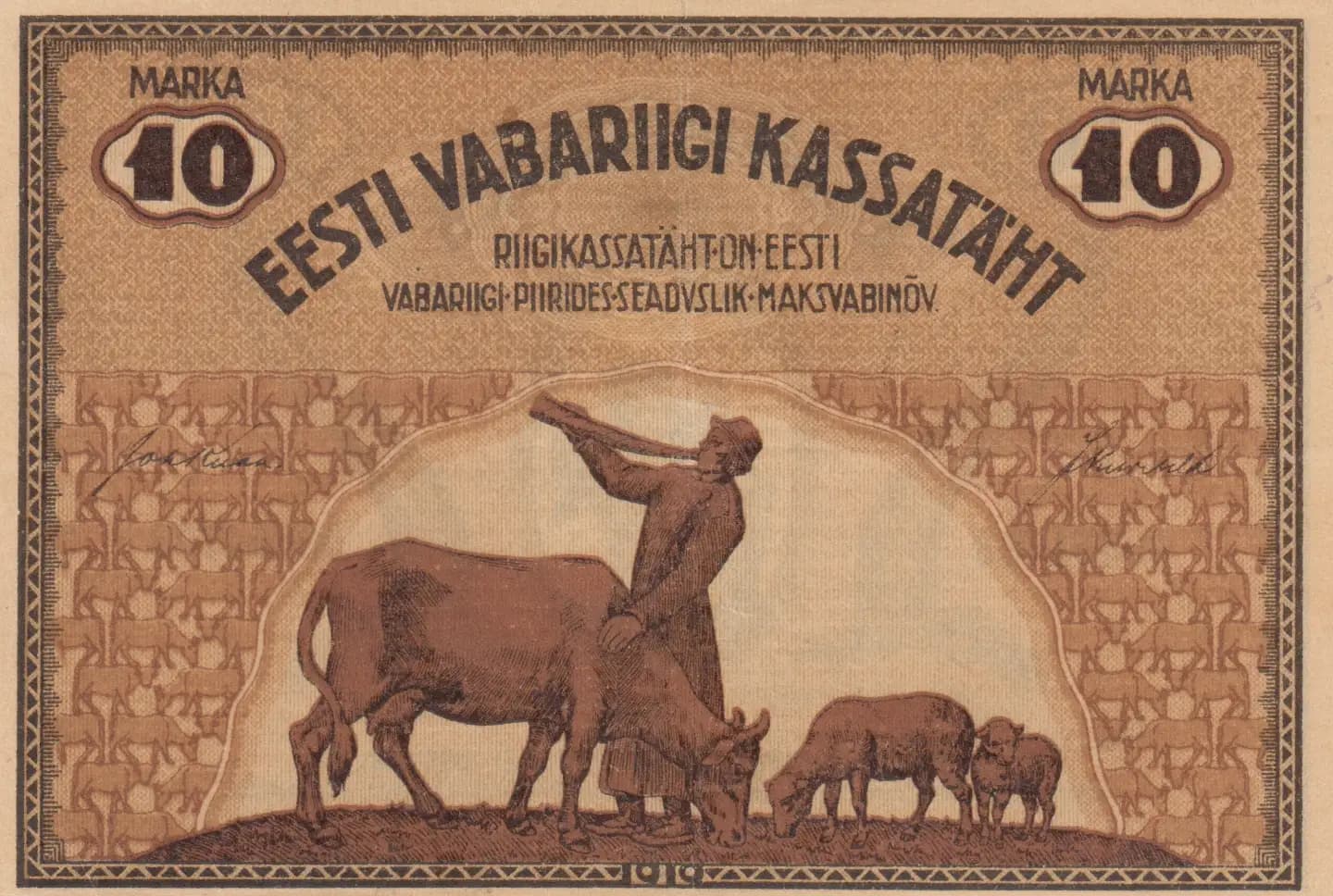
This 10 Marka note from Estonia's 1919 Treasury issue (Pick P-46b) presents exceptional imagery celebrating rural prosperity and national identity. The obverse features a classical horseman with raised arm flanked by cornucopiae overflowing with coins, while the reverse depicts a shepherd tending cattle and sheep—a striking allegory of Estonia's agrarian foundation. In EF condition, this note shows pristine paper quality with no wear, creases, or foxing, making it an attractive example of early Estonian numismatic design.
Common. The eBay market data shows this note in EF condition selling for approximately $34 in 2009, with 2016 catalog values of $80 for VF condition, indicating steady but modest collector demand. The print run was substantial for a foundational issue of a new nation's currency, and examples remain readily available in the collector market. The existence of multiple documented varieties (P-46b, P-46c, P-46d, P-46s) further suggests significant production quantities across variant types.
Issued during Estonia's initial period of independence following World War I and the Russian Revolution, this 1919 note represents the Treasury of Estonia's assertion of monetary sovereignty. The rural imagery—the shepherd with livestock on the reverse and the prosperity symbolized by the cornucopiae and coins on the obverse—reflects Estonia's agrarian economy and national pride during the founding years of the Estonian Republic. The inclusion of text in Estonian, German, Russian, and Swedish underscores the complex multilingual character of the newly independent Baltic nation.
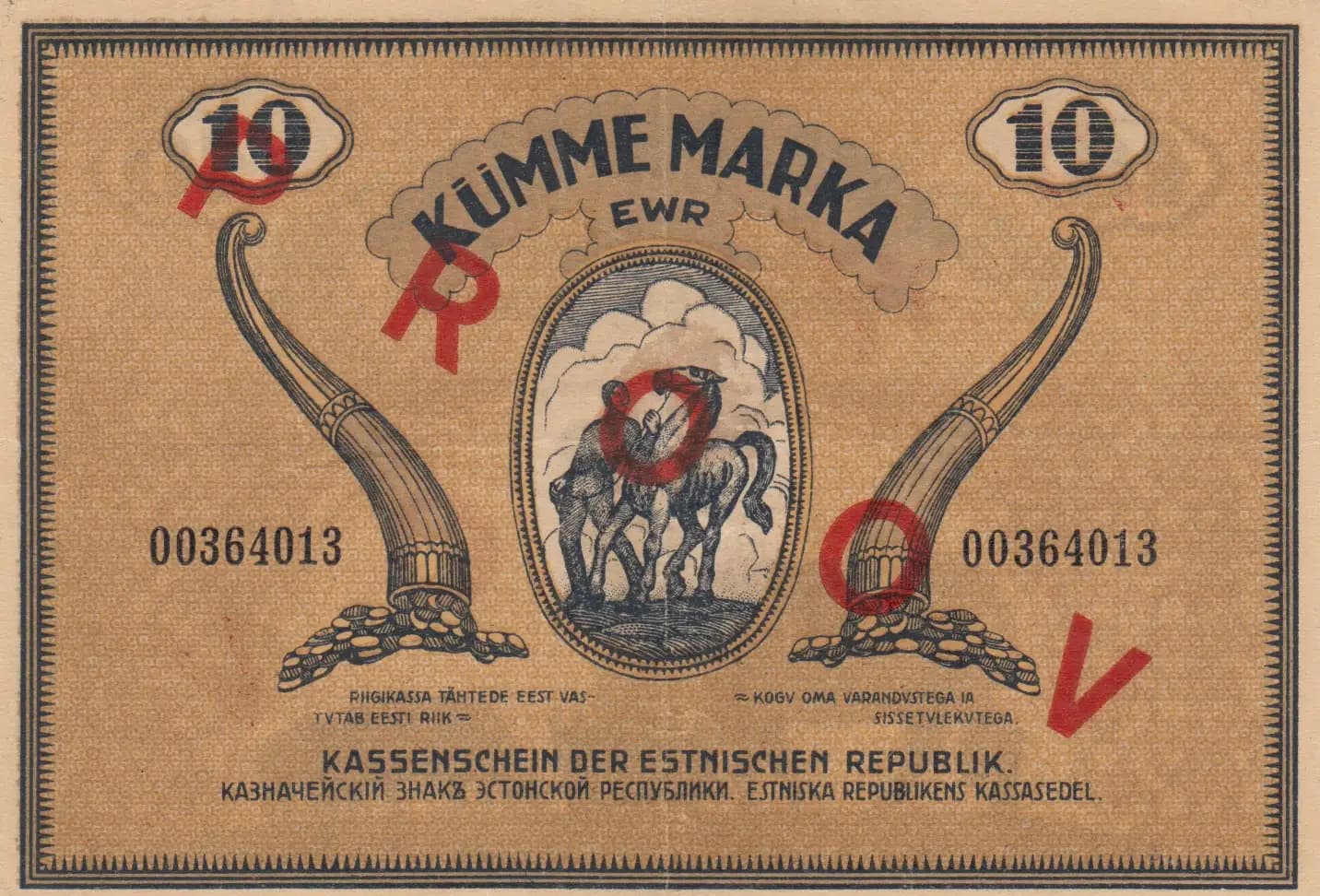
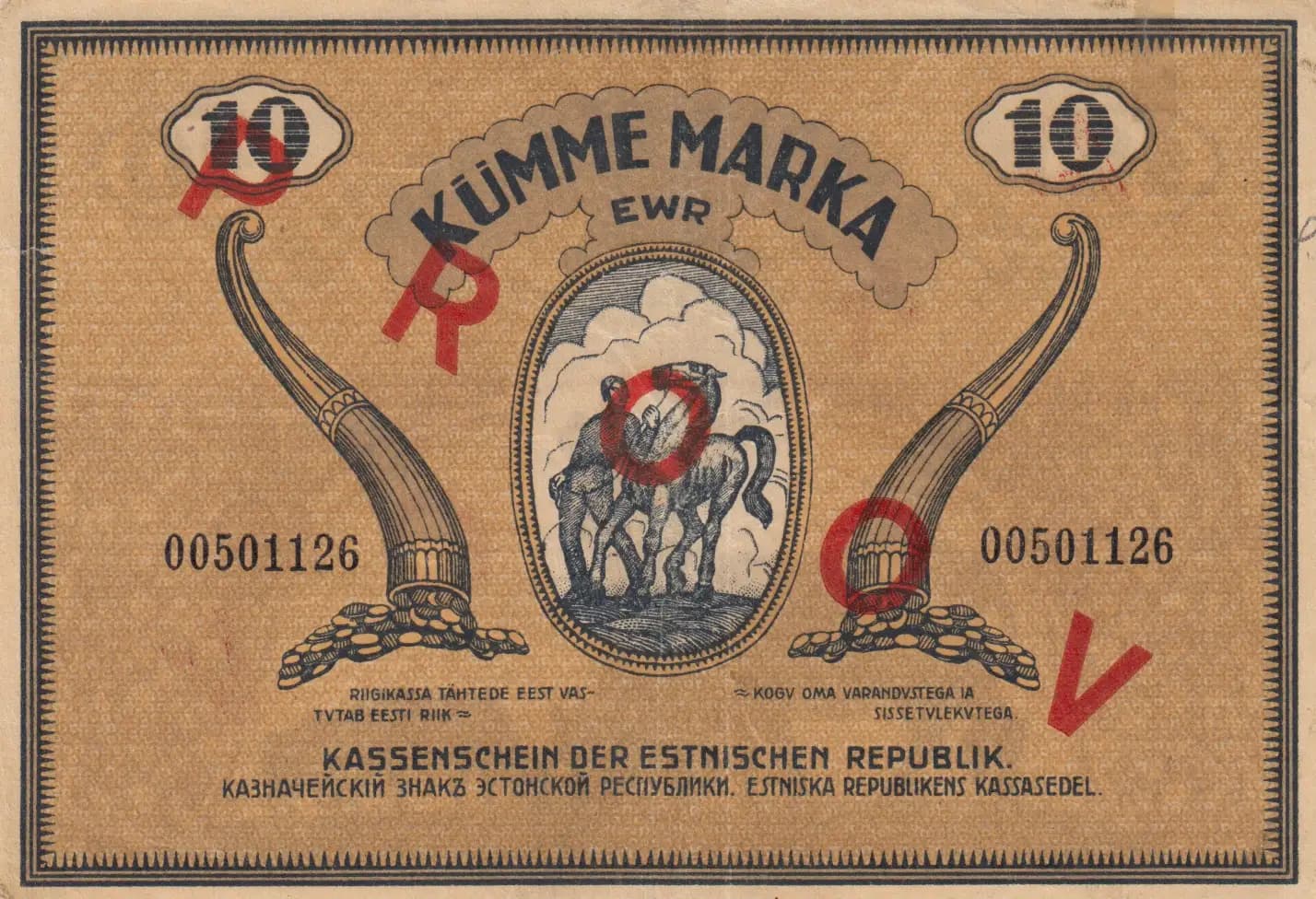
The obverse presents a classical allegorical composition centered on a circular medallion containing an engraved figure mounted on horseback with raised arm, set against a cloudy background—representing prosperity, leadership, or national vigor. Flanking this medallion symmetrically are two curved cornucopiae (horns of plenty), each emerging from a base of stacked coins, symbolizing agricultural abundance and wealth. The reverse features a detailed pastoral scene with a standing herder or farmer in period clothing positioned beside livestock comprising one large bovine and several smaller animals (sheep or goats), representing the rural agrarian economy fundamental to the new Estonian state. Both sides employ fine line engraving with ornamental borders and denomination cartouches in the corners. The tan/beige paper stock and brown/black engraving create a warm, classical aesthetic typical of post-WWI European currency issues.
FRONT: 'KÜMME MARKA' (Ten Marks); 'RIIGIKASSA JÄHTEDE EEST VASTUTAB EESTI RIIK' (The Estonian State is responsible for the treasury notes); 'KOGV OMA VARANDYSTEGA JA SISSETULEVIEGA' (Together with all its property and revenue); 'KASSENSCHEIN DER ESTNISCHEN REPUBLIK' (Currency note of the Estonian Republic - in German); 'КАЗНАЧЕЙСКИЙ ЗНАК ЭСТОНСКОЙ РЕСПУБЛИКИ' (Treasury note of the Estonian Republic - in Russian); 'ESTNISKA REPUBLIKENS KASSAEDEL' (Estonian Republic's treasury note - in Swedish); Serial number '00451793'. BACK: 'MARKA' (Mark/Marks); 'EESTI VABARIIGI KASSATAHHT' (Estonian Republic Treasury Note); 'RIIGIKASSATAHTON EESTI VABARIIGI' (State Treasury Note of Estonia); Additional legal reference text regarding state treasury authority.
Intaglio engraving (line engraving), evidenced by the fine detail work visible throughout both the obverse and reverse designs, the precise geometric border patterns, and the sharp rendering of the figurative and symbolic elements. The security features include fine line engraving throughout and decorative border patterns. While the specific security printer is not definitively documented in standard catalogs for this Pick number, Estonian Treasury notes of this period were typically produced under state authority with characteristics consistent with European security printing standards of the era.
This is identified as Pick P-46b, characterized by light vertical line watermark. Related varieties include P-46c (light horizontal line watermark) and P-46d (light vertical lines), indicating watermark variations within the same base design and denomination. The serial number visible on this specimen is 00451793. No overprints, date variations, or signature variants are apparent from the visual analysis of this particular note.