10 marka 1919
Market Prices
About This Note
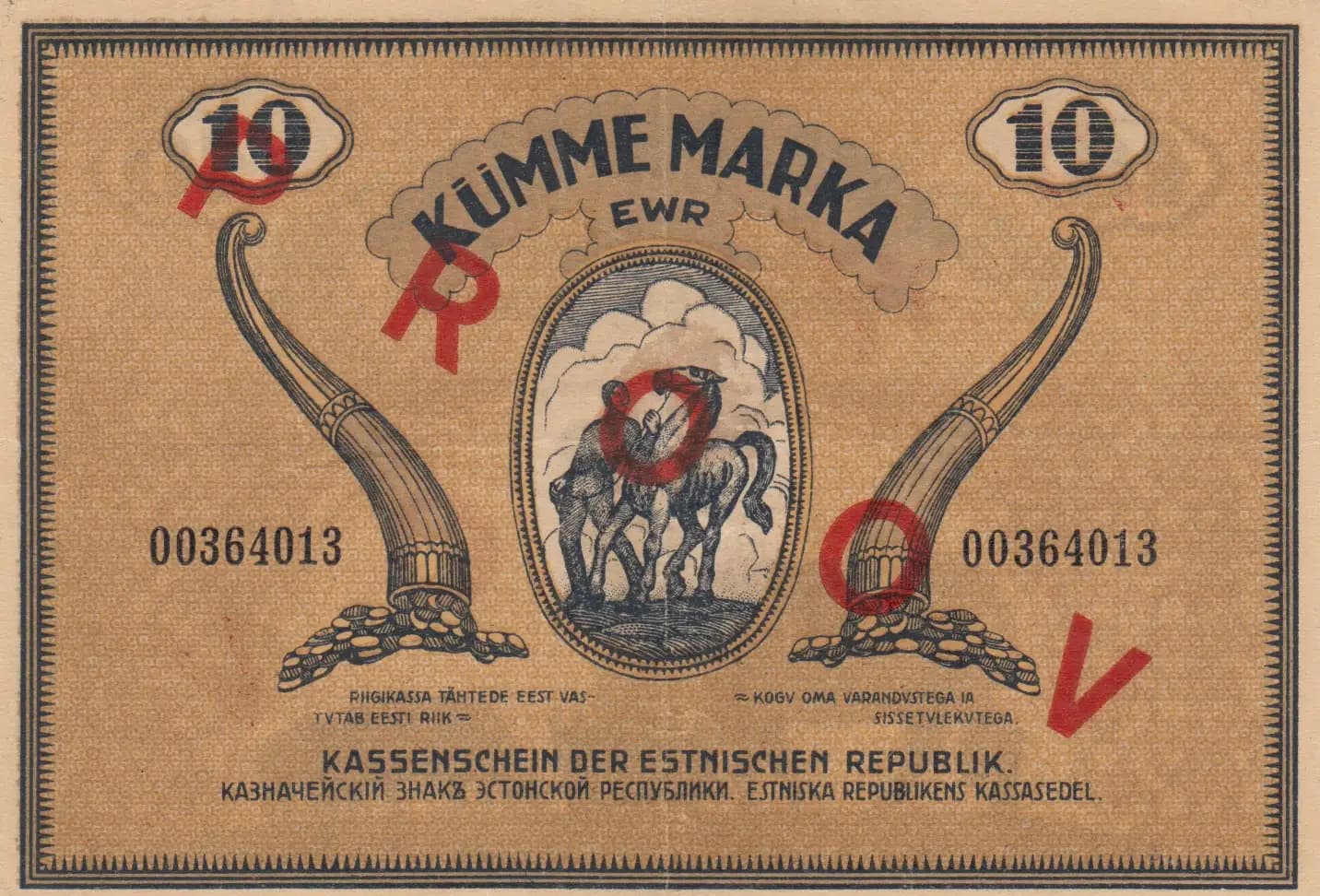
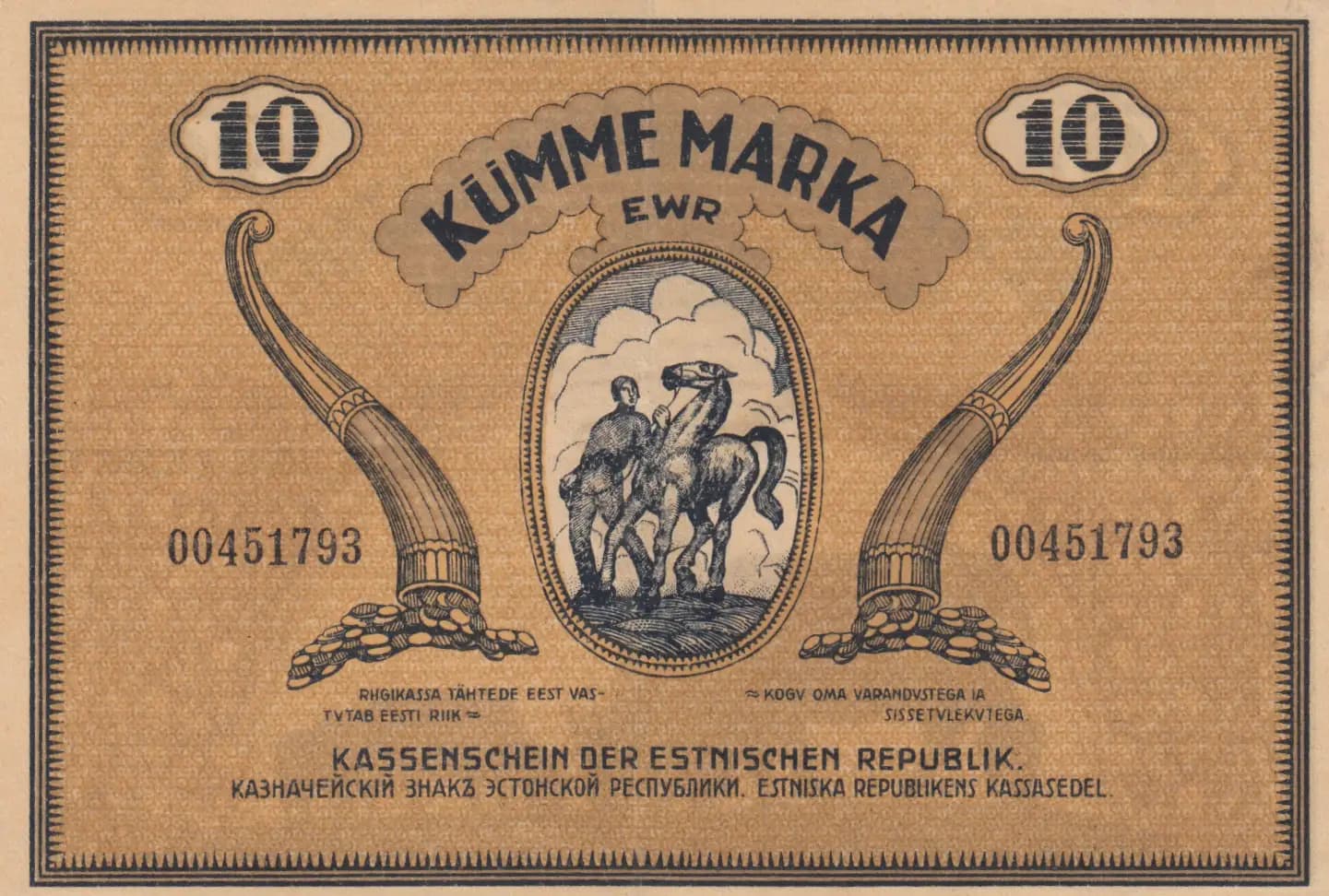
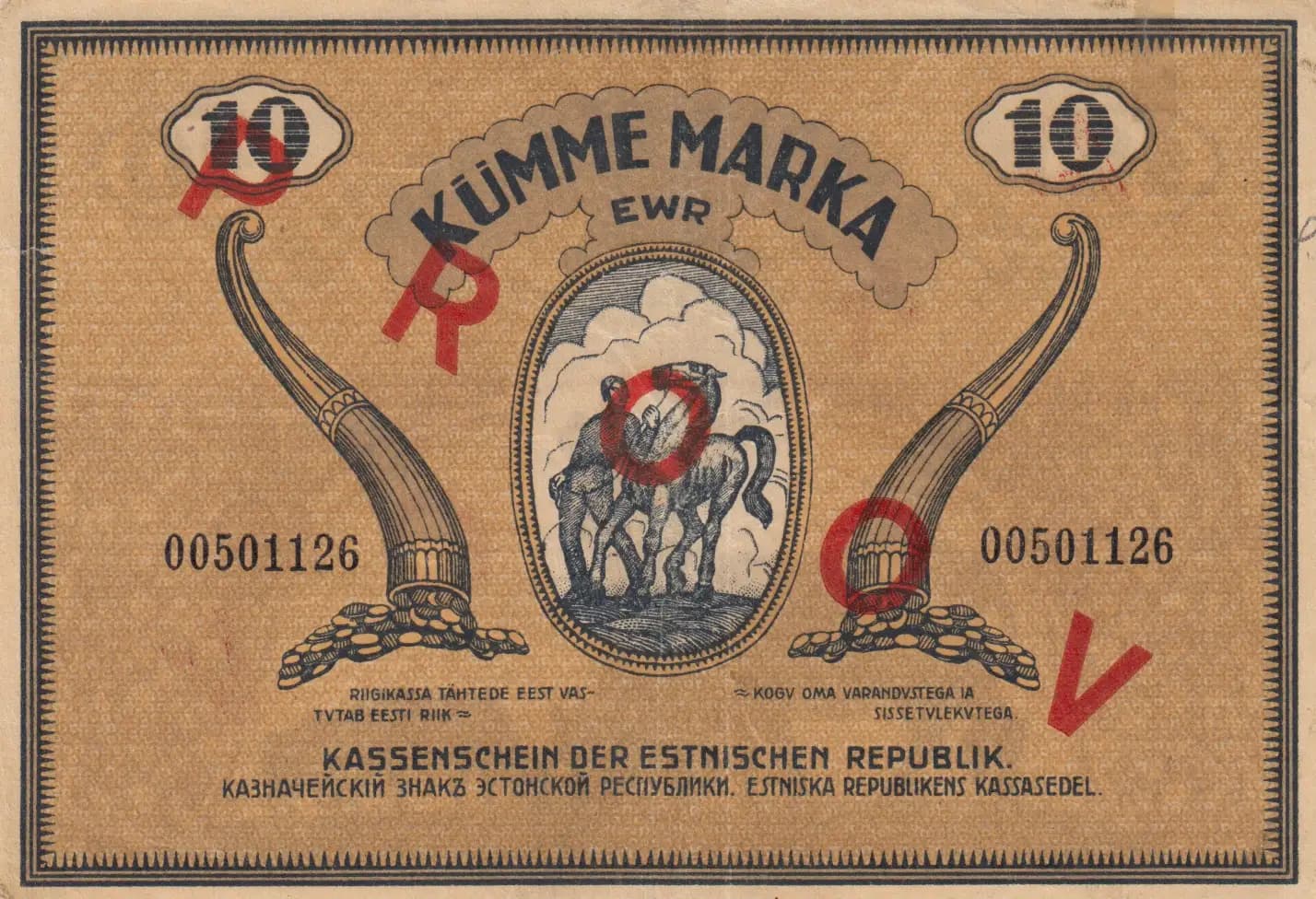
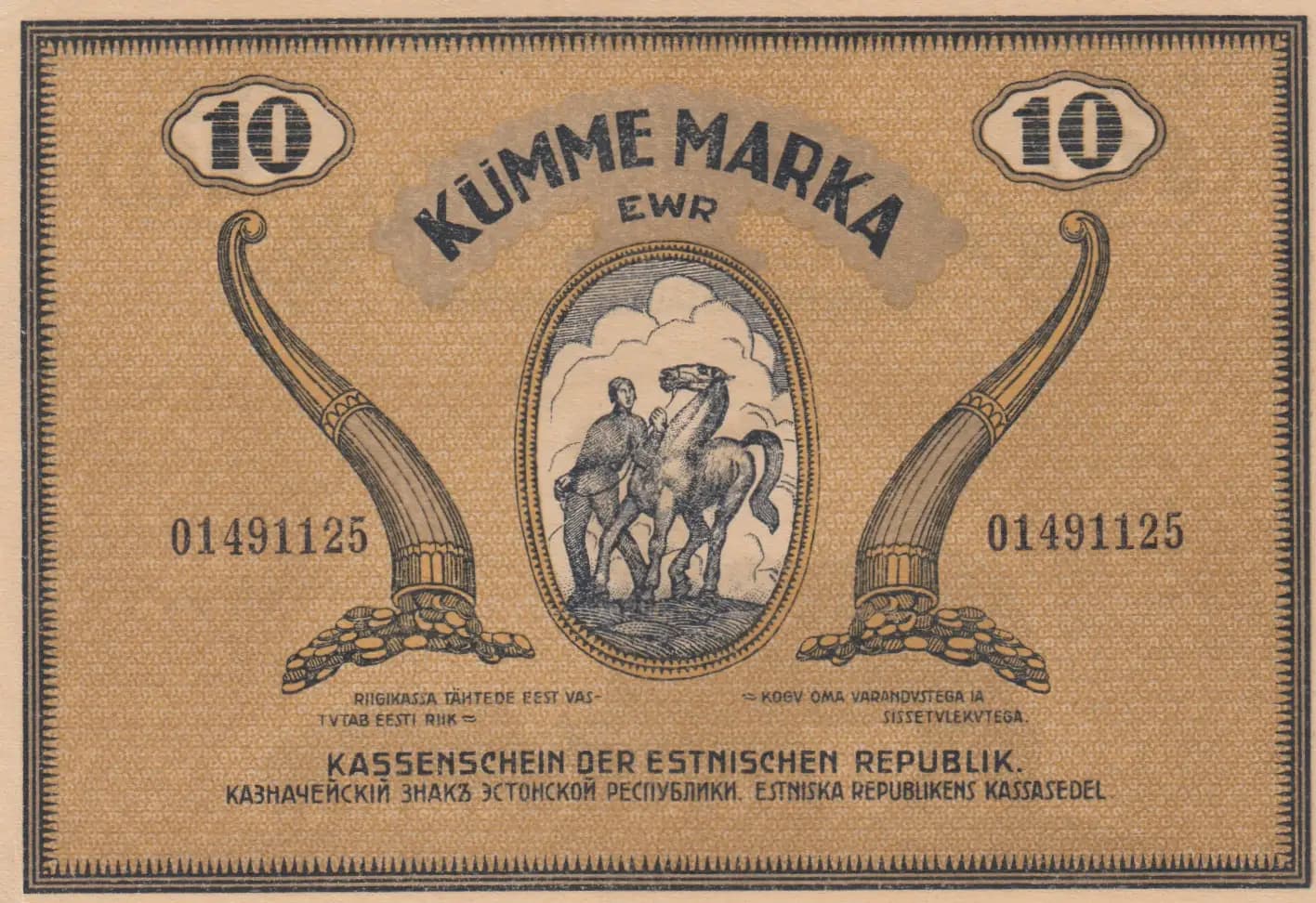
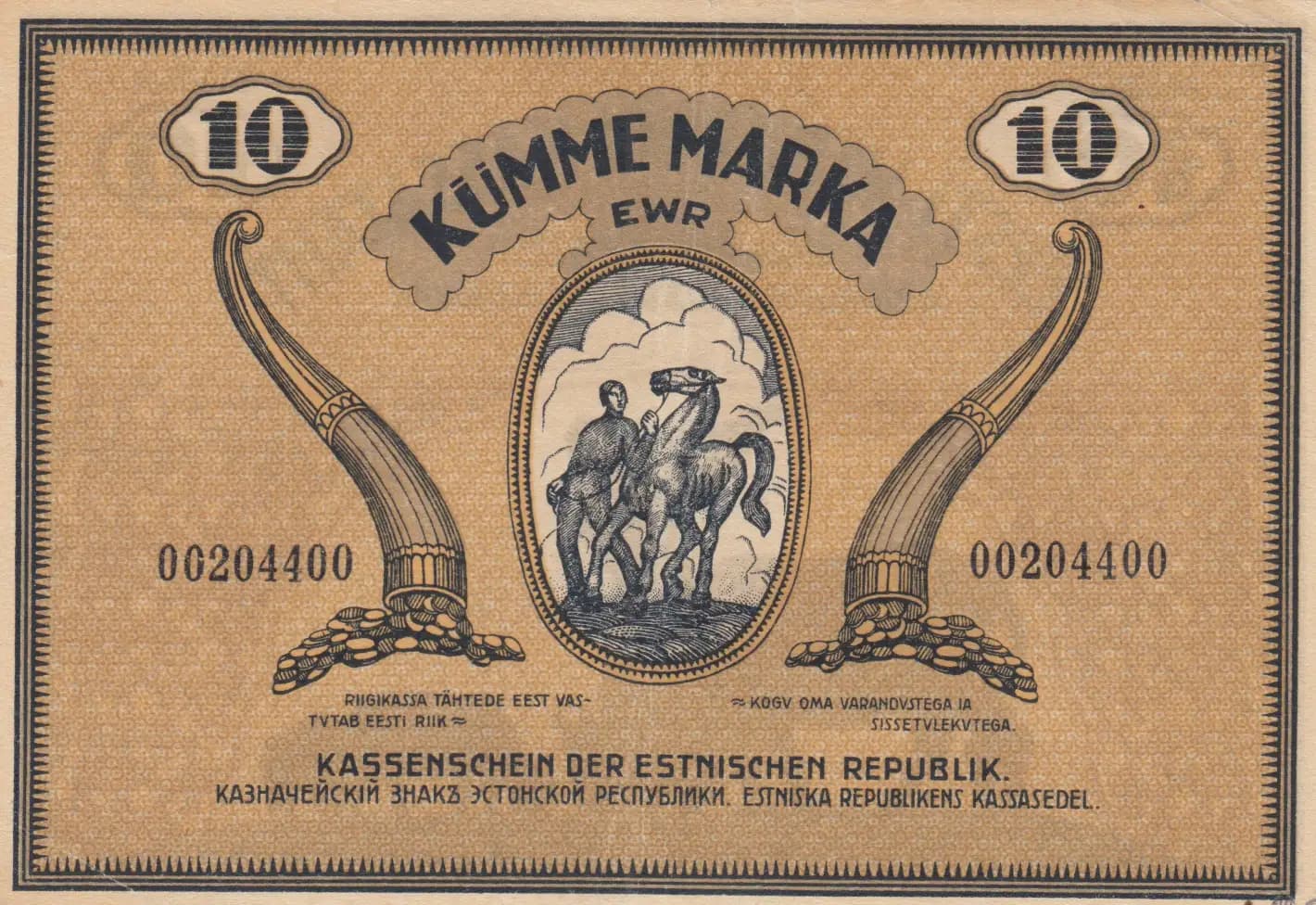
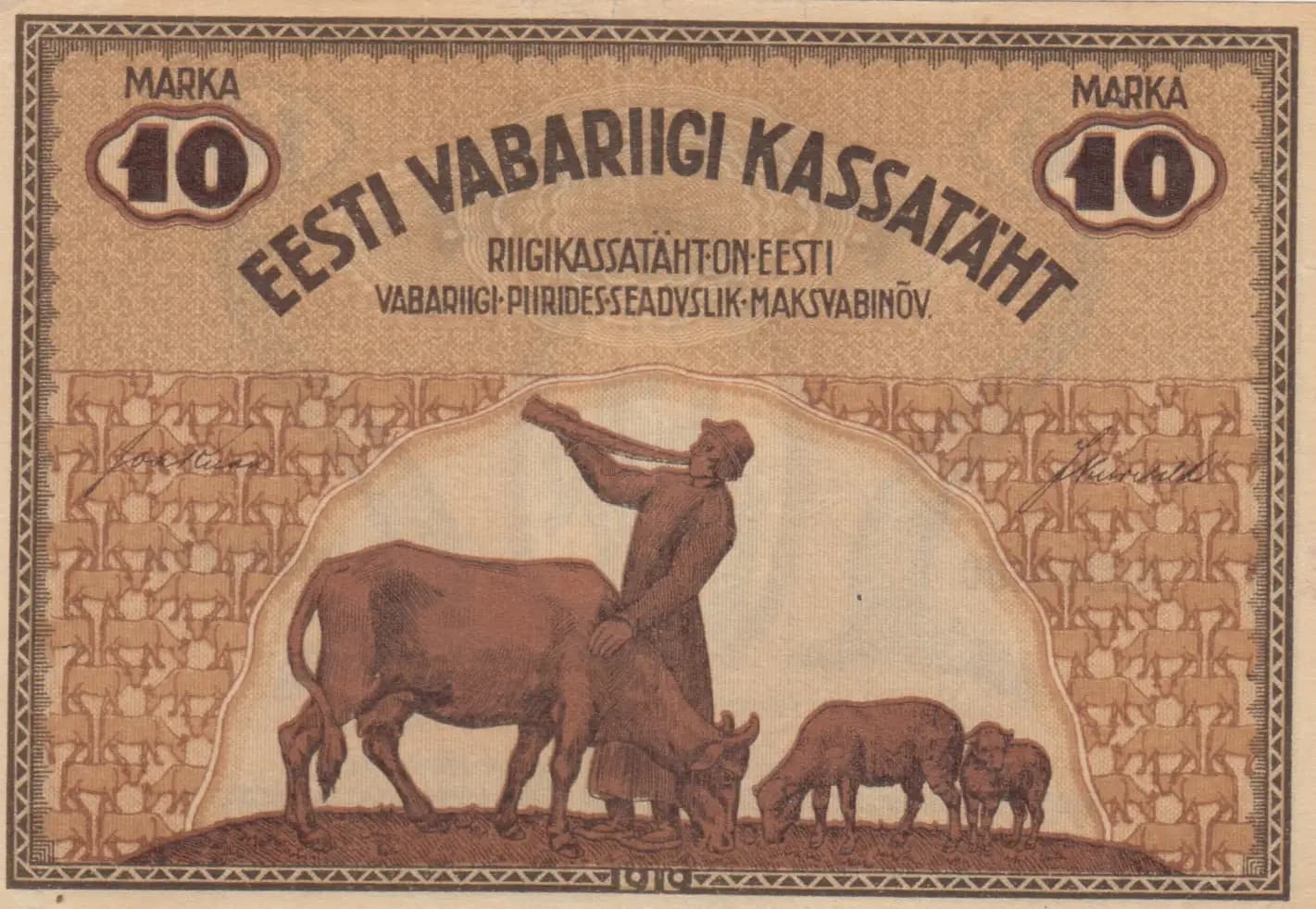
This is an Estonia 10 Marka banknote from 1919, issued by the Treasury of Estonia during the nation's early independence period. The note presents in exceptional condition with crisp printing, sharp borders, and no visible wear, featuring distinctive pastoral and agricultural imagery that reflects Estonia's rural economy. The tan/beige coloring and intricate engraved design showcase the technical quality of early Estonian banknote production.
Common. The eBay market data shows regular trading of this Pick number in the $45-$125 range for VF-XF examples, with catalog values from 2016 placing VF specimens at $80 and UNC at $120. These modest, consistent price points indicate steady availability in the collector market. As a regular issue from 1919 with no evidence of limited print runs or early recall, this denomination remains commonly encountered in collections of early Estonian currency.
This 10 Marka note was issued in 1919 as part of Estonia's first independent currency following its declaration of sovereignty from the Russian Empire. The imagery—featuring a shepherd with livestock on the reverse and a horseman with cornucopiae on the obverse—symbolizes Estonia's agrarian foundation and prosperity during the early years of the Estonian Republic. The multilingual inscriptions in Estonian, German, Russian, and Swedish reflect the diverse linguistic heritage of the newly independent Baltic nation.
The obverse features two cornucopiae (horns of plenty) filled with coins flanking a central oval medallion containing an engraved equestrian scene—a mounted figure with a standing attendant against a cloudy sky background, symbolizing prosperity and leadership. The reverse depicts a pastoral vignette showing a shepherd or farmer gesturing toward domestic livestock (cows and sheep) in a rural landscape, emphasizing Estonia's agricultural character. Both sides employ ornate decorative borders with repeating geometric patterns and prominent denomination numerals '10' in ornamental frames labeled 'MARKA'. The color scheme is predominantly tan and beige with brown toning, creating a warm, naturalistic aesthetic typical of early 20th-century Central European banknote design.
FRONT: 'KÜMMEMARKA' (Ten Marka); 'RIIGIKASSA TÄHTEDE EEST VÄSTEYTÄB EESTI RIIK' (State Treasury Ten Marks Estonia/The Estonian State guarantees for Treasury Notes); 'KOGV OMA VARANDVSTEGA JA SISSETYLEVKTEGA' (With its property and receipts); 'KASSENSCHEIN DER ESTNISCHEN REPUBLIK' (German: Banknote of the Estonian Republic); 'КАЗНАЧЕЙСКИЙ ЗНАК ЭСТОНСКОЙ РЕСПУБЛИКИ' (Russian: Treasury note of the Estonian Republic); 'ESTNISKA REPUBLIKENS KASSASEDEL' (Swedish: Banknote of the Estonian Republic). BACK: 'MARKA' (Marka, denomination label); 'EESTI VABARIIGI KASSATÄHTT' (Estonian Republic Banknote); 'RIIGIKASSATÄHTON-EESTI' (State Treasury Note Estonia); 'VABARIGI-PIIRIDESSE ADYSLIK-MAKSYABINOV' (Within the borders of the Republic).
This note was produced using intaglio engraving, the standard security printing method for banknotes of this era. The fine detail visible in the pastoral vignettes, the crisp line work of the decorative borders, and the sharp rendering of the portrait elements are characteristic of steel plate engraving. The multi-color registration and layered appearance suggest the use of multiple printing passes, possibly by the Estonian State Printing Office or contracted security printer (specific printer attribution for 1919 Estonian notes is not definitively established in accessible sources).
This specimen corresponds to Pick catalog number P-46a. The PMG population report identifies multiple varieties of the 10 Marka 1919 based on watermark characteristics: P-46b features light vertical line watermarks, P-46c features light horizontal line watermarks, and P-46d also has light vertical lines. The visual analysis mentions 'light horizontal lines (blue)' watermark, which would classify this as P-46c. Serial number 00204400 is visible on both sides of the note, consistent with standard Estonian Treasury issue practices. No signatures, dates, or overprints are noted on this specimen.