10 marka 1919 specimen
Market Prices
About This Note
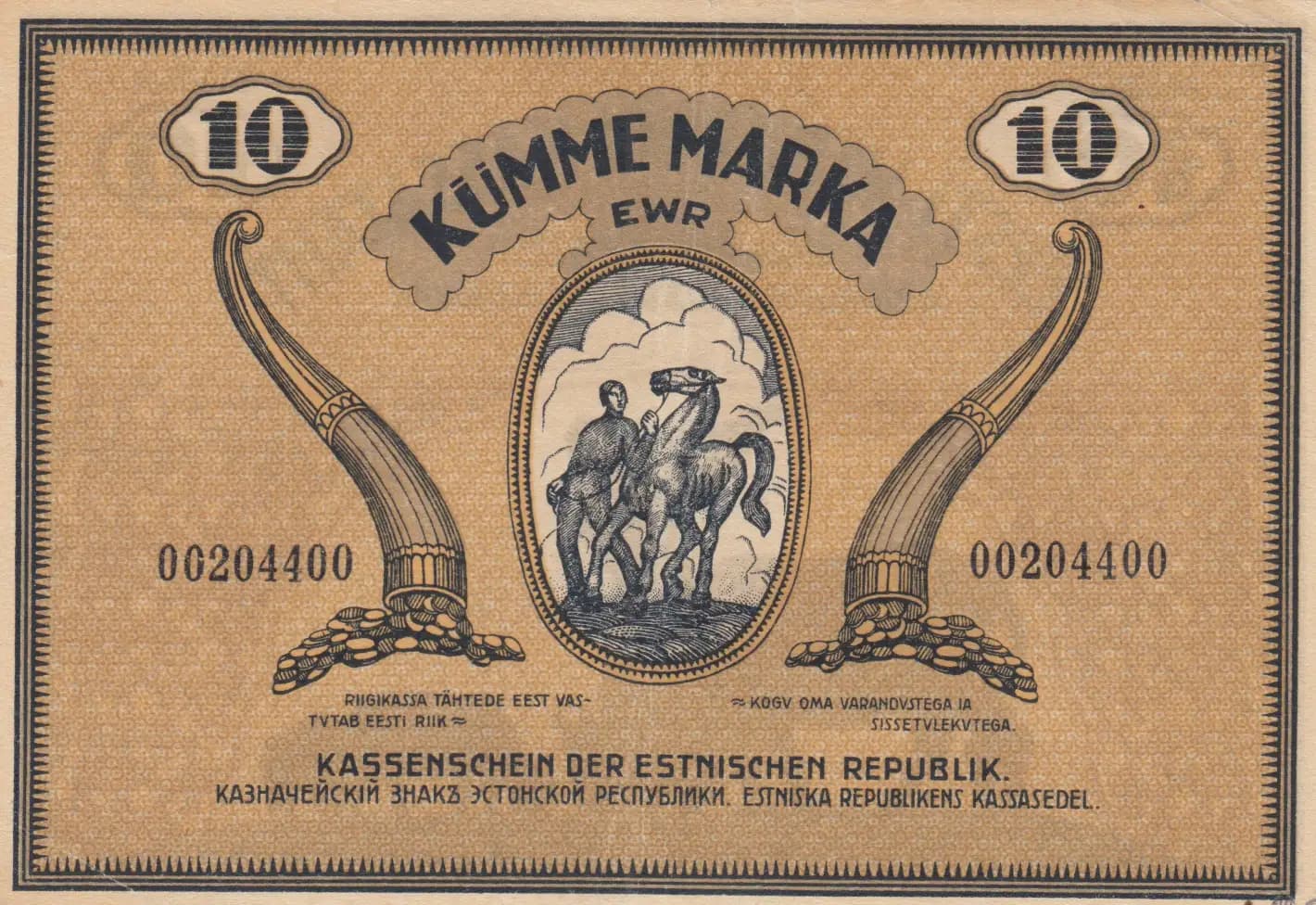
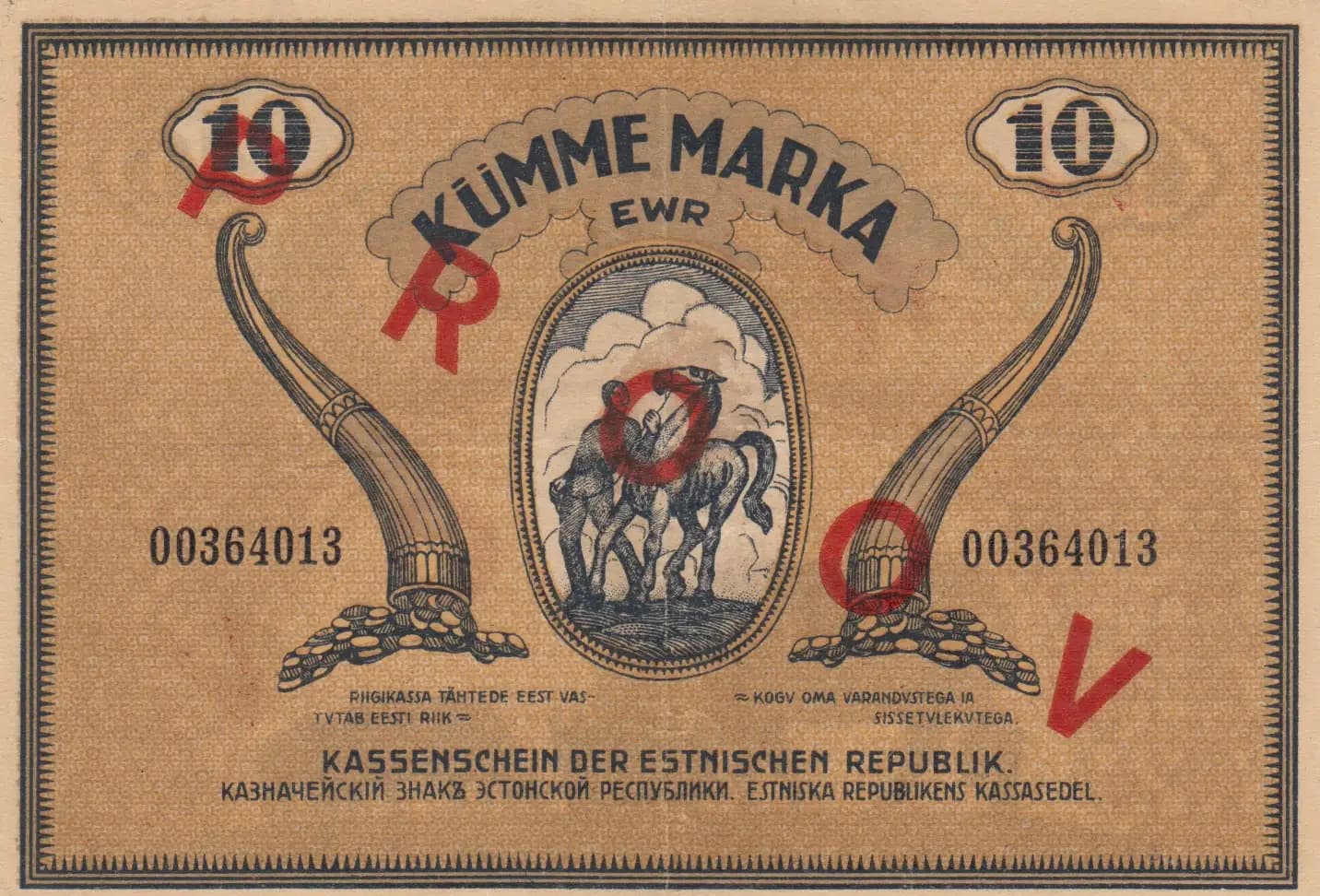
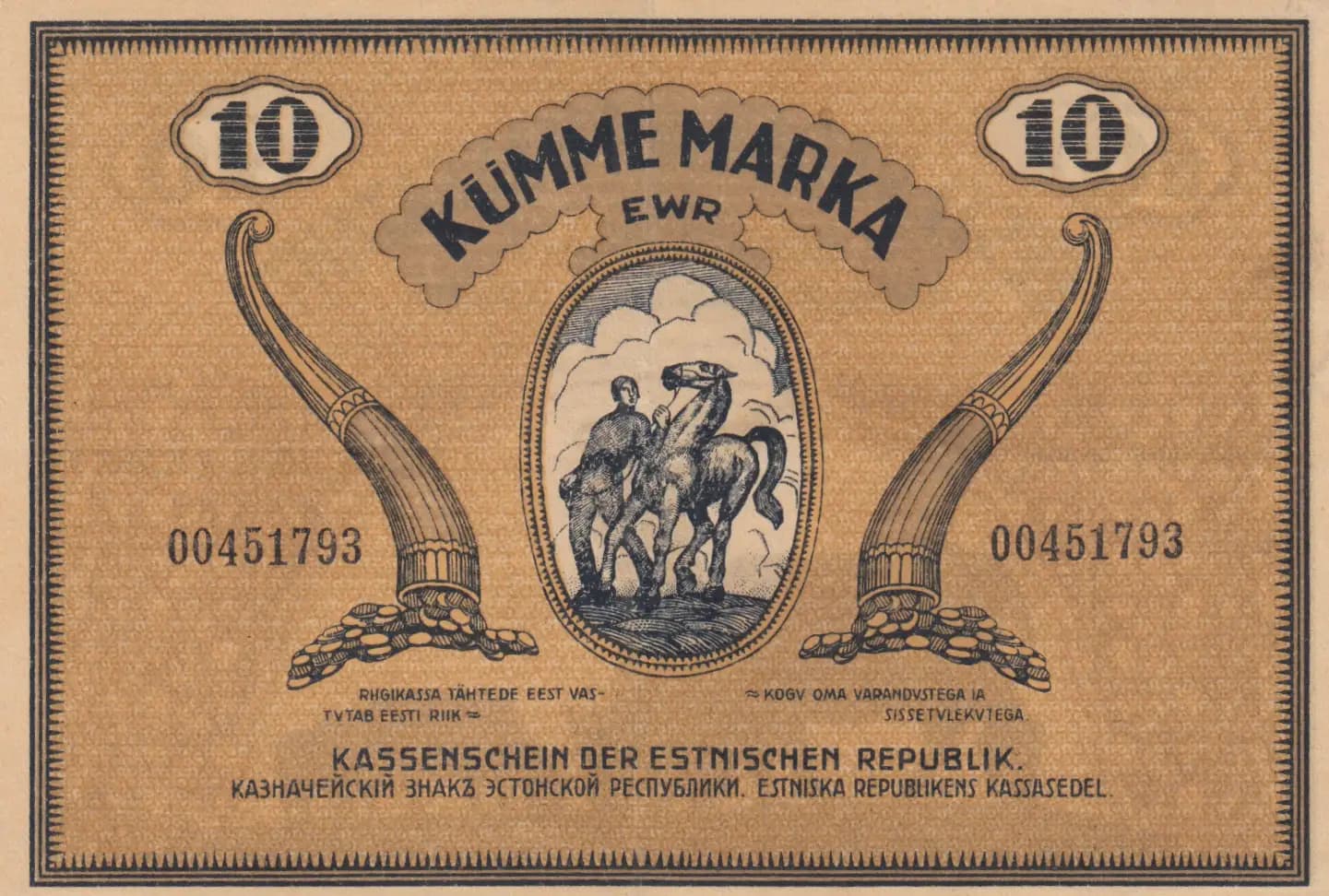
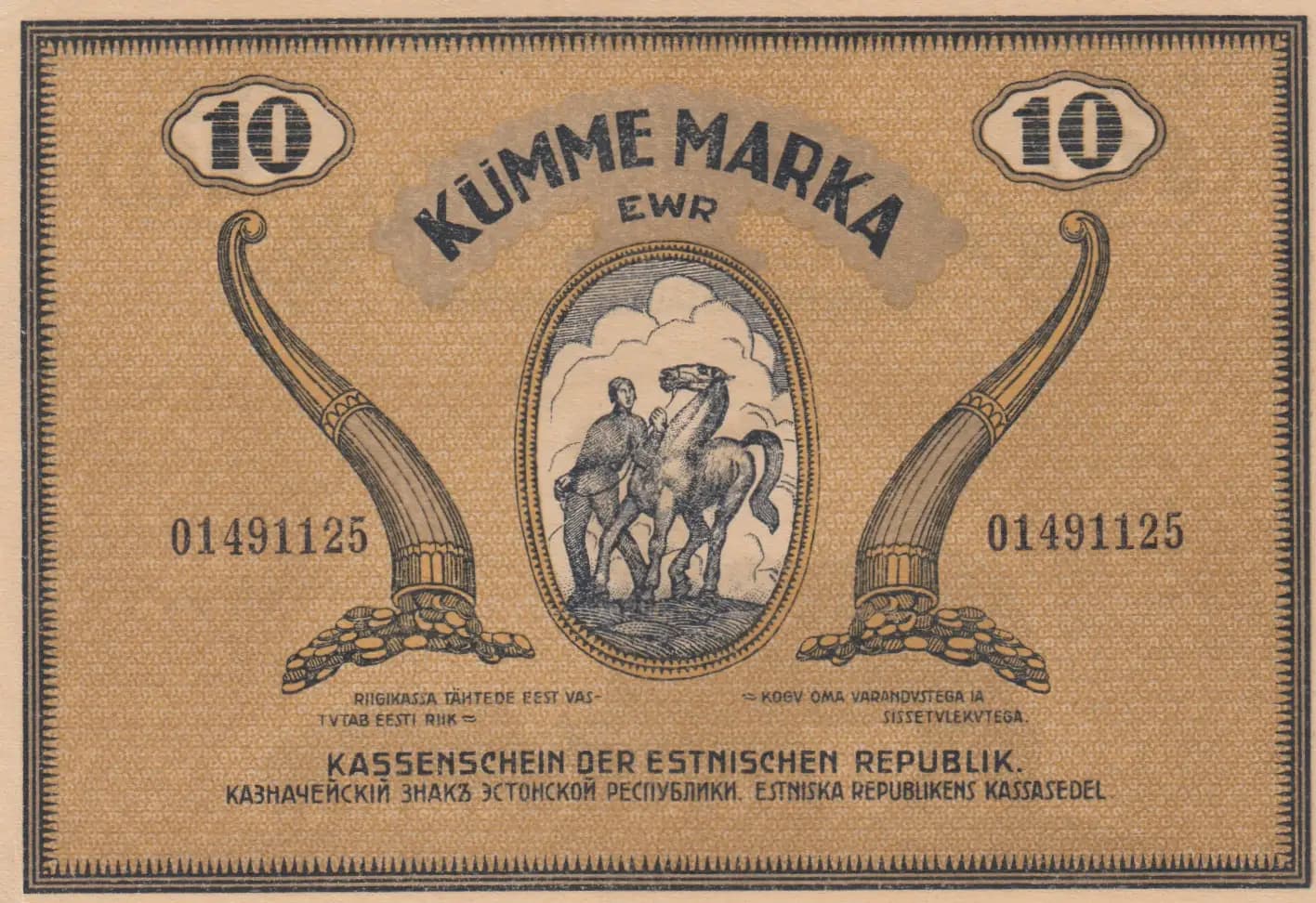
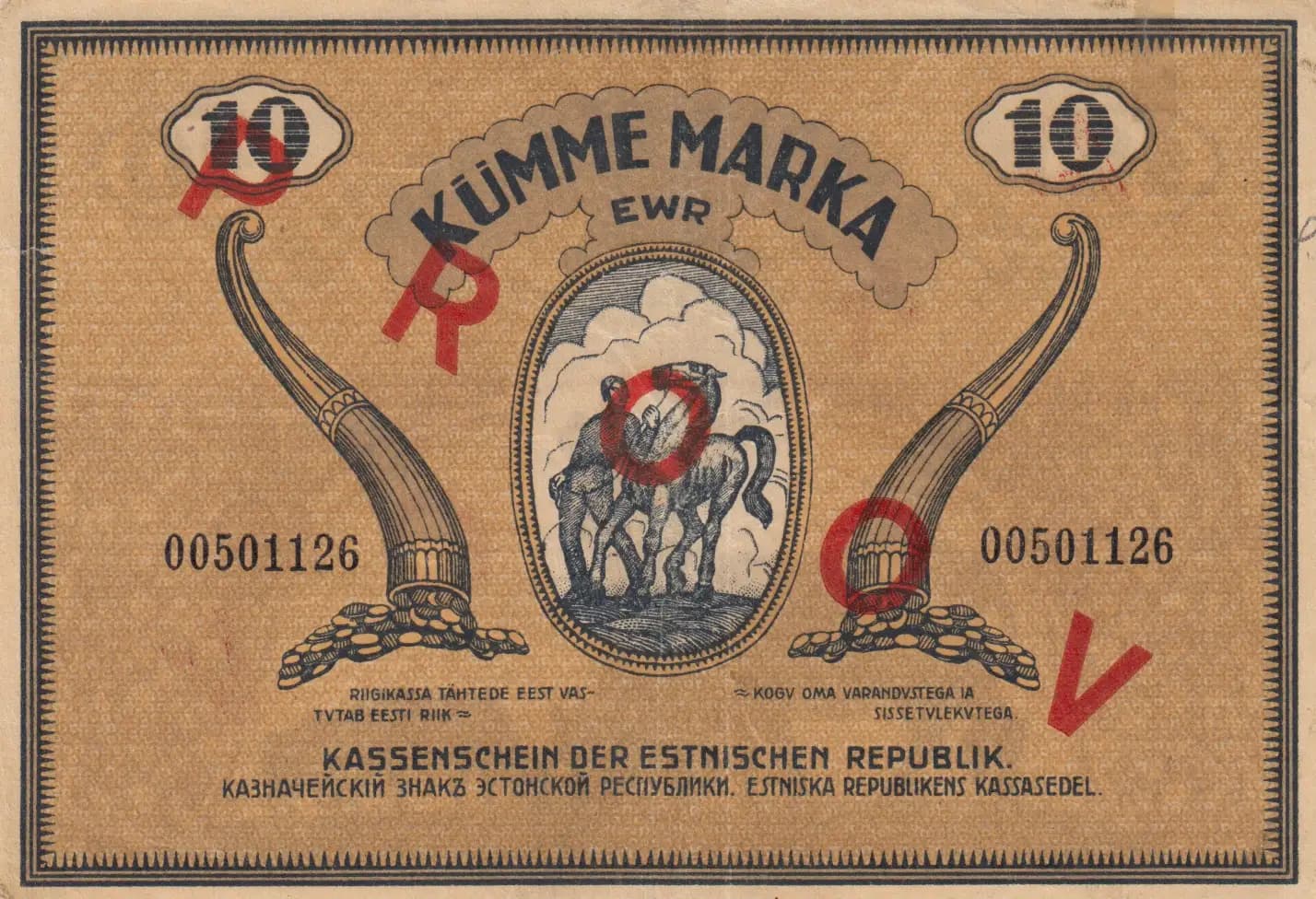
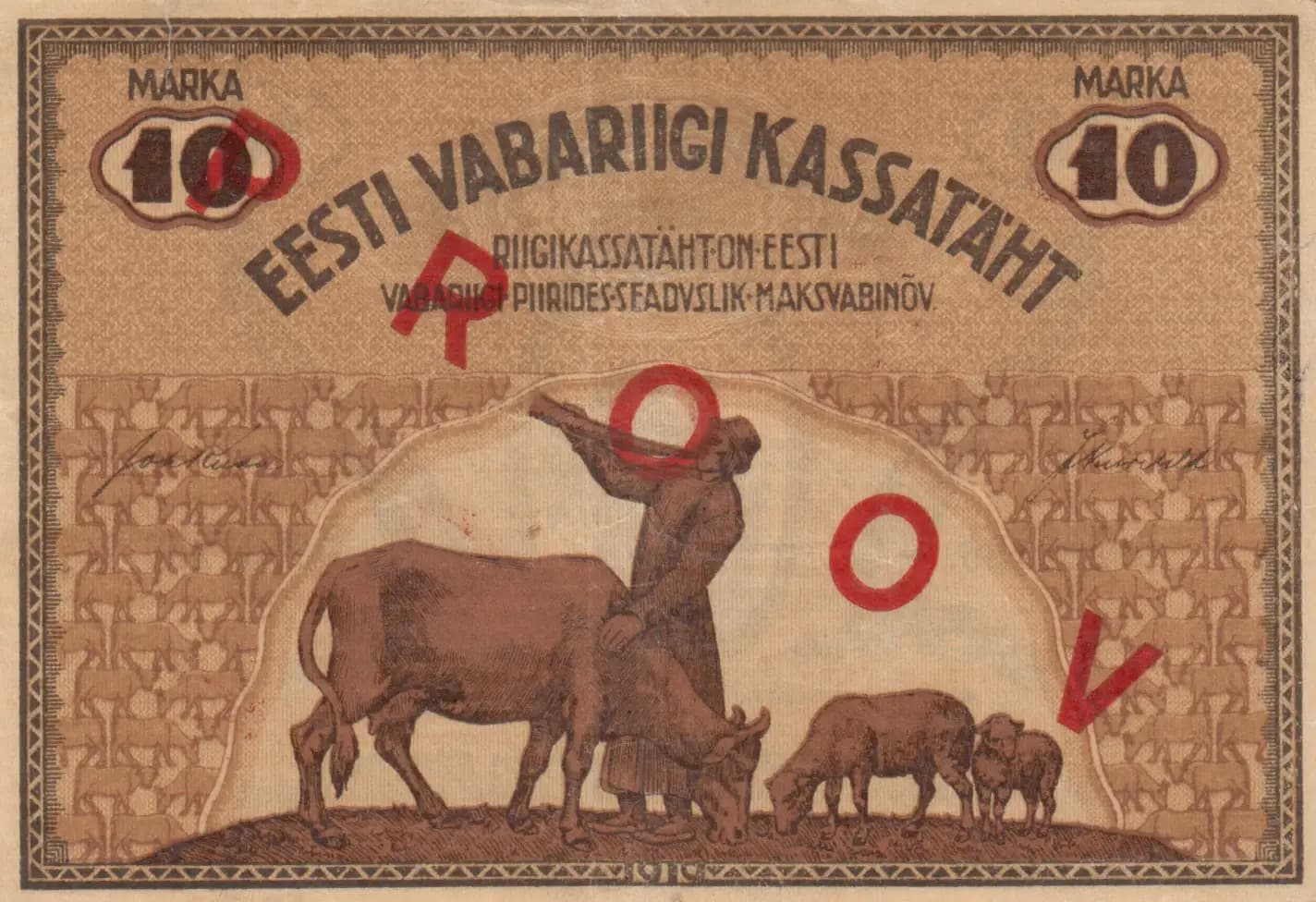
This is a 1919 Estonian 10 Marka specimen note (Pick P-46bs) in VF condition, featuring distinctive heraldic imagery on the obverse with a central dragon or lion medallion flanked by ornate horns, and a pastoral agricultural scene on the reverse depicting a figure in traditional dress with livestock. The note shows characteristic age-related foxing and patina consistent with early 20th-century paper currency, with red specimen/cancellation overprints visible throughout, indicating this was part of the Treasury's specimen archive rather than circulation.
common
Issued during Estonia's initial period of independence following the collapse of the Russian Empire in 1917-1919, this note represents the newly formed Estonian Republic's assertion of monetary sovereignty. The pastoral imagery on the reverse—featuring traditional agricultural workers and livestock—reflects the nation's agrarian economy and cultural identity during this tumultuous post-WWI period. The multilingual inscriptions in Estonian, German, Russian, and Swedish testify to Estonia's complex geopolitical position and the diverse populations within its borders during the early independence years.
The obverse features a heraldic design with a central oval medallion containing a mythical or coat-of-arms creature (dragon or lion) with clouds depicted above, symbolizing state power and sovereignty. This central emblem is flanked by two large ornately decorated curved horns with rope or chain band detailing at their bases, likely representing abundance, prosperity, or traditional Estonian heraldic elements. Corner frames containing the denomination '10' in ornate cartouches appear in all four corners. The reverse depicts a pastoral agricultural scene within an oval medallion: a figure in traditional Estonian dress stands gesturing beside a large ox or cow, with smaller livestock (sheep or goats) in the foreground, symbolizing the nation's agrarian heritage and rural economy. The overall design uses intricate line engraving work with decorative geometric border patterns.
FRONT: '10' (denomination in corners); 'KÜMME MARKA' (Ten Marks in Estonian); 'EWR' (abbreviation, likely printer's mark); Serial number '00501126'; 'RIIGIKASSA TÄHTEDE EEST VASTAB EESTI RIIK' (The Estonian State is responsible for the validity of these notes); 'KOGY OMA VARANDVISTEGA JA SISSETVLEKVTEGA' (With its own property and reserves); 'KASSENSCHEIN DER ESTNISCHEN REPUBLIK' (Cash voucher of the Estonian Republic in German); 'КАЗНАЧЕЙСКИЙ ЗНАК ЭСТОНСКОЙ РЕСПУБЛИКИ' (Treasury note of the Estonian Republic in Russian); 'ESTNISKA REPUBLIKENS KASSASEDEL' (Estonian Republic's cash note in Swedish). BACK: '10' and 'MARKA' (in corners); 'EESTI VABARIIGI KASSATÄHT' (Estonian Republic's cash note); 'RIIGIKASSATAH FON EESTI VABARIIGI' (State Treasury note of Estonian Republic); Additional text in Estonian including 'VABARIIGI' (Republic).
Intaglio engraving (line engraving) on banknote paper, characteristic of high-security currency production of the era. The intricate detail work, fine line patterns, and dimensional quality visible in the images indicate traditional banknote engraving by skilled artisans. The multi-language text and security features suggest production by an established European security printer, likely one with experience in Baltic or Austro-Hungarian currency production, though the specific printer attribution would require additional documentation.
This is cataloged as Pick P-46bs, a specimen note variant (indicated by the 's' suffix and visible red specimen overprint marks throughout both sides). The PMG Population Report indicates this note exists in multiple watermark varieties: P-46b (light vertical lines), P-46c (light horizontal lines), and P-46d (light vertical lines), with P-46s representing the specimen variant. The visual analysis indicates light horizontal line watermarks consistent with the P-46c designation. As a specimen note, this example would have been retained by the Treasury or central bank for archival purposes rather than released into general circulation, making it a non-circulating administrative example of the regular issue (P-46).