10 marka 1919 specimen
Market Prices
About This Note
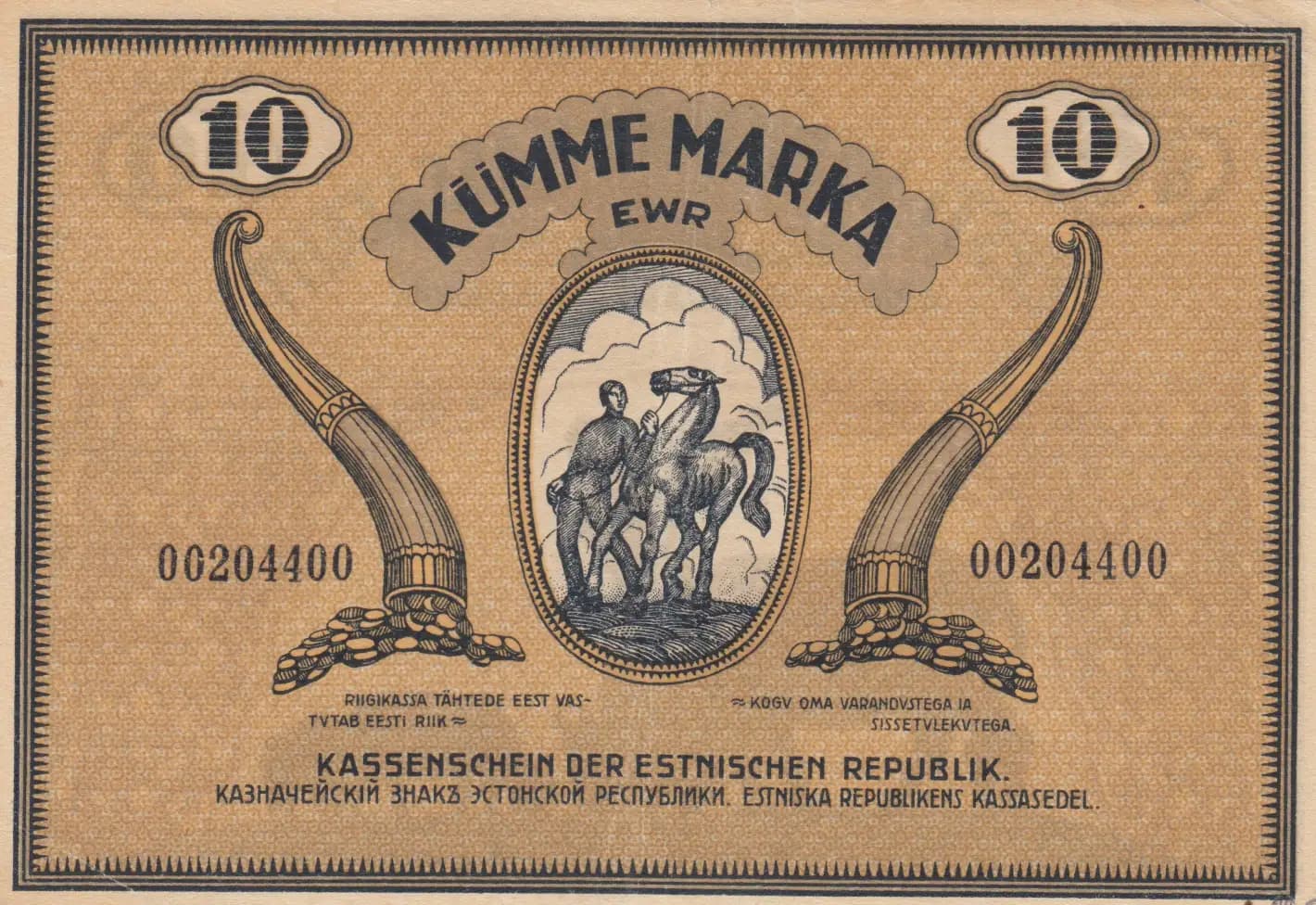
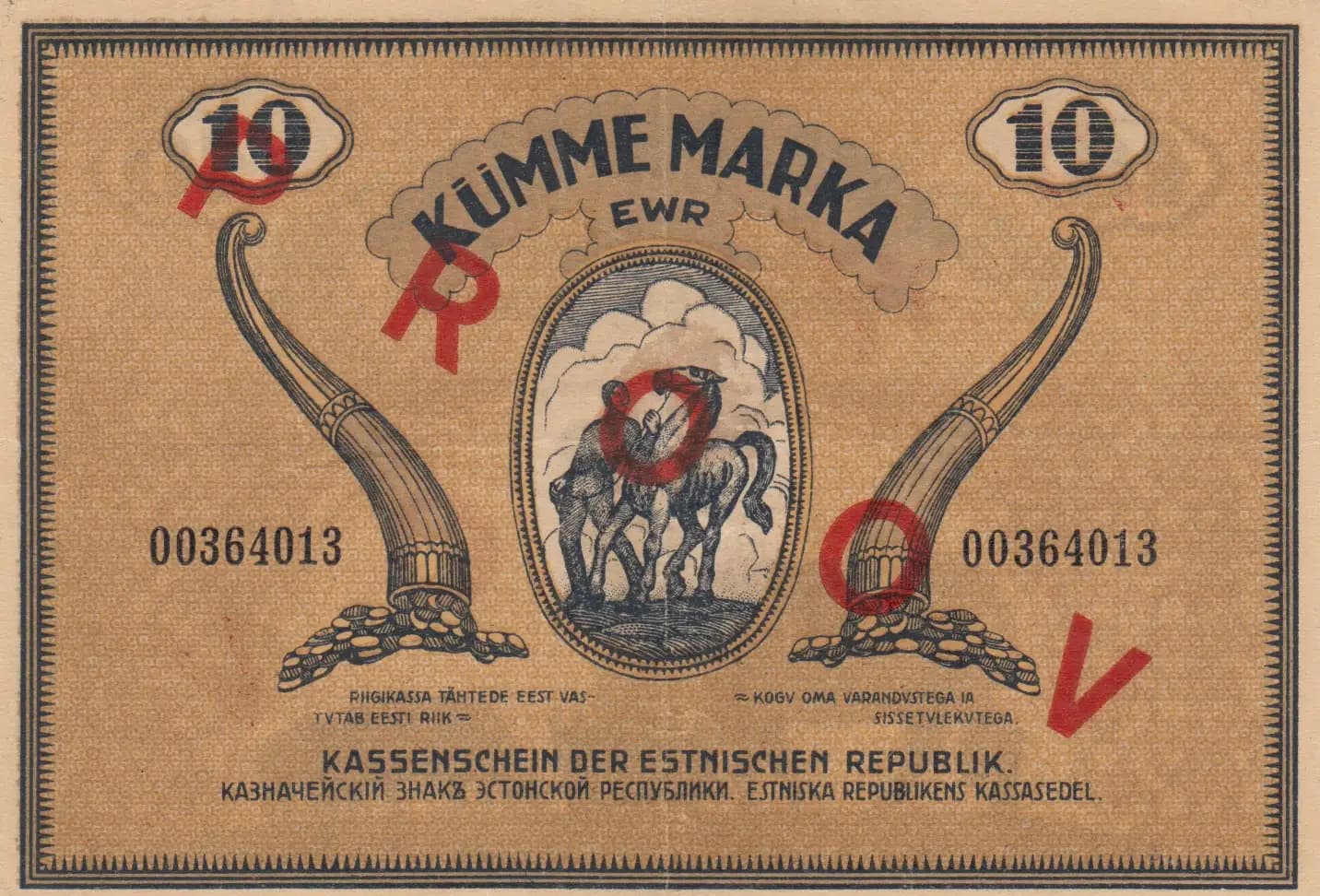
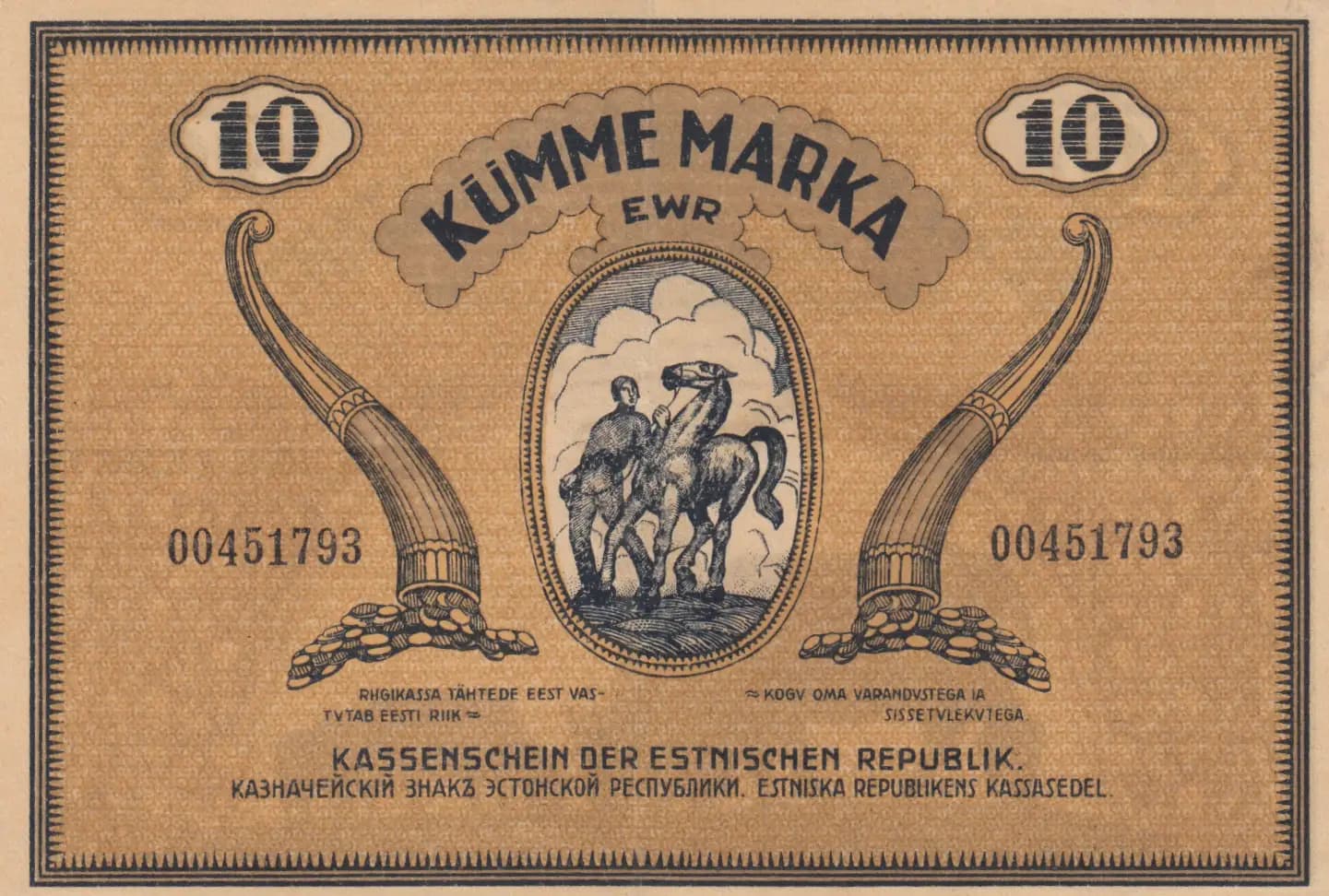
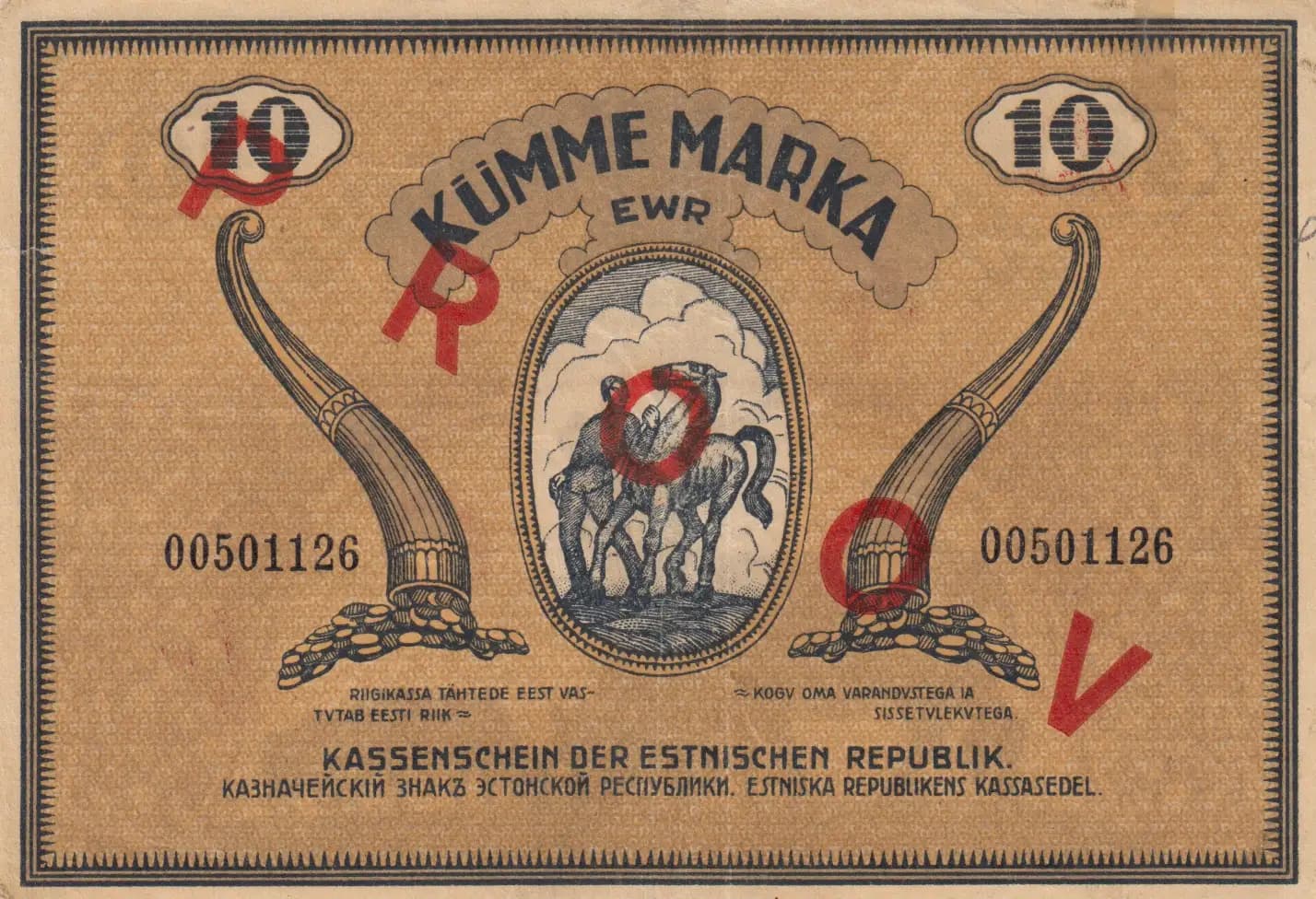
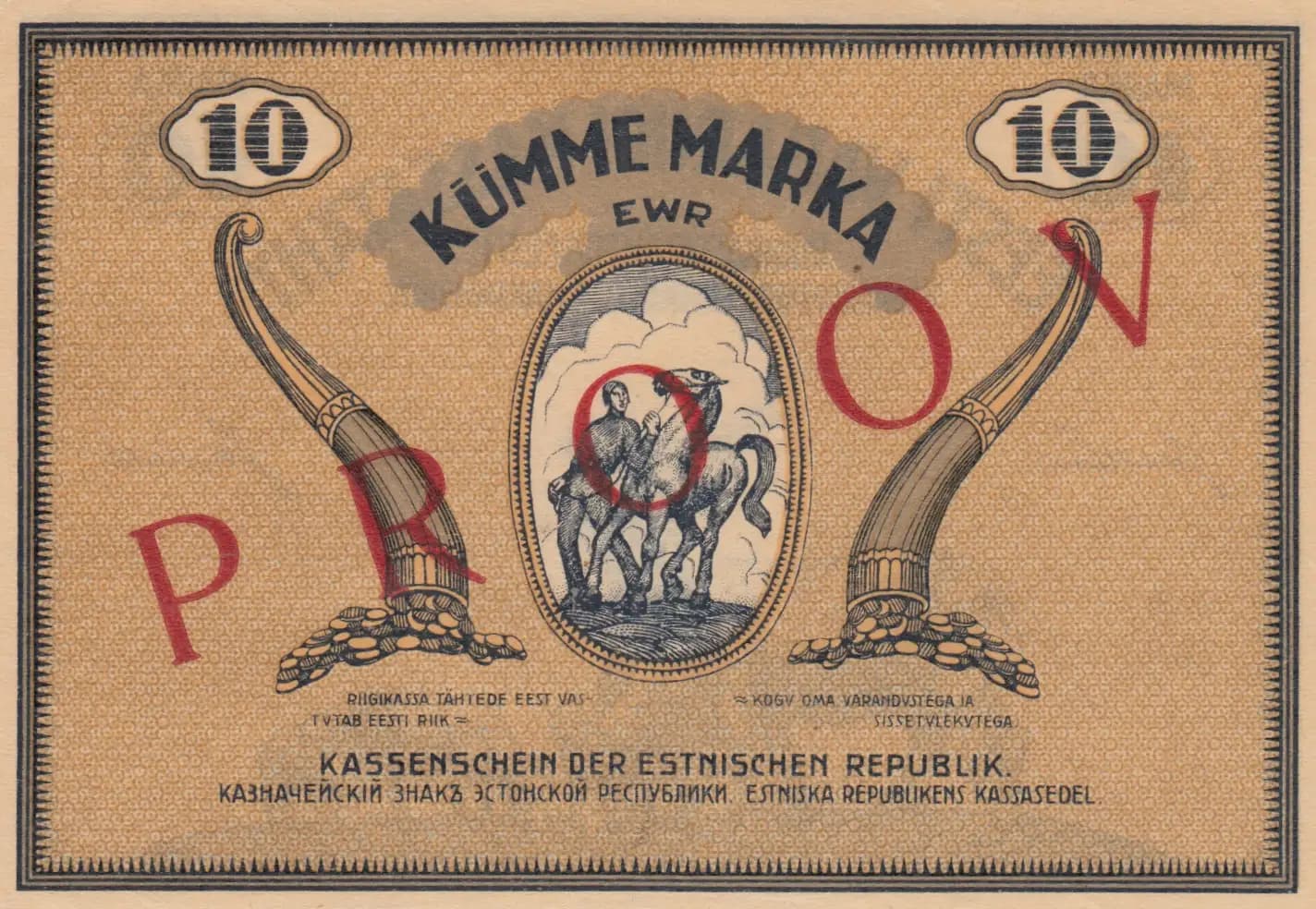
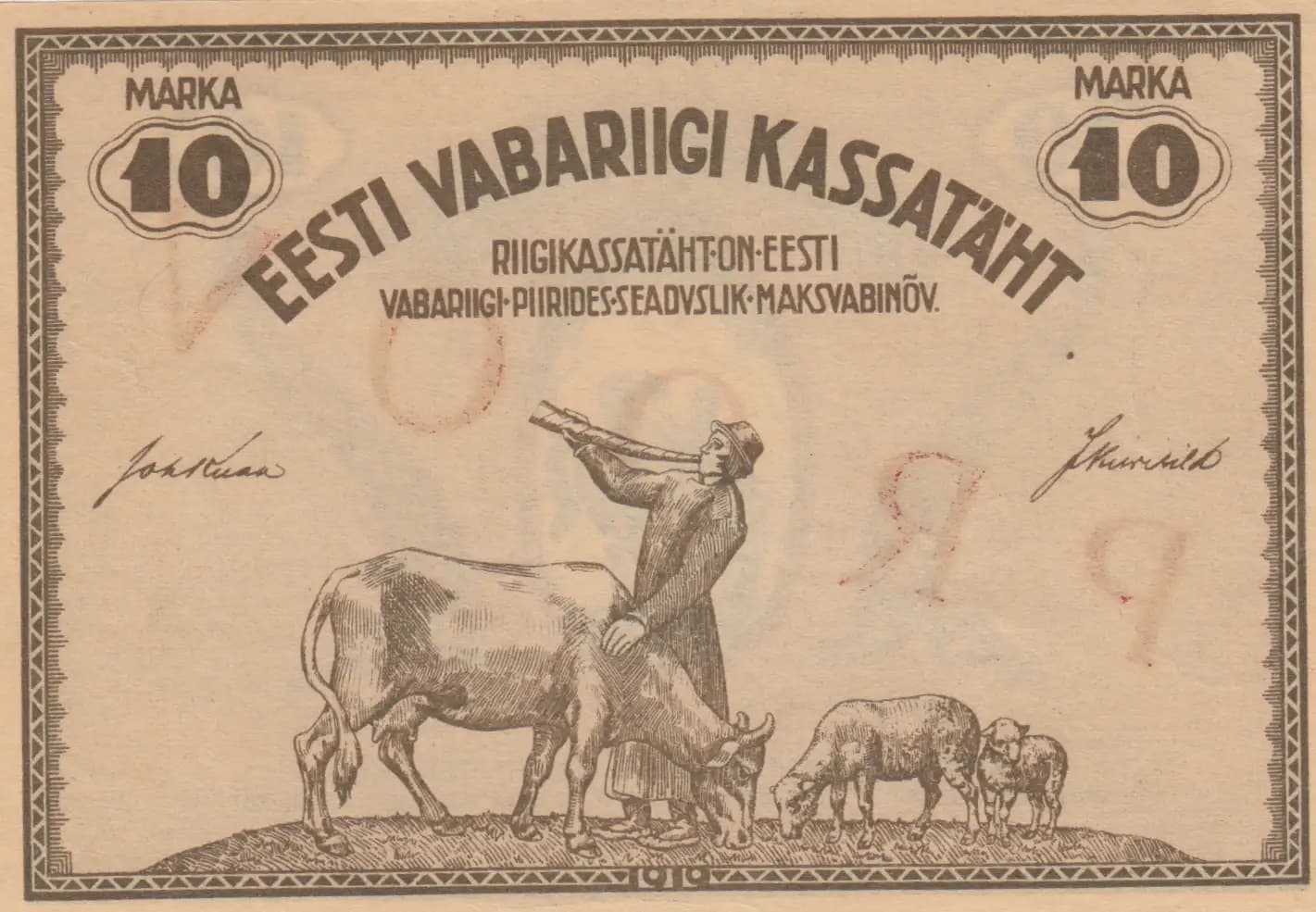
This 1919 Estonian 10 marka specimen note represents an early issue from the newly independent Estonian Republic's first currency. The obverse features a classically engraved equestrian figure within an ornamental oval medallion framed in red, while the reverse depicts a pastoral scene with a shepherd blowing a horn alongside livestock—symbolic imagery representing Estonia's agricultural heritage. Despite significant age-related foxing, staining, and the presence of red specimen cancellation marks, the note retains good detail and remains in AU condition, making it a desirable example of Estonia's formative numismatic period.
Common. The eBay market price data shows AU specimens trading around $269.99 USD, with other grades ranging from $45-$275 USD. This indicates steady, regular market availability. Print runs for early Estonian currency were substantial, and while 1919 issues are less common than later denominations, this Pick number (P-46cs) appears with reasonable frequency in the collector market. The specimen designation (-cs suffix) may make it slightly less common than regular circulation issues, but not substantially so.
The 10 marka denomination was issued by the Estonian Treasury (Riigikassa) in 1919, immediately following Estonia's declaration of independence from the Russian Empire. The pastoral imagery—featuring a horned shepherd and livestock in a rural landscape—reflects the nation's agrarian economy and cultural identity during this period. The inclusion of text in Estonian, German, Russian, and Swedish on the banknote reflects the multilingual character of early 20th-century Estonia and its complex geopolitical situation.
The note exemplifies classical early 20th-century European banknote design. The obverse centers on an equestrian figure—likely representing a historical or symbolic Estonian national figure—rendered in fine engraved detail within a red circular frame, symbolizing authority and national identity. Ornamental cornucopiae-like structures appear at the bottom corners, containing coin imagery, representing economic prosperity and abundance. The reverse depicts a standing male figure in traditional Estonian clothing (long coat and broad-brimmed hat) blowing a ceremonial horn, flanked by a cow and smaller livestock animals in a pastoral landscape—powerful imagery associating the nation with agricultural productivity and rural tradition. Octagonal and rectangular denomination frames containing '10' and 'MARKA' appear in the corners. The fine linear background pattern throughout provides texture and anti-counterfeiting effect.
FRONT: 'KÜMMEMARKA' (Ten marka) - denomination in Estonian; 'KASSENSCHEIN DER ESTNISCHEN REPUBLIK' (Treasury certificate of the Estonian Republic) - German designation; 'КАЗНАЧЕЙСКИЙ ЗНАК ЭСТОНСКОЙ РЕСПУБЛИКИ' (Treasury sign of the Estonian Republic) - Russian text; 'ESTNISKA REPUBLIKENS KASSAEDEL' (Estonian Republic's treasury document) - Swedish/Estonian text. BACK: 'MARKA' - denomination marking; 'EESTI VABARIIGI KASSATAHHT' (Estonian Republic treasury certificate) - primary Estonian designation; 'RIIGIKASSATÄHTON-EESTI' (State treasury certificate Estonia) - alternative Estonian phrasing. Additional treasury-related text appears throughout both sides confirming its official status as a state-issued financial instrument.
Intaglio engraving (line engraving/steel plate engraving). The fine linear background texture, detailed portrait rendering, and classical ornamental border work are characteristic of high-quality intaglio work standard for early national currency issues. The printer for Estonian 1919 issues is documented in some sources as Eesti Kirjastus or other local printing facilities, though confirmation would require additional research.
This is cataloged as P-46cs (specimen variety). The PMG population report identifies four variants for the 10 Marka base number: P-46b (watermark: light vertical lines), P-46c (watermark: light horizontal lines), P-46d (watermark: light vertical lines), and P-46s (specimen). The visual analysis indicates light horizontal blue watermark lines, consistent with the P-46c variant. The presence of red circular cancellation/specimen marks visible in the image confirms the specimen status. Serial numbers and signatures, while visible in the images, are not clearly legible enough to determine specific series or printer variants.