1 mark 1919
About This Note
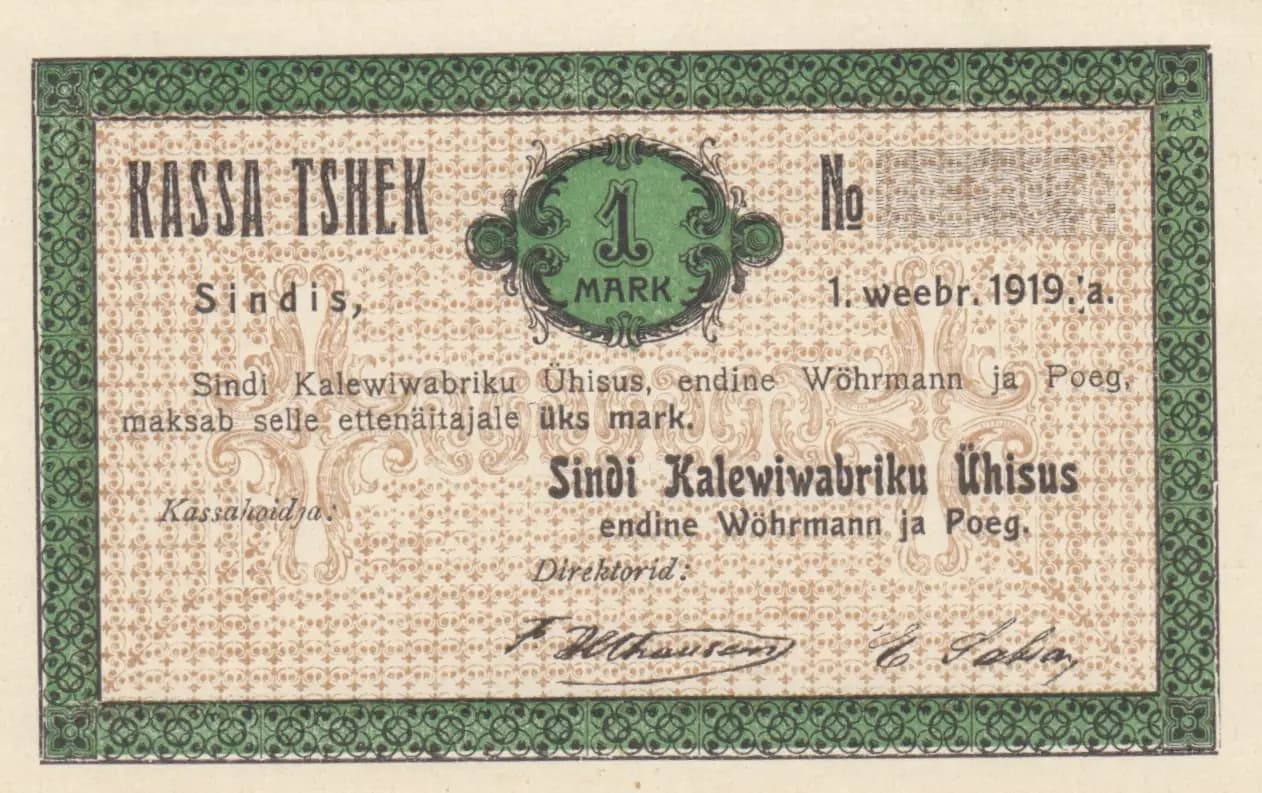
A remarkable emergency scrip note issued by the Sindi Kalevijabrik (Kalevijabrik Union) in February 1919, during Estonia's period of independence struggle and economic transition. The note features an elegant green decorative border with geometric patterns and a cream-colored center field, with the denomination '1 Mark' prominently displayed in an ornate oval cartouche. Despite showing age-appropriate yellowing, creasing, and foxing consistent with a 104-year-old document, the note remains in UNC condition with crisp paper and well-preserved printed details.
Scarce. Factory scrip from the early Estonian independence period, particularly from specific regional industrial facilities like the Sindi Kalevijabrik, has limited surviving population. This is an unlisted Pick number, indicating it falls outside the standard international currency catalogs, suggesting limited documentation and circulation. The note's survival in UNC condition is notable, as most working scrip experienced heavy handling and wear. The specific issuer (Sindi Kalevijabrik Union) was a localized, temporary monetary authority with a brief period of relevance (1918-1920 approximately), and notes from such short-lived issuers typically see smaller print runs and higher loss rates over a century. While not exceptionally rare, this represents a specialized and historically important category of early Estonian numismatic material.
Issued on February 1, 1919, during the critical early months of Estonian independence (declared February 24, 1918), this factory scrip represents the economic uncertainty and localized currency solutions of the period. The Sindi Kalevijabrik, a industrial facility in Sindi (formerly under Russian control), issued this emergency currency when official Estonian monetary systems were still being established. Such private industrial notes served as a bridge currency when national monetary authority was in transition, particularly common in formerly Russian-occupied territories during 1918-1920.
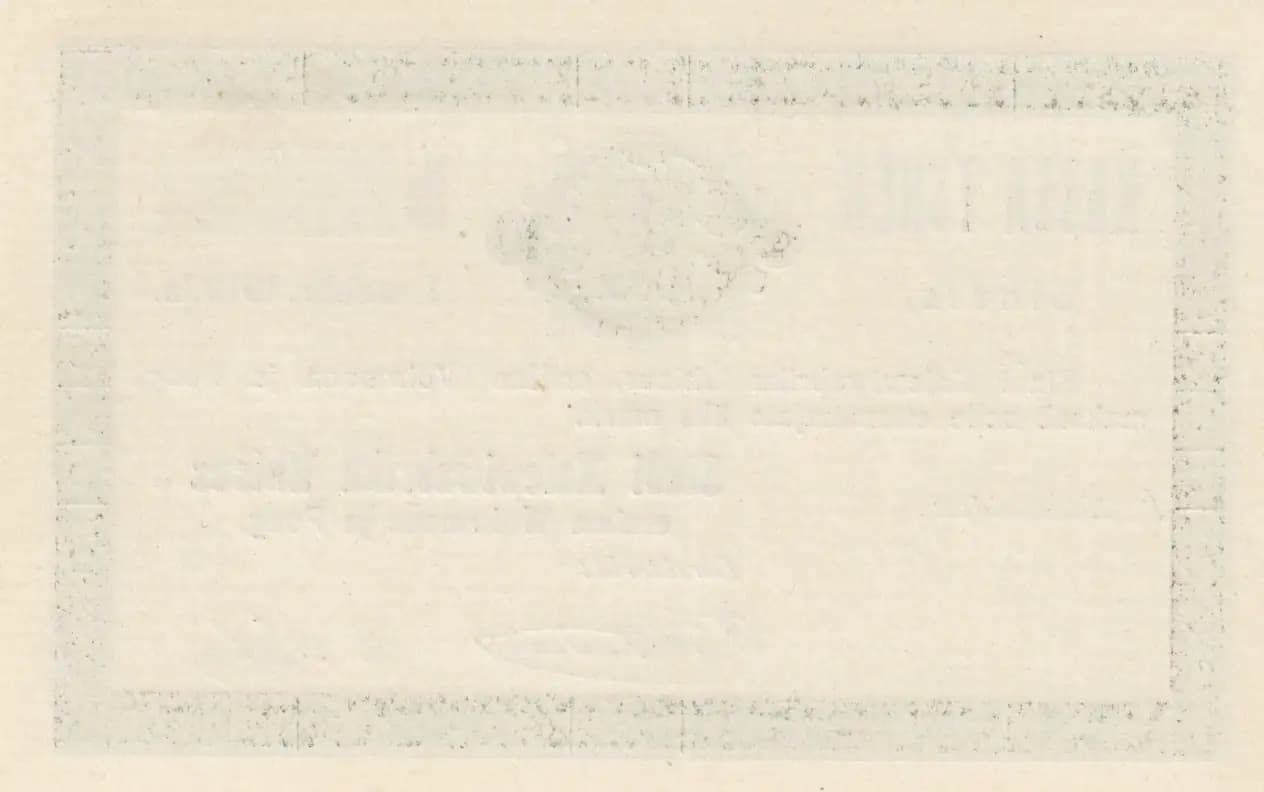
The obverse features a formal commercial design typical of early 20th-century industrial scrip. The denomination '1' is displayed in a large serif font within an ornate oval cartouche, flanked by decorative flourishes, centered in the upper portion of the note. The surrounding field is decorated with a repeating geometric motif pattern providing both aesthetic appeal and basic anti-counterfeiting measures. A green decorative border frame with ornamental scrollwork and geometric patterning encases the entire design. The note identifies the issuer as the Sindi Kalevijabrik Union (successor to the Wöhrmann and Pöeg factory operation), with printed signature line for cashier K. Tsolev. The reverse is intentionally left blank, consistent with many emergency currency issues of this era. The cream/beige paper stock and black ink printing convey formality and official authority.
FRONT SIDE: 'KASSA TSHEK' (Cash check / Payment voucher) | 'No.' (Serial number designation) | '1 MARK' (Denomination in Estonian/German) | '1. weebr. 1919. a.' (1st of February, 1919) | 'Sindis, Sindi Kalevijabrik Union, endine Wöhrmann ja Pöeg, maksab selle ettenäitajale üks mark.' (In Sindi, the Sindi Kalevijabrik Union, formerly Wöhrmann and Pöeg, pays the bearer of this note one mark) | 'Sindi Kalewijabriku Ühisus' (Sindi Kalevijabrik Union) | 'endine Wöhrmann ja Pöeg,' (formerly Wöhrmann and Pöeg) | 'Direktoriaad:' (Board of Directors:) | 'Kassahoaja' (Cashier) | 'K. Tsolev' (Signature of K. Tsolev, Cashier) | BACK SIDE: Largely blank with faint watermark impression only.
Typographic/letterpress printing on cream-colored paper stock. The precise, uniform impression of text and the crisp definition of the ornamental border and cartouche elements indicate traditional letterpress techniques. The dense repeating decorative pattern background was likely produced through metal type or engraved blocks. No evidence of lithographic color layering is visible; the green coloration appears to be monochromatic. The faint circular impression on the reverse suggests an embossed or blind-stamped element. The printer for this specific scrip issue is not identified on the note itself; Estonian regional industrial notes were often produced by local or regional printing facilities.
Variety identified by cashier signature: K. Tsolev. The serial number position is indicated ('No.') but no legible serial number is clearly visible in the provided images. The date of issue is fixed as 1. weebr. 1919. a. (1 February 1919). Given the industrial/commercial nature of this scrip and its short lifespan, variations may exist based on authorized signatories (board members vs. cashier signatures), though only the K. Tsolev cashier signature is documented on this example. No known overprints or denomination varieties have been identified for this issuer's 1-mark denomination.