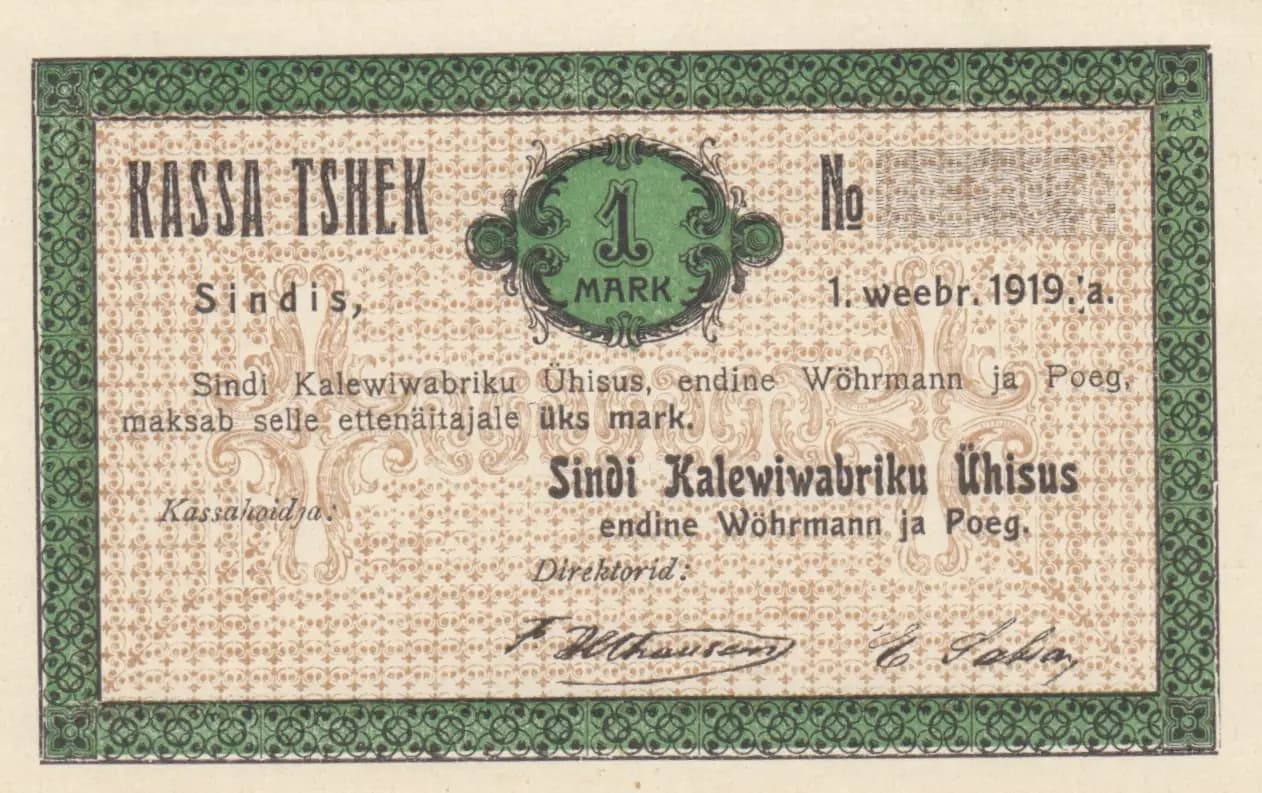
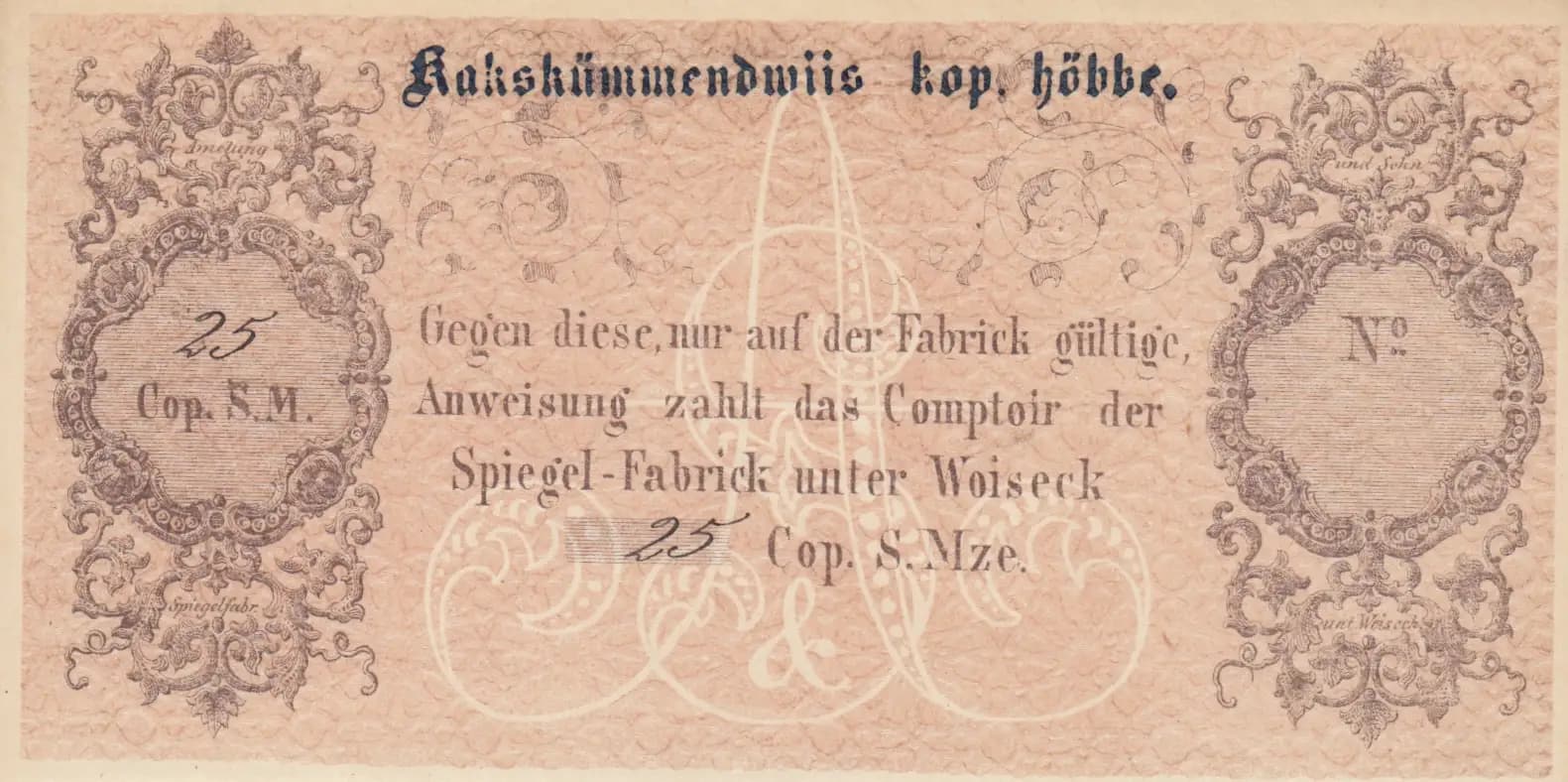
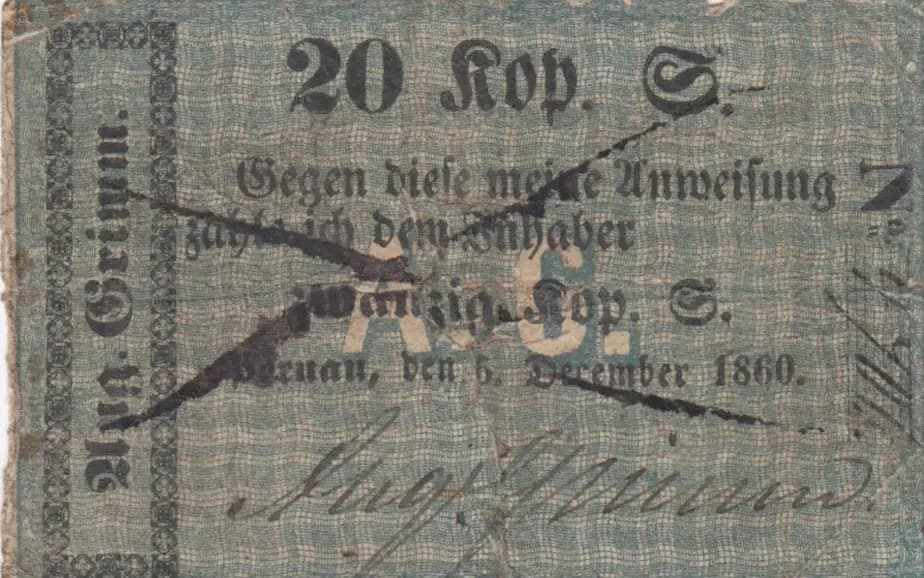
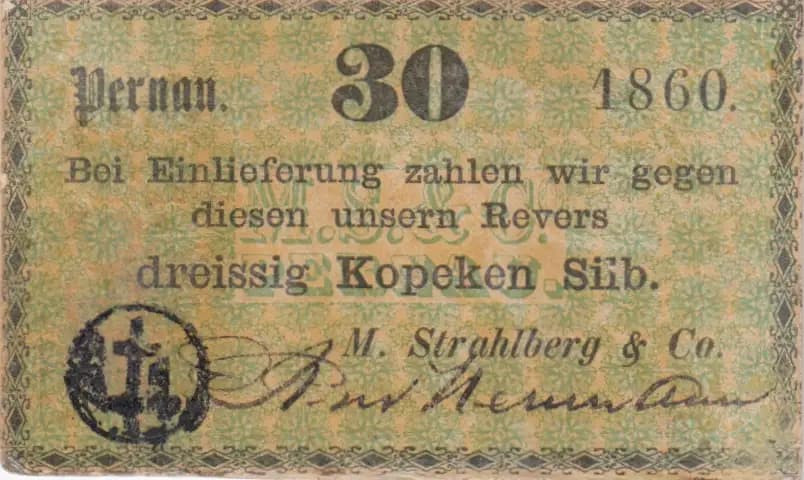
1 mark 1919
Market Prices
13 salesAbout This Note
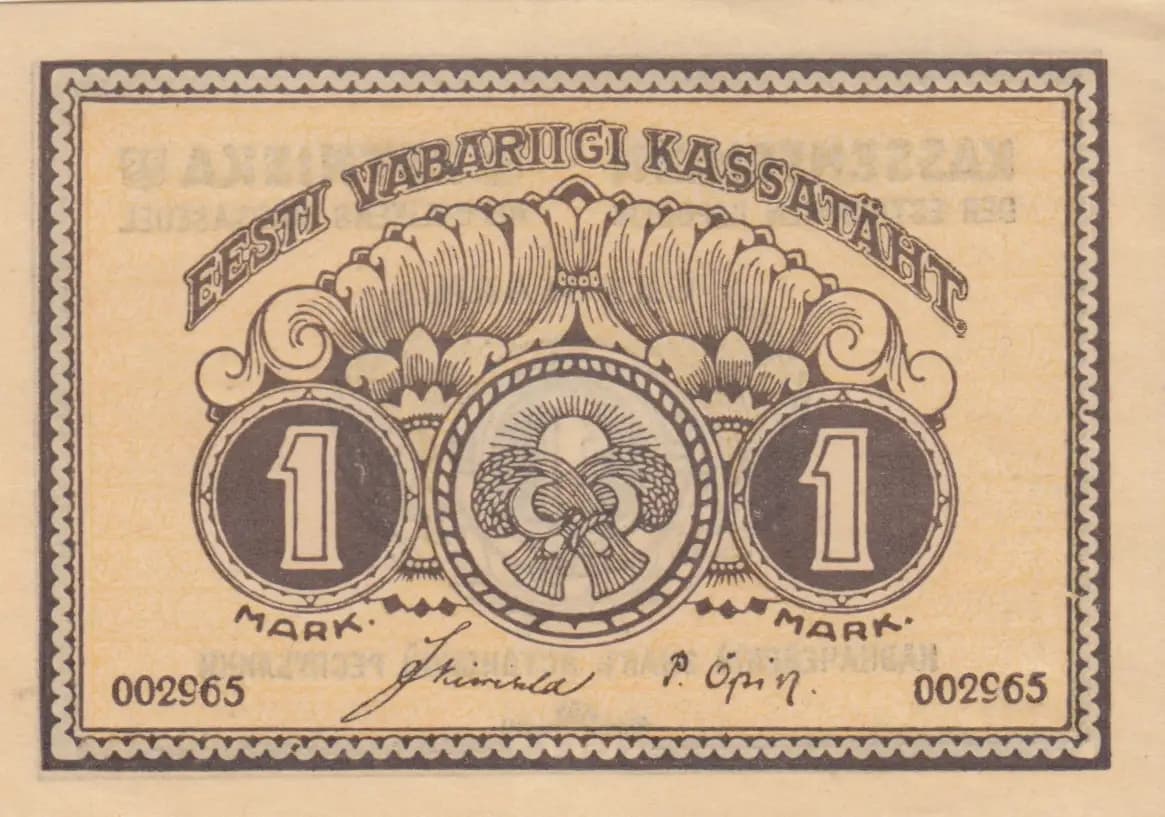
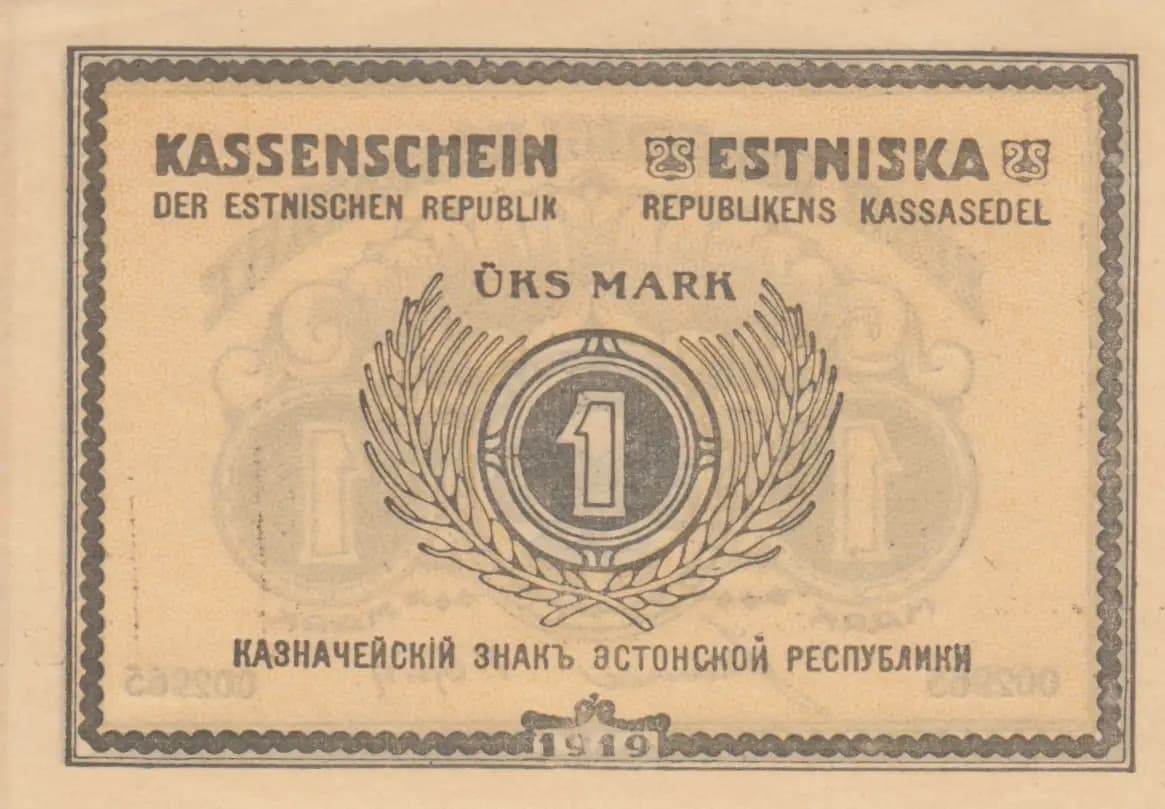
This is an uncirculated 1 Mark banknote from the Estonian Republic's first currency issue in 1919, displaying excellent preservation with only light age-related yellowing consistent with its over 100-year history. The note features distinctive Art Nouveau design elements including ornate circular medallions and elaborate scrollwork on the obverse, with a simpler laurel wreath design on the reverse, reflecting the transitional aesthetic of early 20th-century European numismatic design. As one of Estonia's earliest independent currency issues, this represents a significant historical piece documenting the nation's sovereignty following the Russian Revolution.
Common. The eBay market data provided shows consistent sales of this note in various grades (F to VF typically $3-$37 USD, with UNC catalog value of $50), indicating steady availability and moderate collector demand. The 1919 1 Mark Estonian note was part of a regular initial currency issue and remains relatively accessible on the secondary market. While not abundant, there is no evidence of severely restricted print runs, early recall, or extraordinary scarcity. The note's historical significance as an early independence-era issue provides collector interest but does not elevate it to rare status.
The 1 Mark note was issued by the Treasury of Estonia (Eesti Vabariigi Kassatäht) in 1919, immediately following Estonia's declaration of independence on February 24, 1918, and establishment of its own currency system after centuries of Russian rule. The multilingual inscriptions in Estonian, German, and Russian reflect the complex linguistic and cultural landscape of the newly independent Baltic state, with German reflecting historical Baltic German influence and Russian acknowledging the geopolitical realities of the region. The formal Art Nouveau ornamentation and treasury note designation convey the legitimacy and institutional authority the young republic sought to establish for its monetary system during a period of significant political and economic transition.
This 1 Mark note exemplifies early Estonian republican coinage design with a predominantly Art Nouveau aesthetic. The obverse features two large circular medallions at left and right, each containing the numeral '1' with 'MARK' inscribed below, framing a central circular medallion containing an ornamental bow or ribbon design. The composition is enriched by elaborate scrollwork and acanthus leaf foliation that frames the entire piece, characteristic of late 19th/early 20th-century European bank note ornamentation. The reverse presents a more restrained but equally formal design, with a central circular frame containing the numeral '1' surrounded by a laurel wreath—a classical symbol of authority and achievement. The laurel wreath motif, combined with the formal treasury nomenclature, emphasizes the note's official status and the gravitas the fledgling republic wished to convey. No portrait figures are depicted; instead, the design relies on symbolic and ornamental elements to establish legitimacy and national identity.
FRONT: 'EESTI VABARIIGI KASSATÄHT' (Estonian: 'Estonian Republic Banknote'); 'MARK' (denomination marking); Serial number '002965'. BACK: 'KASSENSCHEIN DER ESTNISCHEN REPUBLIK' (German: 'Treasury Note of the Estonian Republic'); 'ESTNISKA REPUBLIKENS KASSASEDEL' (Estonian: 'Estonian Republic's Treasury Note'); 'ÜKS MARK' (Estonian: 'One Mark'); 'КАЗНАЧЕЙСКИЙ ЗНАК ЭСТОНСКОЙ РЕСПУБЛИКИ' (Russian: 'Treasury Note of the Estonian Republic'); '1919' (issue year).
The note exhibits characteristics of intaglio printing (engraved line work), evidenced by the crisp definition of the ornamental scrollwork, medallion borders, and fine details visible in the Art Nouveau foliation. The color composition—tan/beige with dark brown/black printing—suggests a two-color intaglio process typical of Treasury notes from this period. The uniform, consistent appearance of the design elements and serial numbers indicates professional security printing by an established firm, though the specific printer is not definitively attributed in available catalog data.
The PMG population report indicates one catalogued variant (P-43a) for this Pick number. The observed serial number '002965' appears consistent with standard sequential numbering. No overprints, signatures, or date variations are evident in the visual analysis. Without additional comparative data on serial number ranges or printing batches, the specific variety cannot be conclusively determined from this example alone, though it conforms to the standard P-43 specifications.