50 piastres 1966
Market Prices
24 salesAbout This Note
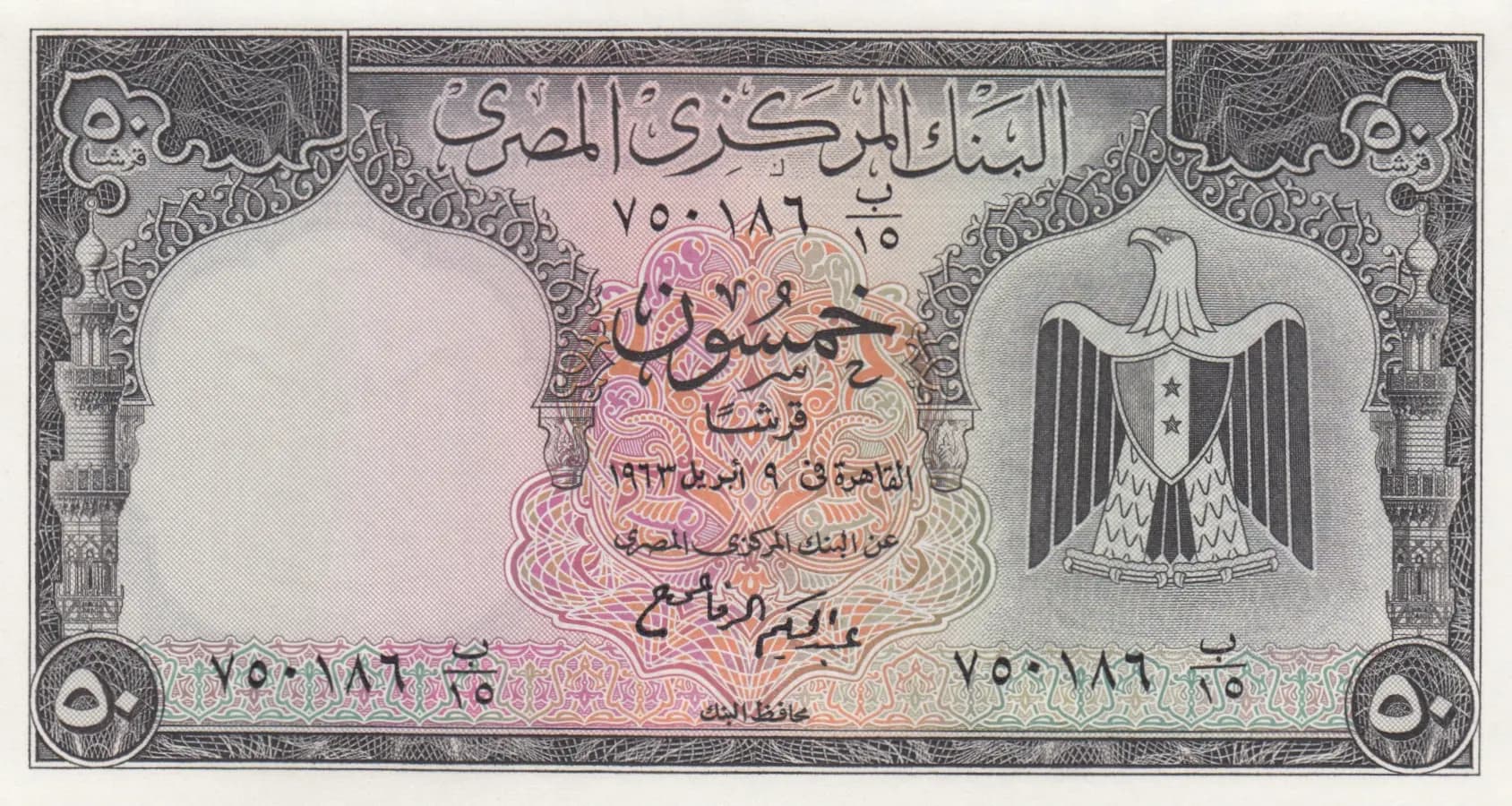
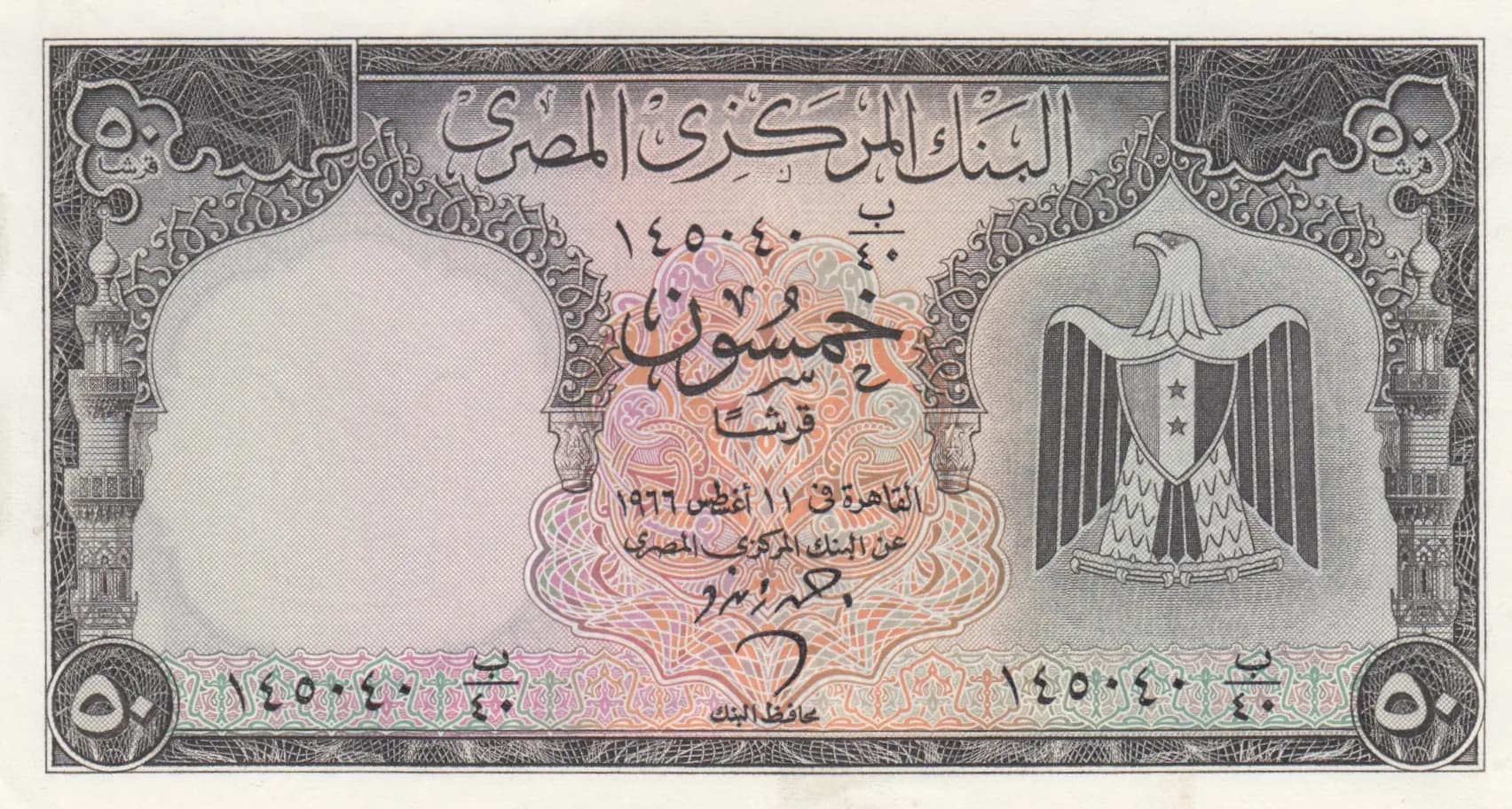
This is an exceptionally well-preserved specimen of Egypt's 50 Piastres note from 1966, displaying the classical Islamic geometric design aesthetic characteristic of UAR-era currency. The note exhibits the hallmark ornate borders, elaborate mandala patterns, and the prominent Egyptian national eagle emblem in uncirculated condition with pristine surfaces and sharp, crisp engraving throughout. This denomination and series represents an important transitional period in Egyptian monetary design, combining traditional arabesque artistry with modern security printing techniques.
Common. The eBay market data provided demonstrates consistent, robust trading activity across multiple years (2014-2023) with numerous sales at modest prices ranging from $10-$110 depending on grade. PMG 67 specimens (the highest grades achieved) average $50-$80, while UNC examples trade for $12-$27. The 2019 catalog valuation of $15 for UNC examples confirms this is a standard, widely circulated issue with substantial surviving examples. The Pick 36b designation and the broad date range (1961-1966 issue period) suggest a significant print run. This note's collector interest is modest and primarily driven by Egyptian numismatic enthusiasts rather than rarity.
Issued during the United Arab Republic period (1961-1971), this note reflects Egypt's post-Suez Crisis national identity and modernization efforts under Nasser's government. The prominent display of the Egyptian national emblem (the eagle with shield) and Arabic inscriptions emphasizing 'Arab Republic of Egypt' (جمهورية مصر العربية) demonstrate the period's emphasis on Arab nationalism and sovereign currency. The use of Islamic geometric and floral patterns throughout the design celebrates traditional Egyptian artistic heritage while the dual dating system (both Gregorian and Islamic calendar years: 1450 AH) underscores Egypt's cultural identity.
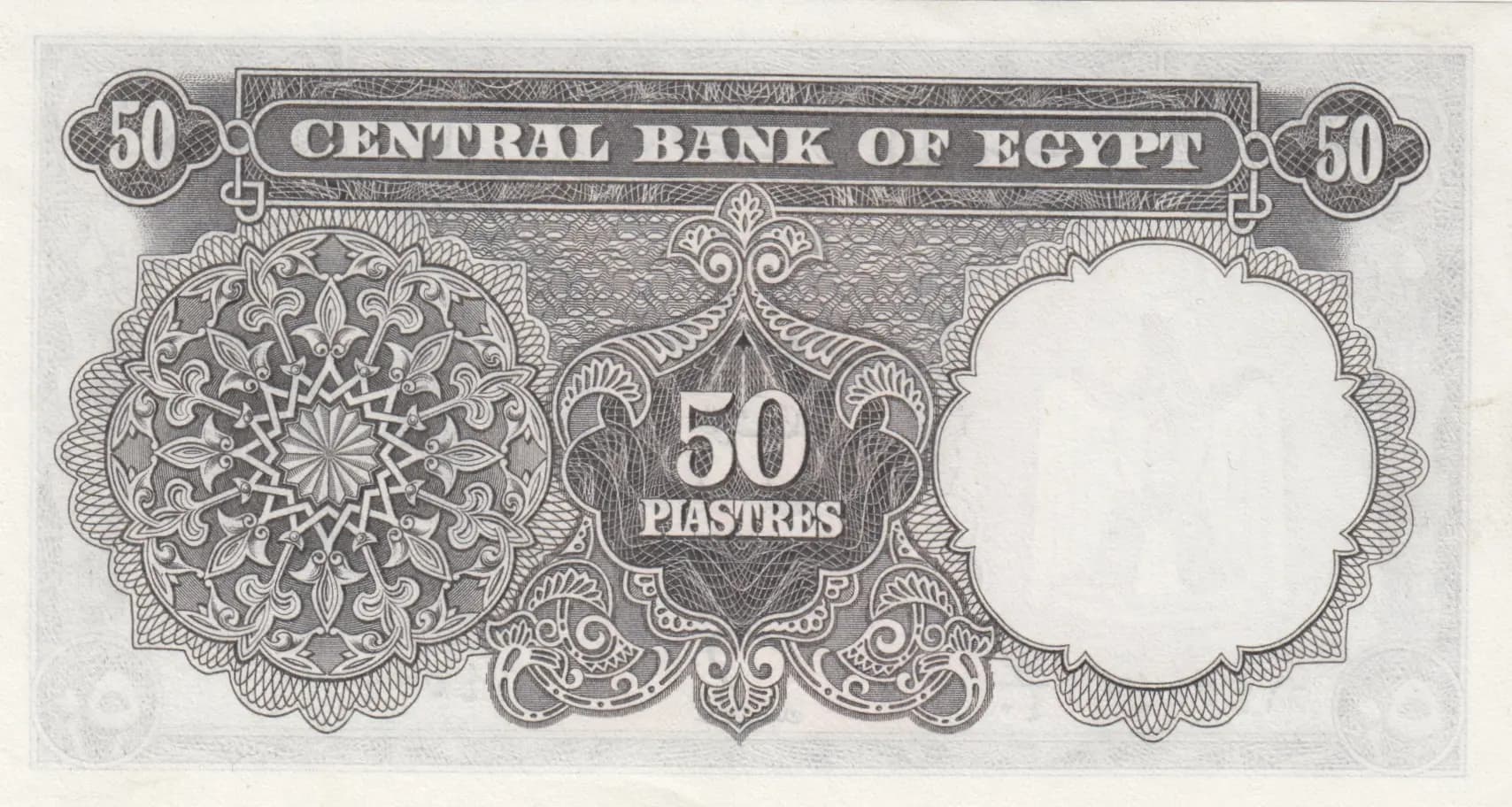
The obverse features a central portrait medallion rendered in grayscale, obscured by ornamental calligraphic overlay typical of Islamic monetary design conventions that avoid realistic portraiture. The Egyptian national emblem—a golden eagle clutching a shield bearing two stars—is positioned prominently on the right side and appears in the watermark as a security feature. Elaborate minaret-inspired towers frame the left and right borders, while intricate Islamic lattice-work (geometric tessellations) and floral arabesque patterns create a comprehensive security pattern across the entire note. The reverse showcases a magnificent mandala-like circular geometric composition on the left, featuring nested polygonal and floral motifs, with the English denomination prominently centered. The color scheme of gray, black, pink/rose, and purple on cream background provides high contrast for both aesthetic appeal and security purposes.
FRONT SIDE: البنك المركزي المصري (Central Bank of Egypt) | جمهورية مصر العربية (Arab Republic of Egypt) | خمسون (Fifty) | 1450 (Islamic calendar year, corresponding to 1965-1966) | 50 (Arabic numeral denomination). BACK SIDE: CENTRAL BANK OF EGYPT (English translation of issuing authority) | 50 PIASTRES (English denomination marking) | 50 (numeral denomination markers in corner circles).
Intaglio engraving (recess printing), the standard security printing method for this era of Egyptian currency. The fine line engraving visible in the borders, the precise geometric patterns, and the sharp registration between colors indicate professional Central Bank security printing. This note was likely produced by the Central Bank of Egypt's printing facilities or contracted to a major European security printer (such as De La Rue or similar), as evidenced by the sophisticated multi-color intaglio process and complex security pattern integration typical of high-grade currency production in the 1960s.
This specimen can be identified as Series 19-42 based on the visual analysis observations. The obverse date range '1965-14.8.1966' indicates the specific printing period. The blackish-green on multicolored underprint is the standard color combination for this Pick number. Known series variations for this denomination exist (Series 19-42 being one documented variety), and collectors should note that serial number prefixes and signature combinations may vary across the production period, though these distinctions are not prominently visible in the provided images. The Islamic calendar date 1450 AH corresponds to the 1965-1966 Gregorian dating shown on the note.