50 piastres 1963
Market Prices
13 salesAbout This Note
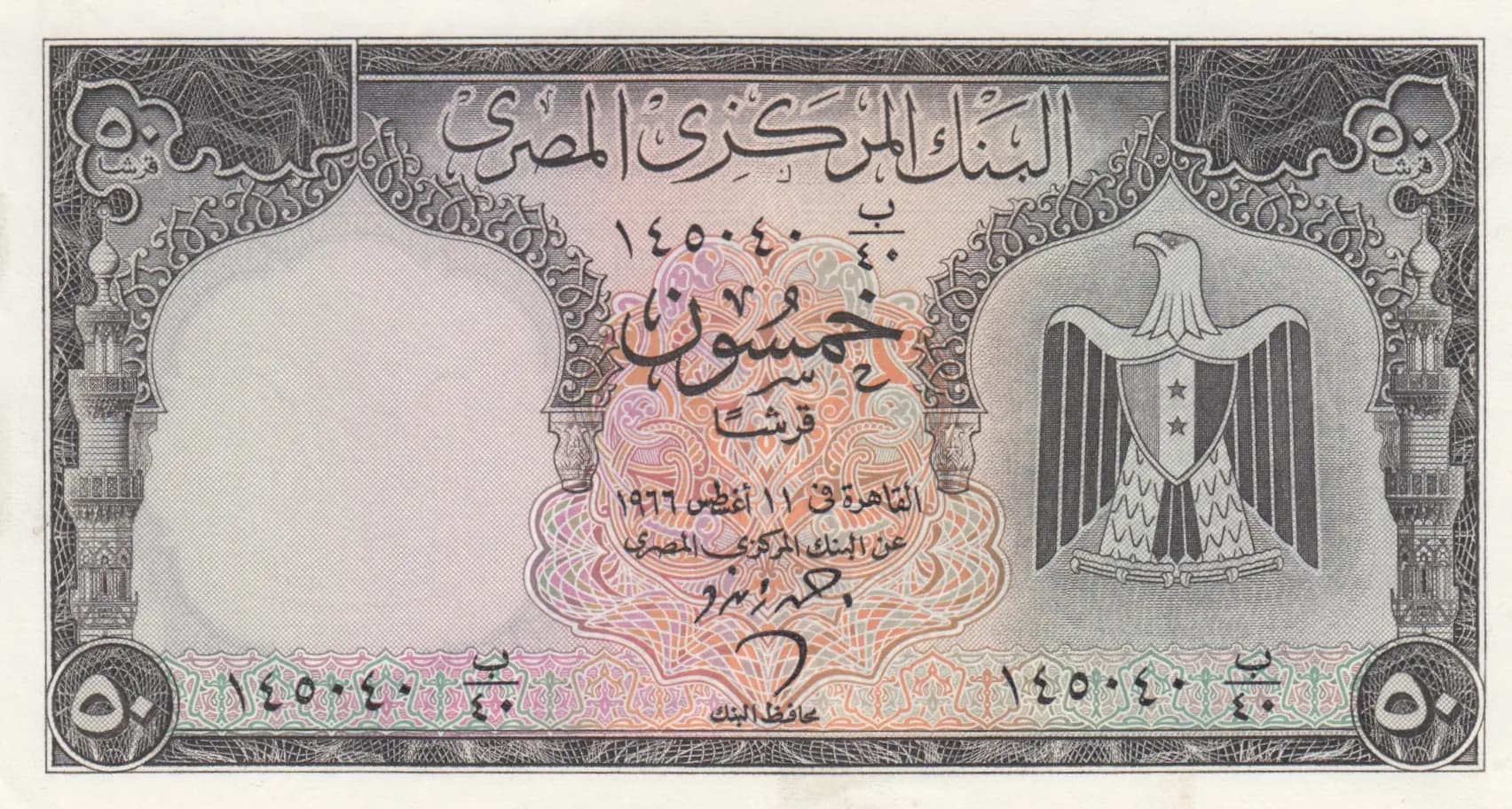
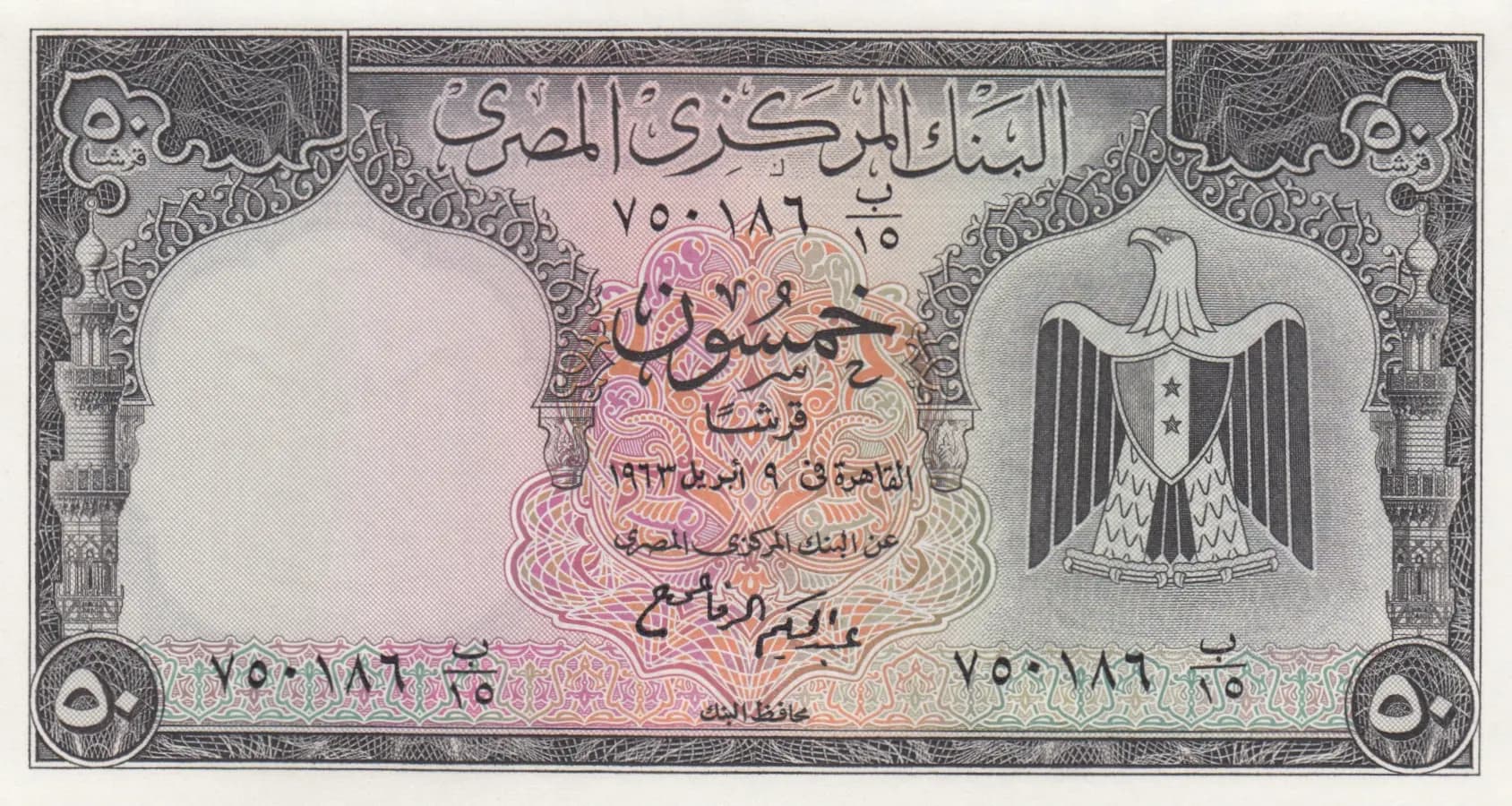
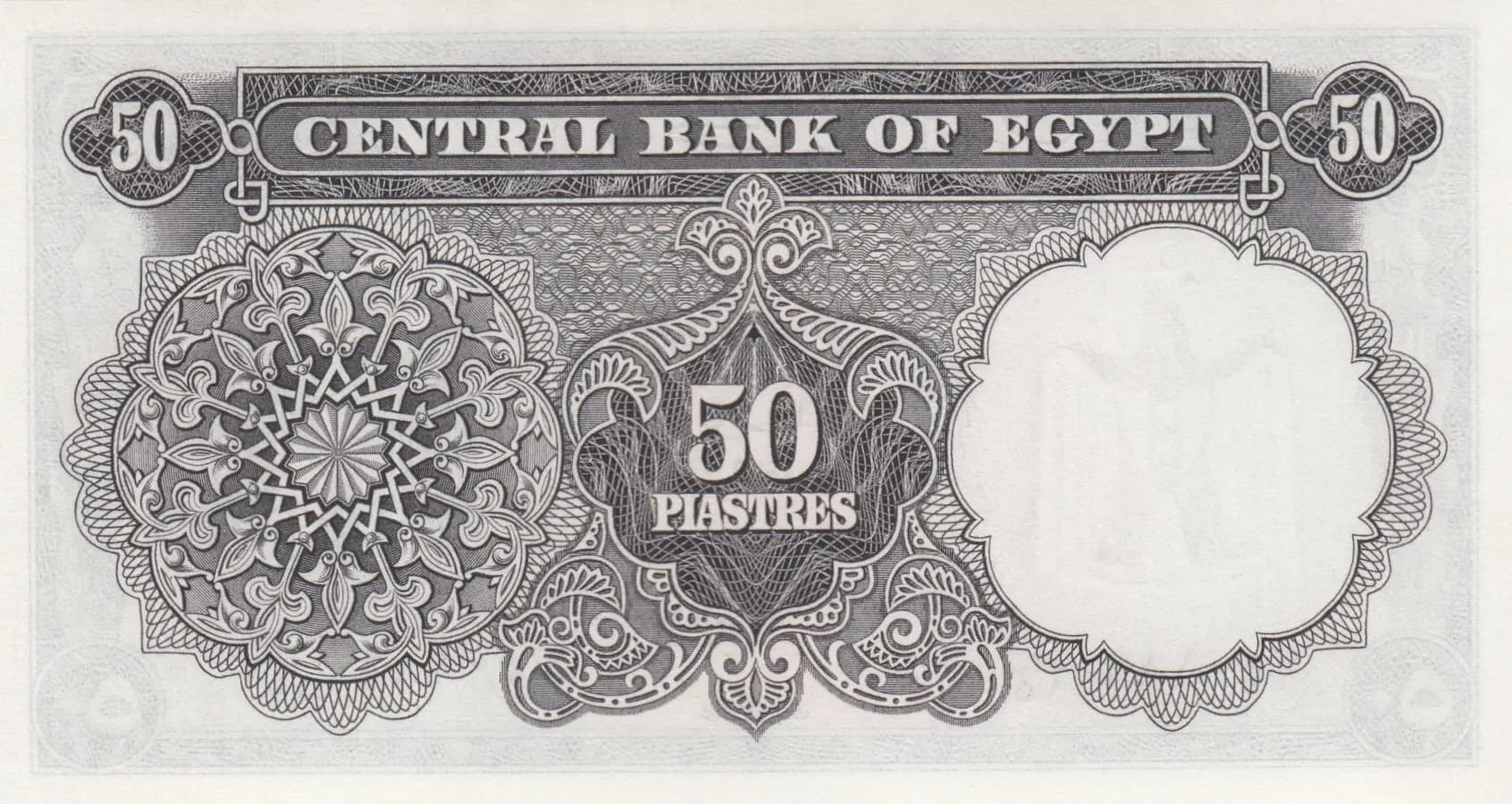
This is an exceptional example of Egypt's 1963 50 Piastres note (Pick 36a), presented in uncirculated condition with vibrant, sharp printing throughout. The front features the impressive U.A.R. national eagle emblem in full color alongside intricate Islamic geometric and arabesque designs in pink, orange, green, and cream tones, while the reverse displays elegant black and white ornamentation with a complex mandala-style geometric pattern. This note represents a key issue from Egypt's United Arab Republic period and remains highly collectible, with recent market activity showing UNC examples consistently trading in the $11-20 range.
Common. This note remains common in the numismatic market, as evidenced by consistent eBay sales data showing UNC examples regularly selling for $11-20 since 2016. The catalog value of $15 for UNC condition reflects steady, predictable demand without scarcity premiums. While the 1961-1966 issue series had substantial print runs to support Egypt's economy during the U.A.R. period, the note maintains collector interest due to its historical significance and attractive design. No print run restrictions, recall events, or supply constraints have made this Pick number scarce.
Issued during the United Arab Republic period (1961-1966), this 50 Piastres note reflects Egypt's nationalist consolidation under Nasser, with the prominent eagle emblem symbolizing national sovereignty and strength. The bilingual design—Arabic on the front and English on the reverse—demonstrates the nation's position as a bridge between Islamic and Western commercial spheres during the Cold War era. The ornate Islamic geometric patterns honor Egypt's rich cultural heritage while the modernist eagle emblem projects a contemporary, forward-looking national identity.
The front of this note showcases the official national emblem of the United Arab Republic—a stylized golden eagle with spread wings holding a shield bearing two stars, positioned prominently on the right side. This emblem also appears as a watermark for security purposes. The design is dominated by elaborate Islamic arabesque work featuring pink, orange, green, and cream intaglio coloring, creating a sophisticated interplay of traditional and modern design elements. The reverse side presents a striking circular geometric mandala pattern in black on the left, with an ornate cartouche displaying '50 PIASTRES' in the center. Corner medallions in all four corners display the denomination across both sides. The entire note is framed by elaborate geometric and floral border patterns characteristic of mid-20th century Egyptian currency design.
Front side: 'البنك والمركزى المصرى' (Central Bank of Egypt) appears as the issuing authority. Serial number references include Arabic numerals for series and identification purposes. Back side: 'CENTRAL BANK OF EGYPT' in English, with '50 PIASTRES' clearly displayed in the center cartouche and denomination markers '50' repeated in all four corners. The bilingual presentation reflects the official languages in use during the U.A.R. period.
This note was produced using high-quality intaglio (engraved) printing, evident from the precise fine line work, sharp detail in the geometric patterns, and the vibrant colored overprinting on the front. The colored inks in pink, orange, green, and cream demonstrate skillful multicolor intaglio application. The mandala pattern on the reverse shows the characteristic crisp edges and subtle tonal variations of professional intaglio engraving. The Central Bank of Egypt employed advanced British and European security printing standards during this period, with production likely handled by established security printers such as Waterlow & Sons or De La Rue, though specific attribution requires archival research.
This example is cataloged as Pick 36a, indicating it is a recognized variety within the 50 Piastres 1963 issue. The note bears the date '1961-13.4.1963' on the obverse, representing the authorization date (1961) and actual printing/release date (April 13, 1963). Series numbers run from 1-18 as noted in catalog references. The serial number visible on this specimen (approximately 750186 based on visual analysis) places it within the standard numbering sequence. Specific signature varieties and plate varieties for this Pick number should be cross-referenced against detailed Pick catalog supplements, though no unusual varieties are apparent from this example.