50 piastres 1955
Market Prices
9 salesAbout This Note
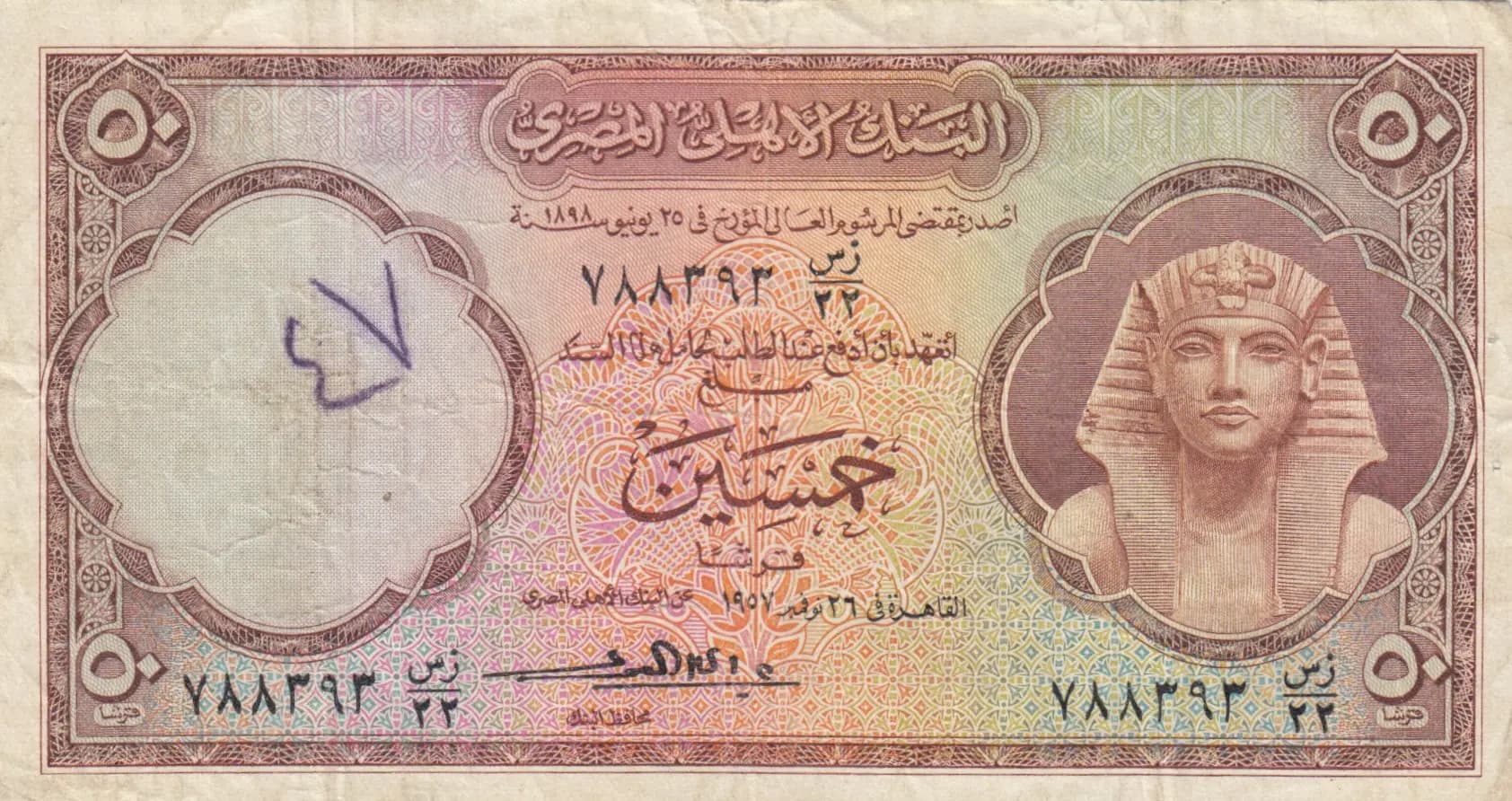
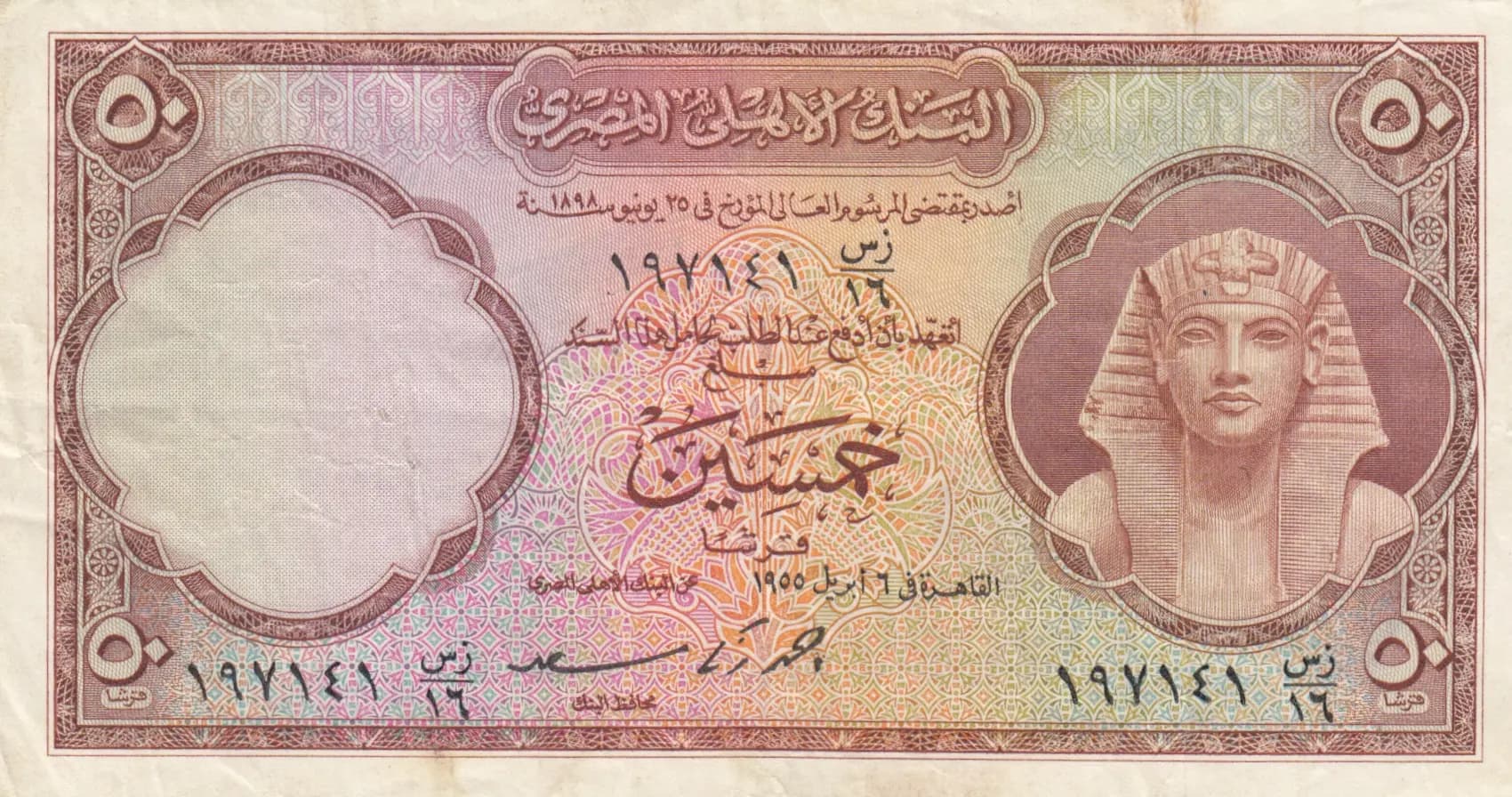
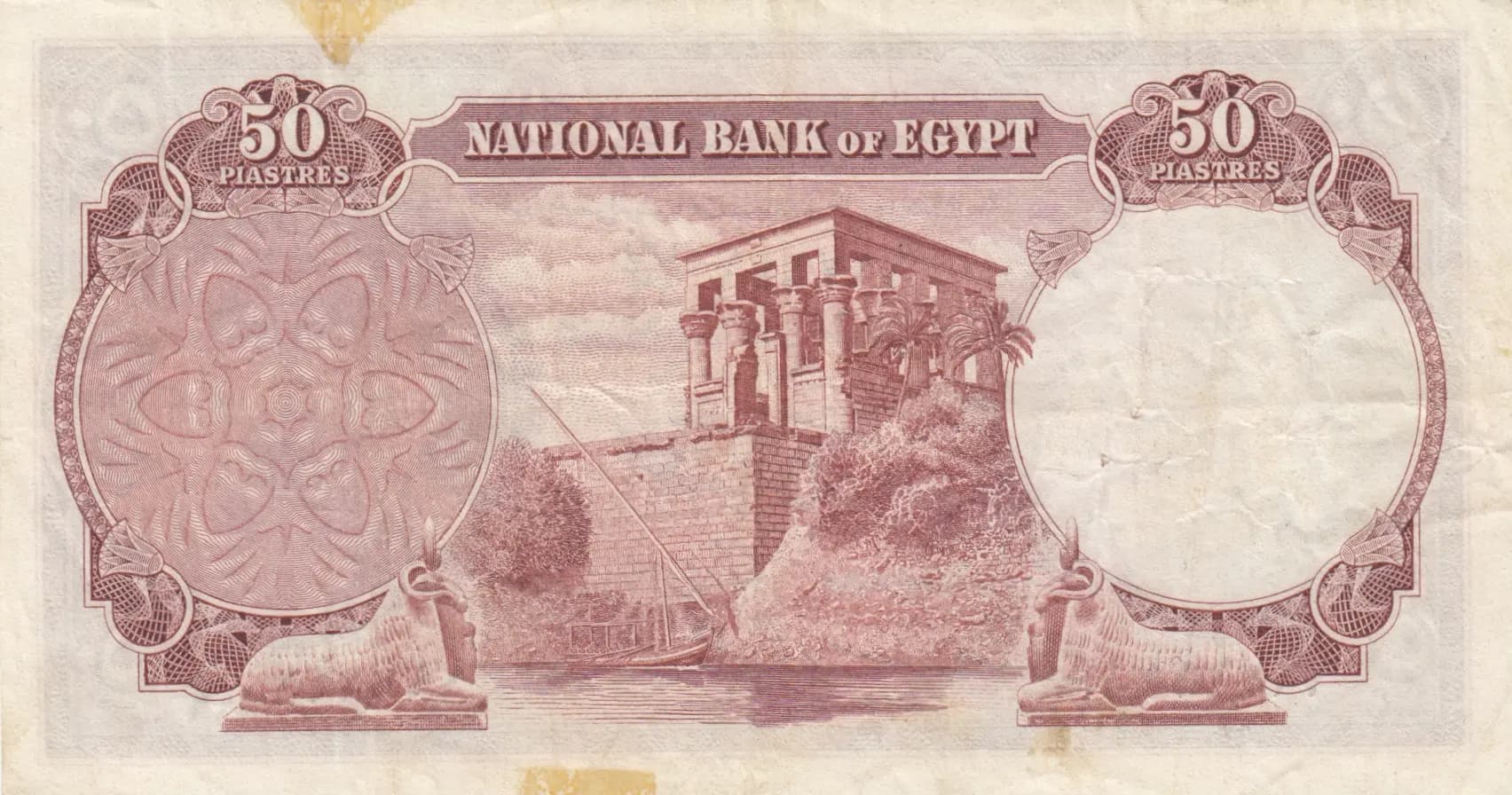
This 50 Piastres note from the National Bank of Egypt (1955, Pick-29) presents a handsome example of mid-20th century Egyptian currency featuring a portrait of Tutankhamen on the obverse and architectural ruins with symbolic rams on the reverse. The note displays VF condition with visible signs of circulation including creasing and slight discoloration consistent with its age, yet the multicolored engraving remains crisp and the ornamental details are well-preserved. This is a foundational piece of post-independence Egyptian numismatics, representing the early years of the modern Egyptian state.
Common. This Pick-29 note circulated widely during the 1952-1960 issuance period and examples remain readily available in the market. eBay transaction history confirms consistent availability across multiple condition grades (F through UNC) with prices ranging from $7.50 to $81 USD depending on grade, with VF-graded examples typically selling in the $35-$47 range. The 2016 catalog valuation of $5 for VF examples confirms ordinary circulation status. Print runs for this denomination during the early post-independence period were substantial, ensuring availability for collectors at modest cost.
Issued during Egypt's formative years following the 1952 revolution and establishment of the Republic in 1953, this banknote reflects nationalist pride through its prominent depiction of Tutankhamen, the young pharaoh representing Egypt's ancient glories. The reverse features Trajan's Kiosk (originally from Philae Island, later relocated to Agilkia Island), alongside rams symbolizing the god Amun, connecting modern Egypt to its pharaonic heritage and religious traditions. The National Bank of Egypt, as the issuing authority, was instrumental in establishing monetary sovereignty during this pivotal period of Egyptian independence.
The obverse features a formal portrait of Tutankhamen (the famous 18th Dynasty pharaoh) in profile facing left, rendered in classical engraved style wearing the traditional nemes headdress (striped royal headcloth) and uraeus symbol of kingship. The portrait is positioned within an ornate cartouche frame on the right side of the note. The composition balances this historical imagery with intricate Islamic and Egyptian geometric patterns, multicolored arabesque designs in the center, and elaborate quatrefoil decorative panels on either side. The reverse depicts Trajan's Kiosk, the ancient Egyptian temple structure originally located on Philae Island, shown as an architectural ruin with columned entrance set within a Nilotic landscape complete with palm trees and water features. Two reclining lion statues flank this central scene at the base—these represent the symbolic rams (Amun) referenced in catalog descriptions, rendered as leonine guardian figures. The entire design employs mauve, dusty rose, cream, and burgundy tones with multicolored pattern accents, creating a sophisticated aesthetic typical of mid-century National Bank of Egypt currency.
{"front":{"issuer":"البنك الاسلامي المصري (Note: Visual analysis indicates this, though catalog references National Bank of Egypt - this may reflect a transitional or alternative designation)","denomination_arabic":"خمسون (Fifty)","denomination_numeral":"50","location":"ٱﻟـــــــــﺎﻫـــــــــﺮﺓ (Cairo)","date":"1971 (Note: This appears in visual analysis but conflicts with catalog date of 1955 - likely printing/verification date)"},"back":{"issuer":"NATIONAL BANK OF EGYPT","denomination_english":"50 PIASTRES","denomination_numeral":"50"}}
Intaglio (engraved) printing on multicolor underprint, executed with fine line engraving throughout to create the detailed portraits, architectural scenes, and ornamental patterns. The multicolored center pattern and background geometric designs suggest simultaneous multicolor printing or sequential color application. The watermark area visible on blank panels (identified as Sphinx by catalog references) was incorporated during the paper manufacturing stage. This printing approach was standard for prestigious banknote production by international security printers during the 1950s, likely executed by a specialized banknote printer such as Thomas De La Rue or similar European security printing houses that worked with Middle Eastern central banks during this era.
The catalog date range (1952-1960) indicates this note was part of a long-running series with potential sub-varieties based on signature combinations, serial number prefixes, and printing dates. The visual analysis suggests a printing/verification date of 1971, which may indicate later printings or overprint varieties not reflected in the 1955 catalog designation. Collectors should note variations in signature combinations of the Governor and Treasurer of the National Bank of Egypt, as multiple signatories served during this extended issuance period. Serial number prefix letters may also distinguish printing batches. Without examination of the specific serial number and signature block visible in the images, the exact variety within the Pick-29 classification cannot be definitively determined, but the note conforms to the standard obverse/reverse design specifications for this Pick number.