5 pounds 1965
Market Prices
58 salesAbout This Note
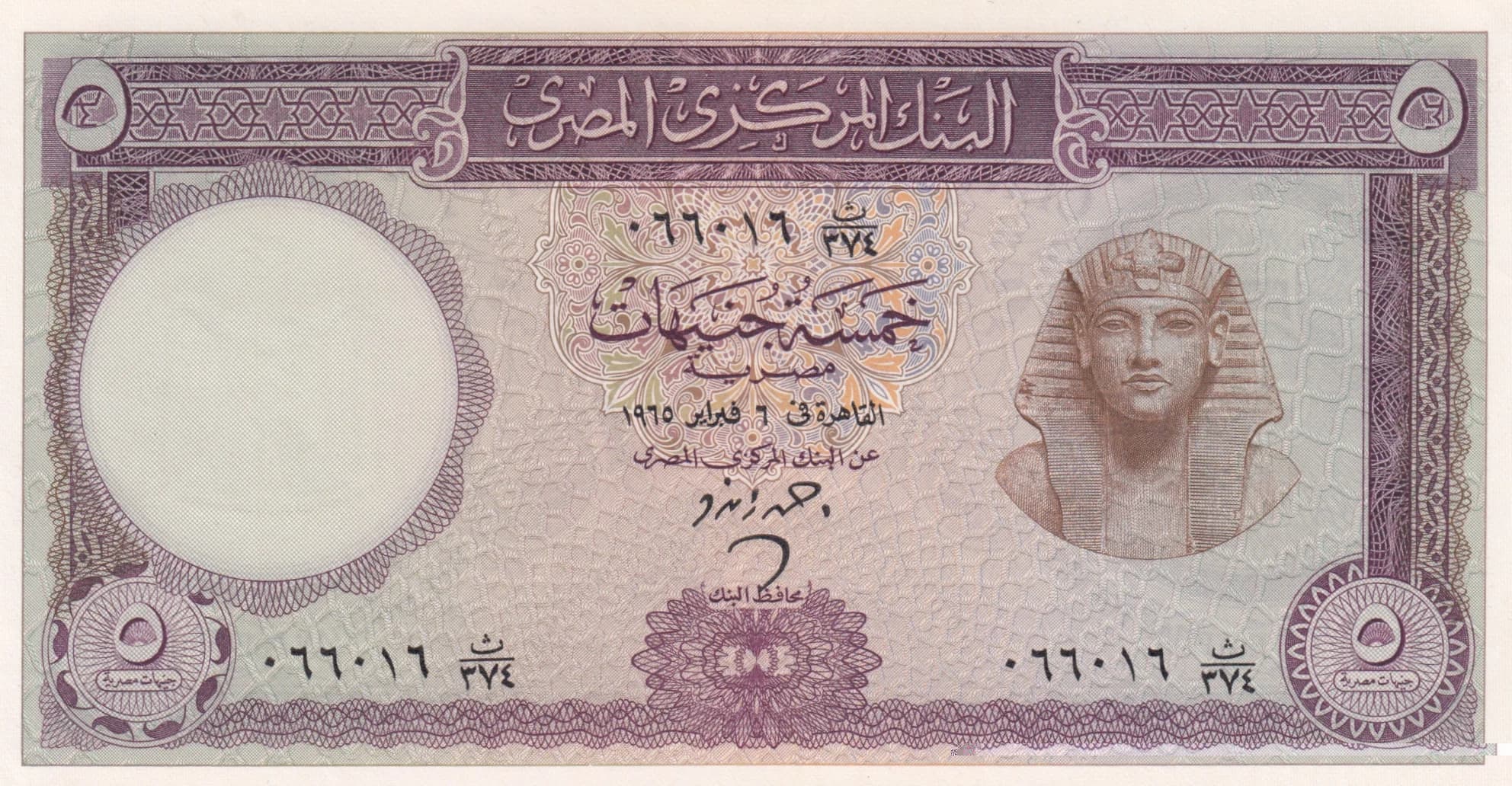
This is an exceptional example of Egypt's 1965 5 Pound note (Pick-40), presented in pristine uncirculated condition. The note features a striking pharaonic portrait in profile on the front and exhibits the characteristic purple/mauve and brown color scheme typical of this series, with intricate engraved security patterns throughout. The bilingual design (Arabic and English) and ornate Islamic geometric patterns reflect post-independence Egypt's cultural emphasis, making this a historically significant and visually striking piece of mid-20th century currency design.
Common. The 1965 5 Pound note (Pick-40) is a standard, widely-circulated denomination from Egypt's post-Nasser era currency series. There were substantial print runs of this denomination, and examples remain readily available in the numismatic market. Even in uncirculated condition, this note trades at modest values (typically under $25-30) on the secondary market, which is the standard pricing for common mid-20th century banknotes. The only exceptions would be extraordinarily rare varieties (signature combinations, printing errors, or special overprints), which do not appear to be present in this example.
Issued in 1965 by the Central Bank of Egypt under President Gamal Abdel Nasser's regime, this note reflects the nationalist period following the 1952 revolution and the 1956 Suez Crisis. The prominent pharaonic imagery—depicting an Egyptian pharaoh wearing the traditional nemes headdress and uraeus symbol—deliberately connected modern Egypt to its ancient Pharaonic heritage, reinforcing national identity and continuity. The bilingual presentation in both Arabic and English reflected Egypt's position as a regional economic power and its diplomatic importance during the Cold War era.
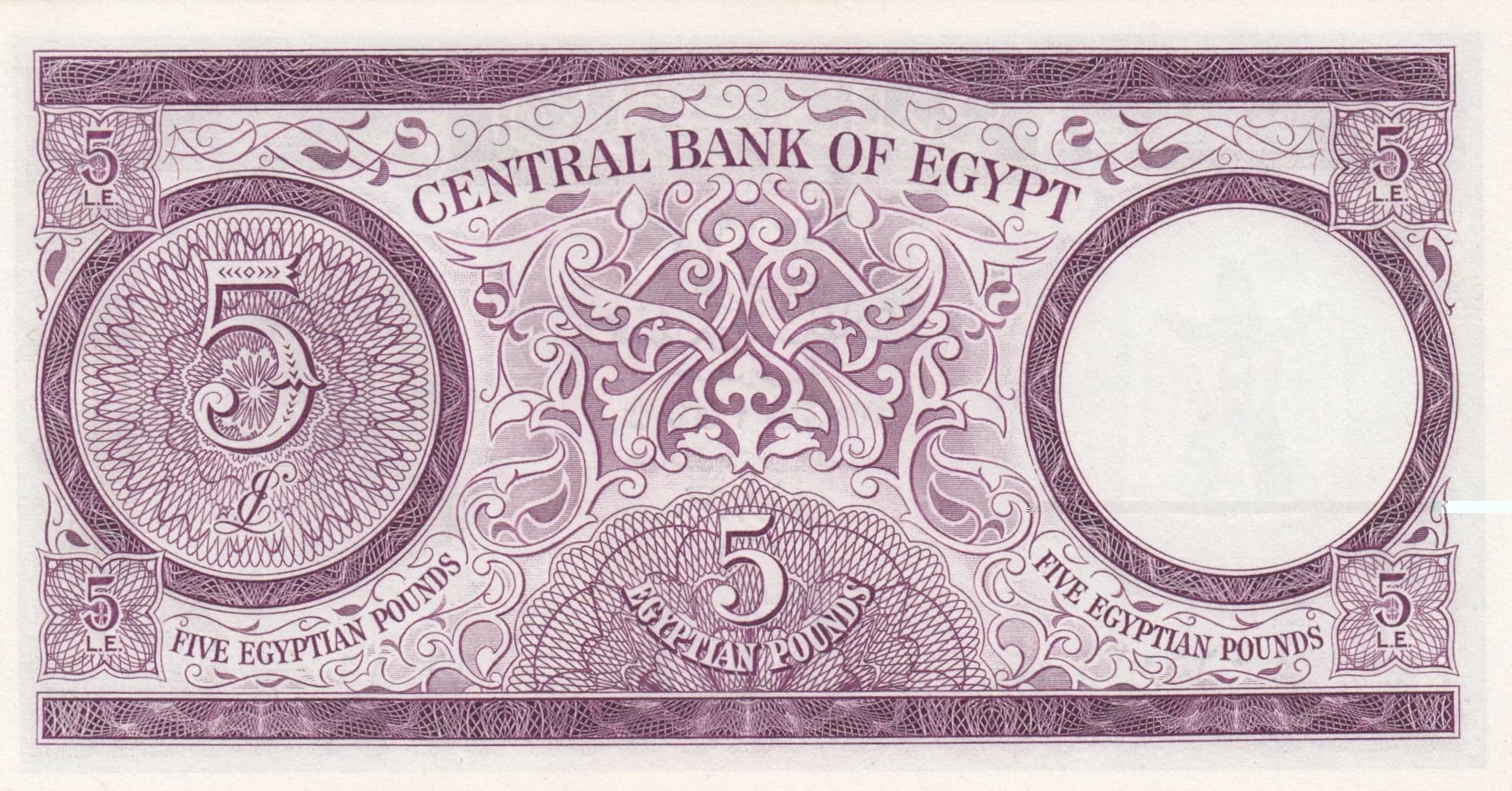
The obverse features a right-facing profile portrait of an Egyptian pharaoh, identifiable by the characteristic nemes headdress (striped cloth crown) and the sacred uraeus (cobra) symbol on the brow—both iconic elements of ancient Egyptian royal regalia. The portrait occupies the right portion of the note while a large blank circular area on the left creates visual balance. The reverse displays a symmetrical layout with a prominent ornamental '5' in an elaborately filigree-decorated circular medallion on the left, mirroring another blank circular frame on the right. Both sides employ elaborate Islamic geometric and floral ornamental patterns as central design elements, with ornate border frames and fine guilloche work in circular medallions. The dual-language approach (Arabic on obverse, English on reverse) reflects Egypt's international standing and Arabic nationalism of the era.
Front side: 'البنك المركزي المصري' (Central Bank of Egypt) appears in decorative cartouche at top; 'خمسة جنيهات' (Five pounds) in Arabic calligraphy at center; Arabic numerals '١٦٦١٦' (1616, likely a serial or plate number) in bottom medallions. Back side: 'CENTRAL BANK OF EGYPT' in English at top; 'FIVE EGYPTIAN POUNDS' in English at bottom with 'LE' currency symbol (for Egyptian pound, from the French 'livre égyptienne') flanking the denomination; large ornamental numeral '5' in left circular medallion.
Intaglio engraving (line engraving), the standard security printing method for Egyptian banknotes of this period. The intricate line patterns, fine detail work visible throughout the design, ornamental border frames, and complex guilloche patterns in the circular medallions are characteristic of high-security intaglio production. This note was produced by the Central Bank of Egypt's printing division; many Egyptian notes of this era were printed domestically or by established European security printers such as Bradbury Wilkinson or similar firms specializing in banknote production.
Based on visual analysis, this appears to be a standard printing of the 1965 issue without obvious overprints or exceptional varieties. The serial number fragment '١٦٦١٦' visible in the medallions does not indicate an obvious rare variety. Pick-40 exists in multiple signature combinations and serial number ranges; collectors typically distinguish varieties by governor signatures (Zawawi or later officials) and serial number prefixes. Without a full serial number inspection, a precise variety attribution cannot be confirmed, but this appears to be a standard circulation type rather than a known rare variety.