25 piastres 1956
Market Prices
21 salesAbout This Note
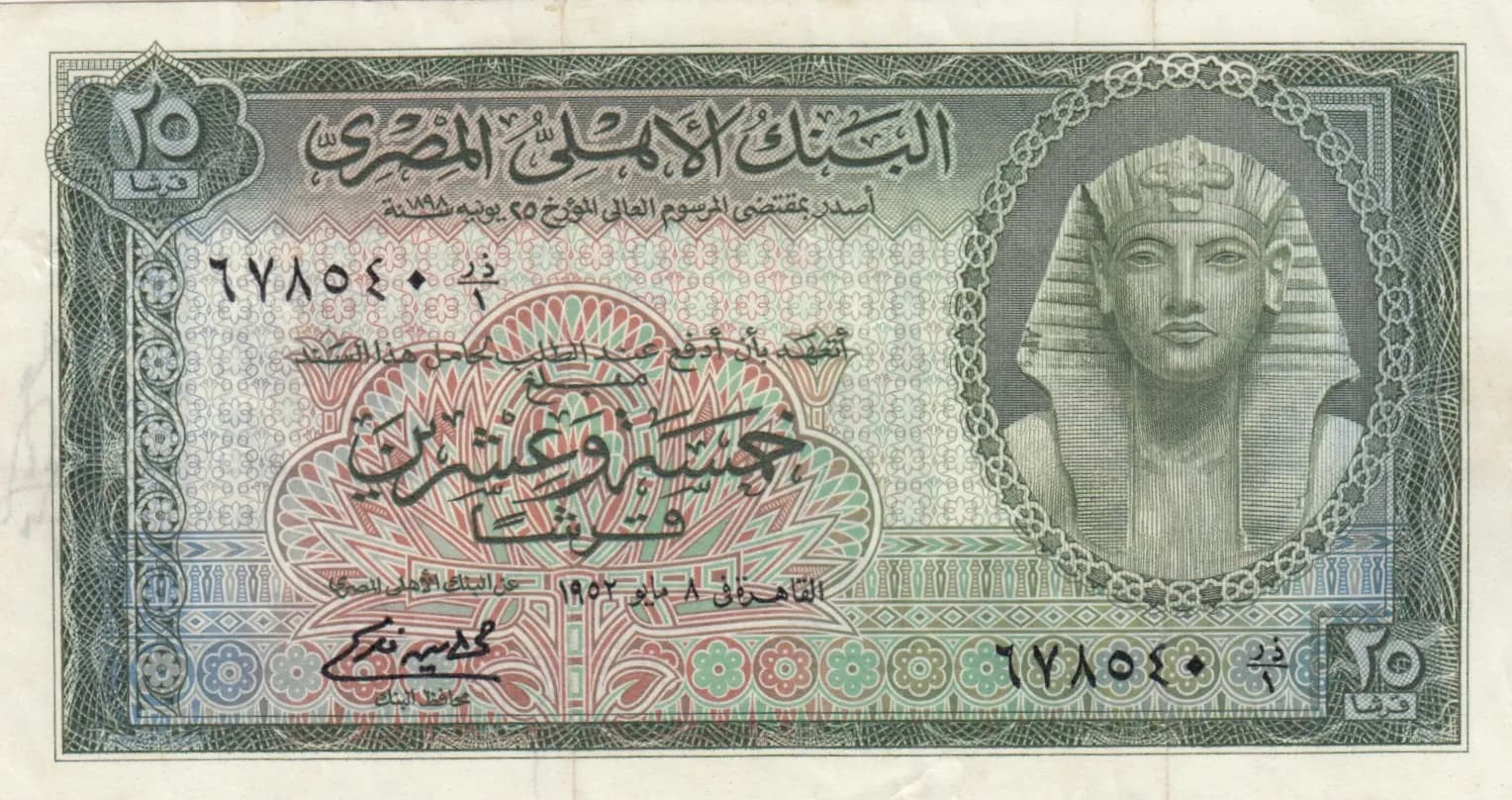
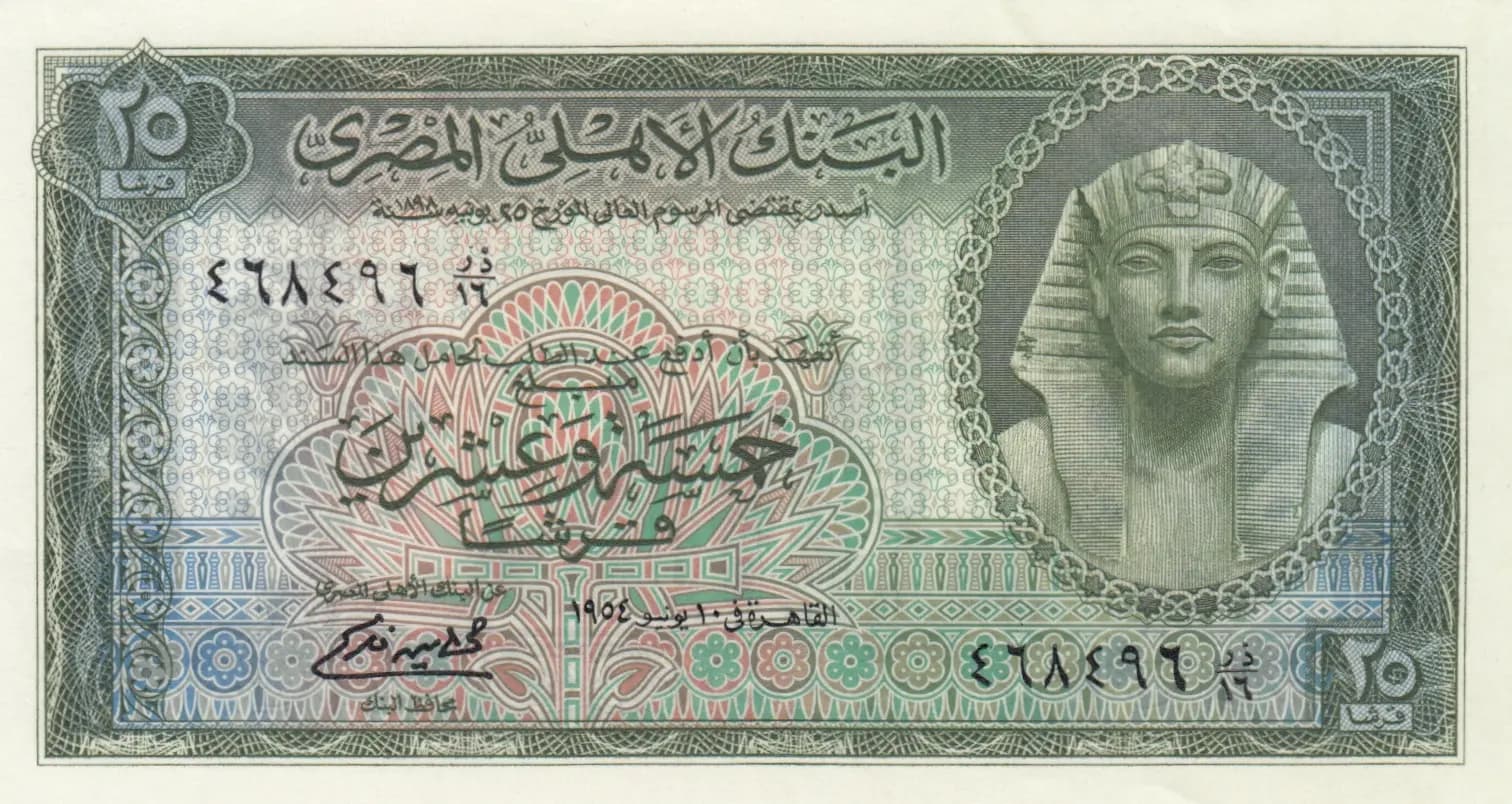
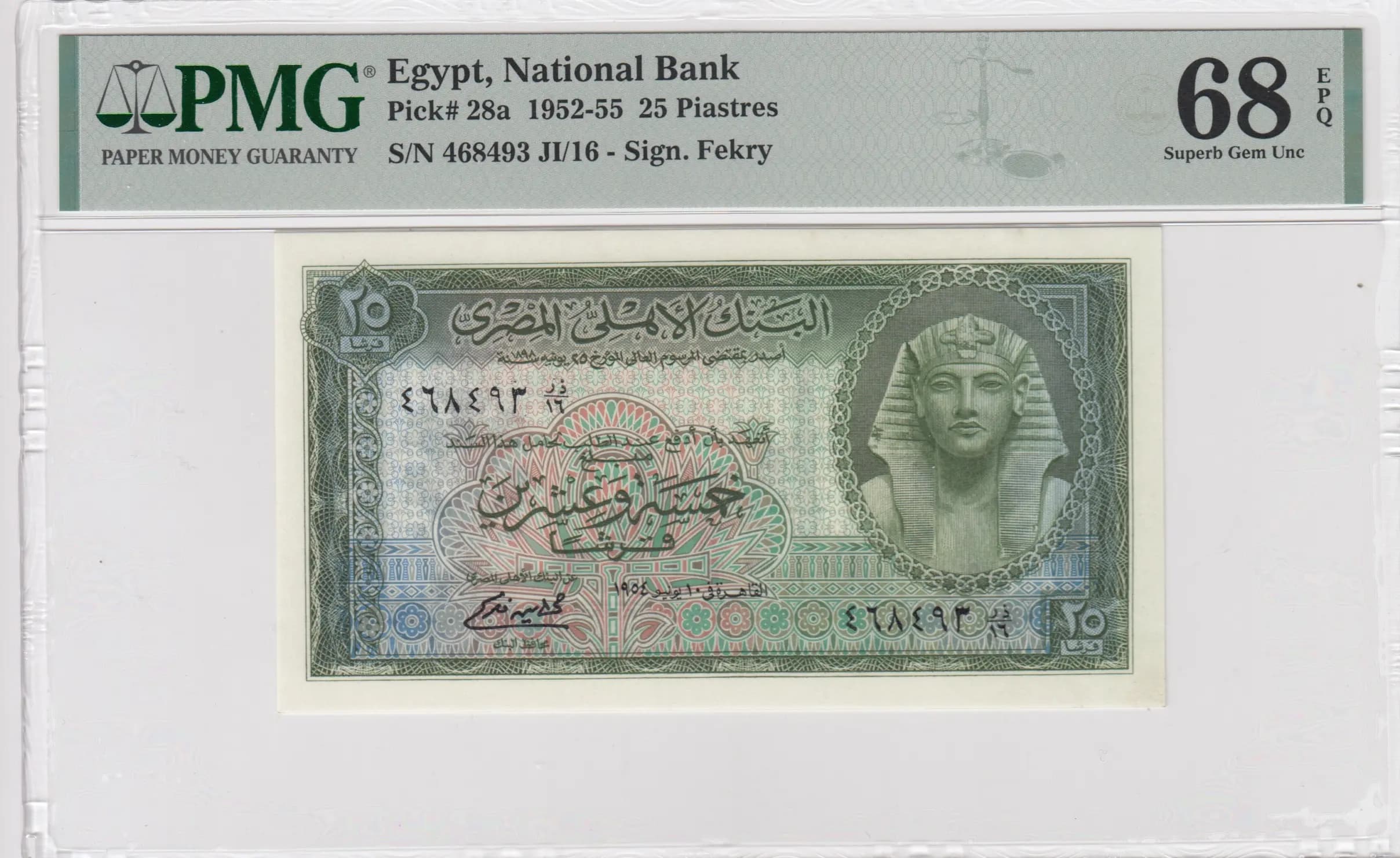
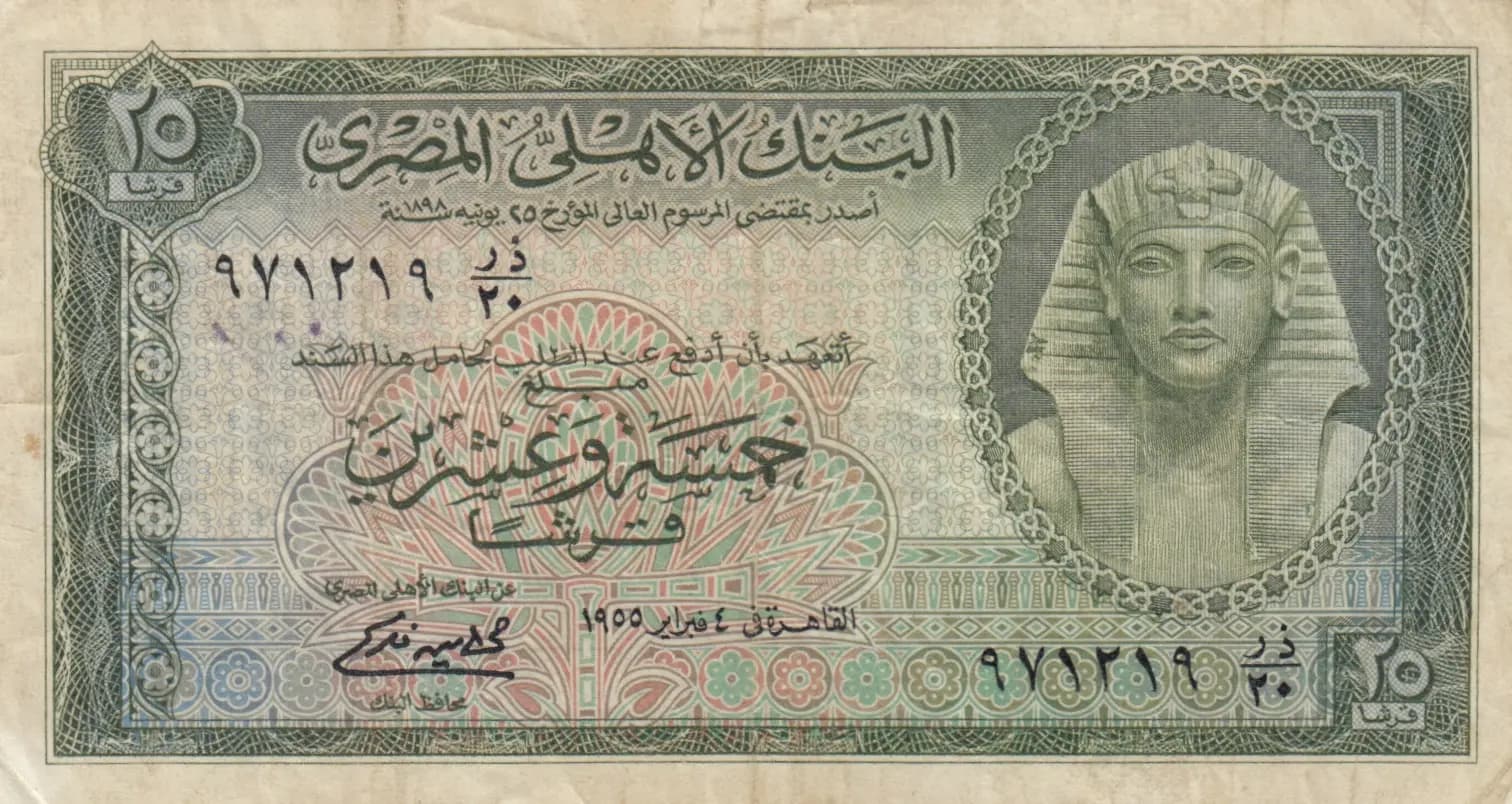
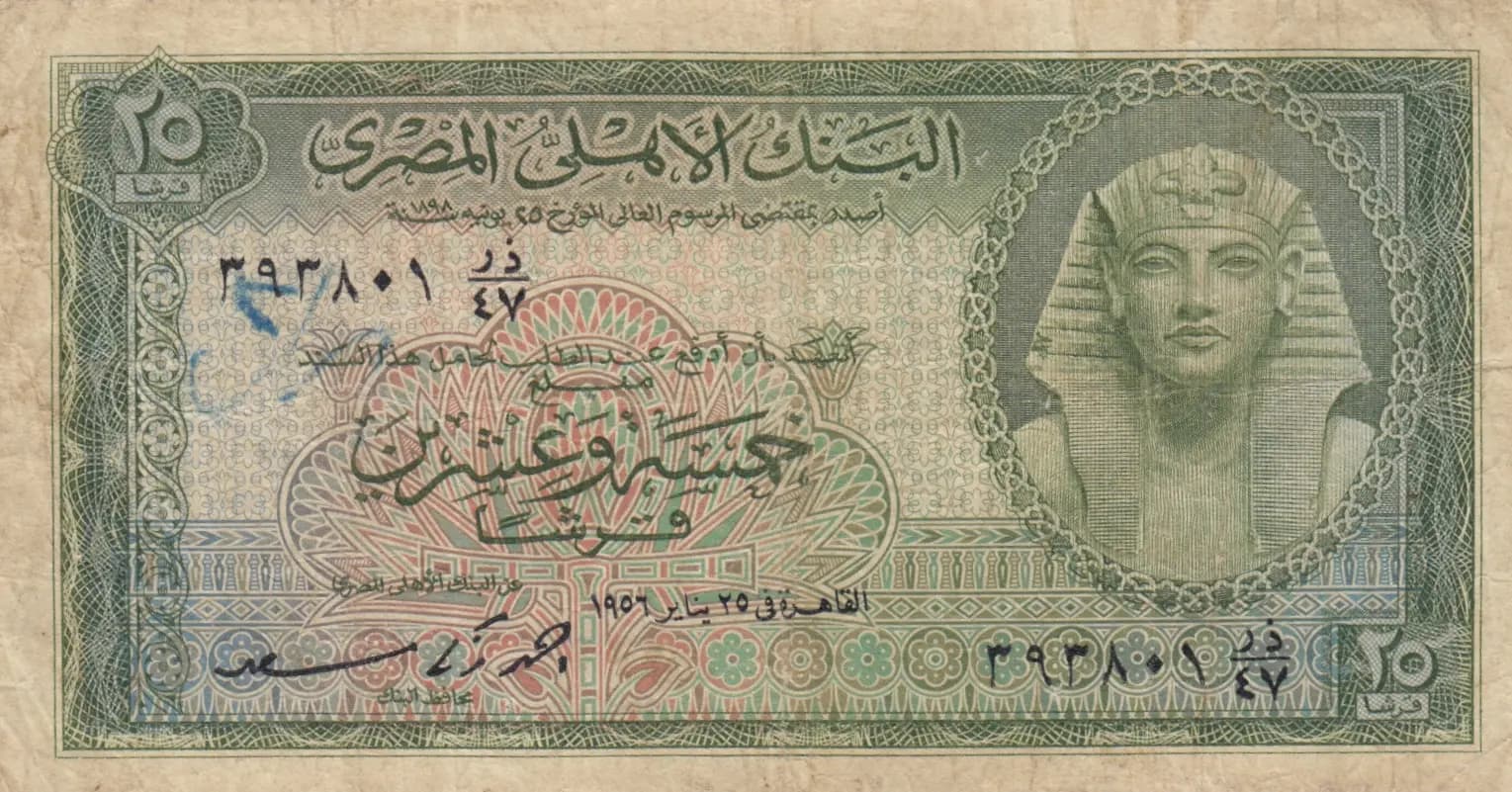
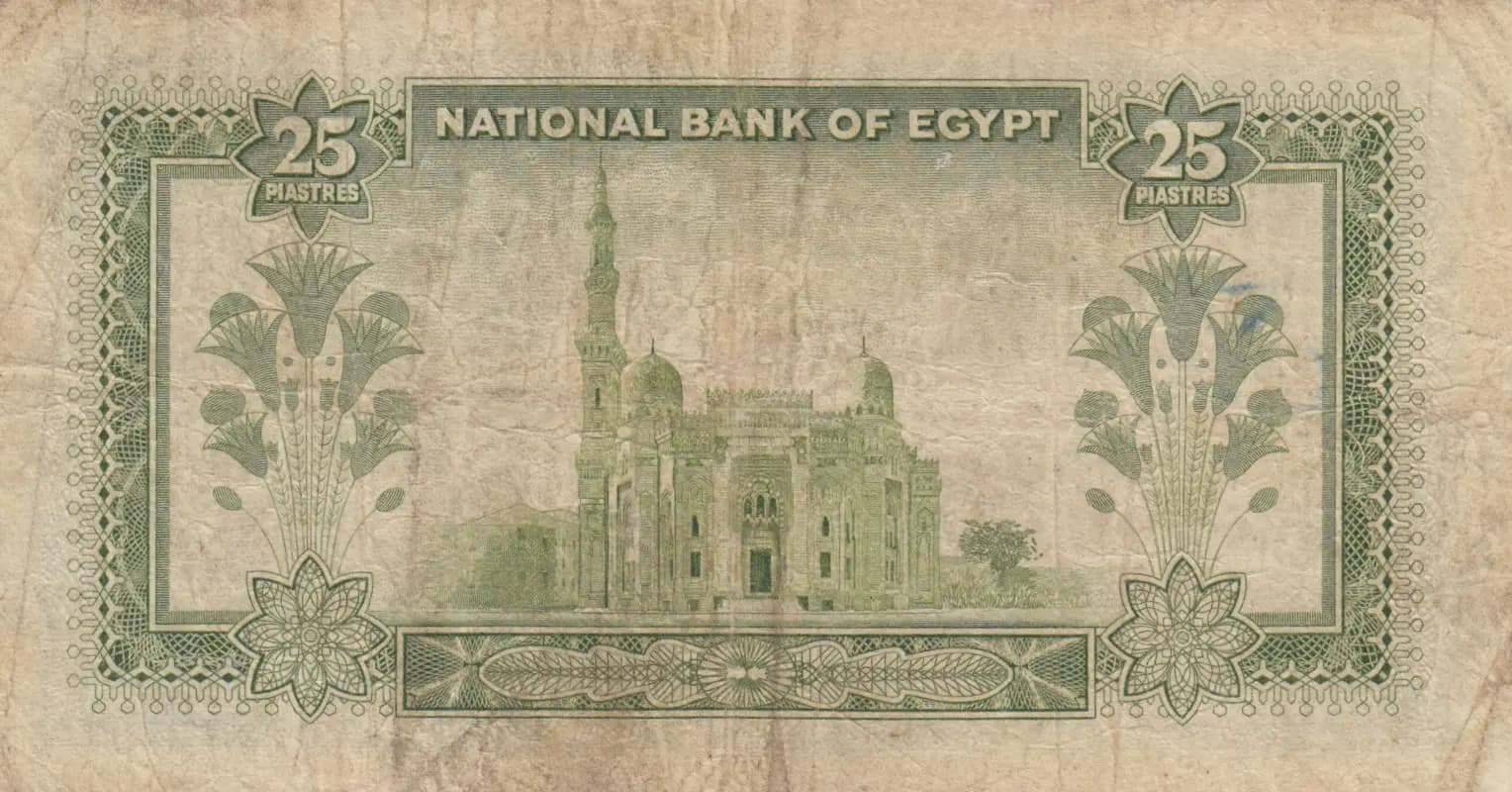
This is an Egyptian 25 Piastres note from the 1952-1957 series (Pick P-28), issued by the National Bank of Egypt and graded in Fair condition. The note displays moderate circulation wear with visible creasing, fold marks, and foxing throughout both sides, consistent with its age and handling history. The front features an elegant portrait of a pharaonic figure in traditional nemes headdress within an ornate oval medallion, while the reverse showcases a detailed architectural engraving of the El-Morsi Abdoul Abbas mosque in Alexandria, framed by lotus blossom motifs—both iconic symbols of Egyptian heritage.
Common. This note from the 1952-1957 series was issued in substantial quantities and remains readily available to collectors. The eBay market data confirms common status, with Fair condition examples selling for $2.35-$11.50 in historical auctions, and even higher grades (EF-UNC) typically selling for $20-$40 without exceptional premiums. Catalogue values place this note at approximately $1-$5 depending on condition, further confirming its common circulation status.
Issued during the early years of the Egyptian Republic following the 1952 Revolution, this banknote reflects the National Bank of Egypt's commitment to featuring Egypt's rich cultural and religious heritage. The front portrait honors pharaonic Egypt—the ancient civilization that defined the nation's identity—while the reverse depicts the El-Morsi Abdoul Abbas mosque, a major Islamic landmark in Alexandria, representing the Islamic cultural layer of Egyptian history. Together, these design elements underscore post-revolutionary Egypt's embrace of both its ancient past and contemporary Islamic identity.
The obverse features an elaborate portrait of Tutankhamen (or a generalized pharaonic figure) wearing the iconic striped nemes headdress, centered within an ornate oval medallion decorated with red and green elements and intricate Arabic calligraphy. Ornamental geometric and floral borders frame the entire design in predominantly green with beige/tan background toning. The reverse presents a finely detailed architectural engraving of the El-Morsi Abdoul Abbas mosque—a major Islamic religious building in Alexandria—complete with minaret, dome, and arched entrances. Lotus plant motifs flank the central architectural image in the corners, serving as traditional Egyptian symbolic elements. The denomination '25 PIASTRES' appears in decorative lotus-framed cartouches at the top corners, with fine geometric border patterns completing the design.
Front: 'البنك الأهلي المصري' (National Bank of Egypt); '١٠' (10); 'دورة' (Note/Issue); Arabic numerals including what appears to be serial number components '٣٩٢١' (3921) and '٢٥-٣٢' (25-32). Back: '25' and 'PIASTRES' in decorative frames (top left and right); 'NATIONAL BANK OF EGYPT' in English across the note.
Intaglio engraving (line engraving), evidenced by the fine line work visible throughout the borders, the intricate geometric patterns in the central medallion, and the detailed architectural rendering of the mosque. The security features including fine line borders and complex background patterns are characteristic of high-security intaglio production typical of Egyptian banknote printing during this era. The National Bank of Egypt's notes from this period were produced by Thomas De La Rue, a leading international security printer.
This appears to be the standard P-28 variety (not the P-28s specimen note variant). The visual analysis suggests this is a regular circulation issue from the series. Specific identification of the variety would require examination of signature combinations and precise date notation, which are not clearly legible in the current images, though the note's characteristics are consistent with the main P-28 circulation issue.