25 piastres 1954
Market Prices
21 salesAbout This Note
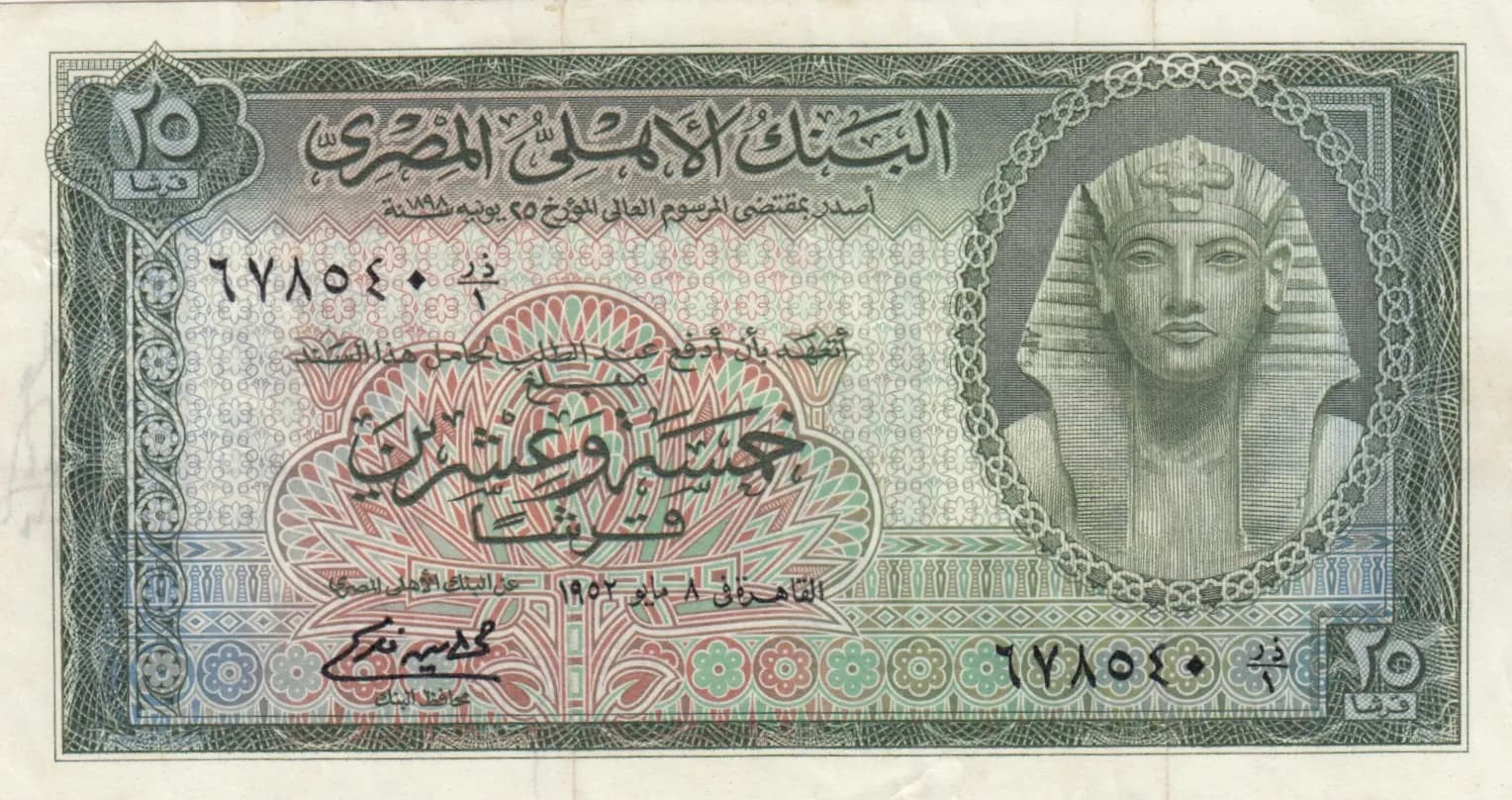
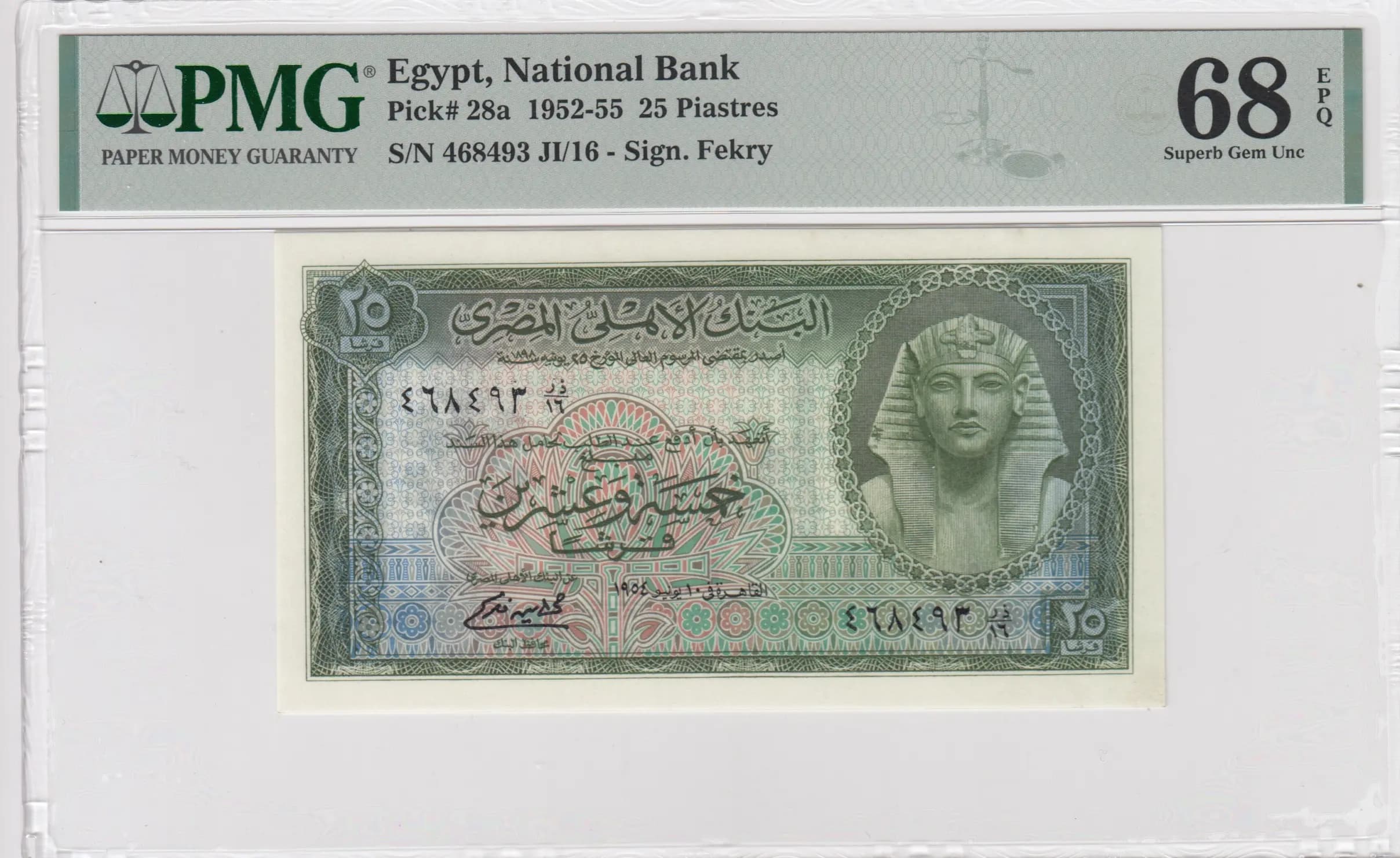
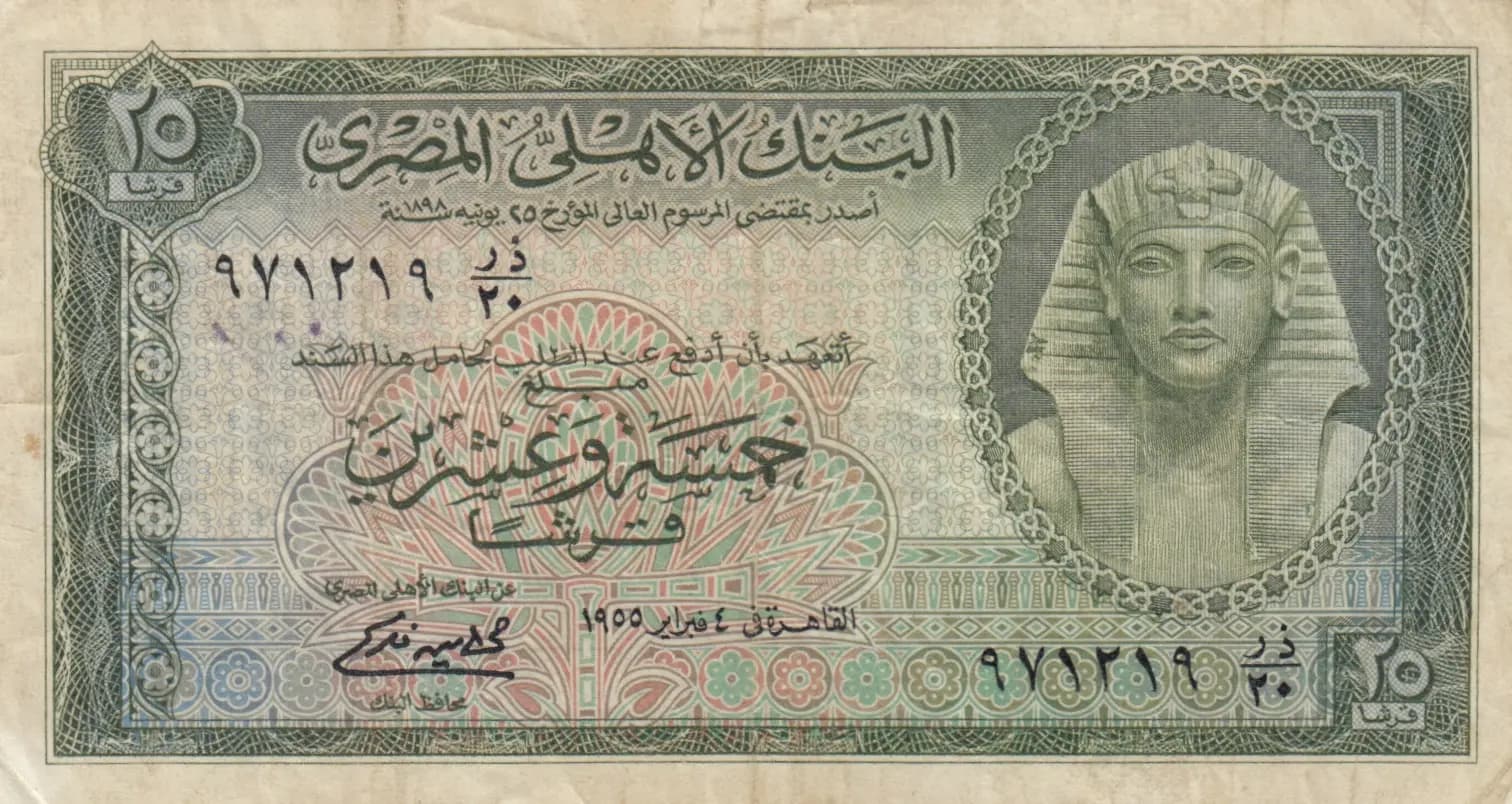
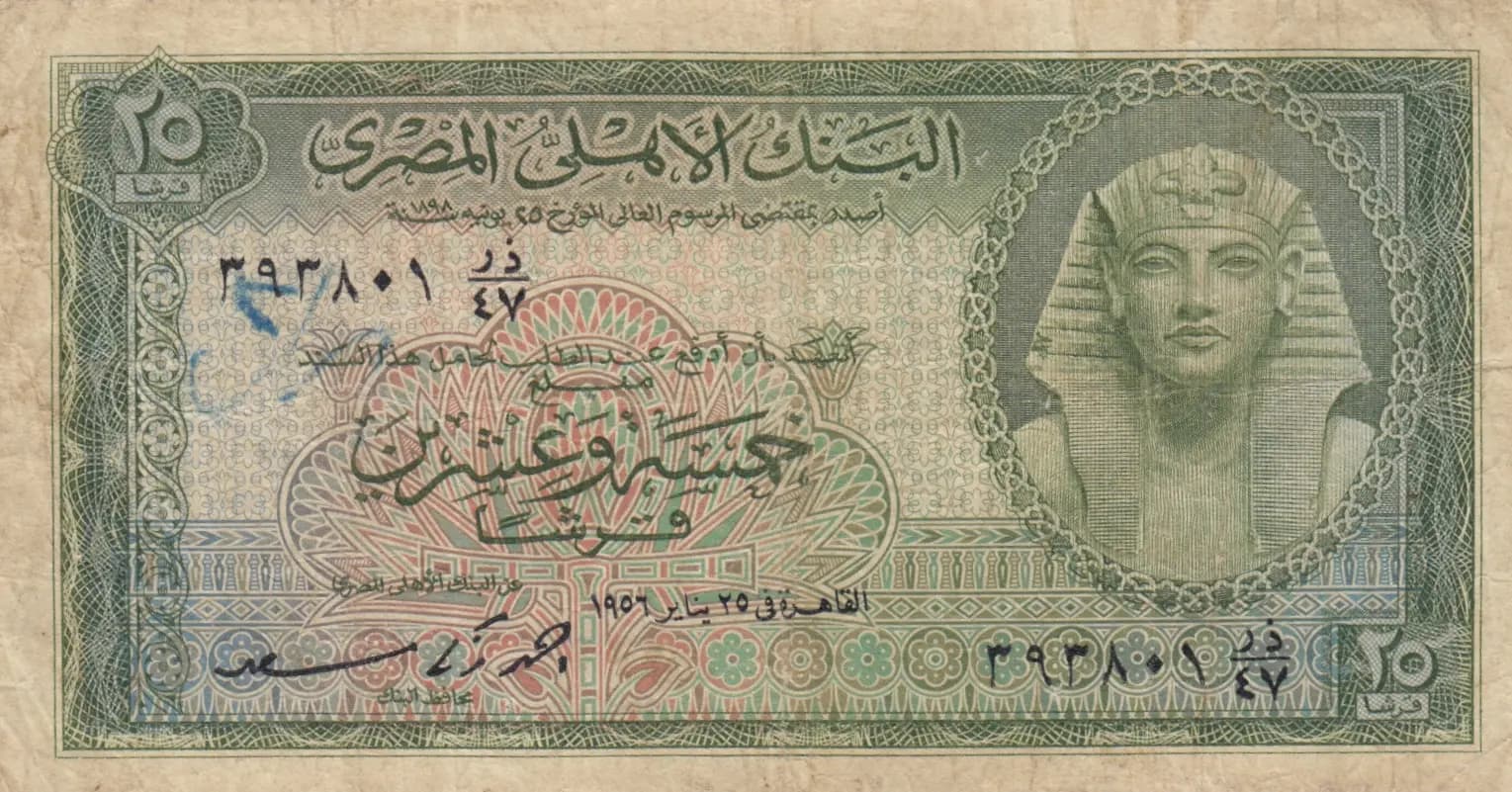
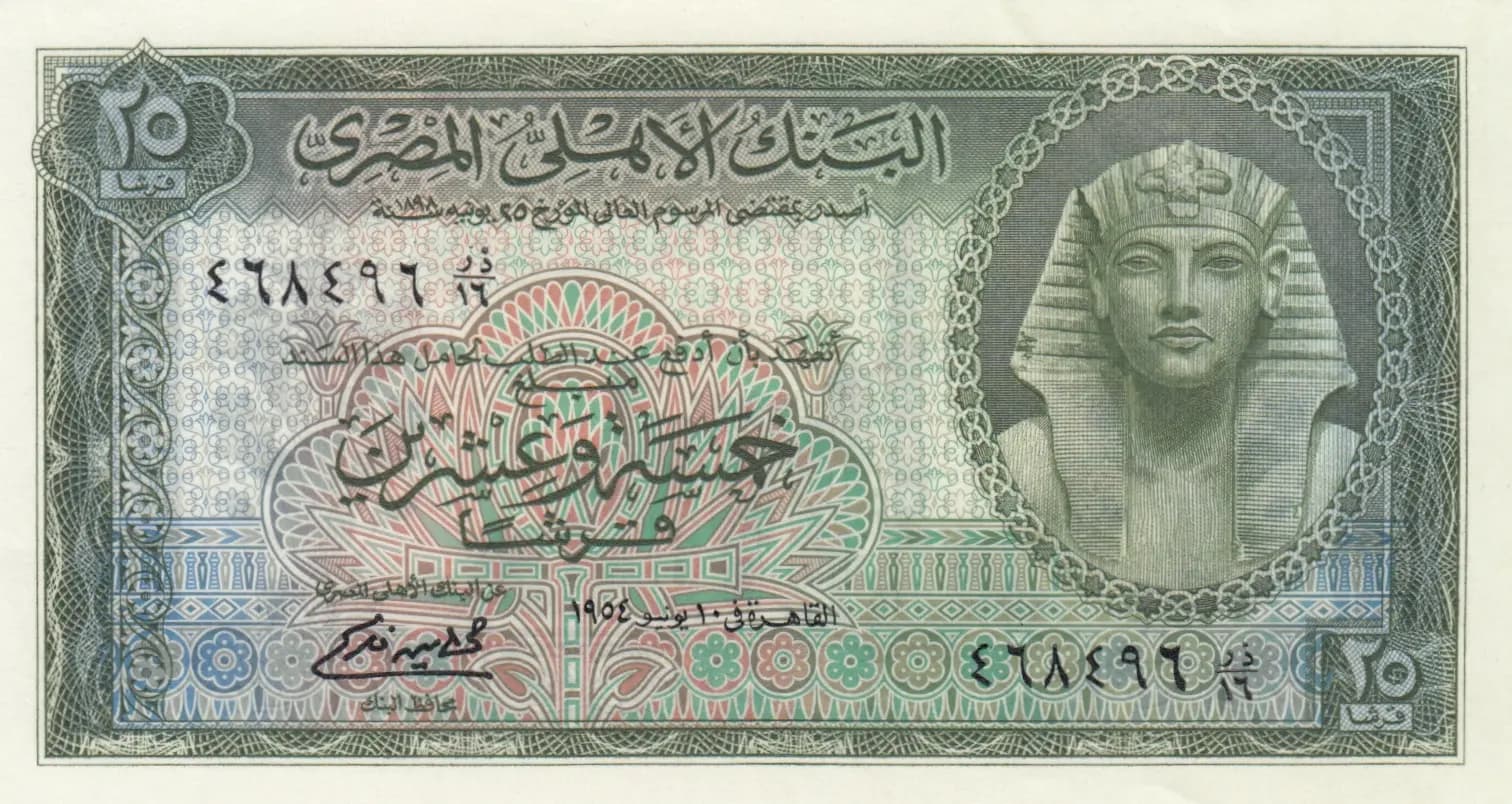
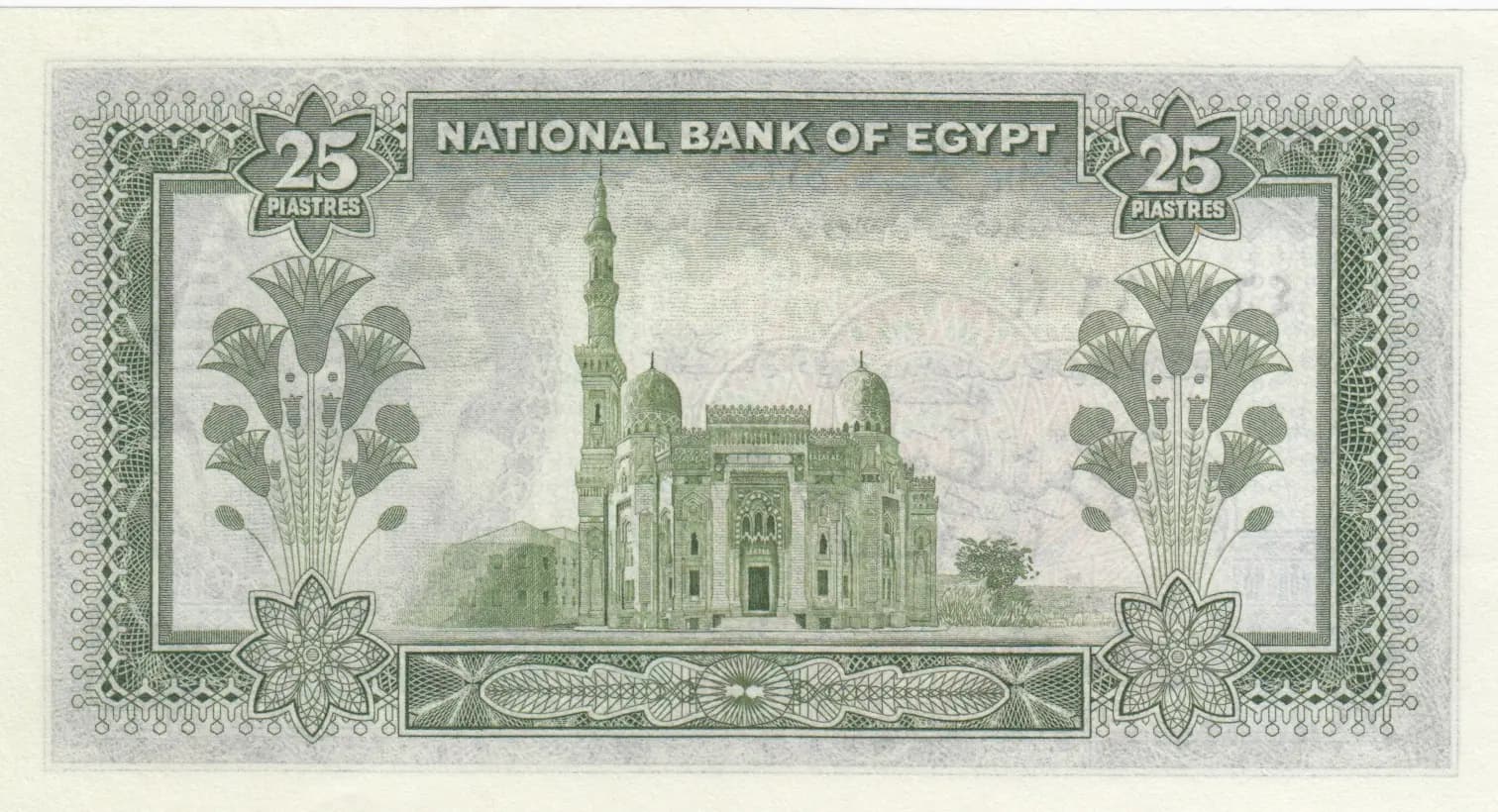
This Egypt 25 Piastres note from 1954 (Pick P-28) features an exceptionally well-preserved design showcasing Tutankhamen's portrait on the obverse and the architectural splendor of El-Morsi Abdoul Abbas mosque in Alexandria on the reverse, flanked by papyrus flowers. The AU condition grade is evident from the crisp engraving detail and minimal circulation wear, though handling creases and age-related toning are present on the front. This is a foundational piece of mid-20th century Egyptian currency and a key example from the early National Bank of Egypt issue period.
Common. The eBay price tracking data shows consistent sales volumes across multiple condition grades from 2011-2026, with recent comparable sales in AU/UNC grades averaging $30-50 and older sales ranging from $12.50-$38. The 2016 catalogue valuation of $25 for UNC confirms widespread availability. Notes with this type of steady, modest market pricing across many sales are typical of regular, high-circulation issues. The 1952-1957 issue period was lengthy and no recall or short-run indicators are present.
This note was issued during Egypt's transitional period following the 1952 Free Officers' Movement revolution that ended the monarchy and established the Egyptian Republic. The choice to feature Tutankhamen—the young pharaoh whose tomb's discovery captivated the world—reflects Egypt's deep cultural connection to its ancient heritage during this period of national redefinition. The reverse depicts El-Morsi Abdoul Abbas mosque in Alexandria, one of Egypt's most significant Islamic monuments, symbolizing the nation's Islamic identity and architectural heritage in the modern era.
The obverse features a right-facing profile portrait of Tutankhamen wearing the traditional nemes headdress with uraeus, rendered in light green and grey tones. The portrait is positioned on the right side of the note and occupies a prominent placement. The left side displays an elaborate decorative cartouche with intricate pink and green patterning typical of Egyptian design motifs. Ornamental geometric and floral borders frame the entire note with repeating patterns and decorative scrollwork. The reverse displays the El-Morsi Abdoul Abbas mosque as the central architectural focal point, featuring multiple domes, a minaret, and Egyptian Islamic architectural details including crenellations. The mosque is symmetrically flanked by stylized papyrus flowers with characteristic fan-like leaves on both sides. Decorative corner ornaments and lotus motifs enhance the border design. The color palette on both sides consists of greens, pinks, creams, and grey tones with black detailing.
Front side: 'البنك الاهلي المصري' (National Bank of Egypt), '٢٥' (25 in Arabic numerals), 'خمسة وعشرون' (Twenty-five in Arabic words), Serial number '٥٧٨٨٩٧'. Back side: 'NATIONAL BANK OF EGYPT' (in English), '25 PIASTRES' (appearing in upper corners in English), denomination markers throughout.
Intaglio engraving (steel plate/copperplate printing), the standard security printing method for Egyptian banknotes of this era. The visual analysis confirms multiple layers of complex engraving with detailed micropatterns, geometric line work, and intricate decorative elements characteristic of intaglio production. The crisp detail and depth visible in both the portraiture and architectural rendering are signatures of this technique. The National Bank of Egypt's printing facilities or contracted security printers (likely De La Rue or similar international security printer) produced this note.
This specific note displays serial number 578897 in Arabic numerals. The PMG population report identifies two variants for Pick P-28: P-28 (regular) and P-28s (specimen), indicating specimen notes exist but the present note is a regular circulation issue. The obverse portrait appears consistent with the standard Tutankhamen design used throughout the series. No visible overprints or date markings indicate a standard issue from within the 1952-1957 production window, likely 1954 as catalogued.