25 piastres 1955
Market Prices
21 salesAbout This Note
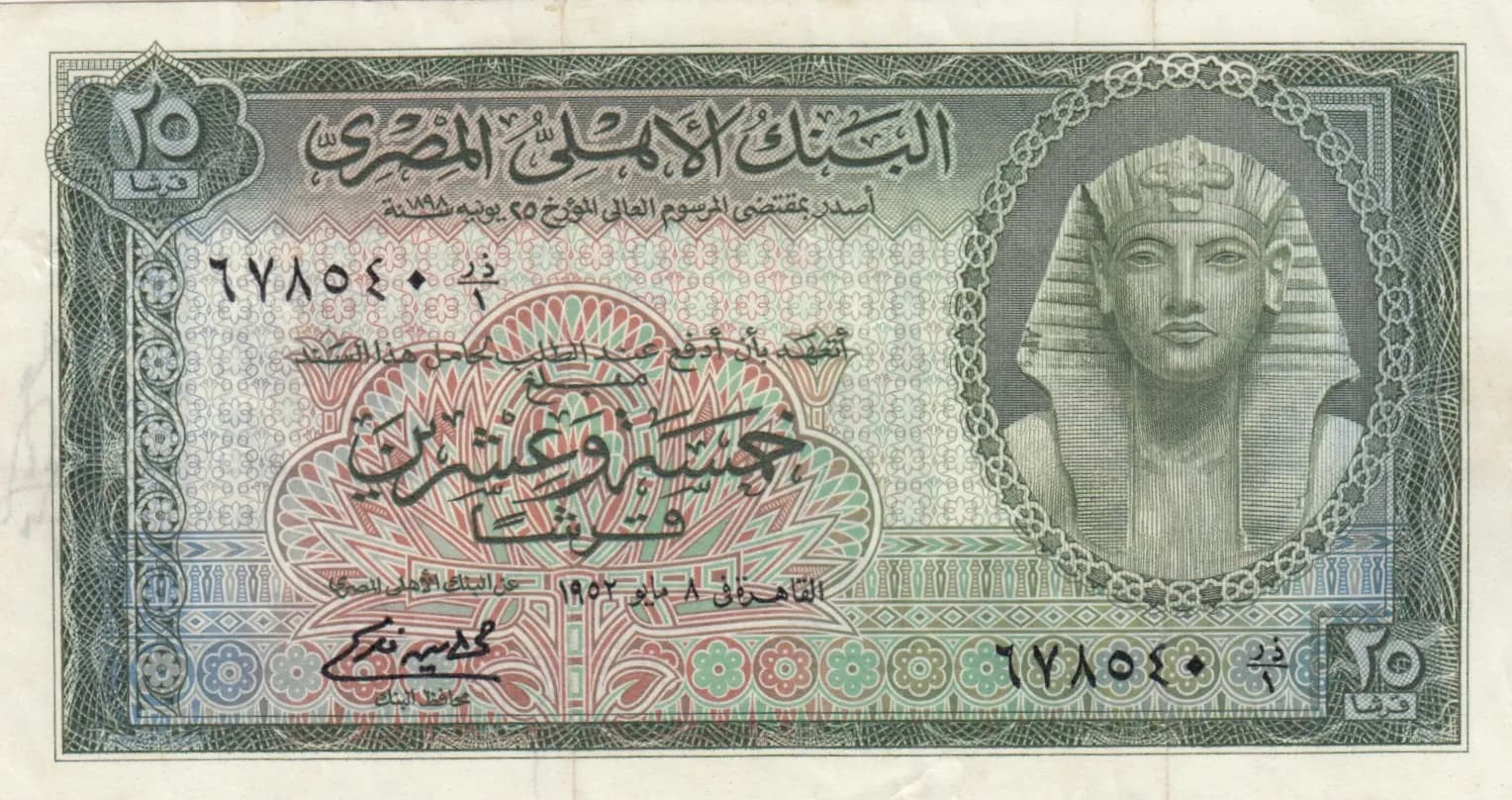
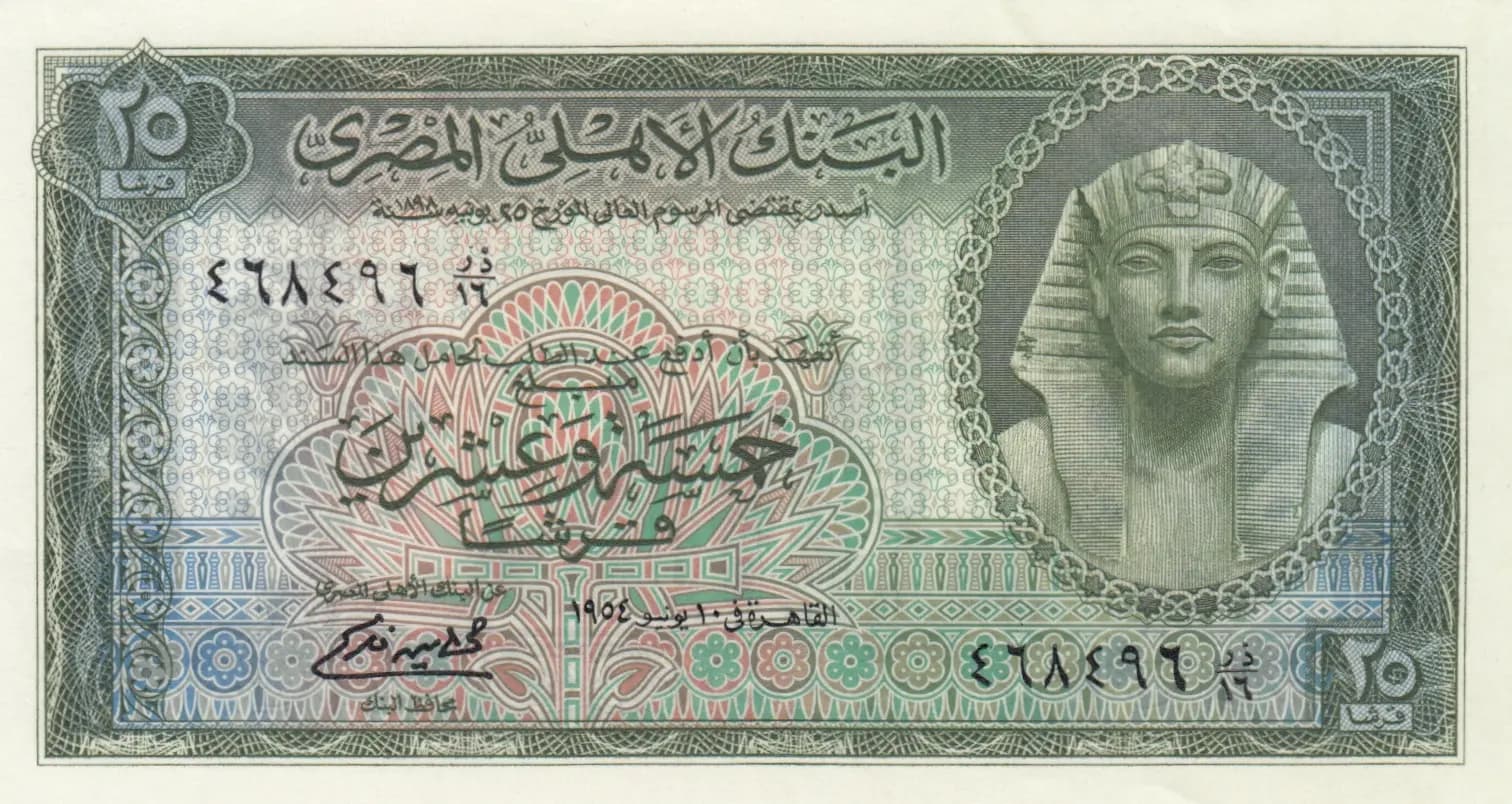
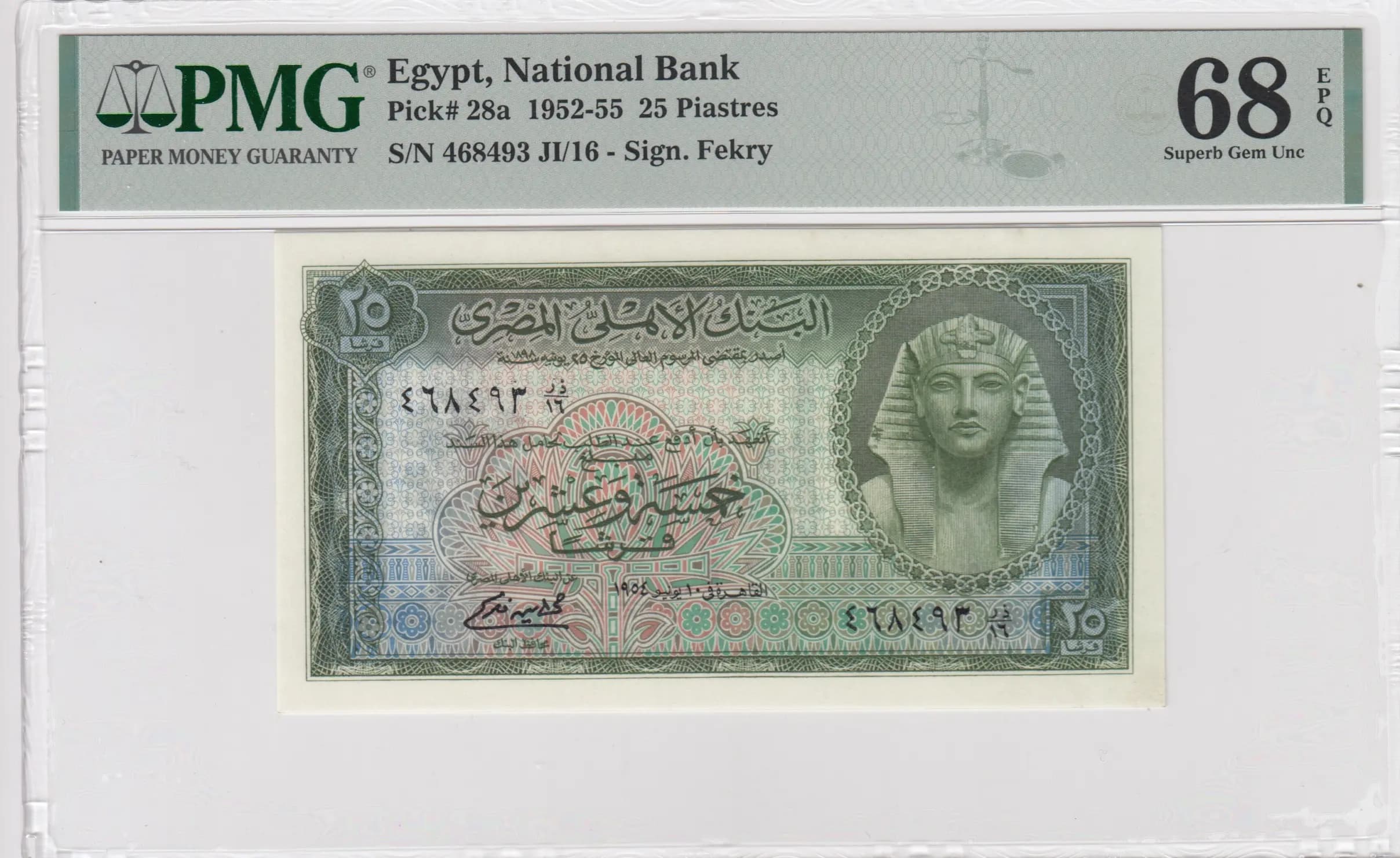
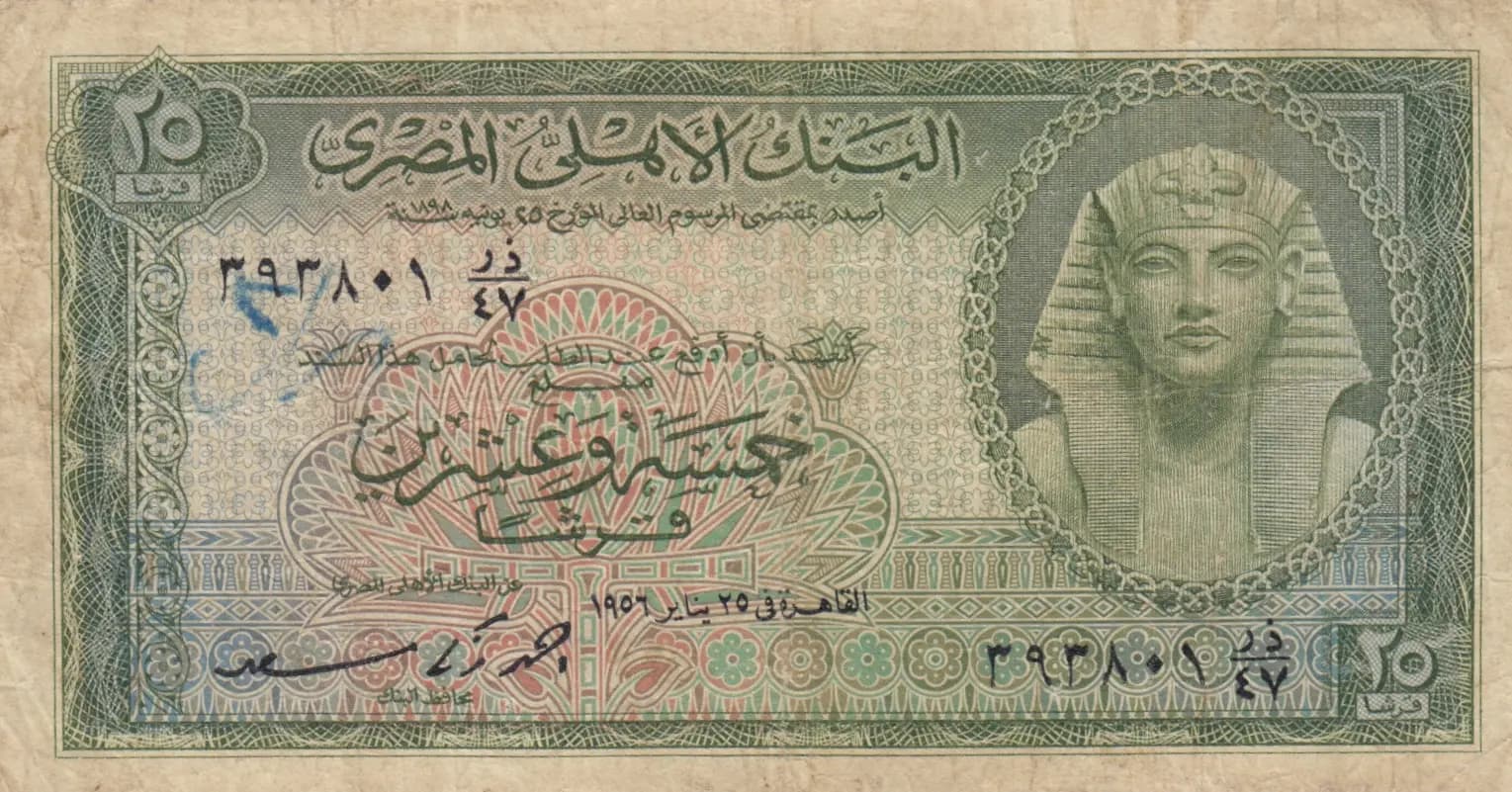
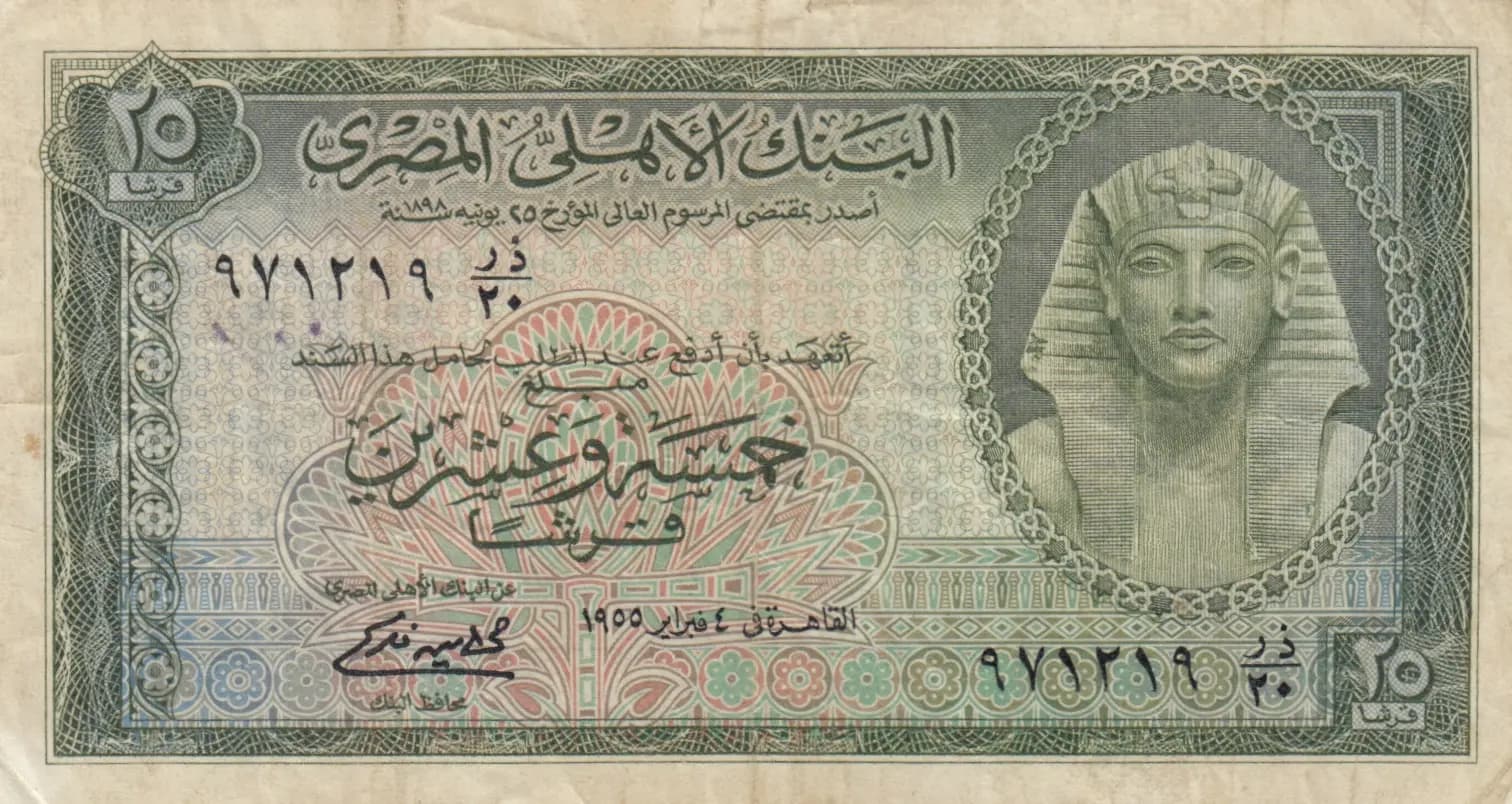
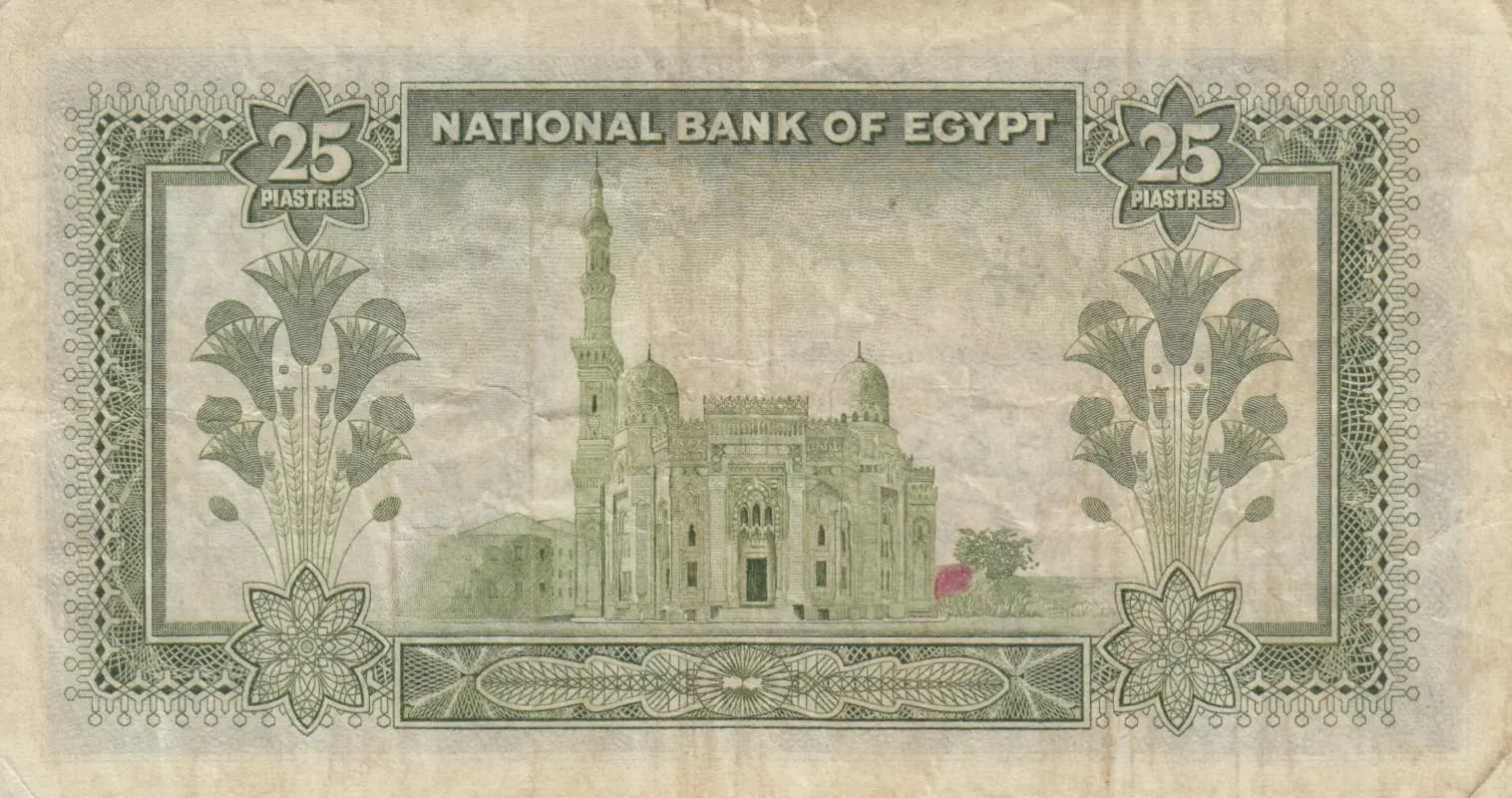
This is a circulated example of Egypt's 1955 National Bank of Egypt 25 piastres note (Pick P-28), graded in Fine condition. The note displays the characteristic green and grey color scheme with a detailed engraved portrait of a Egyptian pharaoh on the obverse and the El-Morsi Abdoul Abbas mosque with lotus motifs on the reverse. Heavy creasing, fading, and age-related discoloration throughout indicate extended circulation, with visible pen marks consistent with period banking practices.
Common. The eBay sales data shows consistent circulation and trading of this note type across multiple condition grades, with F-graded examples selling for $2.35–$11.50 (2011–2015), indicating ready availability in the secondary market. The 1952–1957 series was a regular issue with substantial print runs typical of a national currency in active circulation. Catalog values (2016) list F condition at approximately $1–$2, and population data shows no special scarcity markers. This is a widely available note for collectors of Egyptian currency.
This note was issued during the early post-revolutionary period of Egypt, approximately three years after the 1952 Free Officers Movement. The inclusion of the pharaonic imagery—specifically the pharaoh's profile—reflects Egypt's connection to its ancient heritage and was a common iconographic choice for mid-20th century Egyptian currency. The reverse depicts the El-Morsi Abdoul Abbas mosque in Alexandria, celebrating Islamic architectural heritage, while the papyrus/lotus plant motifs symbolize Egyptian cultural identity and the nation's classical past.
The obverse features a classical engraved portrait of an Egyptian pharaoh in left profile, wearing the traditional nemes headdress, rendered in green and grey tones within an ornate cartouche-style frame. Decorative geometric borders with interlocking patterns and floral-inspired scrollwork frame the design, with denomination numerals and bank name in Arabic positioned around the portrait. The reverse showcases a detailed engraved illustration of the El-Morsi Abdoul Abbas mosque with its characteristic minaret and domed structure, featuring Islamic architectural details including crenellated walls and gateway entrance. Stylized papyrus or lotus flowers flank the central mosque, symbolizing Egypt's botanical and cultural heritage, with ornamental frames containing additional lotus motifs in the corners. Both sides employ fine-line guilloche patterns and complex geometric security printing characteristic of mid-20th century Egyptian banknote production.
Front side: 'البنك الأهلي المصري' (National Bank of Egypt); '٢٥' (25); 'قرش' (Piastres); '٩٧١٢١٩' (Serial number 9712119); 'القاهرة فبراير ١٩٥٥' (Cairo February 1955). Back side: 'NATIONAL BANK OF EGYPT' (English inscription); '25 PIASTRES' (English denomination marking in two corners).
Intaglio engraving (recess printing), the standard security printing method for banknotes of this era. The fine-line work visible in the portrait, architectural details, and ornamental borders, combined with the complex guilloche patterns throughout, are consistent with high-security banknote production by a specialized security printer. The National Bank of Egypt during this period typically employed established European security printing firms, though specific printer attribution for this note would require additional documentation.
Serial number 9712119 is observed on this example. The note is dated February 1955 and exhibits the standard design of Pick P-28 without notable overprints or signature variants that would distinguish it as a special variety. PMG has catalogued P-28 and P-28s (specimen) variants; this appears to be a standard circulation note (P-28). Further variety identification would require examination of signature varieties or subtle design differences not evident from the current visual analysis.